
Imagine pressing a button and watching the window rise smoothly, effortlessly. This convenience seems straight out of the 2000s, but the first car with electric windows dates back to 1941 – and it was an unimaginable luxury for the time!
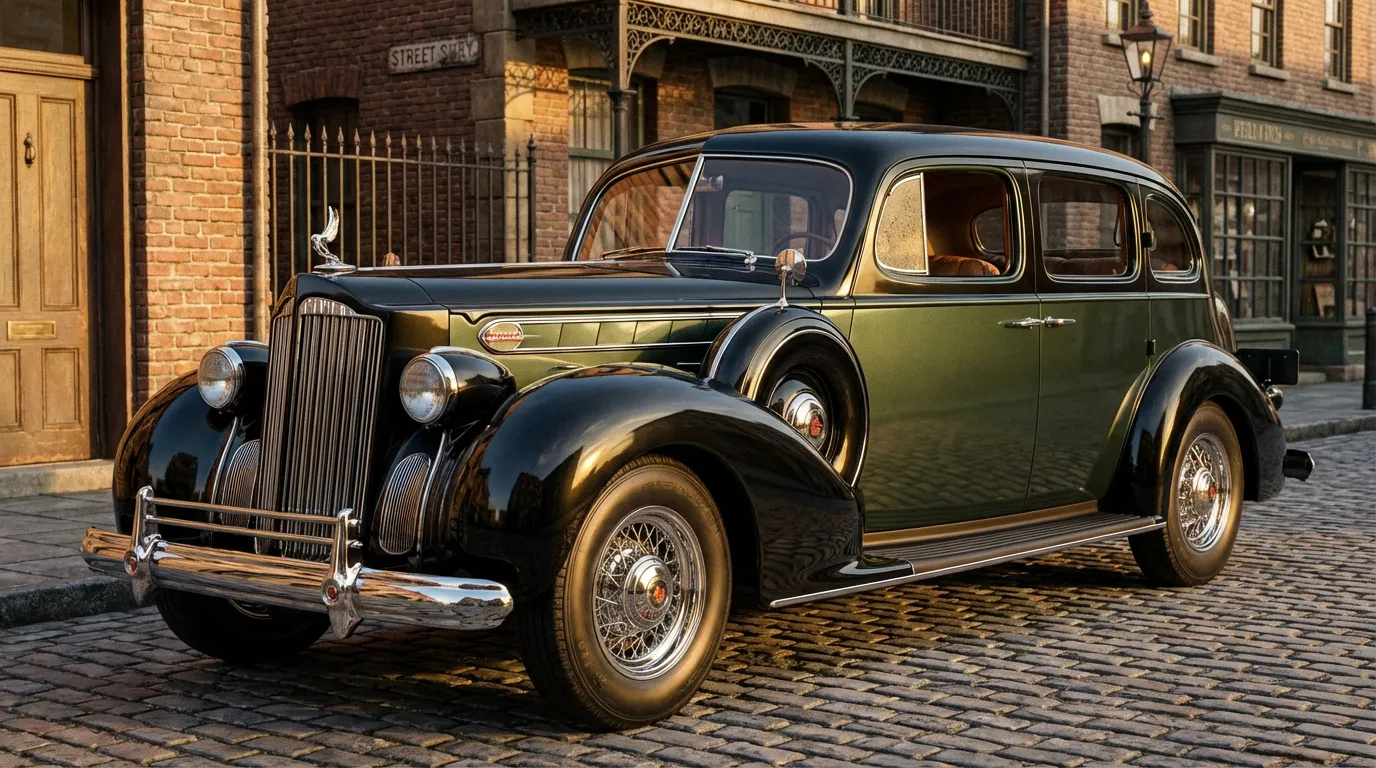
The Invisible Revolution: How the PACKARD Custom Super Eight 180 Changed the Game in 1941
In the automotive world of the 1940s, manually cranking the windows was standard. Cars were robust machines but filled with manual labor. Everything changed with the PACKARD Custom Super Eight 180 touring sedan, launched in the 1941 model year. This American masterpiece introduced the first energy-operated windows, utilizing a complex hydraulic system powered by electric pumps, pressure cylinders in the doors, and hydraulic lines. Initially designed for convertible hardtops and electric seats, the mechanism was an engineering marvel of cutting-edge technology.
PACKARD was no ordinary car. With its elegant design and high-performance V8 engine, it represented the peak of pre-War luxury. Electric windows were optional, reserved for the wealthy who could afford innovations that saved effort on long trips. But it wasn’t all smooth sailing: fluid leaks were common, and maintenance was a nightmare due to complexity. Still, this pioneering work paved the way for what is now standard in 99% of new vehicles across the USA automotive market.
Ford and Cadillac didn’t fall behind. The Ford Lincoln Custom limousine of 1941 offered electric windows as standard in its seven-passenger versions, powered by a colossal V12 engine of 292 cubic inches and 120 horsepower. It was the ultimate prestige car, featuring an extended wheelbase for maximum comfort. Cadillac innovated with an electric glass divider between the driver and passengers – perfect for privacy, preventing the driver from overhearing wealthy conversations. Unlike the hydraulic systems of PACKARD and Ford, Cadillac’s feature was fully electric, though limited only to the divider, not the side windows.
“These 1940s innovations were tested in extreme luxury, proving that automotive technology has always evolved from the top down.” – Automotive historians on the legacy of PACKARD.
To put the impact into perspective, consider acetylene headlights lit with matches or Chrysler car record players in the 1950s, which often skipped more than they played. Electric windows followed this trend: experimental, expensive, and full of bugs, but undeniably visionary for 1940s American cars.
Pioneers in Detail: Technical Comparison of the First Models
| Model | Year | System | Extra Innovations | Common Problems |
|---|---|---|---|---|
| PACKARD Custom Super Eight 180 | 1941 | Hydraulic-electric | Foldable hardtops, power seats | Leaks, complex maintenance |
| Ford Lincoln Custom | 1941 | Hydraulic-electric | V12 120hp, 7 seats | Fussy in daily use |
| Cadillac (divider) | 1941 | Pure electric | Driver privacy | Limited to divider |
This table summarizes why 1941 was the pivotal year for automotive power windows. PACKARD led the way, but competition quickly accelerated adoption across the U.S. auto industry.
Turbulent Evolution: From Fussy Hydraulics to Perfect Electric in the Chrysler Imperial of 1951
The initial hydraulic systems were notoriously prone to failures – imagine fluid leaking inside the doors during a rainstorm! The turning point came in 1951 with the Chrysler Imperial, which debuted the first pure electric windows, completely eliminating hydraulics. Equipped with Hydraguide power steering, optional Fluid-Matic automatic transmission, and the legendary FirePower Hemi V8 with 180 horsepower, it was a luxury powerhouse. Finally, reliable buttons lifted the glass without drama.
This evolution reflects automotive history: testing in flagship models like the PACKARD and Chrysler refined technology for the masses. Years later, in the 60s and 70s, electric windows became standard in midsize cars across the North American market. Today, with anti-squeeze sensors and touch integration, they are invisible conveniences – but direct descendants of these pioneers.
Viral curiosity: Did you know that the Ford GT 2005 owned by Paul Walker, a modern icon, pays homage to this extreme Ford luxury lineage? From vintage V12s to modern supercars, innovation persists in American automotive history.
Another nostalgic link: V8 engines like the Chrysler Imperial’s resonate in current debates, such as the Jeep Wrangler Moab 392 2026, which revives the raw V8 power for Jeep’s 85th anniversary.
Early Problems and Lessons for Today
- Hydraulic leaks: Fluid stained interiors, requiring specialized mechanics in the US auto repair scene.
- High cost: Exclusively for elites – equivalent to thousands of current dollars in today’s economy.
- Reliability: Pump motors burned out easily in hot Southern climates.
- Maintenance: Dismantling doors was difficult, inspiring modern plug-and-play solutions.
These setbacks taught essential lessons: simplicity often wins. That’s why current EVs prioritize direct electric motors, without complex fluid systems.
Today, manual crank windows are making a comeback in off-road niches. The Jeep Wrangler and Gladiator kept them until the 2025 model year for durability on rough trails, as discussed in Jeep Recon 2026 vs Wrangler. Even the Amazon-backed Slate truck adopts crank handles for low cost. Irony: the luxury of 1941 has become a retro “feature” in modern durability focus!
In the U.S. classic car market, where Packards are rare collectibles, this story still resonates. Luxury importers in the 40s brought these giants to elites in major cities. Compare this to Toyota Camry maintenance today: electric windows rarely fail thanks to the lessons learned from these pioneers.
Automotive nostalgia proves a constant: innovations are born in luxury segments. From PACKARD to the Lamborghini Temerario hybrid, simple buttons change worlds. Next time you press yours, remember to thank 1941.
This heritage explains why modern performance vehicles like the Ford Mustang Steeda Q500, with 446 hp police interceptor models, incorporate refined technology refined over decades – read more at Steeda Q500 Mustang. The evolution continues across the U.S. auto landscape!