
Classic power of the MOPAR 440 versus the 440 MAGNUM reveals how airflow changes produced up to 375 HP in muscle cars. Discover the difference.
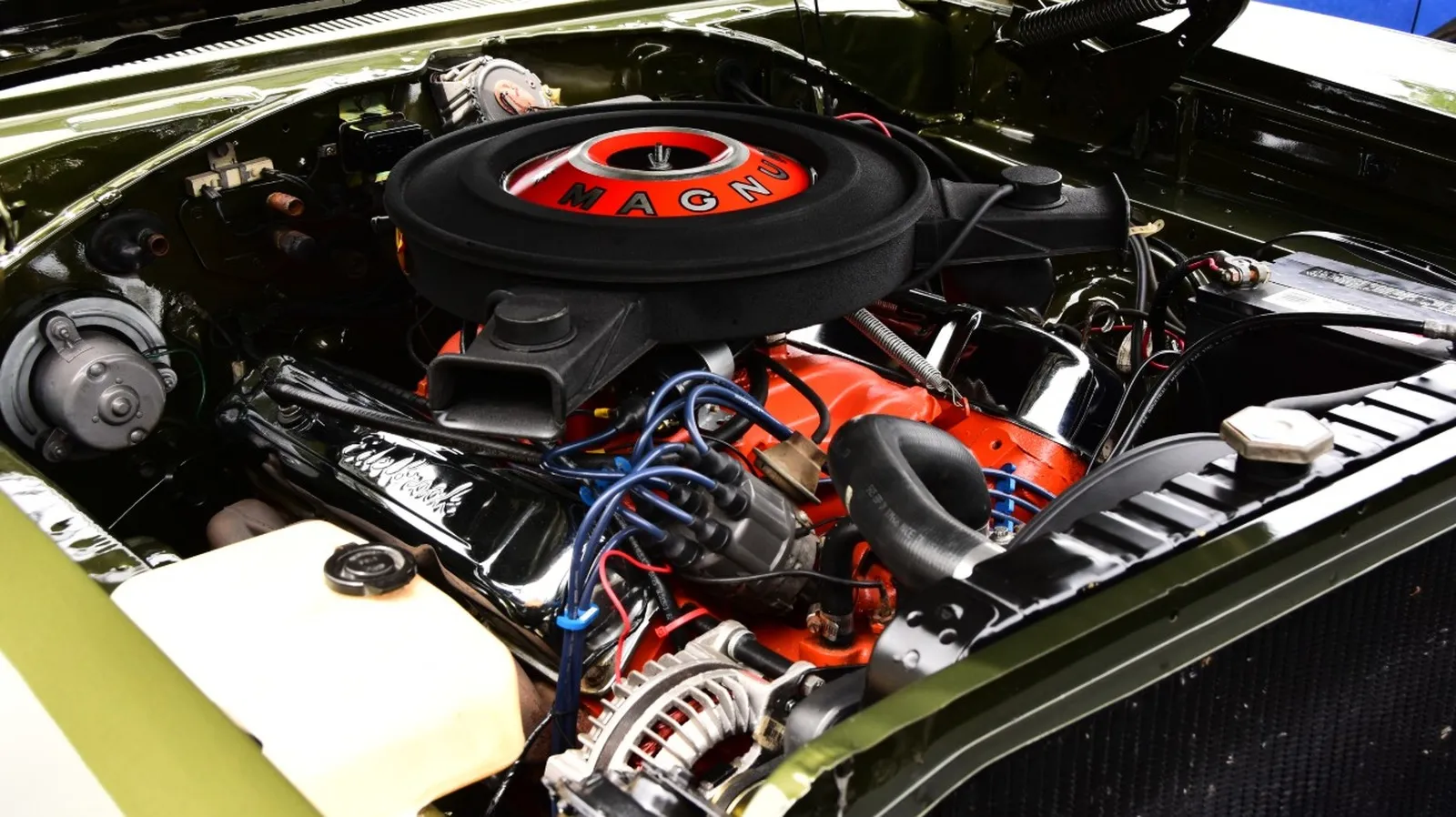
During the golden era of American muscle cars, few engines earned as much reputation as the legendary Mopar 440. But within this family emerged a version that raised the performance level even further: the 440 Magnum. At first glance, they look practically identical. However, small engineering changes transformed the behavior of this big block and helped create some of the most iconic cars in automotive history.
The Mechanical Base of the Legendary Mopar 440
The Mopar 440 belongs to the famous Chrysler RB Big Block family (Raised Block), developed to deliver large displacement, abundant torque, and durability. This engine appeared in various models in the late 1960s and early 1970s, the period considered the peak of muscle cars.
Technically, the engine had impressive specifications for the time:
- Displacement: 440 cubic inches (7.2 liters)
- Bore x Stroke: 4.32 x 3.75 inches
- Compression ratio: about 10.1:1 in the early versions
- Declared power: around 350 HP
- Torque: approximately 480 lb-ft (651 Nm)
The RB architecture used a taller block than Chrysler’s “Low Block” series engines. This height increase allowed a longer piston stroke, resulting in an engine with enormous capacity to generate torque at low RPMs.
Another important technical detail was the use of:
- 5 robust main bearings
- stamped steel rocker arms
- hydraulic lifters to reduce maintenance
- oil pump positioned at the front
This combination made the 440 extremely reliable and relatively easy to maintain, something essential in an era when giant engines were used in both sports cars and sedans and pickups.
By the way, large engines with very different personalities have always been part of automotive evolution. An interesting example of radical engineering can be seen in the 1908 GNOME OMEGA rotary, which also showed how small design choices can completely change an engine’s behavior.
440 Magnum The Dodge Performance Package
The 440 Magnum was not a completely new engine. In practice, it was the same 440 block equipped with a performance-focused upgrade package.
These changes had a clear goal: to increase the airflow and fuel flow to generate more power.
Among the main changes were:
- Larger exhaust valves (1.74 inches versus 1.60 in the regular 440)
- Higher capacity carburetor
- Air filter with dual intake (dual snorkel)
- Dual exhaust system
- More aggressive camshaft
O comando de válvulas foi uma das alterações mais importantes. No Magnum, o perfil do comando tinha aproximadamente:
- 268° de duração na admissão
- 284° no escape
- lift de cerca de 0.450 / 0.467 polegadas
This profile allowed the engine to breathe better at higher RPMs, increasing performance without completely compromising daily drivability.
The result was a gain of approximately 25 HP compared to the standard 440.
Today, understanding how small changes in airflow impact power continues to be essential for enthusiasts and engineers. In fact, topics like mechanical efficiency and engine evolution are still discussed in modern analyses, such as in the article about why 5-cylinder engines became rare.
Real Power And The Muscle Cars That Used These Engines
Officially, Chrysler classified the engines as follows:
| Engine | Power | Torque |
|---|---|---|
| 440 Base | 350 HP | 480 lb-ft (651 Nm) |
| 440 Magnum | 375 HP | 480 lb-ft (651 Nm) |
Although the difference seems small on paper, in practice the Magnum delivered a more aggressive behavior, especially during strong accelerations.
The traditional 440 was more common in:
- Dodge Polara
- Dodge Monaco
- Chrysler luxury sedans
- Dodge pickup trucks
Meanwhile, the 440 Magnum was mainly reserved for the brand’s high-performance models:
- Dodge Charger R/T
- Dodge Coronet R/T
- Dodge Challenger R/T
- Dodge Super Bee
These cars helped consolidate the Magnum as one of the most respected engines of the muscle car era.
Today, when we compare these naturally aspirated giants with modern machines — such as the 2026 CHEVROLET CORVETTE STINGRAY Z51 or even extreme projects like the BUGATTI W16 MISTRAL, it becomes clear how much technology has evolved. Still, the brutal charm of a big block like the Mopar 440 remains virtually impossible to replicate.
After all, these engines were not just about horsepower numbers. They represented an entire automotive philosophy — where massive displacement, deafening sound, and insane torque were the perfect recipe to create some of the most memorable cars ever made.