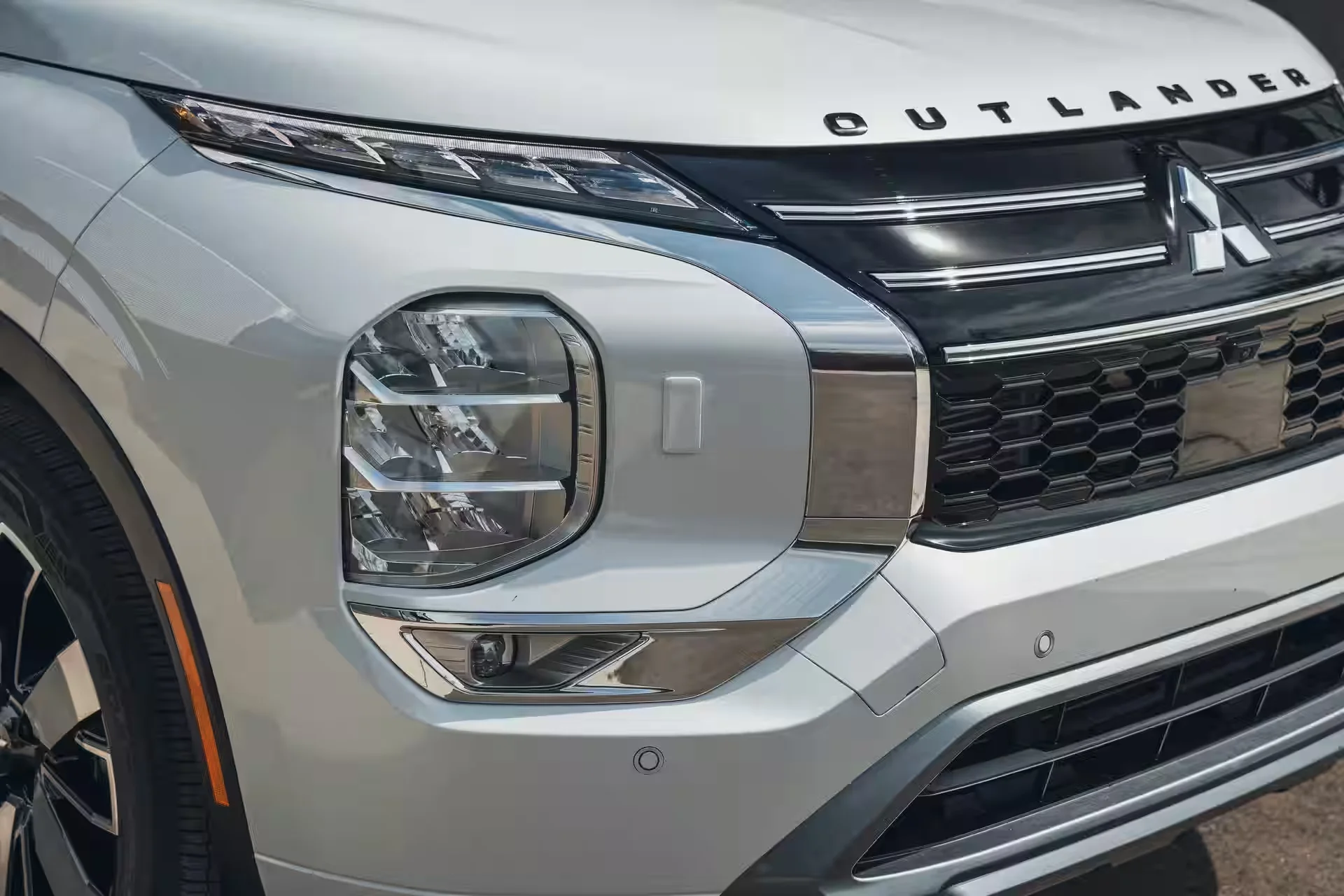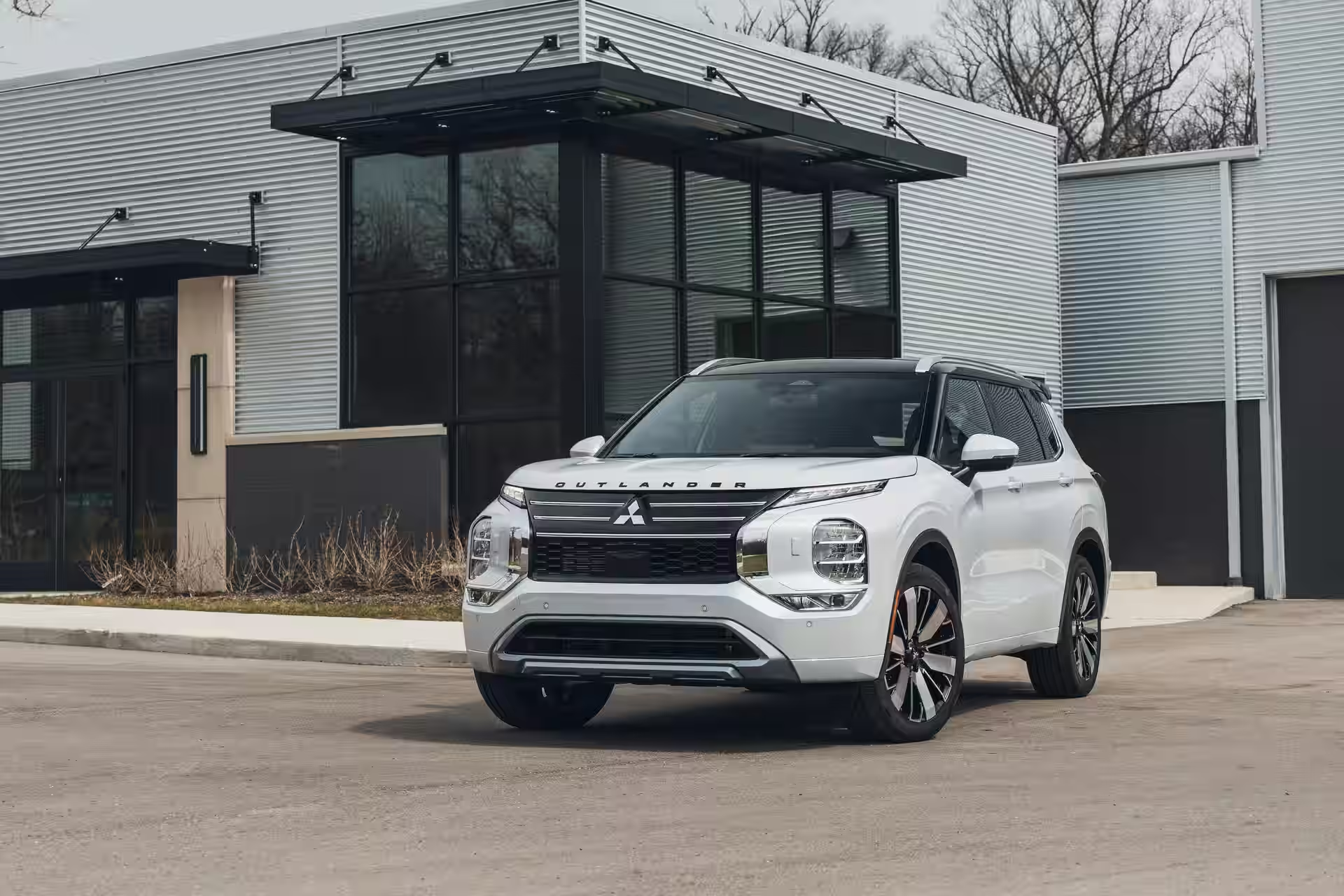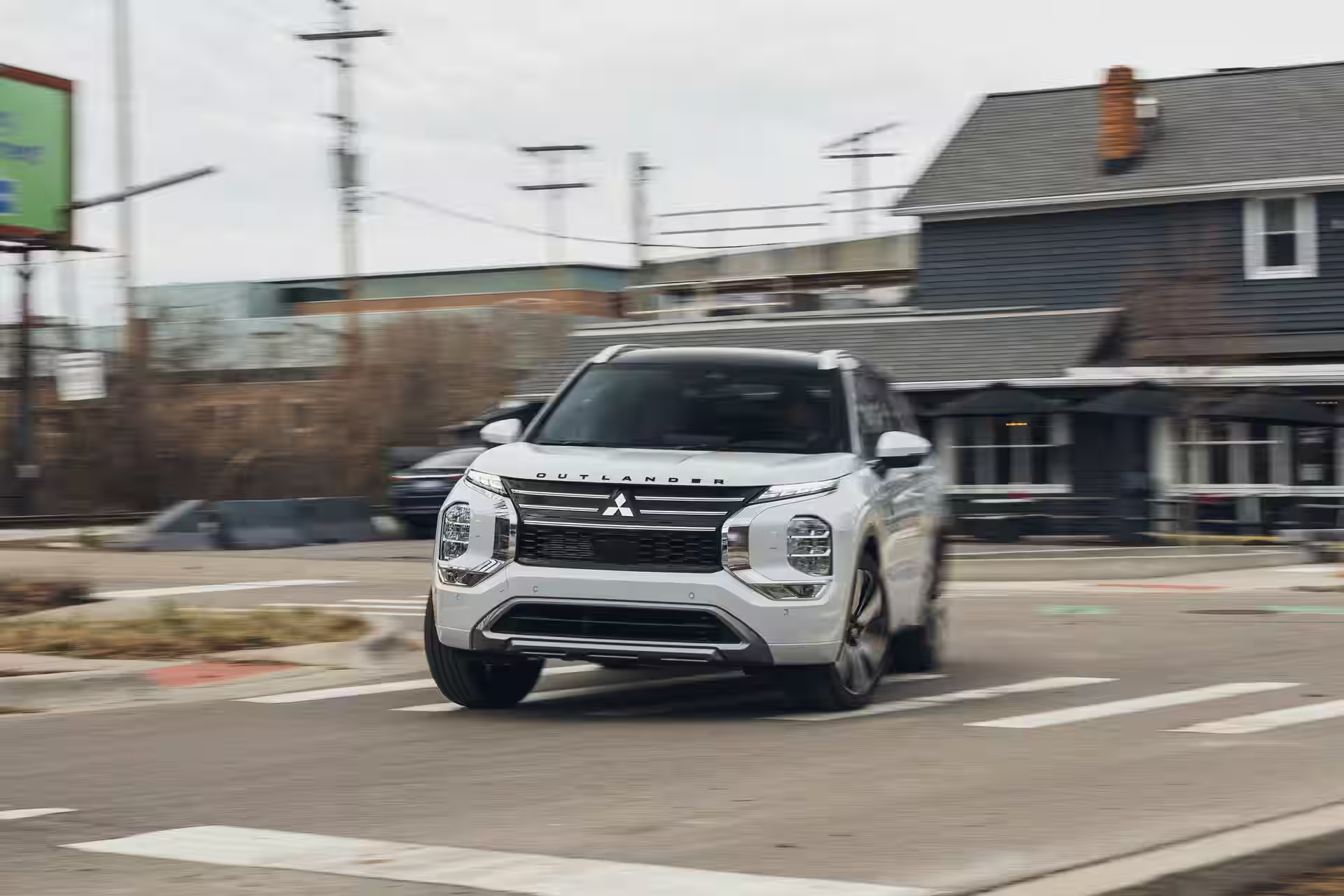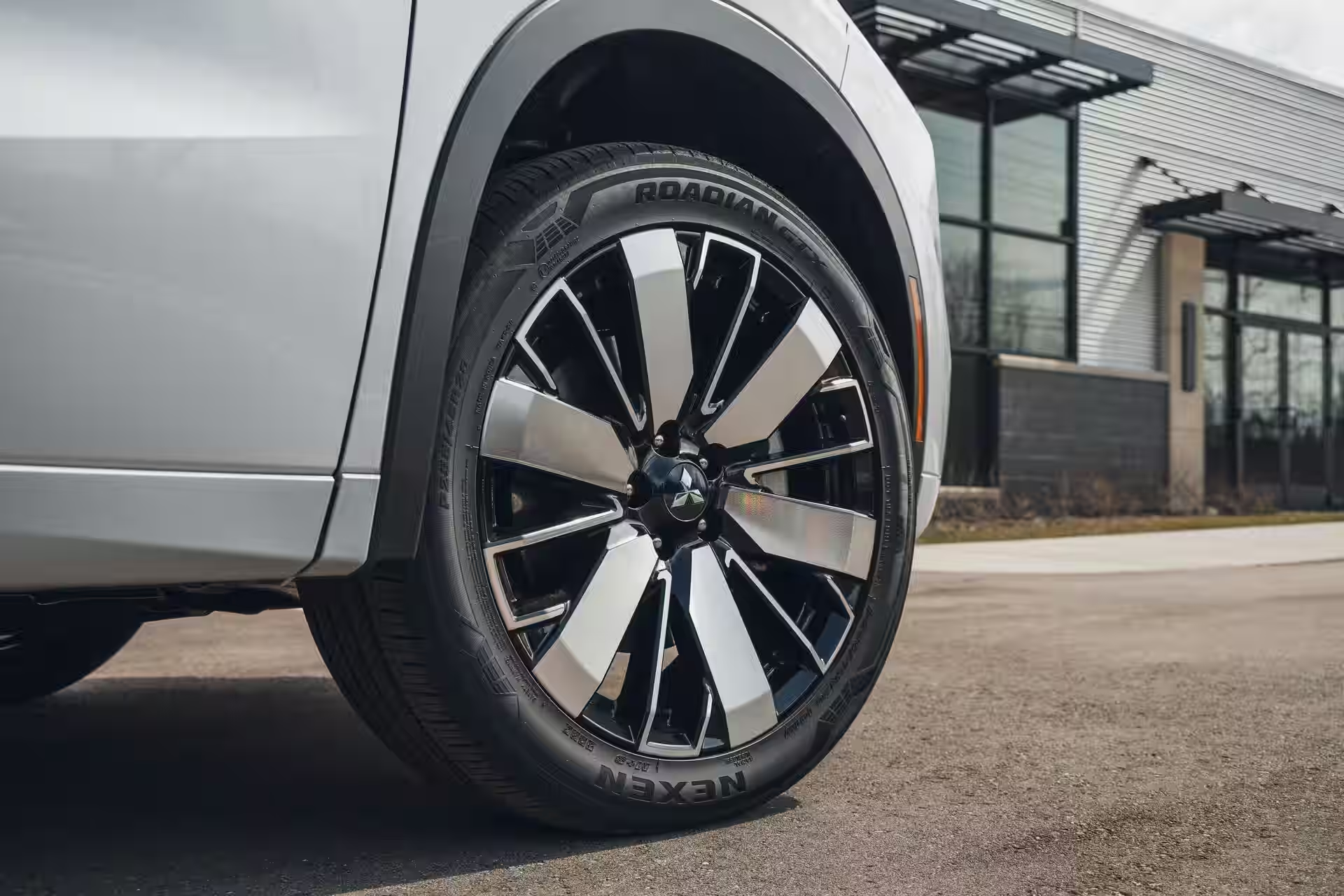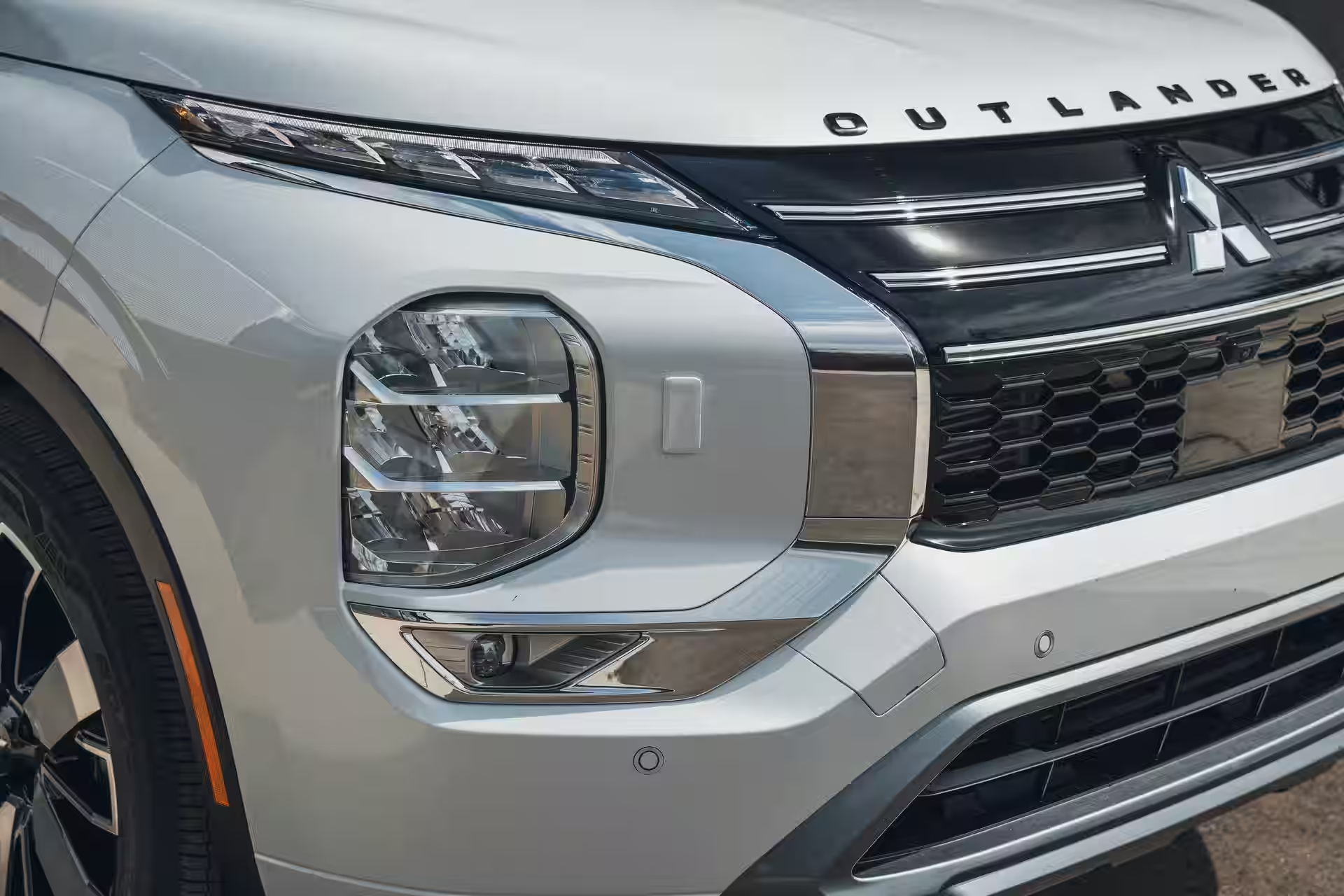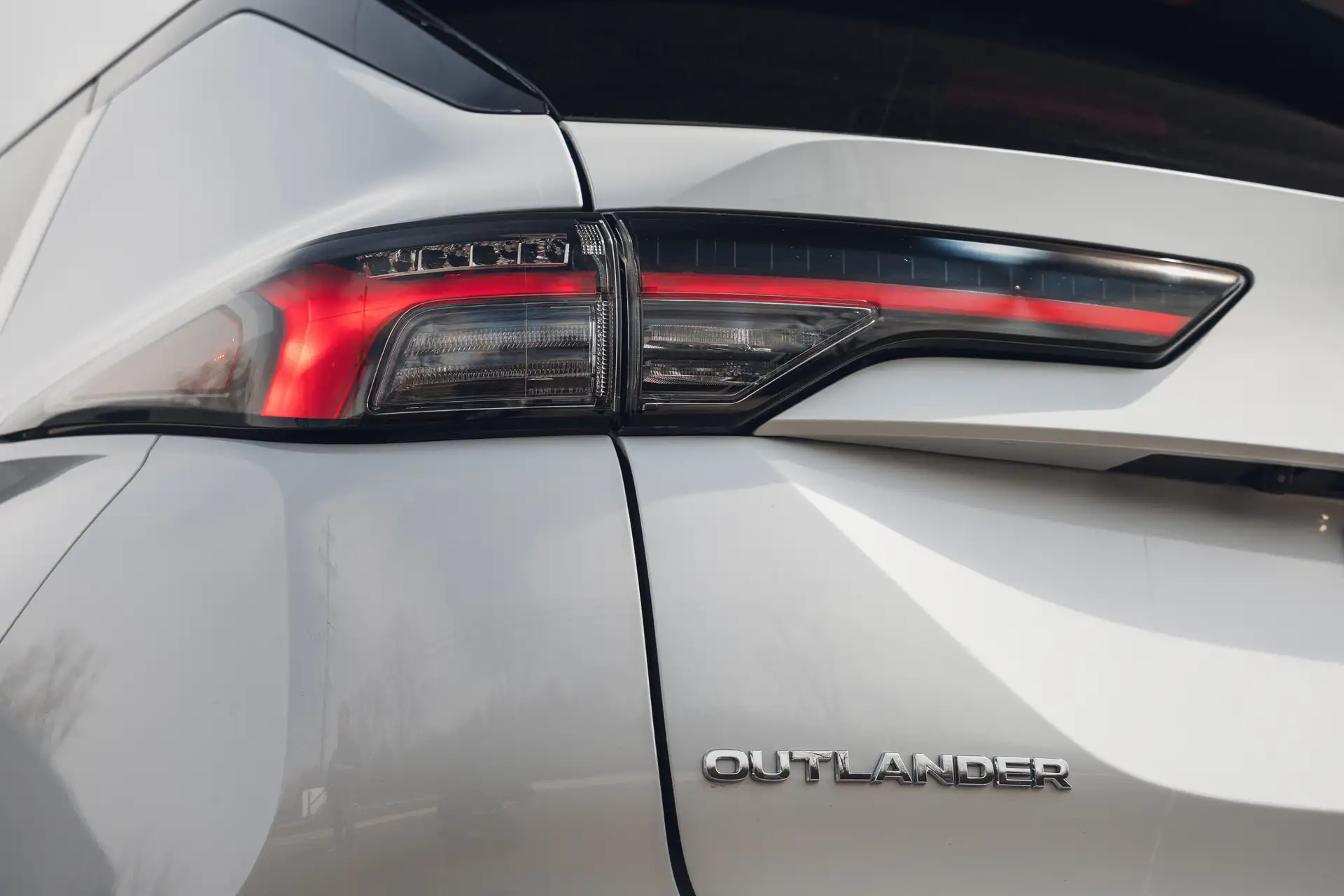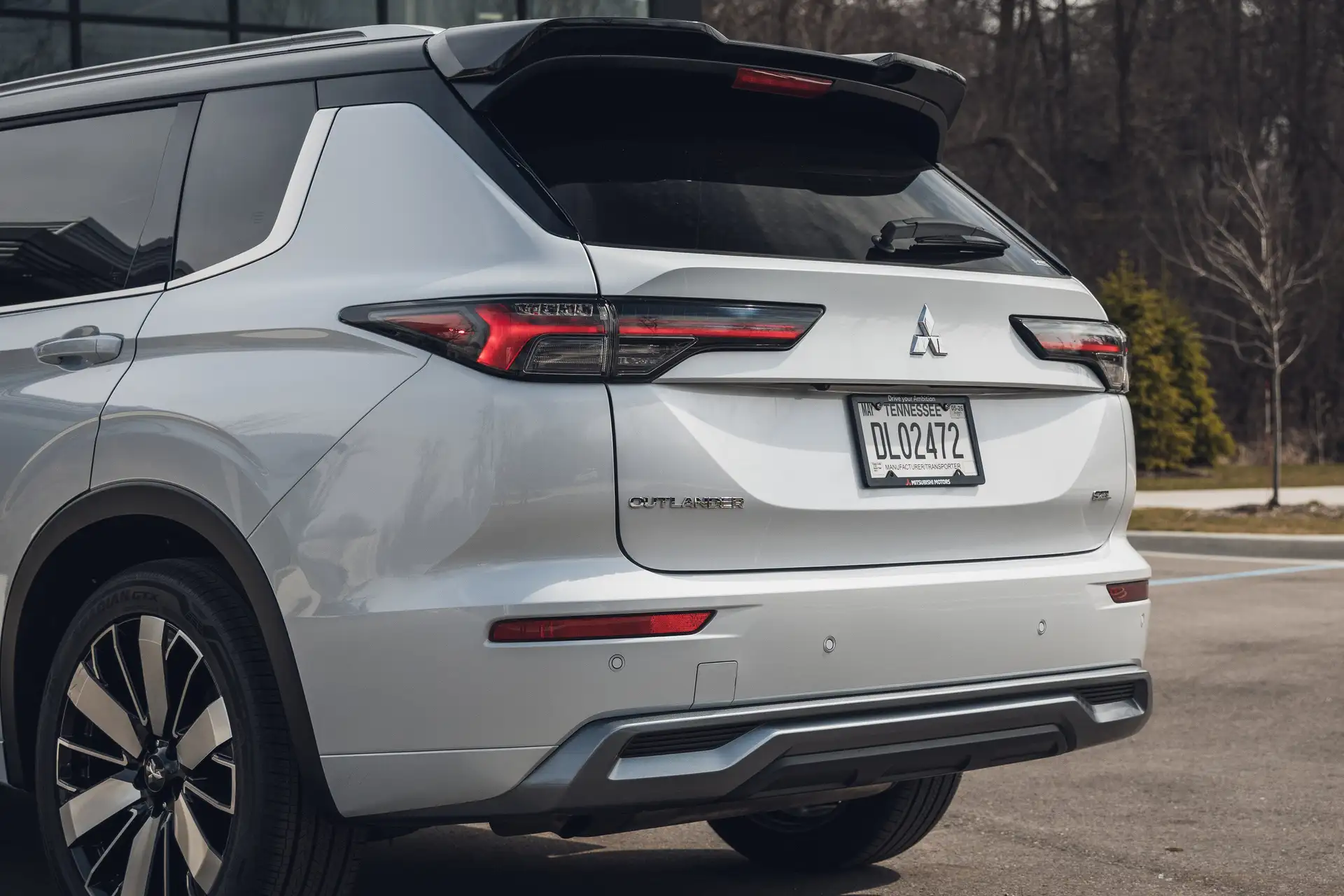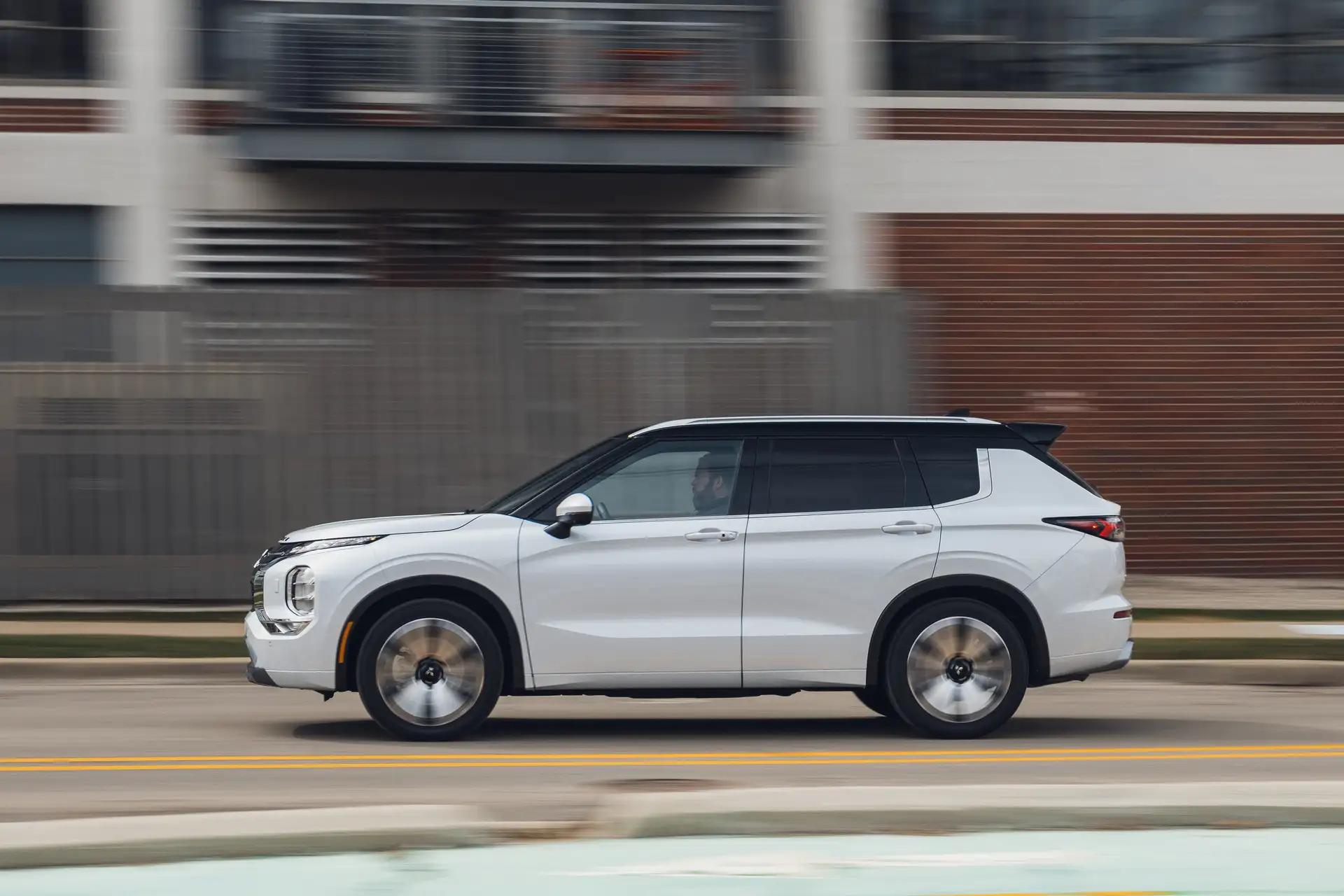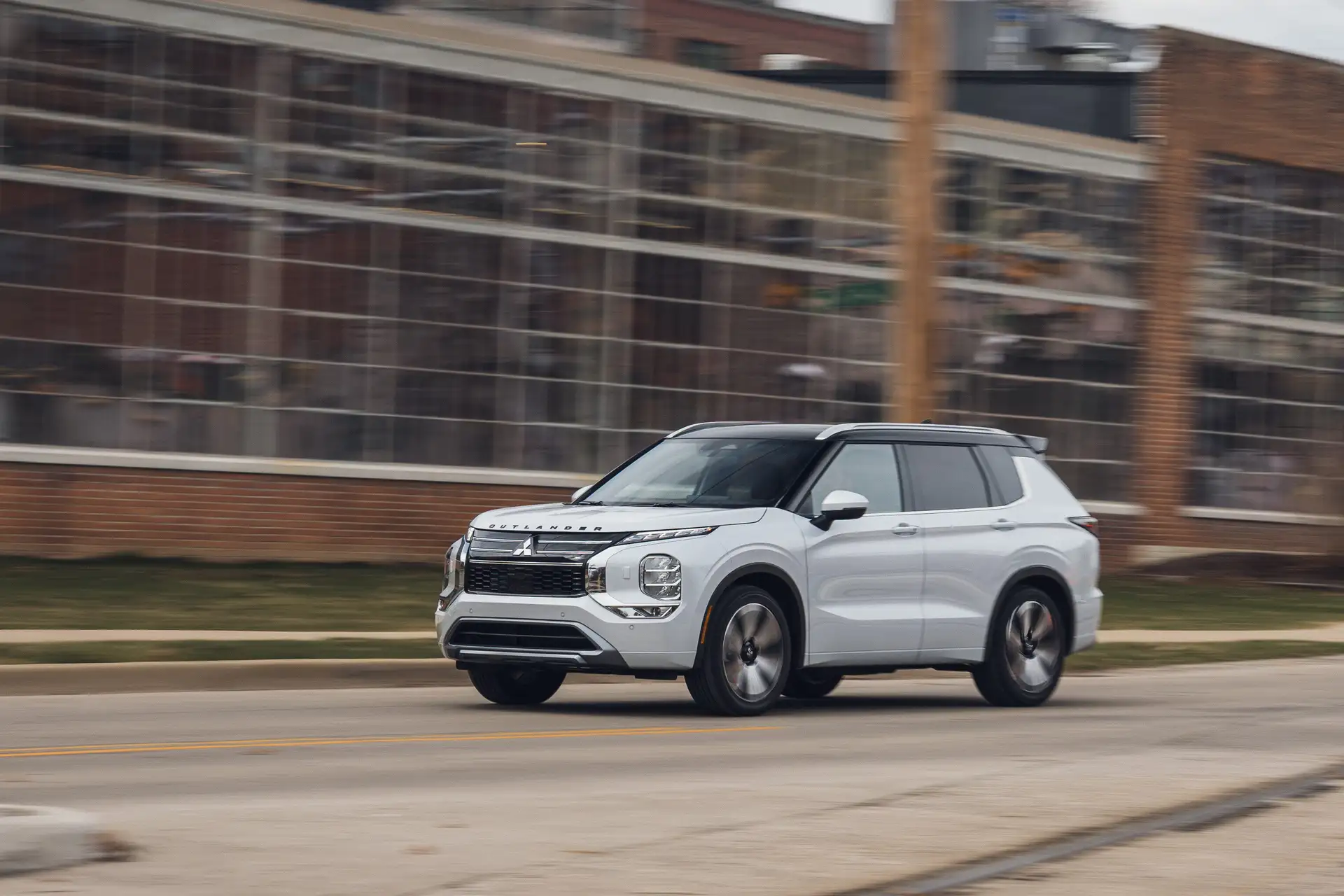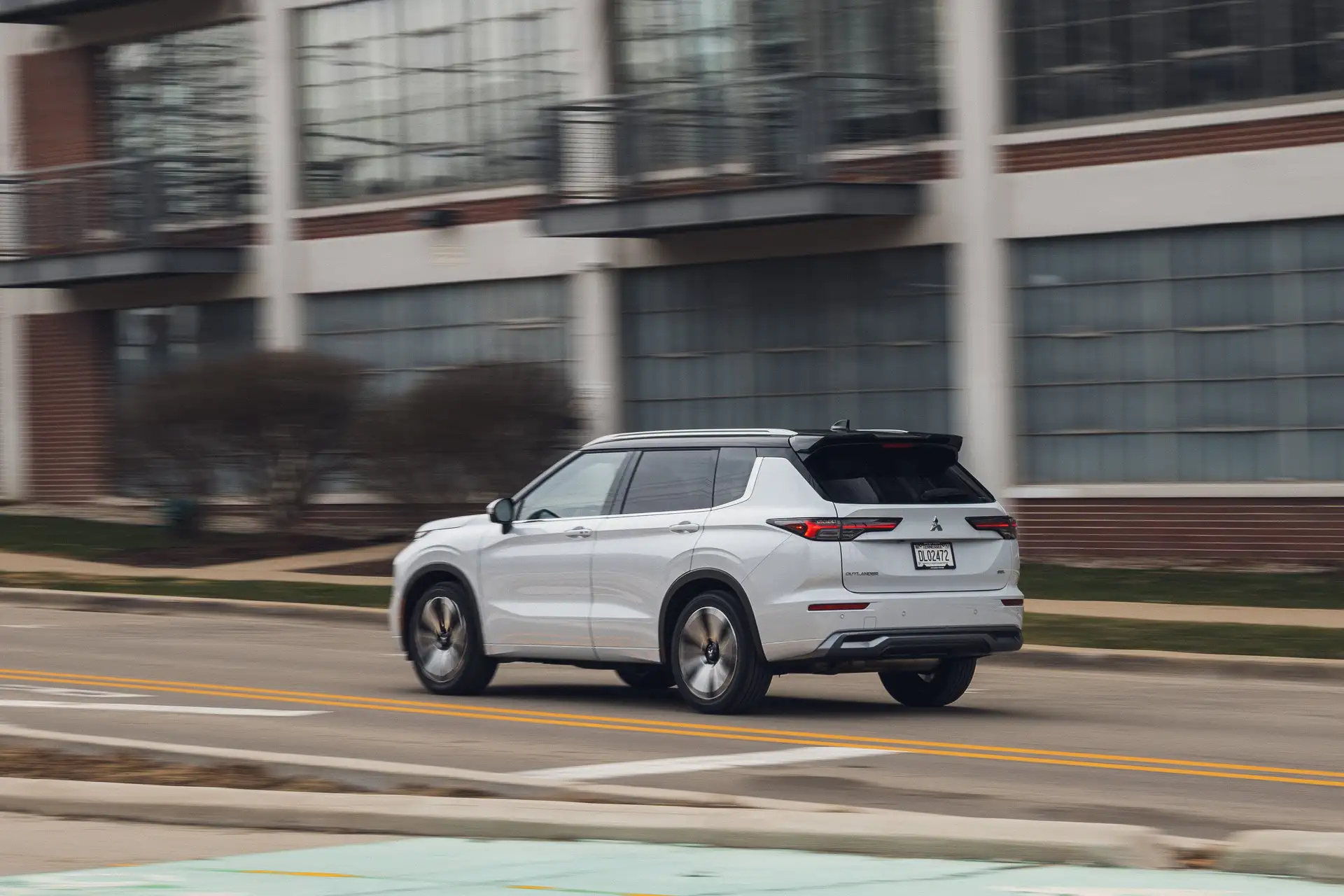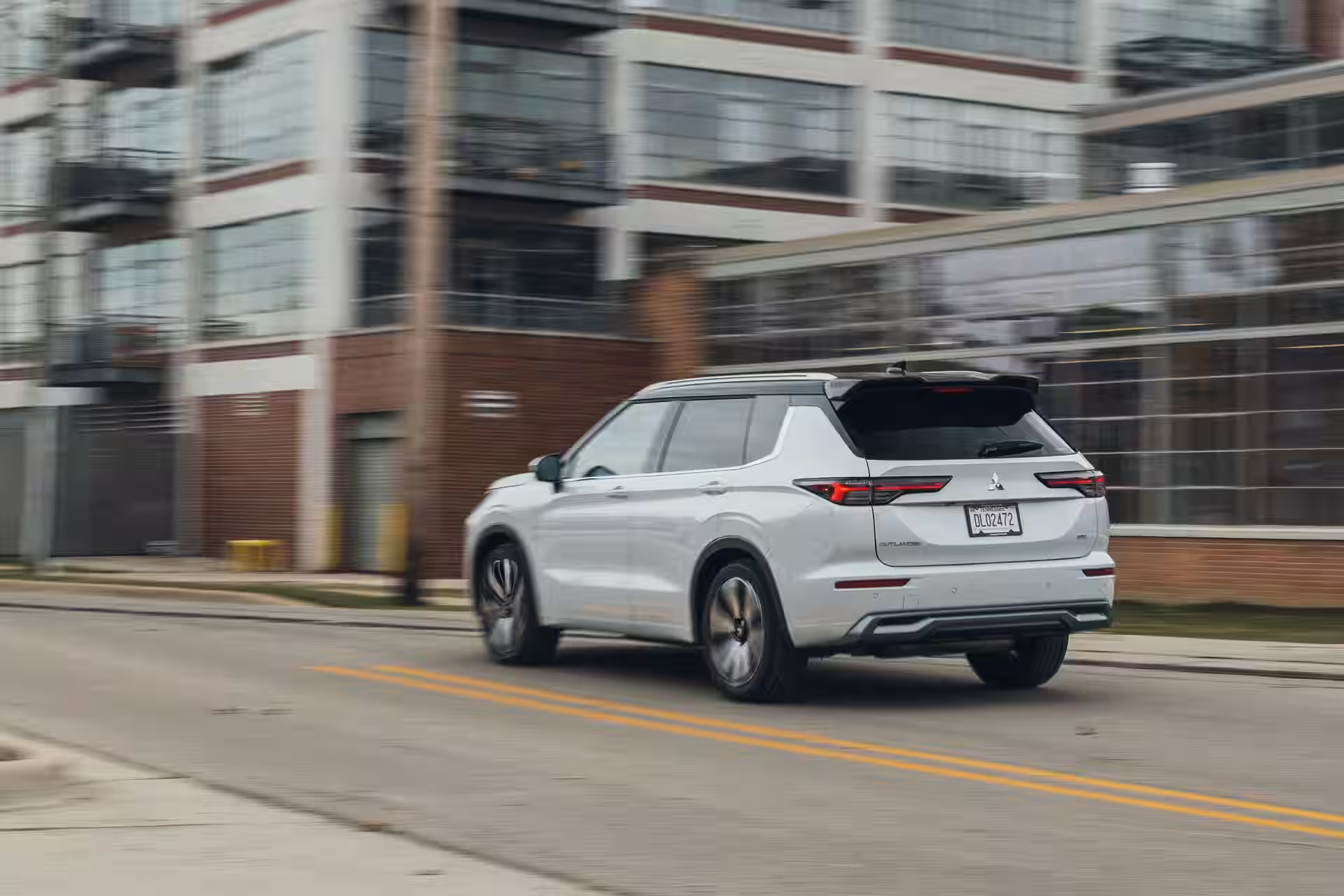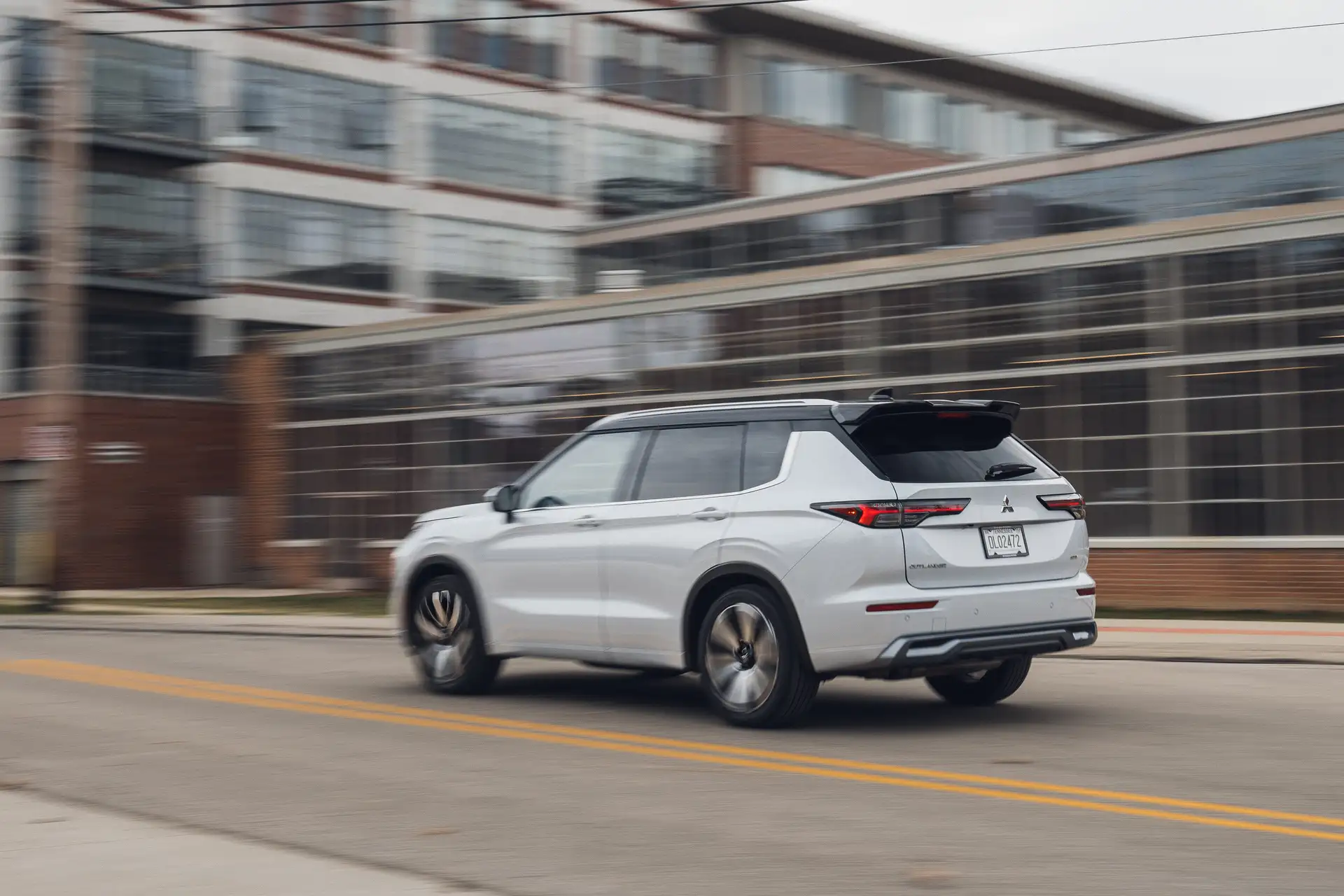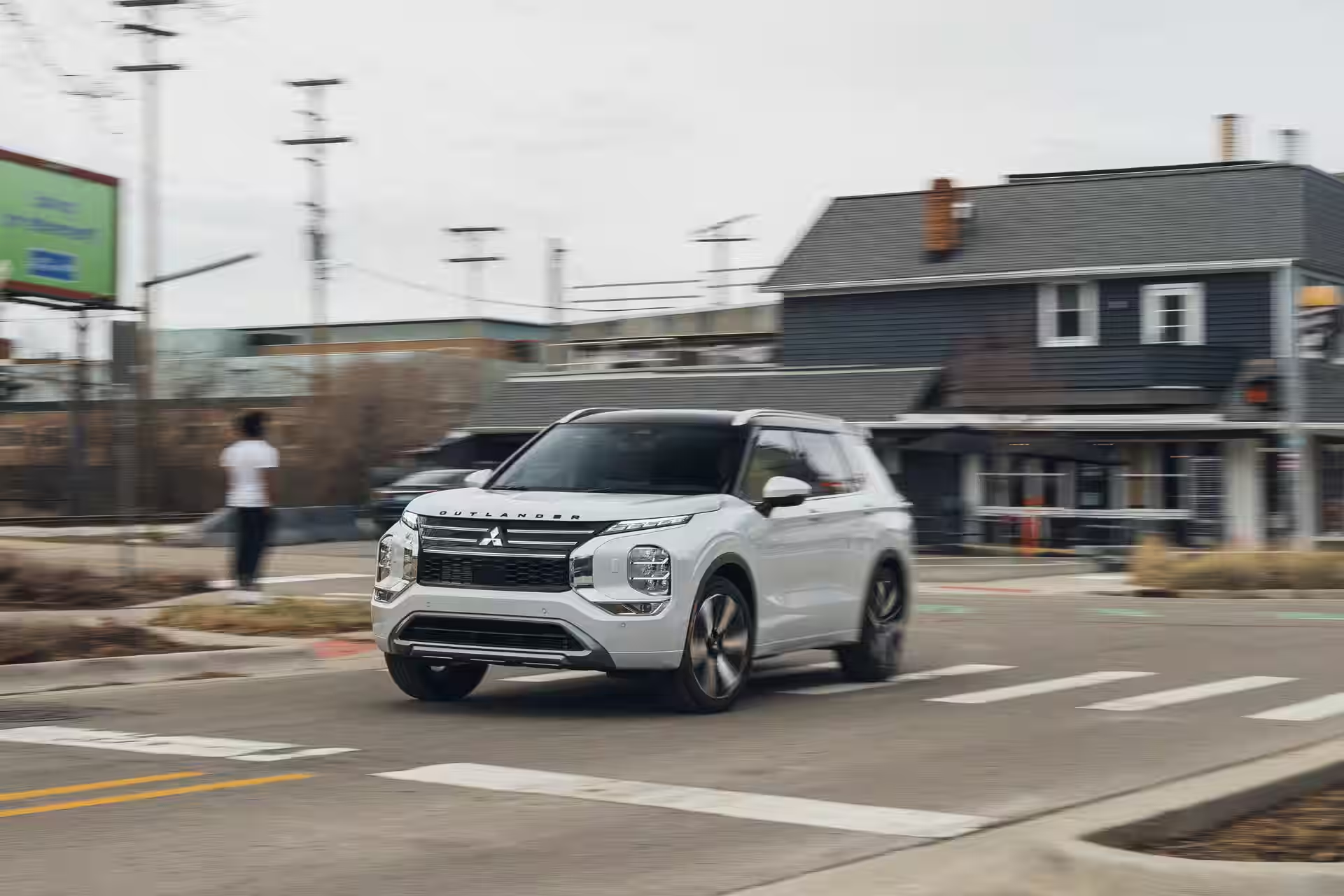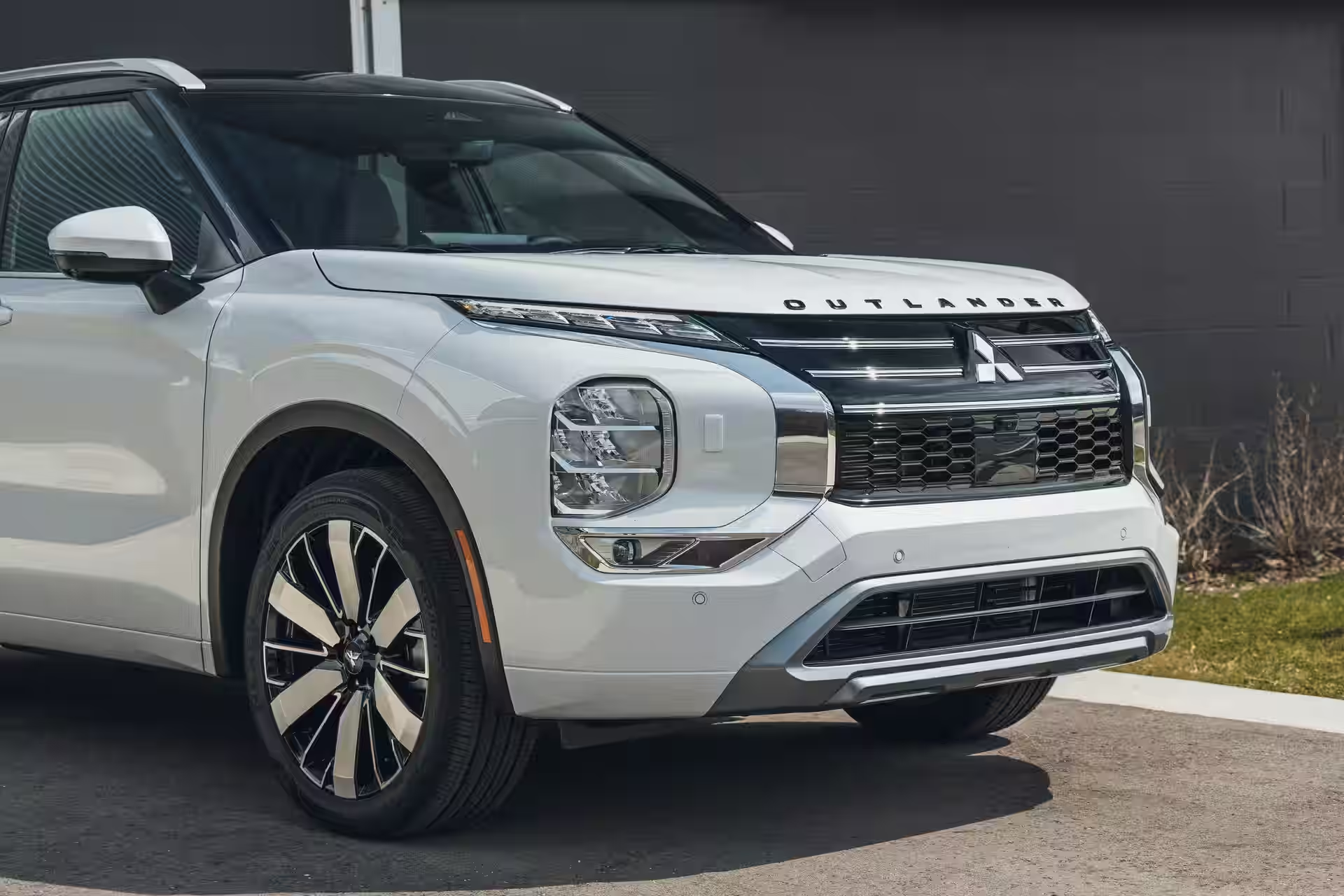
The 2026 Mitsubishi Outlander SEL tries to solve a real family problem with one rare feature in this class, but once the numbers, pricing, and packaging come into focus, the answer is not as simple as the badge suggests.
Why the 2026 Mitsubishi Outlander SEL Is Getting So Much Attention
The compact SUV segment is brutally competitive. Buyers expect efficiency, comfort, safety tech, cargo flexibility, and enough power to avoid feeling strained on the highway. In that battlefield, the 2026 Mitsubishi Outlander SEL shows up with a card almost nobody else plays in the non-luxury, non-electric market: a third-row seat.
That detail alone makes the Outlander worth talking about. For families who occasionally need to carry six or seven people without moving up to a larger midsize SUV or a minivan, this Mitsubishi instantly earns a closer look. But the more important question is not whether the Outlander has a third row. The question is whether the rest of the vehicle is strong enough to justify its compromises.
And that is where this review gets interesting.
Underneath its bold styling and upscale ambitions, the 2026 Outlander is still fighting against a reality that informed buyers will notice quickly. Its platform ties it closely to Nissan engineering, and that connection becomes impossible to ignore when you compare performance, powertrain refinement, cabin logic, and value. If you have recently read about the criticism aimed at Nissan’s SUV strategy, the mood feels familiar, especially after reports like this early backlash against the Nissan Murano, which shows how quickly buyers now challenge products that look expensive without feeling fully resolved.
The Outlander is not a bad SUV. In some ways, it is even clever. But it is also one of those vehicles that makes perfect sense only for a very specific buyer.
Key takeaway: If you absolutely need occasional seven-passenger capacity in a compact footprint and do not want an EV or a luxury badge, the 2026 Outlander stands nearly alone. If you do not need that third row, the logic starts to weaken fast.
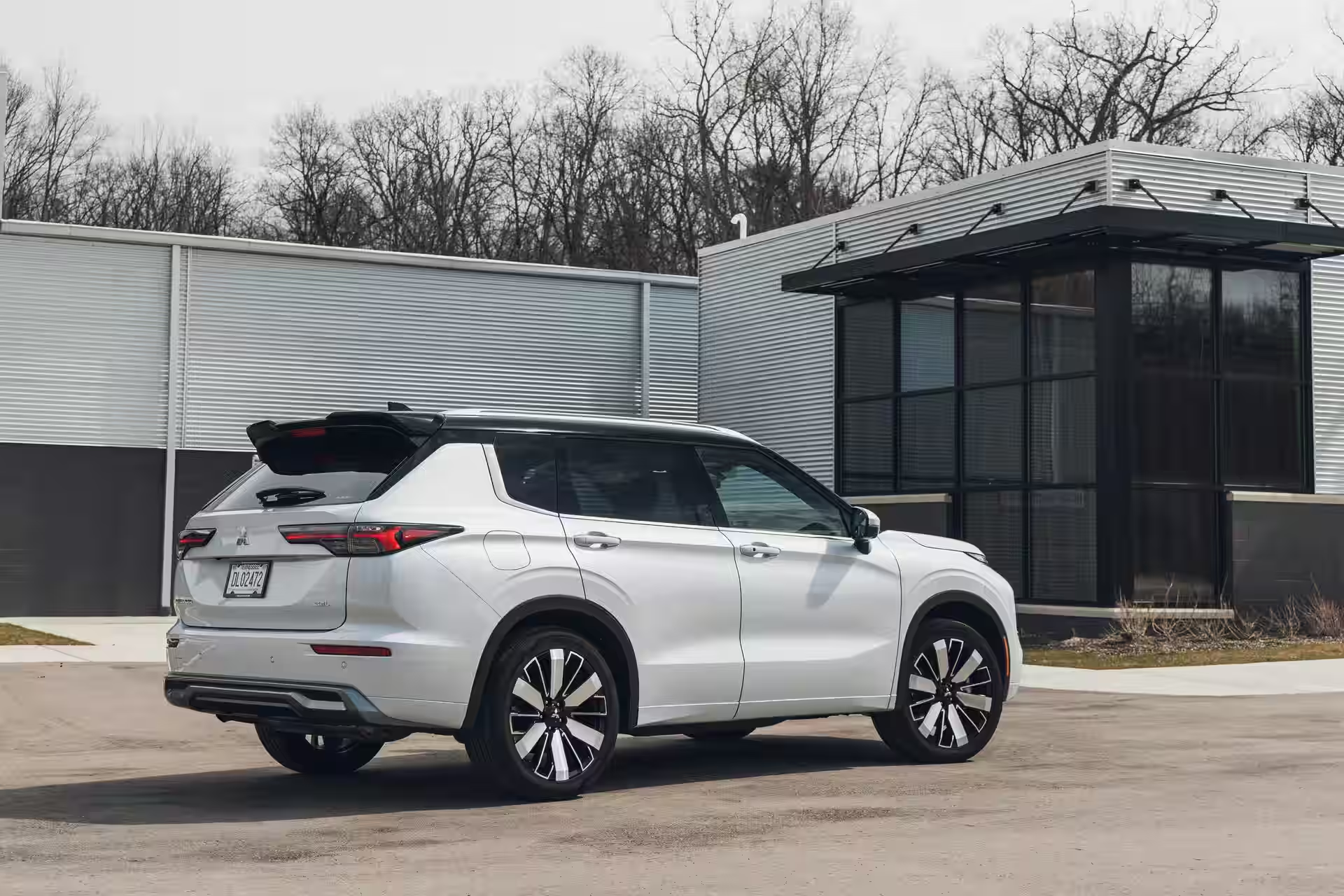
What powers the 2026 Mitsubishi Outlander SEL
The 2026 Mitsubishi Outlander uses a turbocharged 1.5-liter inline-four paired with a CVT automatic transmission. In SEL trim with all-wheel drive, output is rated at 174 horsepower and 206 lb-ft of torque, with Mitsubishi’s S-AWC all-wheel-drive system handling traction duties.
On paper, those figures look acceptable for urban commuting and family use. In the real world, the issue is not just the raw power figure. It is the relationship between output, weight, and price.
- Engine: 1.5-liter turbocharged four-cylinder
- Power: 174 hp at 6,000 rpm
- Torque: 206 lb-ft at 3,000 rpm
- Transmission: Continuously variable automatic transmission
- Drive: Front-wheel drive or S-AWC all-wheel drive
- Curb weight: 4,034 lb
- Seating: Up to 7 passengers
That 4,034-pound curb weight matters. In a compact crossover, it is a lot to ask from 174 hp. The result is predictable: the Outlander feels more burdened than brisk, especially once passengers and cargo are added.
Mitsubishi has tuned the CVT to keep the engine in the useful part of the torque band at lower speeds, and around town that helps. The vehicle does not feel dangerously slow in daily traffic. It simply never feels eager. If your routine includes full loads, steep grades, fast merges, or long interstate travel, you will notice the strain.
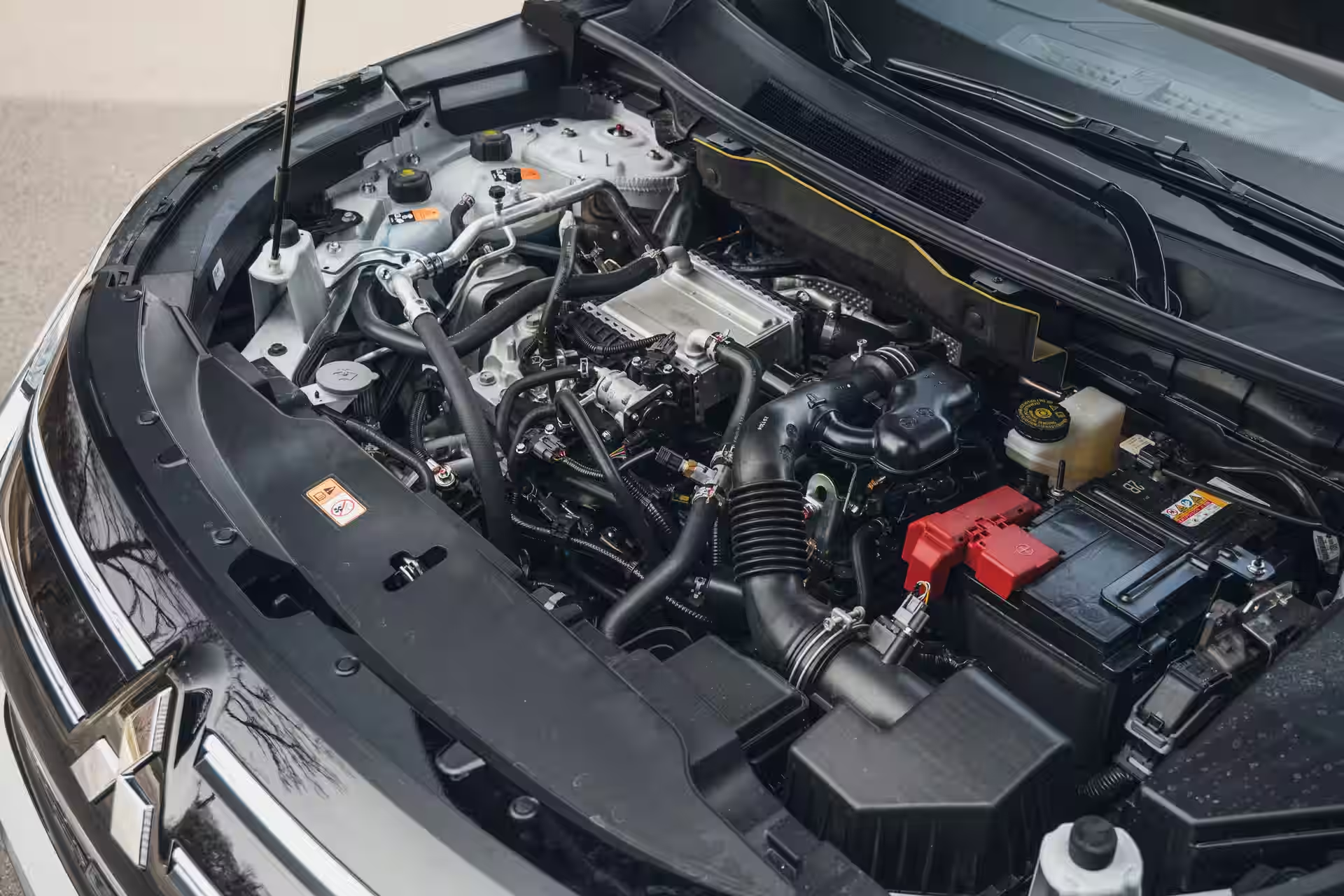
Performance, fuel economy, and the reality behind the specs
The 2026 Outlander SEL AWD reaches 60 mph in 8.4 seconds and runs the quarter mile in 16.5 seconds at 83 mph. Those are serviceable numbers, but hardly impressive in a segment where many rivals feel lighter on their feet or deliver stronger acceleration with similar or better efficiency.
Its roadholding figure of 0.83 g suggests stable but unremarkable grip, and the 70-0 mph braking distance of 164 feet points to acceptable stopping performance rather than standout control. Again, the Outlander is not failing here. It is just not leading.
Fuel economy also deserves context. EPA estimates sit at 27 mpg combined, 26 mpg city, and 30 mpg highway. In independent highway evaluation at 75 mph, however, the vehicle returned 27 mpg, which is a notable drop from the official highway figure.
| 2026 Mitsubishi Outlander SEL AWD | Measured Figure |
|---|---|
| 0-60 mph | 8.4 seconds |
| Quarter mile | 16.5 sec @ 83 mph |
| Observed fuel economy | 24 mpg |
| 75-mph highway test | 27 mpg |
| EPA combined | 27 mpg |
| Highway range | 390 miles |
For buyers comparing compact SUVs in 2026, this puts the Outlander in a difficult middle ground. It is not especially quick, not especially efficient under test conditions, and not especially cheap once trimmed up. That creates pressure on its one major differentiator to do a lot of work.
That differentiator, of course, is the tiny rear-most bench.
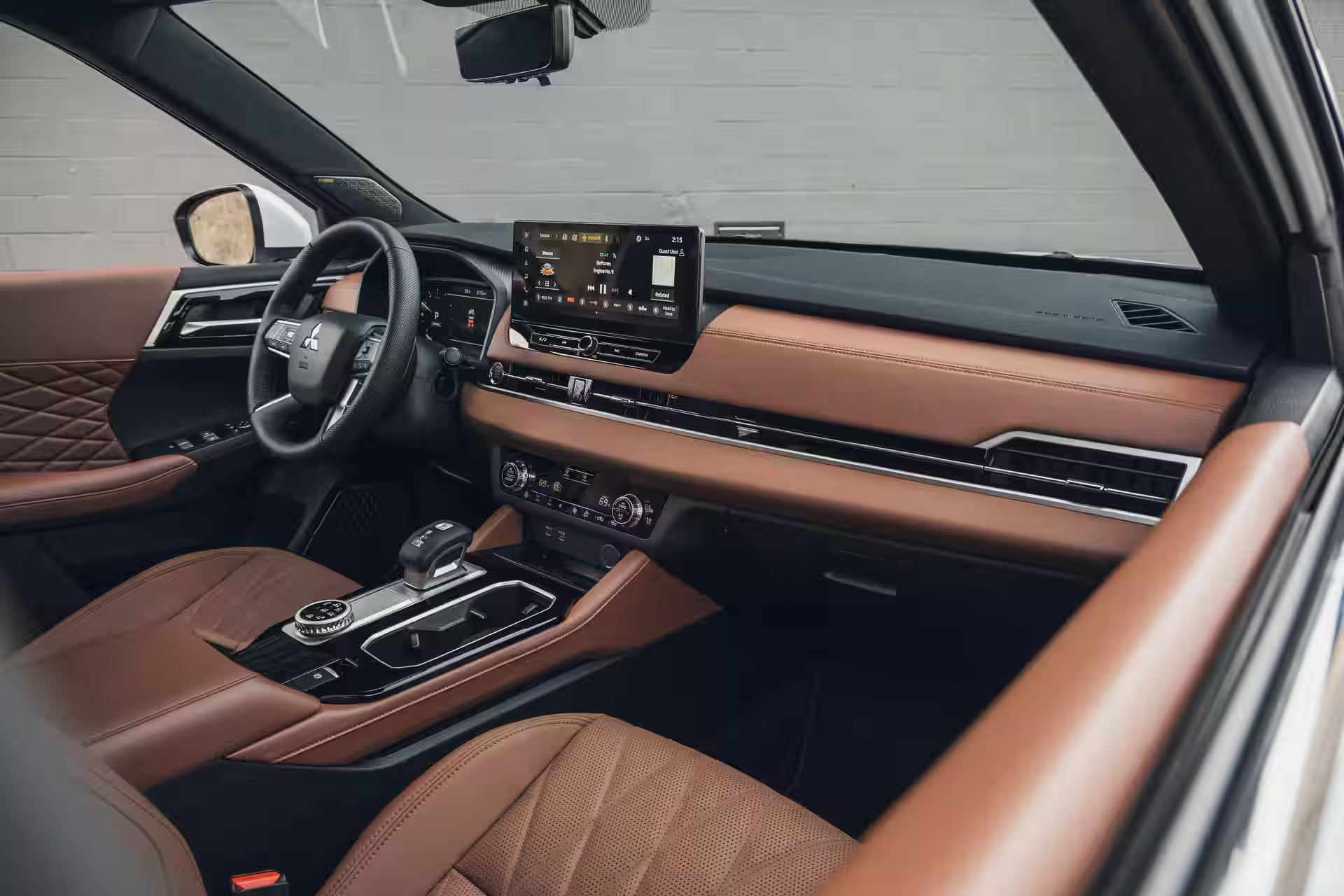
The Third Row Changes Everything, but Not Always for the Better
There is no reason to dance around it. The third row in the 2026 Mitsubishi Outlander is the reason many people will click on this vehicle in the first place. It gives Mitsubishi a unique pitch: a compact SUV with seven seats using a conventional gasoline powertrain and mainstream pricing.
That sounds almost perfect in theory.
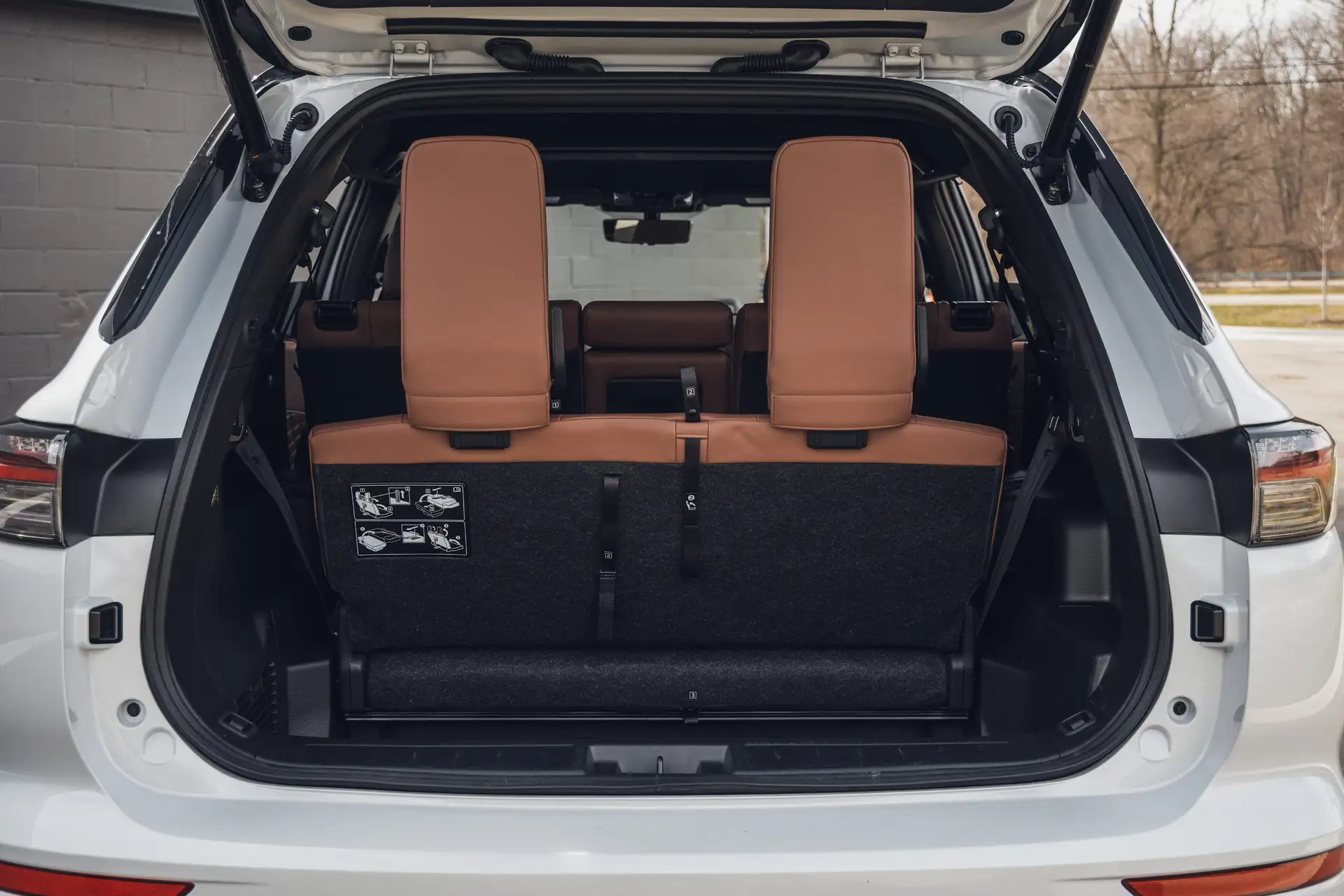
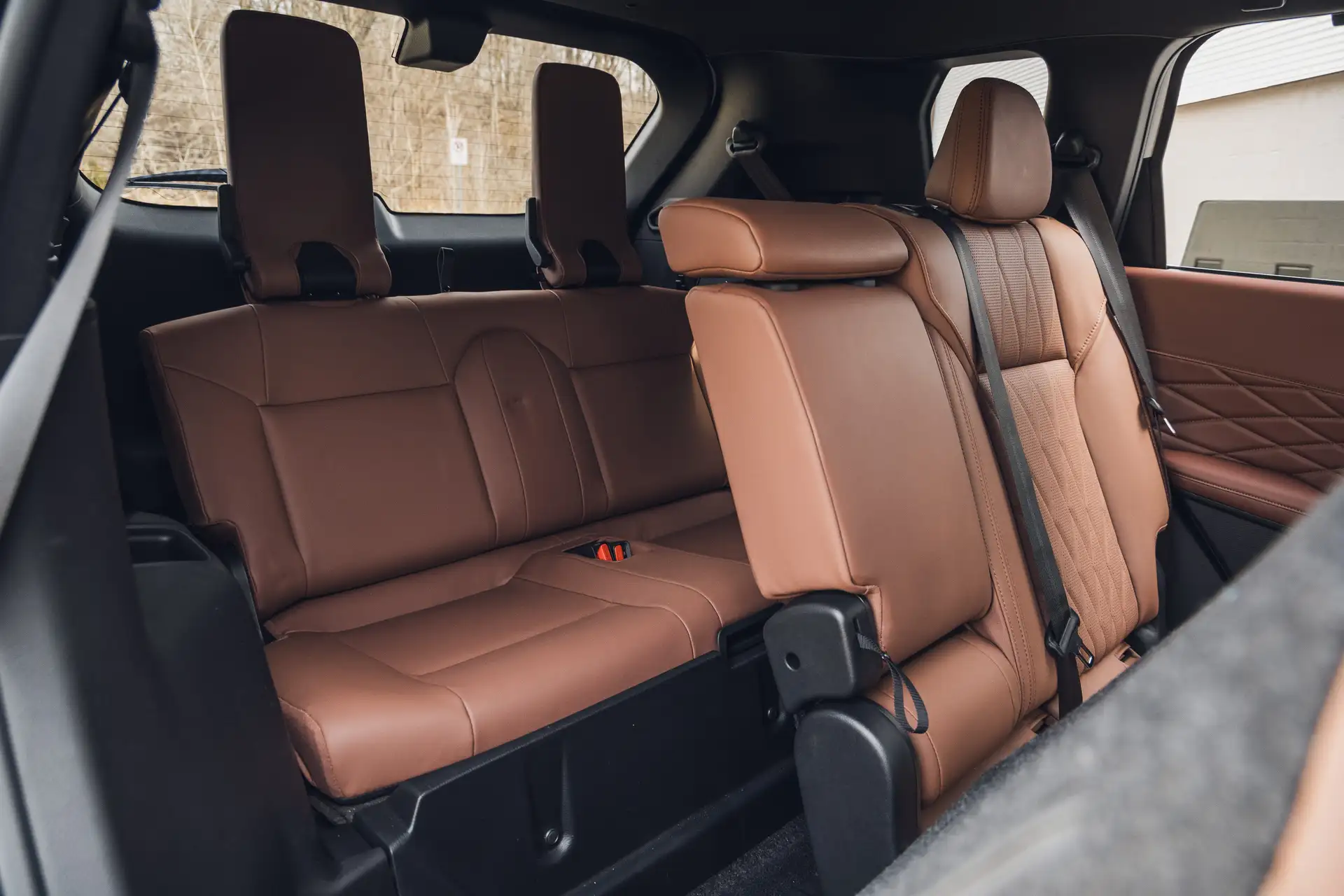
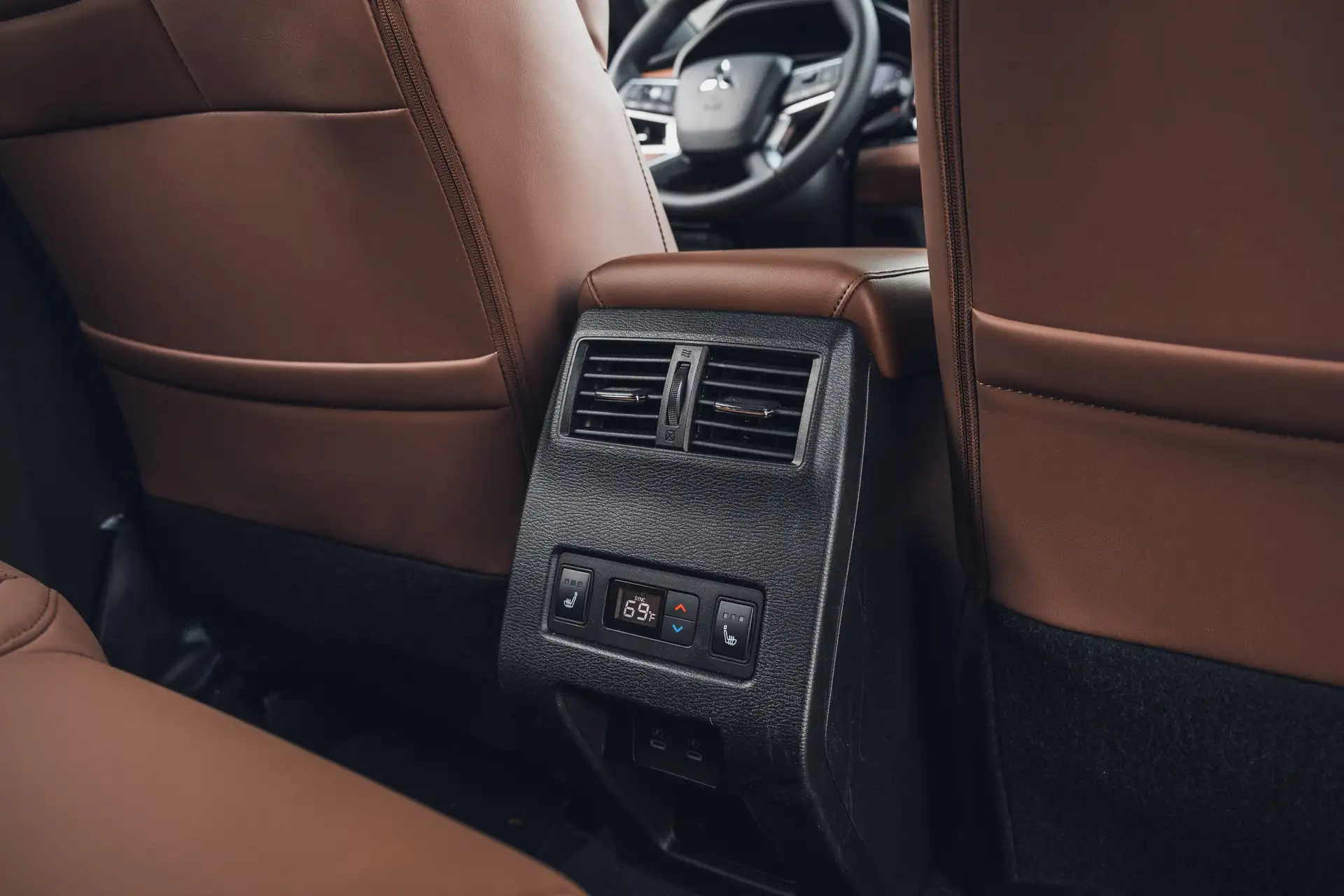
In practice, the third row is best understood as an occasional-use emergency solution. It is ideal for short trips, children, unexpected school pickups, or those moments when five seats are not enough and you do not want to take two cars. It is far less convincing as a regular seating area for adults or taller teenagers.
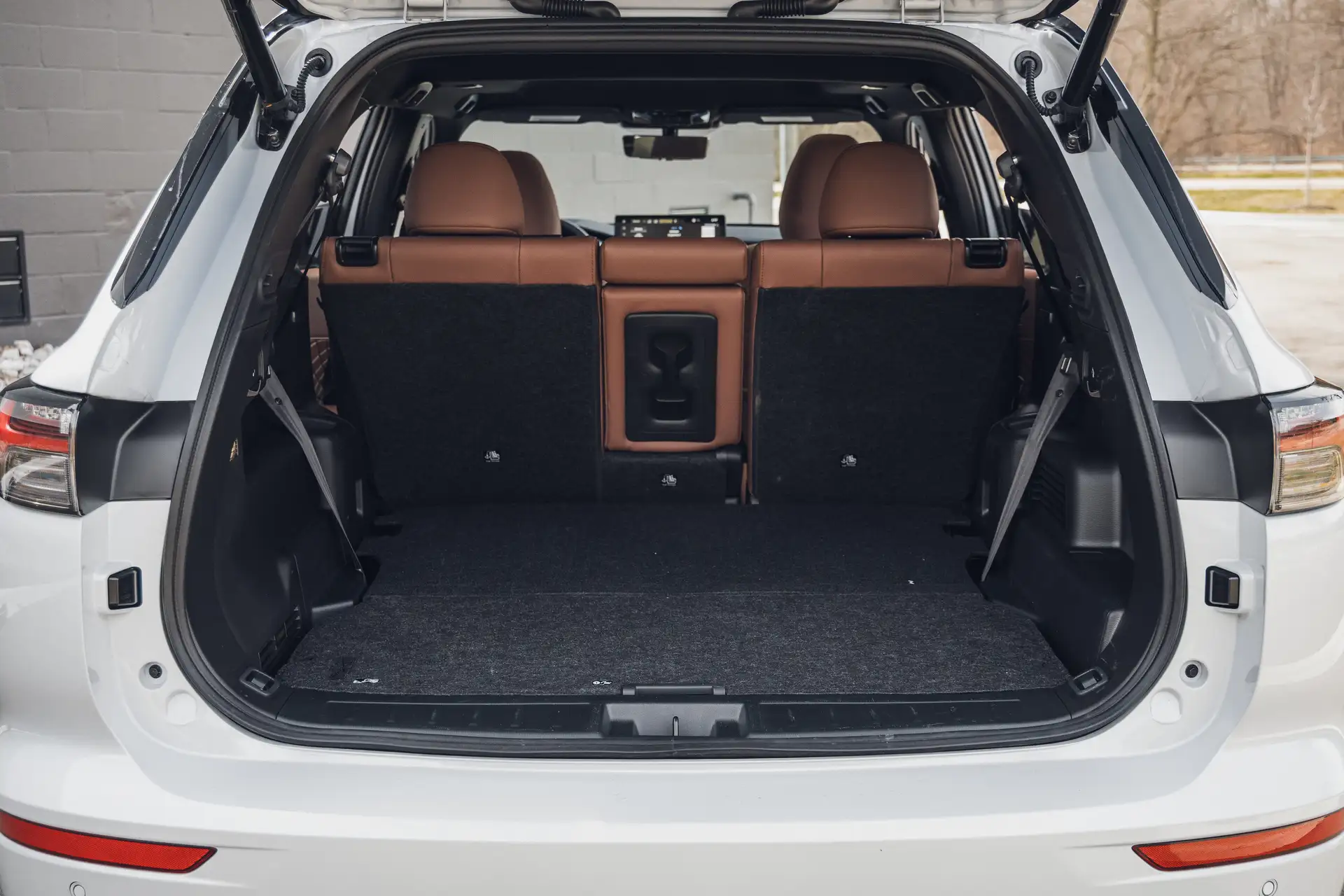
Access is awkward, legroom is tight, and cargo space behind the third row falls to just 11 cubic feet. That means once all seats are occupied, luggage flexibility nearly disappears. Fold the third row and things improve substantially, with 31 cubic feet behind the second row and 64 cubic feet with the rear seats down.
- Cargo behind third row: 11 cu ft
- Cargo behind second row: 31 cu ft
- Maximum cargo volume: 64 cu ft
This is the heart of the Outlander dilemma. The third row is genuinely useful because it exists. But it is not spacious enough to replace a larger family vehicle. So the buyer has to decide whether “occasionally helpful” is enough to offset softer acceleration, a busier powertrain, and a surprisingly high sticker price in upper trims.
That question becomes even sharper now that family buyers are considering a wider range of alternatives. Some are moving toward value-packed compact crossovers, while others are jumping directly into electrified options. If your buying process includes newer small SUV benchmarks, it is worth seeing how market expectations are shifting, especially with entries such as the Hyundai Kona 2027 and its price-tech reset, which highlights how much equipment buyers now expect before a vehicle crosses the $40,000 line.
And if you are open to electric alternatives, the pressure gets even stronger. Vehicles like the Tesla Model Y and its efficiency-performance balance force conventional SUVs to defend every compromise much more carefully than before.
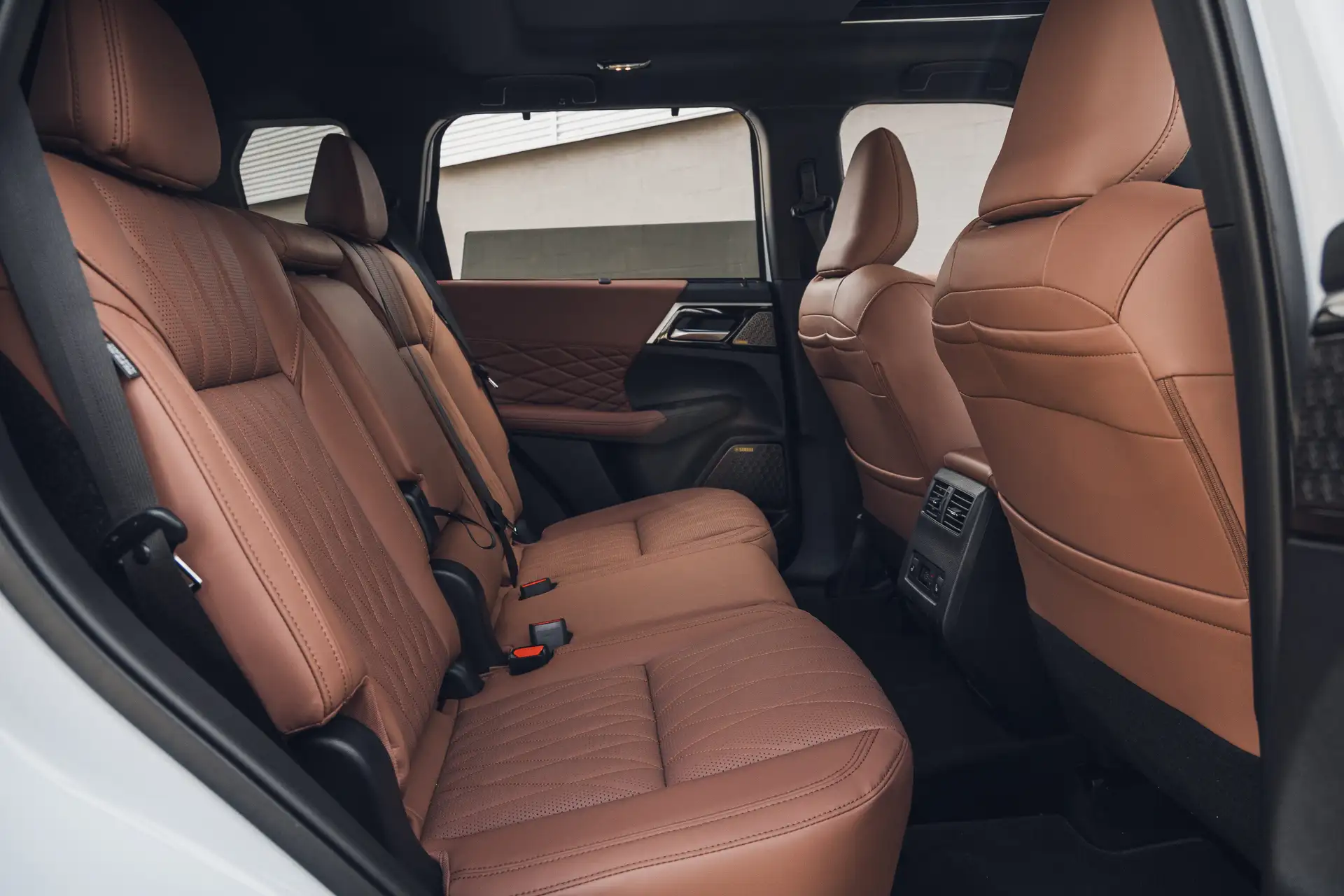
Ride, steering, braking, and daily driving feel
The Outlander’s everyday driving character is mixed. The cabin stays impressively insulated from road and wind noise for the class, which gives the SUV a more mature personality than its acceleration figures suggest. On a commute or school run, that quietness helps the vehicle feel more expensive than some of its hard data would imply.
Yet the control inputs do not feel perfectly harmonized.
The steering is heavier than expected for a mainstream family crossover. Some drivers may interpret that as substance, but others will see it as unnecessary effort in parking lots and city driving. The brake pedal is more problematic, with an awkward combination of soft travel and sudden initial bite. Smooth stops can take more concentration than they should in a vehicle built primarily for family duty.
Then there is the engine stop-start system. In traffic, it can restart clumsily if the brake pedal pressure changes slightly as the SUV approaches a full stop. It is one of those calibration issues that sounds minor on paper but can become irritating over time.
These details matter because family SUVs live or die by polish. Customers may forgive average acceleration, but they are less forgiving when basic stop-and-go behavior feels unsettled.
Inside the Outlander SEL, Premium Ambition Meets Hard Plastic Reality
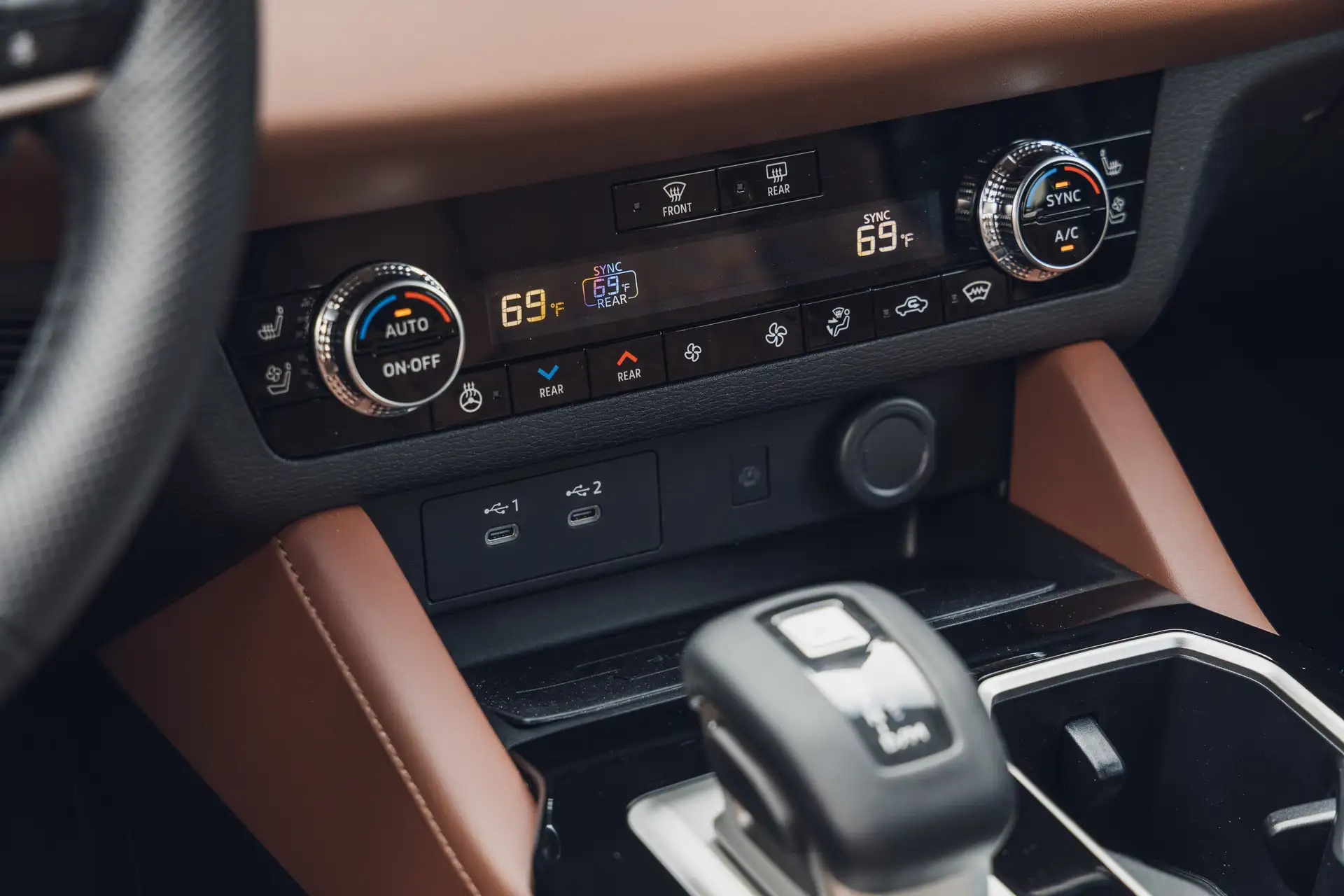
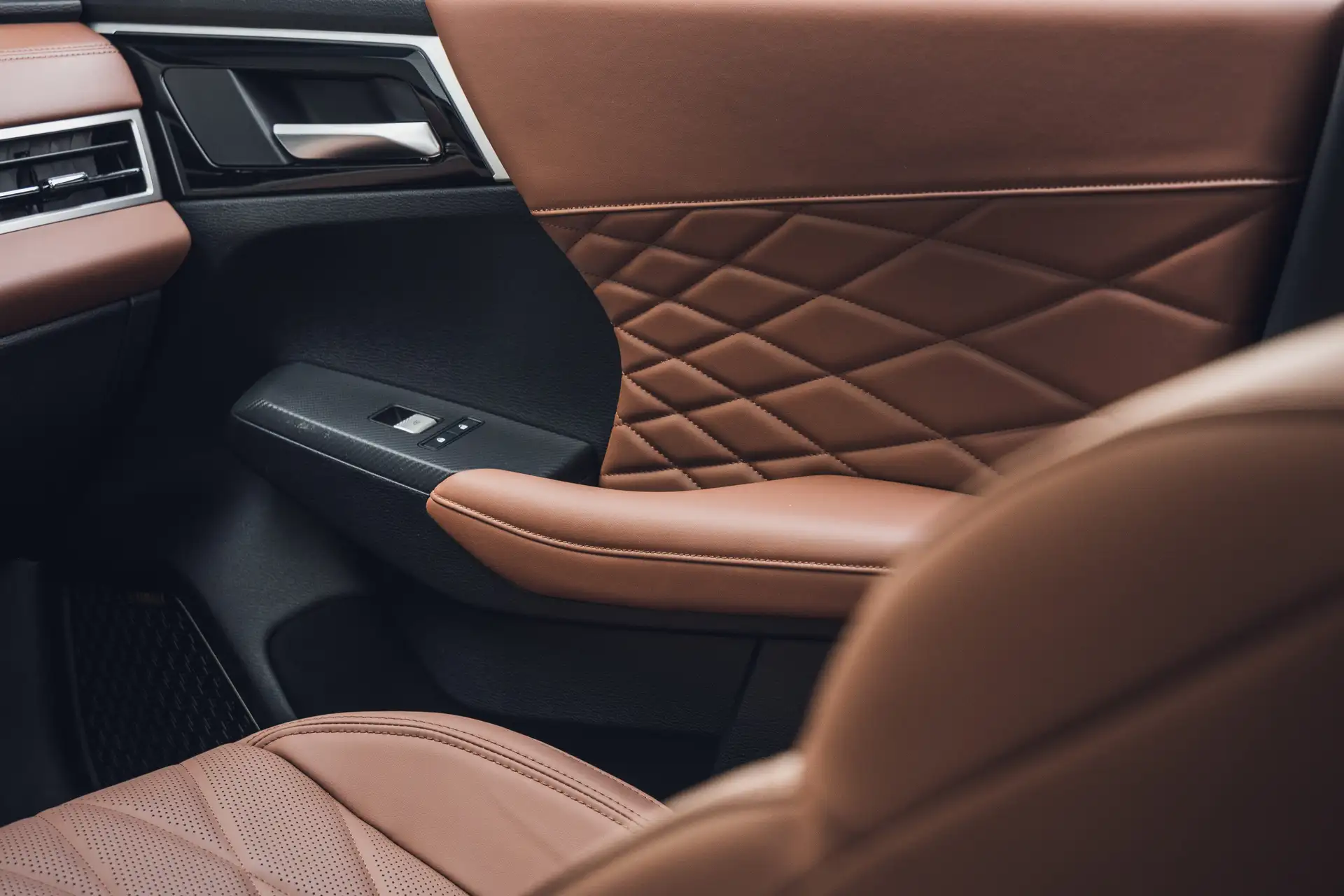
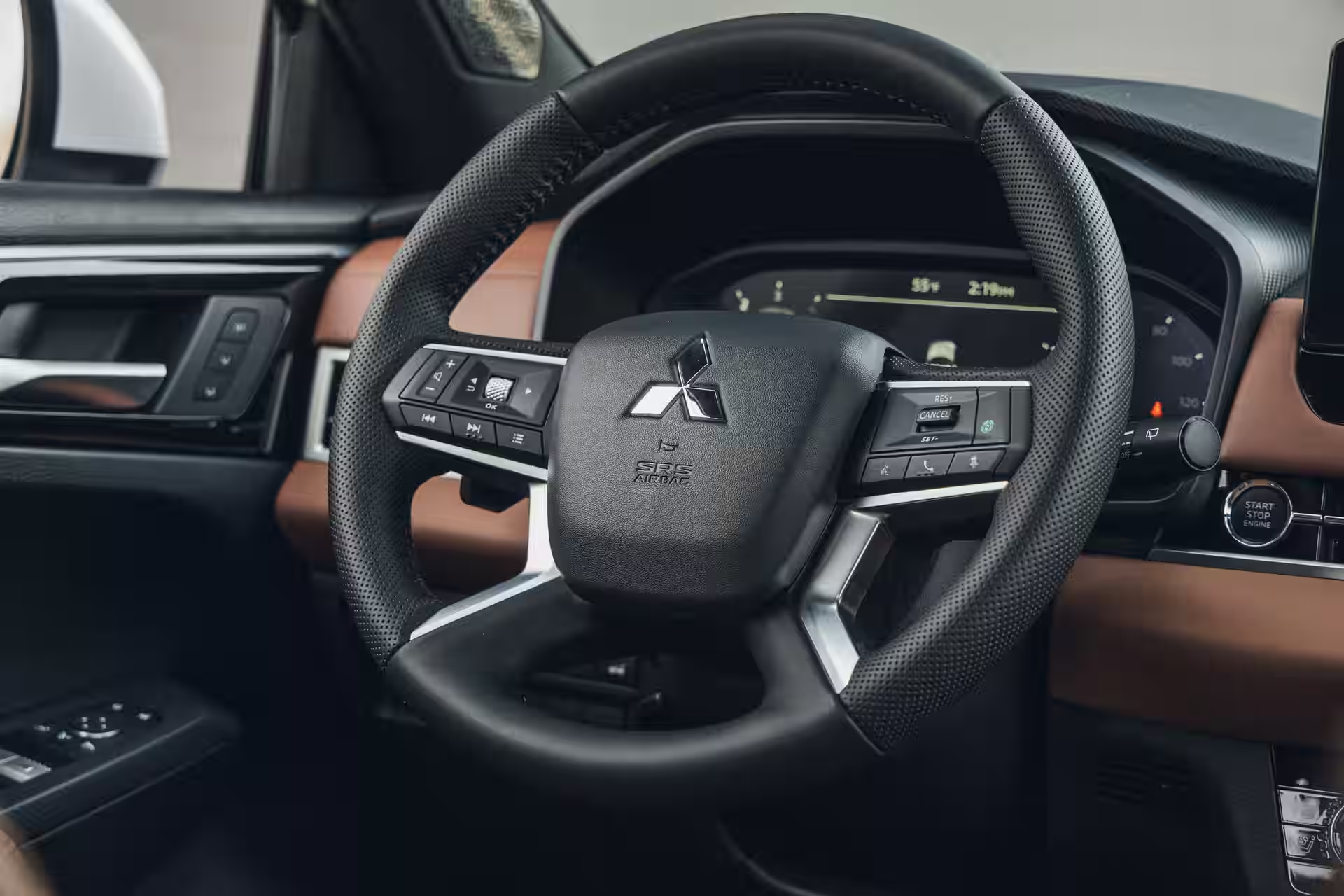
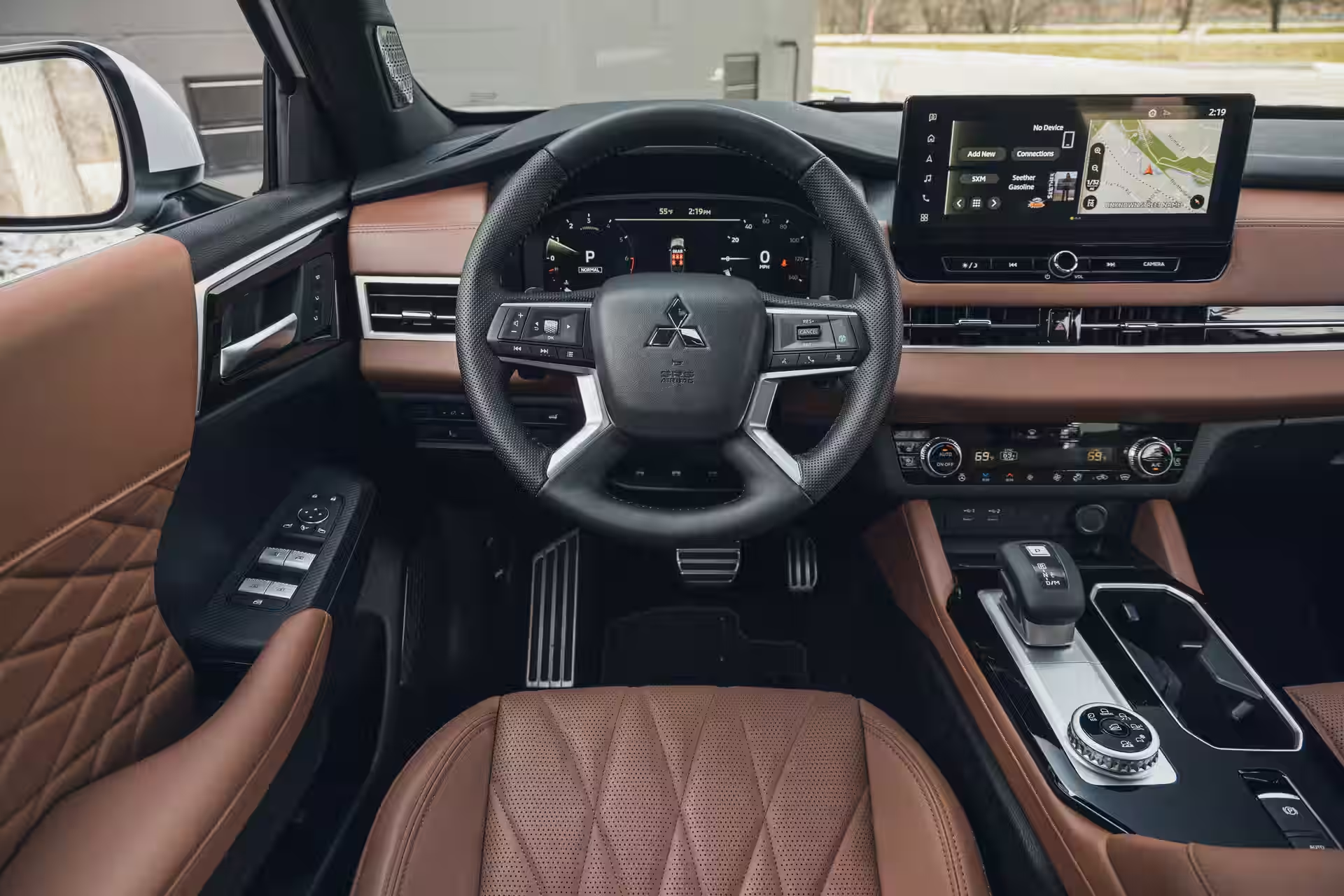
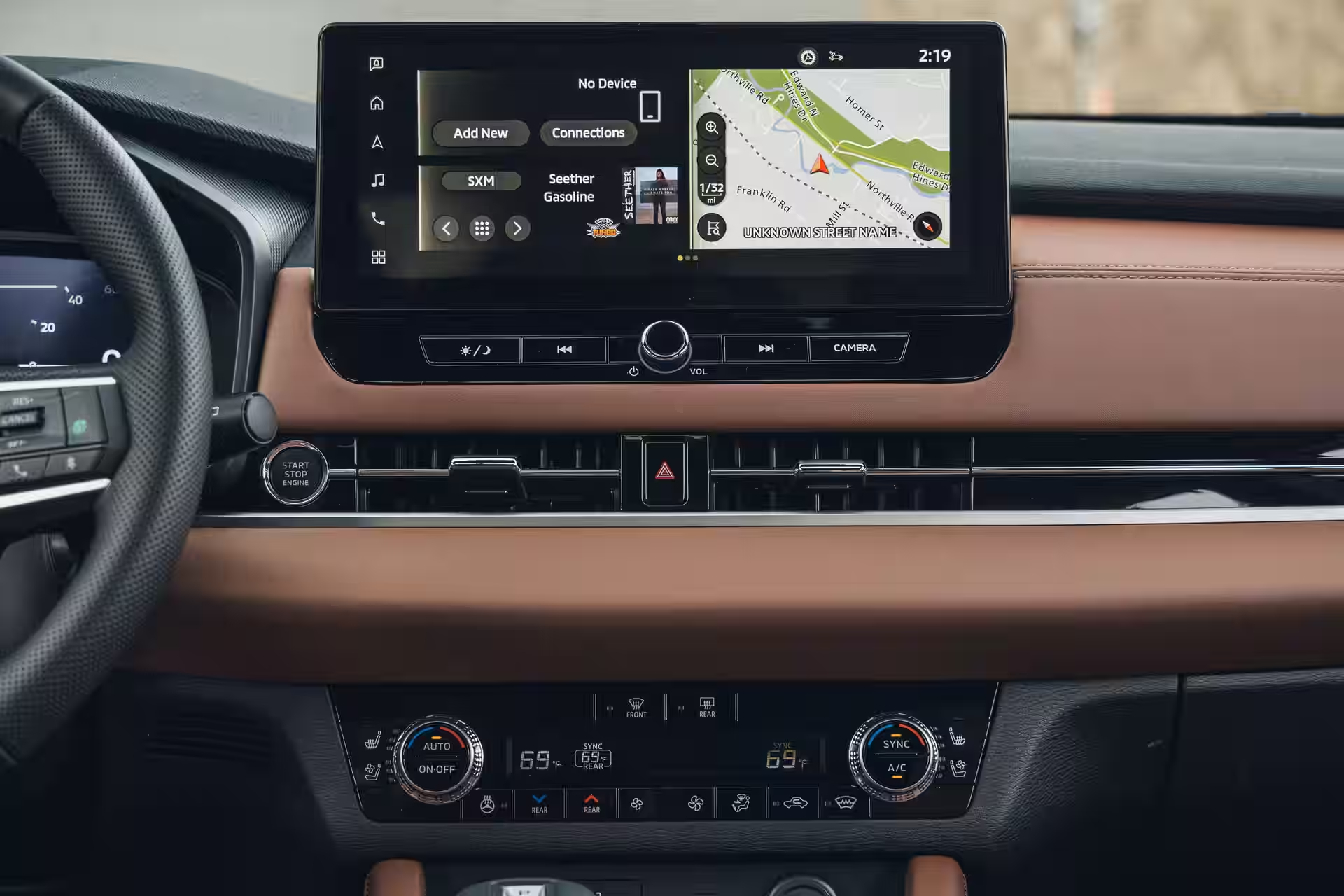
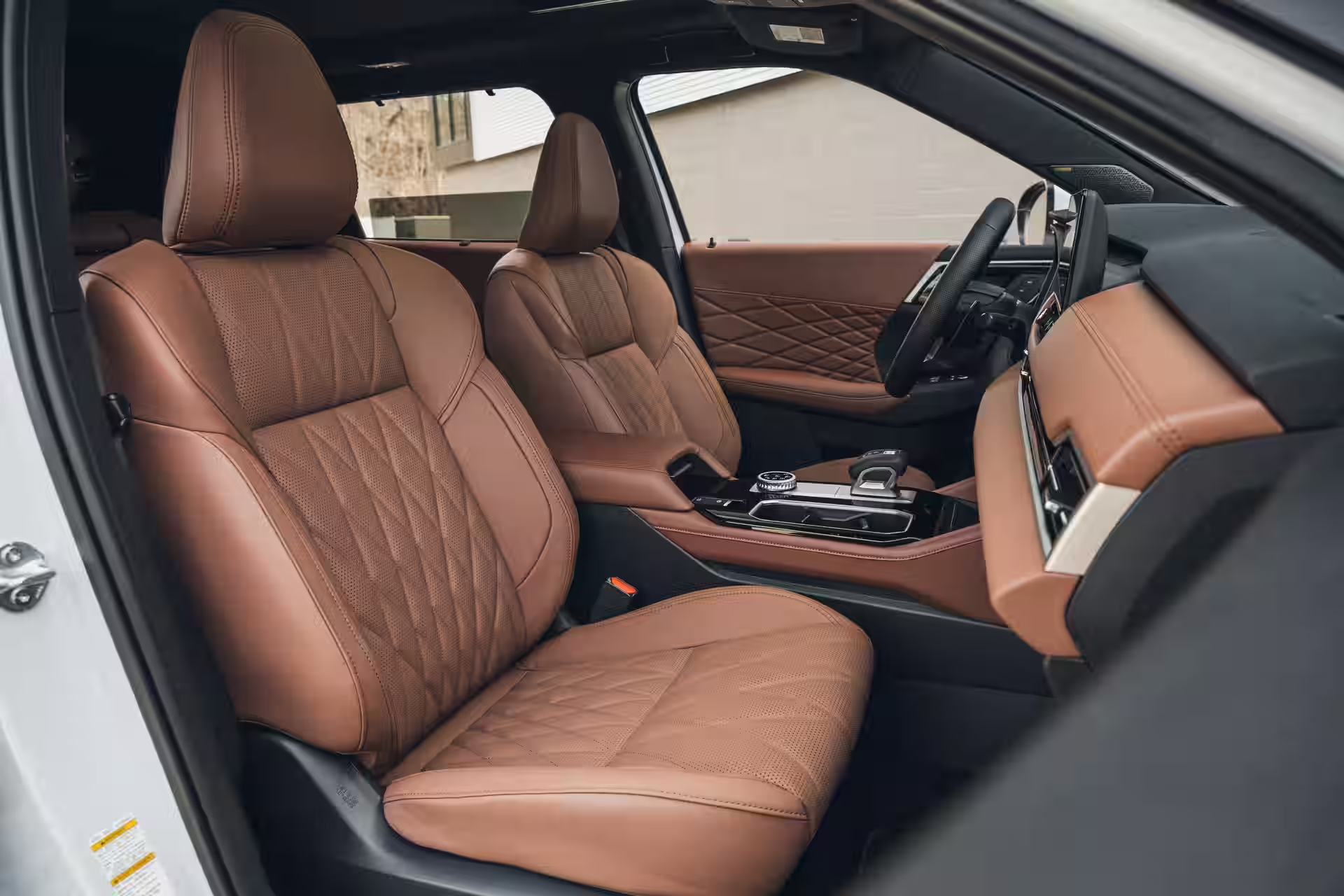
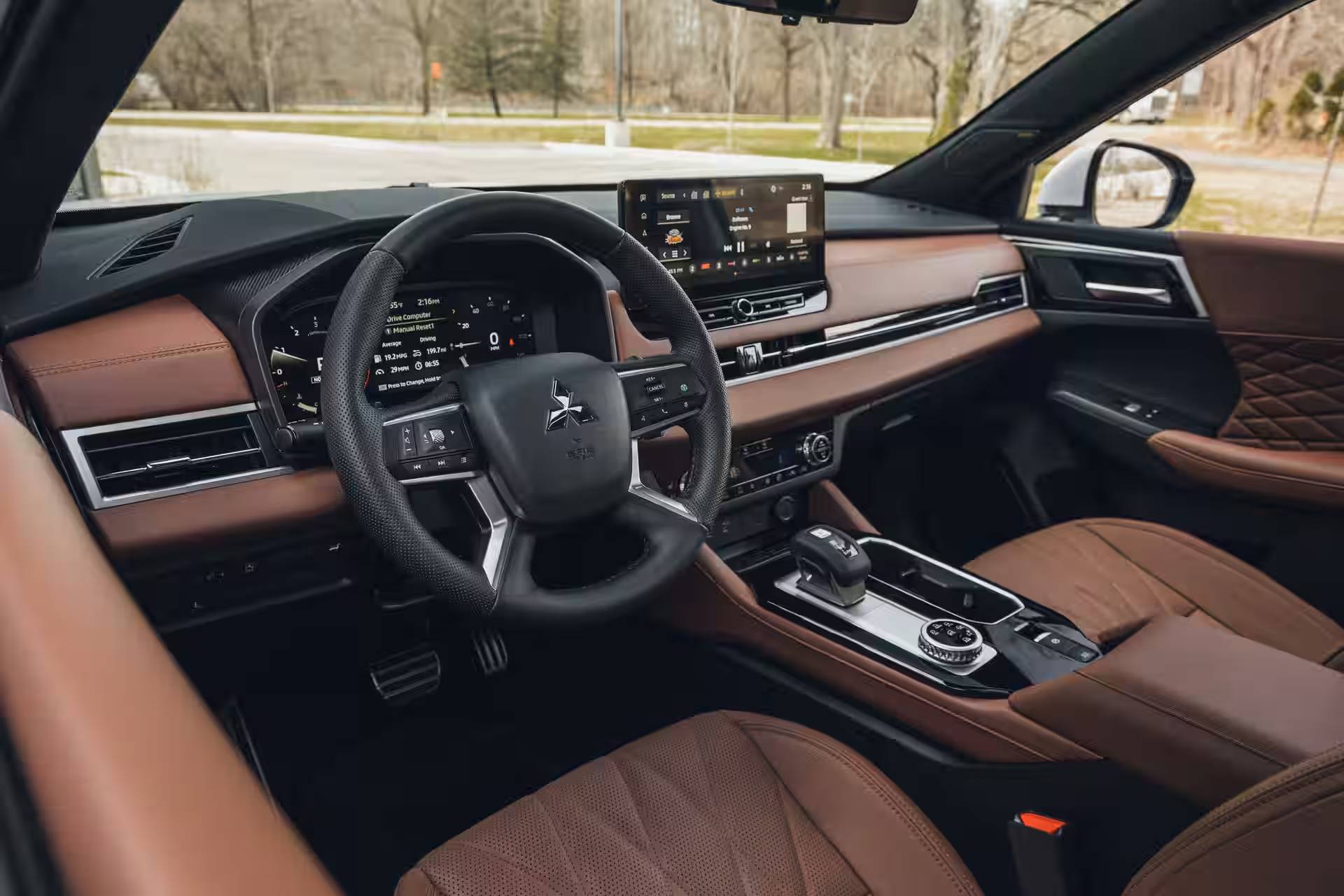
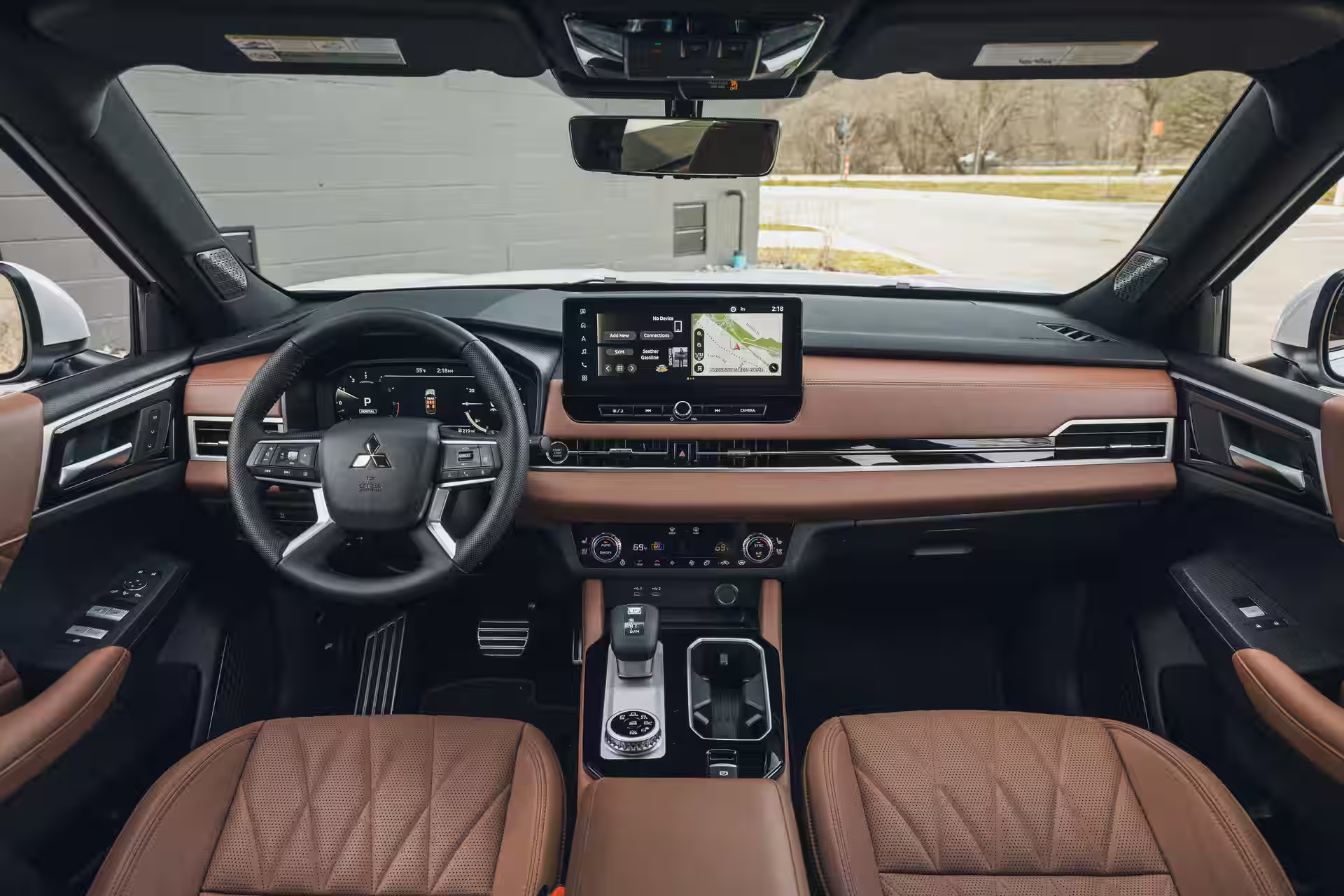
One area where the 2026 Mitsubishi Outlander SEL makes a strong first impression is the cabin design. At a glance, especially in upper trims, the interior looks clean, layered, and upscale. The dashboard layout is tidy, the digital displays are clear, and the seating in better-equipped versions can feel genuinely comfortable on longer drives.
The tested SEL with the Premium package adds several desirable upgrades:
- Semi-aniline leather seating surfaces
- Faux-leather door inserts
- 12-speaker Yamaha audio system
- Head-up display
- Digital rearview mirror
These features give the Outlander a luxury-adjacent atmosphere, at least in the upper visual field. The front seats deserve special praise. They are supportive, soft enough for longer drives, and among the better points of contact in the vehicle.
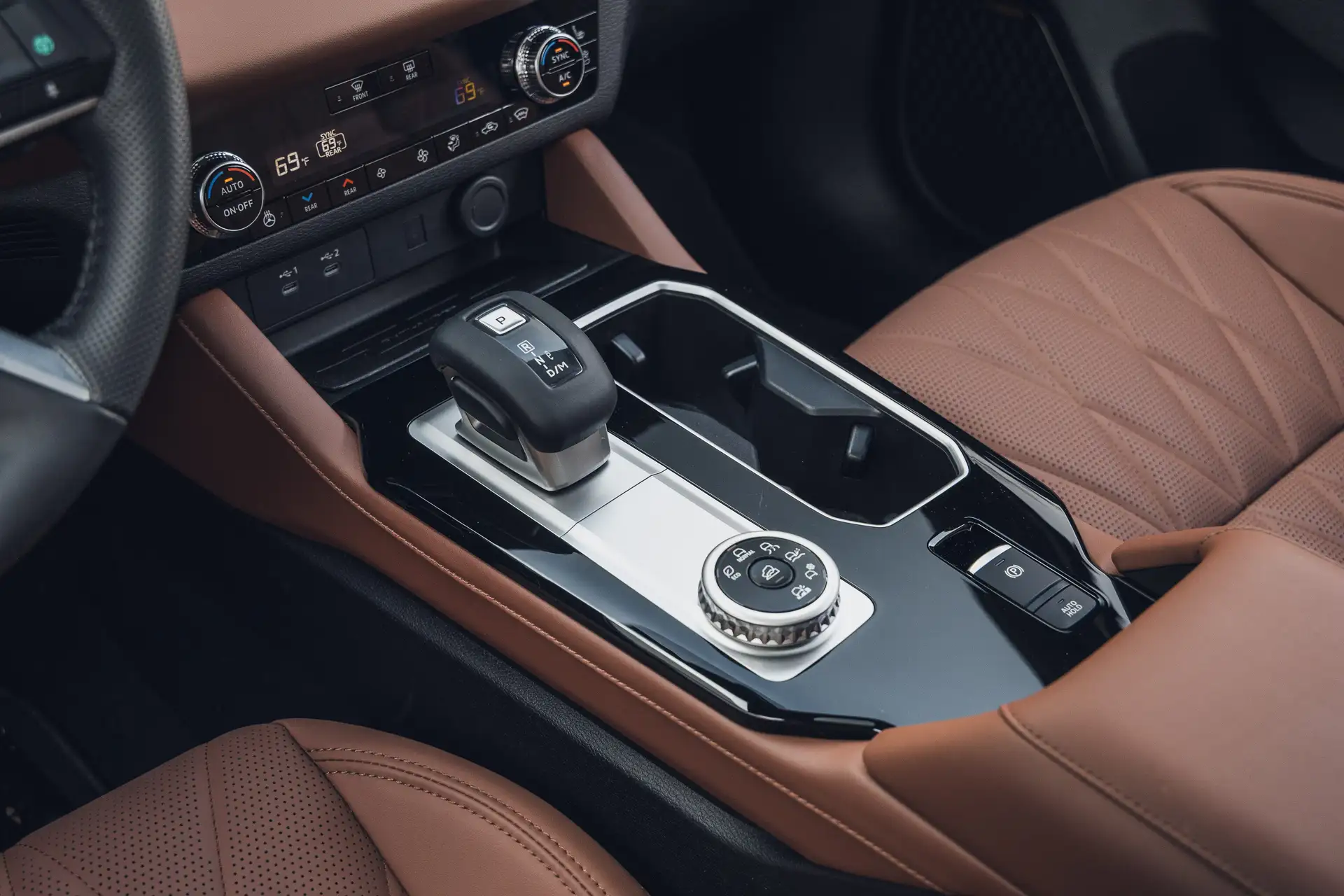
But the Outlander also reveals one of its biggest weaknesses once you begin touching what you see.
Some trim pieces feel premium, while others are unmistakably hard and cost-conscious. That mismatch creates a kind of material whiplash. Soft stitched surfaces and quilted details suddenly meet rigid plastics in lower sections and door areas, reducing the credibility of the upscale pitch. This is not unusual in the segment, but it becomes more difficult to excuse in a vehicle approaching $47,235 as tested.
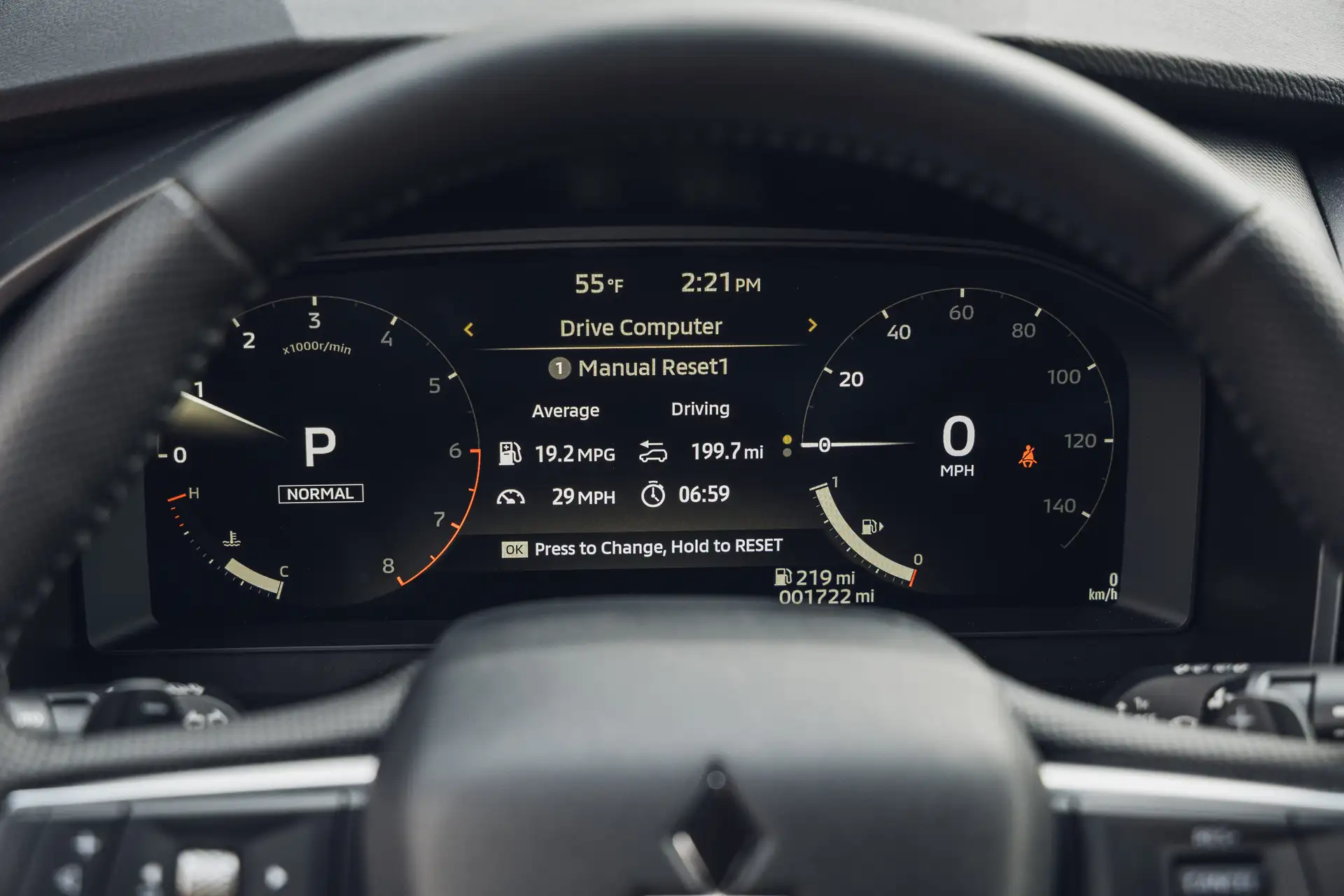
The technology itself is easy to use. The digital instrument display is readable, the infotainment layout is intuitive, and USB-C charging points are placed sensibly. Storage areas are also well thought out, which matters in a family vehicle where phones, snacks, cables, and cups accumulate quickly.
Still, once the Outlander enters the mid-$40,000 range, buyers will begin expecting either truly premium execution or stronger mechanical performance. Ideally both.
Pricing and trim strategy that actually makes sense
The base price of the 2026 Mitsubishi Outlander SEL S-AWC starts at $42,590. The tested example reached $47,235 after options including the Premium package, paint, cargo cover, and accessory items.
That is where many potential buyers will hesitate.
The smarter buy in the lineup is likely a lower trim, especially one that stays below $40,000. The Outlander SE, priced around $36,690, preserves the key structural advantage of the model while avoiding some of the sticker shock that makes the SEL harder to defend.
| Trim Strategy | Why It Matters |
|---|---|
| SE under $40,000 | Better value balance for buyers focused on family utility |
| SEL with Premium package | Looks richer, but enters a price zone with stronger competitors |
| Top-spec configurations | Harder to justify given performance and material inconsistencies |
This also reflects a broader industry pattern. Buyers are becoming ruthless about value clarity. They will gladly pay more for obvious gains in speed, efficiency, luxury, or innovation, but they punish products that feel caught between segments. That is why cross-shopping matters so much now. Even outside the Mitsubishi-Nissan family tree, newer launches keep redefining what buyers should expect, including vehicles like the Kia Seltos 2027 with its hybrid twist and the Nissan X-Trail 2026 pushing upscale tech into mainstream territory.
The Outlander, then, is easiest to recommend when treated not as a premium compact SUV, but as a practical workaround for one specific need.
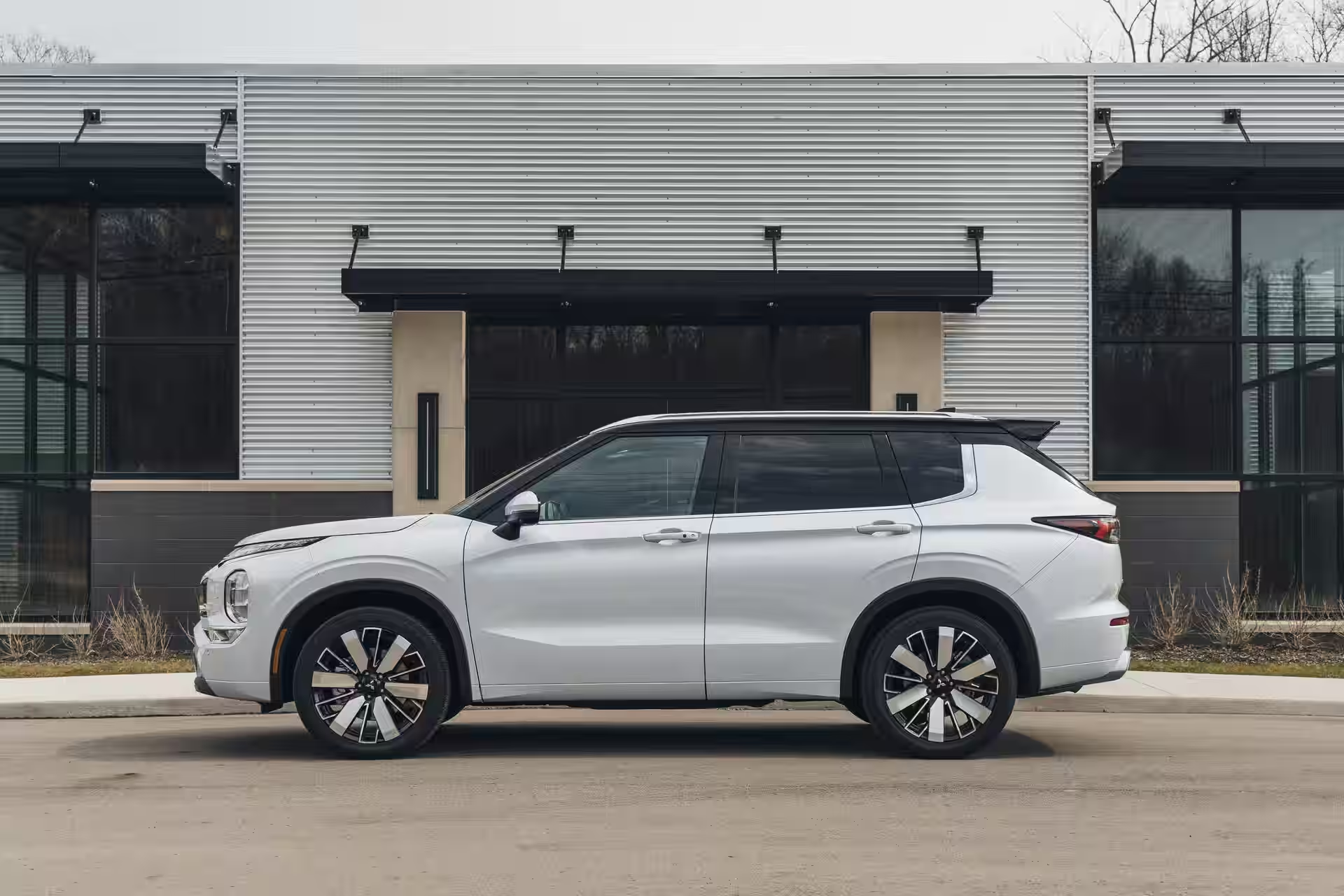
That need is occasional seven-seat flexibility.
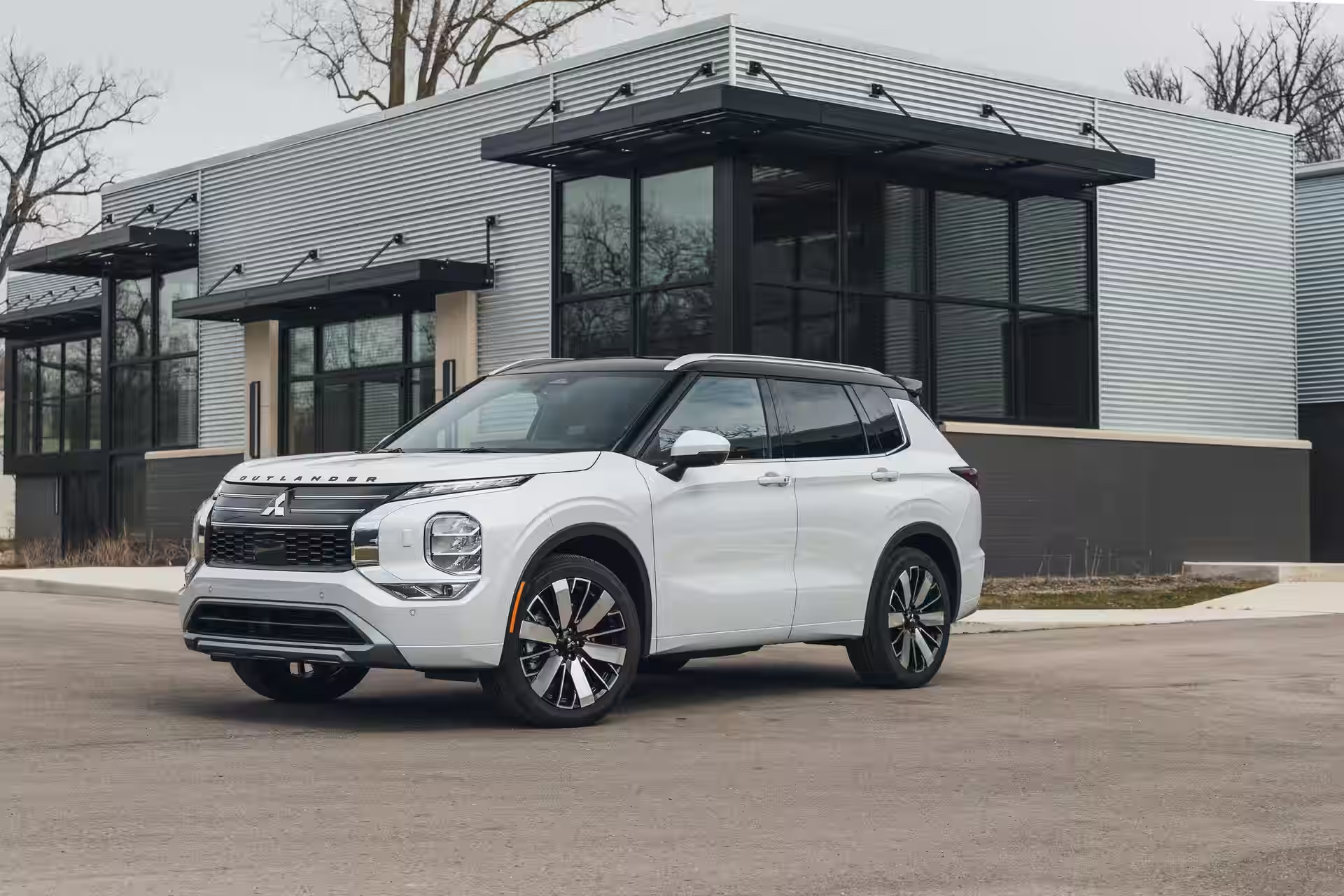
If you need that, the 2026 Mitsubishi Outlander remains one of the most unusual answers in the segment. Its styling is handsome, its cabin is quiet, its infotainment is easy to live with, and its third row gives it a role many rivals cannot fill without going electric or luxury-priced.
If you do not need that, the equation changes. You are left with a compact SUV that is relatively heavy, only moderately quick, somewhat inconsistent in control feel, and expensive in higher trims. In that light, it starts to feel less like a standout and more like a compromise wrapped in sharp sheet metal.
For the right household, that compromise still works. Families with young kids, grandparents nearby, or occasional carpool duty may see the Outlander as a smart niche tool. Everyone else should shop carefully, because once the third row loses importance, the list of better-rounded alternatives gets long very quickly.
2026 Mitsubishi Outlander SEL at a glance
- Best feature: Rare third-row seating in a compact non-luxury SUV
- Biggest weakness: Price and performance do not align in upper trims
- Daily-use strength: Quiet cabin and easy-to-use technology
- Main caution: Third row is useful, but far from roomy
- Smart buy: Lower trims offer a more convincing value story
In the end, the 2026 Outlander SEL is not defined by what it does best on a spec sheet. It is defined by what it allows a buyer to do when six or seven seats suddenly matter. That is a real advantage. It is just not a universal one.