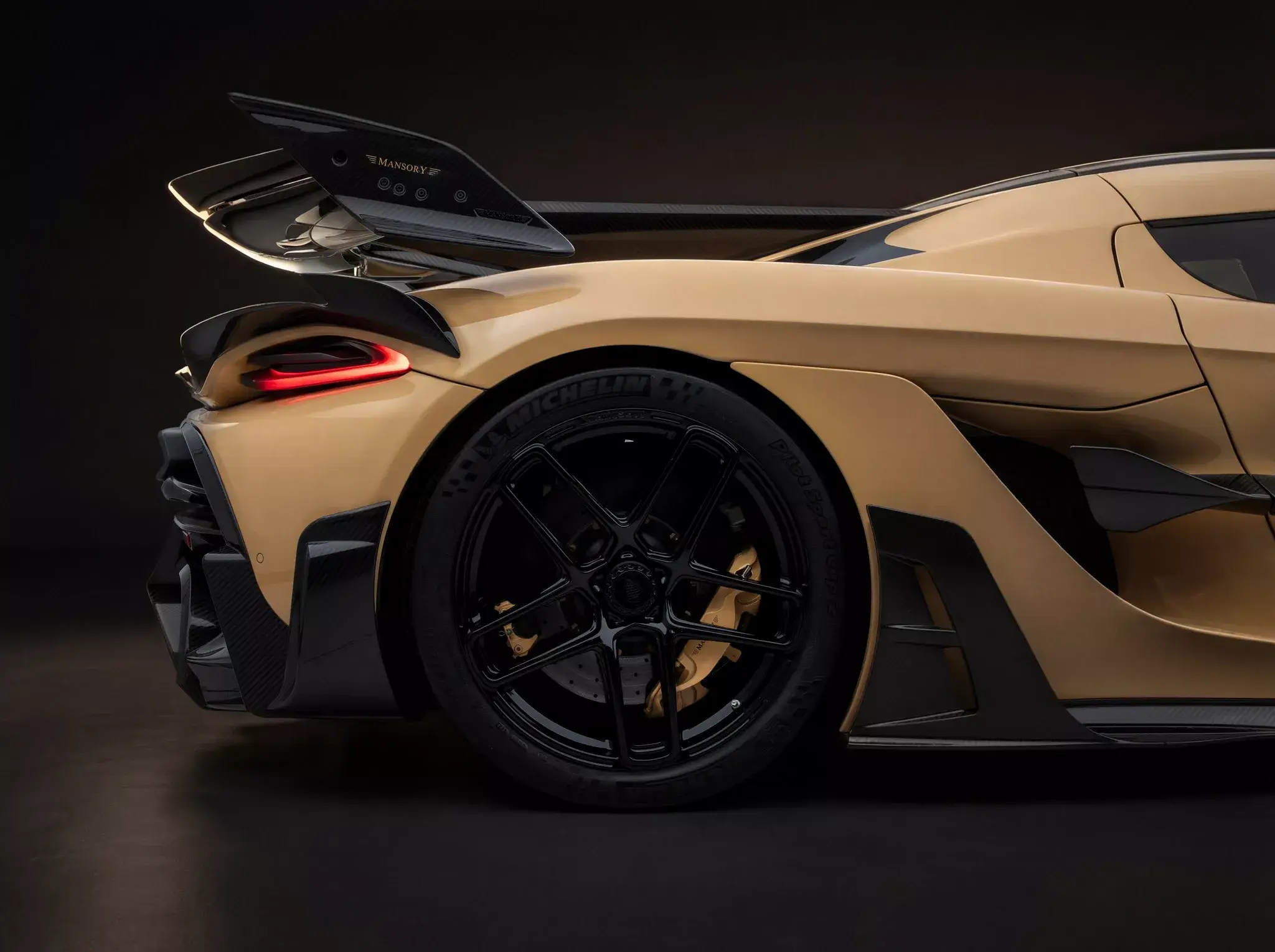
An Middle Eastern billionaire has elevated the KOENIGSEGG JESKO to another level with MANSORY. The result is visually stunning and ultra-exclusive!
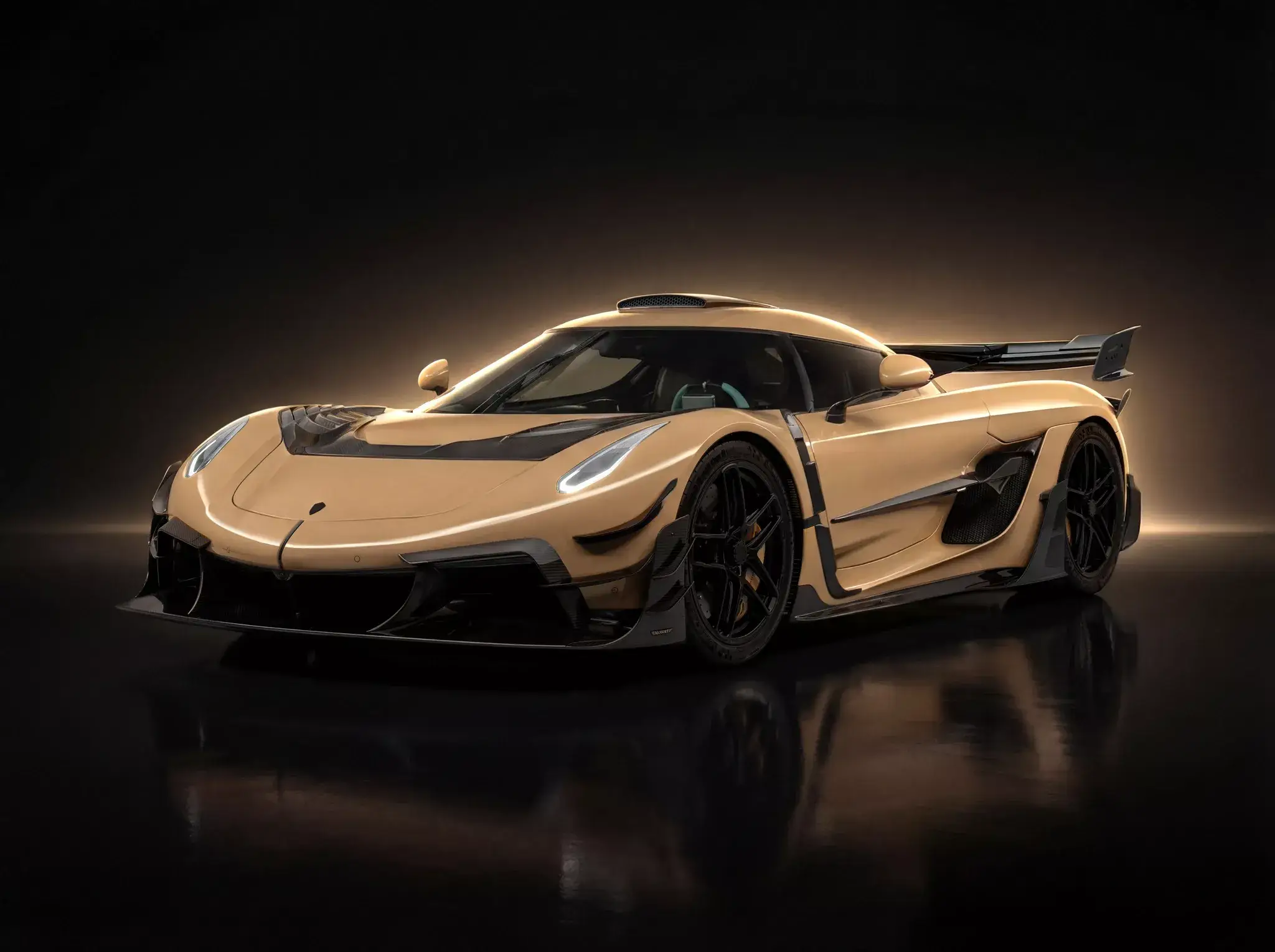
The Mansory Project on the KOENIGSEGG JESKO
Context and exclusivity: The KOENIGSEGG JESKO already sits at the top of the hypercar pyramid — limited production of 125 units and a market price around US$ 3 million make any external modification a noteworthy event. When the renowned tuner Mansory takes on the task at a Middle Eastern client’s request, the outcome becomes more than just a modification — it transforms into a unique collector’s piece.
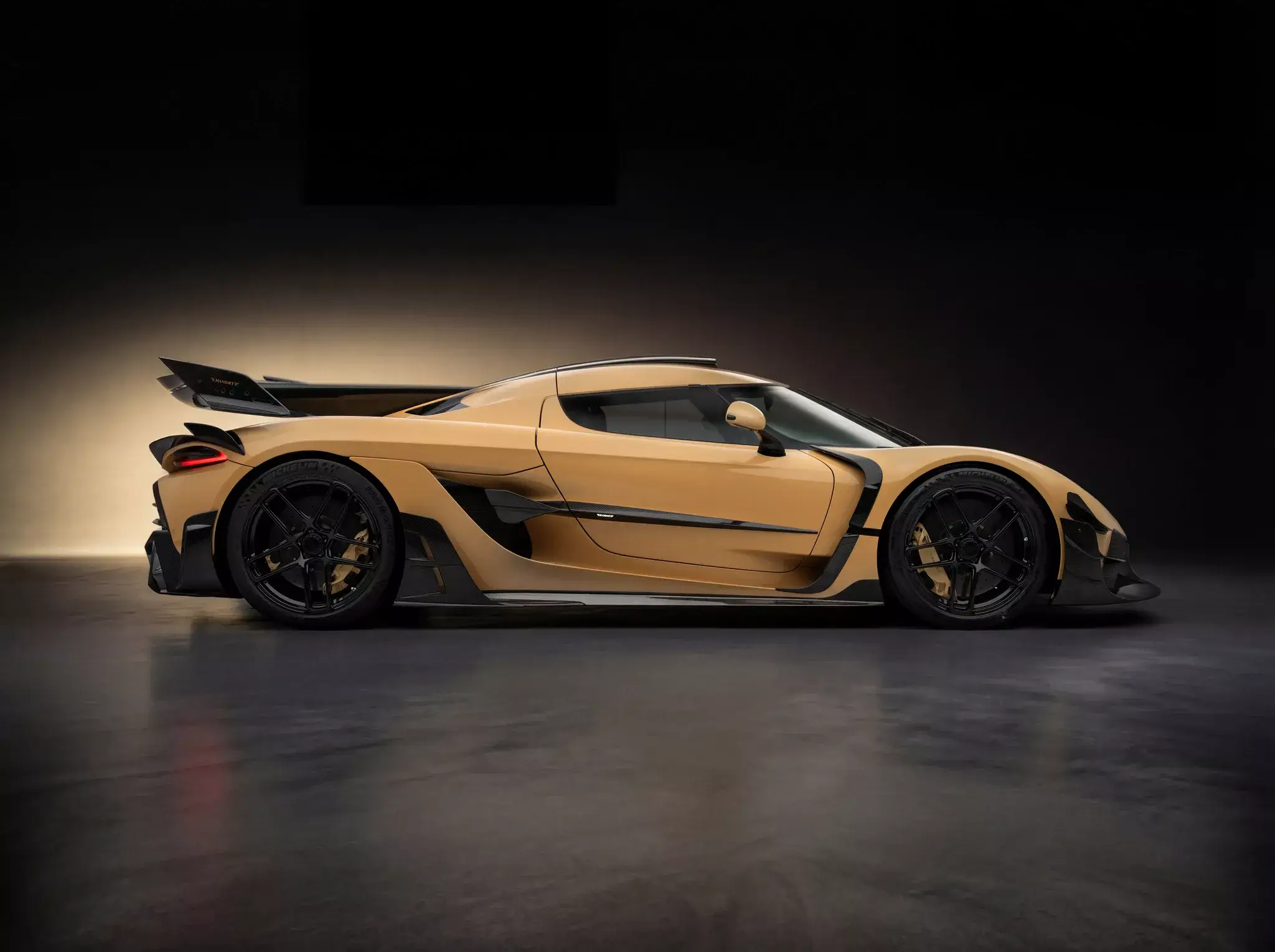
The original brief outlined clear objectives: extreme visual presence, ultra-light materials (carbon fiber), regional identity (desert-inspired paint), and an interior that sharply contrasts with the factory standard. The final package adds 17 new external carbon components, exclusive wheels, repainting of calipers, additional lighting, and a complete interior redesign in turquoise leather with quilted stitching.
For readers familiar with radical transformations in high-luxury cars, it’s interesting to compare how carbon kits and customization programs alter perception and value — exemplified by projects such as the Larte Design carbon kit that transformed the LAMBORGHINI URUS SE with 18 pre-preg carbon fiber parts.
Details of the modifications and aesthetic approach
External: Mansory introduced 17 new components, all featuring exposed carbon fiber or finishes that highlight the material’s texture. Elements applied include:
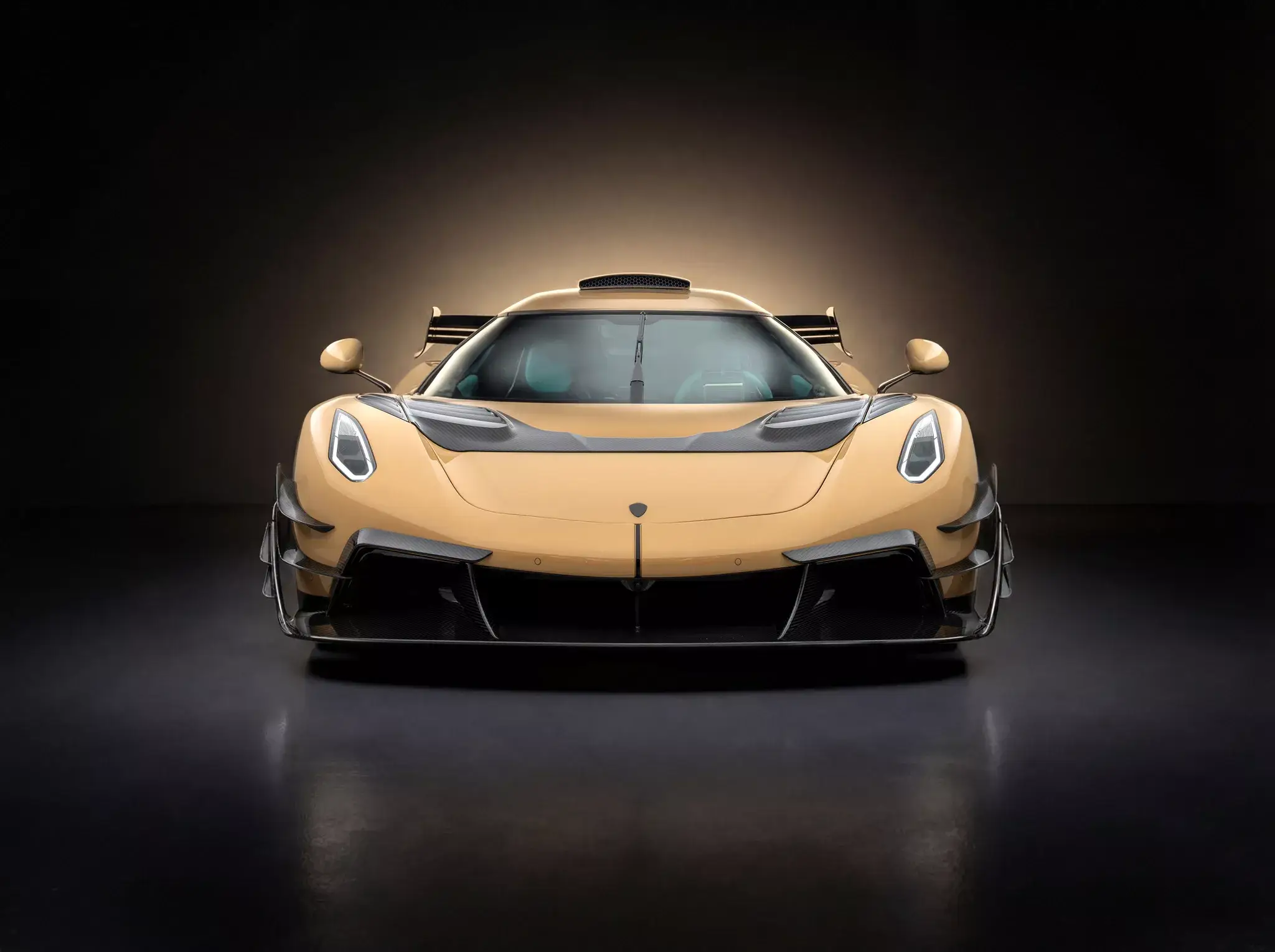
- Front: new splitter, air intake trims, aerodynamic canards, a carbon fiber strip on the hood, and redesigned louvers.
- Side: carbon inserts behind the front arches, longitudinal strips on the doors, and new side skirts.
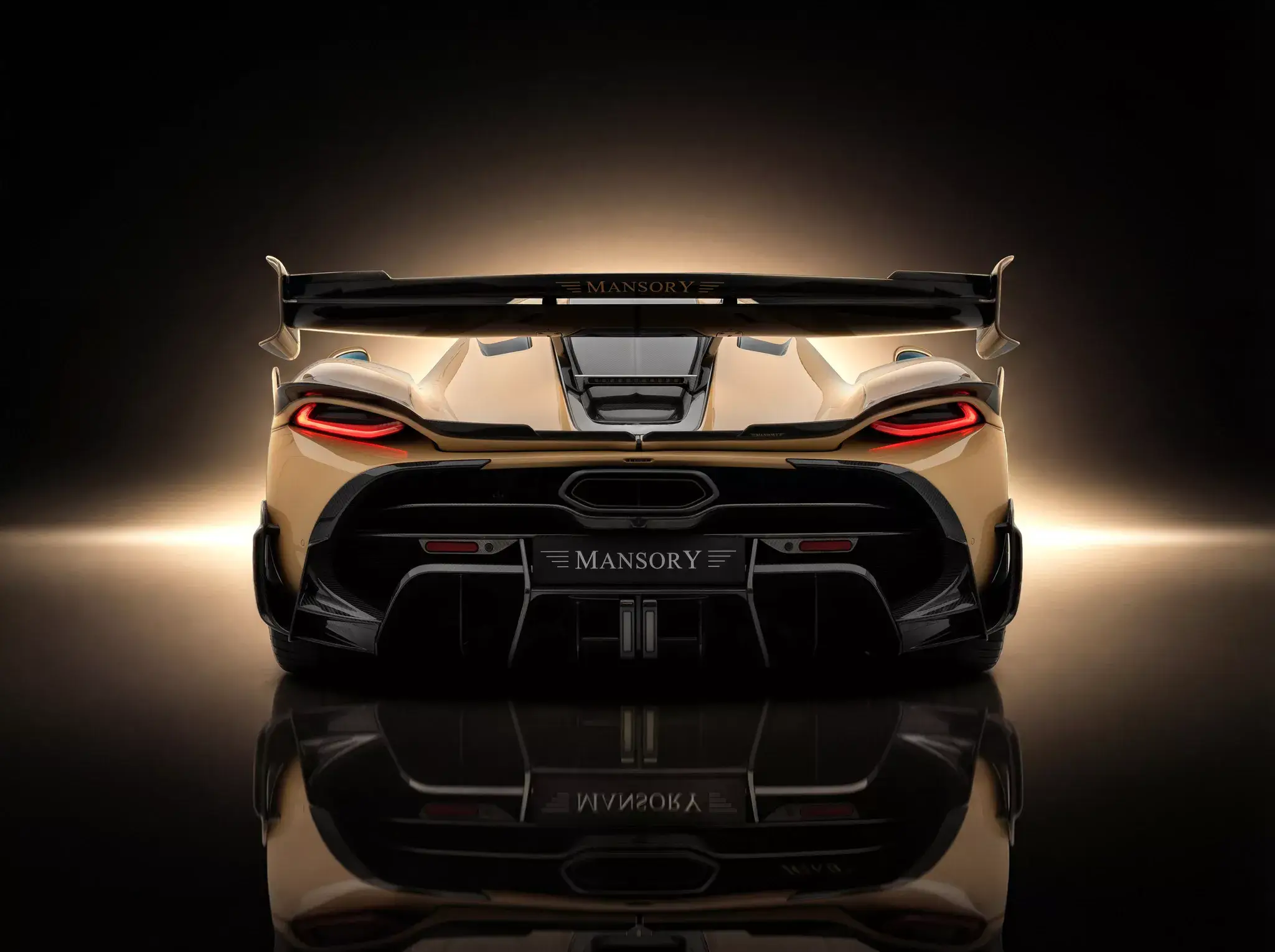
- Rear: modified dual-plane wing with new endplates, a carbon lip on the decklid, and a redesigned integrated rear diffuser.
The paint finish is a highlight of the project: a dark cream/beige tone applied with techniques that preserve nuanced under strong light, designed to harmonize with the desert landscapes of the region. Brake calipers were repainted to match this palette, and a third central brake light, inspired by Formula 1 solutions, was installed to enhance the racing appeal of the set.
Interior: Mansory didn’t hold back on boldness inside. The interior was completely redesigned with vibrant turquoise leather, door panels, central console, and headliner all covered, along with shell-type seats in carbon fiber with preserved structural bases. The contrasting quilted stitching in black creates a striking visual contrast, transforming the environment into more of a design studio than a standard cockpit.
Customized projects like this often spark debates among enthusiasts about taste and coherence. For those interested in exclusive interiors and collector editions, recent examples of finely reinterpreted supercar interiors — such as the case of the PORSCHE 911 GT3 90 F.A. PORSCHE with details that excite collectors — help illustrate how emotional value can surpass purely technical criteria see this special project.
Technical Impact, Market, and Recommendations for the Owner
What changes in performance? Here lies the most sensitive part of the report: the KOENIGSEGG JESKO Attack was developed with precise aerodynamic engineering by Koenigsegg itself, aiming for downforce, stability, and behavior at high speeds. Mansory focused on aesthetics and lightweight materials, but no official data on CFD simulations, wind tunnel tests, or track tests after modifications are available.
Without homologation aerodynamic data, any changes to elements such as splitter, canards, side skirts, and diffuser can affect load distribution and longitudinal and lateral stability.
Therefore, the technical recommendation is clear: before driving the car at maximum capacity, conduct controlled tests on a track and, if possible, wind tunnel tests or digital simulations comparing the original airflow with the new setup. High-visibility aesthetic modifications often require fine-tuning of suspension, electronic stability calibration, and sometimes minor structural reinforcements to ensure safety at extreme speeds and maneuvers.
Resale value and market positioning: Customizations of this level have a dual effect. For private collectors — especially in the Middle East, where unique pieces have high appeal — the intervention can increase perceived value. However, for buyers who prioritize factory originality and intact technical history, radical modifications may reduce the pool of potential buyers and liquidity.
Recent cases of price fluctuations at Middle Eastern auctions, such as the dramatic drop of the BENTLEY BACALAR in Abu Dhabi, show that the ultra-luxury market has its own dynamics and is sensitive to regional preferences understand this case. For the owner of the modified KOENIGSEGG JESKO, documenting the entire process with photographic reports, material certificates, and invoices from Mansory helps preserve value and technical credibility.
Specific care for Middle Eastern use: The desert climate presents additional challenges. Sand and dust accelerate wear of brake components, bearings, and filters. Choosing UV-resistant paint and anti-graffiti varnish is recommended; equally important is a preventive maintenance routine focusing on sealing air intakes, cleaning diffusers, and inspecting carbon fibers for signs of delamination.
Additionally, wheels and tires should consider high surface temperatures and the possibility of light off-road driving common in desert regions. To compare extreme approaches by tuners and the impact on performance, BRABUS’s work with high-powered models offers insight into how far technical customization can go without compromising safety see another extreme example.
Final practical recommendations:
- Track tests and validations: before high-speed driving, undertake assisted tests with expert aerodynamic teams.
- Documentation: keep a complete record of modifications, including materials, part codes, and Mansory warranties for future resale or insurance.
- Specialized maintenance: hire technicians experienced with hypercars and knowledgeable in carbon fiber for regular inspections.
- Climate protection: use specific covers and consider storing in a controlled environment to preserve paint and exotic leathers.
Projects involving hypercar customization walk a fine line between art and engineering. The transformation of the KOENIGSEGG JESKO by Mansory exemplifies how aesthetics and the desire for exclusivity can create true collector’s works but also require technical caution and transparent documentation. For readers following the latest developments and special editions in the automotive world, comparing this work with other high-end interventions helps understand trends and risks in the segment — whether OEM carbon kits like on the LAMBORGHINI URUS SE or collector interior redefinitions that reshape emotional value.