
Is reducing your car’s weight worth the risk of breaking a wheel? Understand the crucial difference between magnesium and forged aluminum for your safety.
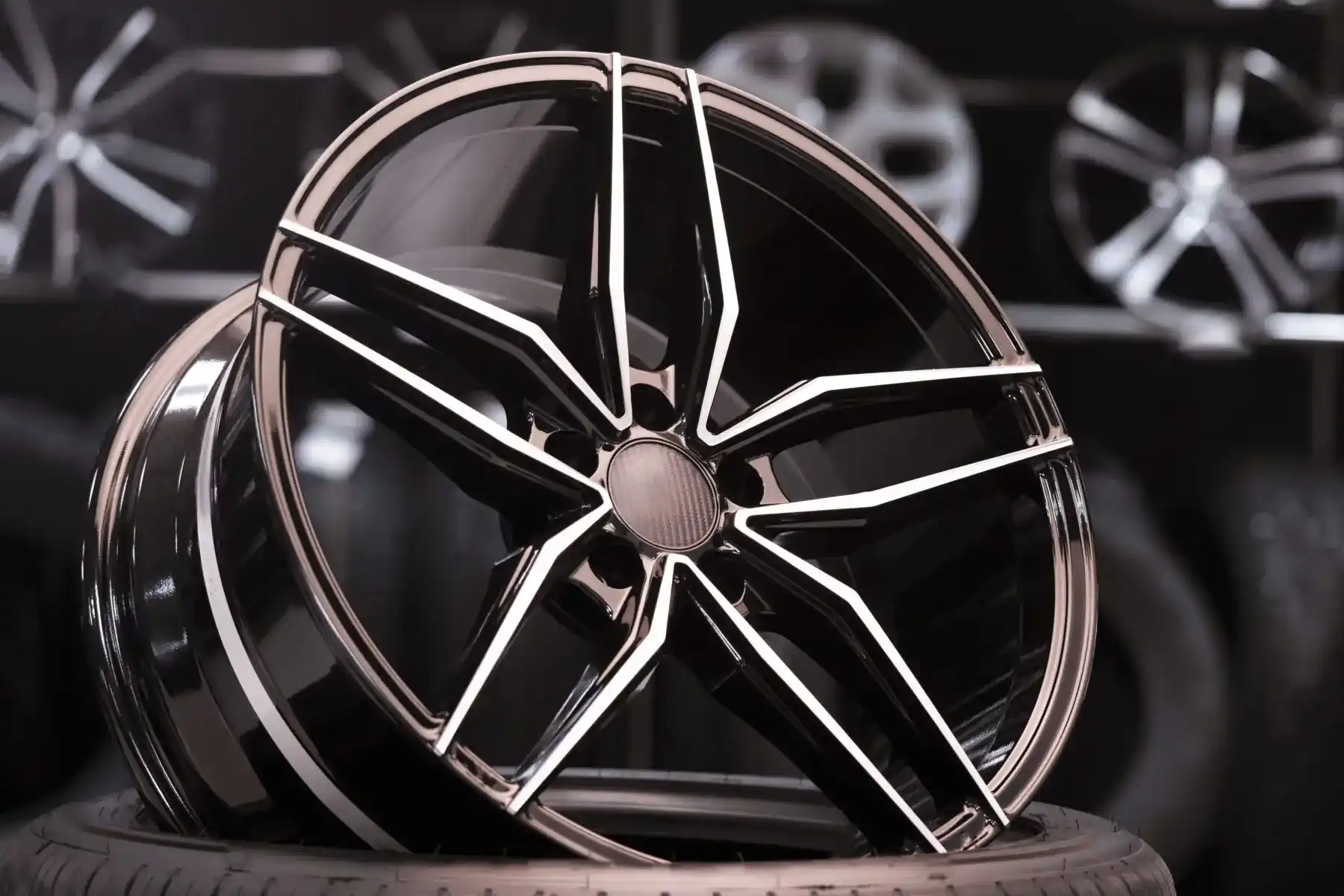
Why Does Wheel Choice Impact Your Daily Car So Much?
In the automotive world, lightweight wheels are a dream for those seeking performance without sacrificing practicality. Magnesium promises a revolution with its ultra-low density – about 1.74 g/cm³ compared to 2.7 g/cm³ for aluminum – but is it worth it for chaotic city traffic? Let’s dissect properties, durability, and real economy, with technical data proving: for daily use, forged aluminum reigns supreme.
Track vs. Street Performance: Where Each Material Shines
The reduction of unsprung mass is the biggest advantage of lightweight wheels. Every kilogram saved improves acceleration, braking, and grip in curves. Magnesium wheels, used in hypercars like the PORSCHE MACAN GTS ELECTRIC 2026, cut up to 30-40% of the weight of a standard steel wheel, translating into:
- Better steering response: Less rotational inertia means more precise turns, ideal for track.
- Optimized braking: Reducing 1 kg per wheel can shorten braking distance by 2-3 meters at 100 km/h.
- Fuel economy: Gains of 0.2-0.5 km/l in mixed use, according to SAE tests.
However, stiffness tells a different story. The elastic modulus of magnesium (45 GPa) is lower than forged aluminum (70-80 GPa), making it more flexible under impact. On public roads with potholes, curbs, and debris, this becomes a weakness: magnesium tends to shatter instead of bend, unlike aluminum which absorbs shocks.
Fatigue studies show that after 50,000 km, magnesium wheels lose 15-20% of their structural integrity due to aging, while forged aluminum maintains over 95%. For track day enthusiasts, magnesium is gold; for everyday driving, aluminum delivers 95% of the dynamic benefits without the drama.
| Feature | Magnesium Wheels | Forged Aluminum |
|---|---|---|
| Density (g/cm³) | 1.74 | 2.7 |
| Elastic Modulus (GPa) | 45 | 70-80 |
| Weight Reduction vs. Steel (%) | 35-40 | 25-30 |
| Impact Resistance | Low (brittle fracture) | High (plastic deformation) |
This table summarizes the trade-off: extreme lightness of magnesium versus robustness of forged aluminum. In vehicles like SUVs or sedans used for urban driving, where comfort and safety are paramount, aluminum prevents unwanted visits to the workshop.
Durability in the Real World: Corrosion, Maintenance, and Repairs
Environmental exposure is magnesium’s Achilles’ heel. Its position at a potential of -2.37V makes it hyper-reactive, corroding 10 times faster than aluminum (-1.66V) without impeccable protection. Rain, road salt, or acidic washes damage the coating, initiating galvanic corrosion that eats away the wheel from the inside.
Maintenance becomes a routine: neutral pH cleaners, protective wax weekly, and monthly inspections. A scratch exposes the metal, and in humid regions like the Brazilian coast, lifespan drops to 2-3 years. Forged aluminum, with natural anodization, resists for decades with regular washes.
- Repairs: Magnesium does not weld easily – requires pure argon and specialized welders, costing R$ 2,000-5,000 per wheel. Often, replacement is inevitable.
- Aluminum: Common workshops repair bends for R$ 300-800, with standard CNC machines.
In long-term tests by Automobile Magazine, magnesium sets failed in 25% of cases after 30,000 urban km, compared to 5% with forged aluminum. For electric cars like the MG MG4 EV 2026 XPOWER, where weight matters, lightweight forged wheels still optimize range without risks.
Initial cost is a concern: a set of 18″ magnesium wheels costs R$ 20,000-50,000, versus R$ 8,000-15,000 for premium forged (BBS, OZ). Replacement? Magnesium doubles the loss. In SINGER DLS TURBO “THE SORCERER” based on Porsche, mag wheels justify themselves on track, but not for your daily driver.
Final logistics settle the debate: services for magnesium are rare outside the capitals, requiring shipping to specialists. Aluminum? Available on every corner. For light off-road use, like in the SUBARU OUTBACK WILDERNESS 2026, forged wheels can handle trails without issue.
Engineers like those at Lotus (Colin Chapman’s philosophy: “add lightness”) use magnesium in prototypes, but daily production prioritizes forged. Real metrics: 95% performance at 20% of the cost with zero risk of urban catastrophe.
2024 updates show a trend: brands like BBS are launching forged wheels with microfibers of carbon, rivaling magnesium in weight (effective 1.9 g/cm³) with superior durability. For heavy electric vehicles, this preserves batteries and suspension.
Choose forged aluminum for peace of mind: light enough to enjoy, strong enough to survive. Magnesium? Save it for the collector’s garage or weekend adventures.