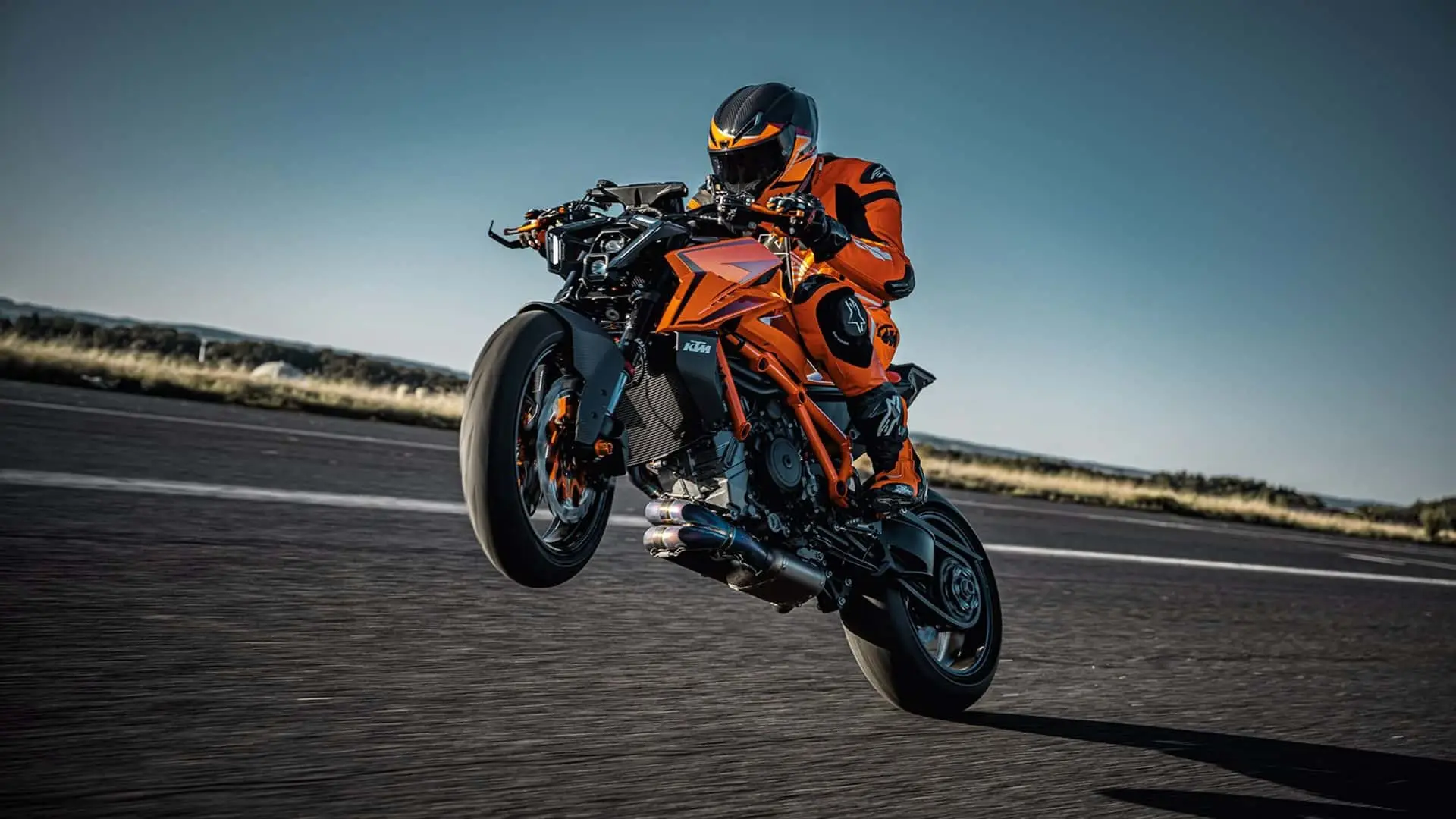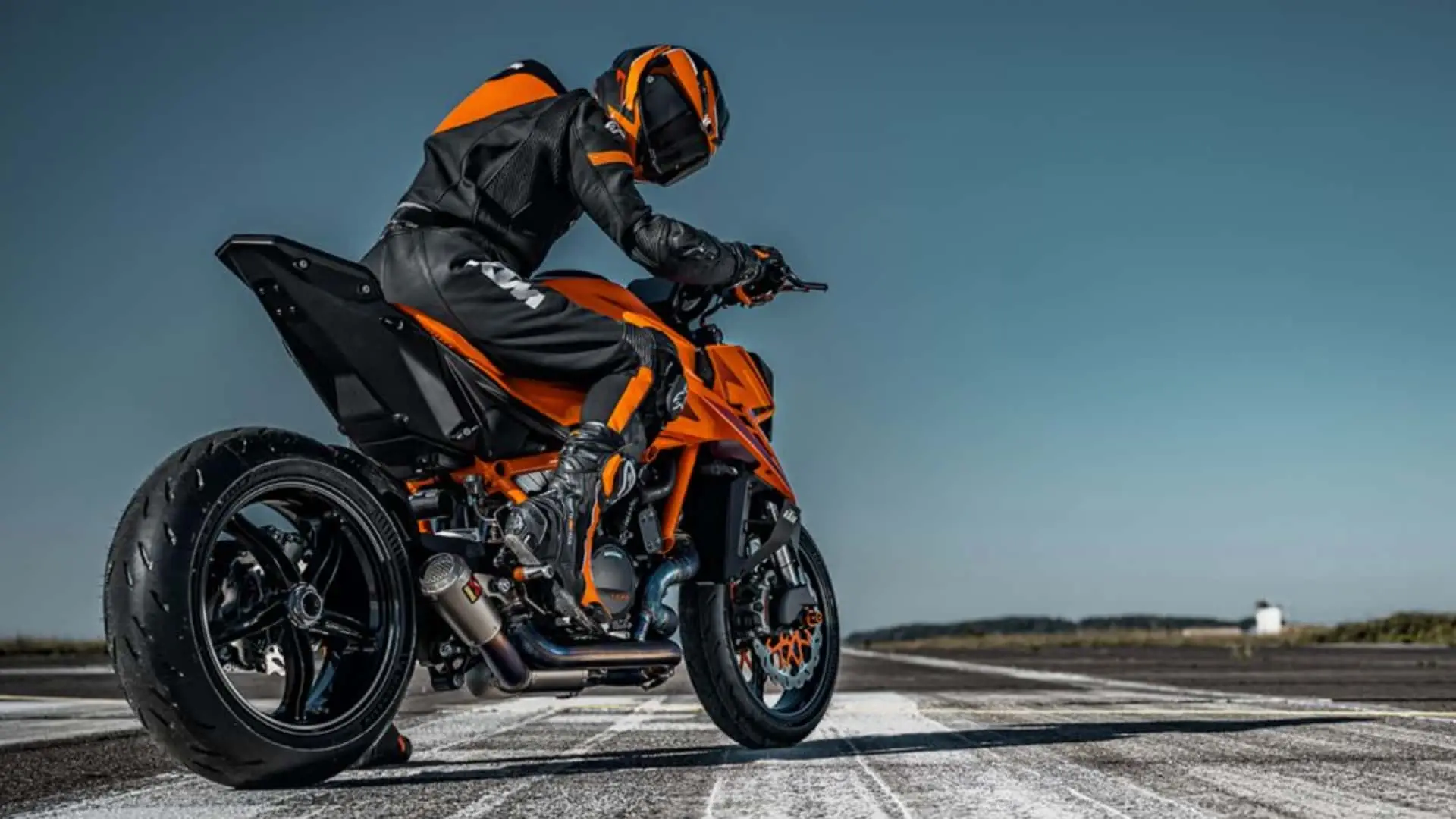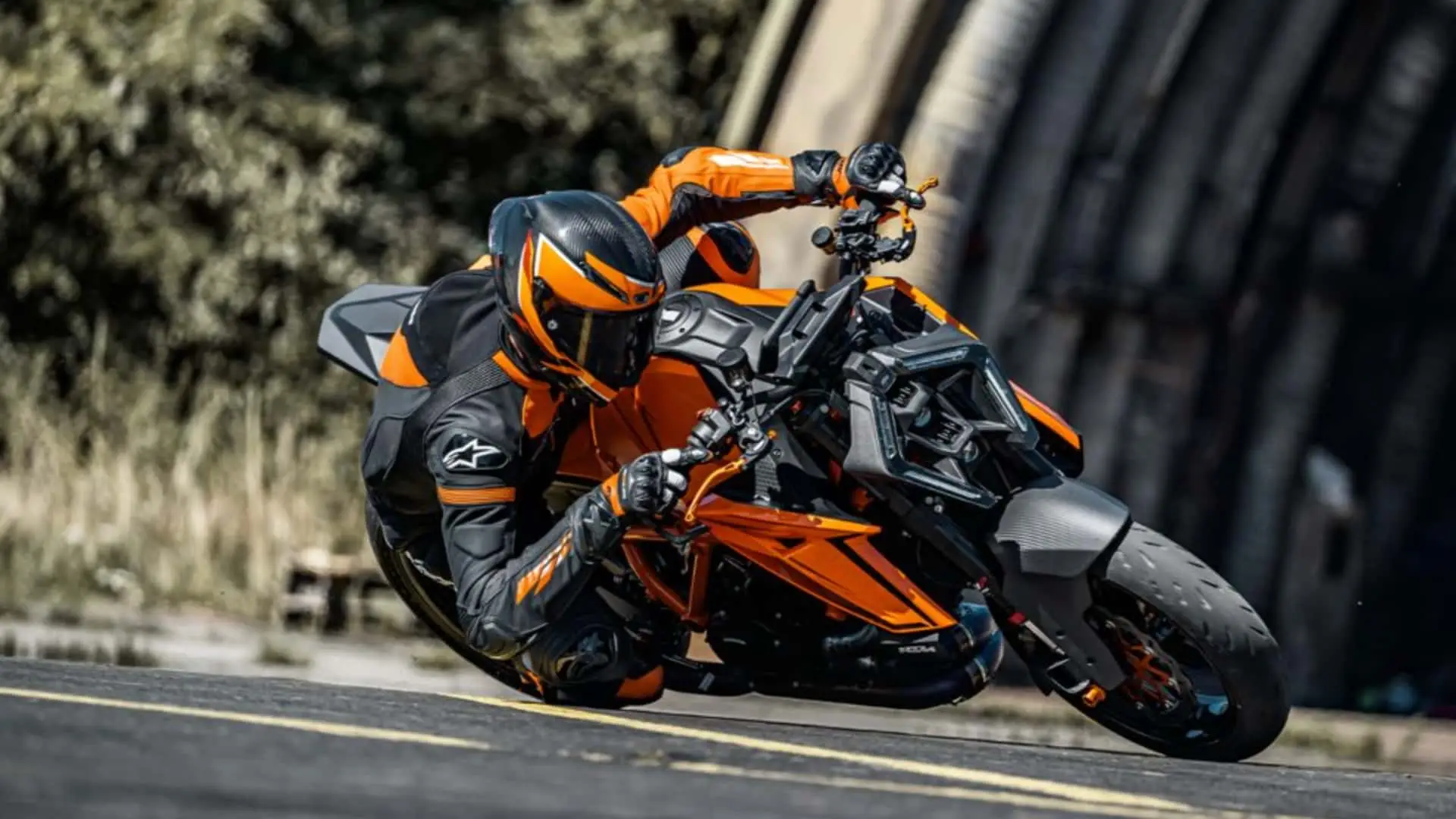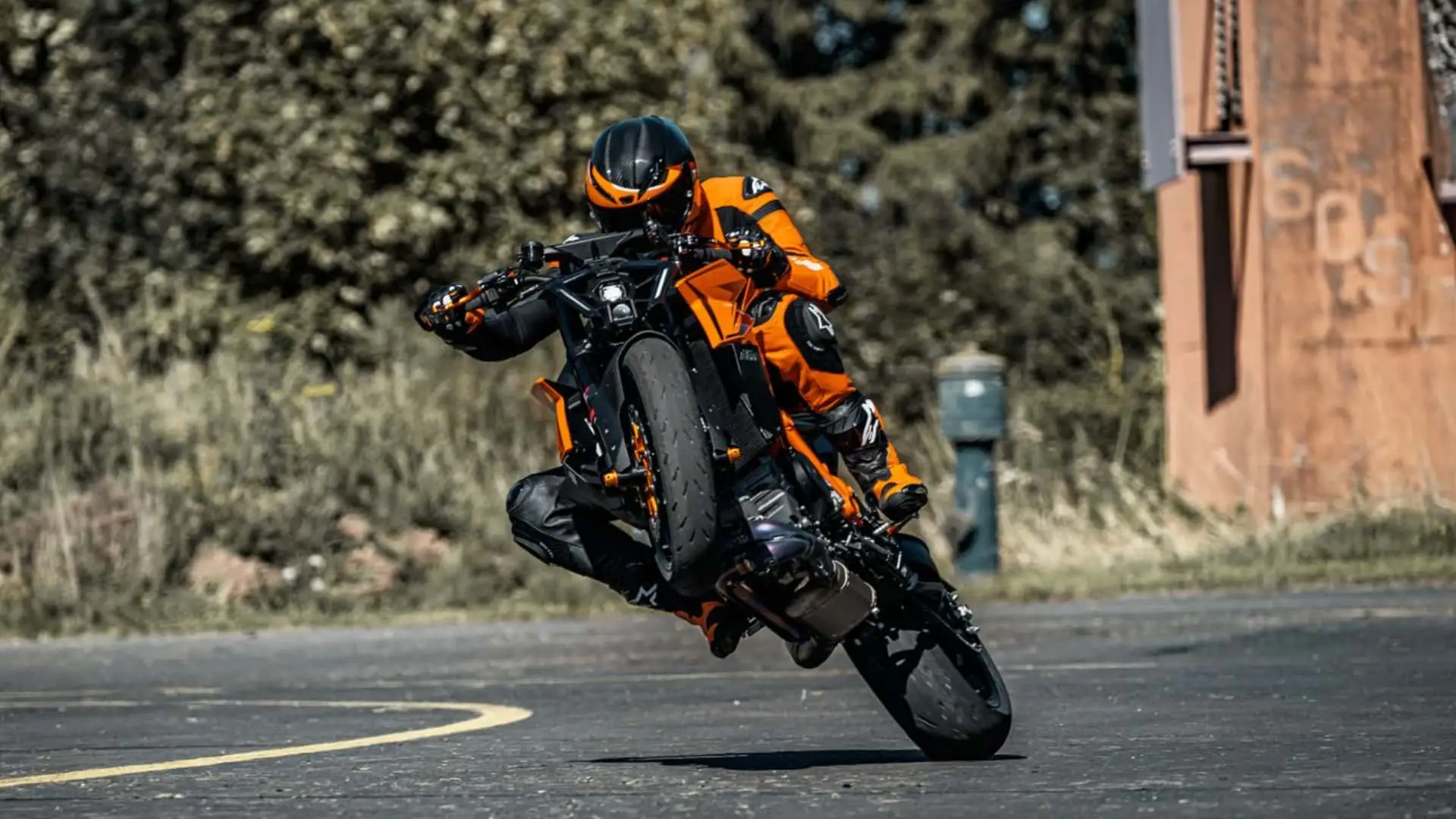
She didn’t get stronger; she became more dangerous. See the real weight and torque figures that make this bike the queen of track days.
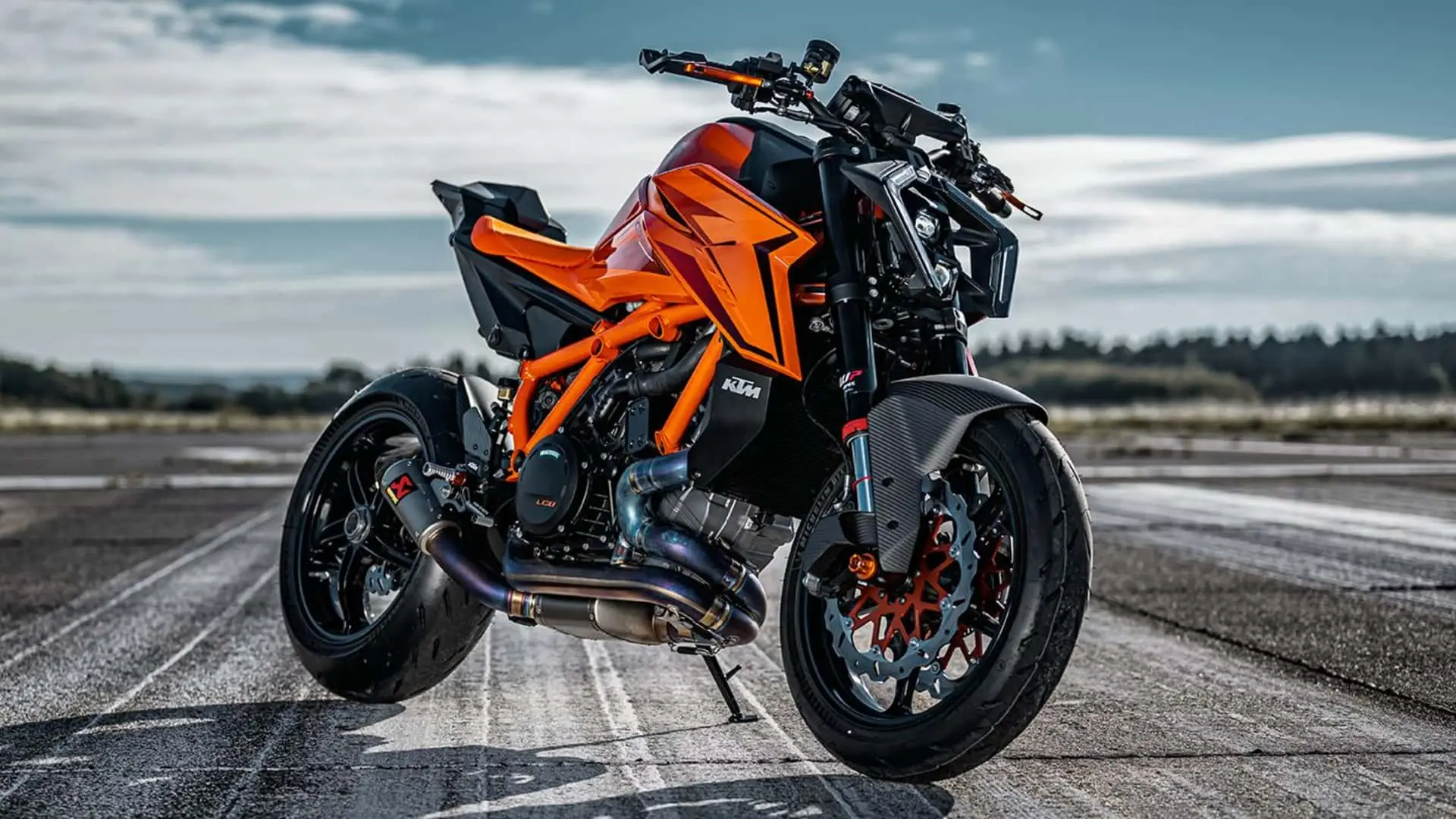
When a manufacturer decides to launch a low-volume RR (Racing Replica) edition—expensive and without concessions—they are sending a very clear message: “We are strong enough to do something that doesn’t need to please everyone.” That’s exactly what the upcoming KTM 1390 Super Duke RR 2026 seems to represent.
What European Certification Reveals (And What It Says About KTM)
The existence of the KTM 1390 Super Duke RR gained strength after certification documents surfaced in Europe—a kind of “official trace” that typically precedes announcements and launches. These records tend to be more reliable than rumors because they are pure bureaucracy: numbers, weights, measures, and versions.
But the context matters as much as the technical sheet. After a turbulent period, with behind-the-scenes noise and signs of stress, KTM returning to invest in an RR is a symbol of recovery. An RR is not a “volume product.” It is a product of image, margin, and engineering. It’s the brand saying it trusts its own future again.
This strategic reading resembles a phenomenon also seen in the automotive market: when funds are tight, companies cut emotional projects and focus on the “basic.” When momentum returns, special series, limited editions, and machines designed to make headlines emerge. If you enjoy stories about cars that have suffered drastic value drops despite being very rare, check out this irresistible click: Bentley Bacalar Drops at Abu Dhabi Auction.
Key point: what makes this RR special isn’t “more power.” It’s less weight and more focus.
RR in KTM: It’s Not About Horsepower, It’s About “Refining” The Platform
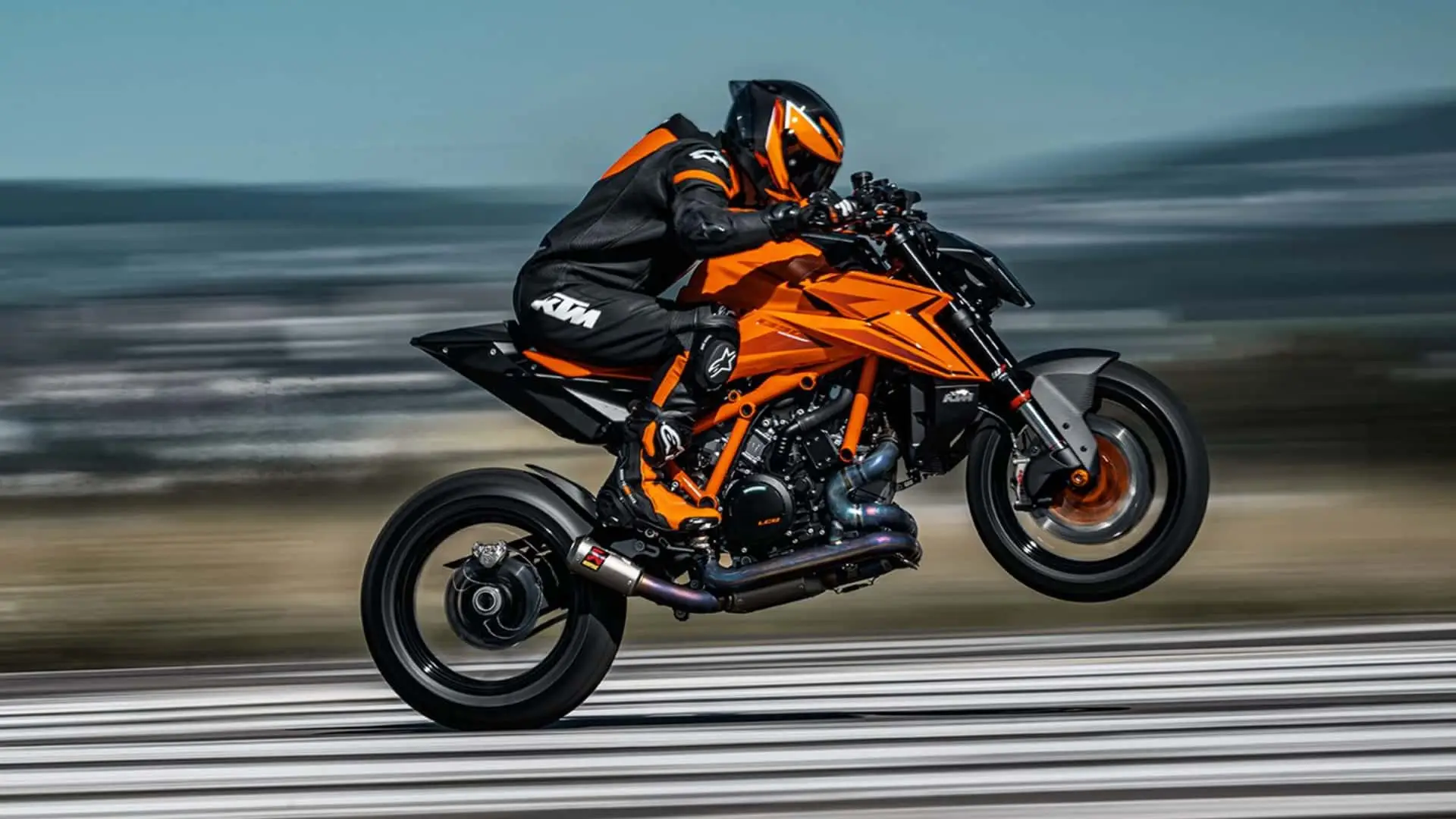
The “RR badge” at KTM has a very specific history: limited editions, more noble equipment, and an obsession with reducing mass. Instead of competing on numbers, the brand tends to work where the rider truly feels a difference on the track: agility, responsiveness, and high-load braking.
This is where the most viral promise of the 1390 Super Duke RR 2026 is born: it takes an already brutal naked bike and tries to transform it into something even more direct, more “sharpened,” and closer to a track-day tool.
“The RR isn’t trying to be the most powerful in the world. It aims to be the most efficient at turning power into usable speed.”
This aligns with a concept that many confuse: power versus torque in the real world. To understand why isolated numbers are deceptive (and why lightweight bikes “appear” stronger than they are), this text provides a dose of reality: The Brutal Truth About Horsepower Vs Torque When Towing.
KTM 1390 Super Duke RR 2026: Engine, Weight, And What Really Matters
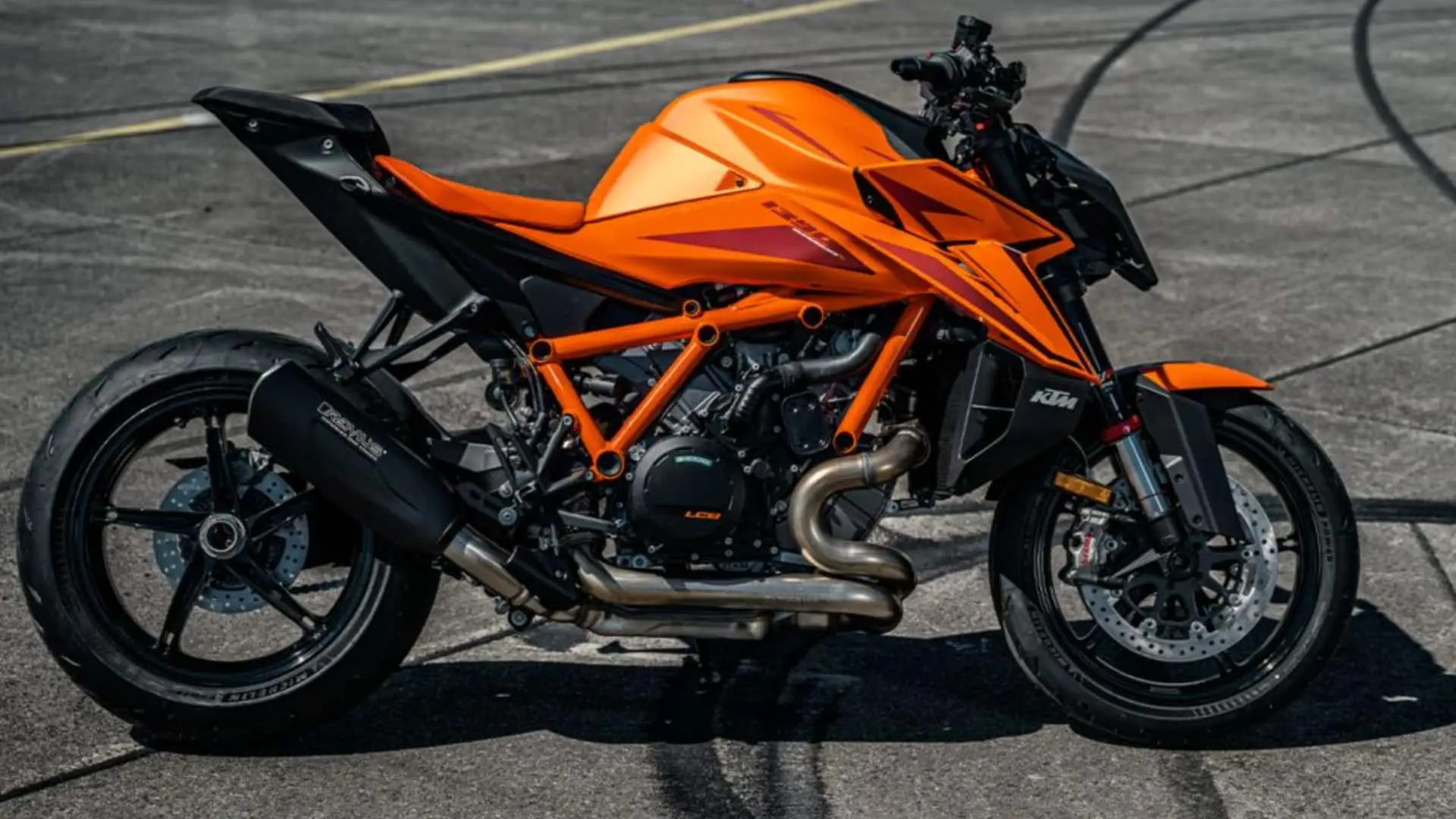
Based on the technical data circulating from certification, KTM did not change the engine’s peak power compared to the standard 1390 Super Duke R. This is bold and smart at the same time: the engine is already strong, and the real gain might be in “carrying less mass” and better controlling the bike during corner transitions.
Power And Torque: The Numbers Remain Raw
- Maximum Power: 188 hp at 10,000 rpm
- Maximum Torque: 145 Nm at 8,000 rpm
For a sport naked, this already places the Super Duke in a category where the rider “negotiates” with physics. And precisely because of this, reducing weight tends to be more transformative than gaining a few horsepower.
The Big Appeal of the RR: 7.7 Kg Less (And That’s Huge)
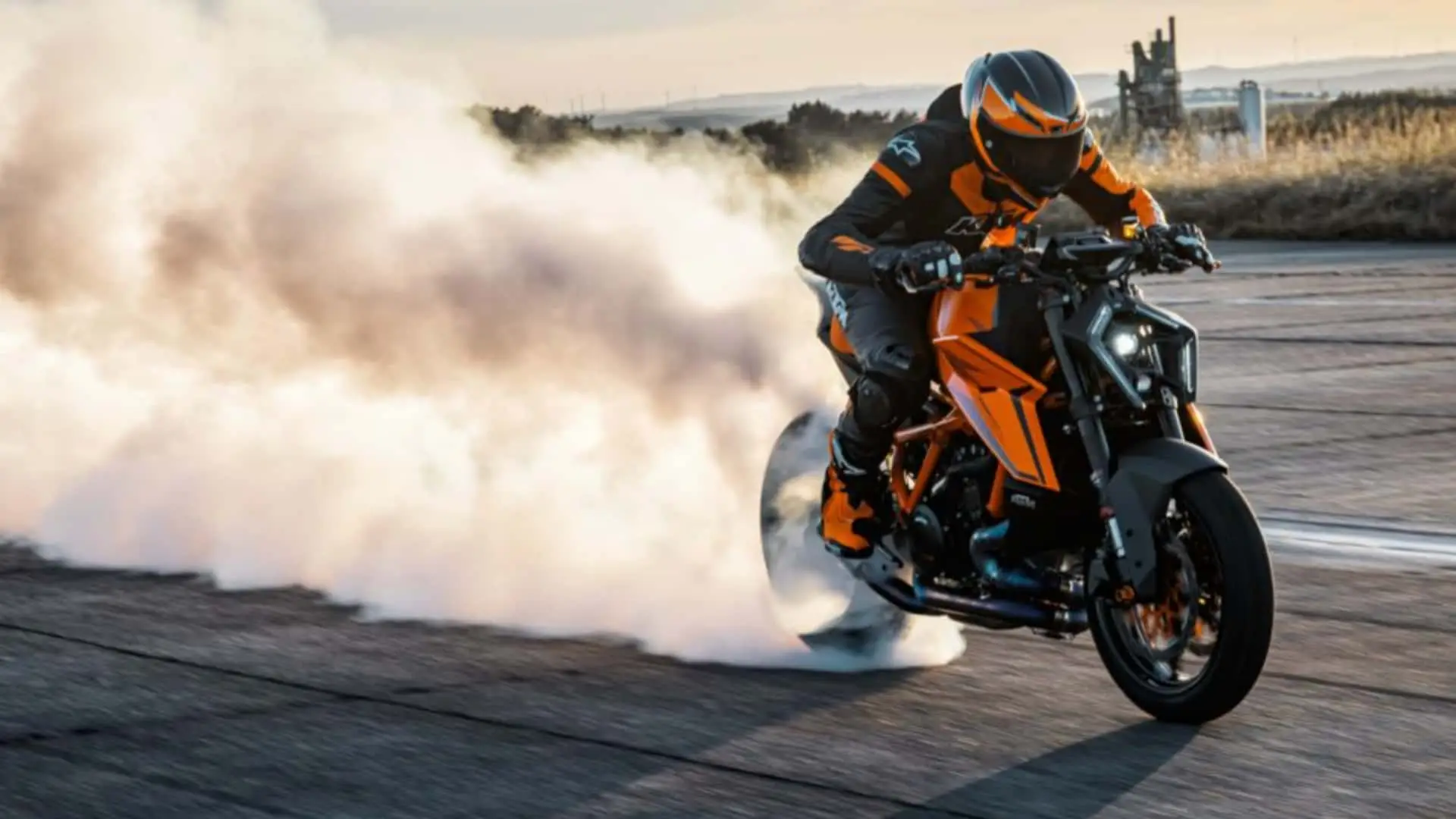
The most significant change is the weight reduction. The record indicates a decrease of approximately 17 pounds, which is about 7.7 kg. In motorcycles, 7.7 kg is a lot, especially when it comes to dynamic behavior: corner entry, quick direction changes, and stability under braking.
| Specification | 1390 Super Duke R (Reference) | 1390 Super Duke RR (2026) | Difference |
|---|---|---|---|
| Weight with full tank | 211.8 kg | 204.1 kg | -7.7 kg |
In racing language: less weight means braking later with less drama, changing sides faster, and tiring the rider less during long sessions.
How KTM Reduced the RR’s Weight: What Is Confirmed and What Makes Sense
The document points to a mass reduction item that is almost a signature of “showcase” bikes: Akrapovič titanium exhaust, street legal. Titanium isn’t just marketing: it has lower density and less weight in the upper and rear sections, where every gram influences the “pendular” feeling during direction changes.
Additionally, there is a set of components commonly found in previous RR models that makes perfect sense to achieve this diet:
- Forged Wheels: usually the best cost-benefit for real performance because they reduce unsprung and rotational mass.
- Lithium-ion Battery: small, light, and efficient for shedding a few kilos with minimal impact on usability.
- Lightweight Bodywork (like Carbon Fiber): where the RR tends to “stand out.”
- Single-Seat Tail: less focus on the passenger, more on the track, plus reinforcing the special edition look.
And a word of expert advice: not all weight reduction is equal. Removing weight from the wheels is different from removing weight from the exhaust, and different still from removing weight from the fairings. The best scenario for performance is reducing rotational mass and unsprung mass, because this improves suspension response, acceleration, and steering agility simultaneously.
By the way, if you enjoy understanding the “why” behind engineering choices (not just reading the specs), this content explains a technological change born from the pursuit of efficiency and reliability: Why Cars Switched From Distributors To Ignition Coils.
Suspension: Less Electronics, More “Hands-On” (And More Track-Focused)
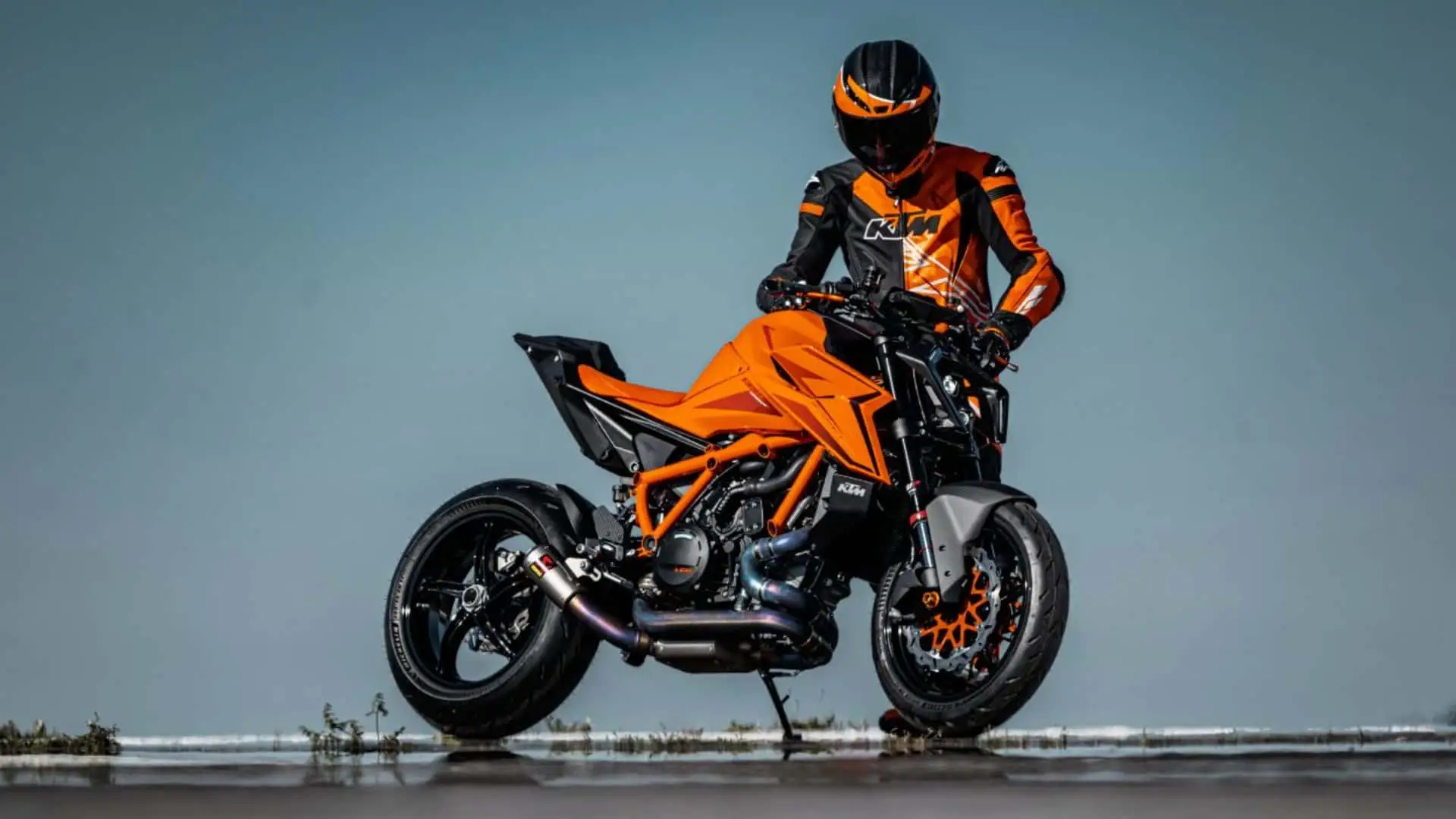
Although certification doesn’t provide a complete suspension catalog, the typical trend for an RR is to trade practicality for precision. In other words: moving from an electronic setup designed for multiple scenarios to a more “raw,” fully adjustable kit, for those who know how to fine-tune preload, rebound, and compression to shave off lap times.
If KTM follows the logic of previous RRs, it’s plausible to expect a top-tier WP package, with manual adjustments and a focus on thermal consistency under severe use. On the track, consistency is gold: the bike must behave the same at the start and at the end of a session.
Dimensions And Ergonomics: Small Changes, Big Signal
Another revealing detail is that the RR appears slightly wider around the handlebar area. This may indicate the presence of lever guards (race style), something many associate with superbikes and track days for a simple reason: they protect the levers in case of contact and reduce the risk of accidental activation.
- Width: Slight increase, possibly due to cockpit components aimed at the track.
- Wheelbase: No relevant changes (a good sign for maintaining chassis identity).
- Tires: 120/70-17 front and 200/55-17 rear, maintaining the “muscle bike stance.”
Keeping the tire sizes the same makes sense: the Super Duke is known for rear traction and presence, and the 200/55 is part of that character. The RR doesn’t want to turn into another bike; it wants to become the most focused version of itself.
When It Arrives, How Much It Costs, And Why This Bike Should Become an Obsession
The records indicate the 1390 Super Duke RR as a 2026 model. This suggests an announcement soon, but the actual schedule may vary due to logistics, production queue, and market strategy. The detail is that an RR typically arrives with limited availability and a price higher than the standard version because the cost of lightweight materials and premium components rises quickly.
Why the 1390 Super Duke RR Might Go Viral (Even Before Being Unveiled)
- Low-Volume Edition: Scarcity creates desire, and desire creates headlines.
- Significant Weight Loss: “7.7 kg less” is the kind of number every rider understands instantly.
- Street-Legal Titanium Akrapovič: An upgrade with both emotional and technical appeal.
- Track-Focus Without Abandoning Streetability: The idea of having a “civilized weapon” is extremely seductive.
There’s also an interesting parallel with the behavior of performance consumers: many are tired of “paper promises” and want to feel the difference in the real world. This applies to bikes, cars, and even discussions about energy efficiency and technological choices. An example of market mood change is here: More Buyers Are Abandoning Electric Cars and Returning to Gasoline.
Who This RR Will Make Sense For (And Who It Won’t)
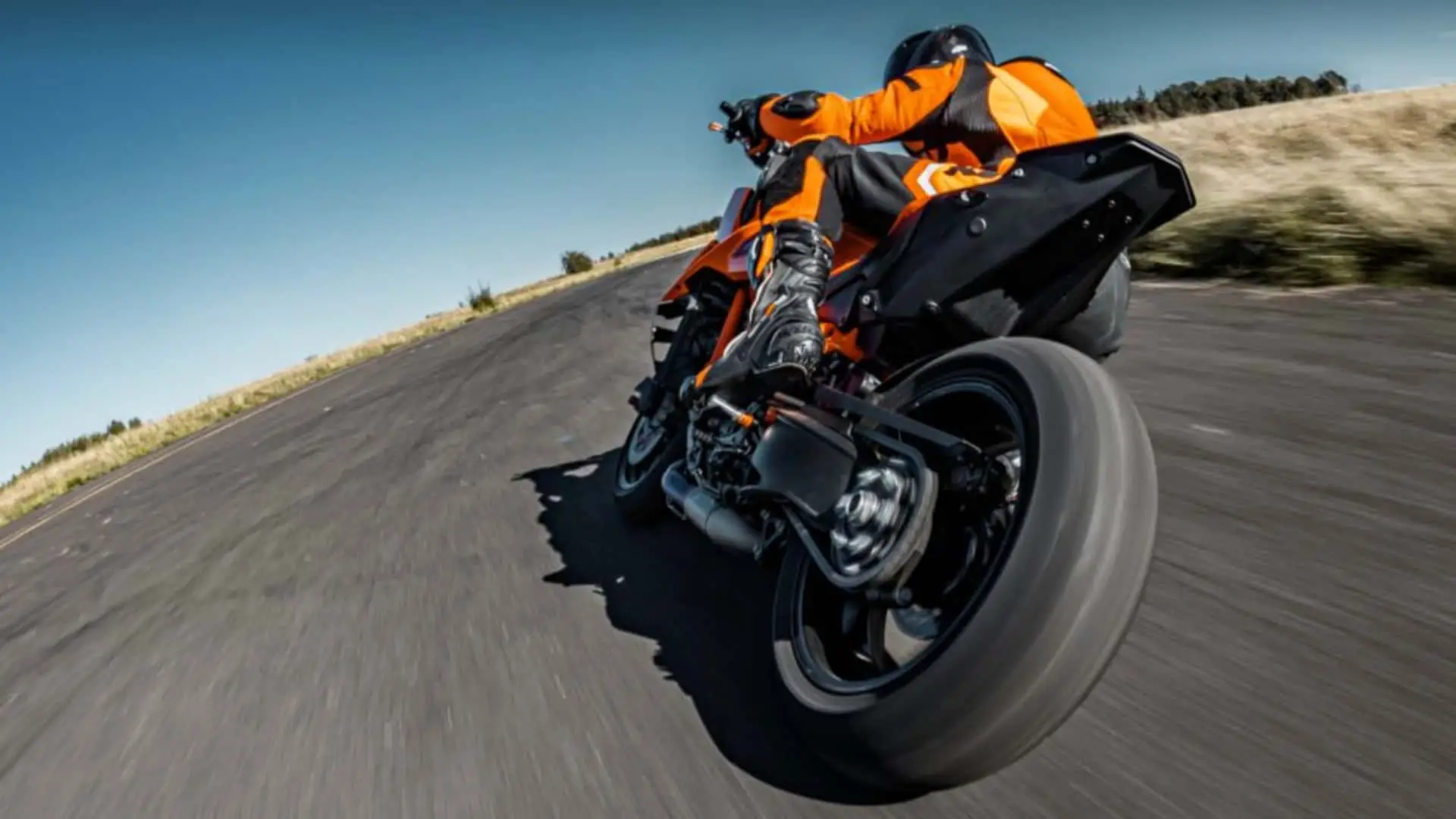
The 1390 Super Duke RR 2026 is likely to make sense for a very specific profile:
- Track Day Rider wanting a naked bike with behavior closer to a superbike, without fairings.
- Enthusiast Valuing Components (forged wheels, titanium, premium suspension) more than “+5 hp” in the listing.
- Collector who understands the value of a limited series and the future liquidity of a well-maintained RR.
On the other hand, if your use is 100% urban, with passenger comfort and maintenance costs as priorities, the RR might be “too much” in the literal sense: stiffer, more demanding, more expensive, and less tolerant.
By the way, speaking of tolerance and invisible costs, many learn the hard way how small maintenance decisions affect safety and wallet. This content is a must-click for anyone with a vehicle in the garage: Maintenance Mistakes That Are Making Your Mechanic Rich And Putting Your Safety At Risk.
What can be confidently said today: the KTM 1390 Super Duke RR 2026 doesn’t aim to win a horsepower war; it aims to win the sensation war. And for those who can read the sport, reducing weight where it matters is one of the most “expensive” and effective ways to make a bike feel different.
If KTM delivers forged wheels, a lightweight battery, carbon fiber parts, and truly track-oriented suspension, the RR is poised to be the most desirable Super Duke of the generation: not for being the strongest on paper, but for being the fastest when the track demands it.