
The IVECO S-WAY giant now drives itself! Understand the Level 4 technology that promises to eliminate accidents caused by human error.
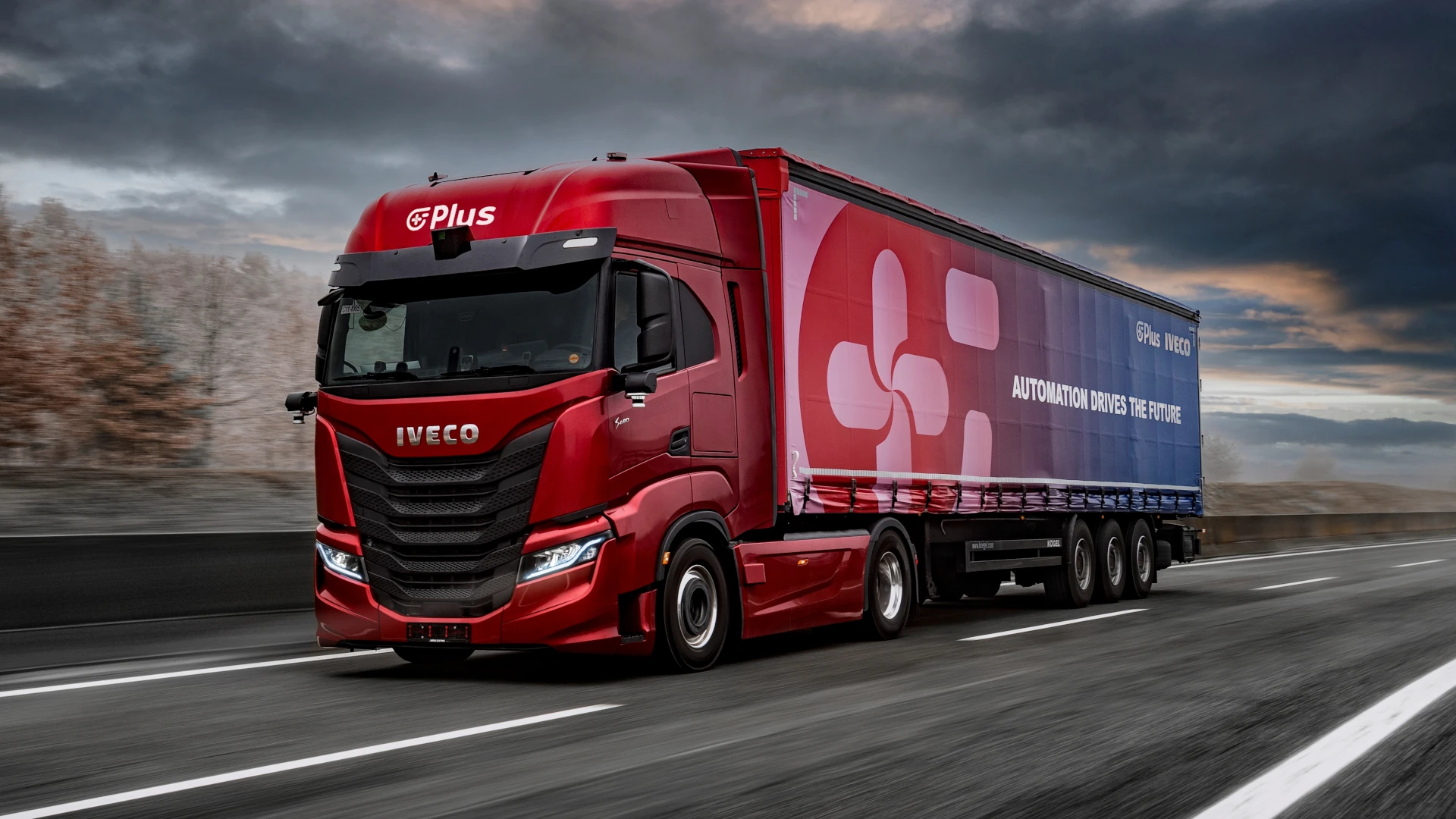
IVECO, a brand of the Iveco Group and a leader in the commercial vehicle industry, has taken a giant step toward full autonomy. In a strategic partnership with PlusAI, a global leader in virtual driving software powered by artificial intelligence, the company announced its first deployment program of heavy trucks with Level 4 autonomous driving systems in Southern Europe. This project is not just a standalone test but a structured initiative involving logistics operator Sesé and the Government of Aragón, creating a true ecosystem to validate the technology that promises to revolutionize global supply chains.
The heart of this technological revolution is the IVECO S-Way model, the brand’s heavy truck platform already renowned for its efficiency and durability. What makes these vehicles unique, however, is the integration of SuperDrive, the virtual driver software from PlusAI. Unlike simpler assistance systems, Level 4 autonomy enables the vehicle to perform all driving functions under specific conditions, without constant human intervention. While the technology can operate independently, the program ensures a safety operator is onboard during all test phases, guaranteeing that machine learning occurs under strict human supervision.
Examining the evolution of diesel engines, it’s clear that mechanical efficiency has reached impressive levels, as discussed in our article about why diesel engines have higher compression ratios than gasoline engines. Now, the challenge extends beyond fuel combustion to how the vehicle behaves in space to optimize energy use and maximize highway safety.
The Strategic Route Between Madrid and Zaragoza: The Ideal Laboratory
The project will primarily focus on one of the most critical freight corridors in the Iberian Peninsula: the route connecting Madrid to Zaragoza. Covering approximately 300 kilometers (184 miles), this route features diverse traffic and ideal infrastructure conditions for developing highly complex autonomous systems. Selecting Zaragoza, the capital of Aragón, is no coincidence, as the city has established itself as a strategic logistics hub for all of Europe.
Starting in 2026, trucks equipped with Level 4 technology will begin operating on these commercial routes for Sesé. This multi-year testing phase will gather essential data on how artificial intelligence responds to various weather conditions, traffic densities, and complex interactions with human drivers. The ultimate goal is to develop a transportation solution that is cleaner, smarter, and, above all, safer.
Road safety is arguably the strongest argument in favor of autonomous driving. Global statistics show that most accidents involving heavy vehicles are primarily due to human error, whether caused by fatigue, distraction, or poor judgment. Systems like PlusAI’s SuperDrive provide instant and continuous reaction capabilities, eliminating biological variables that compromise safety. This trend toward automation and connectivity is already evident in other sectors, such as in the large alliance between Panasonic and Amazon Zoox, focusing on urban robotaxi fleets.
Sustainability and Efficiency: Shaping the Future of Supply Chain Logistics
Beyond safety, operational efficiency is a core focus of the IVECO and PlusAI partnership. Autonomous trucks operate more smoothly, optimizing gear shifts, acceleration, and braking, which leads to significant reductions in fuel consumption and CO2 emissions. In a world eager to reduce its carbon footprint, autonomy is a powerful tool for making long-distance transportation more sustainable.
Shawn Kerrigan, COO and co-founder of PlusAI, emphasizes that autonomous trucks have the potential to transform global freight transportation. Collaborations in Spain and Germany demonstrate how this technology can enhance the competitiveness of European supply chains. The next step is integration with intelligent traffic systems, a trend already underway with GPS systems that control traffic lights intelligently to reduce congestion and lost time.
The freight market faces growing challenges, including driver shortages and the pressure for faster deliveries. Level 4 automation isn’t meant to immediately replace human drivers but to alleviate the workload on long, monotonous highway runs, enabling professionals to focus on higher-value tasks like last-mile logistics or complex loading and unloading operations.
Despite advances in electrification, many buyers remain hesitant about a full transition, as evidenced by the fact that more buyers are returning to gasoline and diesel engines in certain segments. For heavy transport, hybrid solutions combining mechanical efficiency with advanced artificial intelligence offer the most realistic and immediate path to both commercial viability and ecological sustainability.
The Role of Artificial Intelligence and Machine Learning
What sets IVECO’s program apart is the depth of AI integration. PlusAI’s SuperDrive software employs a combination of advanced sensors—including LiDAR, radars, and high-definition cameras—to generate a 360-degree view around the truck. These data are processed in milliseconds by algorithms that continuously learn from each mile traveled.
This learning capability is crucial for handling rare and unforeseen situations, known as corner cases, which are difficult for humans to predict manually. AI “learns to drive” by observing safety patterns and optimizing trajectories—similar to the approach used by Xiaomi’s new AI system that learns to drive autonomously.
The partnership between Iveco Group and PlusAI has spanned several years, with successful Level 2+ (partial autonomy) testing in various markets. The move to Level 4 in Spain and Germany signifies a maturing collaboration. For Iveco Group, vehicle automation is a strategic priority, as highlighted by Marco Liccardo, the company’s Director of Technology and Digital. He emphasizes that this project brings the brand closer to providing customers with cutting-edge technology for more sustainable transportation.
“Autonomous vehicles are transformative technologies that can greatly improve road safety and reshape freight transportation worldwide,” says Shawn Kerrigan of PlusAI.
As testing advances, industry observers are watching closely. The success of this program along the Madrid-Zaragoza route could establish regulatory standards for the entire European Union and serve as a model for other regions. Autonomous transportation is no longer a distant promise but a rapidly approaching reality that will reach logistics centers in less than two years.
Comparison Table: Levels of Autonomy in Freight Transport
| Level | Description | Human Intervention |
|---|---|---|
| Level 2+ | Advanced assistance (ADAS) with lane control and adaptive cruise control. | Mandatory and continuous. |
| Level 3 | Conditional autonomy on specific highways. | Required when prompted by the system. |
| Level 4 | High autonomy in designated areas or routes. | Minimal or none on the route; operator present for testing. |
| Level 5 | Full autonomy under any condition or location. | None. |
The journey toward full autonomy is accelerating. With IVECO and PlusAI leading the way in Europe, the future of freight transportation appears safer, more efficient, and highly innovative. Their commitment to innovation and sustainability will transform Spanish roads into the first major stage of this global shift—impacting everything from large exporters to consumers awaiting their deliveries at home.