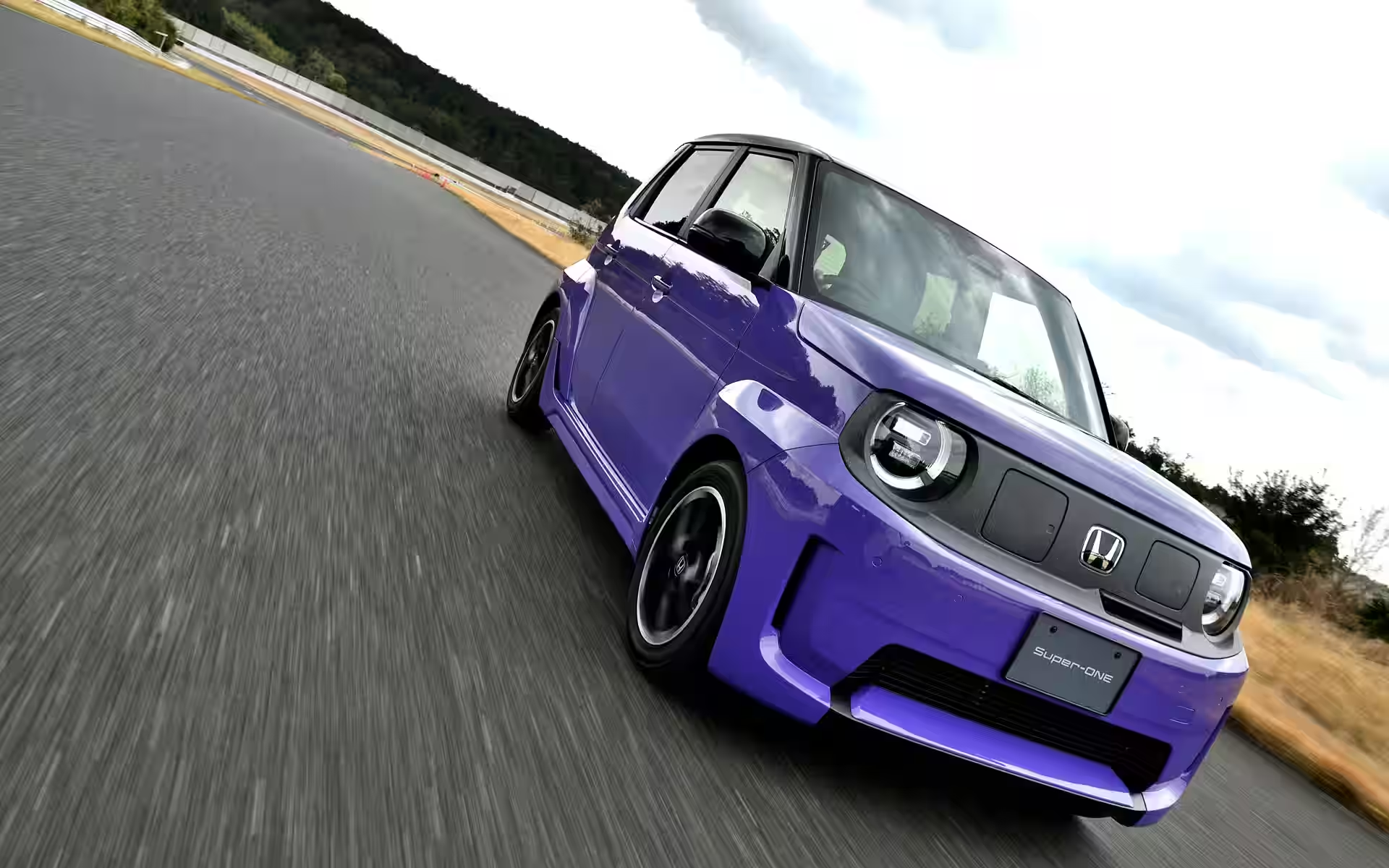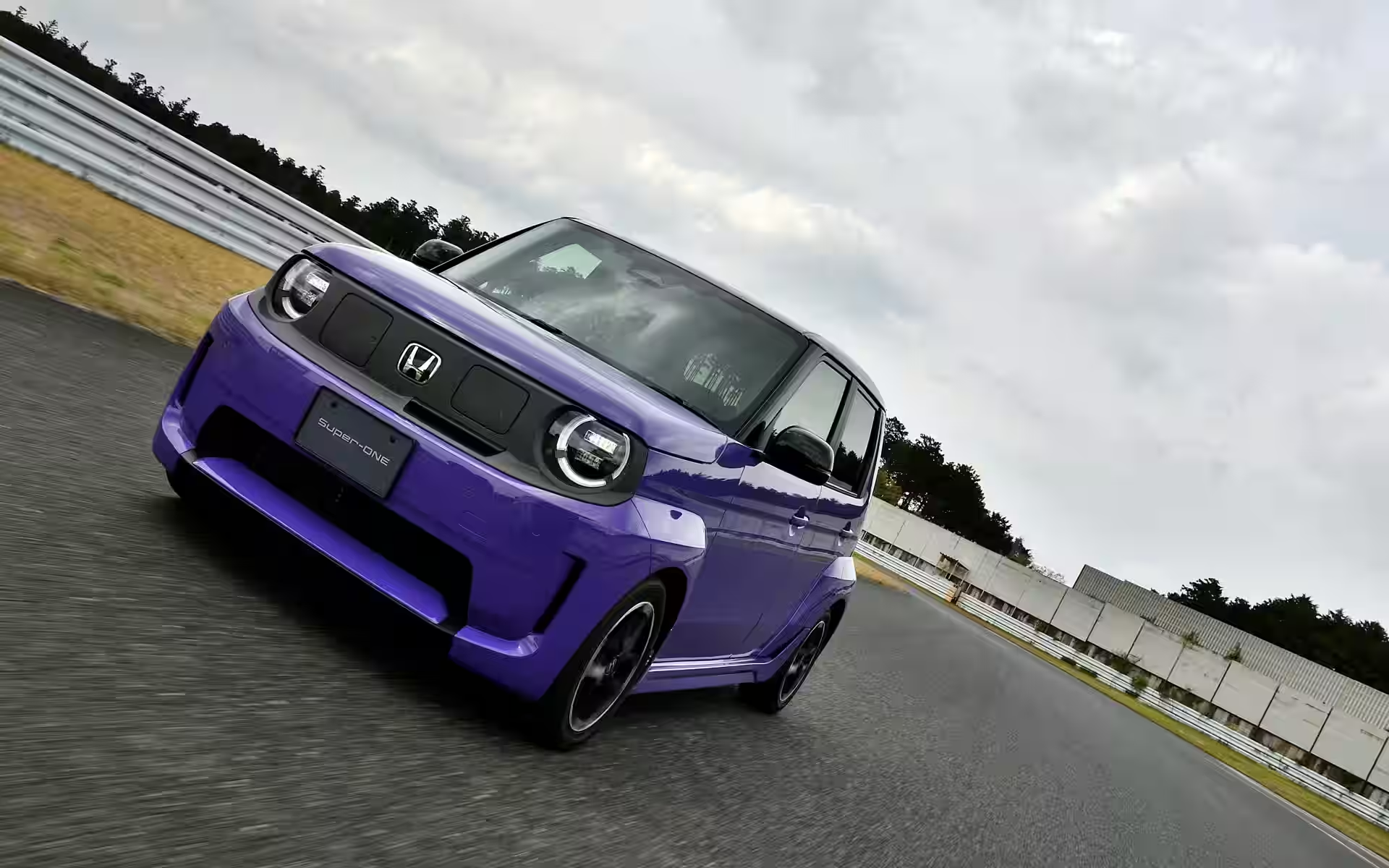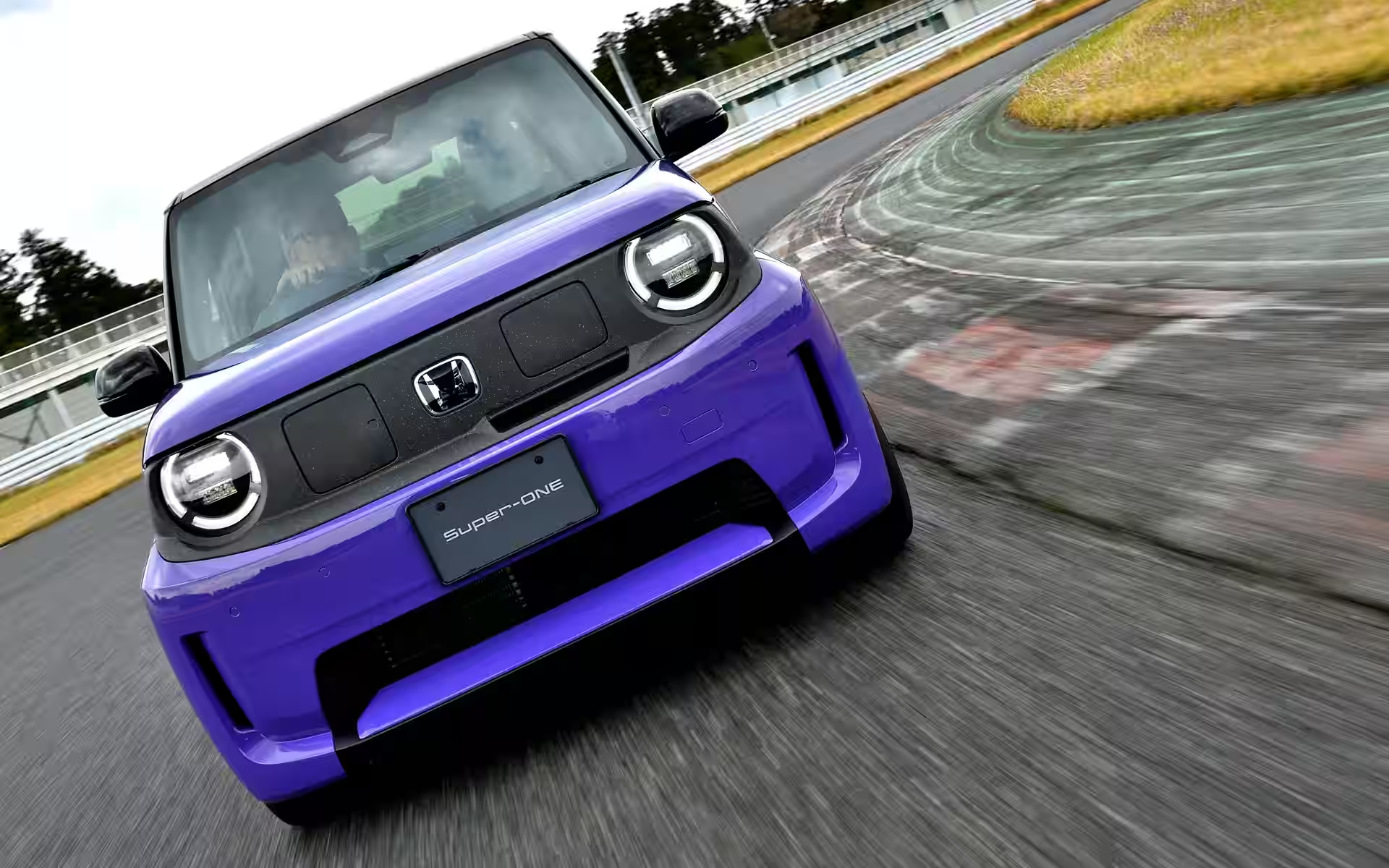
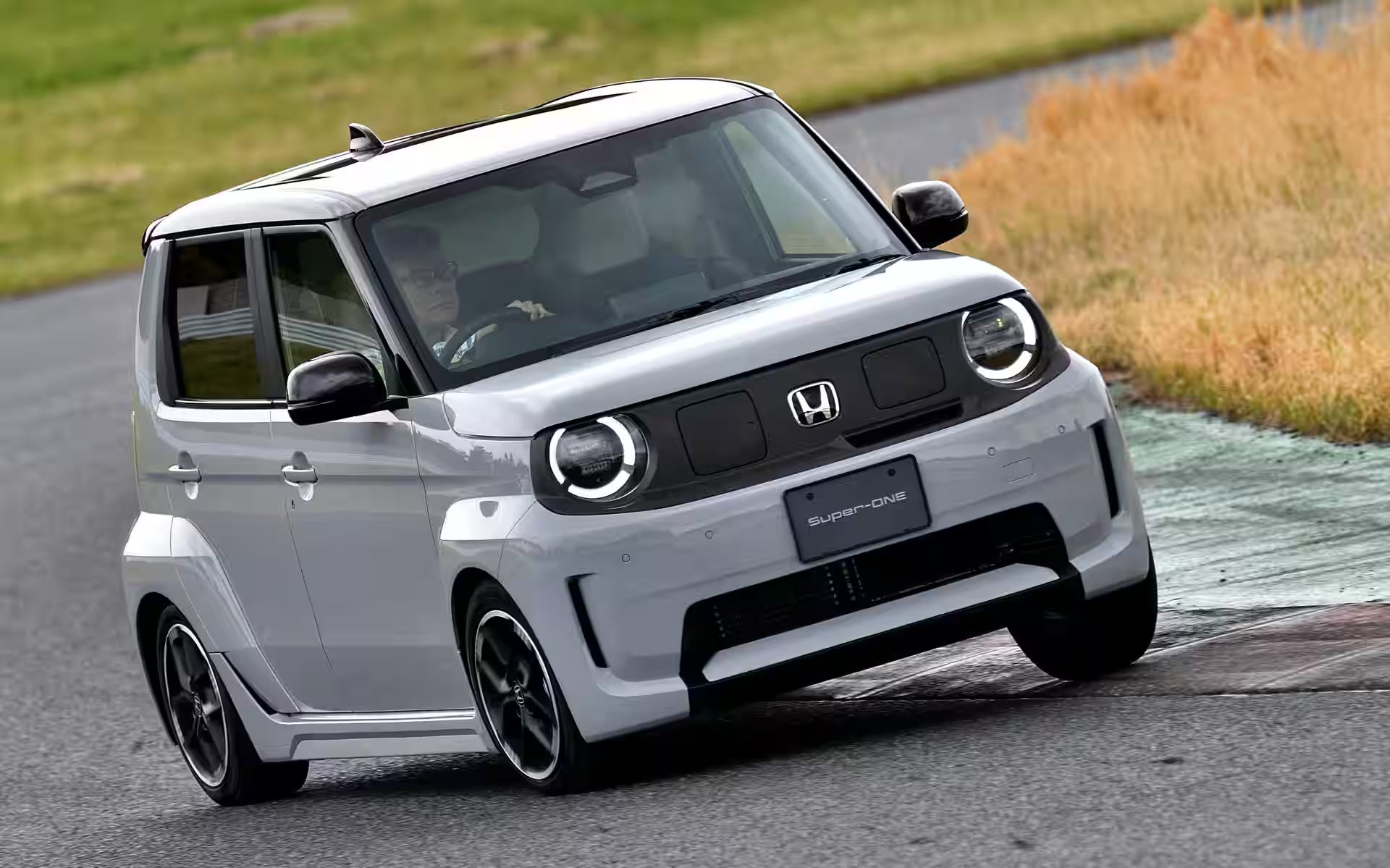
The Honda Super-ONE is not trying to be the fastest EV on the planet. It is trying to be the most fun small electric car you can actually drive hard. And after a circuit run, that mission looks very real.
A Small Honda EV With Big Driver Energy
Honda’s new Super-ONE is a compact battery electric vehicle built around a simple but powerful idea: make a small EV feel light, playful, and easy to place on a racetrack. Official development details now point to a launch scheduled for late May 2026, and the car has already moved from concept to a near-production prototype with a very clear identity.
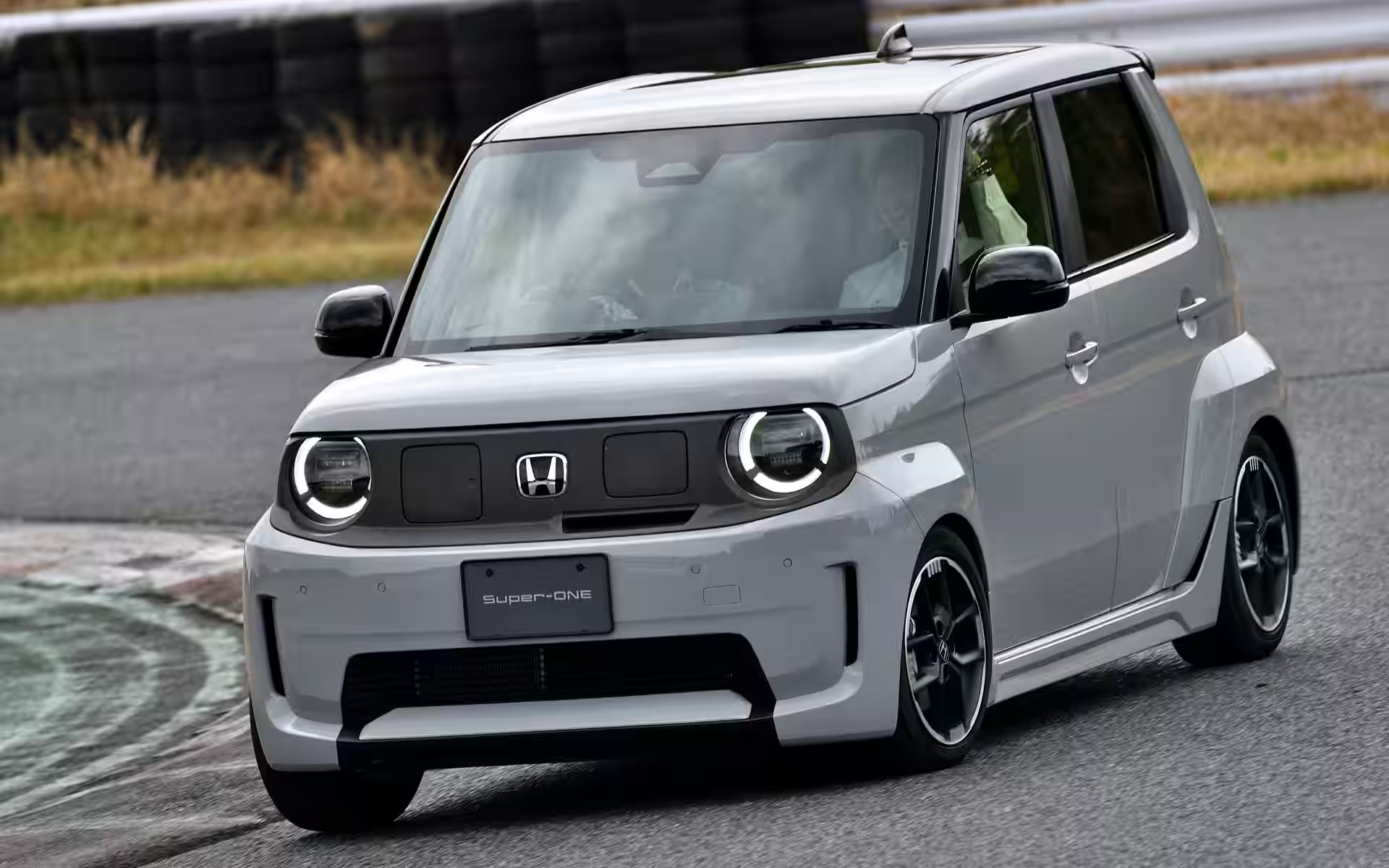
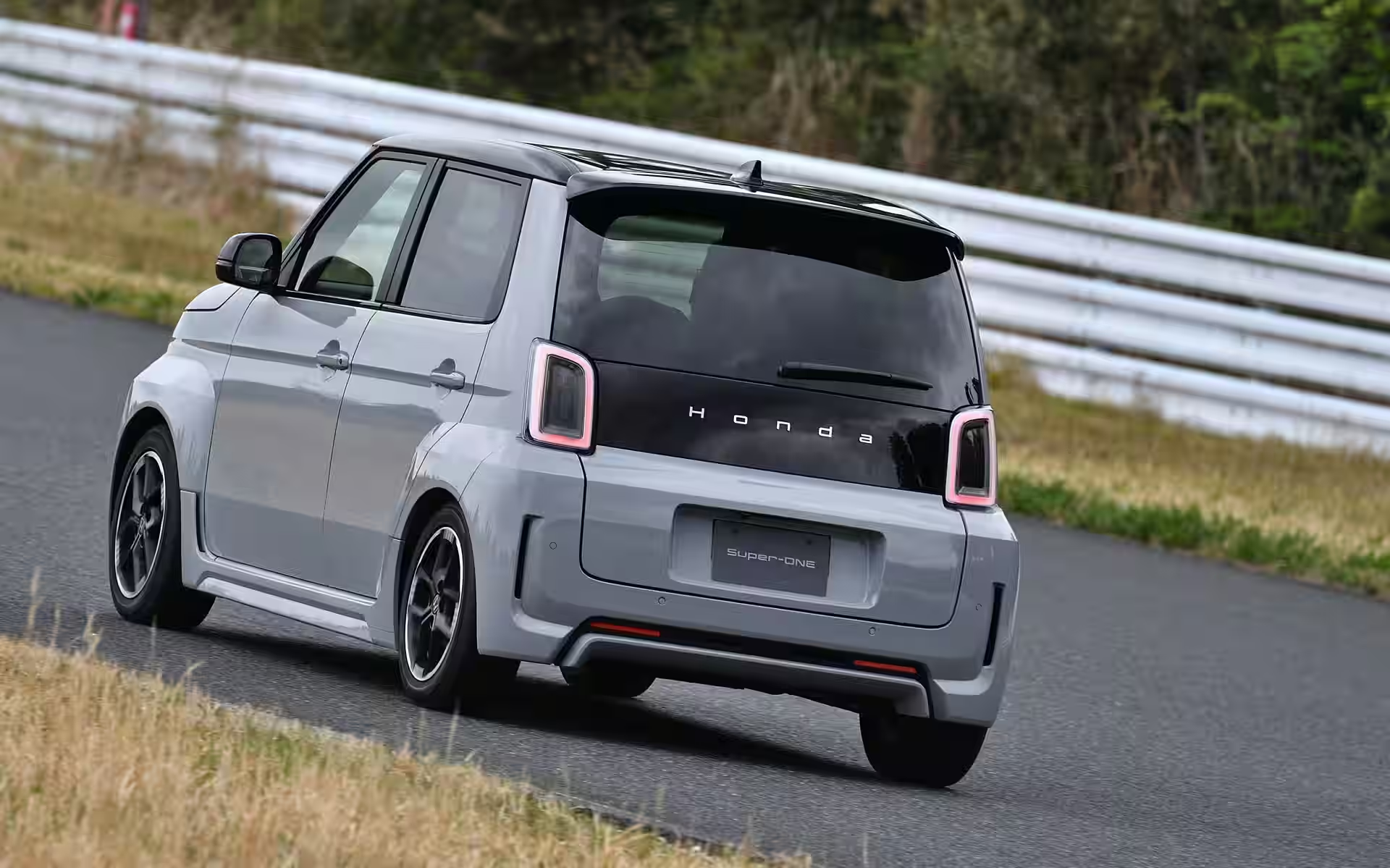
At first glance, the shape is pure attitude. The wide stance, boxy proportions, and performance bodywork evoke the spirit of classic hot hatch icons, but the engineering underneath is much more modern. One of the most talked-about details is the 1,090 kg curb weight, which is impressively low for a mainstream electric passenger car. That number matters because lightness helps with everything that makes a car feel alive: acceleration, braking, cornering, and even efficiency.
The battery package remains close to the related N-ONE e:, using a unit around 29.6 kWh, while the claimed driving range lands at 274 km under Japan’s testing cycle. Honda also widened the car’s footprint with larger tires and a more aggressive chassis setup, making it clear this is not just a dressed-up commuter EV.
If you follow compact performance cars, this is the kind of machine that sits in the same conversation as other clever small-package experiments. For more context on how the market is shifting toward value-packed electrification, see GEELY Galaxy A7 EV and the price war or the tech-driven approach in Kia EV3 2027.
The Chassis Changes That Make It Feel Sharp
Honda did not stop at making the Super-ONE lighter than many rivals. The company also reworked the suspension and body structure to lower the center of gravity and sharpen the car’s behavior in quick transitions. The battery is mounted low and centrally, helping the car achieve a center of gravity of about 520 mm, compared with roughly 590 mm for the N-ONE RS.
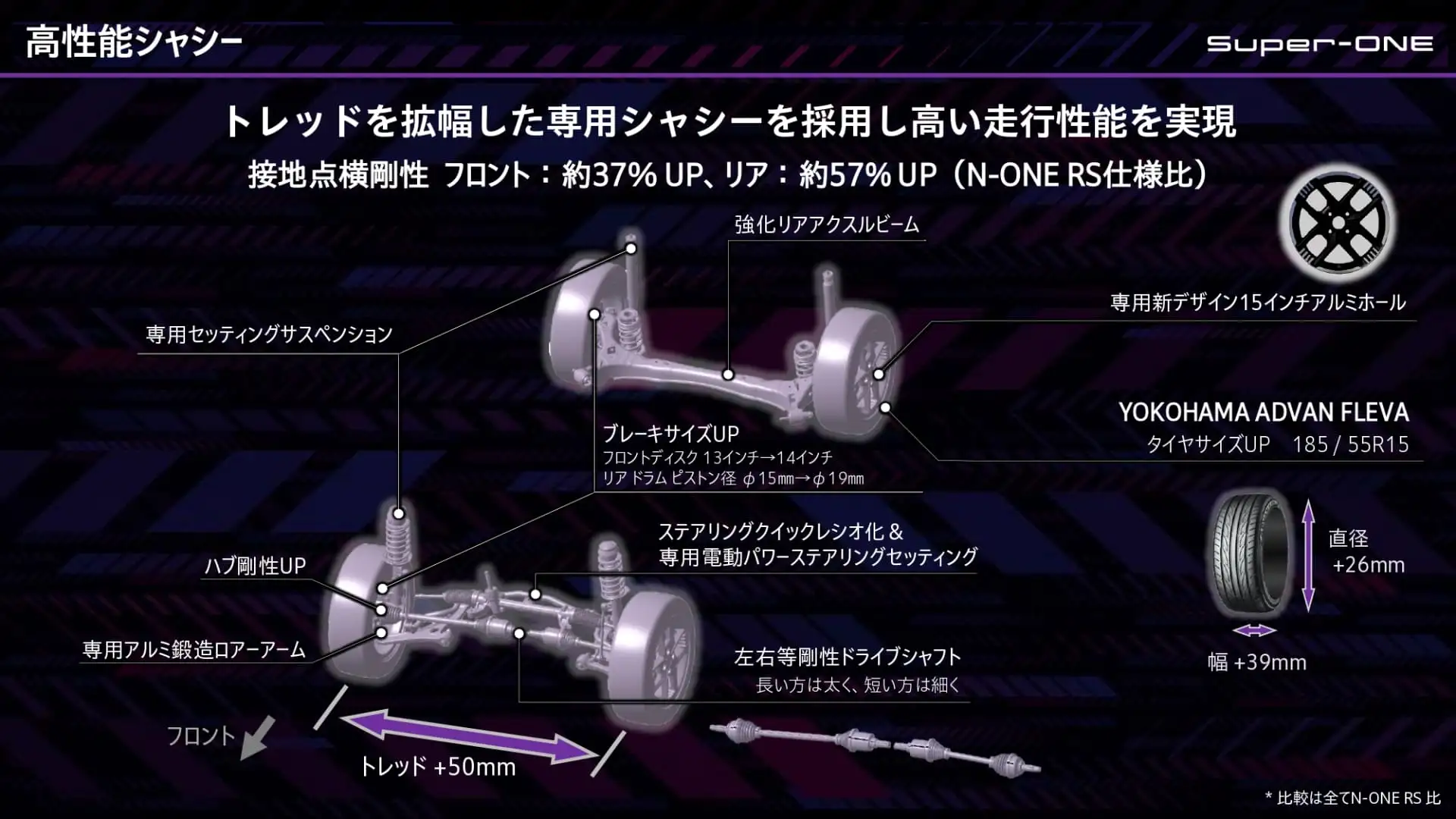
That change sounds small, but in dynamic driving it is huge. A lower center of gravity reduces body roll and helps the car change direction faster. Honda also widened the track by 50 mm and strengthened multiple suspension and rear-axle components. The front received revised arms, knuckles, brakes, springs, dampers, stabilizer bars, and bushings, while the rear was reinforced with upgraded hub and compliance-bushing changes. In short, the chassis was tuned to feel more planted without becoming harsh.
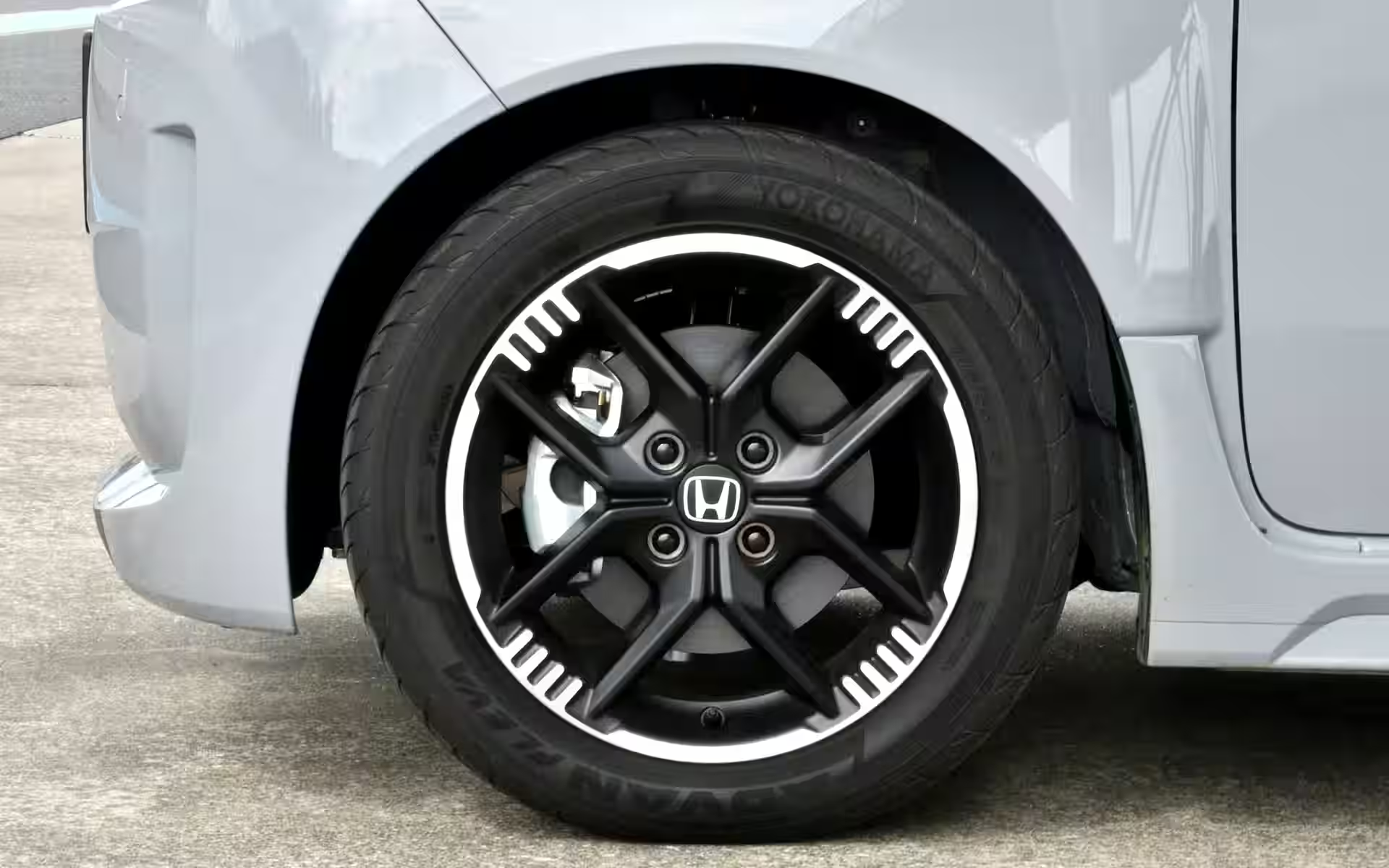
The tire choice reinforces that goal. The Super-ONE uses 185/55R15 Yokohama ADVAN FLEVA tires, a meaningful step up from the smaller rolling stock used on the base model. The result is a car that feels willing to turn, yet still accessible enough that the driver does not need race-car reflexes to enjoy it.
Honda’s biggest trick here is not brute force. It is balance. The Super-ONE seems engineered so ordinary drivers can tap into its limits without fear, which is often the real secret behind a memorable performance car.
That philosophy is similar to what makes the Toyota Corolla FX 2026 and Volkswagen Golf R 2026 so compelling in very different ways: the best cars are often the ones that feel smaller, tighter, and more honest than their spec sheets suggest.
BOOST Mode Turns a Cute EV Into a Proper Toy
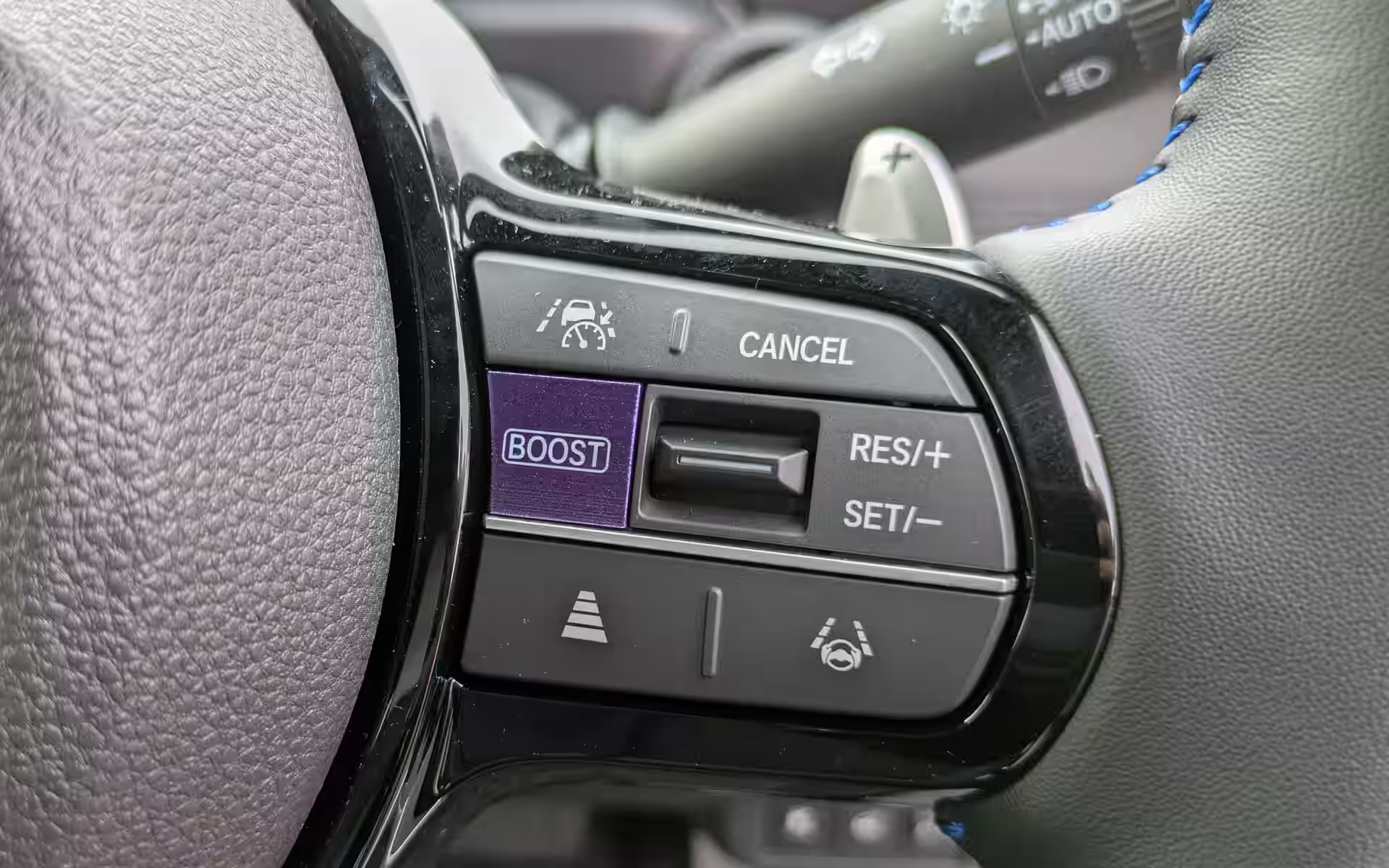
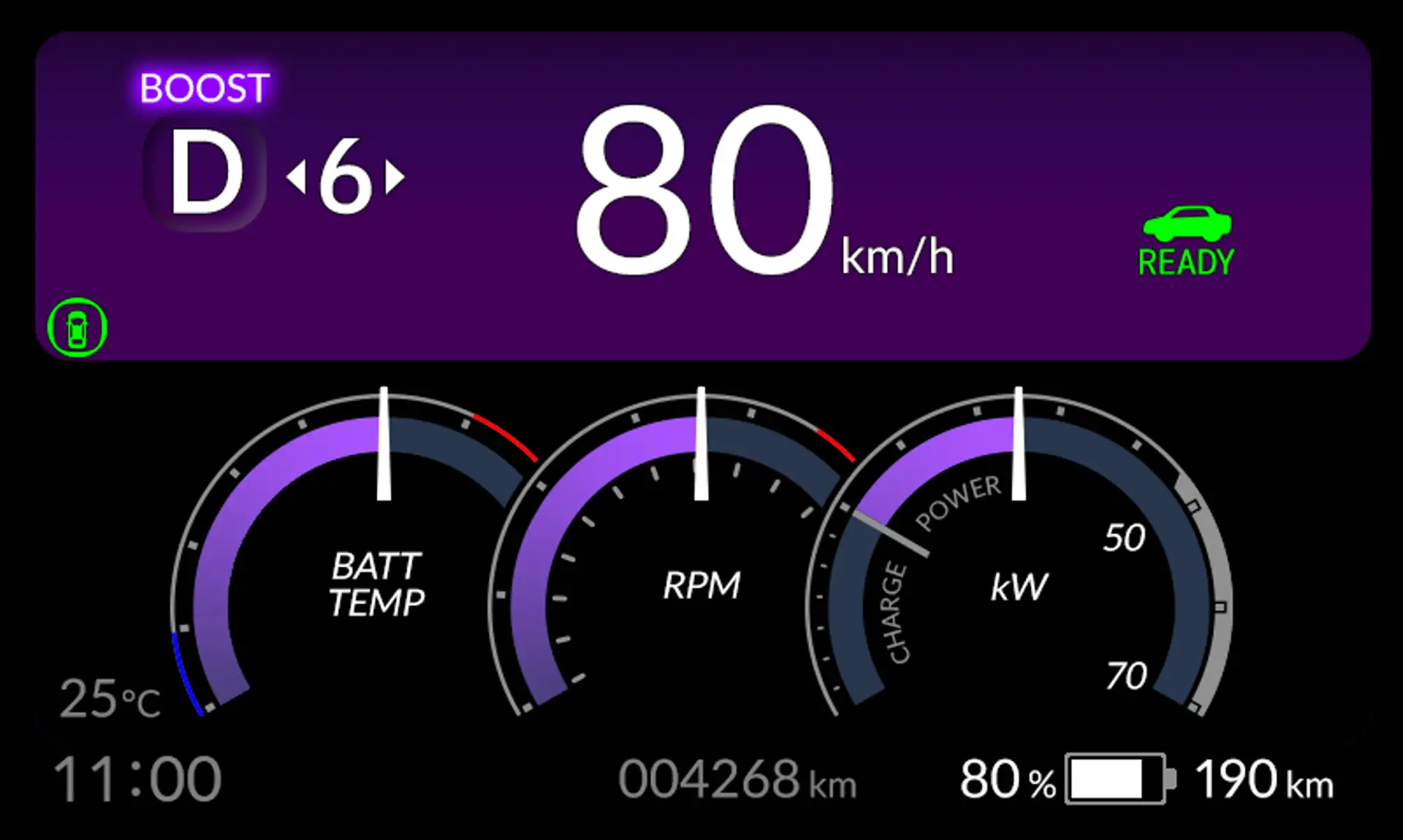
The headline feature is clearly BOOST mode. In normal driving, the Super-ONE delivers about 47 kW of output, but when BOOST is activated, power rises to 70 kW. For a vehicle of this size, that kind of jump changes the personality of the car. It is not just faster; it feels more urgent, more eager, and more entertaining at higher speeds.
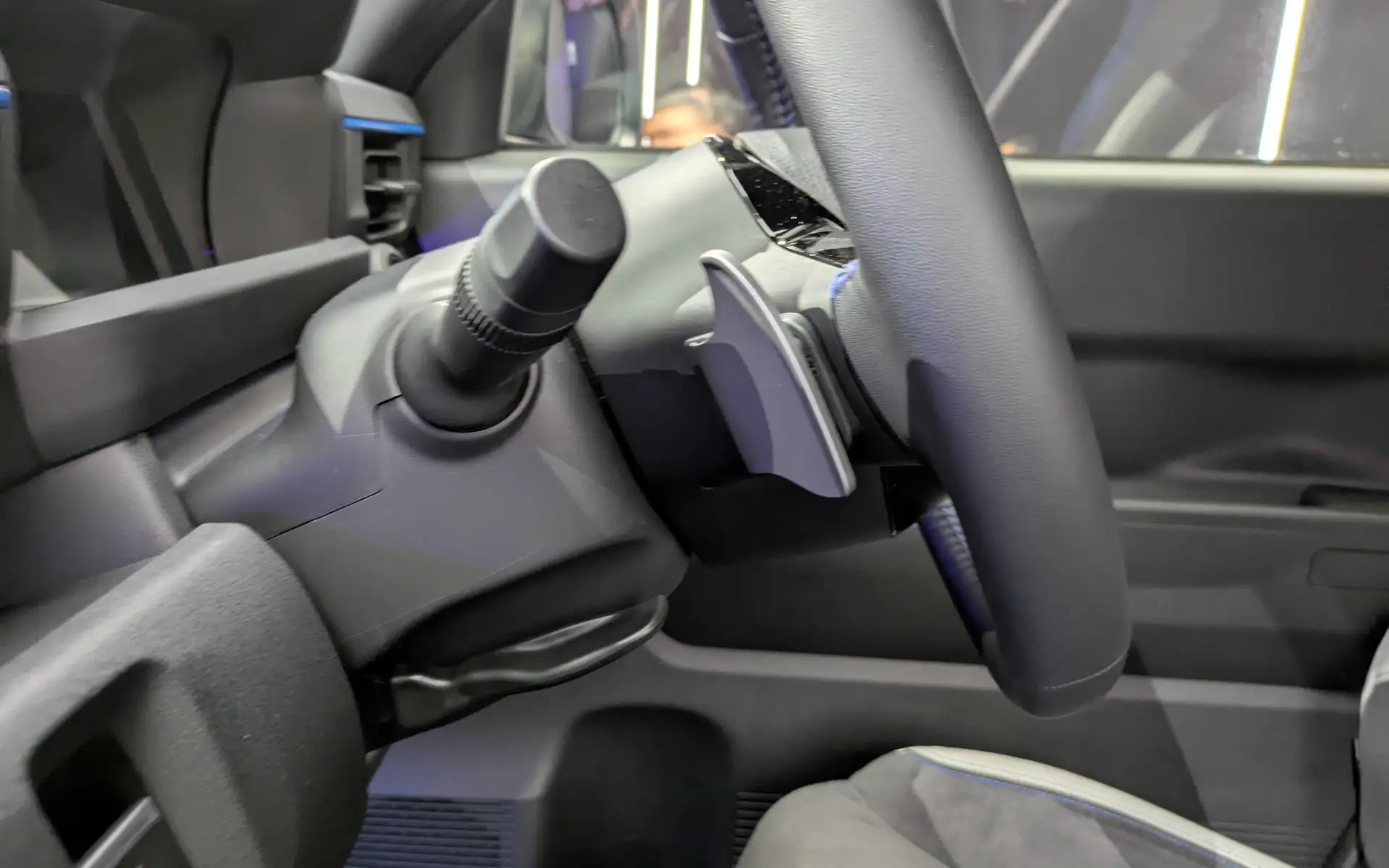
Honda also leaned heavily into theater. The car adds a BOSE premium audio system that synthesizes a sporty engine-like sound, while virtual gear-shift logic creates the sensation of a 7-speed DCT. That means the Super-ONE can deliver artificial shift jolts, rev-limit style interruptions, and paddle-controlled manual-style operation. It is a deliberately playful setup, designed to satisfy drivers who miss the engagement of a gasoline hot hatch.
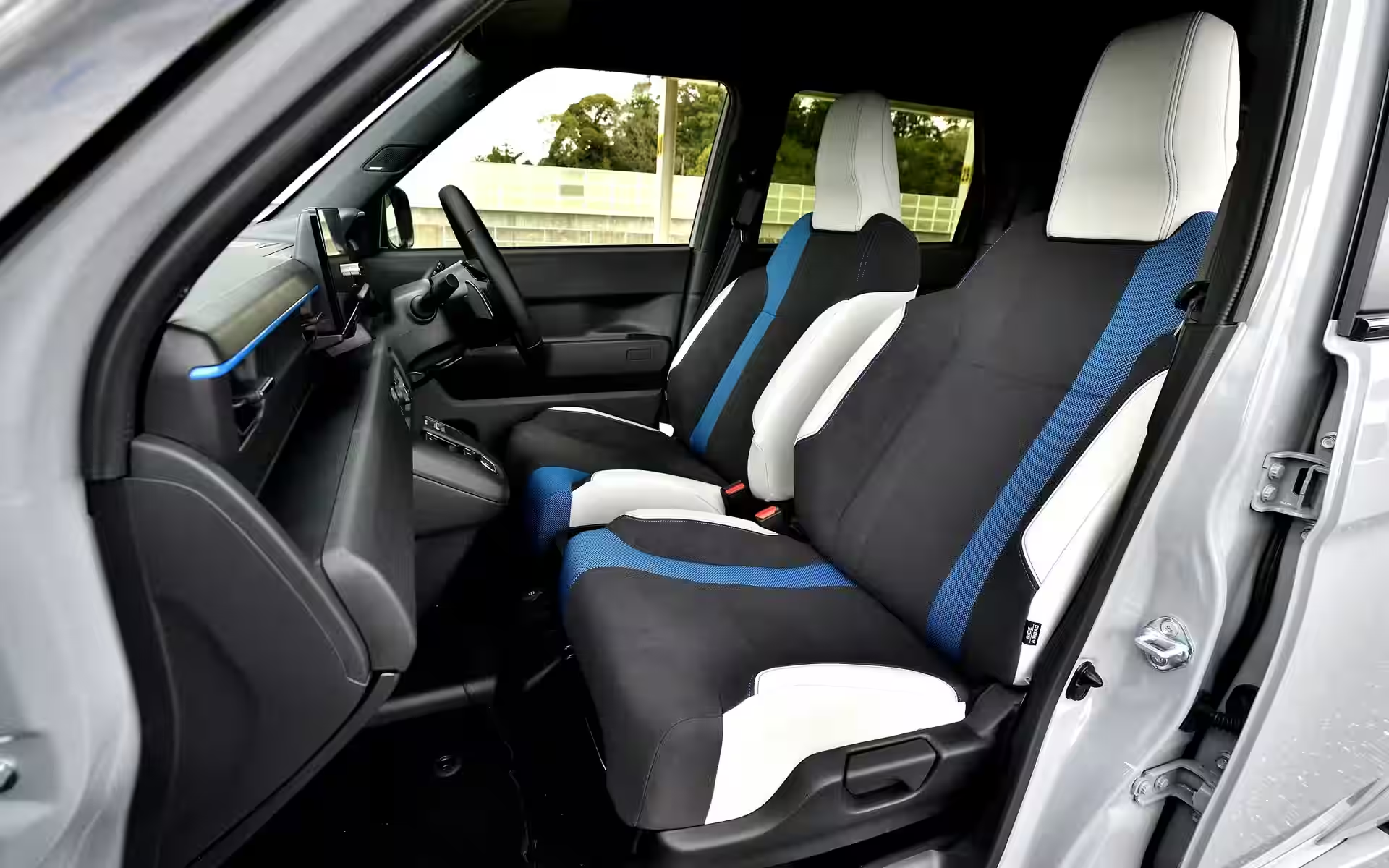
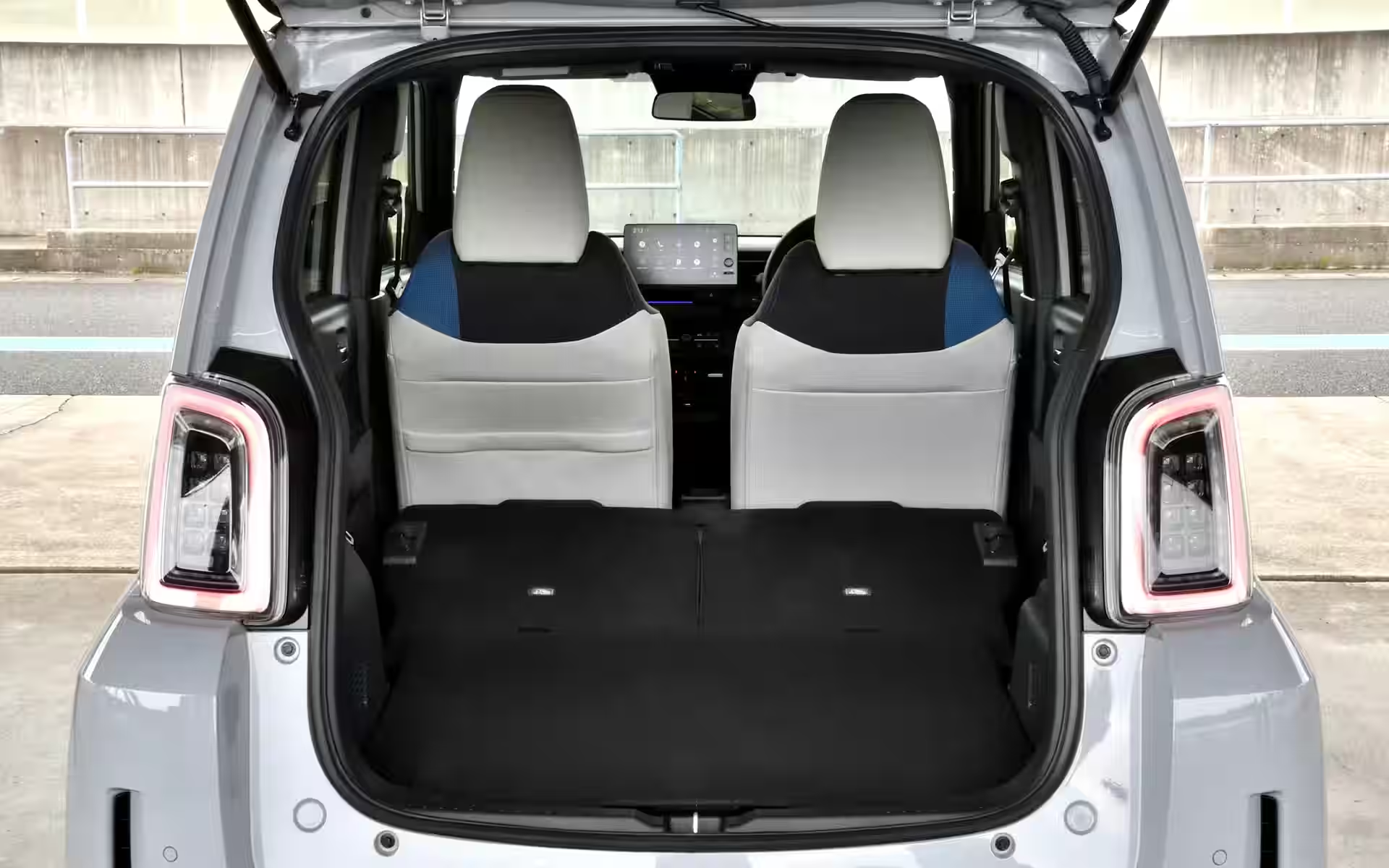
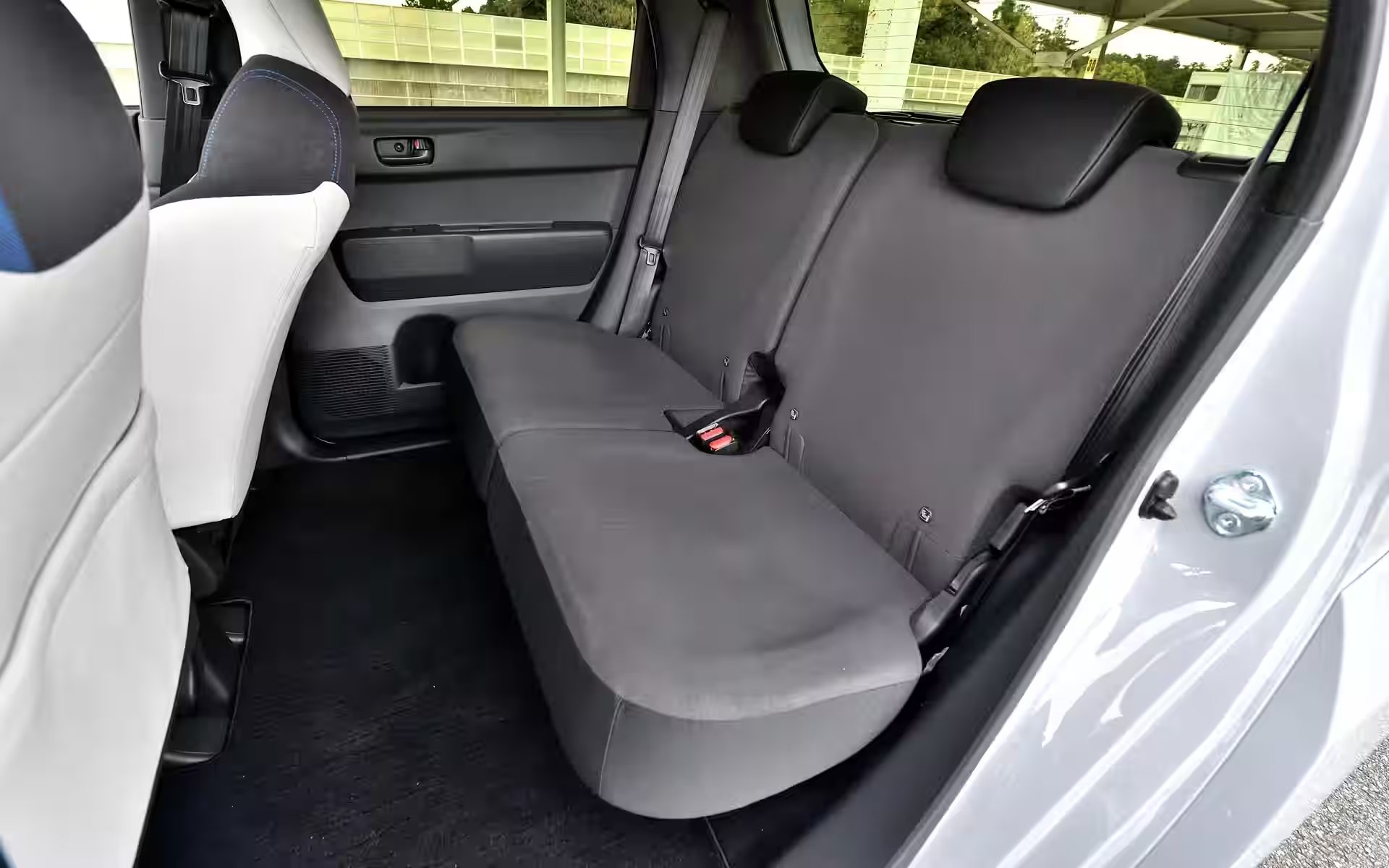
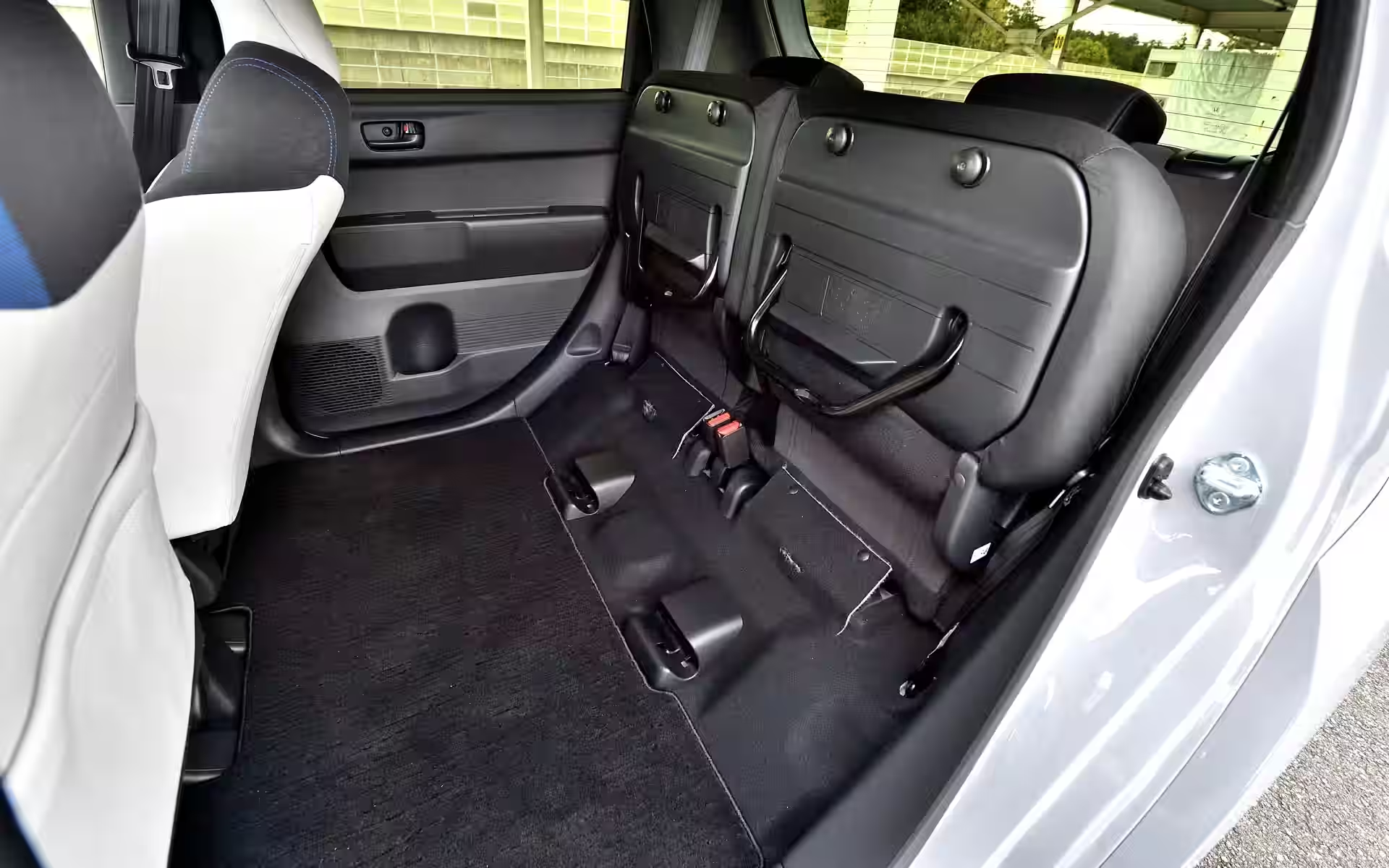
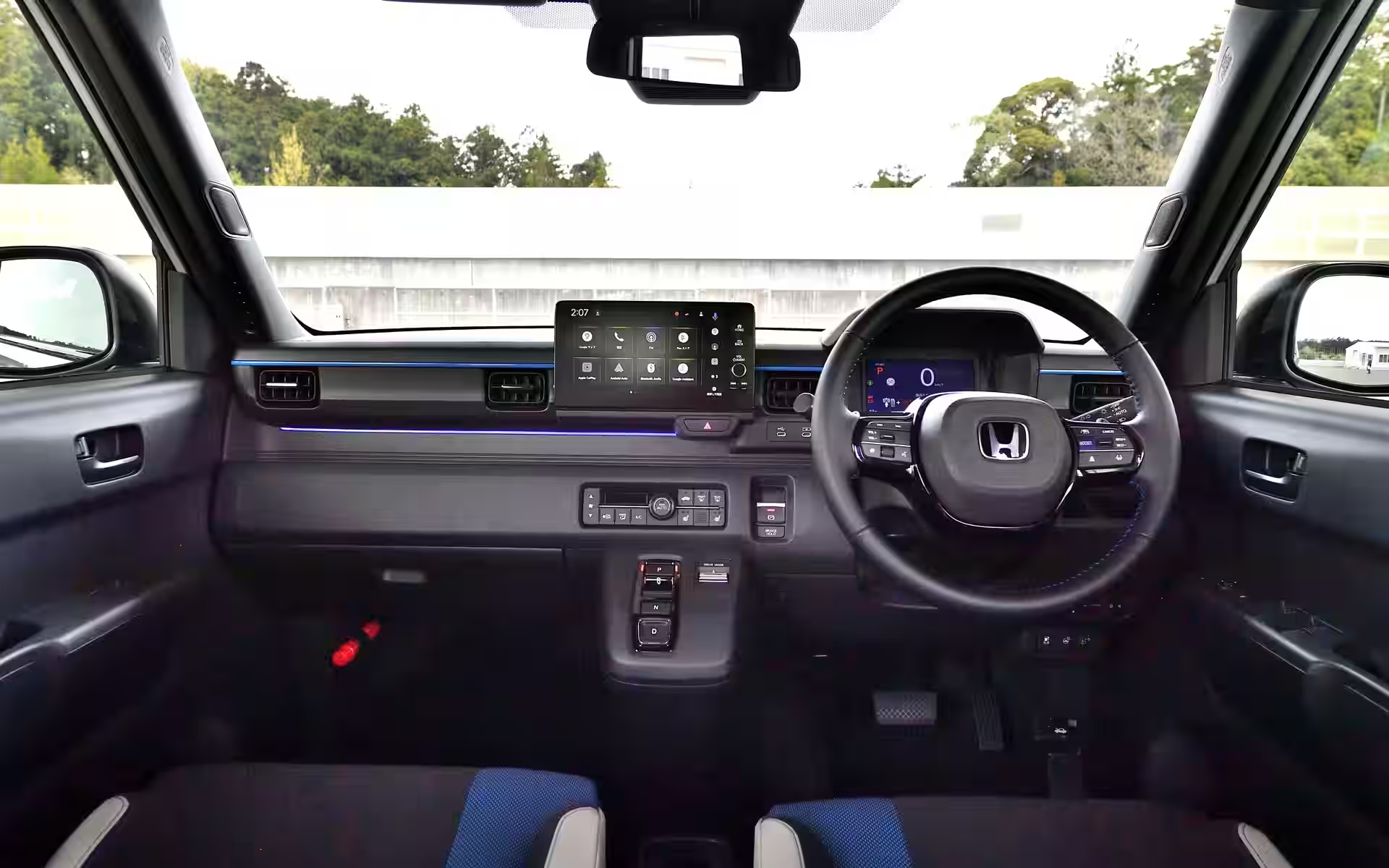
Inside, the car gets sports seats with stronger side support, a leather-wrapped steering wheel, a dedicated BOOST switch, Google-based navigation, ambient lighting, and a cabin layout that still preserves Honda’s practical small-car usability. Fold the rear seats and you get a useful cargo area for track-day gear, helmets, or bags. That everyday flexibility is one reason this EV stands out in a crowded field.
| Key Honda Super-ONE Highlights | Details |
|---|---|
| Curb Weight | 1,090 kg |
| Battery | About 29.6 kWh |
| Range | 274 km |
| Normal Output | 47 kW |
| BOOST Output | 70 kW |
| Tires | 185/55R15 Yokohama ADVAN FLEVA |
That mix of practicality and personality is exactly why compact EVs are becoming more interesting than many larger electric crossovers. Some brands are chasing luxury, like the DENZA D9 DM-i, while Honda is going after joy. Different mission, same market disruption.
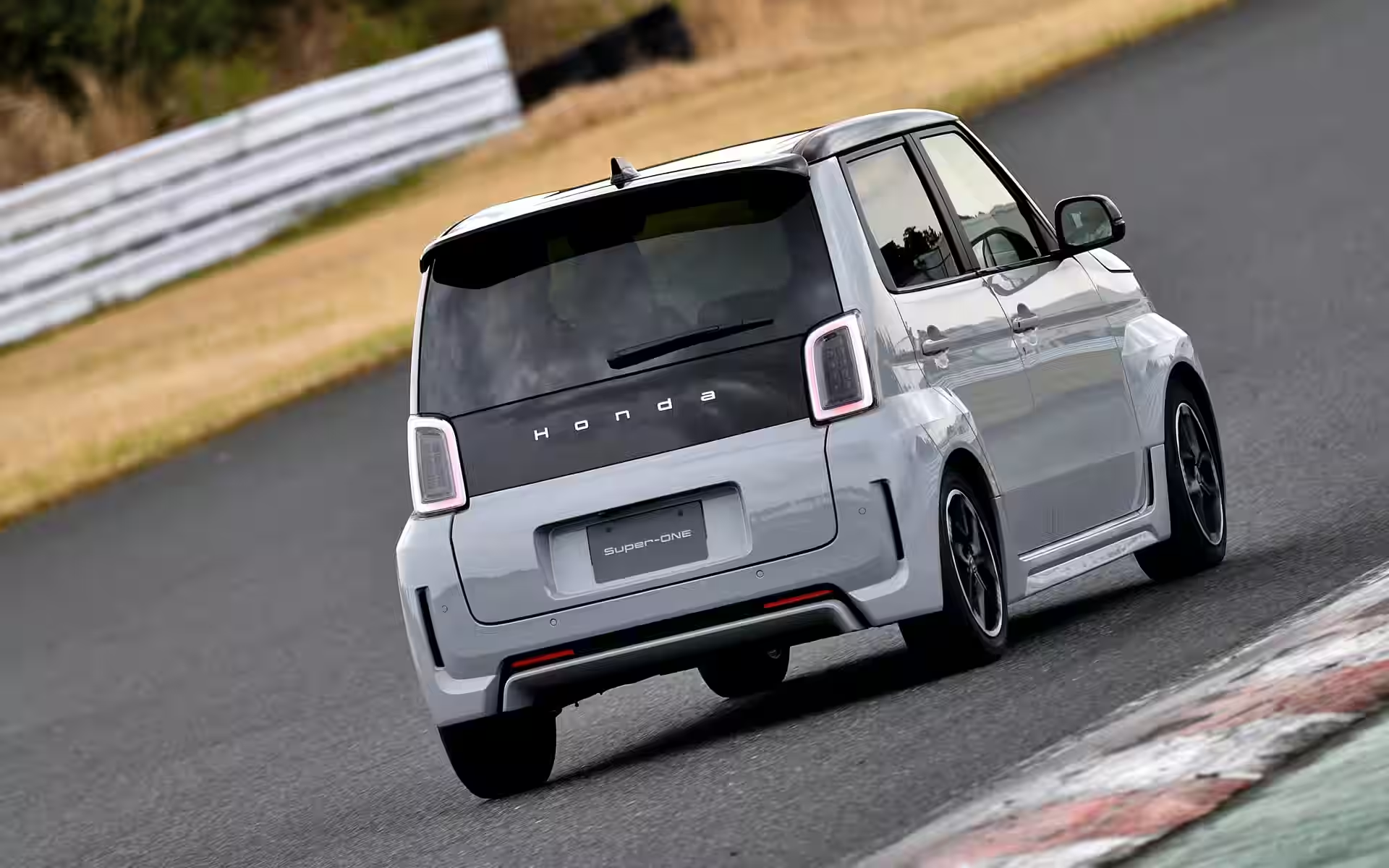
On track, the Super-ONE reportedly feels easy to place, eager in slaloms, and surprisingly composed through bends. Even with multiple passengers onboard, it keeps moving with enough enthusiasm to stay interesting. The real magic is that Honda appears to have built a car that is usable on the street, but genuinely entertaining when the road opens up. That combination is rare.
For enthusiasts watching the global EV race, the Super-ONE could be an important signal. It shows that electric cars do not need to feel heavy, sterile, or overly serious. They can be compact, lively, and full of character. If Honda gets the pricing and final tuning right, this little BEV may become one of the most talked-about performance newcomers of 2026.