
The legendary INSIGHT line is reborn 100% electric with 201 HP, 500 km WLTC range, and aggressive crossover design. But there is a detail at the origin that few noticed.
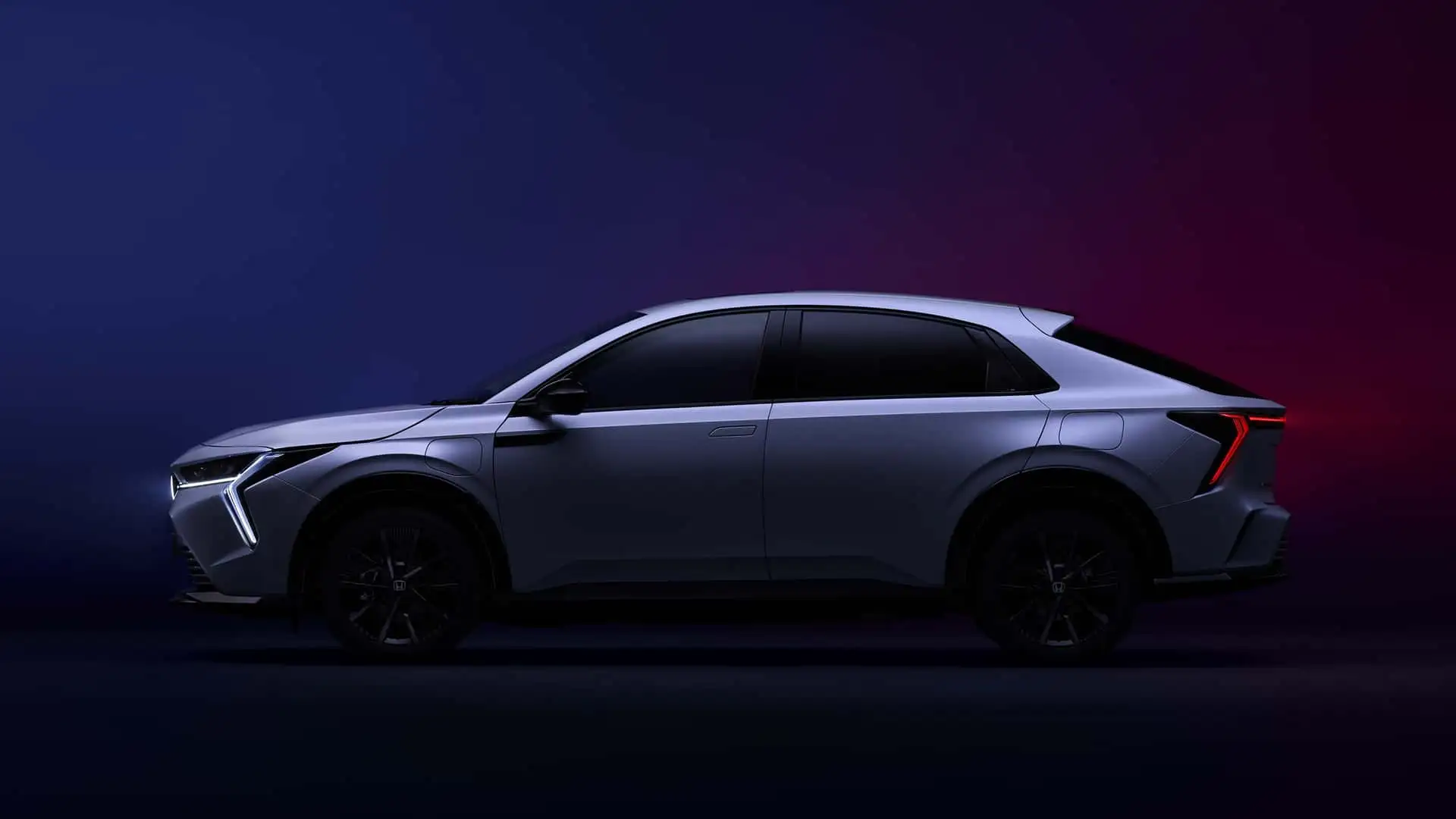
In 1999, Honda made history. Even before the Toyota Prius dominated American streets, the original Honda Insight was already proving that efficiency and design could go hand in hand — with rear wheel covers and every line designed to cut through the wind. Now, after years of silence, the legend is reborn. But this time, what lies behind the emblem might be more surprising than the car itself.
The Insight That Broke Paradigms Ahead of Everyone
To understand the significance of this comeback, we need to go back to the beginning. The first-generation Insight was not only the first hybrid sold in the United States — it was a declaration of war on the industry. While other manufacturers hesitated, Honda bet on lightweight aluminum, extreme aerodynamics, and a three-cylinder engine that consumed less than any competitor at the time.
The result? An icon that, unfortunately, lost momentum after 2006. The following generations never regained the pioneering aura. And now, in 2027, Honda tries something bold: turning the Insight into an electric crossover with over 480 km of range. The question echoing among enthusiasts is simple — will this time be different?
“The new Insight is, in practice, a version with a swapped badge and right-hand drive of the Honda e:NS2, developed by the Dongfeng Honda joint venture in China.”
Inside the Machine: Specifications That Impress
Opening the hood of the Honda Insight 2027 reveals numbers that put the model in the heavyweight competition. The front electric motor delivers 201 hp (150 kW) and 31.6 kgfm of torque — a conversion equivalent to approximately 310 Nm of instant power available from the very first press of the accelerator.
The 68.8 kWh battery is the heart of the range promise. In the rigorous WLTC cycle, the Insight guarantees over 500 km on a single charge. For those who know the differences between test protocols, this means real performance in mixed conditions — not just in slow urban drives.
The design, in turn, does not disappoint those seeking presence. The front features aggressive lines, thin and pointed daytime running lights, as well as hidden rear door handles that clean the side profile. Horizontal light bars front and rear, plus the illuminated Honda logo, create a unique visual signature — even though it is identical to the Chinese e:NS2, except for the emblem on the trunk lid.
| Specification | Honda Insight 2027 |
|---|---|
| Power | 201 hp (150 kW) |
| Torque | 31.6 kgfm (~310 Nm) |
| Battery | 68.8 kWh |
| WLTC Range | +500 km |
| Initial Production | 3,000 units |
The Interior That Erased the Past (And The Buttons)
Opening the door, the shock is immediate. The center console has no physical buttons — almost everything has been integrated into a 12.8-inch screen that dominates the dashboard. It is a bold bet that divides opinions: while some celebrate the minimalist aesthetic, others question the practicality while driving.
The contradiction lies in the steering wheel: multiple physical controls ensure the driver doesn’t need to take their eyes off the road to adjust essential functions. Three buttons dedicated to the gear selector complete the hybrid logic of the project — technological, but not completely devoid of tactile feedback.
The driver also has a 9.4-inch digital panel, heated steering wheel, and head-up display. On the comfort list, front seats with heating and ventilation, reclining rear seats, a Bose sound system with 12 speakers, ambient lighting, and even an integrated front-facing dashcam.
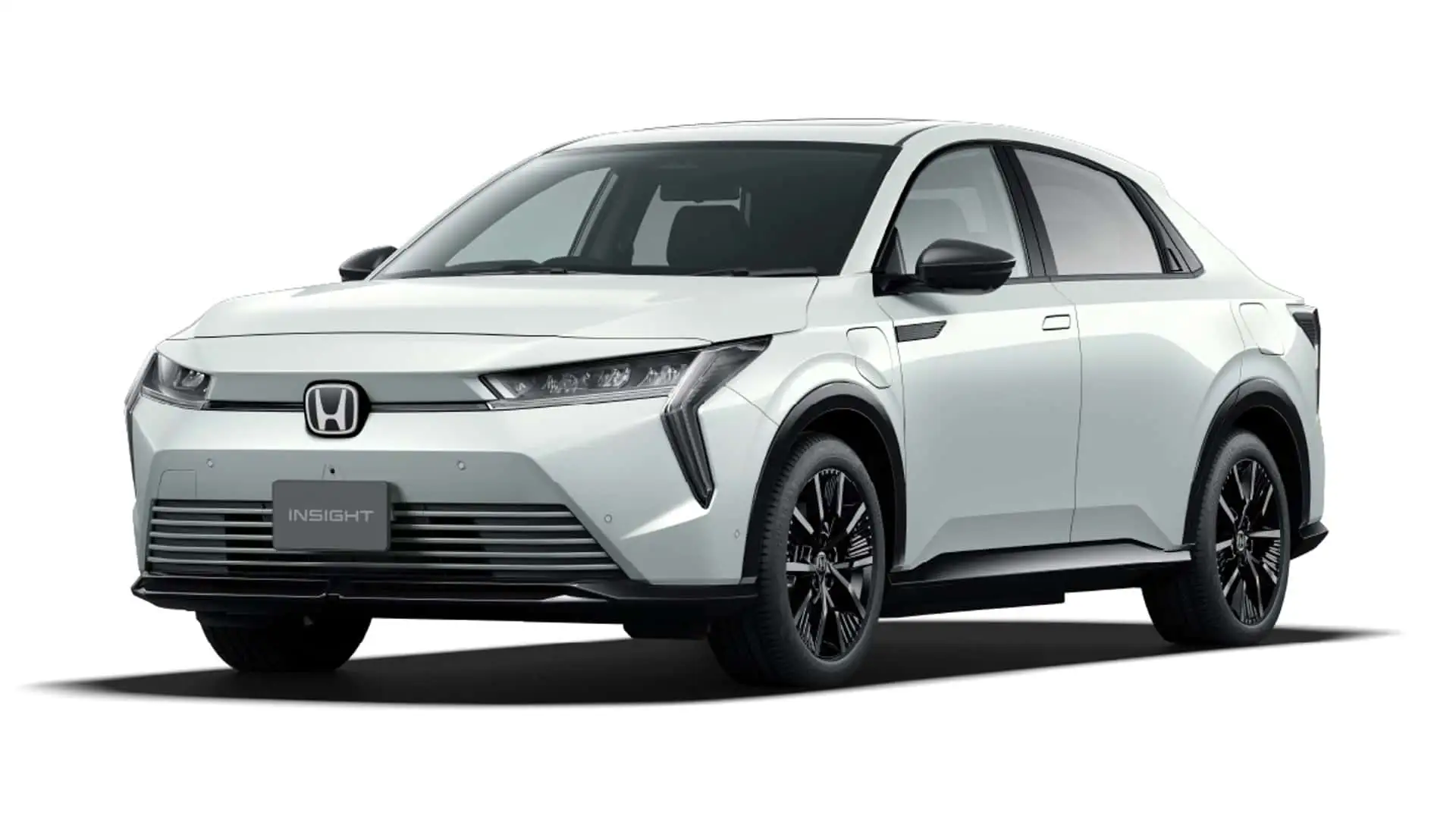
For those following the evolution of premium electric vehicles, it is worth noting how Honda positions the Insight in territory that competes with models like the 2026 BMW i3 and its Neue Klasse platform — albeit through completely different paths.
The Truth Few Tell: Why the Insight Came From China
Here lies the most intriguing element of the Insight’s return. The model was not born in a Japanese lab — it is essentially a rebadged Honda e:NS2, produced by Dongfeng Honda, a Chinese joint venture that already launched the original in 2024. Honda simply switched the steering wheel to the right, adapted it for the Japanese market, and applied the historic badge.
This is not a pure engineering story. It is a strategic move: Honda needs to offload excess production capacity in China, where demand for EVs is facing turbulence. The Insight thus becomes the first electric vehicle made in China to be launched in Japan by a domestic automaker — a milestone few openly celebrate.
The initial production limited to 3,000 units for the Japanese market, with store arrival on March 19, reinforces the experimental nature of the project. There are no announced plans for export to the United States, Europe, or Latin America — at least not in this generation.
Interestingly, this strategic “rebadging” move is not exclusive to Honda. BYD has dominated conversations about how Chinese manufacturers are redefining electric production costs — and Honda seems to be learning quickly from the new global reality.
Even more importantly: the 2027 Insight has no relation to Honda’s future 0 Series — the line of electric SUVs and sedans developed from scratch for the United States, with a debut planned for late 2025 and early 2026. These are parallel worlds that, for now, are not expected to intersect.
For enthusiasts following the energy transition in the industry, the Insight represents a piece of transition — not the revolution that the original name promised. But in a market where Toyota and other giants are finally accelerating their electric plans, every move counts.
The 2027 Honda Insight thus arrives as an enigma wrapped in competent technology. Is it a good electric car? By the numbers, yes. Is it the triumphant return that longtime fans were waiting for? That depends on how much of the original soul they are willing to trade for modern efficiency.