HEL PERFORMANCE consolidates power in the premium brake market by acquiring a billet caliper manufacturer.
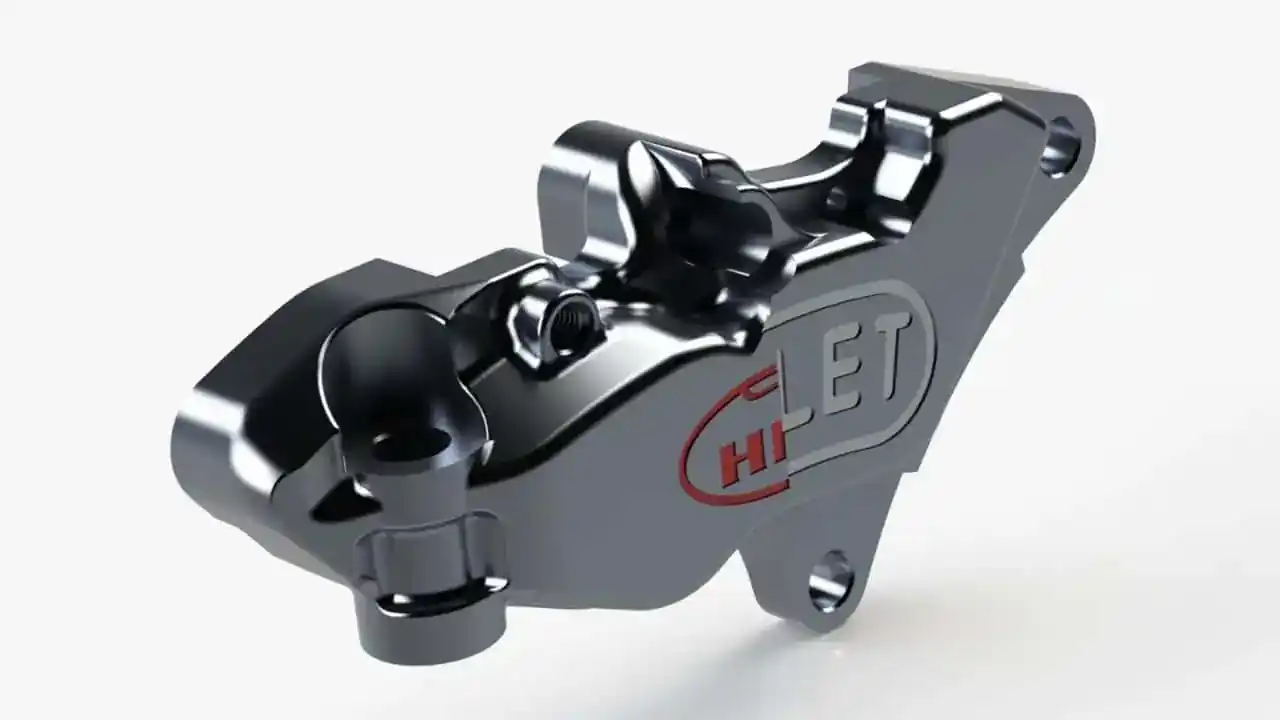
The consolidation of two giants in the high-performance brake world has just redefined the rules of the game. When a global-scale brand meets a gem of handcrafted engineering, the result can be the ultimate evolution — or the dilution of everything that made both special. What’s at stake goes far beyond product lines and distribution spreadsheets.
The Merger Nobody Saw Coming, But Everyone Will Feel
HEL Performance, synonymous with stainless steel braided brake lines and high-performance components with an established presence in Europe and beyond, has just swallowed Harrison Billet — a manufacturer of billet machined brake calipers with an almost mythical reputation among custom, classic, and performance motorcycle builders.
The difference between the two is vast in philosophy. While HEL built an empire through scale, distribution, and brand recognition, Harrison Billet operated on the opposite end of the spectrum: limited production, surgical tolerances, and finishes that justified waiting months.
“Billet machined calipers aren’t just ‘better’ — they’re designed differently. Every fluid channel, every piston angle, every thousandth of tolerance is intentional.”
This level of technical obsession attracts exactly the type of rider who notices the difference between “stops well” and modulation that transmits neural confidence. The one who feels the lever feedback as an extension of their own nervous system when carrying the front into a mountain curve.
What Changes in Practice for Riders
The acquisition raises three concrete questions that will determine whether this merger goes down in history as a success story or a cautionary tale:
- Global accessibility: Will Harrison Billet finally escape chronic scarcity? HEL’s distribution infrastructure could turn previously rare products into available ones.
- Identity continuity: Will the public promise to maintain development and manufacturing in the UK under the Harrison brand hold up under pressure for results?
- Strategic integration: Will we see complete HEL + Harrison kits, or will the lines remain isolated?
The optimistic scenario is tempting: handcrafted engineering with an industrial backbone. HEL already produces billet calipers for modern superbikes but instantly gained untransferable credibility in the custom, classic, and cruiser segments — markets where heritage is worth more than specs.
For those closely following industry moves, this consolidation echoes strategies seen in other high-performance niches. Harley-Davidson with its RMCR shows how historic brands need to evolve without betraying their essence — a balance HEL now needs to execute with surgical precision.
The Verdict That Matters Won’t Come From a Boardroom
Press releases promise perpetuity of values. Reality is written in the products that reach workshops. The high-performance brake enthusiast community is notoriously intolerant of subtle degradation — they notice changes in anodizing, piston smoothness, bite consistency even before engineers acknowledge problems.
The true measure of success will be simple: in two years, will a Harrison Billet caliper still be desired for the same reasons as today? If the answer is yes, we will have witnessed the rare merger where scale amplified excellence instead of diluting it.
For riders who live the obsession for components that transform machines into extensions of the body, we recommend closely watching how other premium brands navigate these waters. Akrapovič with its titanium exhausts and BMW with the R 1300 R Superhooligan show distinct paths to preserving technical DNA at scale.
The consolidation of the motorcycle aftermarket market continues relentlessly. Brands that once operated in specialized silos now seek synergies to survive and grow. What separates successful transitions from forgotten ones is precisely what is at stake here: the ability to keep the technical soul alive within larger corporate bodies.
For those who invest in braking performance as an absolute priority — not as an accessory, but as an active safety system — upcoming HEL releases bearing the Harrison signature will be revealing. The structure is set. Now, it remains to be seen if the engineering will match the ambition.
Curious about how other technical consolidations are reshaping the two-wheeled market, it’s worth exploring how Ducati repositioned its DesertX to compete in segments once dominated by rivals, or how the Yamaha Ténéré 700 World Raid redefines genuine adventure expectations.
The brake is the last contact between rider and asphalt. When this connection is mediated by components that carry decades of technical evolution, every corporate acquisition carries the weight of not breaking this invisible chain. HEL Performance bought more than a brand — it bought the responsibility to keep alive a form of engineering that the industrialized world almost forgot how to do.