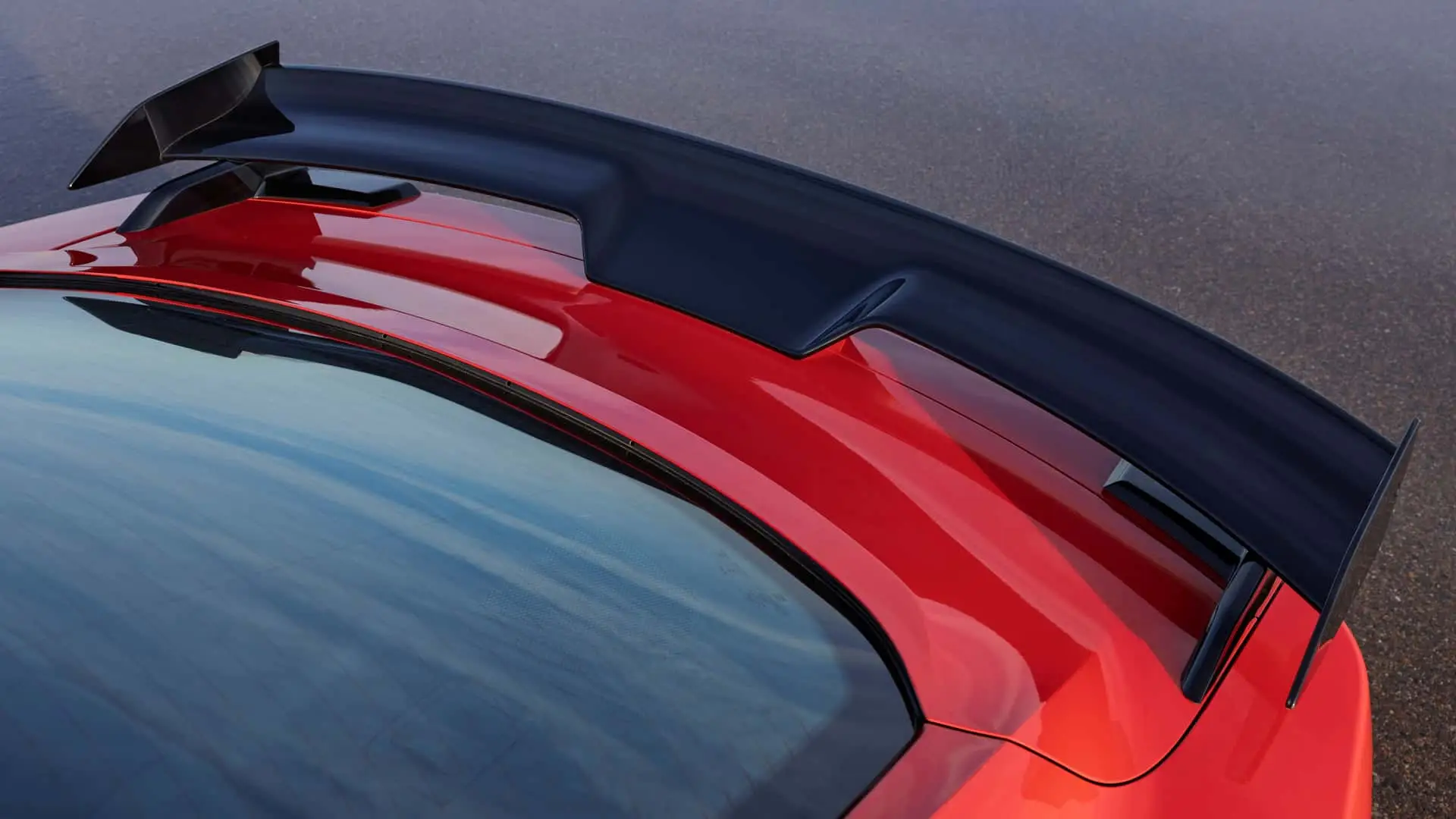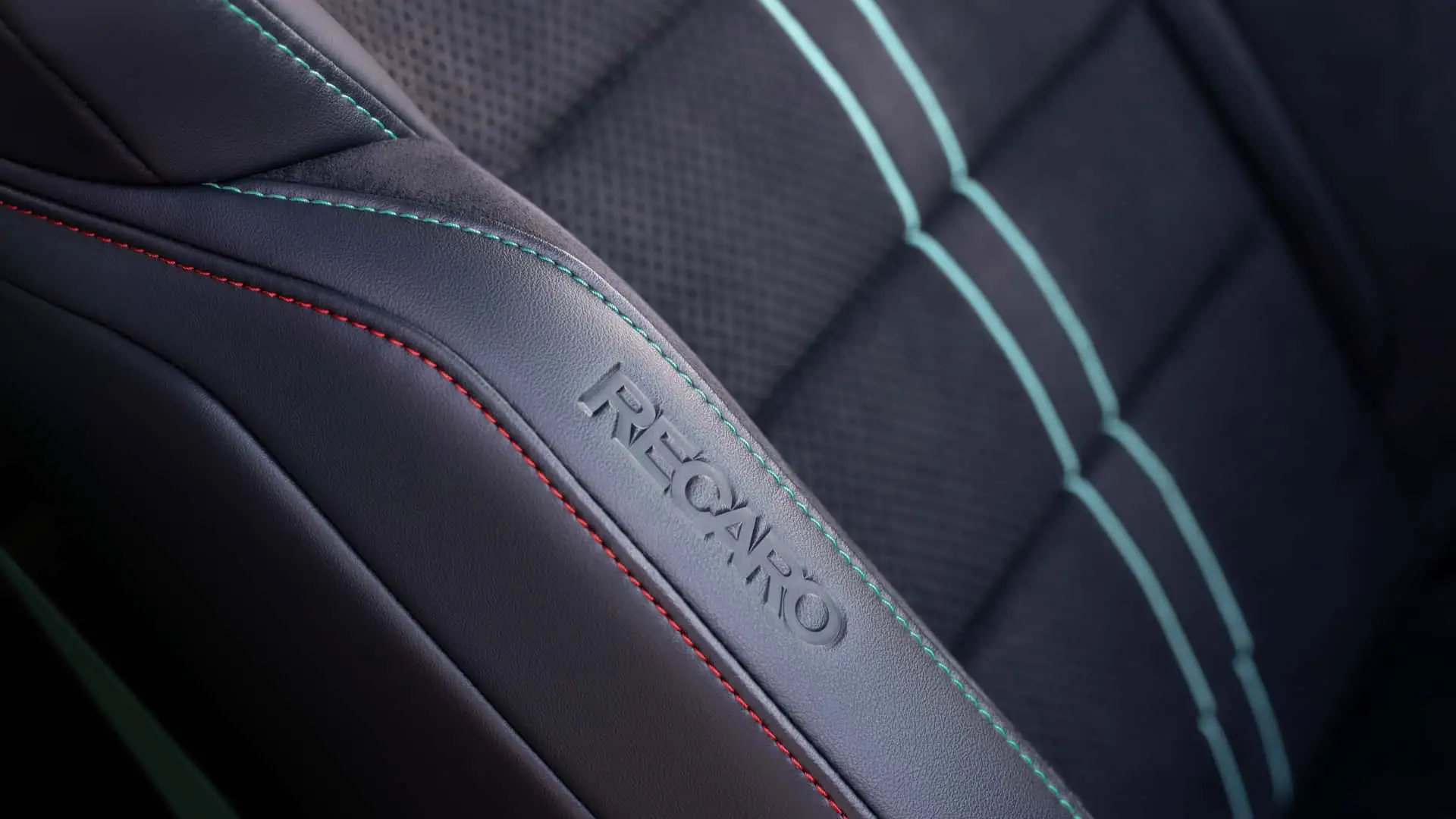
The 2026 Ford Mustang Dark Horse SC arrives with a clear goal: to bring high-level track technology to a much more affordable price range than European hypercars — all while delivering a visceral V8 that promises pure excitement.
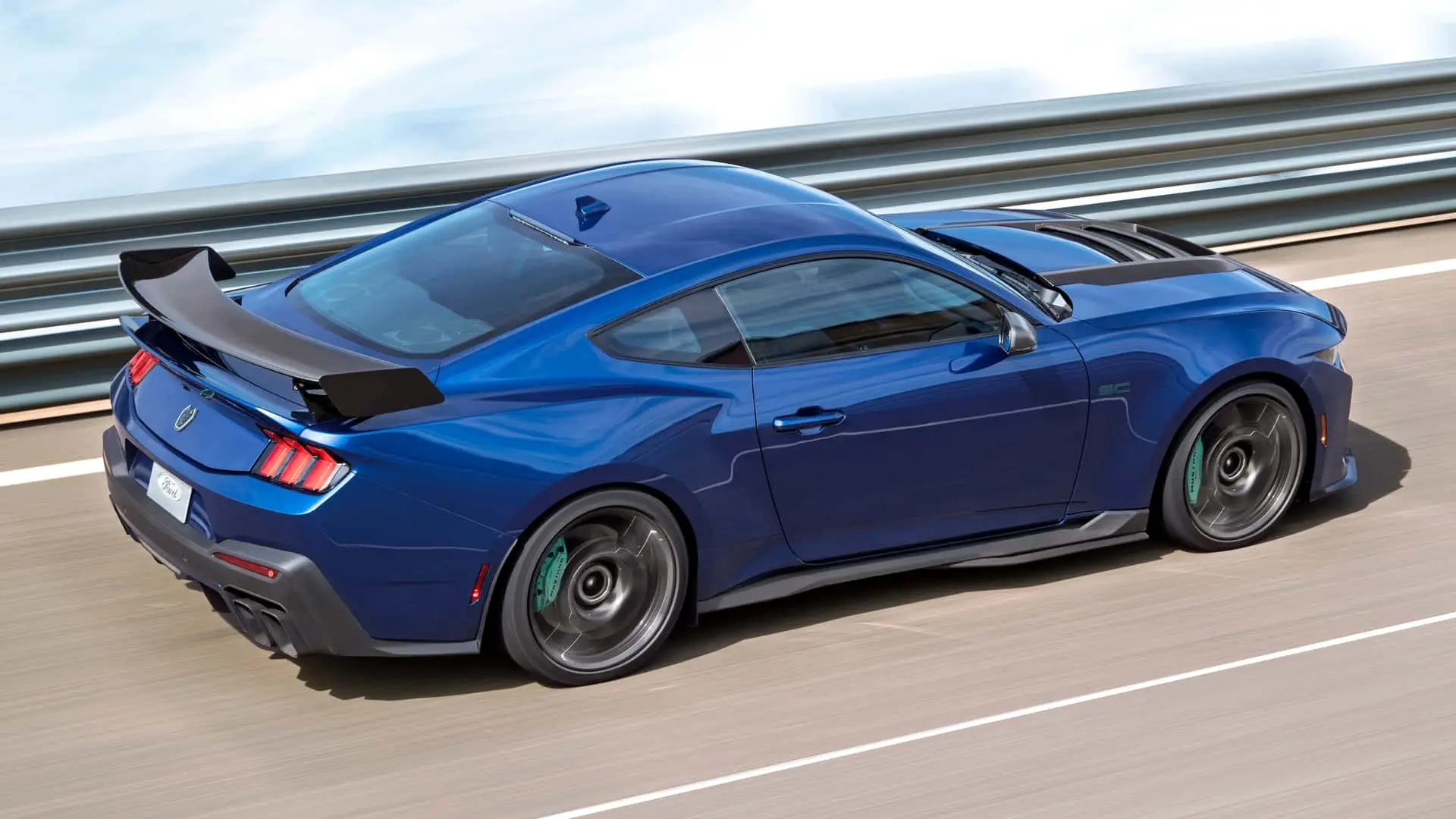
Why the Mustang Dark Horse SC Is Nicknamed “Volks-GTD” and Its Market Positioning
Volks-GTD isn’t just a marketing nickname — it’s a statement of intent. Ford designed the Dark Horse SC to occupy a strategic space between the standard Dark Horse (around 500 hp in the US / 453 hp in Europe) and the exclusive Mustang GTD, which features near-hypercar numbers (826 hp) and a price exceeding €320,000.
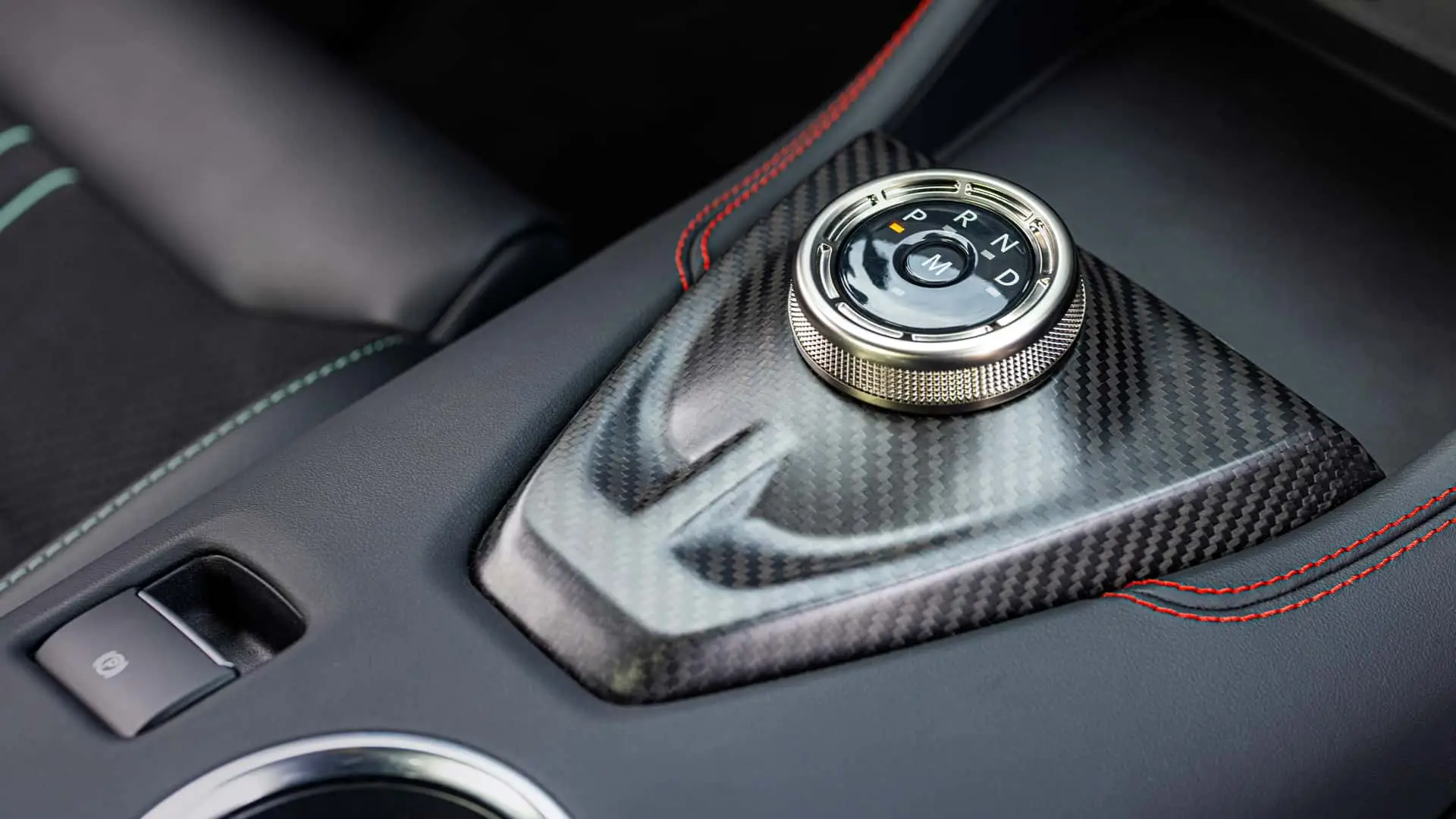
Internally, the Dark Horse SC was engineered to offer a more accessible track experience than the GTD: its mechanical setup (a 5.2-liter supercharged V8 engine and a 7-speed dual-clutch transmission) mirrors the architecture of the previous Shelby GT500 — a vehicle that, in extreme configurations, delivered around 760 hp and 847 Nm of torque. This positions the SC in a performance zone where its cost/benefit ratio can be highly disruptive compared to brands like Porsche, Ferrari, and Lamborghini.
“We developed it to beat them,” said Ryan Shaughnessy, Mustang Product Manager — a statement that encapsulates the technical and competitive ambitions of this model.
From a market perspective, the Dark Horse SC has two main objectives:
- Track performance without the exorbitant price of the GTD.
- Image and technology to appeal to enthusiasts seeking more than a traditional muscle car, without sacrificing sound and V8 mechanics.
What’s Behind the Technical Specifications: Engine, Transmission, Chassis, Aerodynamics, and Track Pack
When analyzing the Dark Horse SC, it is important to distinguish between hardware (engine, suspension, brakes) and software/tuning (MagneRide, traction control). The combination of these elements defines the car’s credibility and performance profile: smart engineering, proven components, and track-calibrated tuning.
Engine and Transmission
Although Ford has not yet released official power and torque figures for the SC, the mechanical setup leaves little doubt:
- Engine: 5.2-liter supercharged V8 — known for robustness and immediate response in mid- to high-RPM ranges.
- Transmission: 7-speed dual-clutch (DCT) — a choice that emphasizes ultra-fast, consistent shifts on the track.
Why is this important? A supercharged V8 provides abundant torque at mid-range RPM, easing corner exits and delivering strong acceleration without revving too high. The DCT ensures this torque is efficiently transferred to the wheels with minimal loss, comparable to modern supercar solutions.
Chassis, Suspension, and Brakes — The Foundation of Performance
The Dark Horse SC doesn’t skimp on the components that truly impact dynamic behavior:
- MagneRide dampers with the latest software — essential for adaptive response, switching seamlessly between street and track modes.
- Suspension with stiffer springs, new stabilizer bars, and revised control arms — all aimed at improving cornering dynamics.
- Lightweight magnesium stabilizer bar (strut bar) under the hood — offering structural reinforcement that enhances steering precision.
- Brembo brakes with six-piston calipers at the front and four at the rear — providing high-capacity, consistent braking performance in demanding conditions.
- 20-inch wheels fitted with Pirelli P Zero R tires on the standard setup, with optional carbon wheels and competition tires available in the Track Pack.
Aerodynamics and Cooling: More Than Just Looks
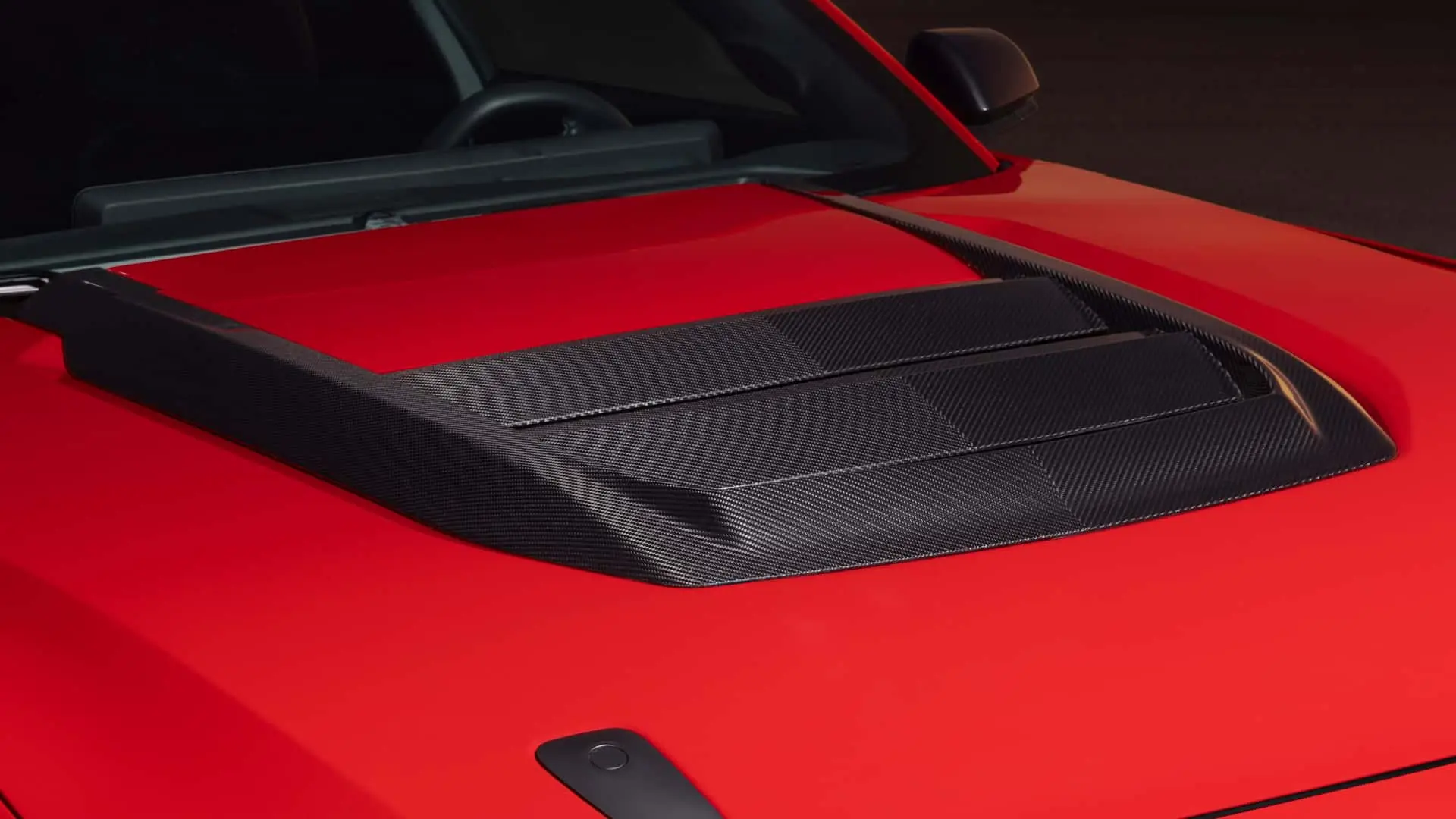
Ford redesigned the front end and hood to maximize airflow and cooling — essential features in a track-focused car:
- Central vent 65% larger than that of the standard Dark Horse; wider side intakes — improving radiator cooling and brake ventilation.
- Aluminum hood with five times larger opening and 2.5 times more downforce (with rain tray removed) — directly enhancing high-speed stability.
- Redesigned rear diffuser to optimize airflow extraction and reduce undesirable aerodynamic pressures at the rear.
Track Pack: Designed for Competition
For those seeking maximum track performance, the Track Pack includes technologies directly derived from the GTD:
| Component | Track Pack Specifications |
|---|---|
| Wheels | 20-inch carbon fiber |
| Tires | Michelin Pilot Sport Cup 2 R (custom-developed) |
| Brakes | Ceramic discs: 420 mm front / 370 mm rear |
| Suspension | Specific MagneRide calibration for carbon wheels |
| Aerodynamics | Rear ducktail and carbon wing; 280 kg downforce at 290 km/h |
| Control System | Variable traction system with 5 levels |
The Track Pack transforms the SC from a refined muscle car into a lap-time tool: using Cup 2 R tires and ceramic brakes emphasizes thermal management and consistency during extended track sessions.
If you want to understand why a DCT is preferred in such applications, check out this analysis of dual-clutch transmissions and how they impact performance and maintenance costs.
Comparisons, Price, Availability, and What It Means for Europeans, Germans, and Brazilians
The big question: will the Dark Horse SC actually “beat” a Porsche 911 GT3 or even challenge Ferrari and Lamborghini? The answer depends on perspective: lap times, value for money, and driving experience.
Considerations include:
- Lap times vs. sensory experience: European cars like the Porsche offer balanced handling, lower weight, and highly calibrated chassis; the Mustang relies on raw engine power, aggressive aerodynamics, and high-quality braking and suspension components to close the gap in lap times.
- Cost: while the GTD exceeds €320,000, the Dark Horse SC will be priced significantly lower — making it a compelling alternative for performance-focused buyers seeking value.
- Availability: Ford announced that orders will open in spring 2026 in the US with deliveries in summer 2026. No official confirmation about sales in Europe (including Germany) or Brazil — importation, taxes, and homologation will be key considerations for international buyers.
For enthusiasts in Brazil and Europe, importing a Dark Horse SC — should Ford not officially offer it — can significantly increase the total cost due to import taxes, transportation, and homologation processes. However, the appeal of a more accessible “GTD” model may justify the effort for many collectors and hobbyist drivers.
Interested in another performance-oriented launch offered at a surprising price? Check out how the new Ford Bronco RTR 2027 balances cost and performance in a different segment — exemplifying Ford’s product strategy.
Compared to the Porsche 911 GT3, the 911 track version is typically faster due to its lightweight build and highly calibrated rear-wheel-drive setup. The Mustang SC, with more torque and downforce in a straight line, can recover ground on straightaways and during corner exits. To explore why radical sports car variants captivate the public, read the article on the Porsche 911 GT3 90 F.A. Porsche 2027, which discusses how exclusivity and aesthetic details influence perceived value.
Who Should Consider Buying the Dark Horse SC?
Ideal candidate profiles include:
- Enthusiasts who participate in track days and want a ready-to-race car without extensive modifications.
- Collectors seeking a modern V8 with racing pedigree and advanced technological features.
- Amateur drivers prioritizing cost per lap (i.e., how much each track session costs considering tires, brakes, and fuel).
If your focus is on everyday economy and fuel efficiency, the SC may not be the best choice. However, for those valuing sound, presence, and performance driven by technology from much more expensive models, the Dark Horse SC offers a compelling proposition.
Technical note: Maintaining a supercharged V8 and ceramic brakes involves higher service and maintenance costs than typical vehicles. Expect specialized workshops and parts to sustain optimal performance and safety.
Finally, understanding Ford’s positioning of models like the Dark Horse SC helps enthusiasts grasp the evolving market landscape — potentially redefining the perception of performance at a more accessible price point, without the hypercar price tag.