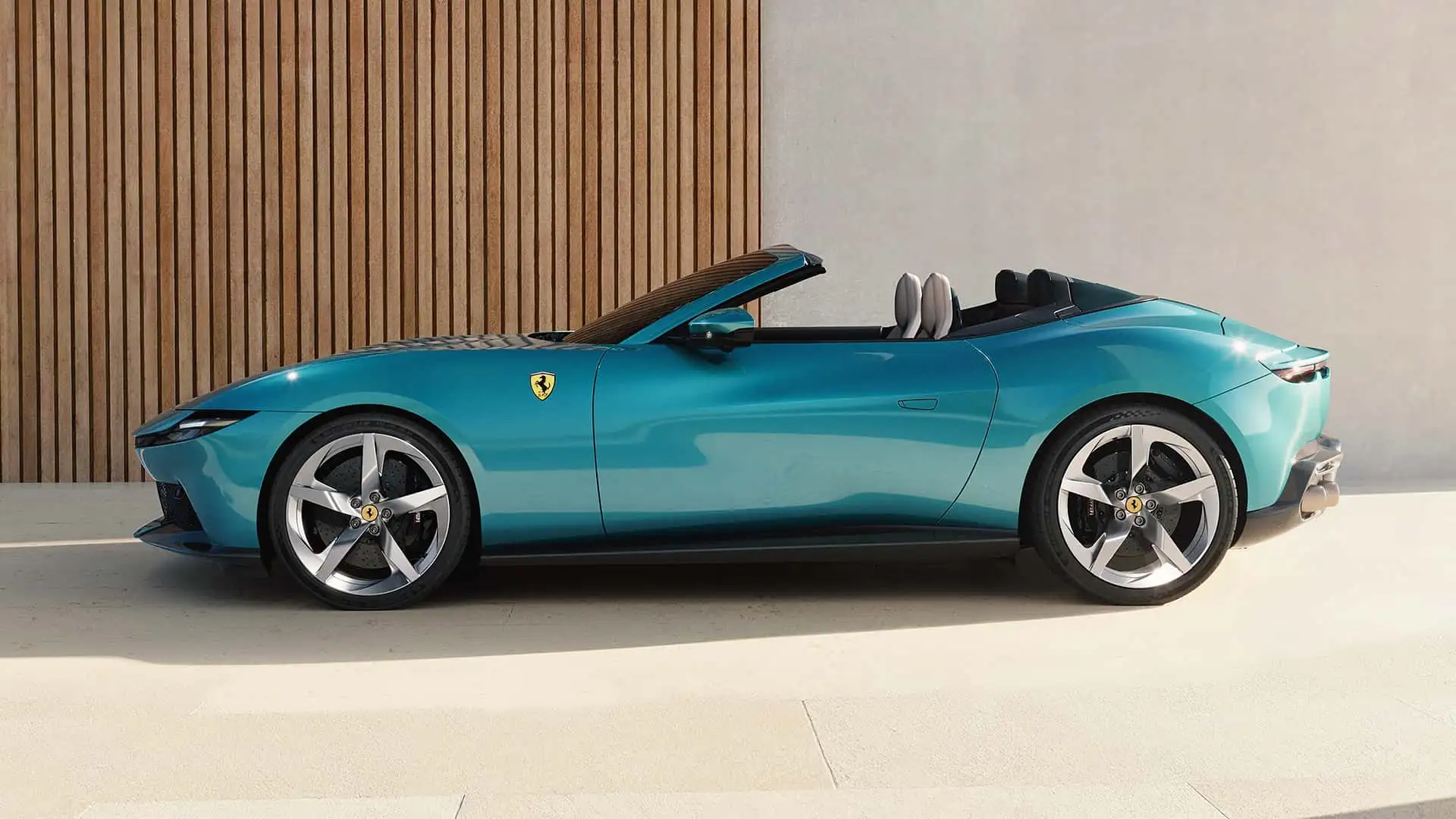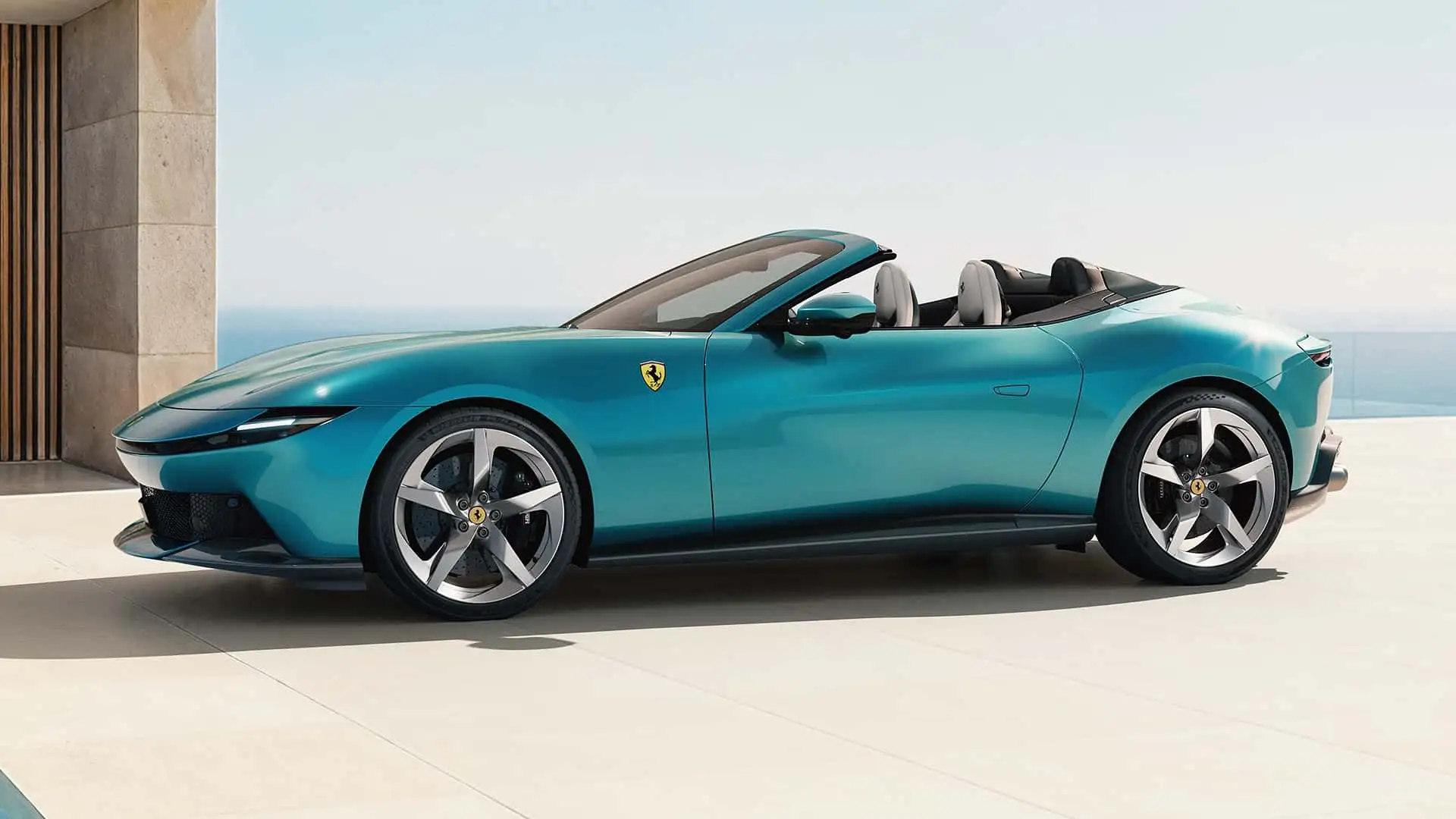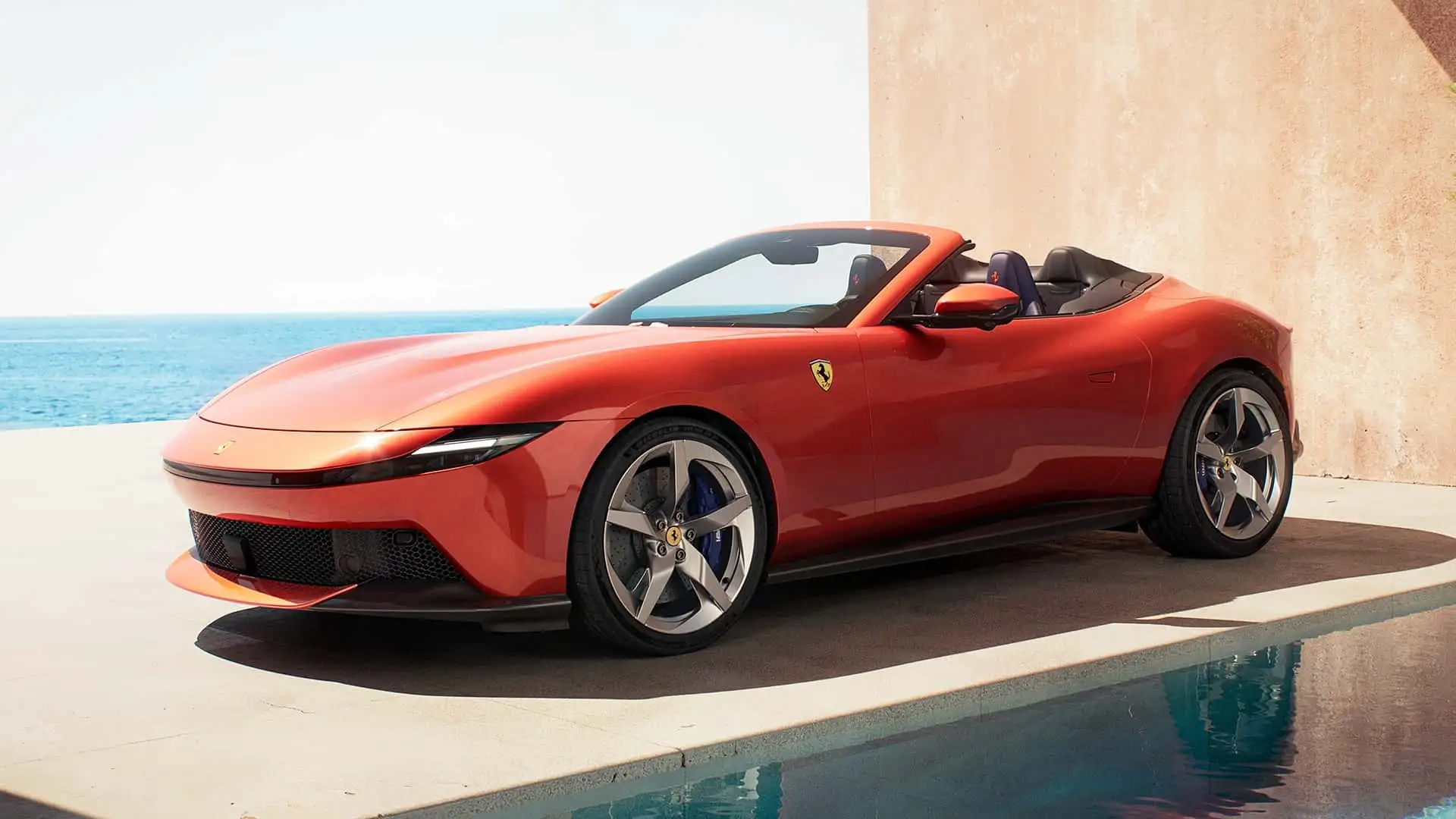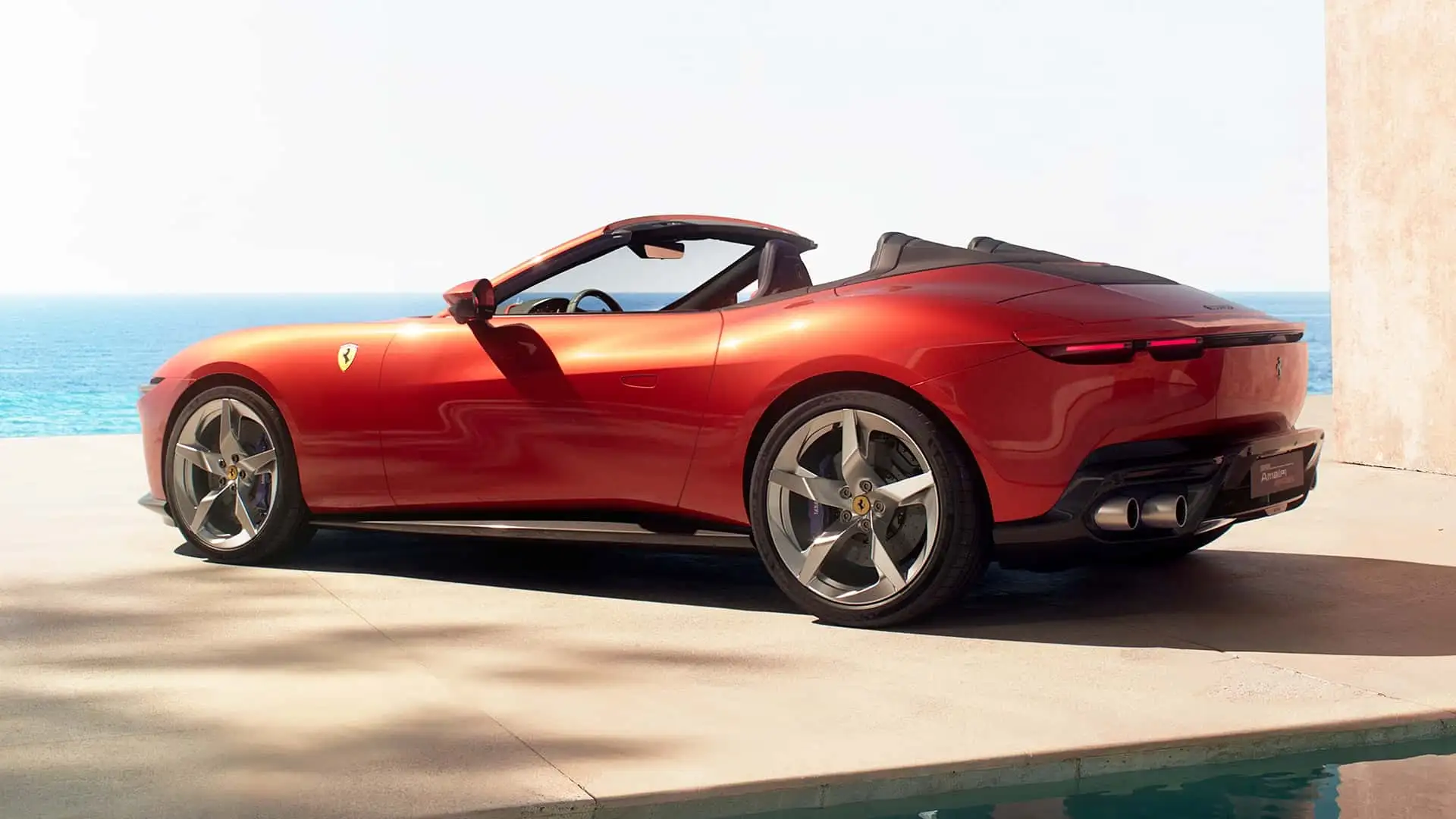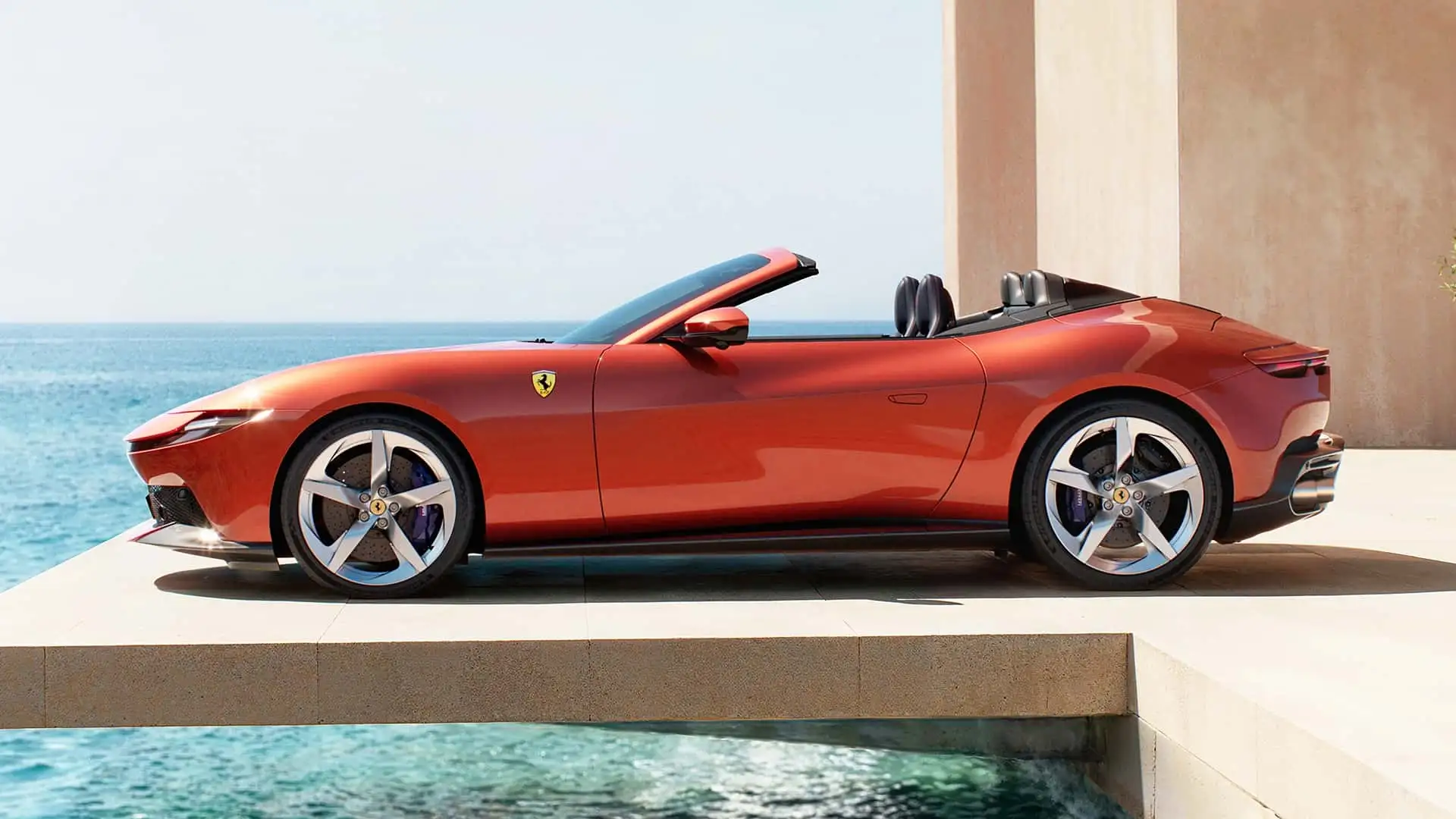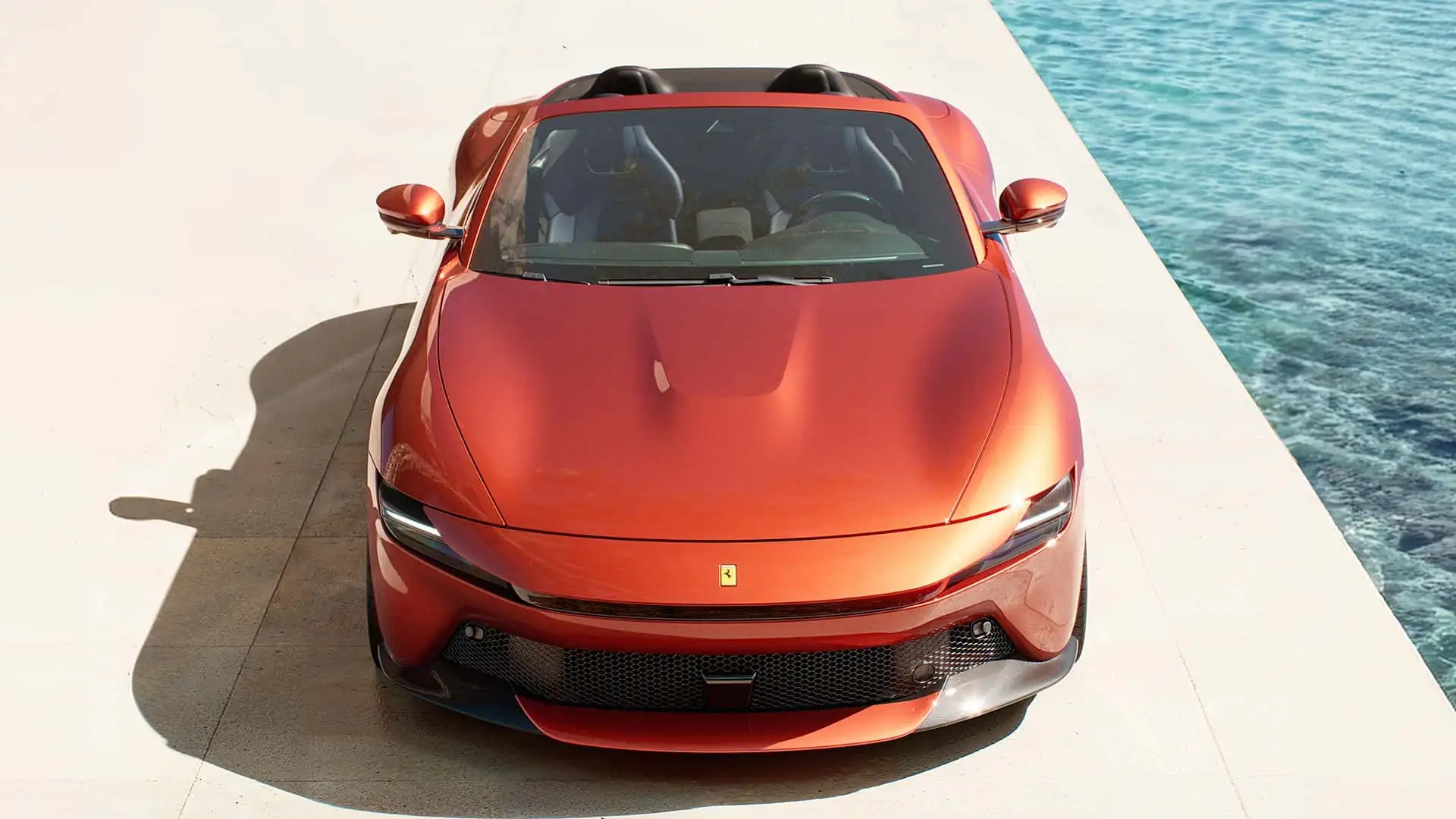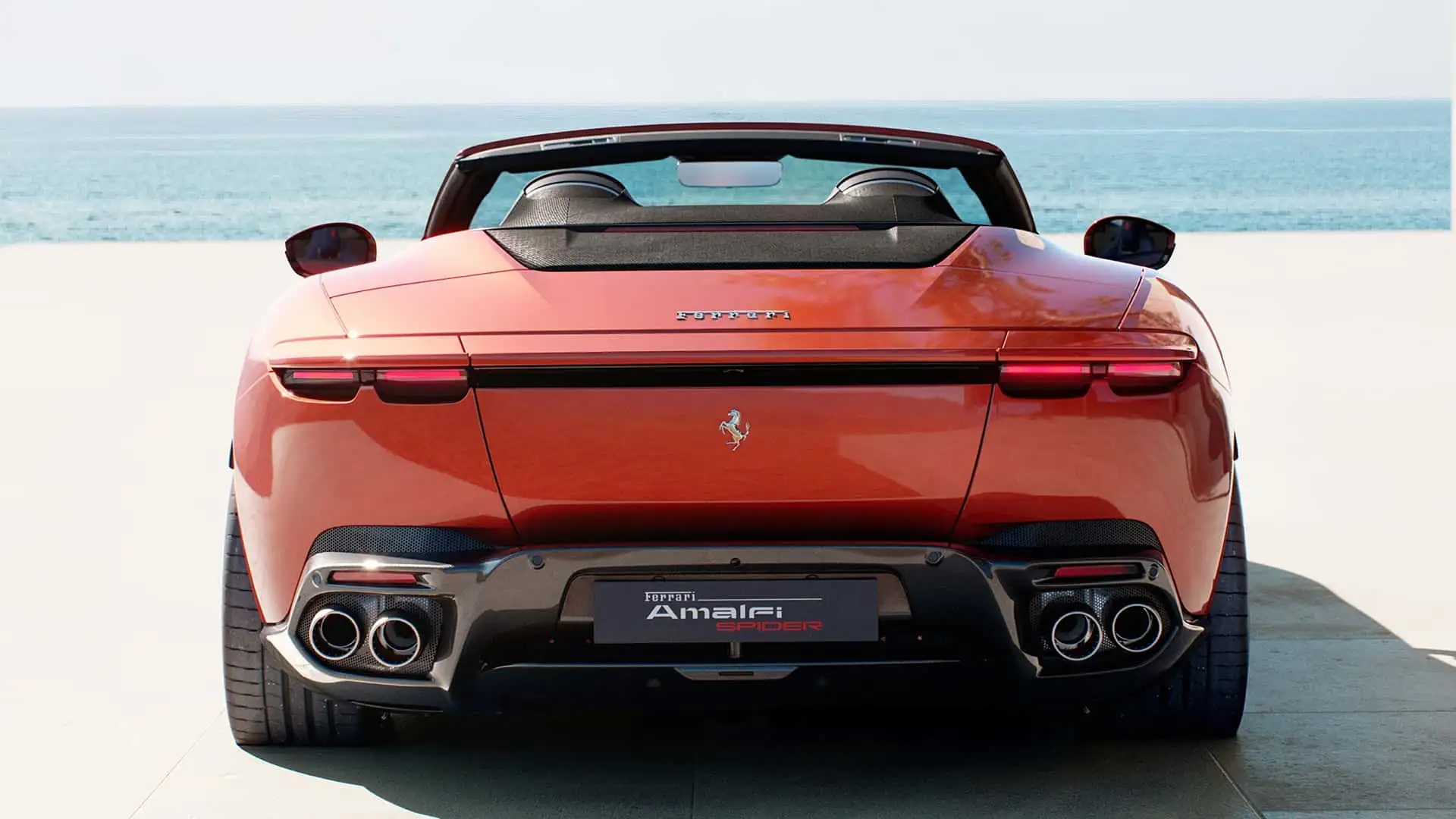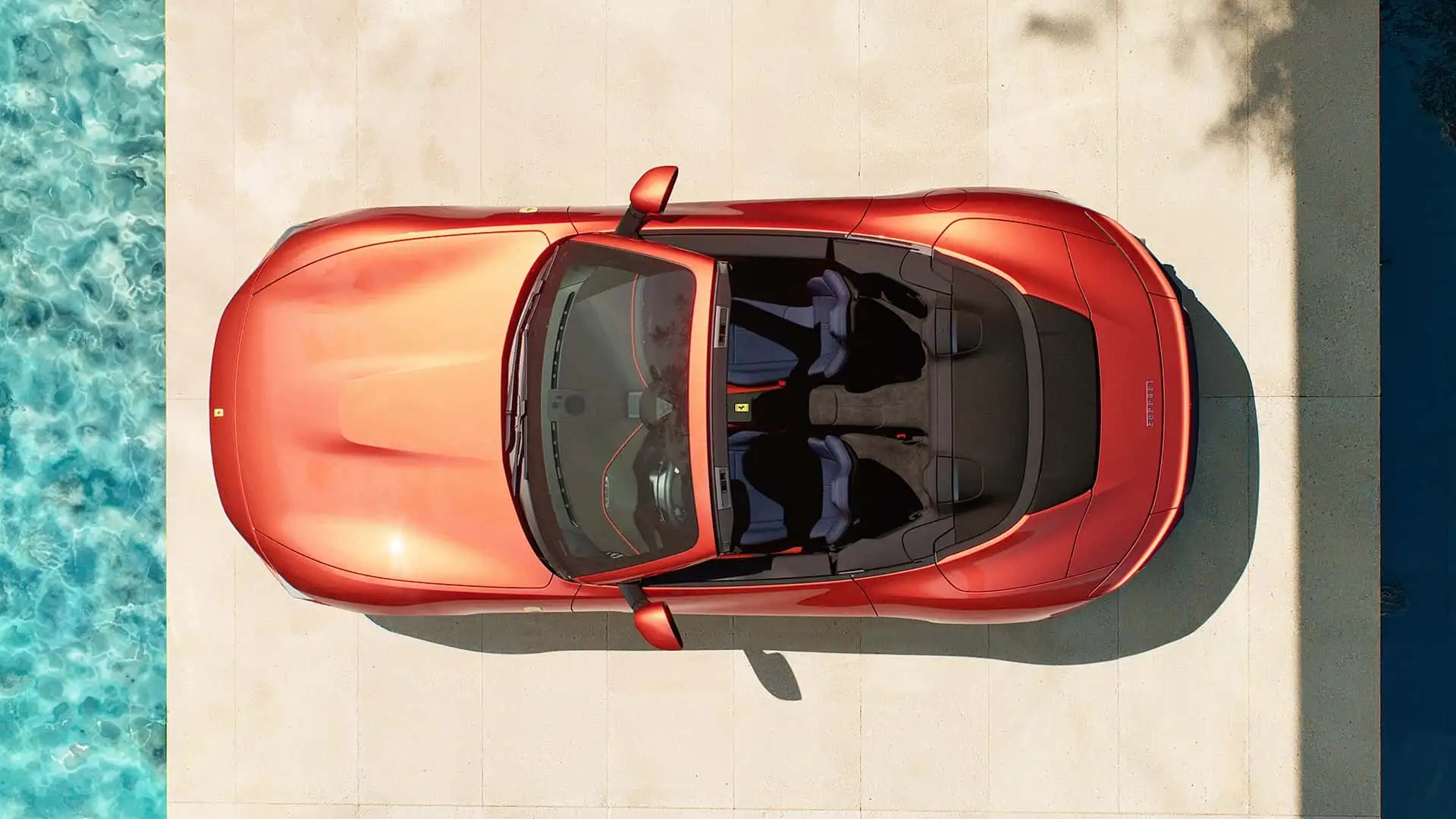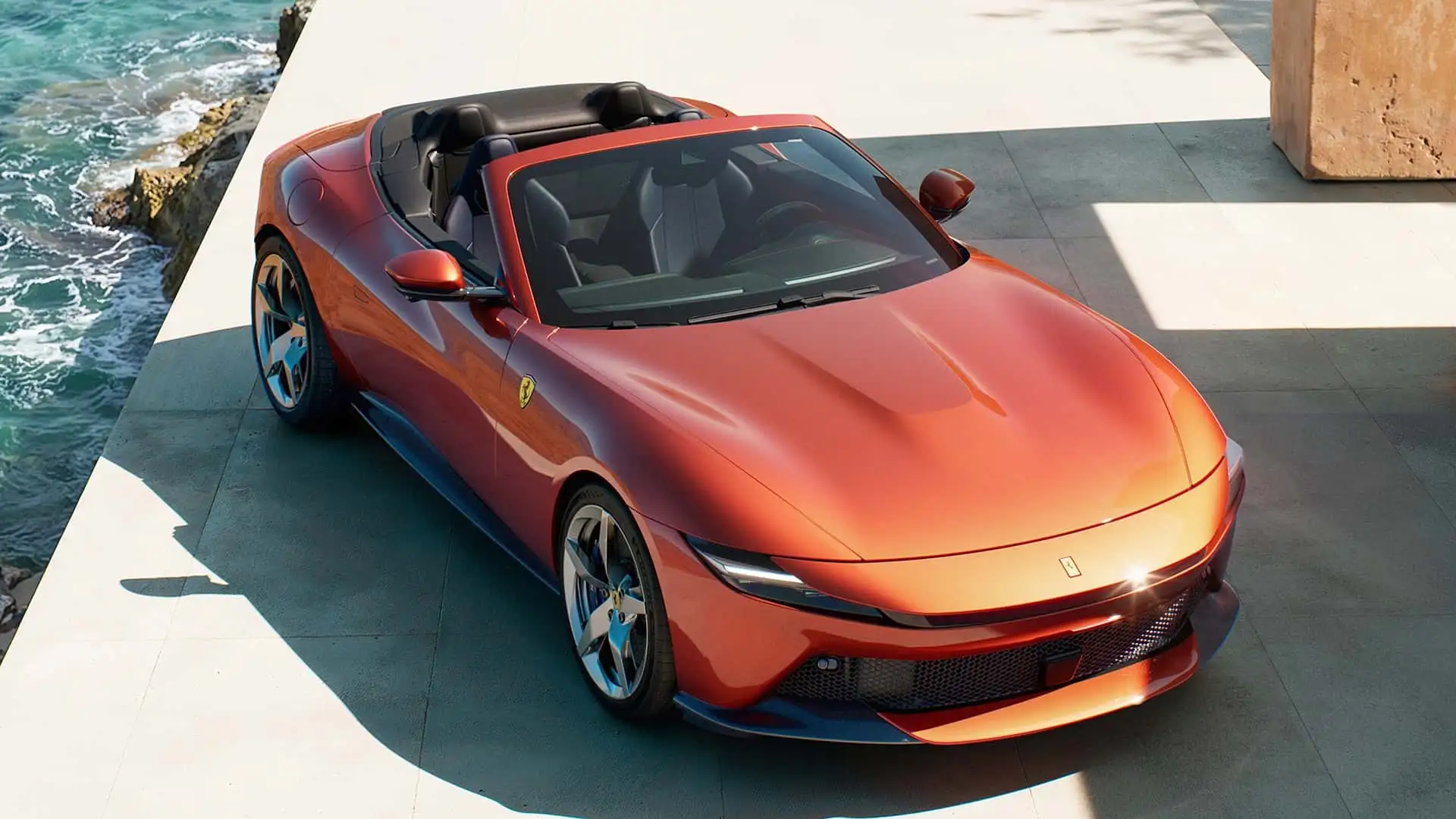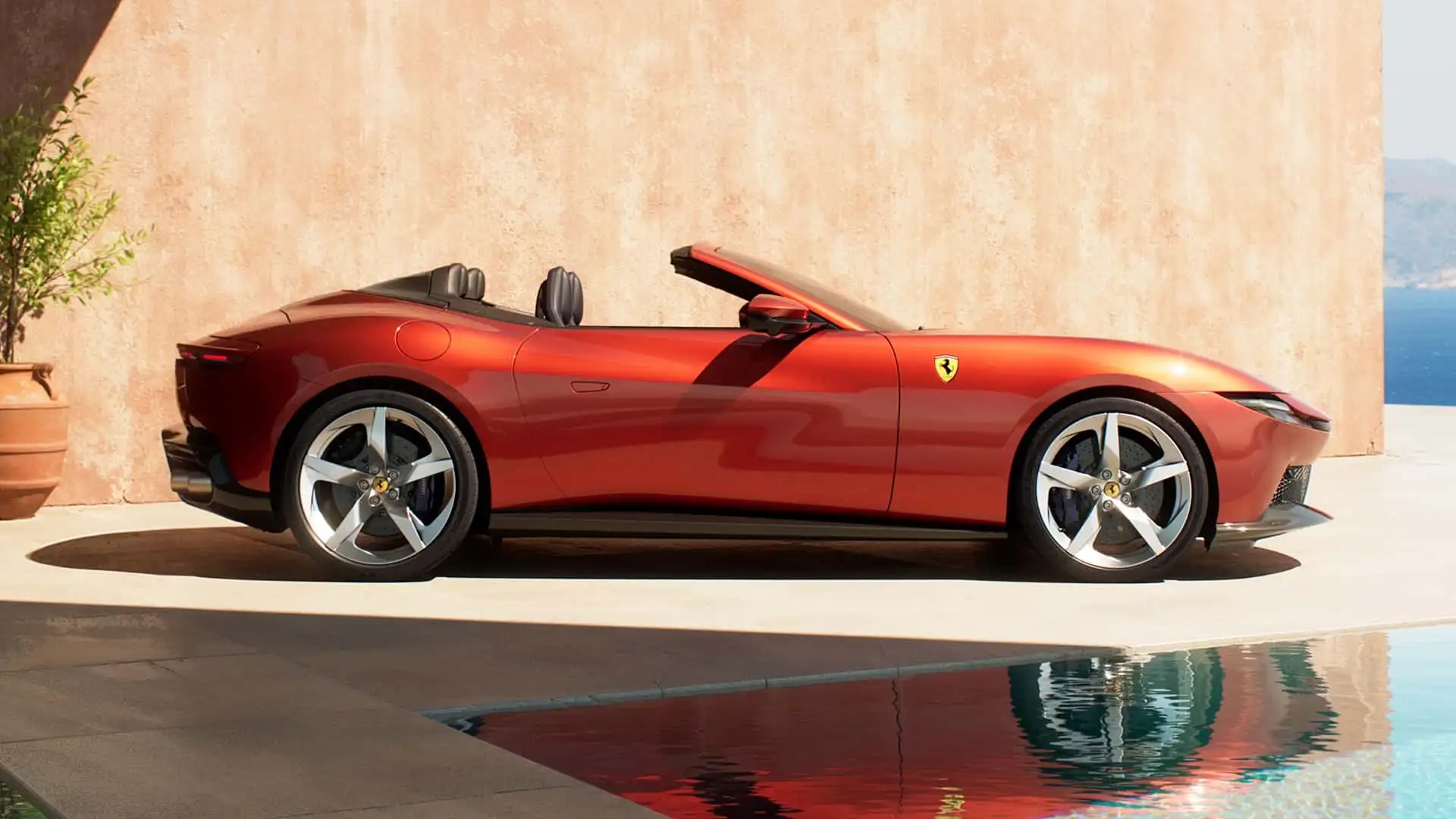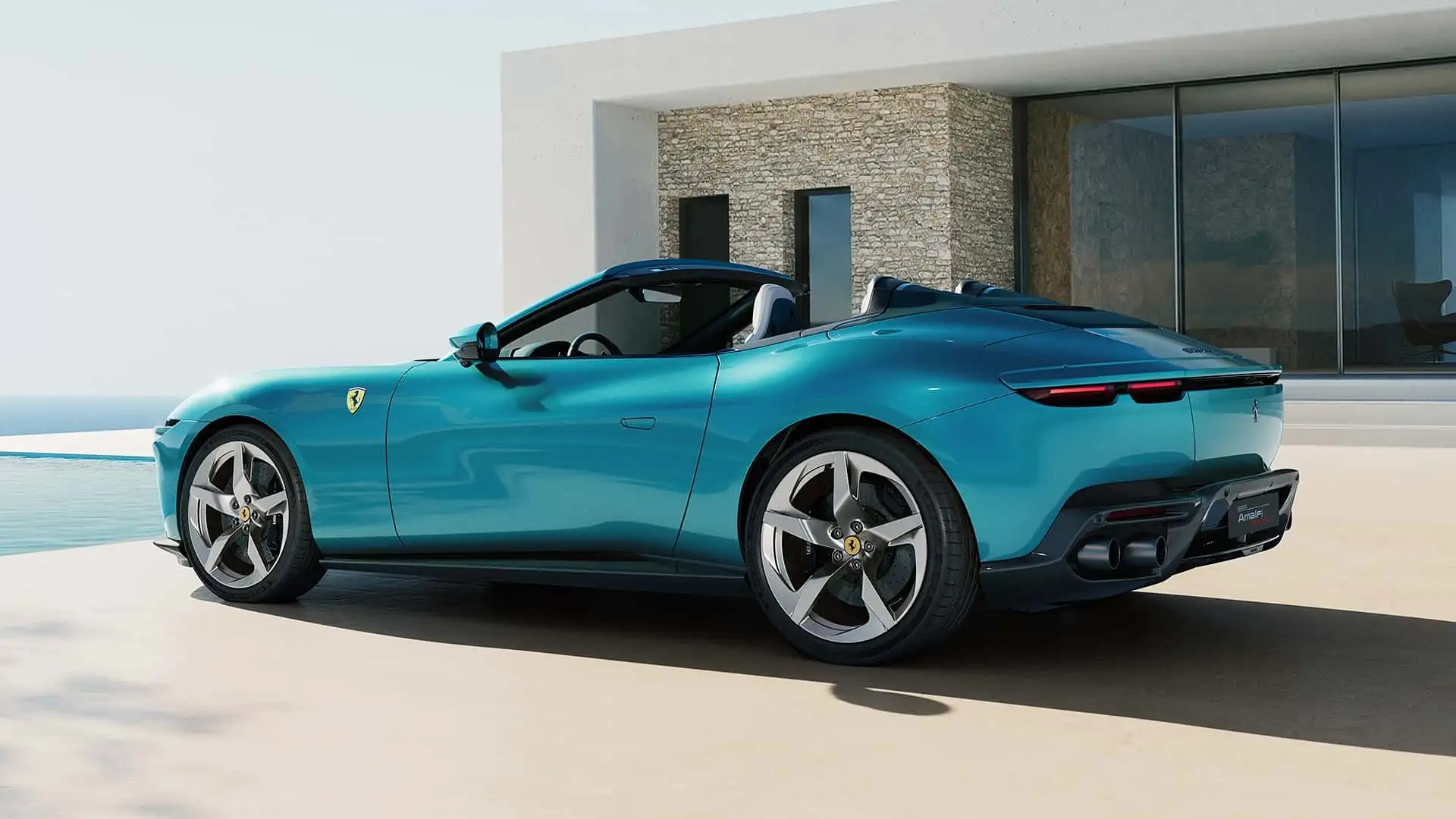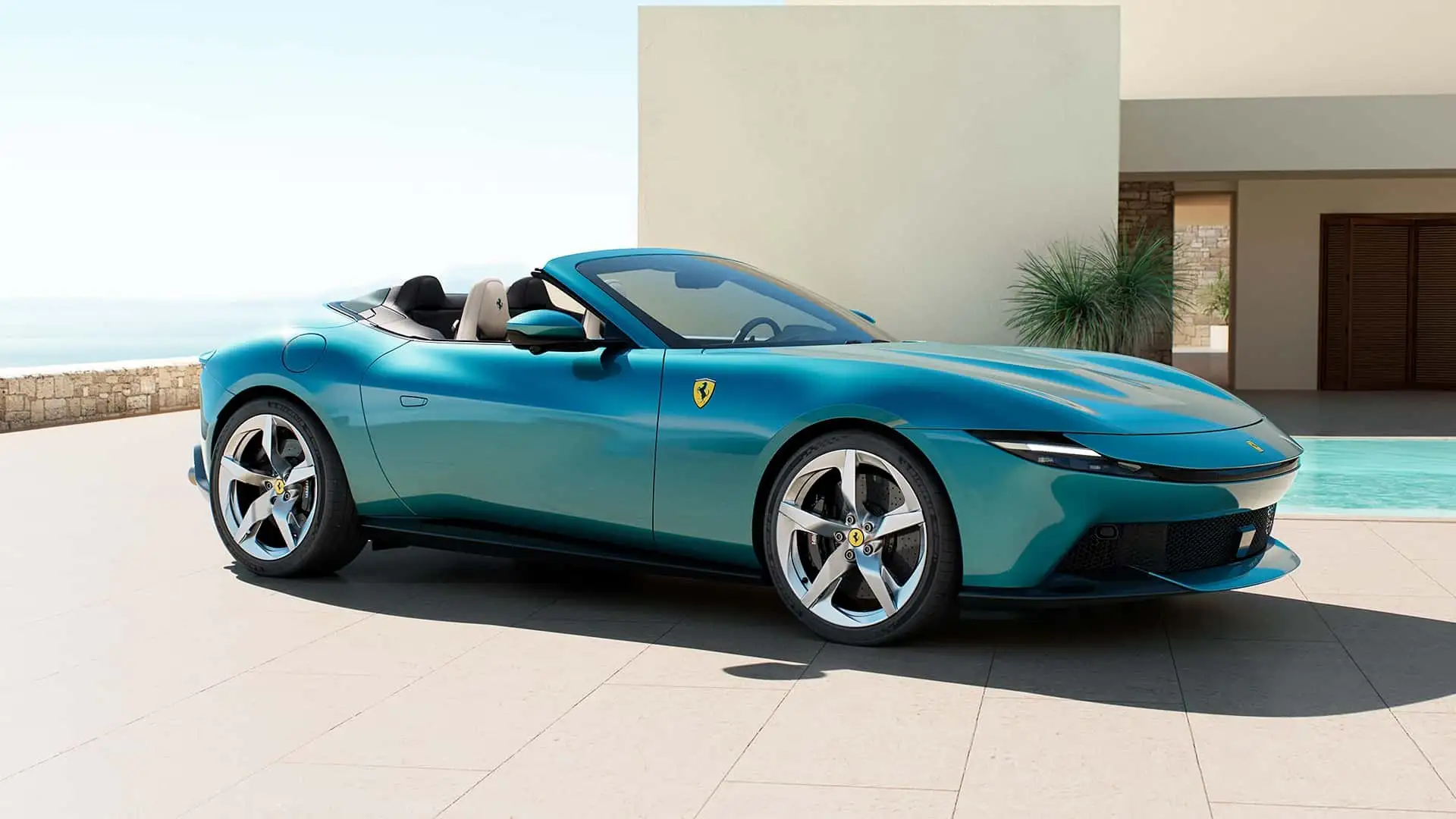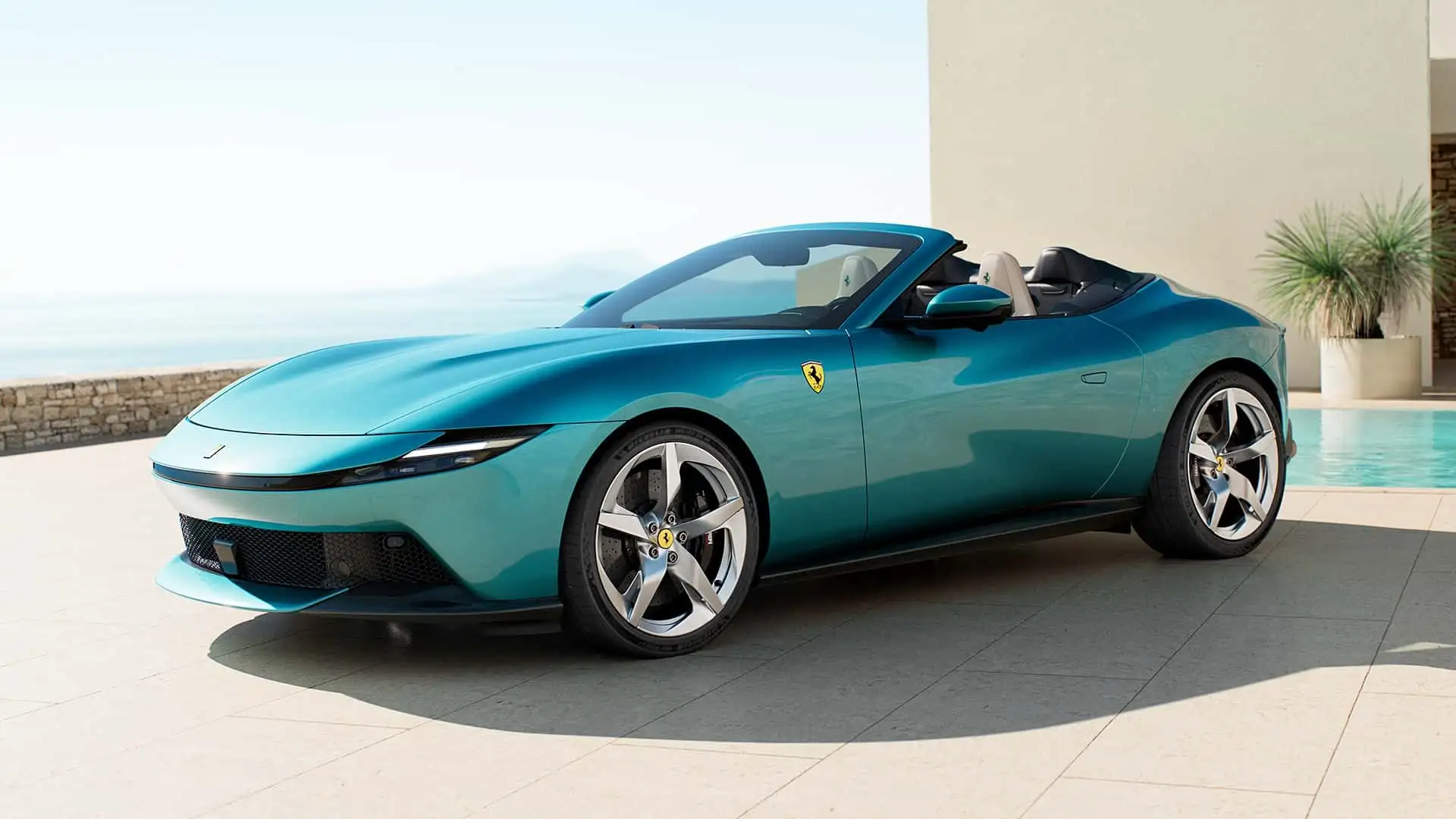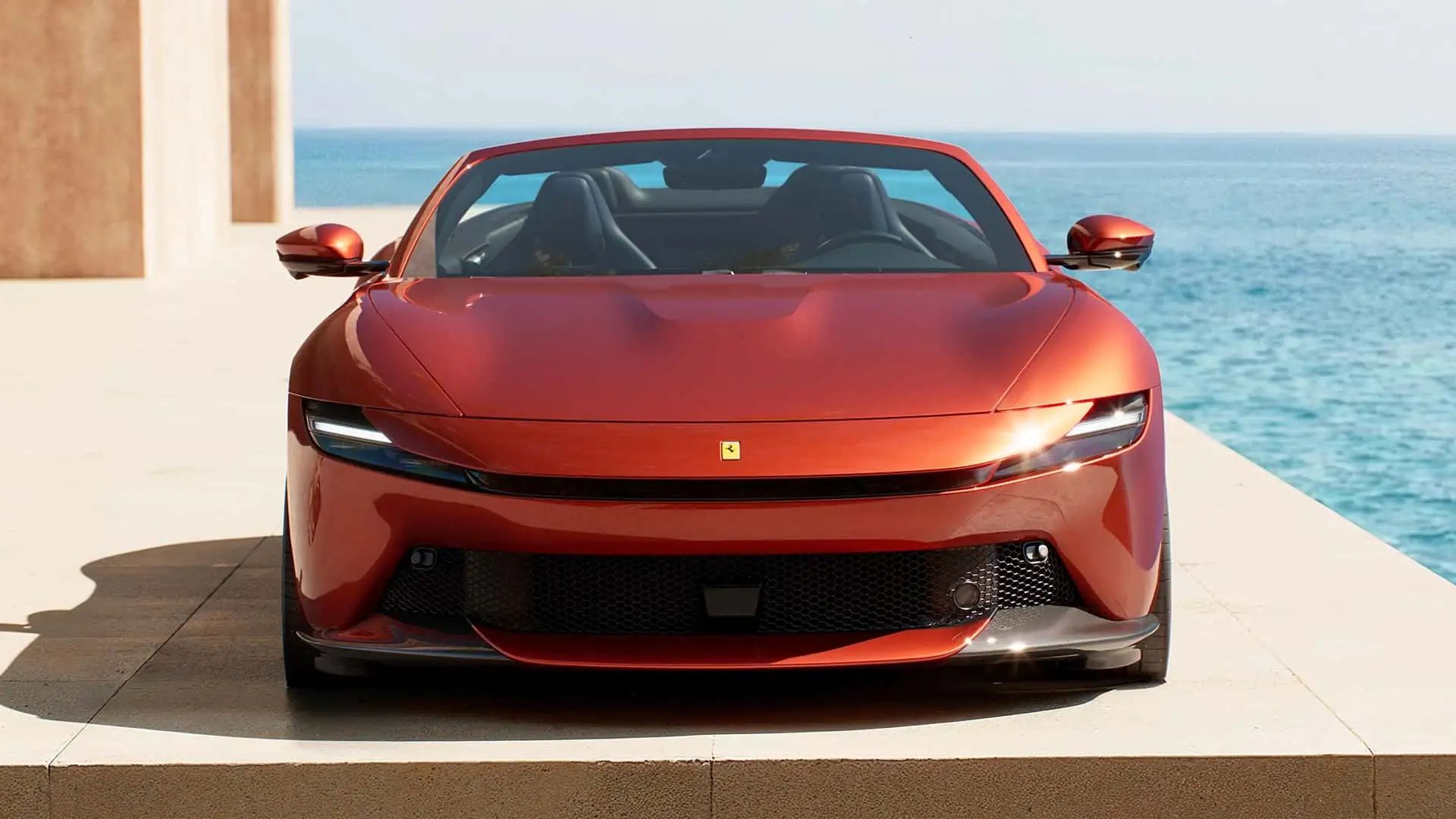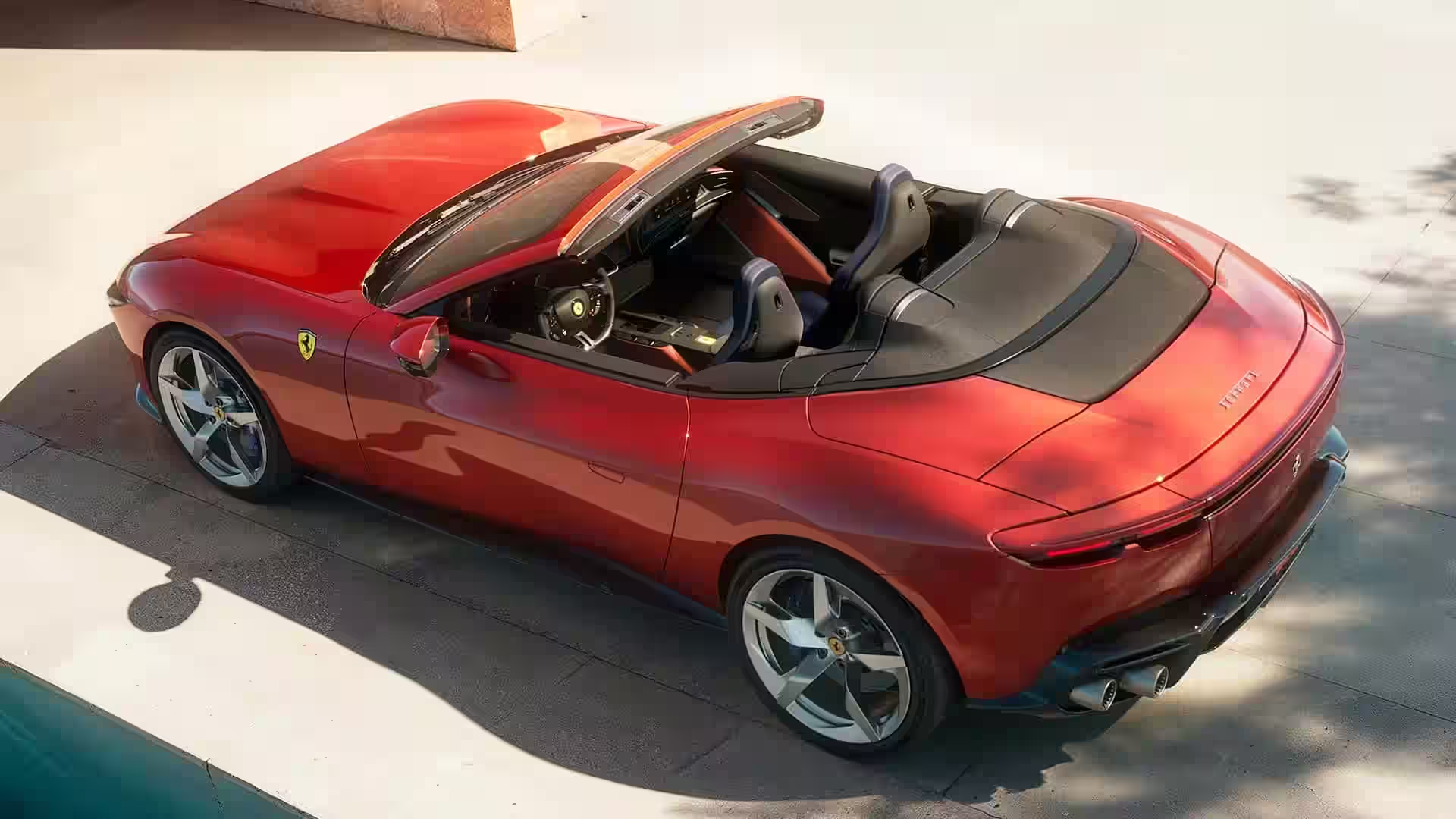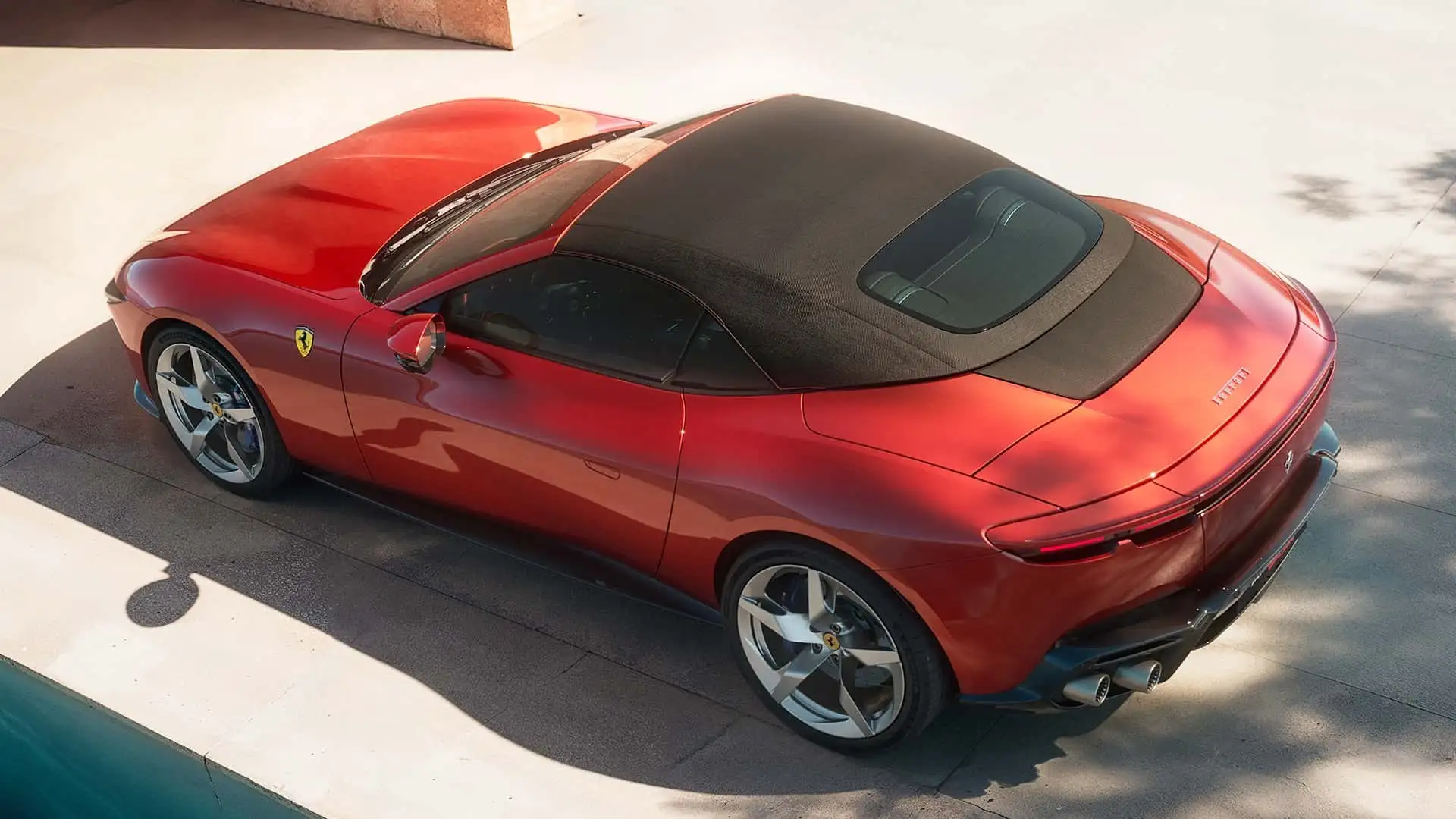
FERRARI AMALFI SPIDER unites 631 hp with the open sky. Discover how the new 5-layer roof redefines luxury and technical performance.
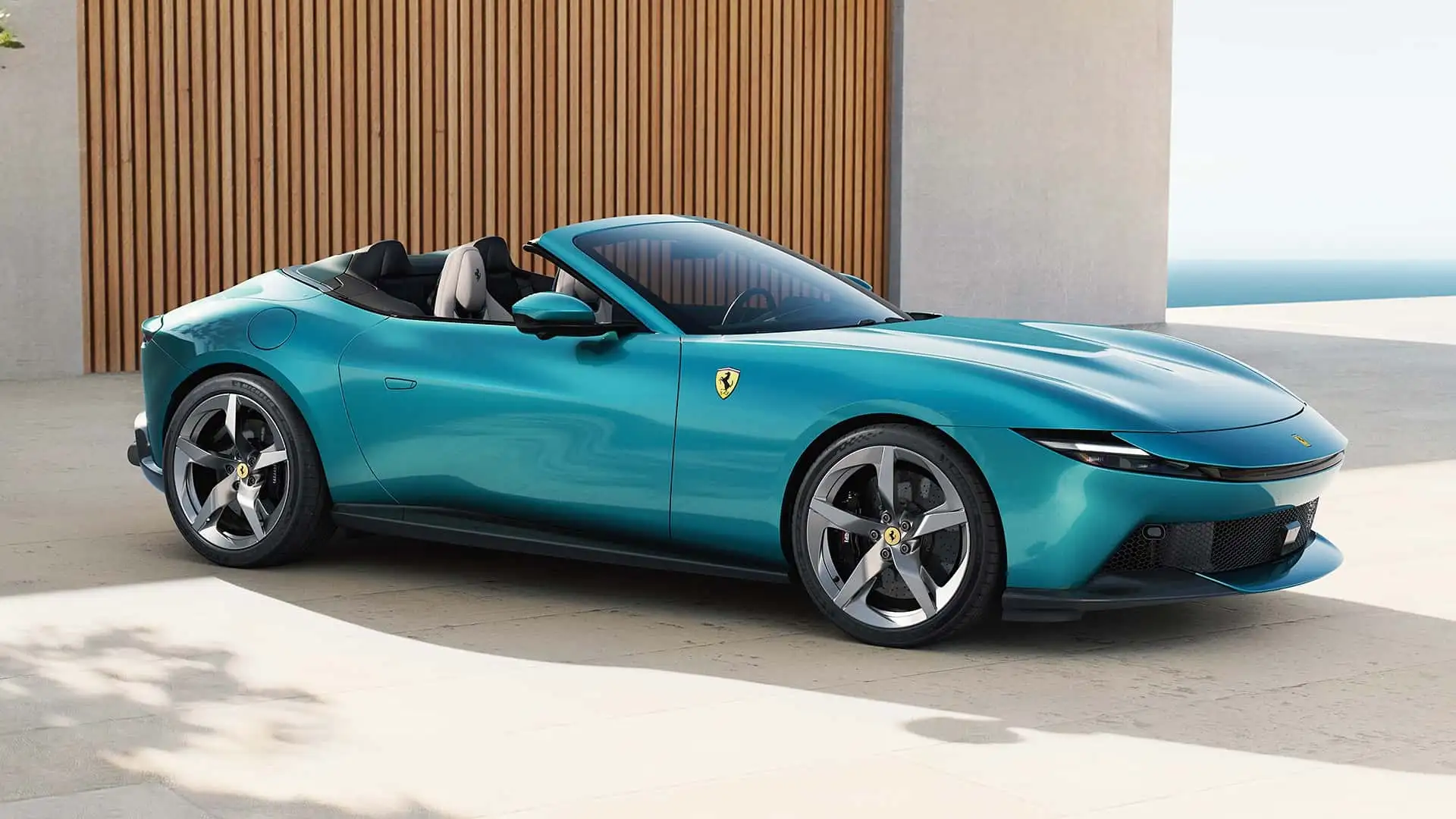
Sometimes, the most radical evolution of a supercar doesn’t come from what’s added, but from what’s removed. Ferrari understood this logic better than anyone when they decided to cut the fixed roof of the Amalfi to create something that goes beyond mechanics: an irreplicable sensory experience.
The Less Is More Philosophy in Maranello
Ferrari’s history with convertibles dates back to decades of obsession with balancing performance and emotion. The Amalfi Spider isn’t merely a convertible version — it’s a declaration that the Italian brand still believes in the ritual of opening the sky above the driver’s head.
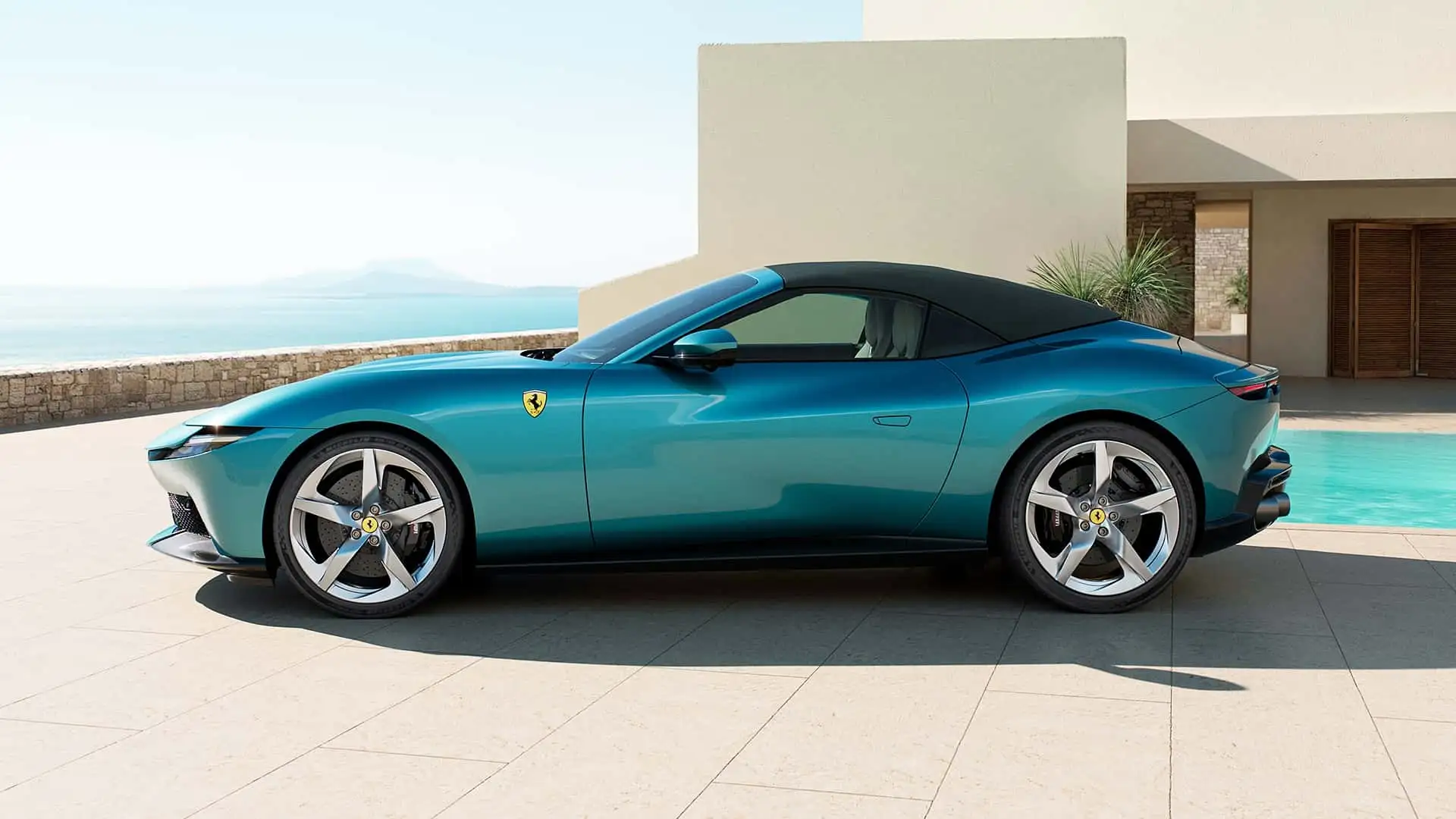
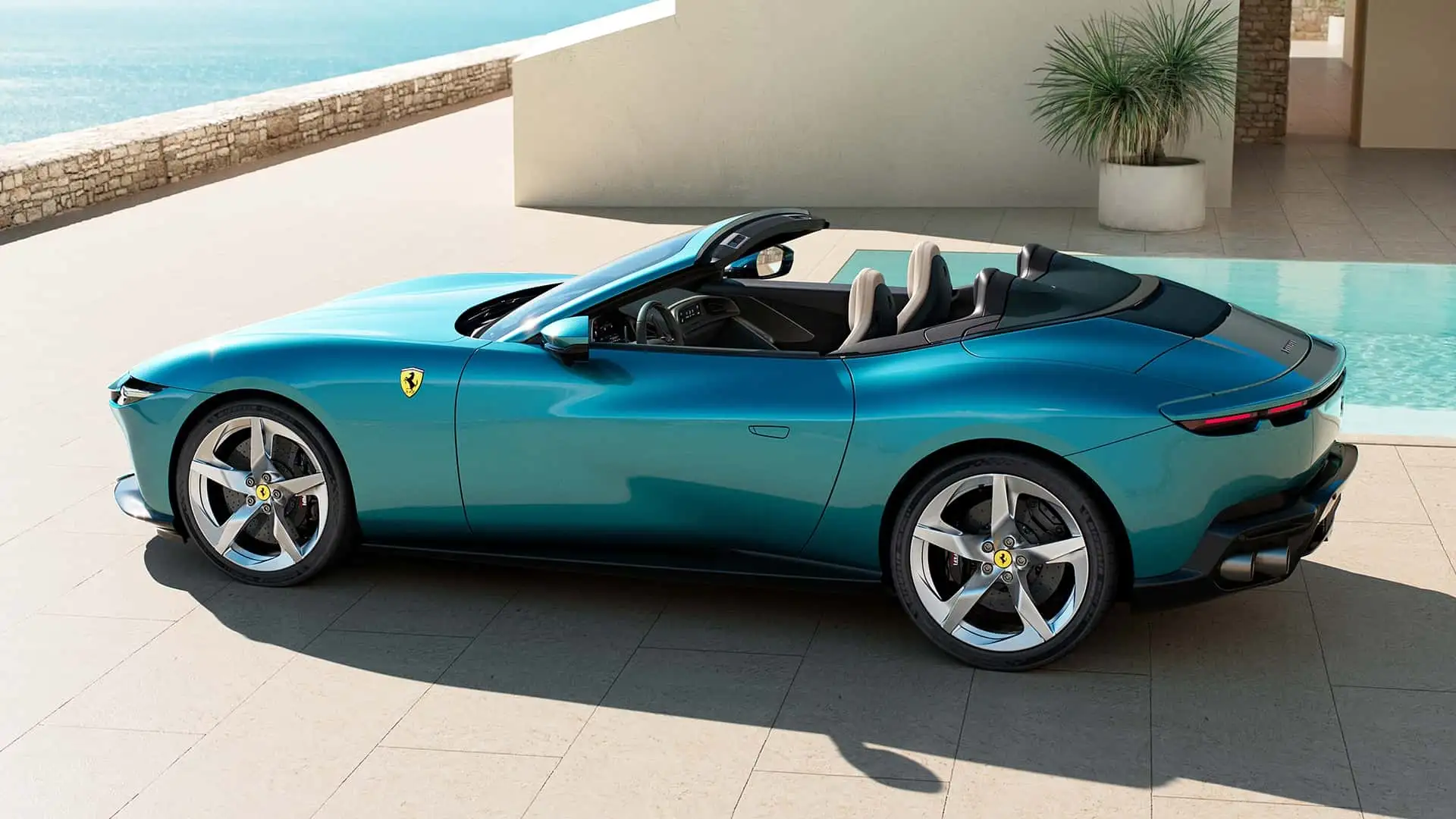
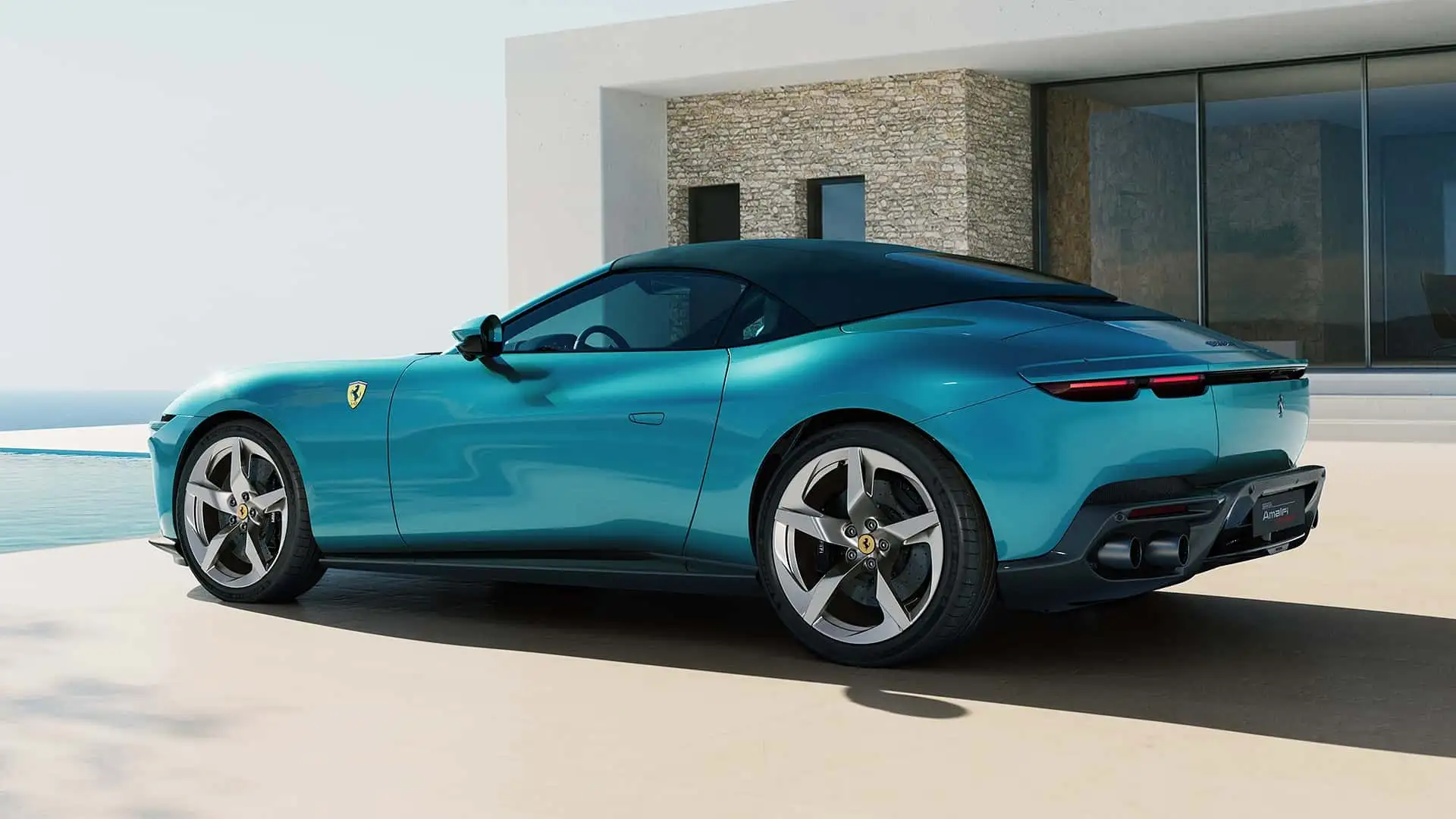
What immediately catches attention is the five-layer soft-top roof, developed with surgical precision. Each layer has varying thickness, arranged in a sandwich-type structure that isolates the cabin surprisingly well. In just 13.5 seconds, the transformation is complete, and the elegant coupe becomes a roadster of expressive proportions.
The engineering behind this roof deserves recognition. Four custom-fit fabric colors are available, plus two technical options including the all-new “Tecnico Ottanio”. The same weaving pattern can be replicated on the tonneau cover, creating visual continuity even with the roof retracted.
The aerodynamics, naturally, were completely reimagined. The integrated active rear wing has three operating modes, capable of generating up to 110 kilograms of downforce at 250 km/h in High Downforce mode. This means the Spider doesn’t lose stability in exchange for freedom — on the contrary, it gains personality.
The V8 That Refuses to Die Elegantly
Under the hood, the F154e 3.9 V8 biturbo engine delivers 631 horsepower — or 163 HP per liter of displacement, a rate that few aspirated engines achieved a decade ago. Ferrari doesn’t reveal official acceleration numbers, but the math is simple: with 1,556 kilograms of curb weight, only 176 pounds more than the coupe, performance expectations are close to 3 seconds in the 0-100 km/h.
The mechanical improvements go beyond the brochure numbers. Lightweight valve timing saves 1.3 kg, while the precision-machined redesigned engine block optimizes thermal management and mass. The eight-speed dual-clutch transmission is the same as the SF90 Stradale, delivering gear changes that feel like teleportation.
The ABS Evo system, inherited from the 296 GTB and refined for the Purosangue and 12Cilindri, works in tandem with Side Slip Control 6.1. This nervous system coordinates steering, torque management, and vertical body movement control — all so the driver can explore the limits with calculated confidence.
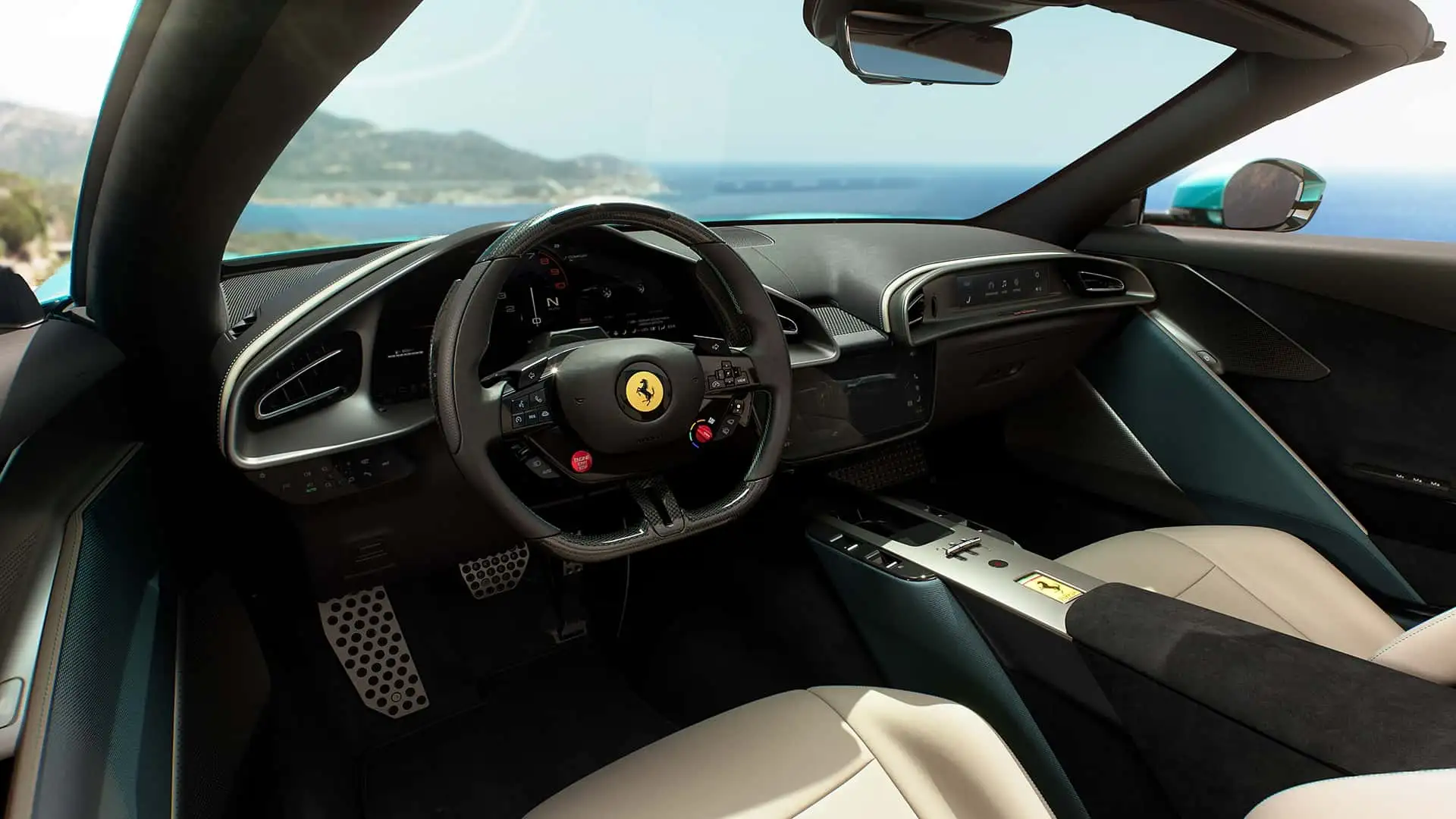
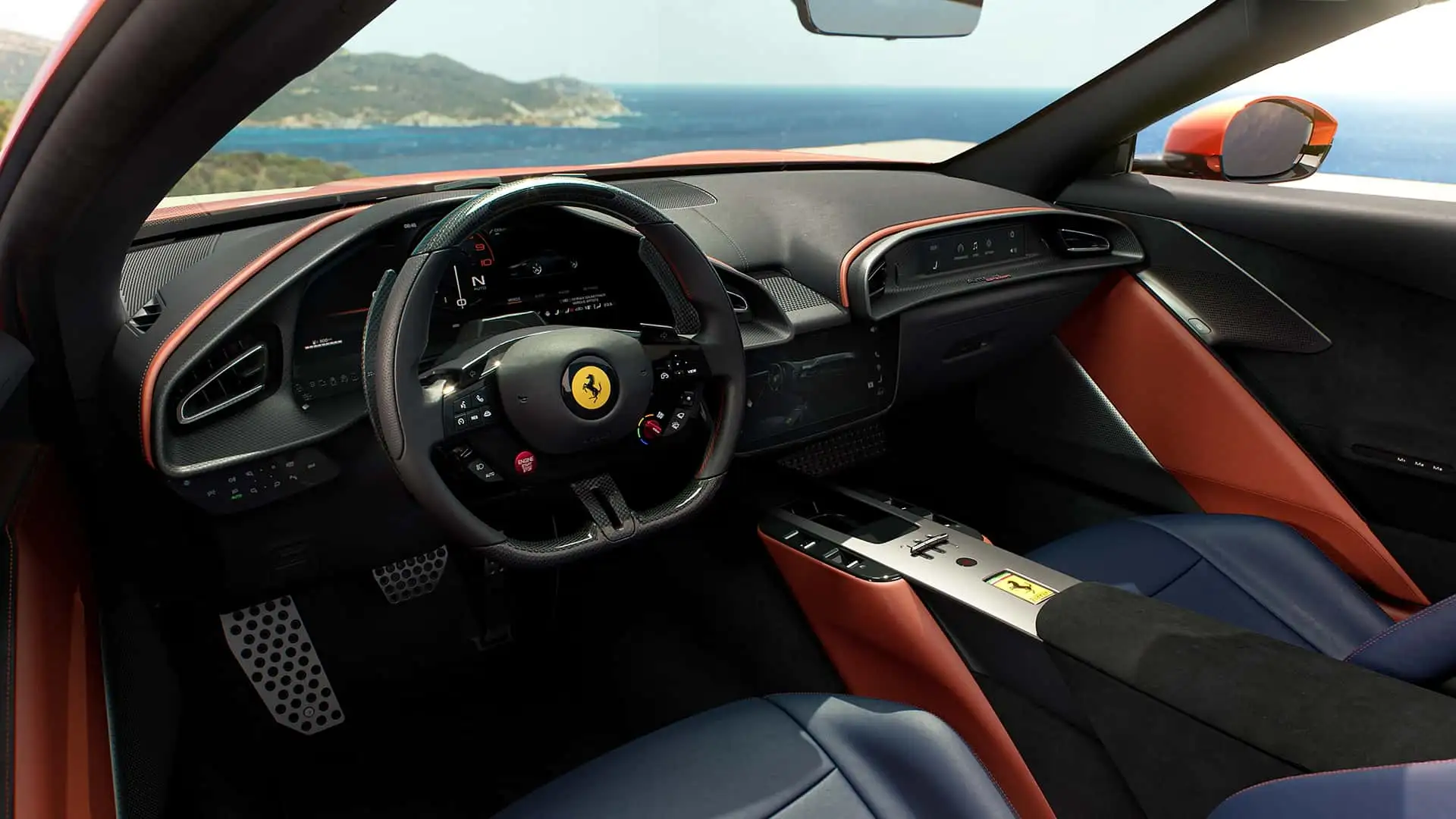
The Manettino on the steering column offers five modes: Wet, Comfort, Sport, Race and ESC-Off. Each one recalibrates F1-Trac, damping, and the electronic differential. It’s like having five different Ferraris under the same steering wheel.
The Commitment That No Technical Specification Reveals
Here lies the most honest dilemma of the Amalfi Spider. With the roof retracted, the trunk shrinks from 255 to 173 liters. The folded soft top takes up 220 millimeters of space — a physical price for sonic freedom.
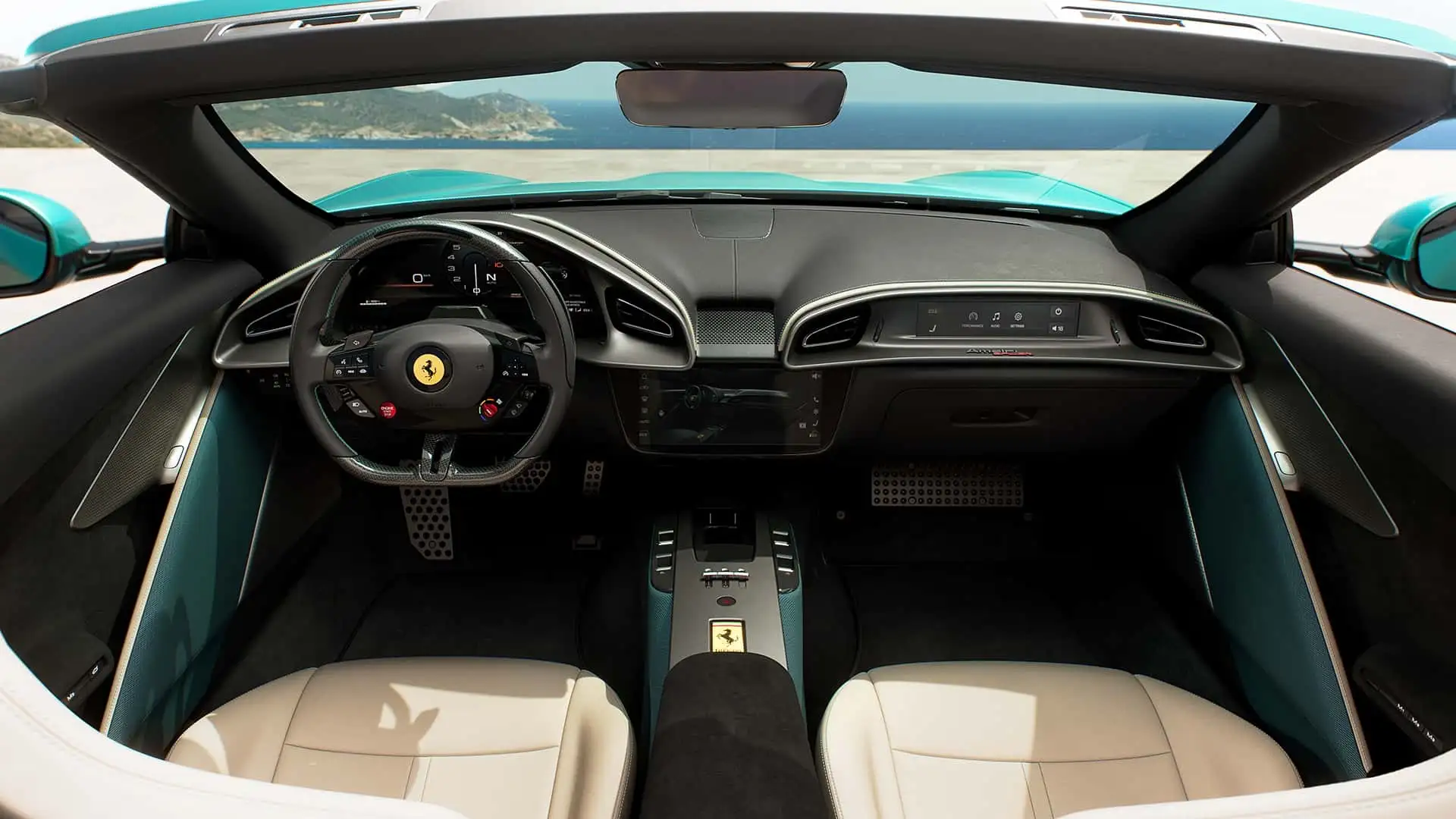
Inside, Ferrari solved a historical problem of convertibles: turbulence. The wind deflector integrated into the rear seat backrests raises with a button and folds down with simple manual pressure. It’s engineering designed for those who will actually use the car, not just display it at elegance contests.
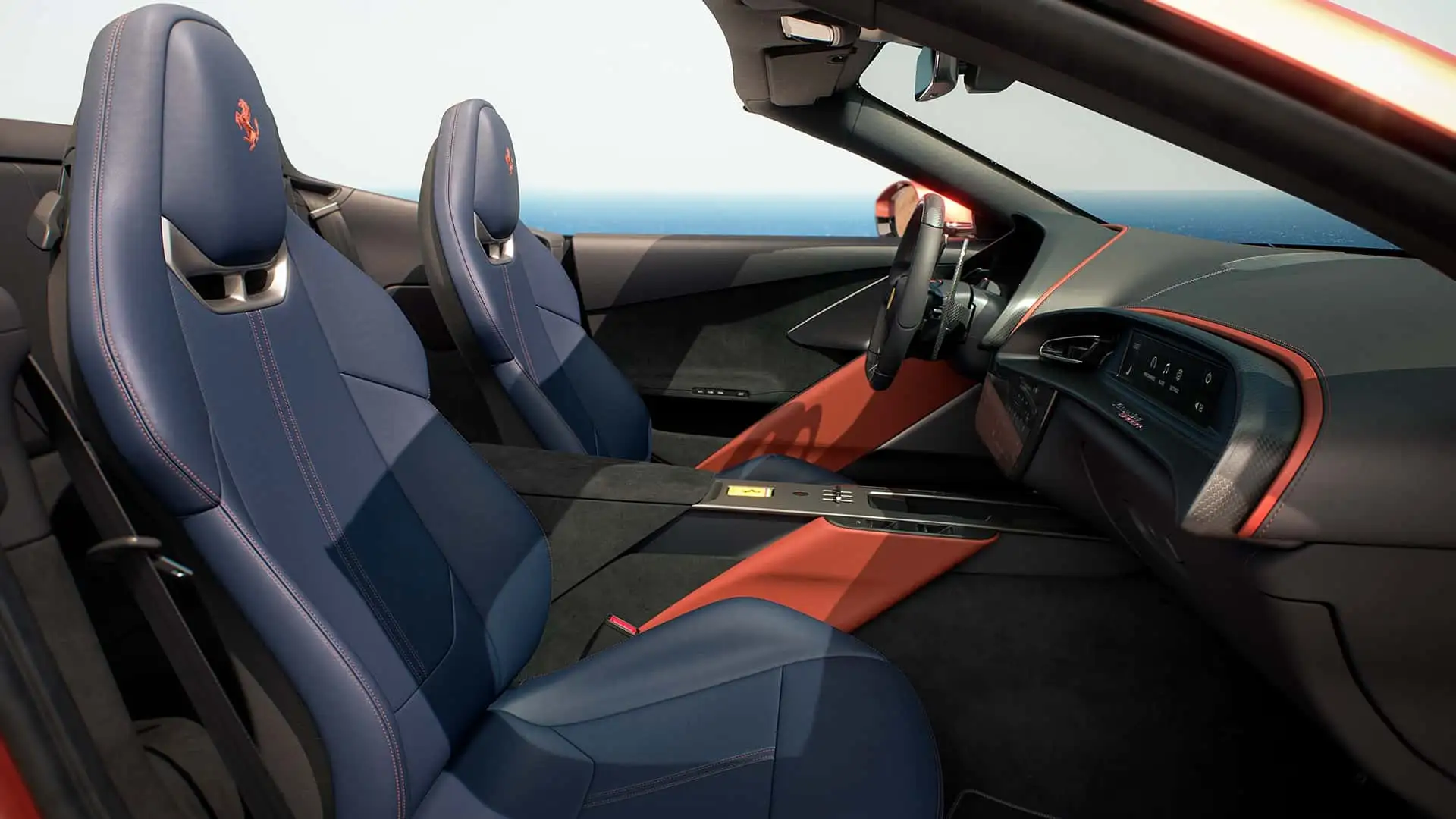
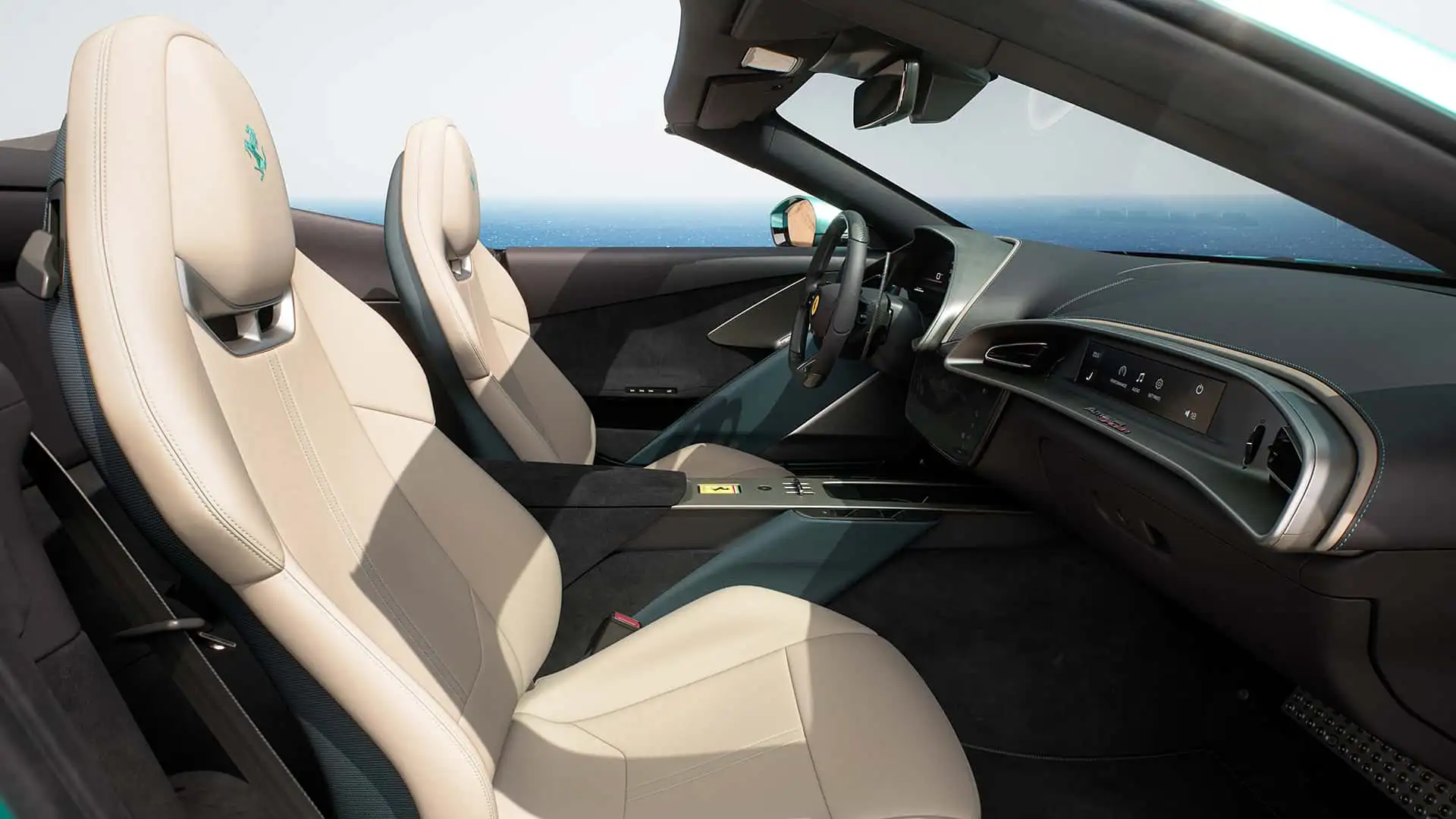
The interior follows the coupe’s language, with a suspended aluminum center tunnel in bridge format and door panels inspired by nautical design. The monolithic cockpit houses the instrument cluster and air diffusers, while two additional screens handle infotainment and passenger entertainment.
The list of assists is extensive for a purist’s car: Adaptive Cruise Control, Automatic Emergency Braking, Blind Spot Detection, Lane Departure Warning, Lane Keeping Assist, automatic headlights, traffic sign recognition, and fatigue monitoring. Optional features include 360° View and Rear Cross Traffic Alert.
The price? Starting at €270,000 in Europe — about €30,000 above the coupe. To contextualize, this value positions the Spider in territory that even challenges the Corvette ZR1 in terms of exclusivity, although with a completely different philosophy. Orders are already open, with deliveries expected to begin in early 2027.
The Ferrari Amalfi Spider is not just another luxury convertible. It’s a manifesto that electrification doesn’t need to mean absolute silence — and that sometimes, losing the roof is the most sophisticated way to gain soul.