
You decide to save on weekend maintenance, open your browser, and find that a premium brand spark plug set is half the usual price. It seems like a great deal, right? Wrong. This “smart saving” could actually be the beginning of the end for your car’s engine. The automotive parts market is experiencing a silent and devastating epidemic: the proliferation of counterfeit spark plugs that look identical to genuine ones but function like time bombs inside your vehicle’s cylinders.
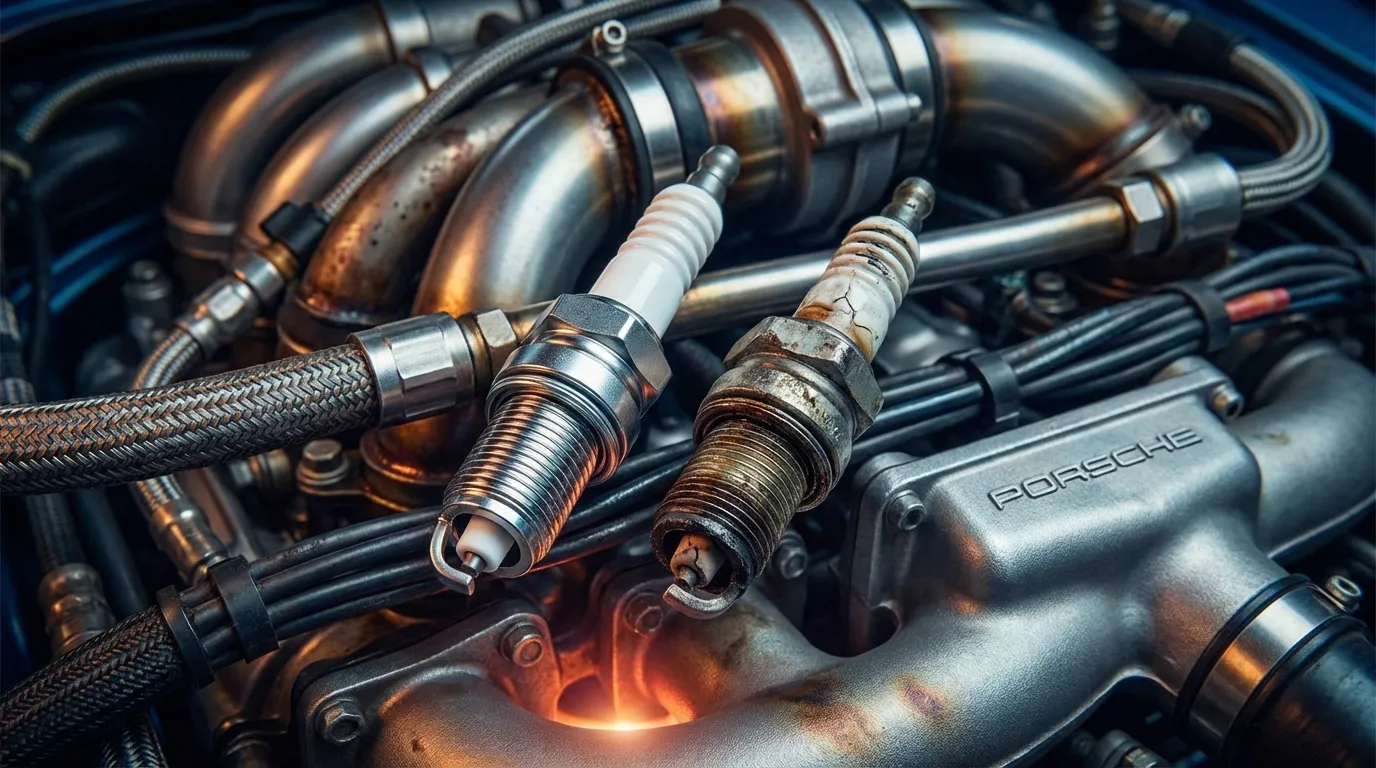
The Black Market That Even Tricks Experienced Mechanics
For those who like to get hands-on and take care of their own car, changing spark plugs is almost a rite of passage. It’s a relatively simple maintenance that promises to restore power and fuel efficiency. However, scammers have identified this demand and flooded online marketplaces with high-fidelity counterfeit products.
Global automotive industry reports, including alarming data from the Federal Chamber of Automotive Industries of Australia, indicated that on certain platforms, up to 60% of spark plugs sold online were counterfeit. We are in 2025, and the sophistication of these copies has only increased. What was once a crude counterfeit now requires a sharp eye — or a caliper — to detect.
The appeal is obvious: while a genuine Iridium or Laser Platinum spark plug can be costly (multiply that by 6 or 8 cylinders), the fakes come with tempting discounts. But it is crucial to understand that the technology behind a genuine spark plug involves precious metals and high-thermal-resistance ceramics, materials that counterfeiters completely ignore to maximize profit.
If you have doubts about which technology your car actually needs before buying, it’s worth checking out our definitive guide: Iridium or Platinum in Your CAR? Find Out Which Spark Plug Is Right for You!.
What Really Happens Inside the Engine?
We are not just talking about a car that “misfires” or consumes a bit more. The mechanical risk is catastrophic. Fake spark plugs lack the heat dissipation capacity of originals. The ceramic insulator is often made of inferior material, filled with microscopic air bubbles.
When exposed to high temperatures in the combustion chamber, these spark plugs can suffer what we call catastrophic failure:
- Electrode Meltdown: Low-quality metal melts and drips onto the piston, puncturing it instantly.
- Ceramic Disintegration: Pieces of the insulator break off and fall inside the cylinder, scratching the walls and destroying the piston rings.
- Ignition Failures (Misfire): Improper combustion sends raw fuel into the exhaust.
This unburned fuel is a silent killer of your exhaust system. It overheats and melts the catalytic converter, a part that costs thousands of dollars. If you’ve noticed strange signs coming from the exhaust, be careful: Bluish Smoke and Burning Smell? Excess oil in the engine is literally cooking your car from the inside!.
How to Identify Fraud
If you’ve already purchased spark plugs and they are in your hands (or if you’re about to click “buy”), here is a survival checklist to identify a fake product. Remember: if the price seems too good to be true, it probably is a scam.
1. The Lot Number Test
Renowned brands like NGK, Denso, and Bosch use a strict tracking system. The lot number is usually engraved on the metal hexagon or on the ceramic insulator. Fake ones often lack this number or have it printed with a blurry and inconsistent font. Search online how each specific brand positions its codes.
2. Thread and Metal Quality
Run your finger along the spark plug threads. Genuine products are perfectly machined and smooth. Counterfeits may have burrs or imperfections. Also, do the scratch test: many fakes are coated with cheap metal over common iron. If you lightly scratch and the color changes drastically or paint peels off, do not install.
3. The Sealing Washer
This is one of the easiest tests. In genuine spark plugs (especially NGK), the crush gasket is extremely difficult to remove; it does not unscrew easily. Fake ones often have a loose washer that can be removed by hand effortlessly.
4. The Electrode and Alignment
Look at the spark plug from the side. The ground electrode (the one that curves) should be perfectly aligned with the central electrode. The angle should be precise. Fakes often have bent or misaligned electrodes. Also, the material of the central electrode in Iridium plugs should be extremely thin (“fine wire”). If it’s as thick as a common copper plug, it’s fake.
Many owners of large sedans suffer from maintenance myths, especially regarding the ignition system. See the specific case of this Japanese giant: The Myths About Spark Plugs in the TOYOTA CAMRY V6 You Need to Stop Believing.
Where to Buy Safely?
The golden rule for E-E-A-T (Expertise, Authority, and Trustworthiness) when buying parts is: traceability. Open platforms like Amazon and eBay act as facilitators for third-party sellers. You might think you’re buying from “Amazon,” but you’re actually buying from “Zé Import Parts Store” that ships from a dubious warehouse.
To ensure originality:
- Buy directly from authorized dealerships.
- Use major franchised auto parts chains that purchase directly from the manufacturer.
- If buying online, verify if the product is “Sold and Delivered” by the official platform itself or by the brand’s official store within the marketplace.
The devaluation of your vehicle happens not only due to serious mechanical issues but also from a series of small neglects. Keeping originality is crucial to preserving your asset, just like taking care of the aesthetics: AUTOMOTIVE PAINT: 10 Invisible Enemies That Are Destroying Your Car’s Value Right Now.
I Installed and Found Out It’s Fake: What To Do?
If you read this article and felt a chill because you just installed suspicious spark plugs, stop the car. Don’t risk “taking a test drive.” Melting of a fake spark plug can occur within minutes under high load.
Remove the spark plugs immediately and inspect them. If there are signs of premature overheating, melting, or cracks in the porcelain, you may have saved your engine in time. Unfortunately, your car manufacturer’s warranty does not cover damages caused by counterfeit parts. If a piston gets pierced because of a R$20.00 plug, the damage of R$15,000.00 (or more) is entirely your responsibility.
The complexity of modern engines, with direct injection and turbochargers, makes them much less tolerant of errors than the old carbureted V8s. The margin for error is zero. Understand how engineering has changed and why precision is vital today: Why Turbo 4-Cylinder Engines Replaced V6/V8? Discover the myths and truths about consumption and reliability!.
Road safety is also at stake. Imagine your engine suddenly cutting out during a dangerous overtaking or crossing because the ceramic of the spark plug shattered. Saving on spark plugs is not being smart; it’s playing Russian roulette with your vehicle’s engineering. Buy from trusted sources, verify each part, and keep your engine roaring healthily, not screaming for help.