
Oil filter change without changing the oil. It seems like saving money, but it can cost you the entire engine. Find out when it works, when it destroys everything, and the detail that 90% of mechanics forget to do.
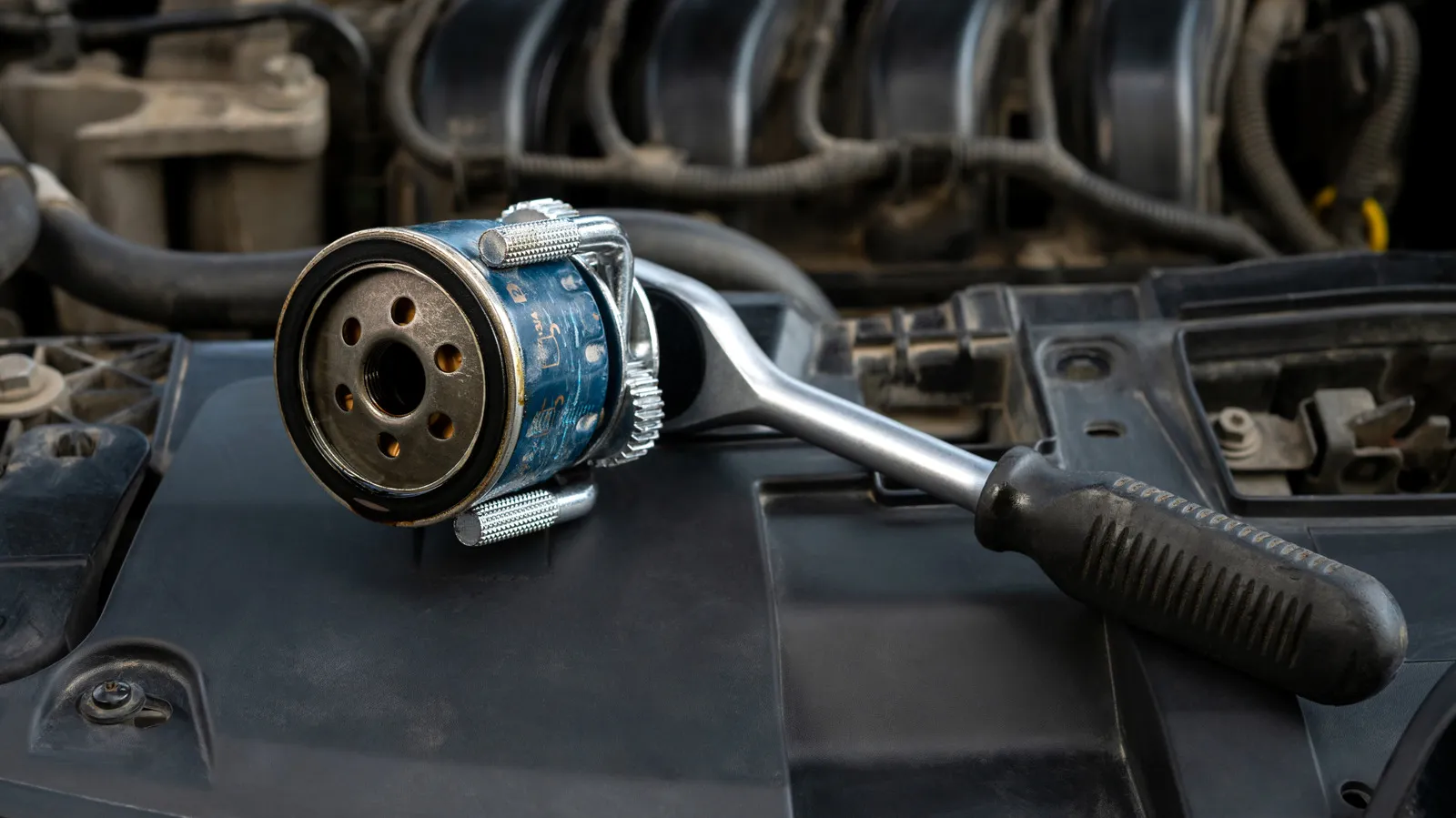
The question that has circulated in mechanic forums and enthusiast groups for decades finally has an answer no one wanted to hear: yes, you can change just the oil filter — but you probably shouldn’t. The seemingly harmless practice hides traps that turn a R$ 50 saving into R$ 5,000 repairs. And the worst part? The damage is usually silent until it becomes irreversible.
Why The Filter And The Oil Are Inseparable
Inside your engine, an invisible war happens with every rotation. The lubricating oil circulates under extreme pressures, carrying worn metal particles, combustion soot, and contaminants that literally scratch internal surfaces. This is where the oil filter comes in — a part that many underestimate until they know its anatomy.
The filter’s internal structure uses layers of cellulose or synthetic fibers designed to retain microscopic particles. Over time, these fibers become saturated. When this happens, two things occur simultaneously:
- The already degraded oil continues to circulate, now with less chemical protection
- The filter goes into bypass, allowing unfiltered oil to pass directly through the engine
The result? A toxic mixture of old lubricant and free contaminants that damages bearings, bushings, and cylinders. The cruel irony is that drivers who only change the filter think they’re doing the “right middle ground” — when, in fact, they may be accelerating wear.
The perfect analogy comes from those who understand extreme performance. Just as the MOPAR 440 required specific components to unleash its potential, your modern engine depends on the synergy between oil and filter in perfect condition.
The Only Scenario Where Changing Just the Filter Makes Sense
There is exactly one situation in which changing only the filter is acceptable — and it involves human error, not planning. Imagine: you finally motivated yourself to do DIY maintenance, drained the old oil, installed new lubricant… and only then realize you forgot to buy the filter.
In this case, changing just the filter afterward is less harmful than leaving the old saturated filter. But there are absolute rules:
“The oil that drains when removing the filter doesn’t come from the oil pan — it comes from the galleries and bypass valve. You lose between 500ml and 1 liter, and this loss is critical for lubrication pressure in the first rotations.”
When installing the new filter, pre-fill it with new oil whenever possible. This practice, ignored by rushed mechanics, ensures the engine does not “run dry” in the initial seconds — a moment when metallic wear is exponentially greater.
After installation, check the level on the dipstick and top up as necessary. Unstable oil pressure in the first few minutes can be enough to compromise the engine’s lifespan, especially in high-performance units like those found in the new Corvette ZR1 or any modern sports car.
The Secret That Workshop Manuals Don’t Tell
Here is the detail that separates experienced mechanics from beginners: oil also has an expiration date, not just mileage. Lubricant sitting in the oil pan for months or years undergoes oxidation, moisture buildup, and additive degradation — even if the car is not used.
This explains why collector vehicles, like the Aston Martin Lagonda Taraf with less than 800 km, still require an annual oil change. Time corrodes the chemical protection regardless of mechanical use.
If your oil is dark, viscous, or has a burnt odor, changing only the filter is like putting on new socks with soggy shoes. The appearance improves, but the problem remains. Degraded oil will saturate the new filter in a fraction of the usual time, negating any benefit from the change.
For those seeking real longevity — whether in a daily utility vehicle or precision machines like the Gordon Murray T.50S Niki Lauda — the rule is non-negotiable: oil and filter are a single system. Saving on one to “make the other last” is faulty logic that automotive engineering does not forgive.
The next time someone suggests this “smart saving,” remember: engines don’t fail instantly. They accumulate microscopic damage until, one day, the bill comes due. And when it does, there isn’t a filter in the world that can undo years of chemical neglect.