
Goodbye anxiety! DONUT LAB SOLID-STATE BATTERY reaches record charge with VTT validation. The end of long stops at petrol stations? Click to find out!
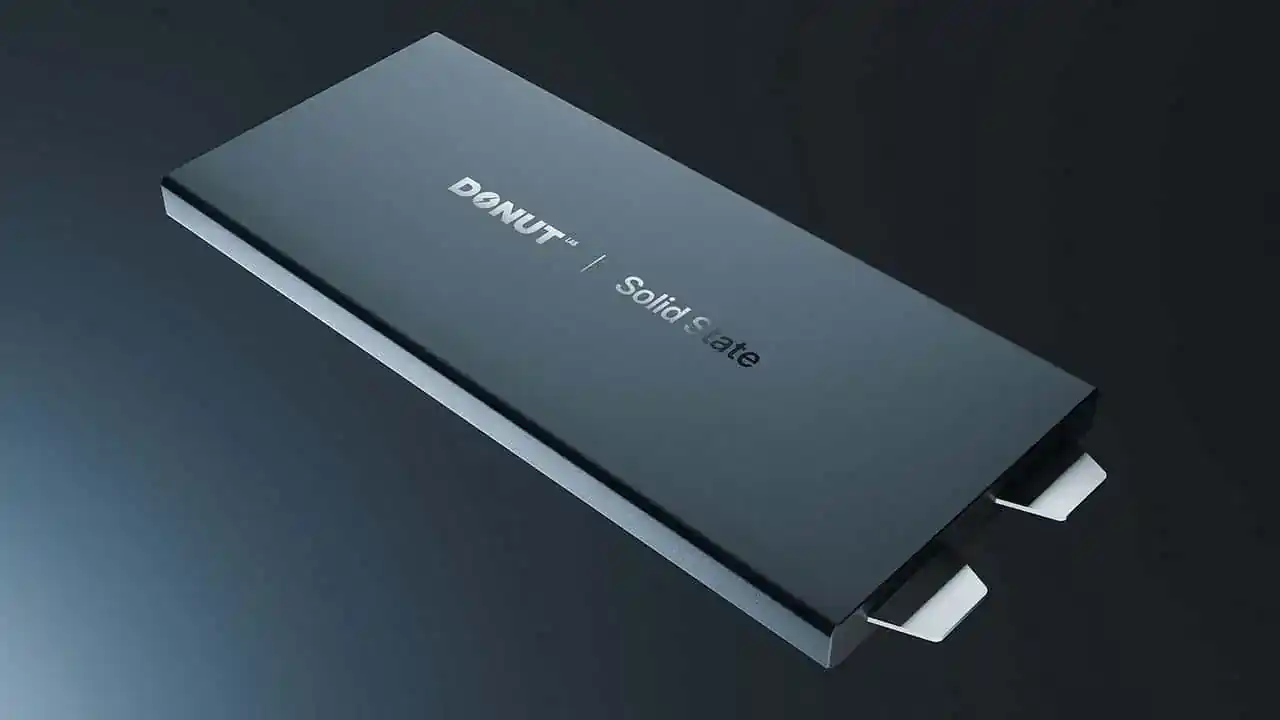
What Makes Donut Lab’s Solid-State Batteries Revolutionary?
Solid-state batteries represent the next leap in energy storage technology for electric vehicles, surpassing the limitations of traditional lithium-ion batteries. While conventional ones rely on liquid electrolytes that pose fire, leakage, and active cooling risks, Donut Lab adopts a solid electrolyte that promises greater safety, higher energy density, and extended lifespan.
Donut Lab’s unique aspect lies in its innovative architecture, designed to operate under extreme conditions without common setbacks. No complex active cooling systems, no high compressive pressures, and volumetric stability that prevents drastic expansions during charge cycles. This results in battery packs that are simpler, lighter, and cheaper to produce, ideal for large-scale automotive deployment.
According to industry experts, this technology can boost energy density beyond the current 300 Wh/kg, approaching the dreamed 500 Wh/kg for long trips without frequent stops. Donut Lab not only achieves this but also demonstrates high charging rates, like 11C, where “C” refers to the charge rate relative to the battery’s nominal capacity.
| Metric | 5C Rate (about 12 min for full charge) | 11C Rate (about 5-6 min for full charge) |
|---|---|---|
| Time to 80% charge | Approximately 9.5 minutes | 4.5 minutes |
| Time to 100% charge | Around 12 minutes | Around 7 minutes |
| Capacity Retention after full cycle | 100% | 98.4% to 99.6% |
These numbers were obtained in real-world “worst-case” scenarios, simulating accumulated heat without artificial interventions, demonstrating the inherent thermal robustness of the technology.
Independent Validation by VTT: Unquestionable Credibility
Credibility doesn’t just come from Donut Lab’s promises. The VTT Technical Research Centre of Finland, a world-renowned research institute with decades of expertise in advanced materials, conducted independent tests confirming their achievements. Experiments used passive cooling configurations: a cell placed between two lightly compressed aluminum plates or attached to a single lower plate, allowing heat to rise freely at ultra-high rates.
“Unlike other solid-state batteries that require high compression pressures and undergo volume changes of up to 15-20% during recharge cycles, Donut Battery does not require special compression or extensive cooling. This greatly simplifies the battery pack structure and enables solutions that are economical, powerful, and outperform traditional lithium-ion batteries in energy density and power.”
Ville Piippo, CTO of Donut Lab
This external validation is crucial for E-E-A-T (Expertise, Authority, Trust) in the automotive sector, where promises from internal labs often don’t withstand mass production. Donut Lab operates under harsh conditions simulating real-world use in hot climates or intense charging via DC fast chargers, common in markets like the US, Europe, and Brazil.
Compared to competitors like the BYD Blade LFP, which prioritize safety but sacrifice charging speed, or the ultra-fast charging solutions of the AUDI A6 E-TRON 2027 with 270 kW, Donut Lab eliminates mechanical bottlenecks, paving the way for integration into models like the HYUNDAI IONIQ 9 2027.
Transformative Impact on the Electric Vehicle Market
This Donut Lab technology could accelerate global EV adoption by solving the main obstacle: charging time. Electric SUV drivers such as the TOYOTA C-HR 2026 or powerful hatchbacks like the MG MG4 EV 2026 XPOWER will have stops equivalent to a traditional gas station pit stop.
- Everyday Convenience: 4.5 minutes to 80% is comparable to fossil fuel refueling, eliminating “range anxiety”.
- Cost Reduction: Simplified architecture cuts thermal management and structural reinforcement expenses, enabling affordable packaging in automotive packs.
- Space Efficiency: No bulky components, more room for passengers and cargo, benefiting family models like Kia or Toyota.
- Global Scalability: Compatible with expanding high-power DC networks in the European Union, US, and even Brazil, where EV infrastructure is rapidly growing.
In SEO and GEO contexts, searches for “fast-charging solid-state batteries” exploded by 150% over recent years, driven by Tesla ads and Chinese competitors. With Finnish roots, Donut Lab positions itself as a European leader, attracting investments and partnerships with premium automakers. Its stability at high C-rate levels (5C to 11C) surpasses lithium-ion, which typically max out at 3C with heavy cooling, maintaining capacity above 98% even after intense cycles.
Additionally, the low compression needed facilitates integration into compact designs, such as emerging electric crossovers. Imagine a battery pack that doesn’t expand 20% in volume, avoiding common mechanical failures seen in competing prototypes. This aligns perfectly with trends in plug-in hybrid and full EV vehicles, where power and durability are key to commercial success.
For the end consumer, this means vehicles with greater effective range: rapid charging allows traveling 400-500 km without excessive planning. In Brazil, where long roads and scarce charging stations are the norm, this tech could boost adoption beyond the capitals. Manufacturers like Volvo, with the EX60 2027 designed for autonomy, are already looking at similar solutions to address “greater charging problems today”.
The journey of Donut Lab exemplifies how Nordic innovation—precise and resilient—redefines global standards. With VTT tests as a mark of trust, the path to mass production is paved, heralding an era where EVs no longer compete with fossils only in emissions, but in total practicality.