
Have you ever stopped to think about what happens to your worn-out tires after they are replaced at the shop? Millions of units accumulate annually, threatening the planet – but there are smart solutions that turn trash into treasures.
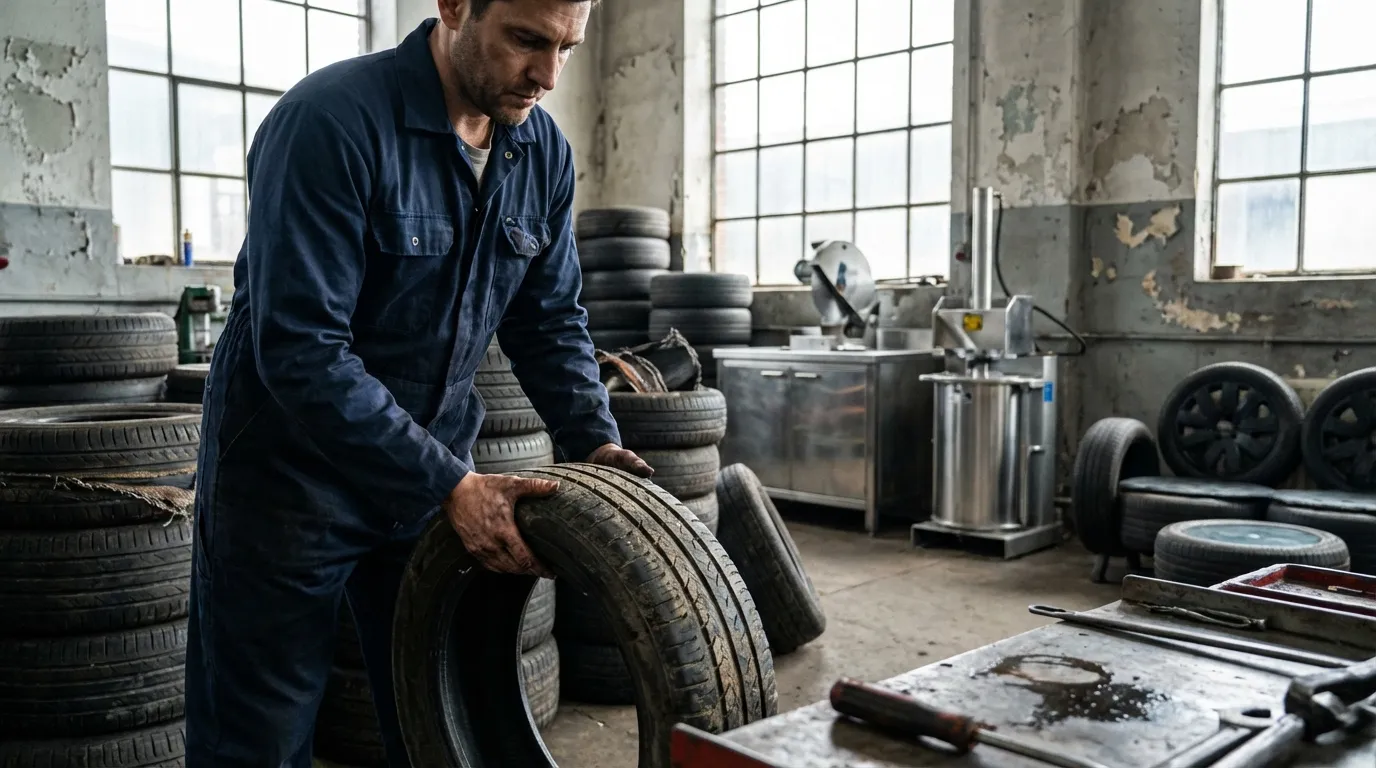
Why Old Tires Can’t Go to Landfills? The Invisible Risks
Automotive tires are made of synthetic rubber, steel, and chemical additives that do not decompose easily. In Brazil, it is estimated that over 30 million used tires are discarded each year, according to data from the National Institute for Used Tire Processing (INPPU). Dumping them in landfills is prohibited by the National Solid Waste Policy (Law 12.305/2010), which classifies tires as hazardous waste.
The dangers are serious: Piles of tires collect stagnant water, becoming breeding grounds for mosquitoes that transmit dengue, Zika, and chikungunya. Moreover, they can ignite spontaneously due to accumulated heat, causing fires that are difficult to extinguish. A classic example occurred in 2018 in Rio de Janeiro, where an illegal warehouse burned for days, releasing toxic smoke with volatile organic compounds, sulfur dioxide, and heavy metals, polluting air and soil.
- Inefficient use of space: A tire occupies a large volume without compacting, quickly saturating landfills.
- Health risks: Attracts rodents that carry hantavirus and leptospirosis.
- Hefty fines: Illegal disposal can cost companies up to R$50 million, according to Conama resolutions.
But not all news is bleak. Most certified tire shops follow the law, sending used tires to sorting centers. Some charge a disposal fee (R$5 to R$15 per tire), which funds reverse logistics. In Brazil, programs like the Brazilian Wheel Association (ABR) ensure that 95% of collected tires are properly processed.
“Tires are not regular waste; they are a valuable resource if managed correctly.” – Waste specialist at USP.
To verify if your shop recycles, ask for the Inmetro certification or affiliation with INPPU. Avoid the “cheaters” who promise free disposal – they might be dumping illegally, as seen in recent inspections in the interior of São Paulo.
Reuse Vs. Recycling: What Do Shops Actually Do?
First, assess the condition: tires with tread depth above 1.6 mm (the legal limit in Brazil) can be reused through retreading. This process removes the worn layer, applies new rubber, and cures in an autoclave, extending the lifespan by up to 50%. Trucks and fleets favor this method: they save 40% on costs and reduce emissions.
If irreparable, proceed to recycling. The industrial process is high-tech:
| Stage | Description | Equipment |
|---|---|---|
| 1. Steel Removal | Magnets remove steel wires (up to 15% of weight). | Magnetic separators. |
| 2. Shredding | Rubber becomes chips of 5-50 mm. | Industrial shredders. |
| 3. Cryogenics (optional) | Liquid nitrogen (-196°C) makes rubber brittle for grinding into powder (crumb rubber). | Cryogenic chambers. |
| 4. Refining | Screens separate by size (0.5-5 mm). | Mills and vibration systems. |
Companies like Tecnopneu and Reciclanip process tons daily. In Brazil, many old tires end up paving new roads, mixed with asphalt for greater durability and noise reduction.
And race tracks? Athletic tracks and playgrounds use recycled rubber granulate as resilient bases. Have you considered that the sipes on your new tire might come from reused material? Other destinations include mulch for gardens (pest-resistant), shingles for roofs (thermal and acoustic insulation), and even industrial carpets.
The evolution of tubeless tires made this process easier, as simpler structures are easier to recycle. Curious fact: NASCAR and Formula 1 send used tires to these centers to avoid landfills.
How to Contribute: Practical Tips for Conscious Drivers
You have power: when changing tires, request a disposal receipt. Apps like “Recicla Pneus” (by ABR) help locate free collection points. In states like SP and RJ, taxes on vehicle registration (IPVA) fund the cleanup of illegal dumps.
Statistically:
- Brazil recycles 82% of collected tires (better than the US, with 70%).
- A recycled tire saves approximately 70 liters of oil and prevents 3 trees from being cut down.
- The industry moves R$2 billion/year, generating 10,000 jobs.
Avoid pitfalls: do not burn tires at home (environmental crime, R$5,000 fine). For stationary vehicles, protect against rodents with simple maintenance like dryer sheets. And if you see illegal dumping? Report it to Ibama at 0800 61 8080.
Turning old tires into resources is a collective victory: less pollution, circular economy, and better roads. Next time you change your tires, ask: “What happens to my tires?” – and demand transparency. Your car thanks you, and the planet breathes a sigh of relief.
Updated with 2024 data from INPPU and Conama. Share if you learned something new!