
Do you make several short trips every day to work, grocery store, or school? Beware: these short journeys might be damaging your engine faster than a long highway drive, even with less total mileage.
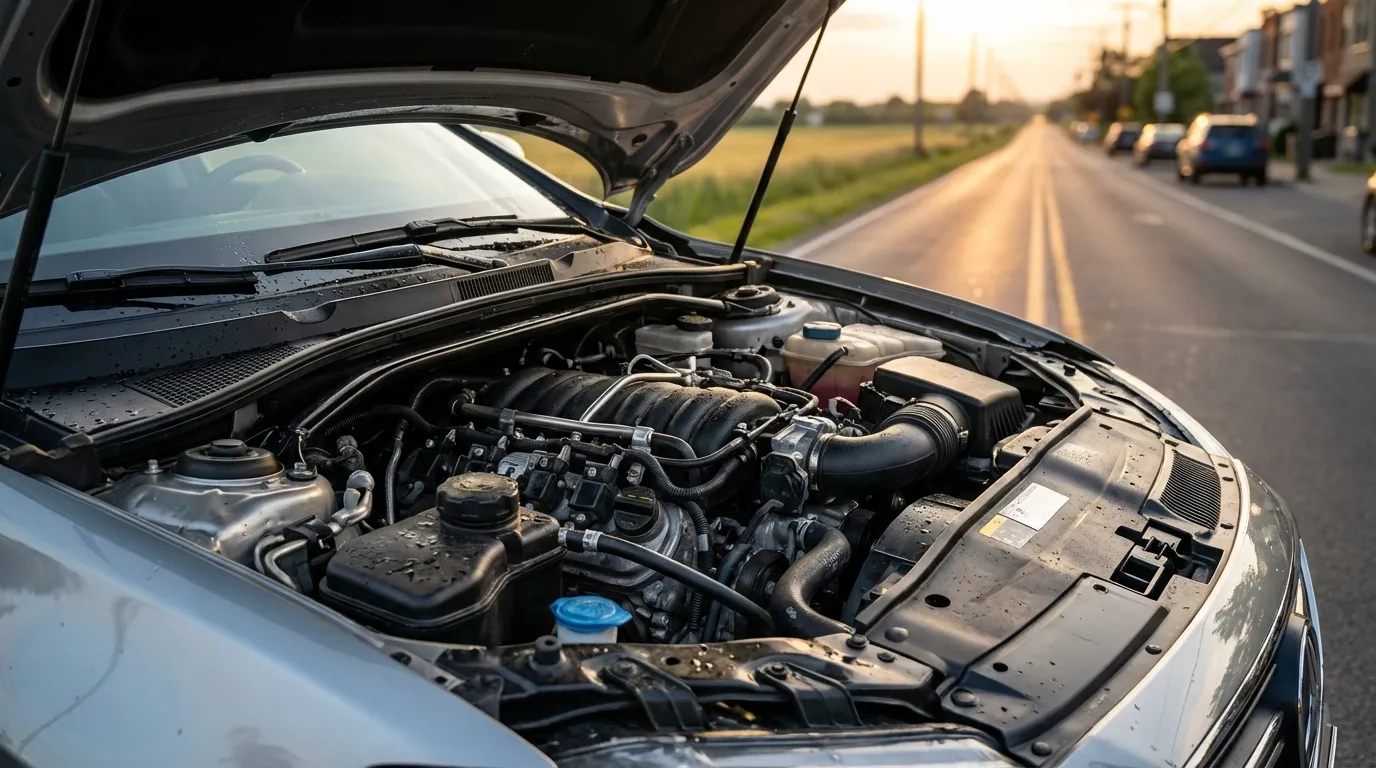
Why Does the Engine Suffer More During Short Trips Under 15 Minutes?
We define short trips as drives under 15 minutes or 10 miles, common in cities like São Paulo or Rio de Janeiro. The main issue is that the engine doesn’t reach its optimal operating temperature, usually between 190°F and 210°F. When you start the car after hours of being stationary, the lubricating oil is cold and viscous, like frozen honey. The oil pump takes extra seconds to circulate it through all components, causing excessive friction on pistons, crankshaft, and valves.
Moreover, metals like aluminum (pistons and cylinder head) and cast iron (engine block in some engines) expand at different rates with heat. Without full warming, irregular clearances occur, accelerating wear. Learn more about the battle between cast iron and aluminum in modern engines, which explains why this expansion is crucial for longevity.
In gasoline engines, carbon deposits accumulate on spark plugs and intake valves due to incomplete combustion at high temperatures. This reduces efficiency and can cause failures. Diesel engines are more affected: the DPF (Diesel Particulate Filter) requires hot regenerative cycles (above 1,100°F) to burn off soot. Short trips prevent these cycles, clogging the filter and activating emergency modes. Studies by manufacturers like Volkswagen and Ford show that urban fleet vehicles have DPFs with 30-50% shorter lifespans.
| Component | Wear in Short Trips | Wear in Long Trips |
|---|---|---|
| Lubricating Oil | Cold high viscosity causes 2-3x more friction | Optimal circulation reduces wear by 70% |
| Pistons and Rings | Irrregular expansion accelerates ovalization | Stable operation preserves geometry |
| DPF (Diesel) | Incomplete regeneration clogs filter | Full cycles clean effectively |
| Valves (Gasoline) | Carbon buildup reduces compression | Proper combustion removes deposits |
Don’t fall for the myth that idling your car is better: it pollutes more and doesn’t warm up evenly. The engine is designed to operate while moving, where airflow properly cools the radiator and oil.
Wear Beyond the Engine: Brakes, Battery, and Even EVs Are Affected
Short trips don’t just impact the engine. The braking system experiences more stop-and-go cycles per mile traveled. One hundred miles of highway driving involves fewer braking events than 25 trips of 2.5 miles each. Brake pads and discs wear 20-40% faster in urban stop-and-go conditions. Find out if replacing all four brake pads is necessary or an overreaction to avoid surprises.
The 12V battery also suffers. Each startup drains up to 30% of its charge via the starter motor. During short trips, the alternator often doesn’t fully recharge it, leading to sulfation and reducing its lifespan by 1-2 years. In electric vehicles (EVs), shallow charge-discharge cycles degrade lithium-ion batteries, decreasing range by 10-15% over time. Best practices include charging between 20-80% and avoiding 100% daily charging.
“Short trips are like gym workouts without warm-up: you accumulate mileage but accelerate wear.” – AAA Engineers.
Other affected components include catalysts, which accumulate sulfur without high temperatures, and belts/tensors, which vibrate more during frequent accelerations. In cold climates like southern Brazil, the impact doubles.
To learn about spark plugs contaminated by carbon fouling, read about fake spark plugs that worsen the problem and how to identify faulty parts.
Practical Tips to Protect Your Engine and Save Thousands on Maintenance
Plan your routes: combine errands into one 20-30 minute drive. If you live in a dense urban area, schedule a weekly drive on open roads – it benefits the engine and your mental health. Use high-quality synthetic oil, which flows better when cold. Brand-name vs. generic oil: does it really matter in Brazil? Yes, especially for urban driving.
- Warm up while driving: Drive smoothly for the first 2-3 km without hard acceleration.
- Preventive maintenance: Change oil every 5,000-7,000 km in short trips; check DPF monthly if diesel.
- Monitor engine temperature: Use OBD2 apps to ensure it reaches 190°F (90°C).
- For EVs: Charge at fast stations occasionally for deeper, controlled cycles.
- Avoid excessive idling: Turn off the engine at long stoplights (start-stop systems help).
In summary, even with 12,500 miles of short trips versus 6,200 miles of long trips, the engine in the short-trip scenario will typically wear out sooner. Urban taxi operators report engine rebuilds happening about 50% earlier. Invest in simple habits to extend your powertrain’s lifespan. If you mostly do short drives, consider hybrids: their combustion engine only starts when necessary, minimizing cold starts.
Sources such as SAE International and AAA reports confirm: long trips preserve 20-30% more components. Adjust your routine and see the difference in your service bills.