
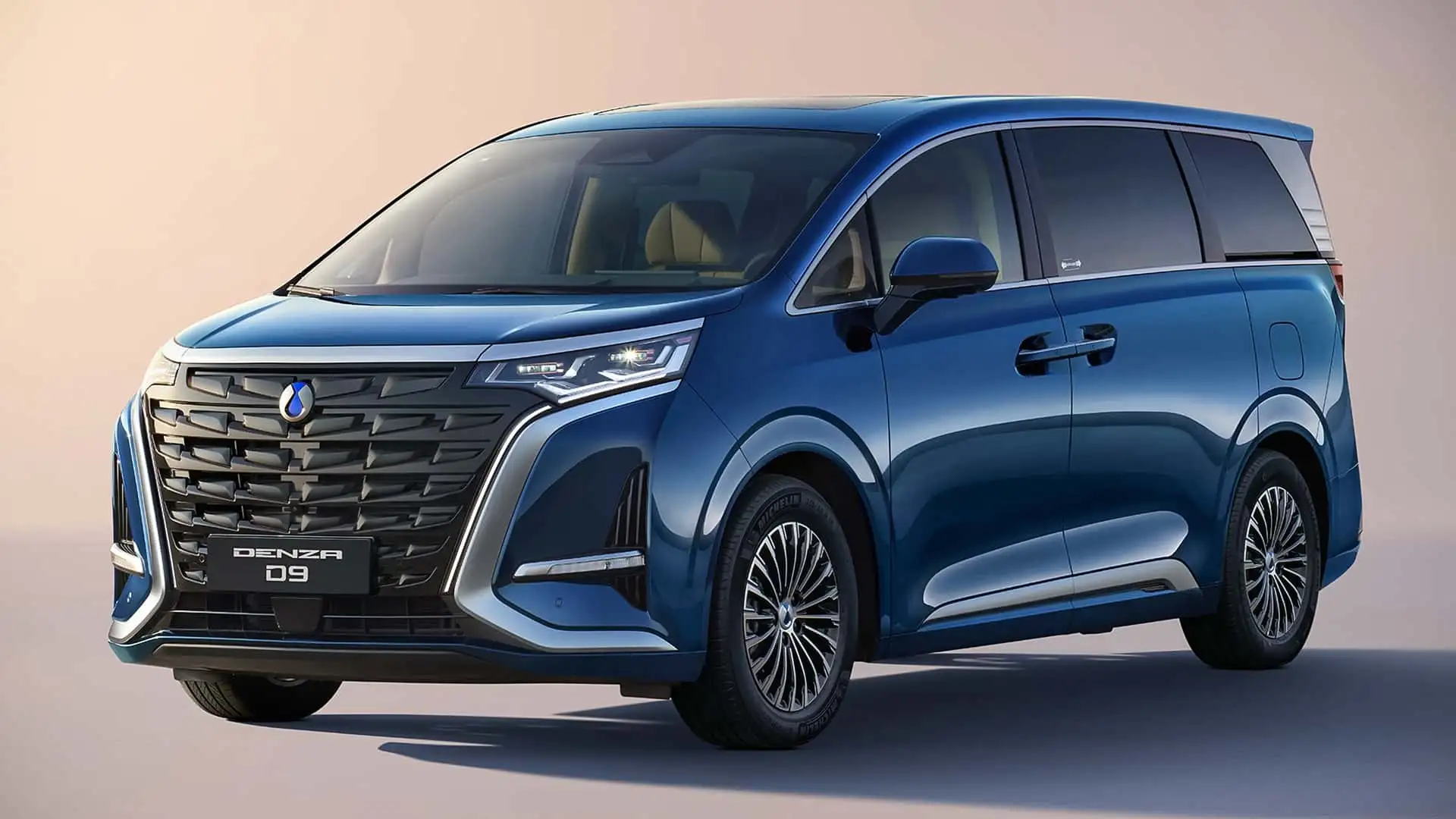
The luxury van war in Europe just got a new contender. Denza, the premium brand backed by BYD, is preparing to bring the D9 DM-i to European buyers with a recipe that is hard to ignore: long-range plug-in hybrid power, first-class cabin treatment, and pricing that aims directly at the heart of the premium MPV segment.
Why The DENZA D9 DM-i Matters In Europe
The European family-hauler and business-shuttle market has long been defined by models such as the Mercedes V-Class and Volkswagen Multivan, with the Lexus LM sitting at the ultra-premium end. The DENZA D9 DM-i enters that space with a different mission: deliver limousine-like comfort, seven-seat practicality, and hybrid efficiency without forcing buyers into a full-electric charging lifestyle.
That positioning is important. In many European cities and airport-transfer fleets, buyers want electric driving for short trips, but they still need the freedom to cross borders, cover long distances, and travel with passengers and luggage without anxiety. The D9 DM-i is built around that exact use case.
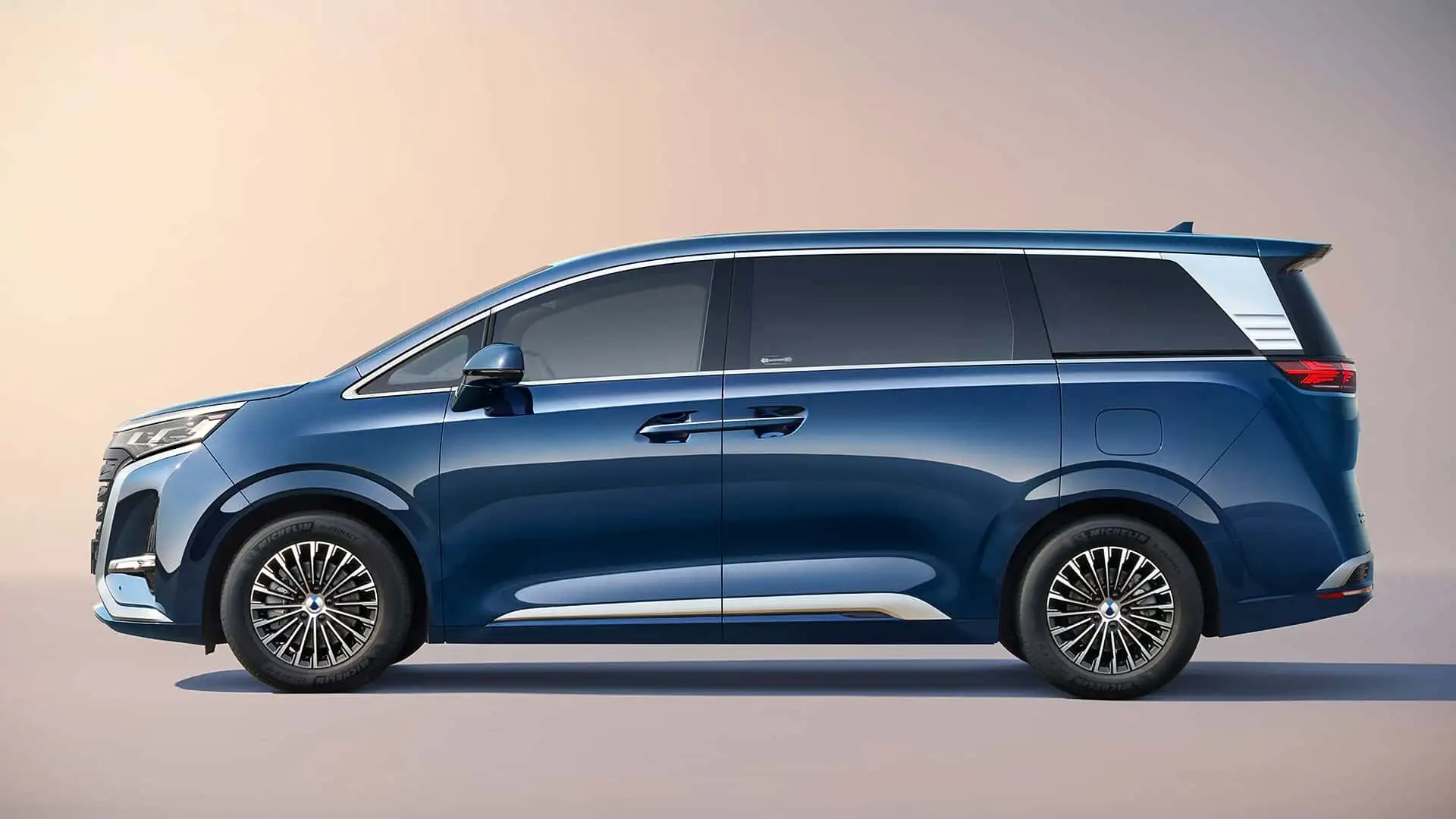
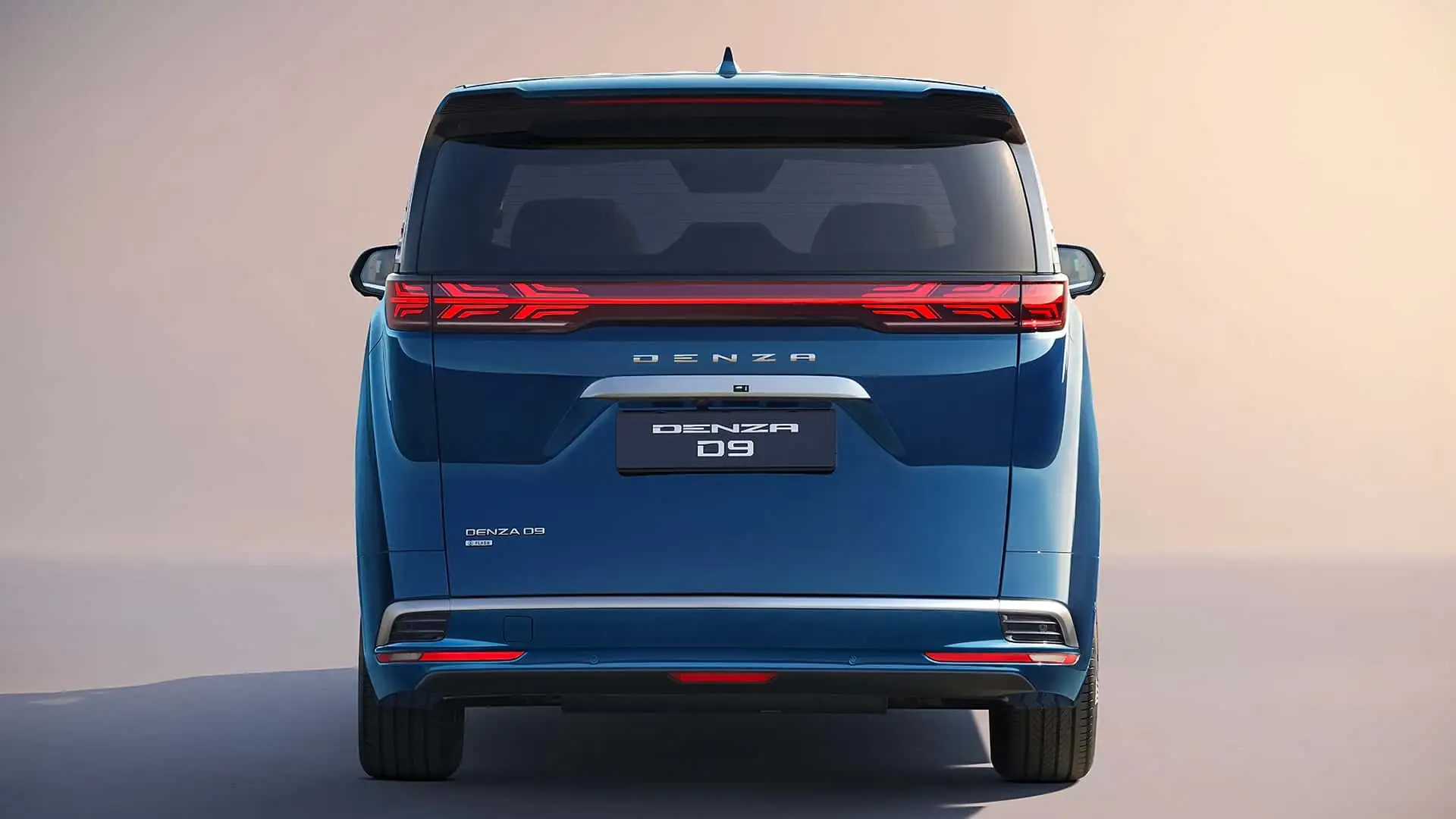
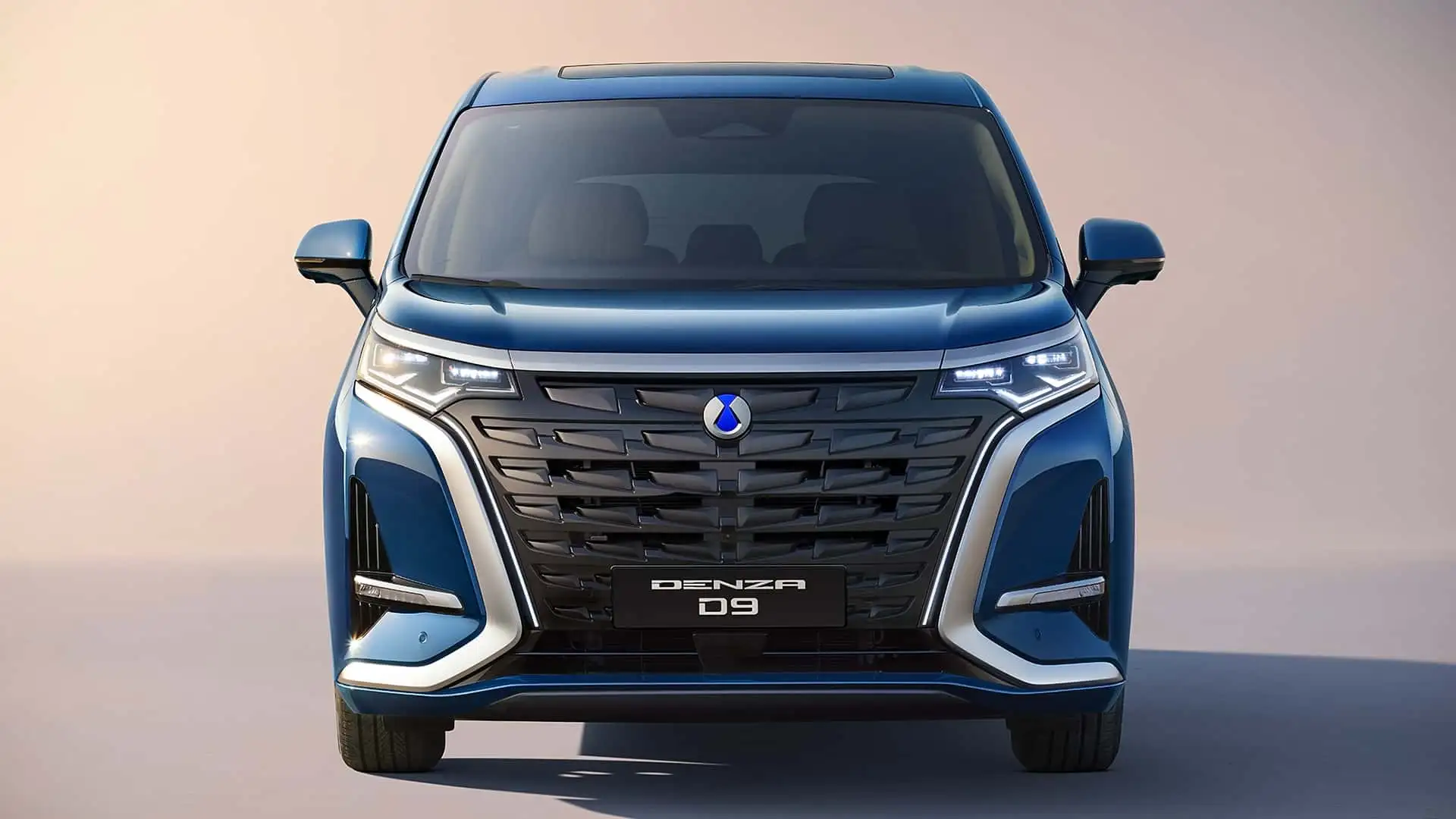
At roughly 5.25 meters long, the D9 is a large MPV with a tall, upright body, generous glass area, and sliding rear doors that are integrated cleanly into the side profile. It is not trying to look like a sport van or a crossover. It looks like what it is: a serious premium people mover with an emphasis on space and presence.
The D9 is also a reminder of how fast Chinese premium brands are moving. What used to be niche or experimental is now becoming polished enough to challenge Europe’s most established luxury nameplates.
For readers following the broader shift in the market, the D9 fits into the same conversation as other disruptive Chinese products such as the BYD Seal 06 GT and Seal 06 DM-i Wagon, which also show how plug-in hybrid technology is becoming a mainstream strategy rather than a stopgap.
Inside The Cabin Aims For True Business-Class Comfort
This is where the DENZA D9 DM-i goes from “interesting” to genuinely attention-grabbing. The interior is designed like a lounge, not a conventional van cabin. A large panoramic roof measuring about 1.1 square meters floods the vehicle with light, while the materials and fit are positioned firmly at premium level.
Up front, both the driver and front passenger get electrically adjustable seats with heating, ventilation, and massage. The steering wheel is heated as well, a small but telling sign that Denza is targeting buyers who expect more than basic transport.
The second row is the headline act. Denza’s so-called Air-Spa Zero-Gravity seats offer 14-way adjustment, 16-point massage, and a recline angle of up to 152 degrees. That is the kind of specification that makes the D9 feel closer to a rolling executive suite than a traditional van.
- Second-row focus with lounge-style seating
- Rear-seat tables for work or dining on the move
- Heated, ventilated, power-adjustable third row
- Flexible seating layouts for four passengers, seven passengers, or mixed cargo use
Even the third row is unusually well equipped for this class, with heating, ventilation, and power adjustment. That is a major talking point because many MPVs still treat the last row as an afterthought. The Denza does not.
Cargo flexibility is also strong. Depending on seat configuration, luggage space ranges from around 430 liters to 2,310 liters. And with all seven seats in use, the D9 still offers enough room for real travel bags, not just weekend essentials.
If you like vehicles that push cabin luxury beyond the expected, you may also want to explore how the BYD Yangwang U8L redefines ultra-luxury with a radically different approach.
Plug-In Hybrid Specs, Flash Charging, And The Price Shock
The heart of the D9 is its DM-i Super Hybrid system. Under the hood sits a 1.5-liter turbocharged gasoline engine producing about 88 kW, paired with two electric motors rated at 170 kW and 45 kW. Combined system output is 260 kW, which converts to roughly 353 horsepower, with all-wheel drive included.
That gives the big van a 0 to 100 km/h time of 8.6 seconds and a top speed of 180 km/h. Those numbers are not sports-car territory, but they are more than enough for a loaded luxury MPV designed to carry passengers in comfort rather than attack lap times.
The battery is the real headline. Denza says the D9 uses a 58.5 kWh Blade Battery, which should deliver up to 210 km of electric range under WLTP. Combine that with a 64-liter fuel tank, and the total WLTP driving range is quoted at as much as 950 km.
| Specification | DENZA D9 DM-i |
|---|---|
| Powertrain | 1.5L turbo engine plus dual electric motors |
| System Output | 260 kW, about 353 hp |
| Electric Range | Up to 210 km WLTP |
| Combined Range | Up to 950 km WLTP |
| 0 to 100 km/h | 8.6 seconds |
| Charging | AC 11 kW, DC up to 559 kW claimed |
There is also the much-talked-about flash-charging feature. BYD claims the battery can accept up to 559 kW DC, with a 10 to 70 percent charge in about five minutes and 10 to 97 percent in roughly nine minutes. That sounds revolutionary, but real-world results in Europe will depend on whether charging infrastructure can actually support those numbers.
In other words, the D9 is not just competing on comfort. It is also arriving as a technology statement. The ability to drive like an EV in city use, then switch to hybrid range for long trips, is exactly why plug-in hybrids remain relevant for many premium buyers.
For another example of how Chinese brands are reshaping the range and pricing discussion, see the Geely Galaxy M7 with 1,730 km range, a model that shows just how aggressive the efficiency race has become.
Underneath, the D9 uses a front MacPherson strut setup and a rear multi-link suspension, paired with the adaptive Disus-C damping system. The idea is to keep the body controlled without ruining the plush ride expected in this class. That matters in a long-wheelbase luxury van where passengers are likely to spend hours onboard.
Infotainment is equally ambitious. The cabin features a 15.6-inch central touchscreen, a 10.25-inch digital instrument cluster, and a separate 10.25-inch display for the front passenger. Second-row armrests contain additional small screens, and optional rear-seat monitors expand the experience further.
The software package includes DiLink, OTA updates, Apple CarPlay, and Google integration. Audio comes from Devialet through a 16-speaker setup, supported by multiple audio zones and more than 200 voice commands. Add in four 50W wireless charging pads, several USB-C ports, one USB-A port, and a small refrigerated compartment between the front seats, and the D9 starts to look less like a van and more like a mobile first-class cabin.
European versions will reportedly launch in Elegance and Ultimate trims. The base car already includes electric sliding doors, a powered tailgate, the large central display, and voice control, while Ultimate adds features such as Nappa leather, real wood trim, zero-gravity seating, a head-up display, and extra screens.
Pricing for Germany is expected to land between 80,000 and 90,000 euros. That places the D9 above a basic long-wheelbase V-Class but below a fully loaded Lexus LM, which is key to its market strategy. In plain terms, Denza is trying to offer near-ultra-luxury equipment without crossing into the most expensive tier.
That price positioning will make or break the car. A fully optioned MPV in this segment is rarely bought on horsepower alone. Buyers will compare perceived quality, brand trust, service network, and resale value. Denza knows this, which is why its European launch strategy relies on new dealers in major Western markets and a clear premium message rather than a volume approach.
For European buyers, the big question is simple: does the DENZA D9 DM-i feel like a genuinely new premium alternative, or just a well-equipped newcomer with impressive numbers? The answer will depend on how much of its Chinese-market promise survives the transition to Europe. But one thing is already clear. The luxury van segment just became far more interesting.