If there is one engine that transformed “normal” cars into walking headlines, it is the Hellcat: a supercharged 6.2L V8 that put family sedans, 7-seater SUVs, and even off-road pickups into the same power club that many previously only associated with supercars.
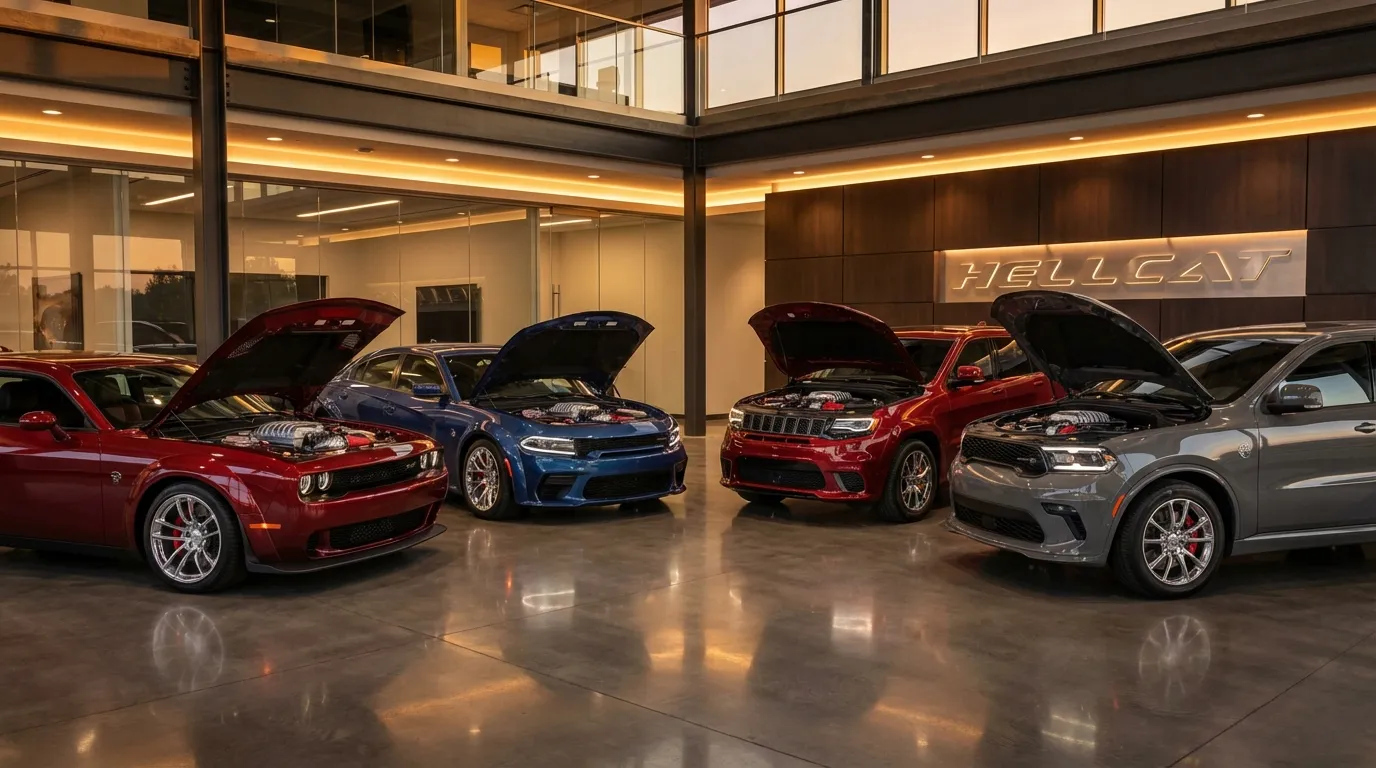
What Is The Hellcat Engine (And Why It Became An Icon)
When searches for “Hellcat 6.2 supercharged engine” exploded in the last decade, it wasn’t by chance. The Hellcat is a 6.2L V8 (HEMI) engine featuring a mechanically driven supercharger, created to deliver brutal power instantly, accompanied by a sound mixing the classic American V8 rumble with the metallic whine of the supercharger.
In practice, it became famous for three primary reasons:
- Amazing Factory Horsepower: Versions exceeded 700 hp and reached over 1,000 hp in production cars.
- “No-Limits” Application: It was integrated into muscle cars, sedans, SUVs, and pickups.
- Culture and Legacy: It became a synonym for excess, and excess sells dreams in the automotive world.
Important: This article lists production cars that left the factory with a Hellcat engine (or Hellcat variations), focusing specifically on models from Dodge, Jeep, and Ram. Concepts and prototypes are not included.
And since we are discussing a V8 that relies on robust ignition and precise control, it is worth exploring a related topic that many overlook until problems arise: Why Cars Switched From Distributors to Coil Packs (Ignition Coils)—the change that made engines more powerful and efficient.
All Production Cars With The Hellcat Engine (Dodge, Jeep, And Ram)
Below is the complete list of the main production vehicles featuring the Hellcat engine, focusing on official versions recognized for leaving the factory with the 6.2L supercharged configuration (in various calibrations). Power figures may fluctuate based on year, market, or fuel type, but the essence remains constant: enormous torque, ample traction (or lack thereof), and a package built to withstand abuse.
| Model | Years (approx.) | Power (approx.) | Profile (SEO Keyword Focus) |
|---|---|---|---|
| Dodge Challenger SRT Hellcat | 2015–2023 | 707–717 hp | Classic Muscle Car, RWD Performance |
| Dodge Challenger SRT Hellcat Redeye | 2019–2023 | 797 hp | Launch Focus, Higher Boost, Enhanced Cooling |
| Dodge Challenger SRT Super Stock | 2021–2023 | 807 hp | Street-Legal Drag Car: Tires and Tune for Strong Launch |
| Dodge Challenger SRT Demon | 2018 | Up to 840 hp | Extreme Launch Performance, Dedicated Package |
| Dodge Challenger SRT Demon 170 | 2023 | Up to 1,025 hp | Apex Predator: E85 Optimized, Track Specs, Total Exaggeration |
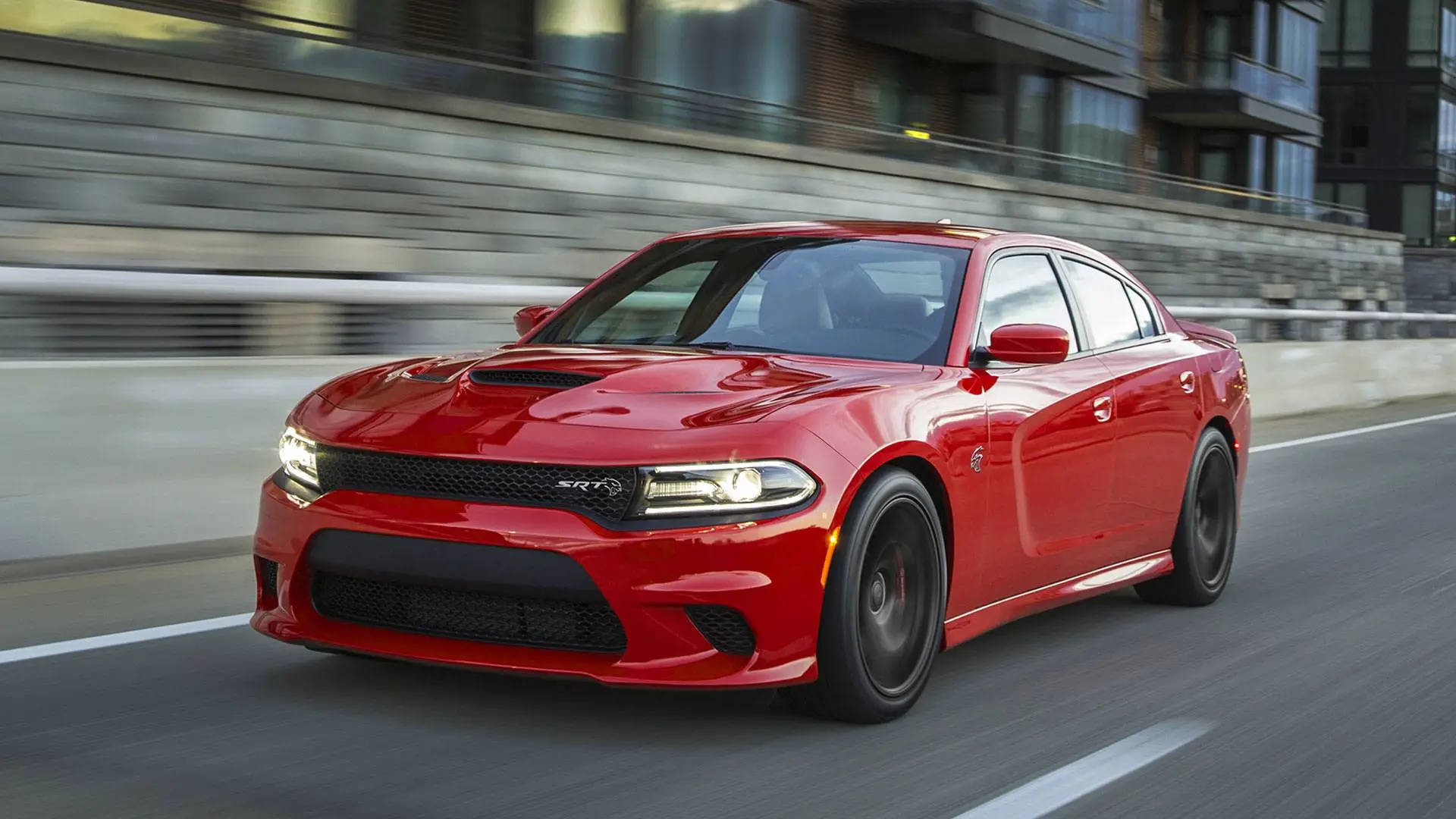
| Dodge Charger SRT Hellcat | 2015–2023 | 707 hp | Insane Sedan, “Family Car” Outperforming Sports Cars |
| Dodge Charger SRT Hellcat Redeye | 2021–2023 | 797 hp | Sedan with More Aggressive Package and Broader Tuning |
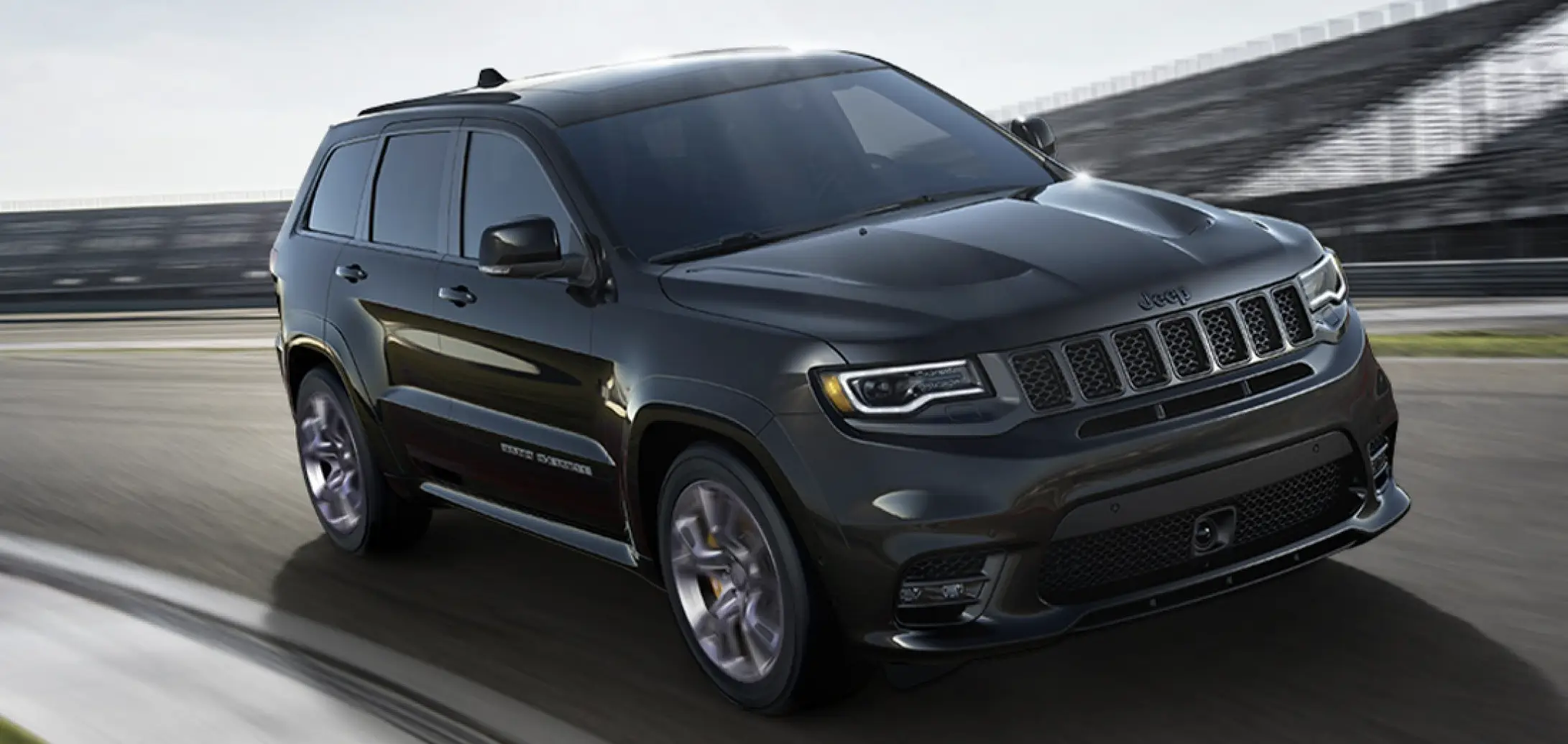
| Jeep Grand Cherokee Trackhawk | 2018–2021 | 707 hp | High-Performance SUV with AWD and Supercar Straight-Line Speed |
| Dodge Durango SRT Hellcat | 2021–Present | 710 hp | Three-Row SUV with AWD and Surprising Acceleration |
| Ram 1500 TRX | 2021–2024 | 702 hp | High-Speed Off-Road Pickup, Baja-Inspired Performance |
Dodge Challenger Hellcat: The Gateway To Automotive Mayhem
The Dodge Challenger SRT Hellcat set a benchmark because it offered, at a comparatively “realistic” price within the high-performance segment, a level of power previously reserved for far more expensive vehicles. It’s the kind of car that causes searches like “Challenger Hellcat 0-60” to appear even before you finish typing.
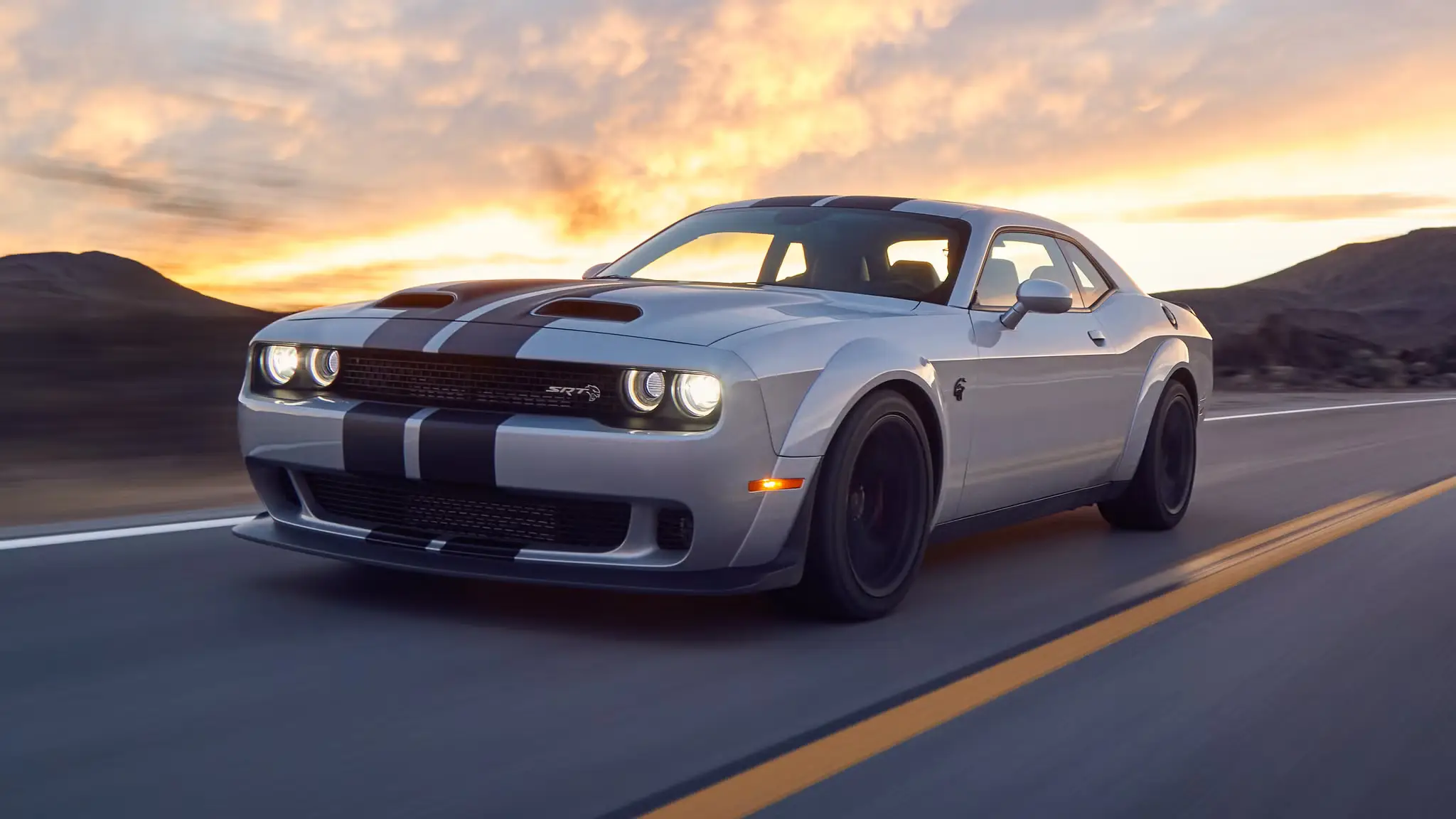
The key element here is the complete package: beyond the engine, it included enhanced cooling systems, a heavy-duty transmission, and driving modes designed to manage the power delivery. And yes: like all original Hellcats, it excels at two things perfectly:
- Burning Rear Tires (with or without your explicit permission).
- Gaining speed too quickly for any standard road to feel sufficiently wide.
If you appreciate the mechanical engineering behind these powerhouses, this related article touches upon the real-world maintenance concerns for owners of high-horsepower cars: Maintenance Errors That Are Making Your Mechanic Rich And Putting Your Safety At Risk.
Redeye, Super Stock, And Demon: When 700 HP Isn’t “Enough” For Performance Enthusiasts
The “standard” Hellcat was already extreme. But Dodge decided that this level of excess could become an entire product line. This is how the most famous variations emerged:
- Hellcat Redeye: More horsepower, increased boost pressure, better cooling, and a greater focus on repeatable acceleration (reducing heat soak after hard runs).
- Super Stock: Closer to a dedicated “drag race car,” featuring a package optimized for hard launches and traction management.
- Demon and Demon 170: The Hellcat engine pushed to industrial limits, featuring adaptations for higher-octane fuels (like E85 where applicable) and performance figures that redefined what a “fast production car” means in the internal combustion era.
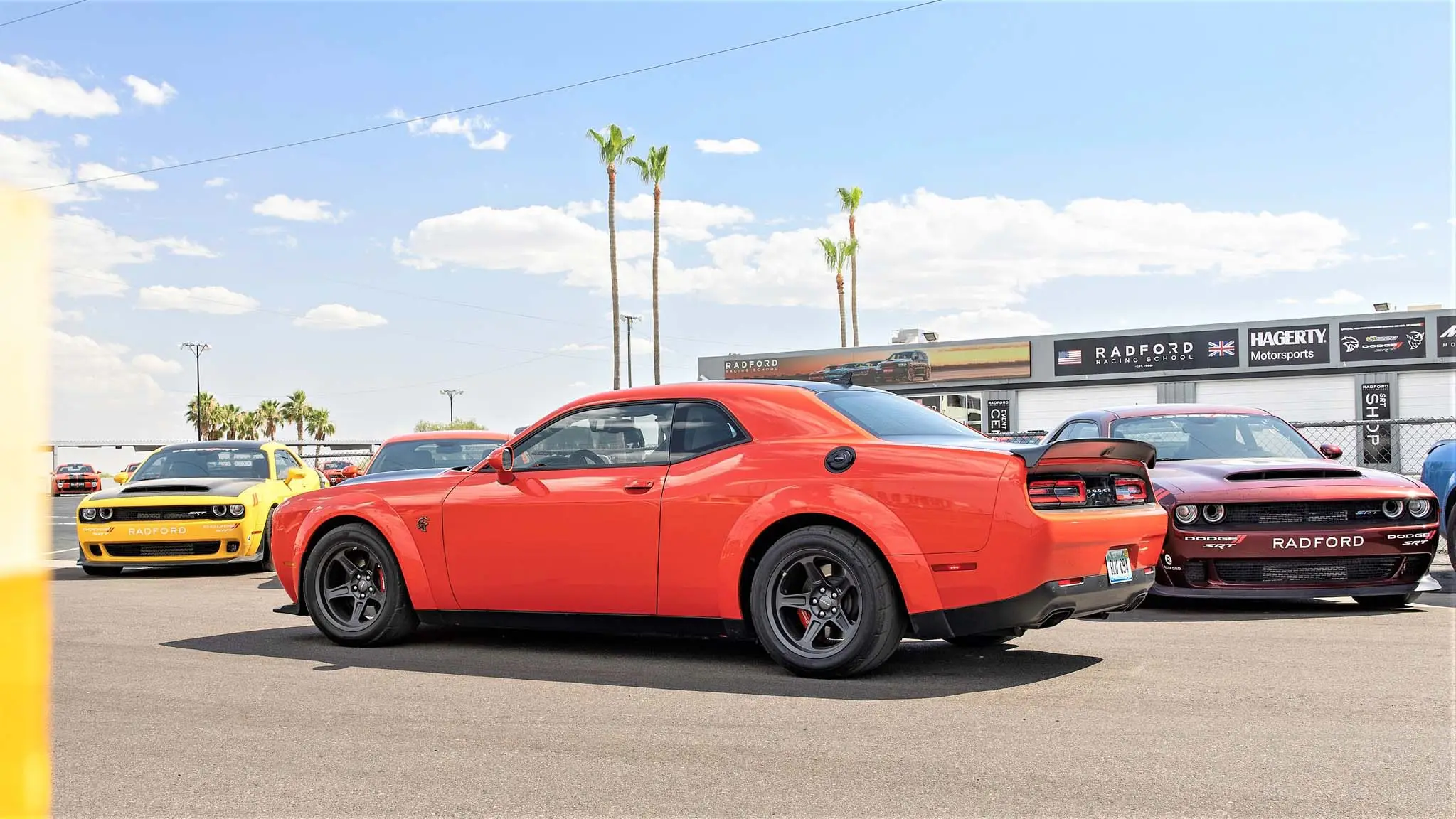
Here’s a technical detail many overlook: for a production car to manage this immense torque, it requires more than just “adding boost.” It demands internal component reinforcement, smarter cooling solutions, and sophisticated power delivery strategies. For a technical parallel (non-Hellcat related) on how materials engineering impacts high-powered engines, review: Automotive Engines: The Brutal Truth About the War Between Cast Iron and Aluminum.
Charger Hellcat: The Sedan That Was Both Logical And Utterly Irrational
The Dodge Charger SRT Hellcat occupies a unique space, being simultaneously a functional “family car” and a straight-line speed weapon. It offers four doors, genuine passenger space, and the ability to make expensive dedicated sports cars sweat when the traffic light turns green.
In execution, it embodies a rare automotive niche: a sedan that refuses to apologize for its sheer irrationality. When the Charger Hellcat Redeye arrived, the logic followed: if it can be made faster, why wouldn’t Dodge do it?
If you enjoy the contrast between cutting-edge technology and aggressive engineering solutions, examine this increasingly popular topic concerning modern pickups (which has significant implications for theft deterrence and vehicle security): Ford Can Remotely Shut Down Your Pickup Even With a Stolen Key: How the Start Inhibit Protects the F-150 And Super Duty.
Jeep Trackhawk And Durango Hellcat: The Era Of Shameless SUVs
The Jeep Grand Cherokee Trackhawk validated a potent idea: with All-Wheel Drive (AWD), a heavy SUV could launch with immediate violence and repeat that performance consistently. For many consumers, this was their first direct experience with the concept of the “fastest production SUV with a combustion engine” in a relatively practical shell.
The Dodge Durango SRT Hellcat then pushed this absurdity into previously impossible territory: three rows of seating, cargo capacity, AWD, and acceleration figures that seem unbelievable given the vehicle’s sheer size. The most intriguing aspect is that it didn’t remain just a viral sensation; it became a tangible object of desire for buyers needing space, commanding presence, and elite performance without switching vehicle types.
Incidentally, the “combustion vs. electrification” debate inevitably arises when discussing the Hellcat, as it symbolized an era unapologetic about fuel consumption. If you want context on why some buyers are reassessing their choices, here is a link that reliably sparks hours of discussion: More Buyers Are Abandoning Electric Cars And Returning To Gasoline.
Ram 1500 TRX: Hellcat Power For Land, Gravel, And Air
The Ram 1500 TRX demonstrates that the “Hellcat engine” mandate isn’t solely focused on drag-strip launches. Here, the objective shifted: high-speed off-road capability, impact-absorbing suspension, a reinforced chassis, and a setup engineered to endure extreme abuse.
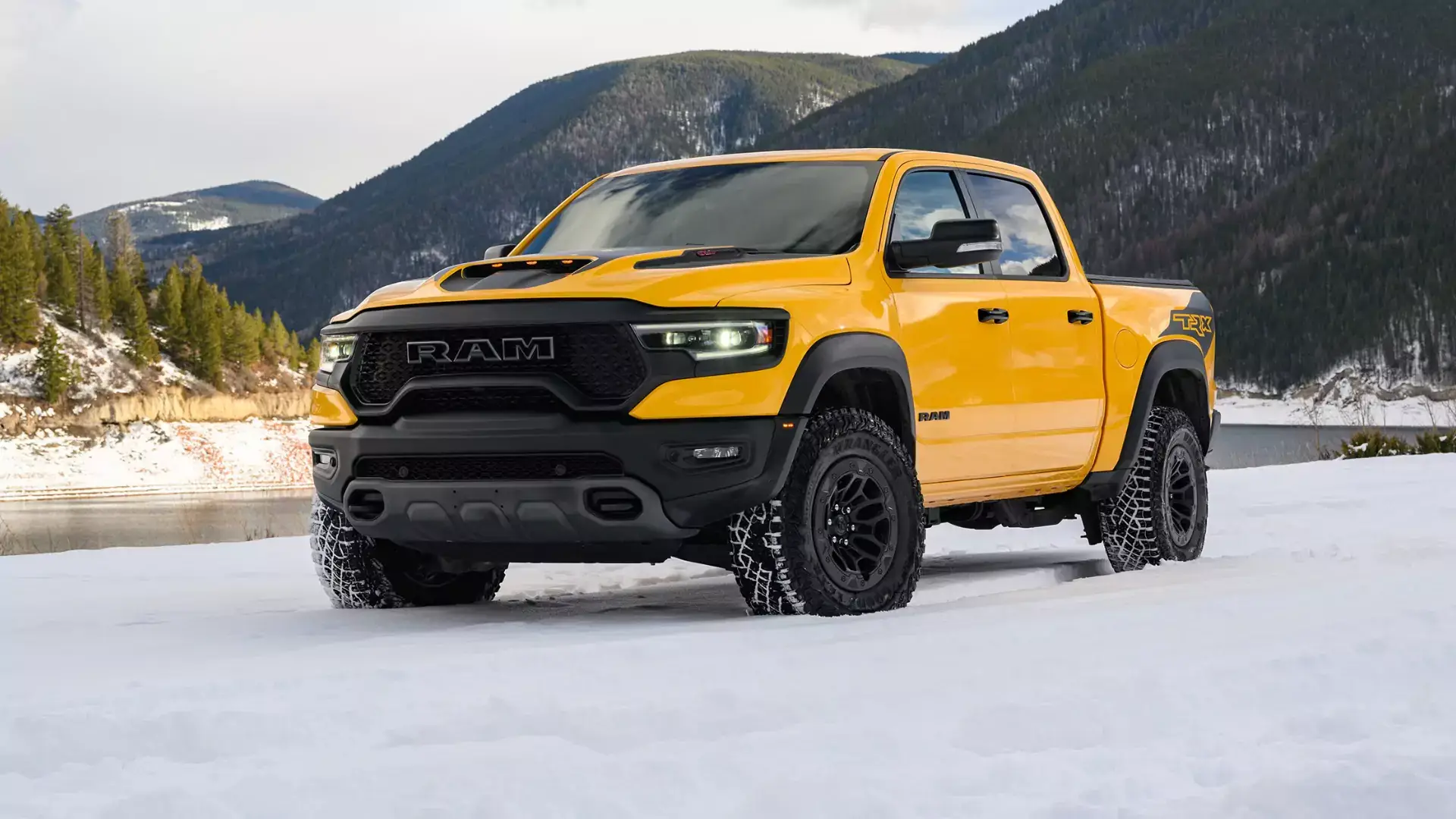
Yes, it is large. Yes, it is heavy. And that mass is precisely what makes its performance so theatrical: witnessing a pickup of this magnitude accelerating ferociously while emitting the supercharger’s signature scream is a visceral sensory experience that easily goes viral, whether captured in short clips or experienced firsthand at automotive gatherings.
Further FAQs On Hellcat Engines
- “Which cars have the Hellcat engine?”
Dodge Challenger (Hellcat/Redeye/Super Stock/Demon/Demon 170), Dodge Charger (Hellcat/Redeye), Jeep Grand Cherokee Trackhawk, Dodge Durango SRT Hellcat, and Ram 1500 TRX. - “Are there Chrysler models with Hellcat?”
In production history, the application has been concentrated within Dodge, Jeep, and Ram. Chrysler did not feature a mainline model equipped with the Hellcat engine. - “Is the Hellcat an HEMI engine?”
Yes. The Hellcat is a 6.2L V8 belonging to the HEMI family, heavily modified with a supercharger and specific calibrations depending on the target vehicle. - “What is the most powerful factory Hellcat model?”
Among recognized production cars, the Challenger SRT Demon 170 is the most extreme, capable of exceeding 1,000 hp when utilizing specific high-octane fuels (like E85). - “Why did the Hellcat become so famous?”
It achieved fame by delivering supercar-level performance within vehicles that were relatively more affordable (compared to true supercars), branding itself with unmistakable sound, road presence, and an identity rooted in sheer excess.