CHEVROLET BOLT 2027 rises from the ashes. LFP technology and 422km of range for under US$30,000. Discover why GM changed its mind.
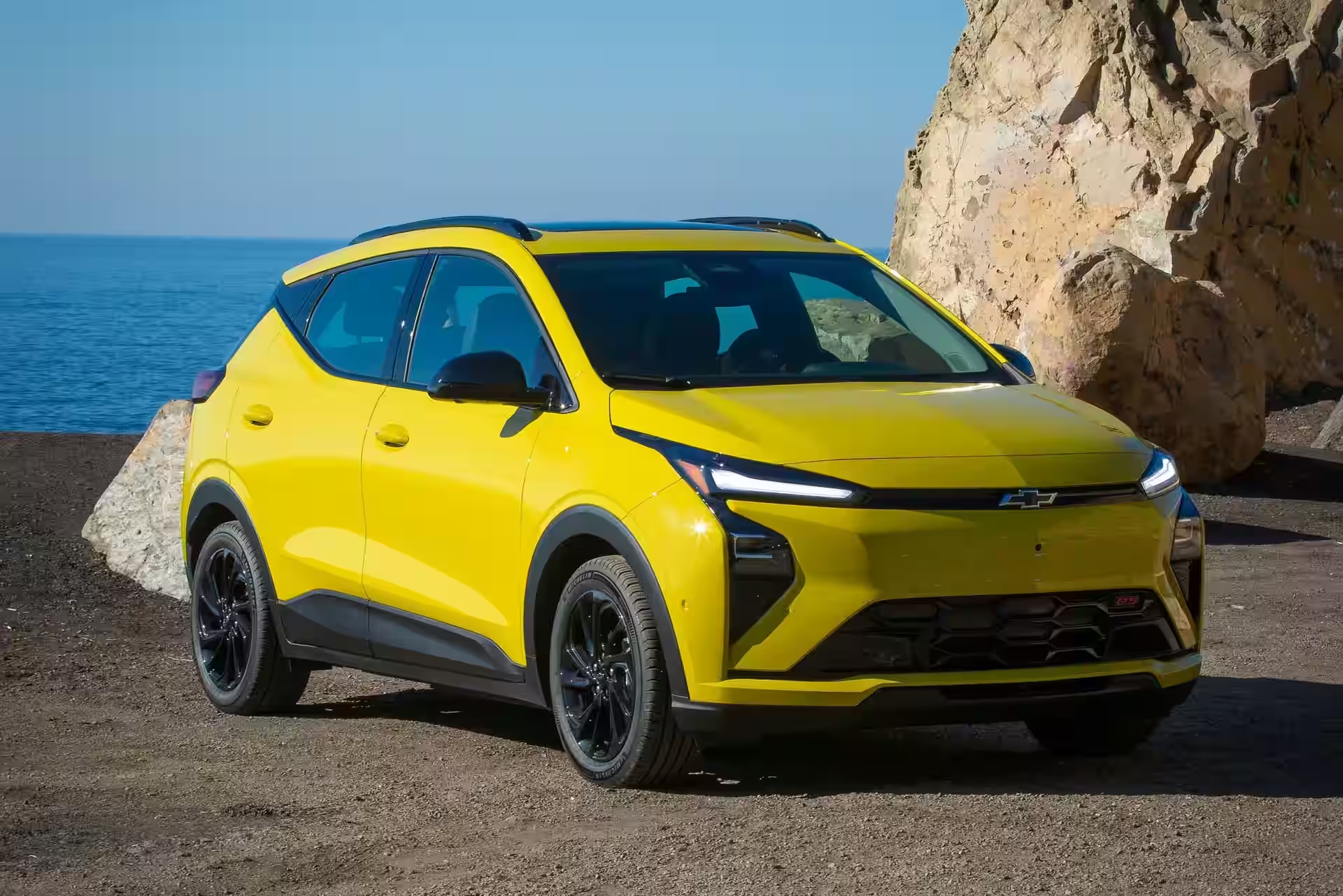
In 2023, General Motors buried the Chevrolet Bolt with a cold and calculated statement. Three years later, it rises from the ashes as a phenomenon that exposes the hypocrisy of the automotive industry. While rivals bet on 4-ton electric pickups with astronomical prices, the 2027 Bolt proves that the electric revolution doesn’t need ostentation. It needs logic.
The Internet Outcry That Saved an Icon
The story of the Chevrolet Bolt 2027 begins with a defeat that turned into a collective victory. When GM announced the end of the Michigan assembly line in 2023, the reaction was immediate and deafening. Forums, social media, and experts united in a chorus of outrage rarely seen in the automotive world. The message was clear: the American market needed the most affordable electric car of its generation.
GM’s response came in record time. Promising a resurrection “in some way, someday,” the automaker kept the project alive in absolute secrecy. The result is a vehicle that carries in its DNA proof that organized voices can still bend corporate giants.
What makes this story even more remarkable is the transparency of the engineers involved. They do not hide the challenges: moving the assembly line to Kansas, designing a new subframe to accommodate the motor and battery, gathering parts for handcrafted prototypes, and employing virtual crash tests to speed up development. Every obstacle overcome reinforces the legitimacy of the comeback.
The Value Recipe Rivals Ignore
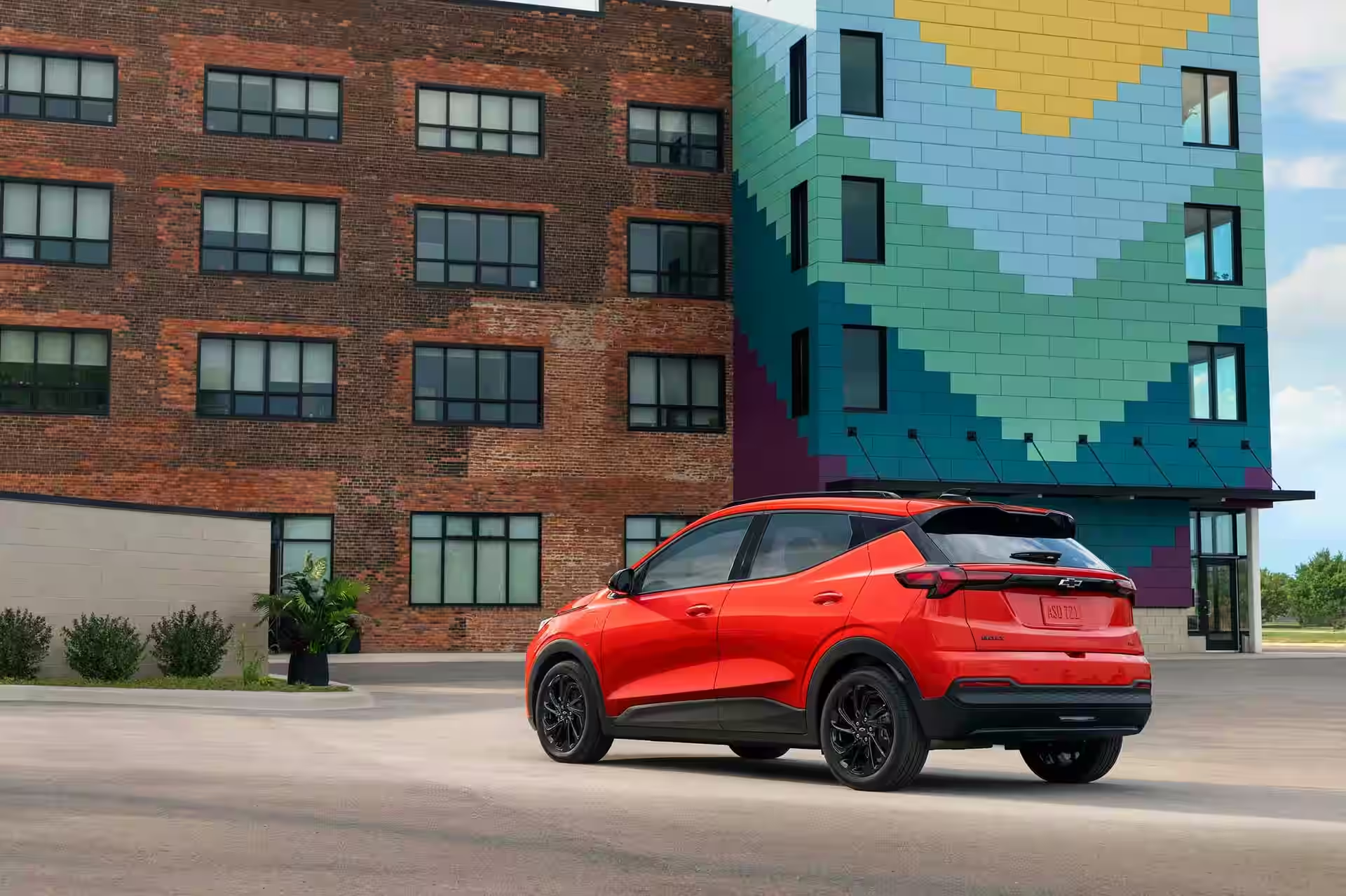
The Bolt 2027 follows a deliberately modest formula that defies market trends. Its compact platform has matured over a decade, absorbing lessons that newer models still need to learn. The X76 electric motor, originally developed for the larger Chevrolet Equinox EV, was recalibrated to deliver 210 horsepower and 169 lb-ft of torque.
The choice of lithium iron phosphate (LFP) battery is particularly smart. Although heavier and with lower energy density than lithium-ion alternatives, it offers three decisive advantages: reduced cost, superior durability, and enhanced thermal tolerance. With a capacity of 65 kWh, it promises an EPA range of 262 miles — a figure that translates to approximately 422 kilometers under the Brazilian cycle.
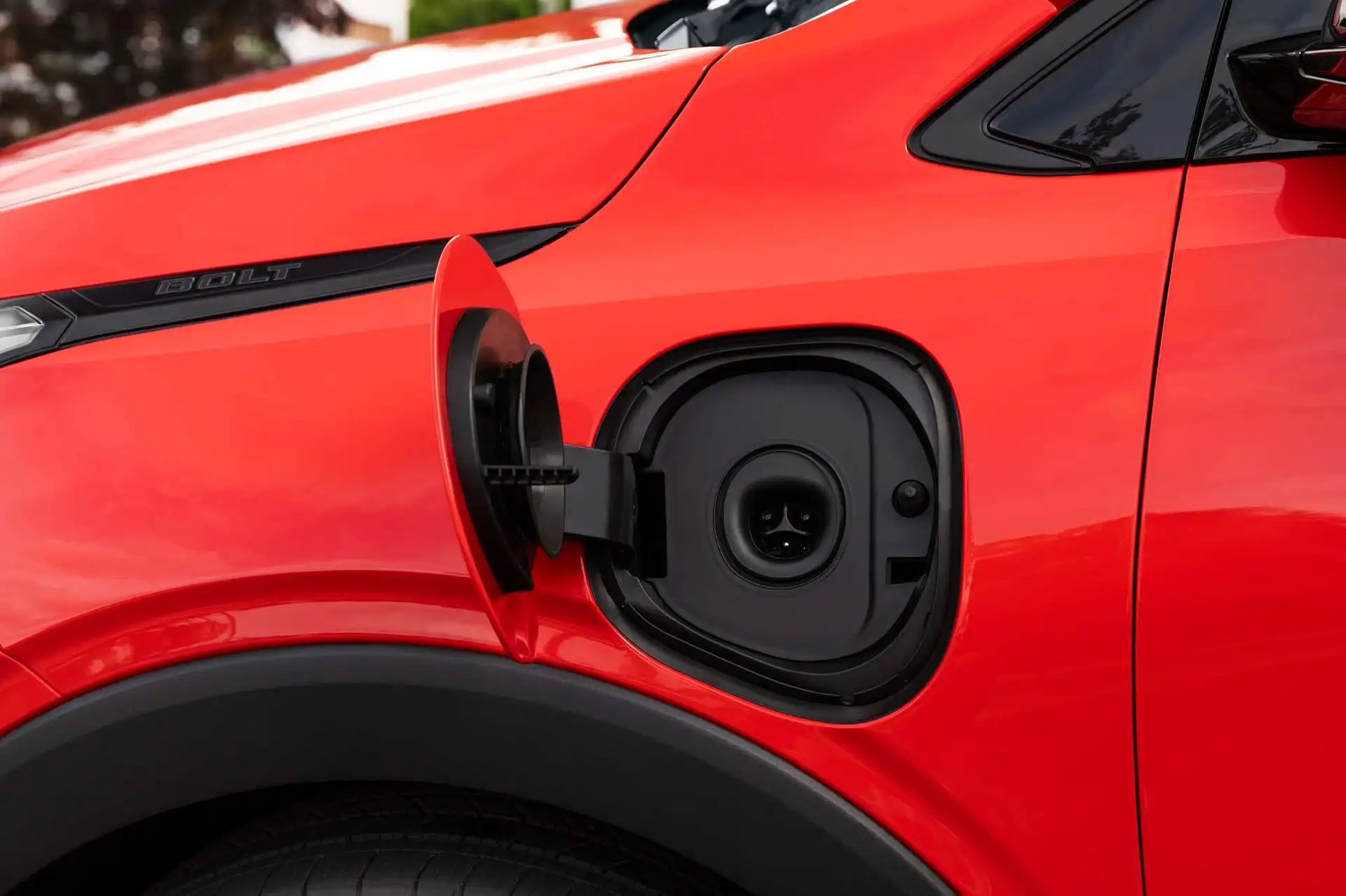
The charging system represents one of the biggest evolutions. The native NACS port eliminates adapters and opens access to the Tesla Supercharger network, currently the most reliable in the United States. The 150 kW peak allows going from 10% to 80% in 25 minutes — nearly three times faster than the previous generation, which struggled with 55 kW limits.
Interestingly, despite operating on a 400V architecture compared to the 800V of premium rivals, the Bolt charges faster than many theoretically superior competitors. The Hyundai Ioniq 5, for example, only reaches 126 kW under real conditions.
Inside the Silent Evolution
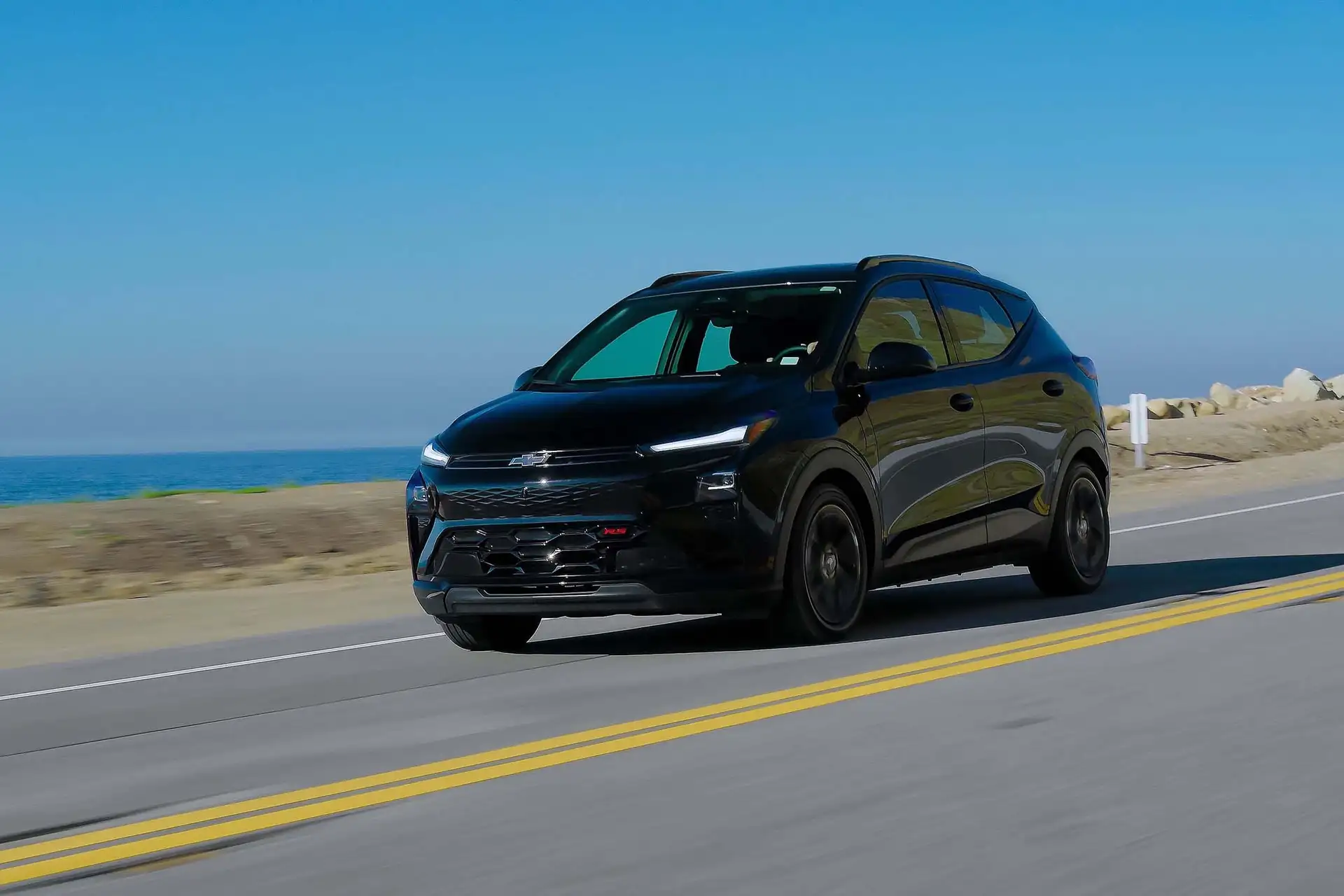
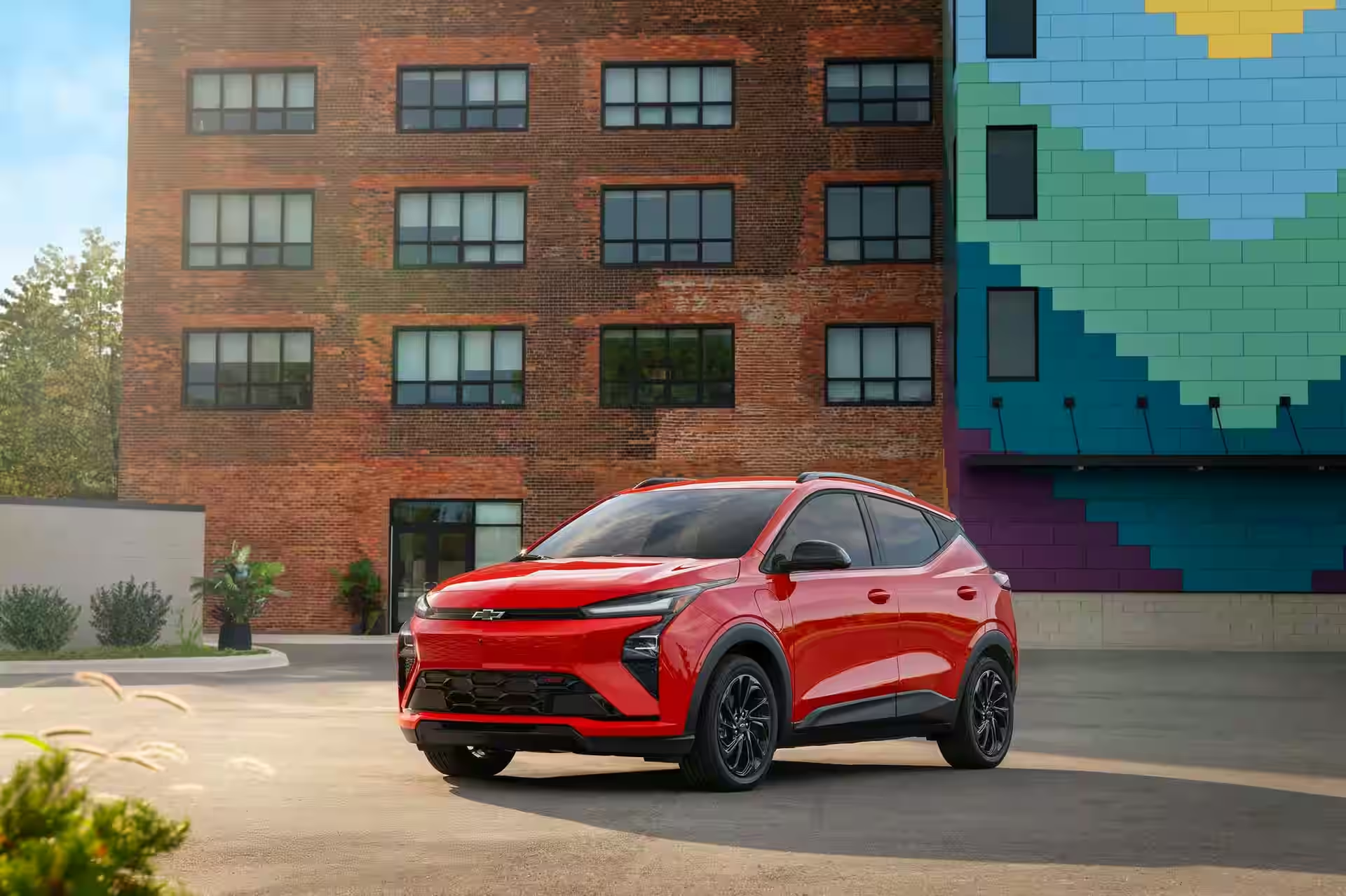
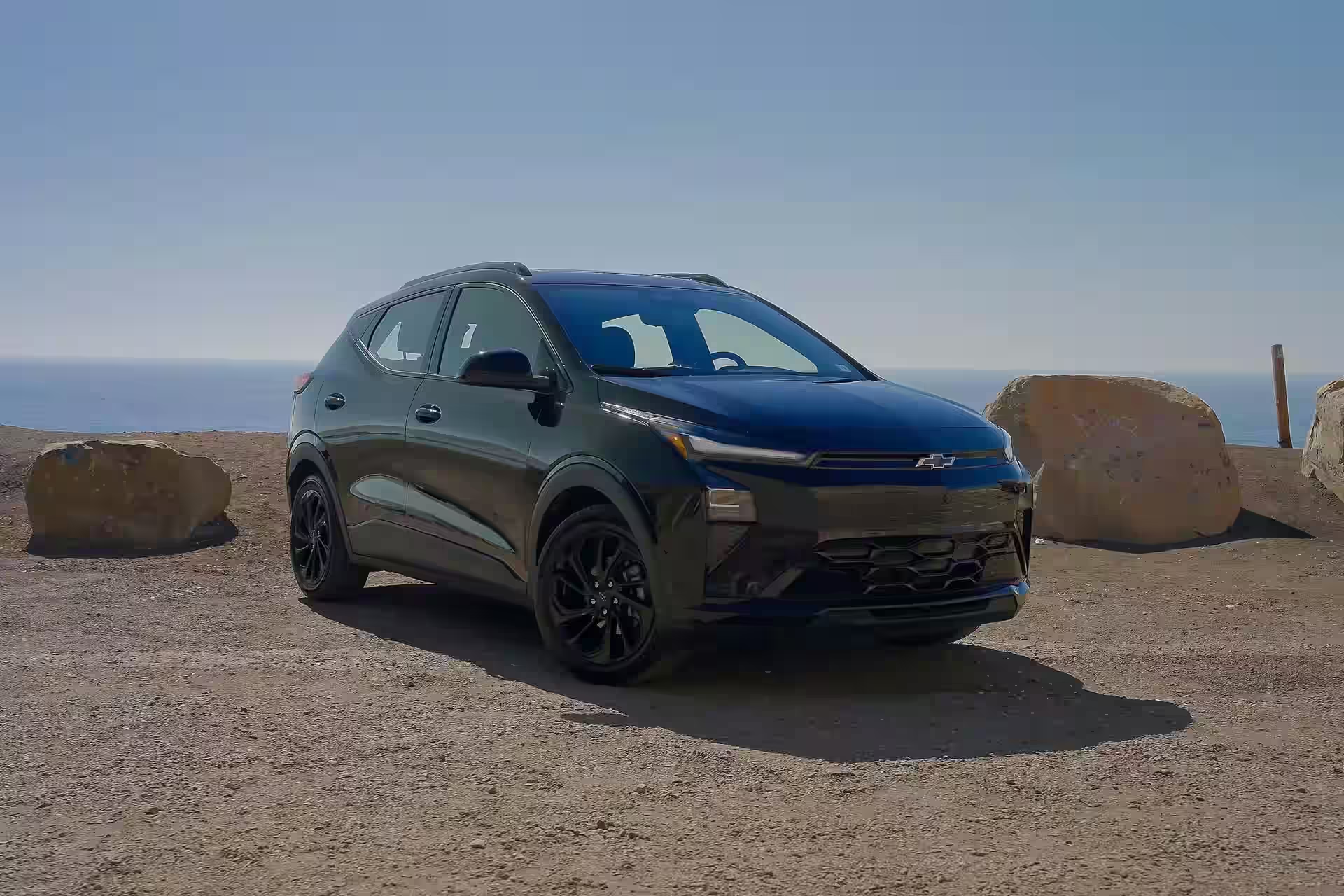
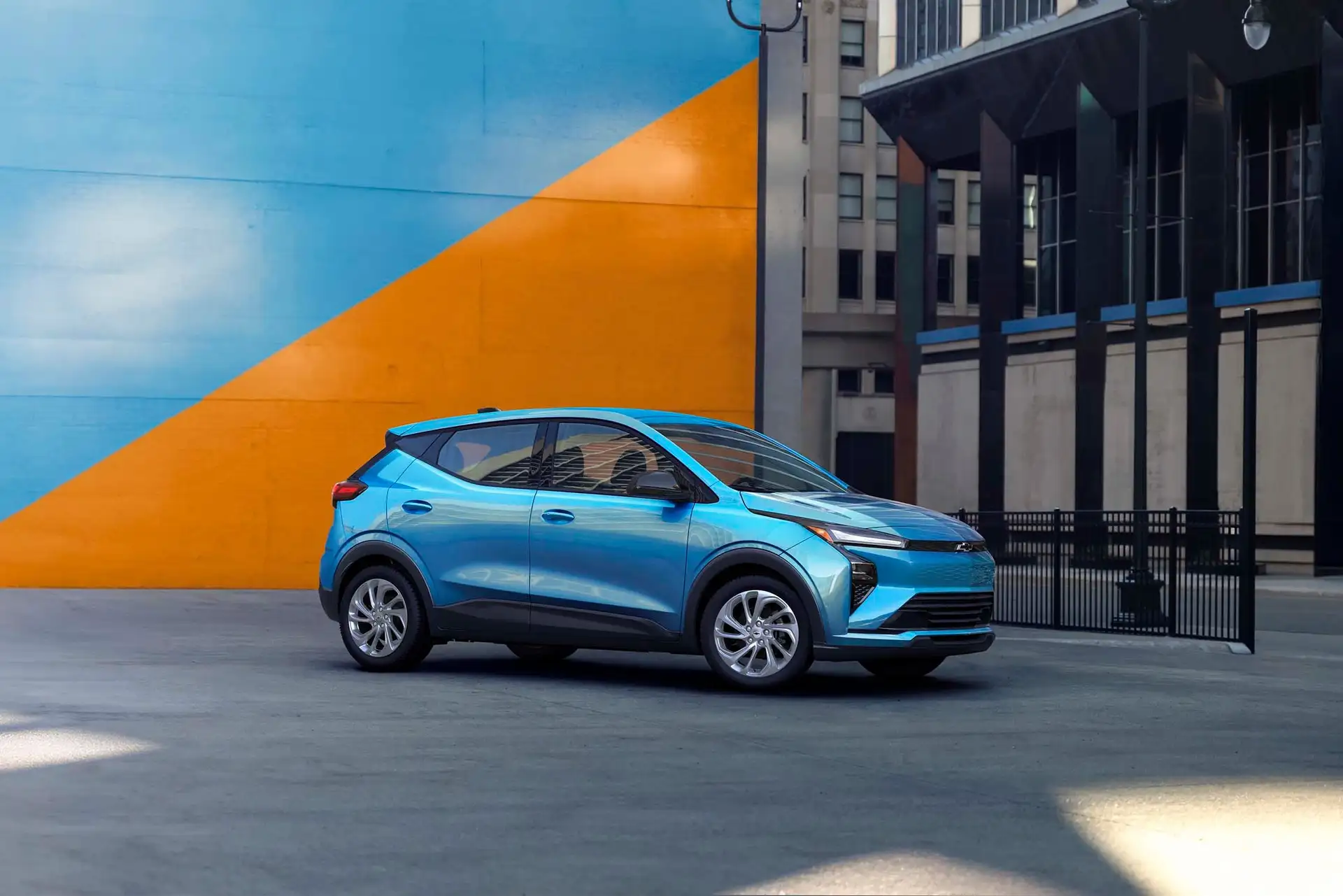
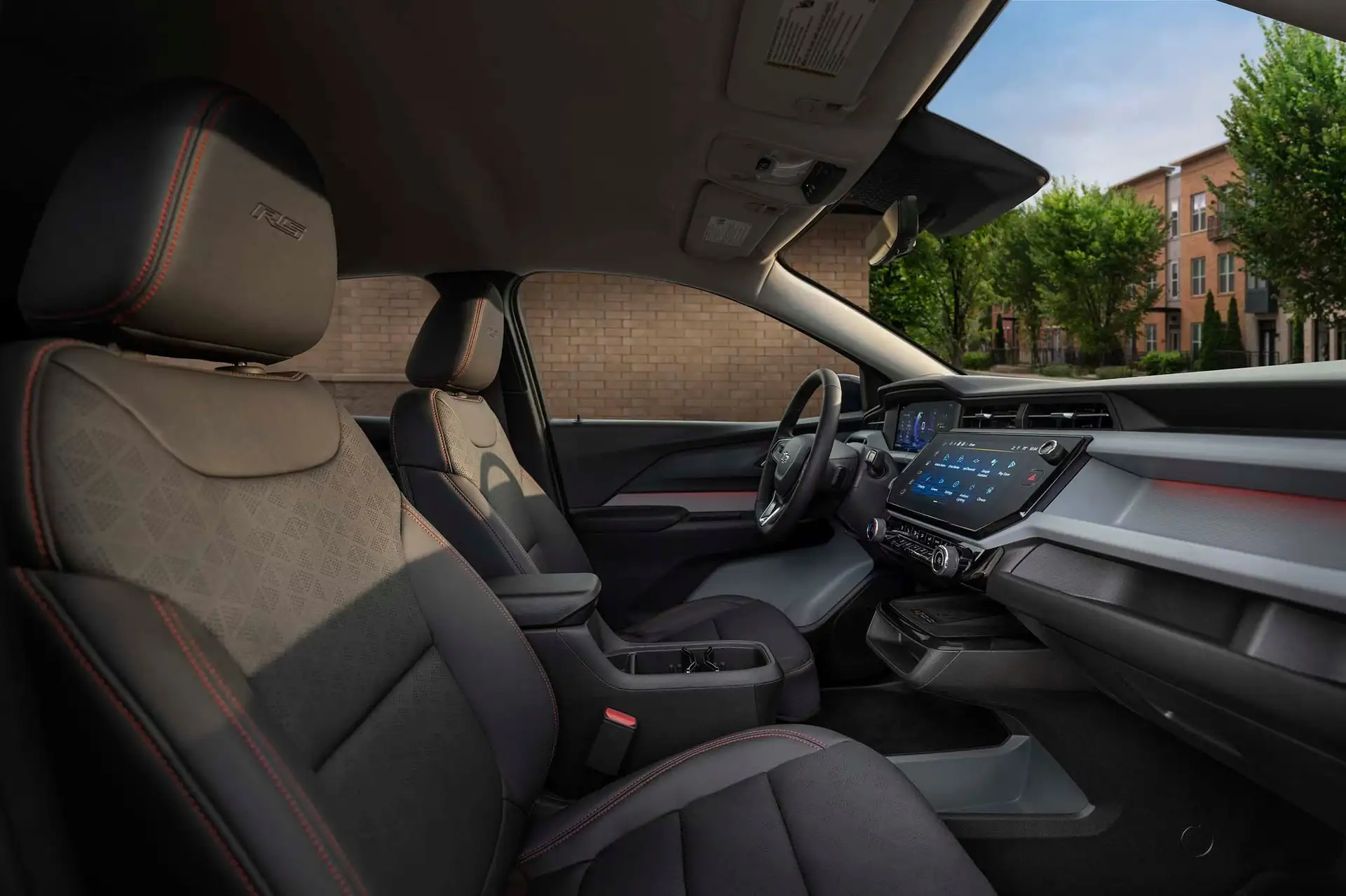
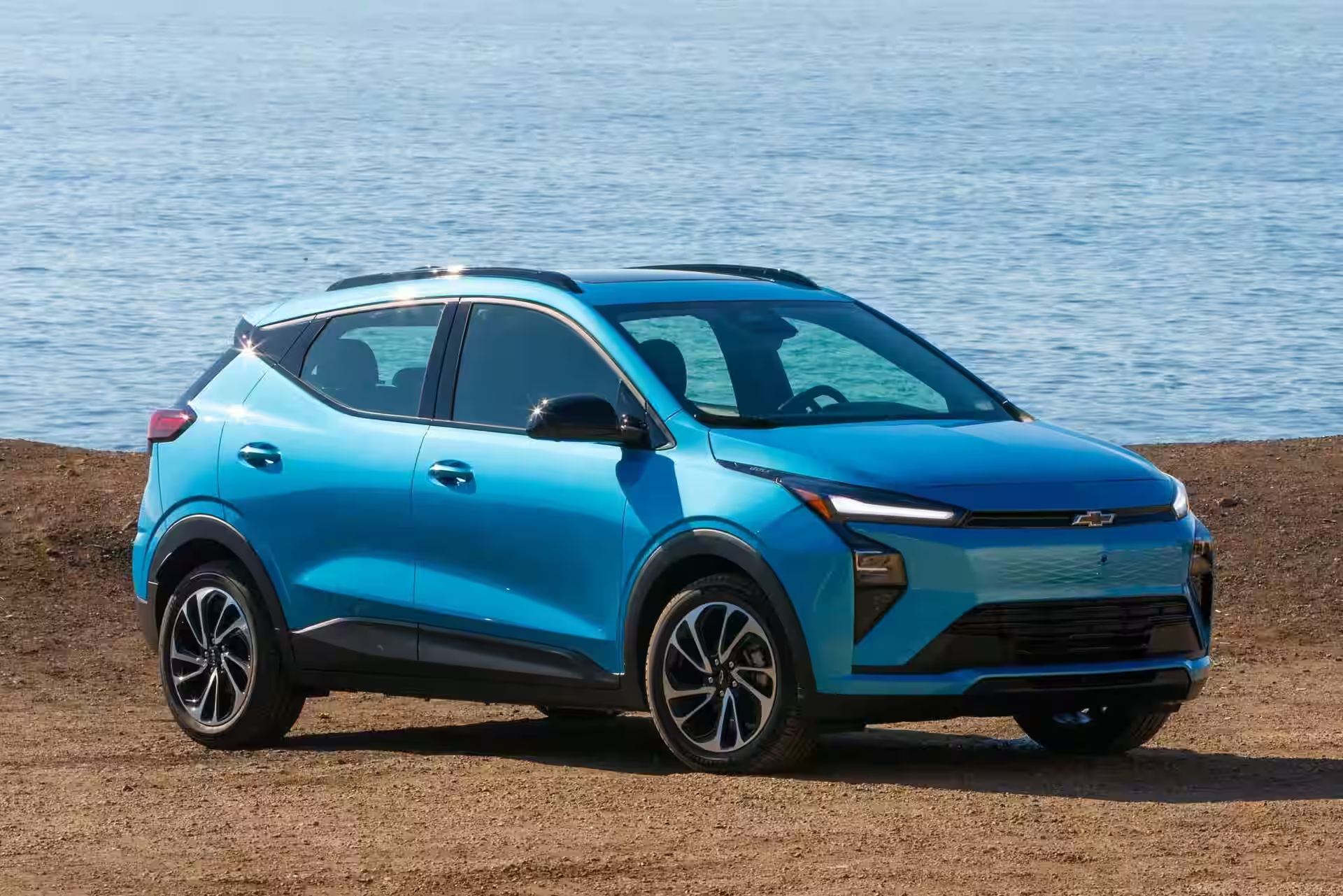
Visually, the 2027 Bolt is almost identical to the 2023 EUV that preceded it. The dimensions remain unchanged: 4.32 meters long, 1.77 meters wide, and a 2.67-meter wheelbase. The compact silhouette hides a surprisingly generous interior, with 96.6 cubic feet of cabin volume — superior to that of a Toyota Corolla Cross.
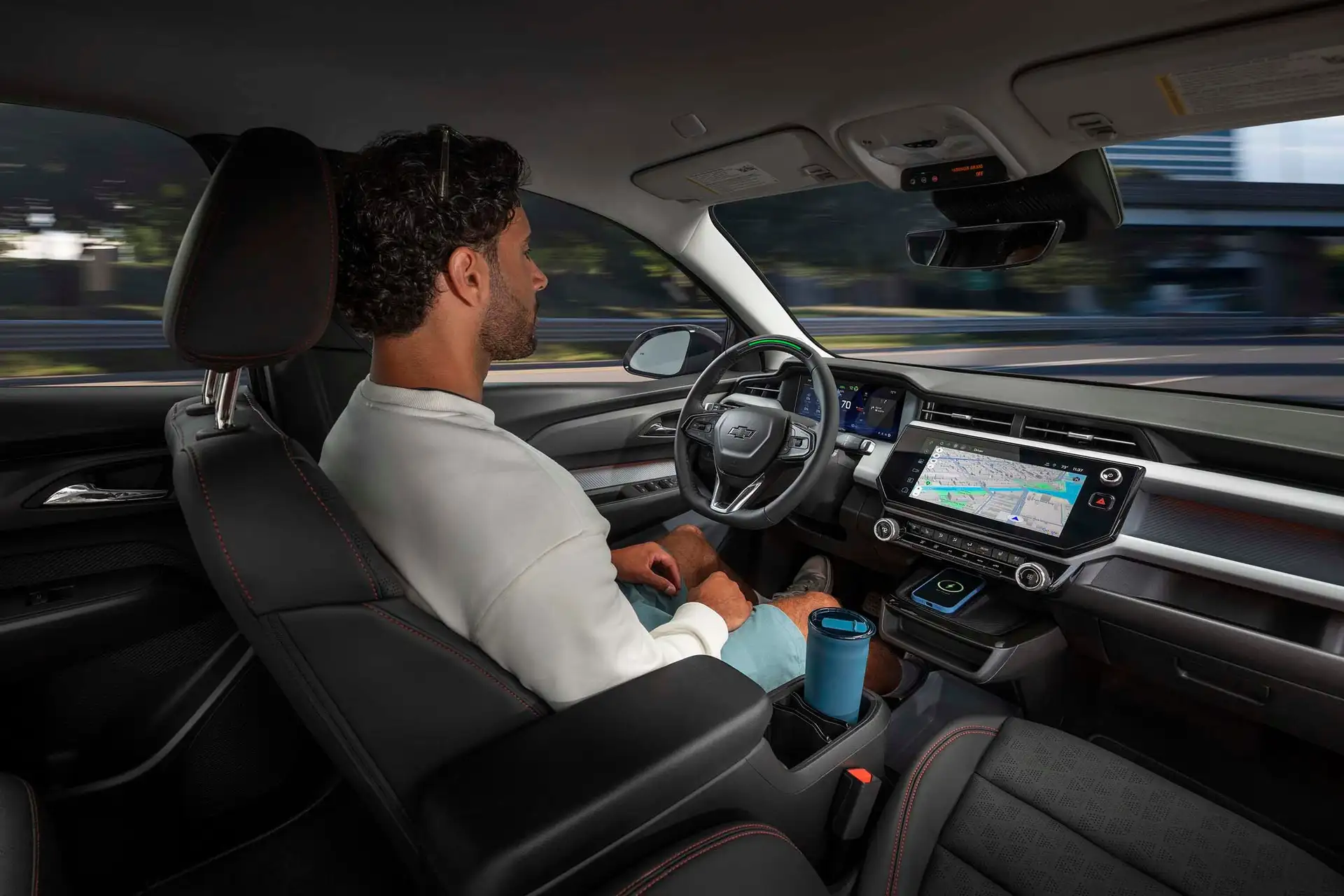
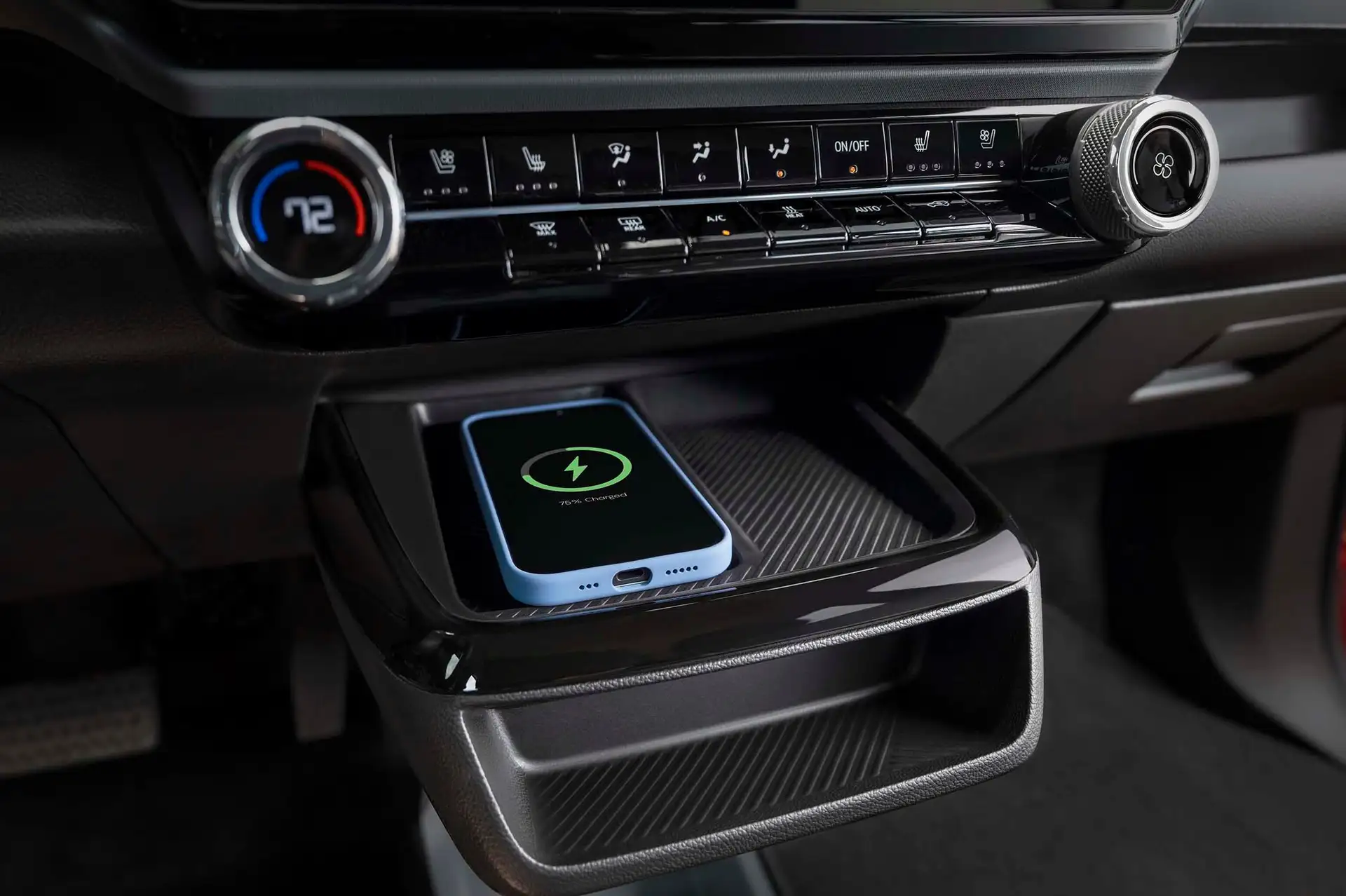
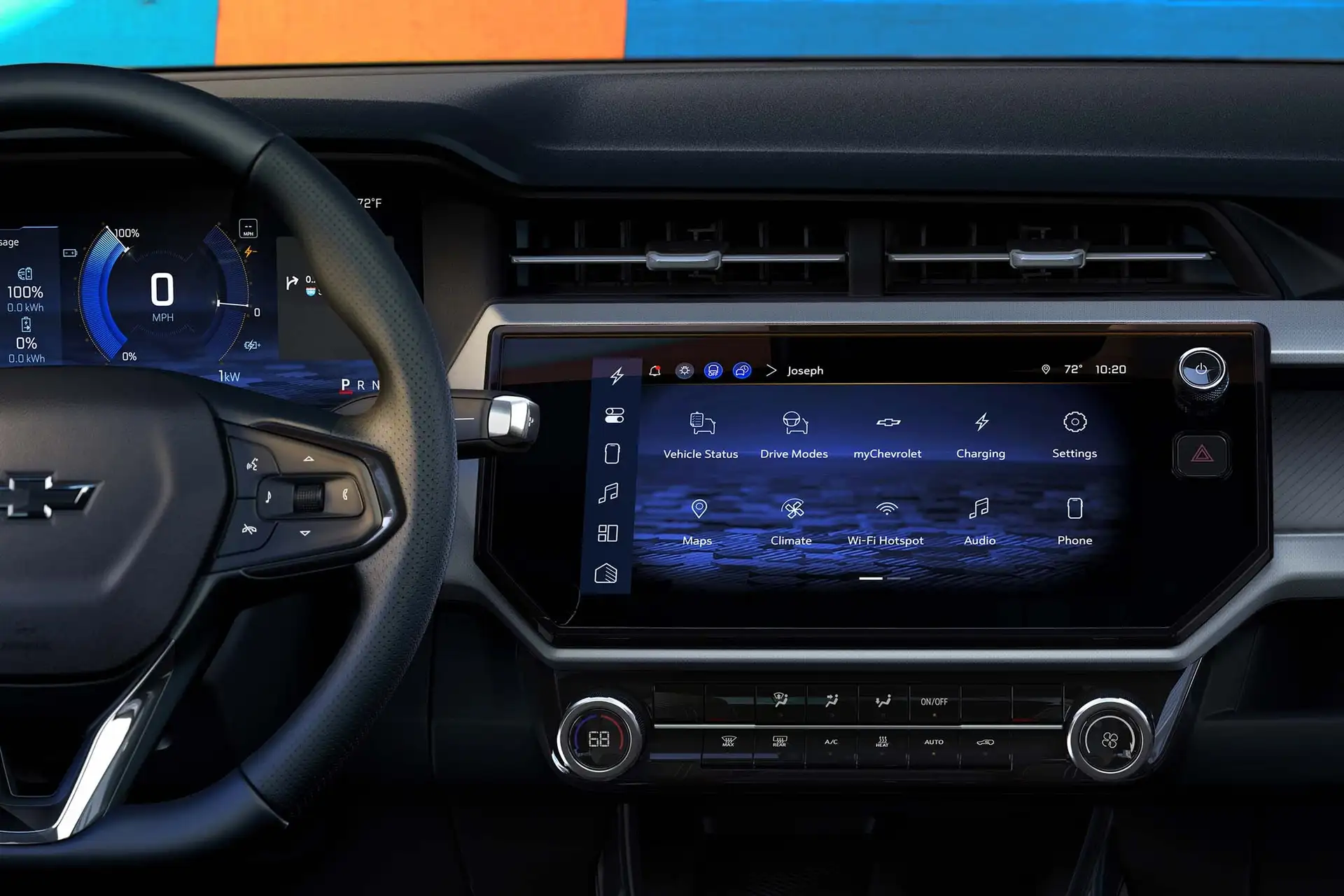
Changes focus where they matter. The new front face features redesigned headlights and refined aerodynamic elements. Inside, the dashboard gains customizable digital instrumentation and an 11.3-inch central screen running native Google software. The controversial decision to eliminate Apple CarPlay and Android Auto is offset by eight years of included data for maps and streaming.
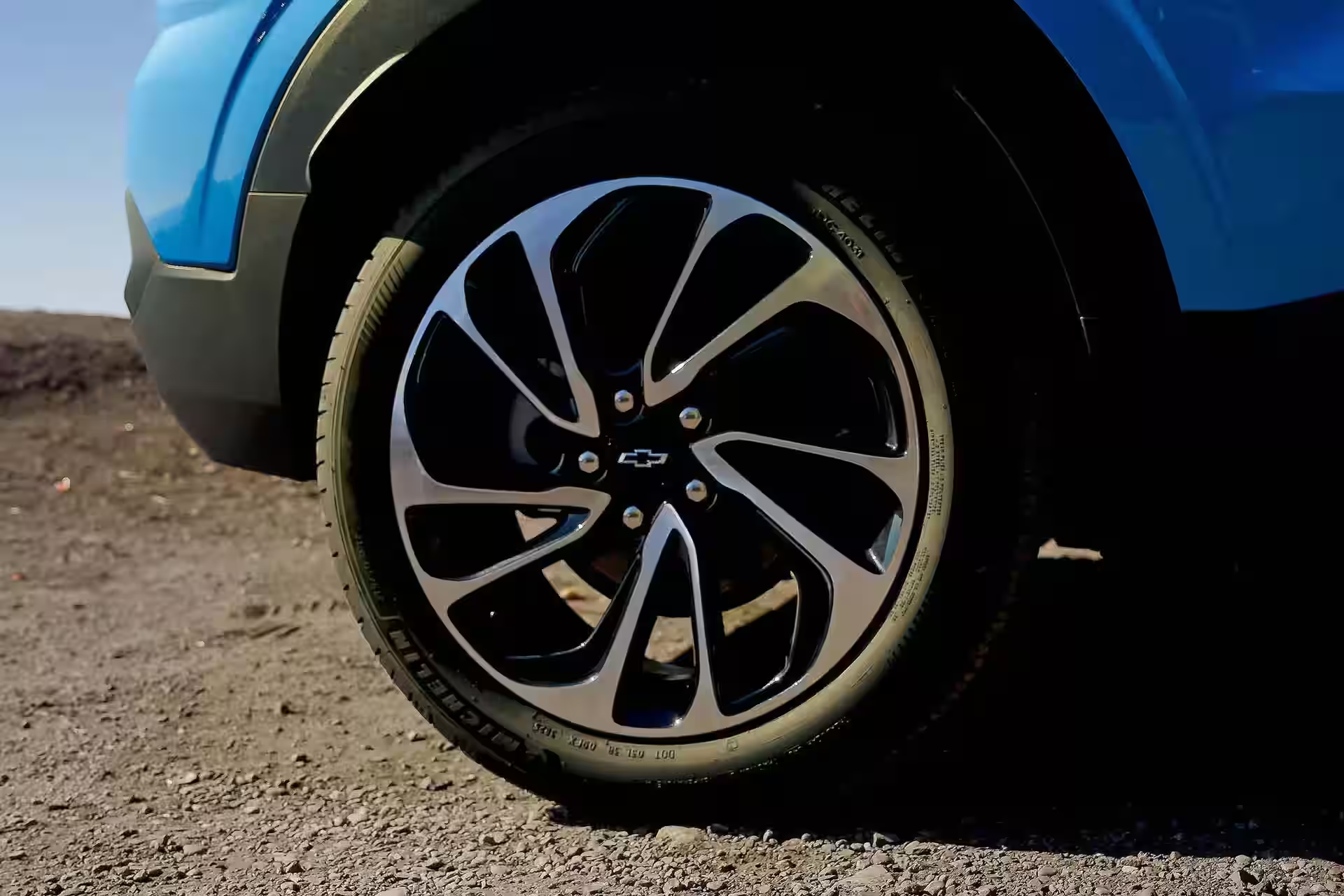
Dynamic calibration deserves special mention. The 215/50R17 Michelin e.Primacy All Season tires, combined with revised geometry and retuned shock absorbers, transform cornering behavior. The previous model was notorious for premature squeals; the new one maintains composure even during vigorous driving through the Malibu canyons.
The regenerative braking system has been completely rethought. The controversial removal of the steering wheel paddle — lamented by many enthusiasts — reflects a genuine technical evolution. Engineers admit the feature originally existed because they hadn’t mastered the blend between regenerative braking and mechanical friction on the pedal. Now, with improved algorithms, the single-pedal mode offers three intensities: off, normal, and high.
Democratic Technology in a $30K Package
The real masterstroke of the 2027 Bolt lies in democratizing features previously reserved for luxury vehicles. The Super Cruise, GM’s autonomous highway driving system, becomes accessible in the cheapest configuration on the American market. Although it requires a $6,000 optional package, the total price of $35,655 still completely upends the category’s pricing logic.
The safety equipment list includes 20 standard items: adaptive cruise control, automatic emergency braking in multiple scenarios, automatic headlights, and parking assistants. The HD Surround View camera system deserves special mention for functioning as an integrated dashcam, recording the front, rear, and sides simultaneously in four quadrants.
The electronic architecture has been modernized with five times more processing power, support for over-the-air updates, and vehicle-to-home capability — allowing the car to power the home in case of an energy emergency. These are not gimmicks; these are the foundations of a vehicle designed to last.

The Battery Ghost and the Geopolitics of Lithium
No analysis of the 2027 Bolt would be complete without addressing the elephant in the room. The massive 2021 recall, which affected all units produced due to fire risks in the battery, left deep scars on the model’s reputation. GM’s response is as straightforward as it is risky: LFP cells temporarily come from a Chinese supplier while the Tennessee factory is not yet operational.
This transition reflects bigger industry tensions. Reliance on Asian supply chains for critical components remains a structural vulnerability for Western manufacturers. The guaranteed 18-month production timeframe for the Bolt — with the possibility of extension through line relocation — demonstrates the uncertainty that permeates long-term planning.
The starting price of US$ 28,995 gains added significance considering the expiration of the federal tax credit for electric vehicles in the United States. When asked about maintaining this price, GM responds with declared intent — and eloquent silence regarding contractual guarantees.
The Contradiction That Defines an Era
The 2027 Bolt exists as a repudiation of its manufacturer’s own strategy. On the same assembly line that produced it, GM is preparing to launch electric pickups that weigh 4 tons and cost three times as much. The Chevrolet Corvette ZR1 recently demonstrated that American engineering can dominate premium categories; the Bolt proves it can also serve those who need fundamental transportation.
This duality is not accidental. It reflects the fragmentation of a market where “electrification” means radically different things to different consumers. For some, it is status and extreme performance. For others, it is simply replacing fossil fuel without going broke in the process.
The limited production period creates artificial urgency that benefits immediate sales but harms long-term planning. The question GM refuses to answer — whether the line can be moved again after the initial 18 months — leaves buyers in strategic limbo. The physical answer is yes; the political answer remains pending.
The Chevrolet Bolt 2027 is not revolutionary by invention. It is revolutionary by refusal — refusal to complicate what should be simple, to price what should be affordable, to abandon what the market has shown to value. Its existence is a victory of organized demand over corporate strategy. Its survival, however, depends on decisions beyond the control of those who appreciate it most.
In a scenario where $37,000 electric crossovers become a reference for “affordability,” the Bolt remains an uncomfortable reminder that another path was always possible. The question is whether the industry — and its consumers — will have the courage to follow it.