
L3 vs L4 gets real as CHANGAN ROBOTAXI wins approval in Chongqing with 10 ms chassis tech. Discover the next autonomy play!
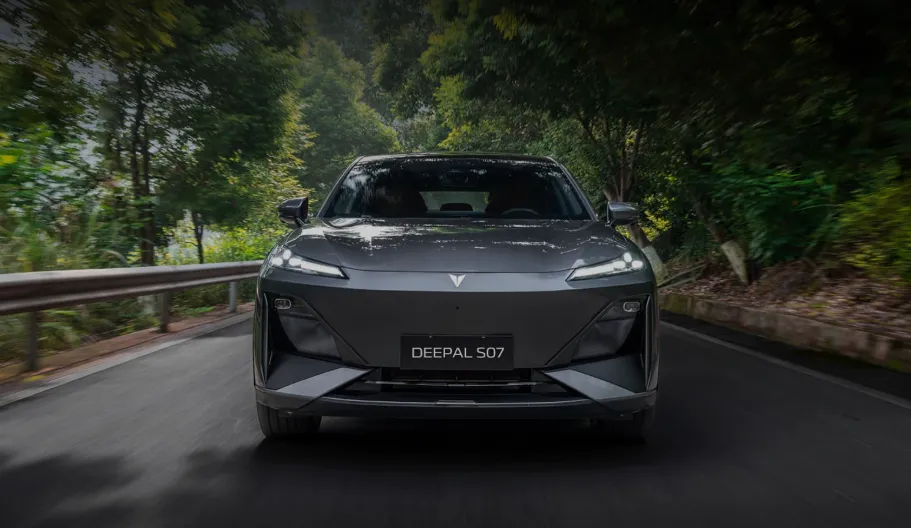
Changan has done something the autonomous driving industry keeps arguing about instead of executing it pushed L3 onto public roads and secured L4 Robotaxi approval almost in parallel, turning a regulatory milestone into a strategic statement.
Why Changan’s L4 Robotaxi Approval Matters More Than A Typical Test Permit
On March 31, Changan Automobile received an L4-level Robotaxi testing license in Chongqing’s Yongchuan policy pilot zone, with approval reportedly backed by six local departments. That detail matters because this is not just another limited demonstration permit. The language around the authorization points to full compliance and full-scenario unmanned testing inside designated operating areas.
In plain terms, Changan is no longer talking only about assisted driving. It is now validating driverless operation without a safety driver under one of China’s toughest urban test environments.
This comes at a critical moment for the global self-driving car market. In 2026, many automakers are still navigating the messy middle ground between Level 2 driver assistance, Level 3 conditional automation, and the far more ambitious Level 4 autonomy. While rivals debate whether L3 is worth the effort, Changan appears to be treating L3 and L4 as two tracks of the same long-term program.
That makes this story relevant far beyond China. Anyone following Tesla FSD, Mercedes-Benz Drive Pilot, Waymo, Baidu Apollo, or the next wave of robotaxi deployment should pay attention. The bigger lesson is not just that an L4 permit was issued. It is how Changan is trying to commercialize autonomy faster by sharing technology across L2, L3, and L4 vehicles.
The Real Strategy Is A Shared Tech Stack From L2 To L4
Changan says its Robotaxi is built on the same core Tianshu end-to-end large model that underpins its production-oriented intelligent driving systems. That is the key to understanding the company’s so-called dual-track approach.
Instead of building an isolated science project for Robotaxi trials, the company is reusing core algorithms across mass-market and high-autonomy products. If true in full operational practice, that gives Changan three major advantages:
- Faster data accumulation from real users in production vehicles
- Lower marginal development cost than maintaining fully separate autonomy stacks
- Quicker feedback loops between assisted driving features and high-level self-driving capabilities
This is exactly where the industry is heading. The biggest winners in autonomous driving may not be the brands with the loudest demos, but the ones that can turn software, sensors, and compute into repeatable large-scale deployment.
Changan’s Tianshu Intelligent Driving system also comes with a wider vehicle-control story. The company links autonomous capability with cockpit, chassis, and electric drive integration, including wire-controlled chassis functions and four-wheel independent control. According to the figures released, drive and braking responses can drop to 10 milliseconds, hydroplaning risk can be reduced by 76%, and tire-blowout trajectory correction can happen within 0.1 seconds.
Those numbers do not prove full real-world superiority on their own, but they do show where the engineering focus is shifting. Autonomous driving is no longer only about perception and mapping. It is increasingly about how quickly the car can physically react when software detects danger.
That broader software-defined vehicle trend is also reshaping other segments. If you want a look at how tech integration is changing mainstream EV expectations, this Kia EV3 story shows how premium-grade intelligence is moving downmarket.
Why Chongqing Is The Brutal Test Case Everyone In Autonomous Driving Respects
Getting L4 approval in Chongqing gives this milestone extra credibility. The city has earned a reputation as one of the hardest places in China to validate autonomous systems because of its layered highways, dense merges, tunnels, steep grades, sharp curves, and frequent low-visibility conditions.
Engineers often describe it as an urban stress test for perception, planning, and control. A self-driving system that can manage Chongqing’s road geometry has a stronger claim to generalizability than one trained mostly on flatter, simpler traffic networks.
Changan is also preparing hardware upgrades to support that claim. By the third quarter of 2026, it expects its self-developed satellite-architecture LiDAR to exceed 200 lines of precision, while tripling computing power and reducing costs by around 30% versus competitors. If these targets are achieved in production-grade form, the benefits could be significant in difficult use cases like:
- Night driving on poorly lit roads
- Dense car-following traffic
- Stop-and-go congestion
- Tunnel transitions and glare-heavy scenes
- Low-visibility weather events
That is the commercial battleground now. Not flashy demos on perfect roads, but reliability in messy edge cases where public trust is won or lost.
Readers tracking the broader China auto-tech surge may also want to compare how battery and software races are evolving in parallel. MG’s semisolid battery push is another sign that Chinese automakers are scaling advanced tech faster than many expected.
L3 Licensed And L4 Approved Is Not A Contradiction
One of the most important details in this story is timing. Changan had already obtained China’s first dedicated L3 autonomous license plate, and within roughly three months it moved from compliant L3 road access to L4 unmanned test authorization.
That speed signals a deliberate strategy.
L3 solves near-term legal and regulatory friction. It helps the market address driver responsibility, operating design domains, insurance, and public-road use rules. L4 aims at the future revenue model, especially Robotaxi and mobility services where removing the safety driver can finally change unit economics.
So the industry debate about skipping L3 may be framed the wrong way. For automakers with the capital and software depth to do both, the smarter move may be to commercialize incrementally while validating the next leap in parallel.
“The real race is not L3 versus L4. It is whether a company can build one autonomous architecture that earns money now and improves fast enough to dominate later.”
That is why Changan’s move matters. It suggests the company does not want to get trapped in the slow monetization of pure L3, nor wait indefinitely for pure L4 to become universally legal and profitable.
| Milestone | What It Means |
|---|---|
| L3 licensed road access | Regulatory pathway for conditional autonomy in real traffic |
| L4 Robotaxi approval | Validation of unmanned operation in designated scenarios |
| Shared Tianshu architecture | Potential scale advantage across L2, L3, and L4 products |
| Chongqing testing | High-complexity environment that strengthens credibility |
For a wider view of how autonomous platforms are being positioned as business models rather than just features, Lucid’s Robotaxi ambitions offer a useful comparison from the premium EV side. And if you want another example of Chinese brands turning software into a sales weapon, XPeng’s latest autonomous driving stack shows how fierce this arms race has become.
The market should now watch three things closely: whether Changan can convert regulatory wins into stable unmanned test performance, whether the shared tech stack truly improves production vehicles, and whether cost reductions in sensors and compute make the path to scaled Robotaxi service financially realistic.
If those pieces align, Changan’s L3 licensed and L4 approved strategy could become one of the most practical templates in the global autonomous driving race.