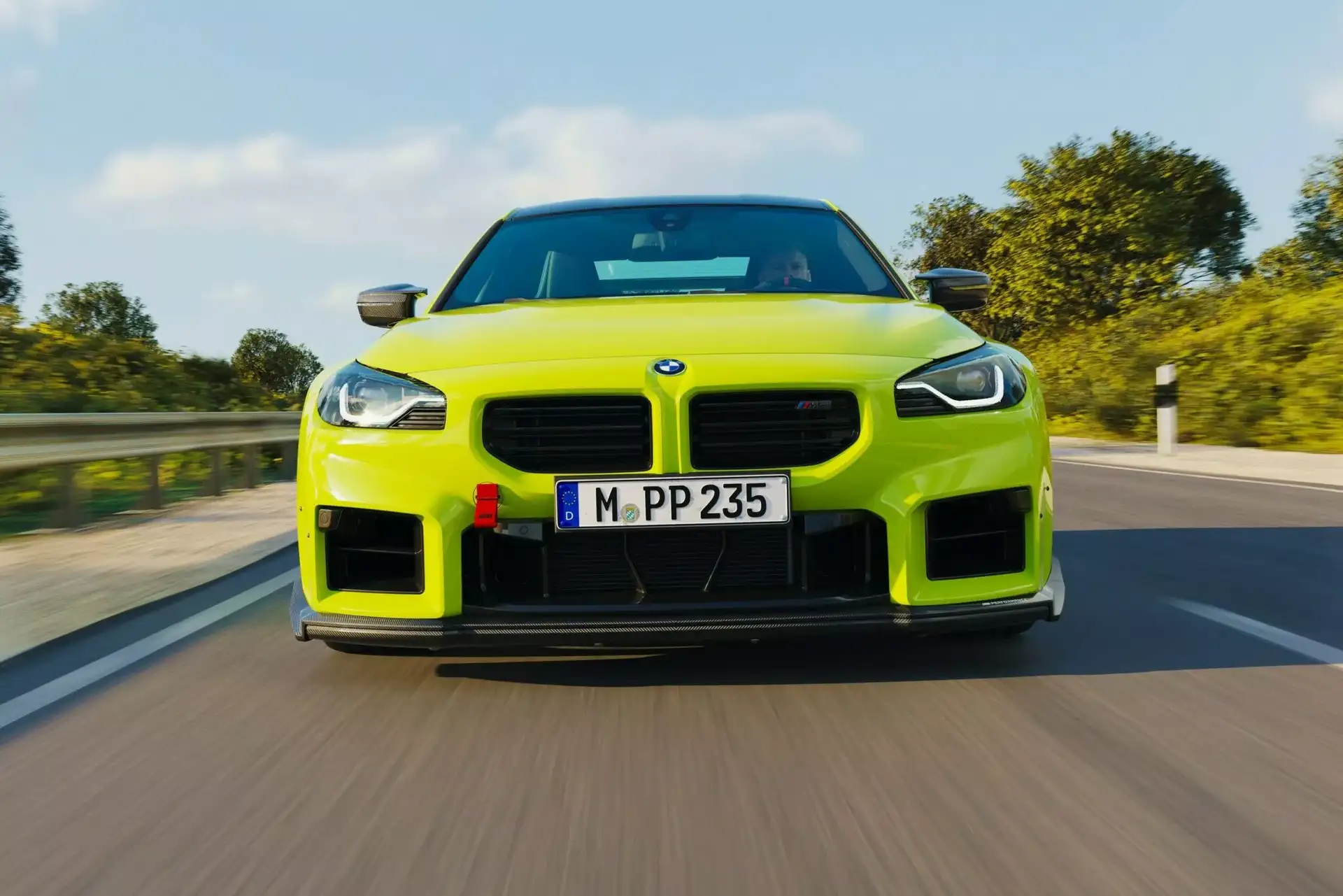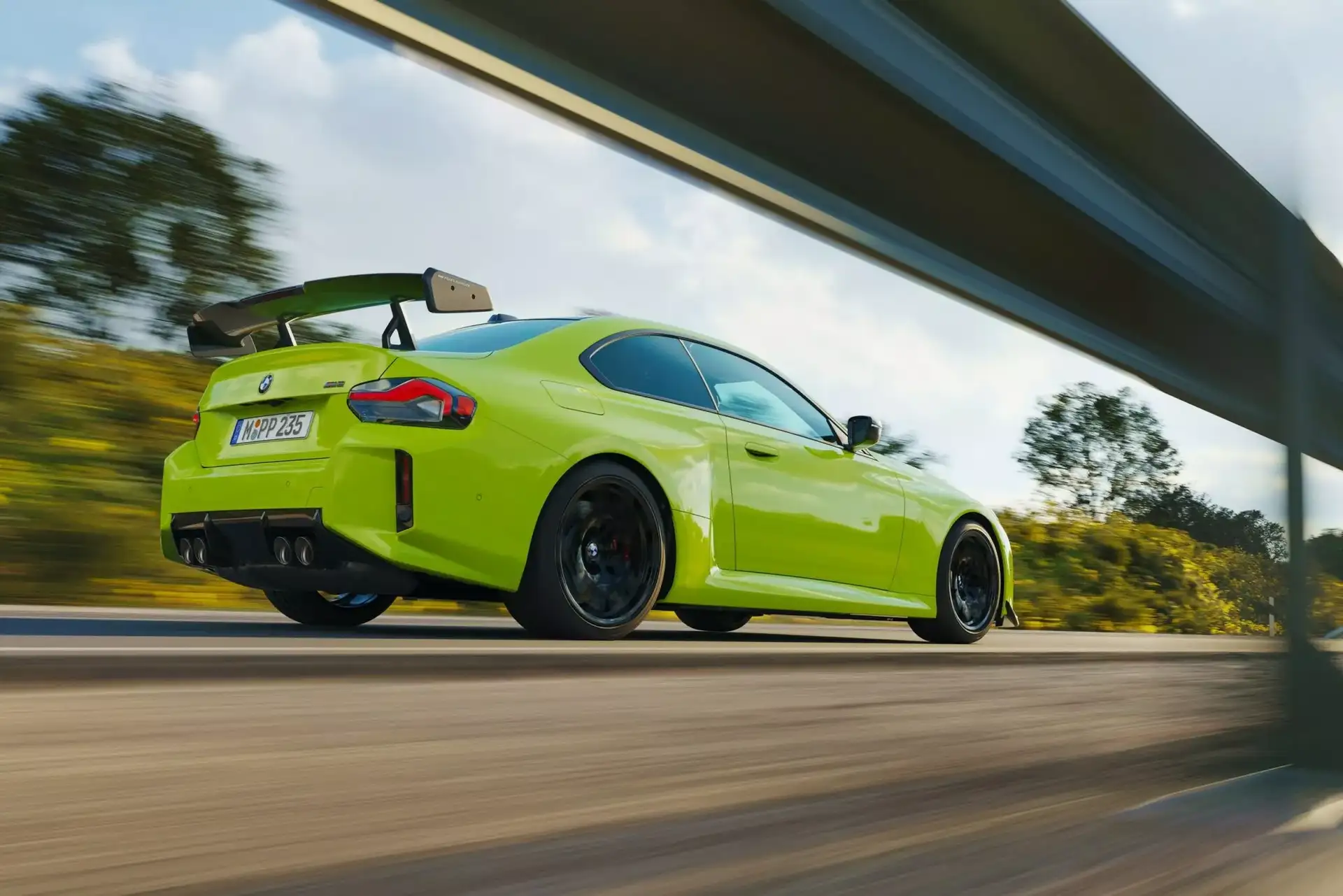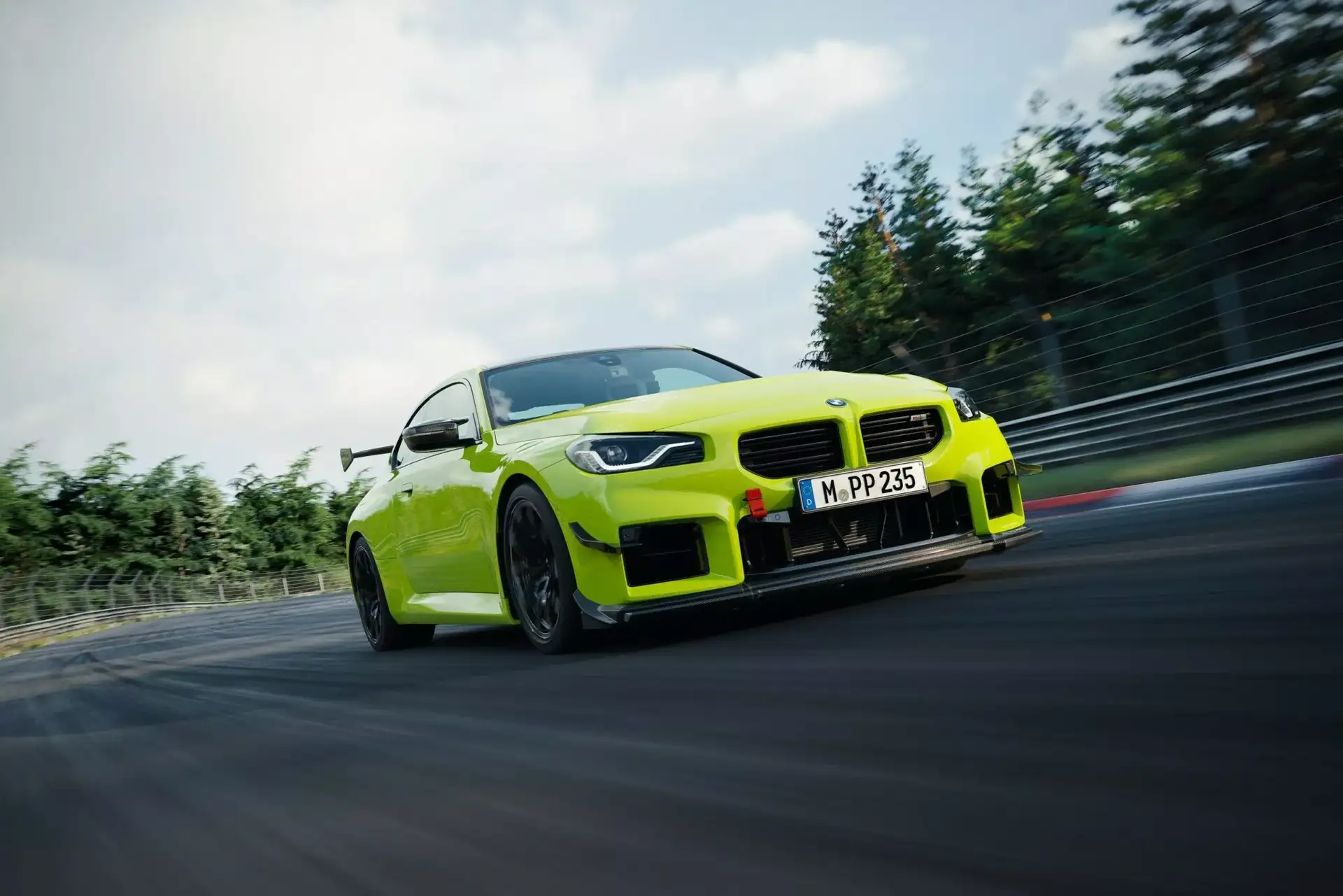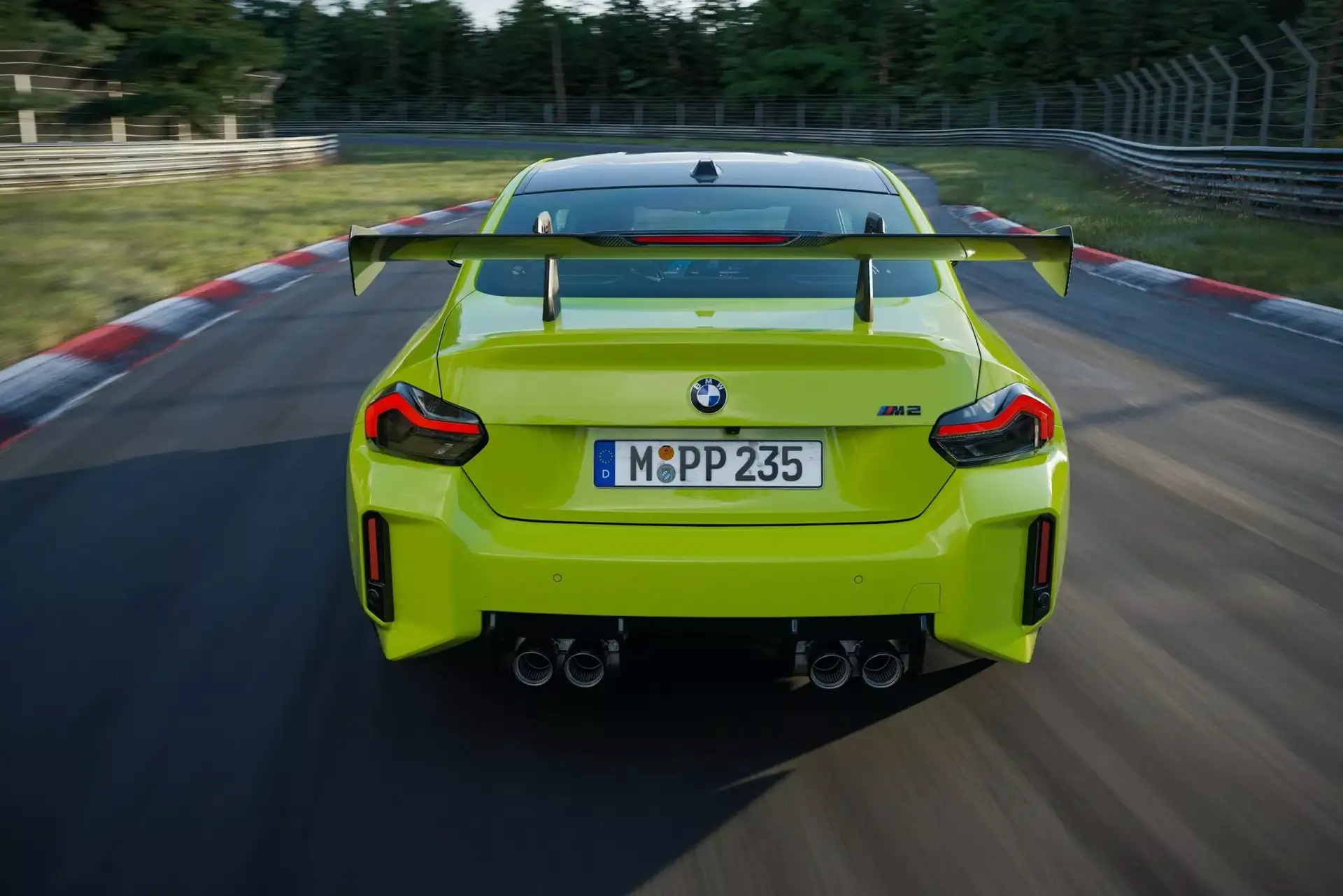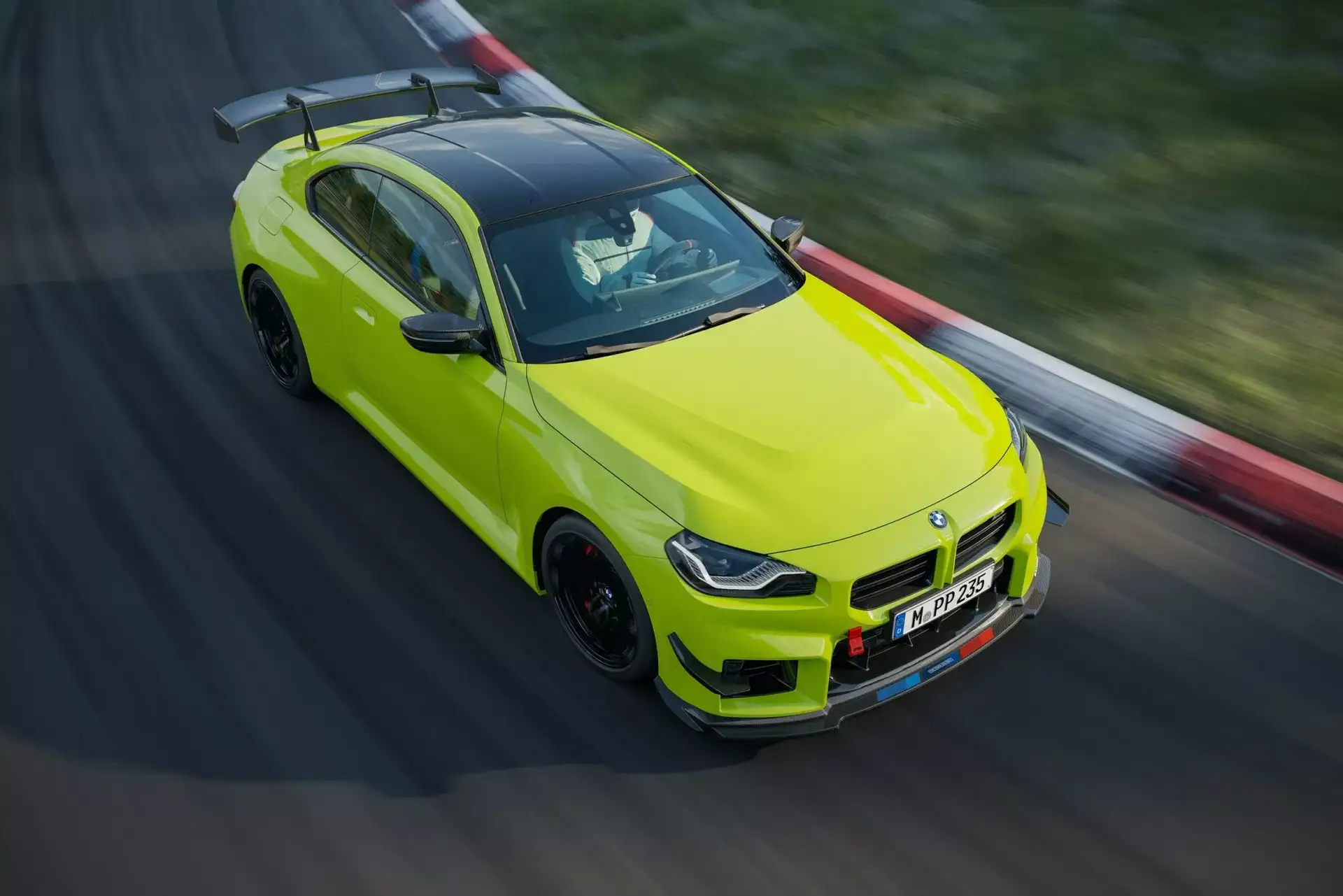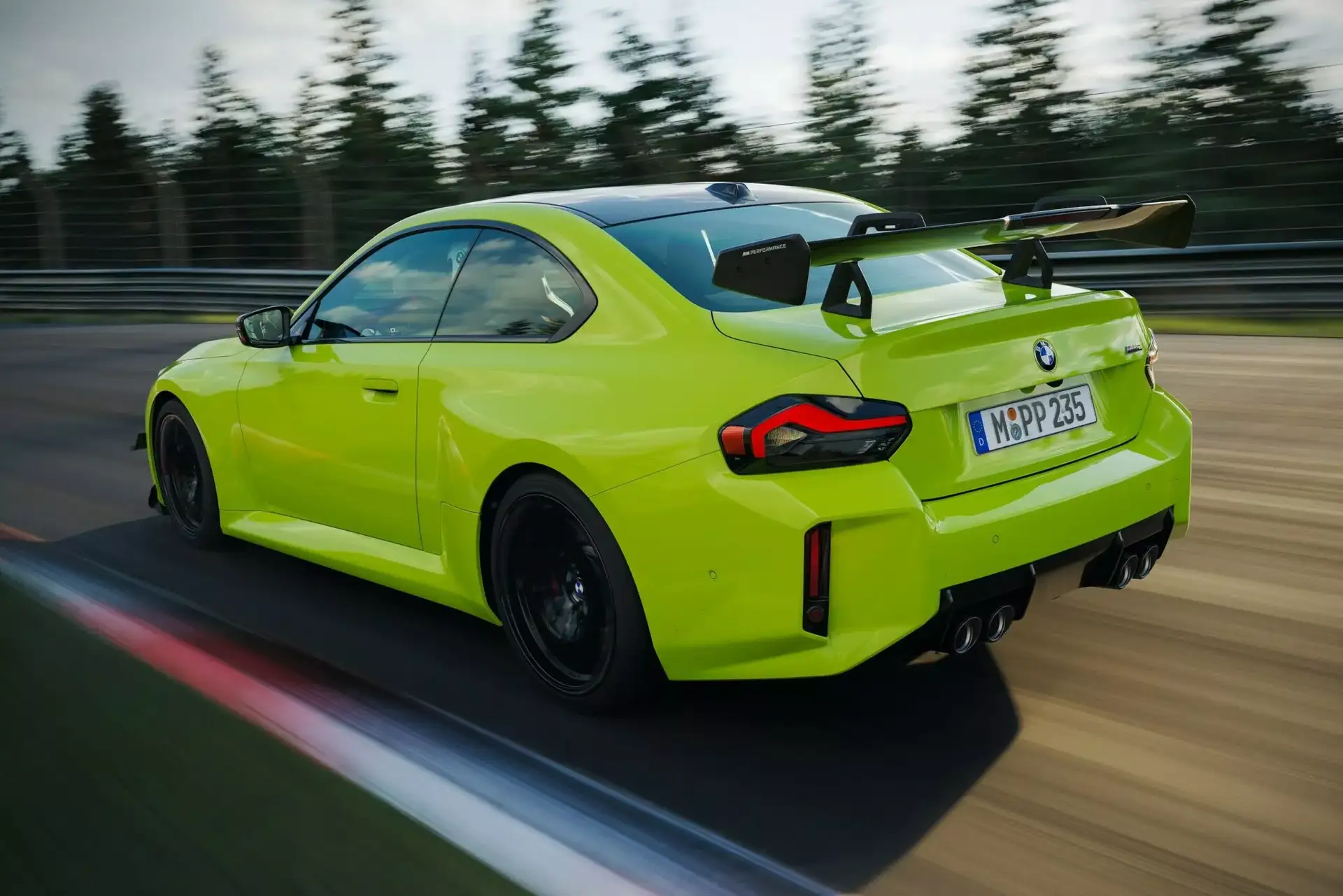
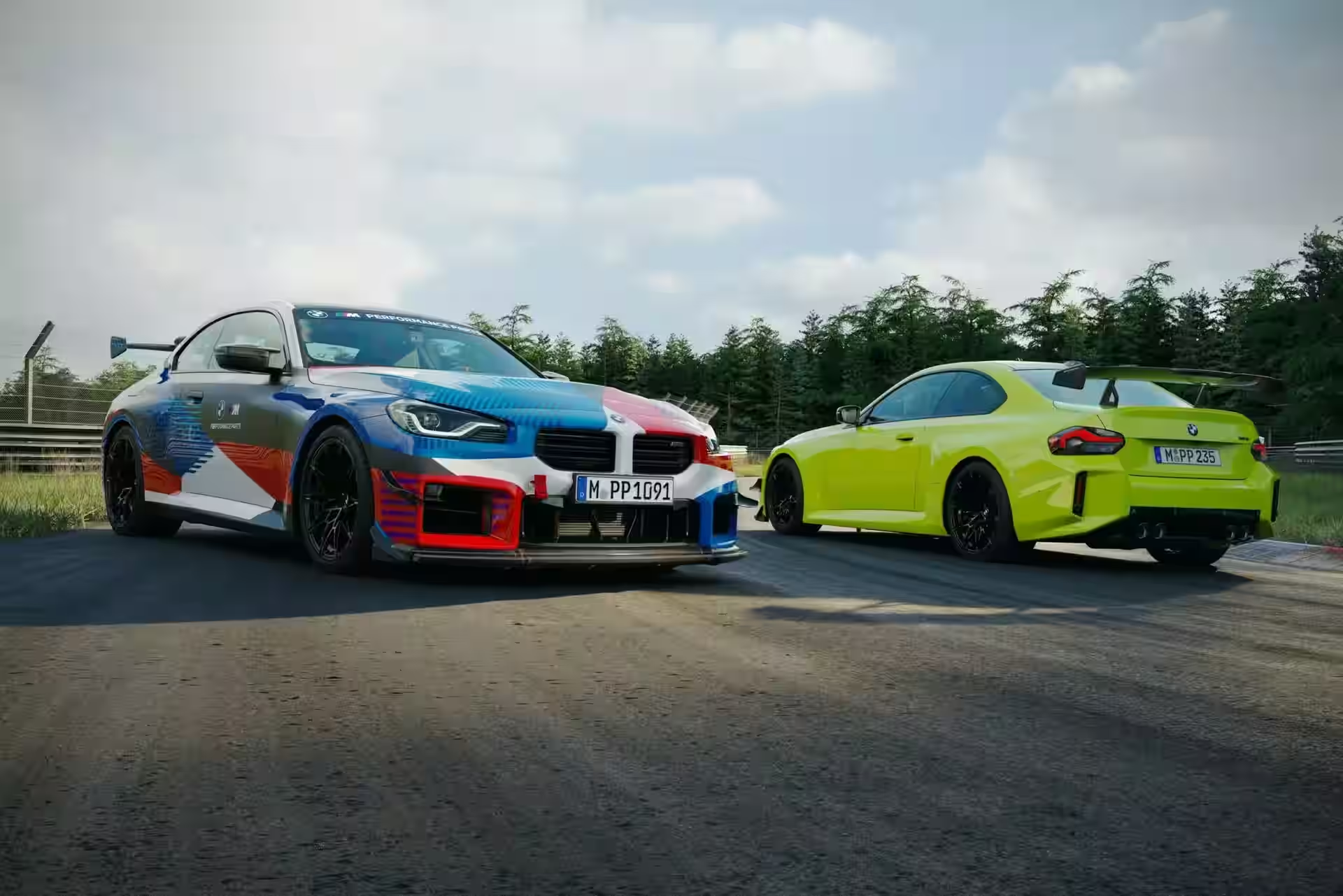
The BMW M2 G87 got serious. With 460 HP and adjustable aerodynamics, the new M PERFORMANCE package promises to dominate track days. Check out the technical details.
Why The BMW M2 Became The Favorite Coupe For Track Day Enthusiasts
The appeal of the modern BMW M2 isn’t about trying to please everyone with its design, but rather delivering a short, stiff, and extremely responsive platform. In practice, it occupies a rare space in today’s market: a compact coupe with a six-cylinder inline engine and rear-wheel drive, ready to accept serious upgrades without requiring a complete preparation project.
In the official specs of the current generation (G87), the M2 uses the 3.0-liter twin-turbo inline six engine (S58 family), with 460 hp and 550 Nm, paired with a 6-speed manual or an 8-speed automatic transmission, depending on the market and configuration. This already places the car at a strong performance level, but what defines the lap time isn’t just power.
On track, two points usually limit the consistency of the street M2: thermal management and high-speed stability. This is precisely where the M Performance package aims, with adjustable parts that change the car’s behavior on long straights, hard braking, and medium/high-speed corners.
To understand why this type of kit is becoming a “strong currency” in the performance world, it’s worth comparing the logic behind extreme downforce projects. An example that helps visualize the concept is the MCMURTRY SPÉIRLING with absurd downforce — of course, these are different approaches, but the point is the same: well-done aerodynamic grip changes everything.
What “Track Day” Demands That The Street Doesn’t
- Real downforce to stabilize the car where the speed rises and the asphalt “disappears” on the steering wheel.
- Adjustable suspension to set height, camber, and balance between axles.
- Heat-resistant parts and repeated use endurance, not just a single 0 to 100 km/h pull.
- Minimum compliance to drive on public roads without turning every garage exit into a drama.
BMW M2 Track Kit M Performance: What’s Included And Why It’s Different
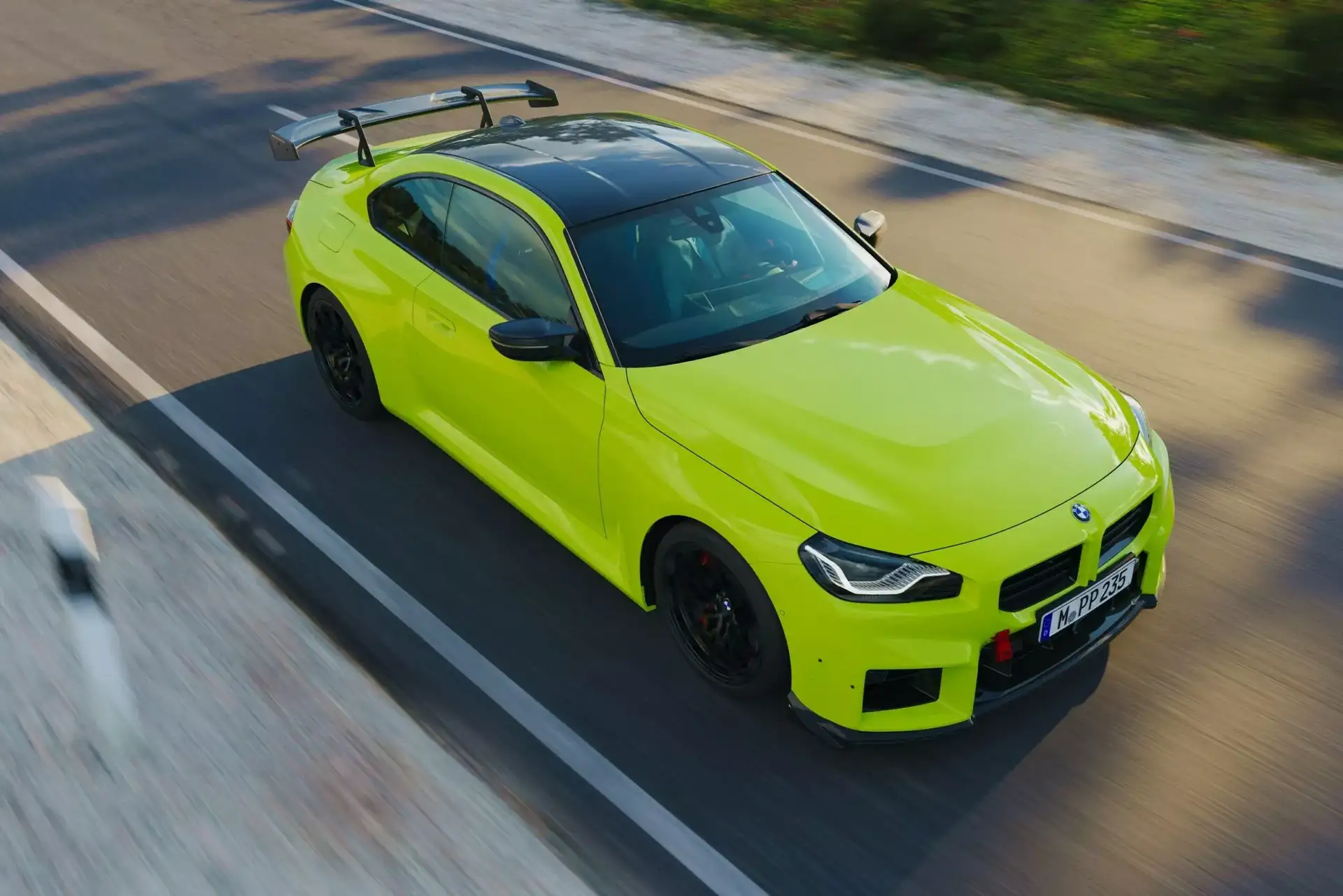
BMW developed a Track Kit M Performance dedicated to the M2 with an explicit focus on track day use. The idea is not to just “dress up” the car but to offer a coherent set of adjustable aerodynamics and chassis tuning. And when a manufacturer does this in an integrated way, the gain is not only performance but also predictability.
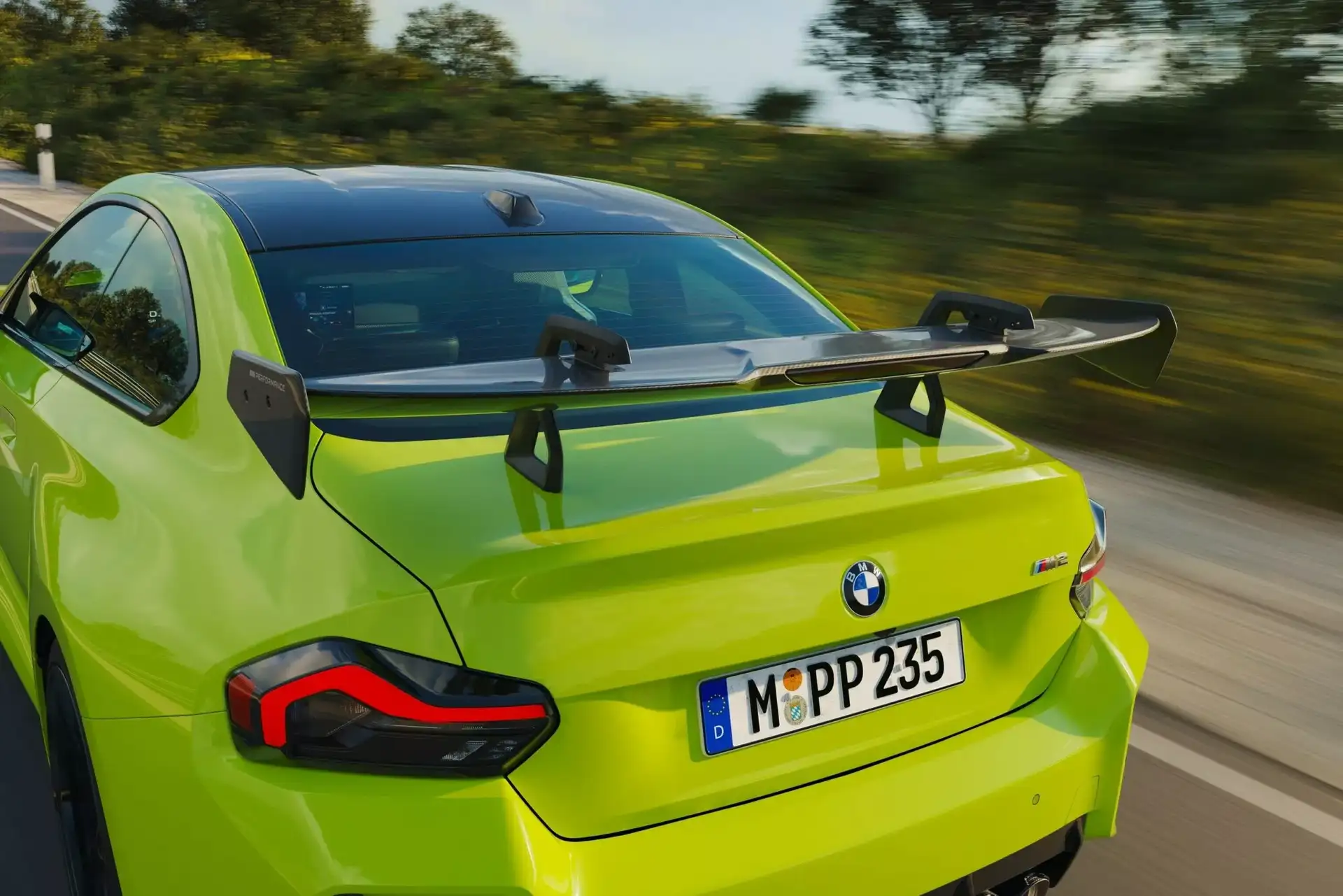
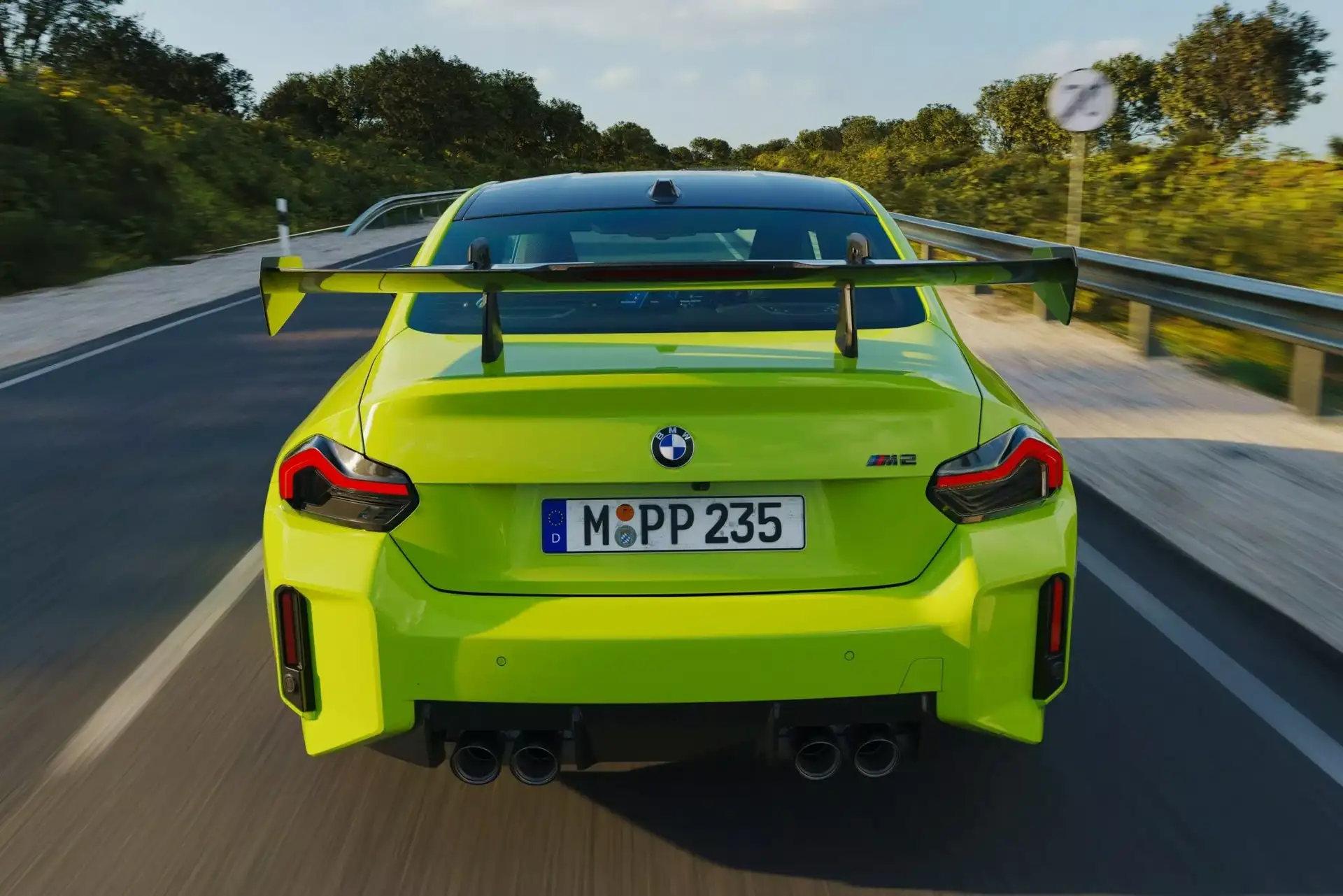
Truly Adjustable Aerodynamics, With Swan-Neck Wing
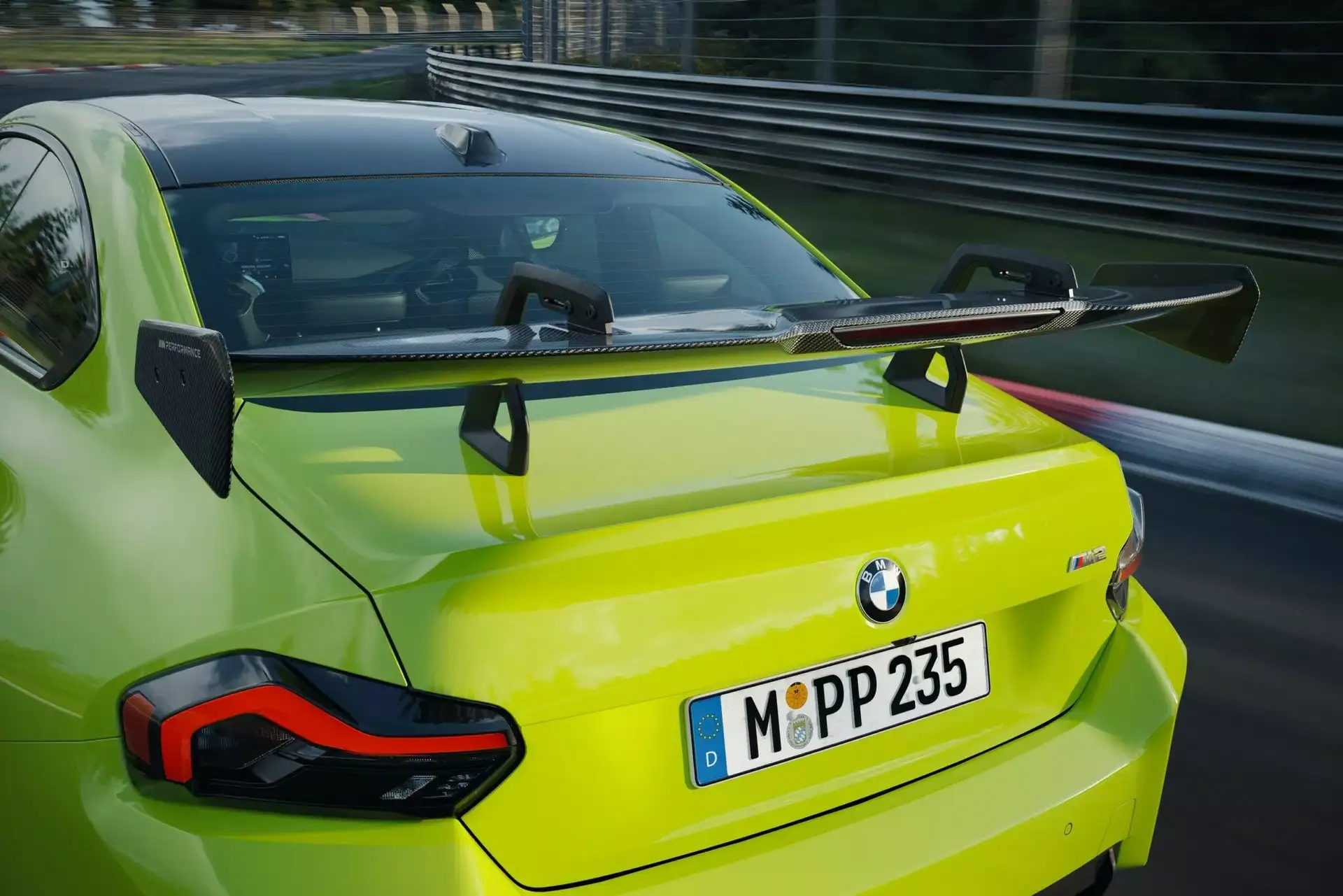
The visual and technical highlight is the rear wing with swan-neck supports, a solution widely used in race cars for one simple reason: it improves the efficiency of the spoiler by “cleaning” the airflow underneath the wing, where downforce generation is most sensitive.
According to the kit’s design, the wing has manual adjustment and is also aligned with the logic of street versus track use. There is a setting aimed at more civilized driving, and a more aggressive position for the track, with the possibility to alter the angle of attack. A detail that shows concern for usability is the presence of an integrated brake light at the center of the wing, something many aftermarket projects ignore.
Front Splitter, Diffuser, And Canards With Function
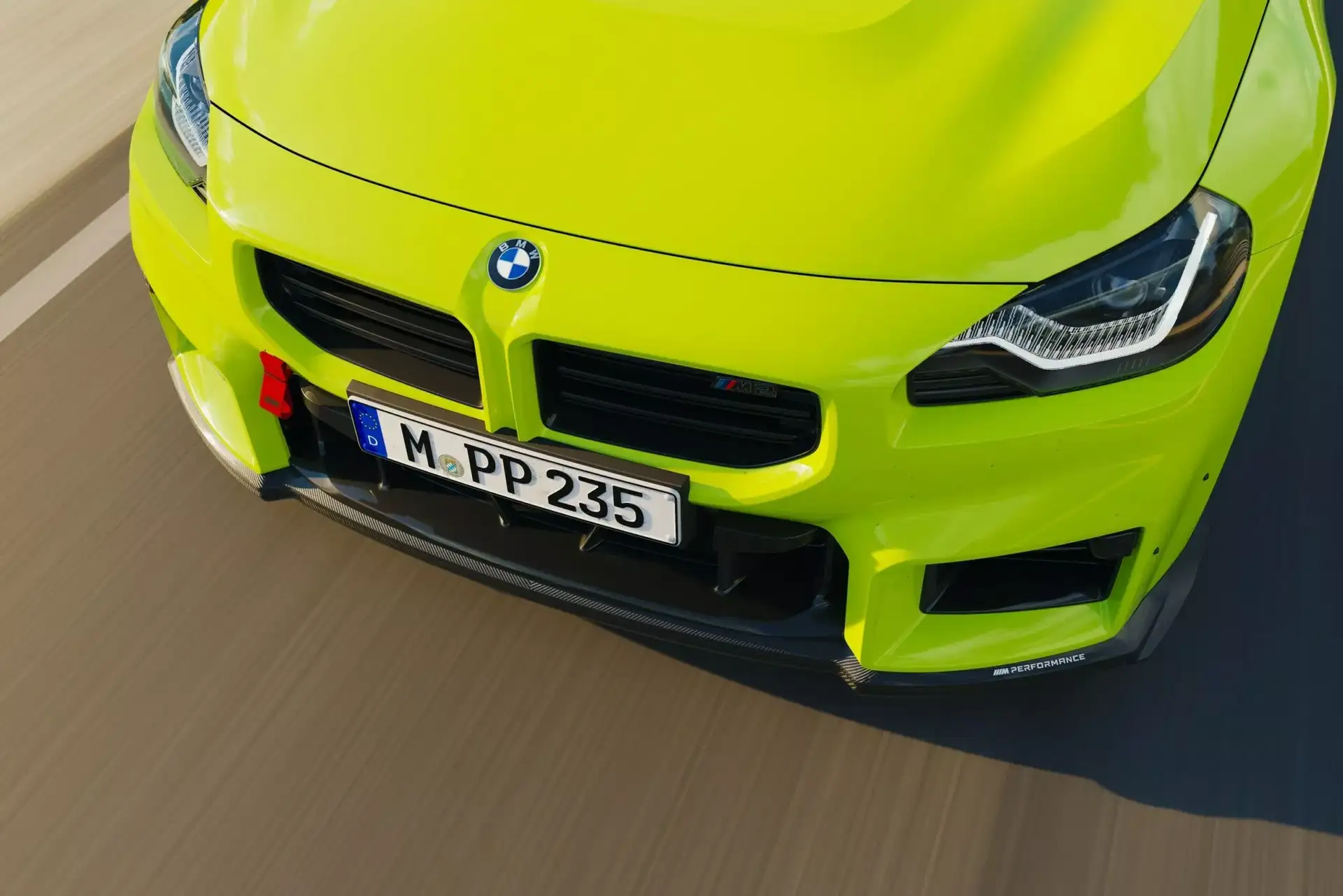
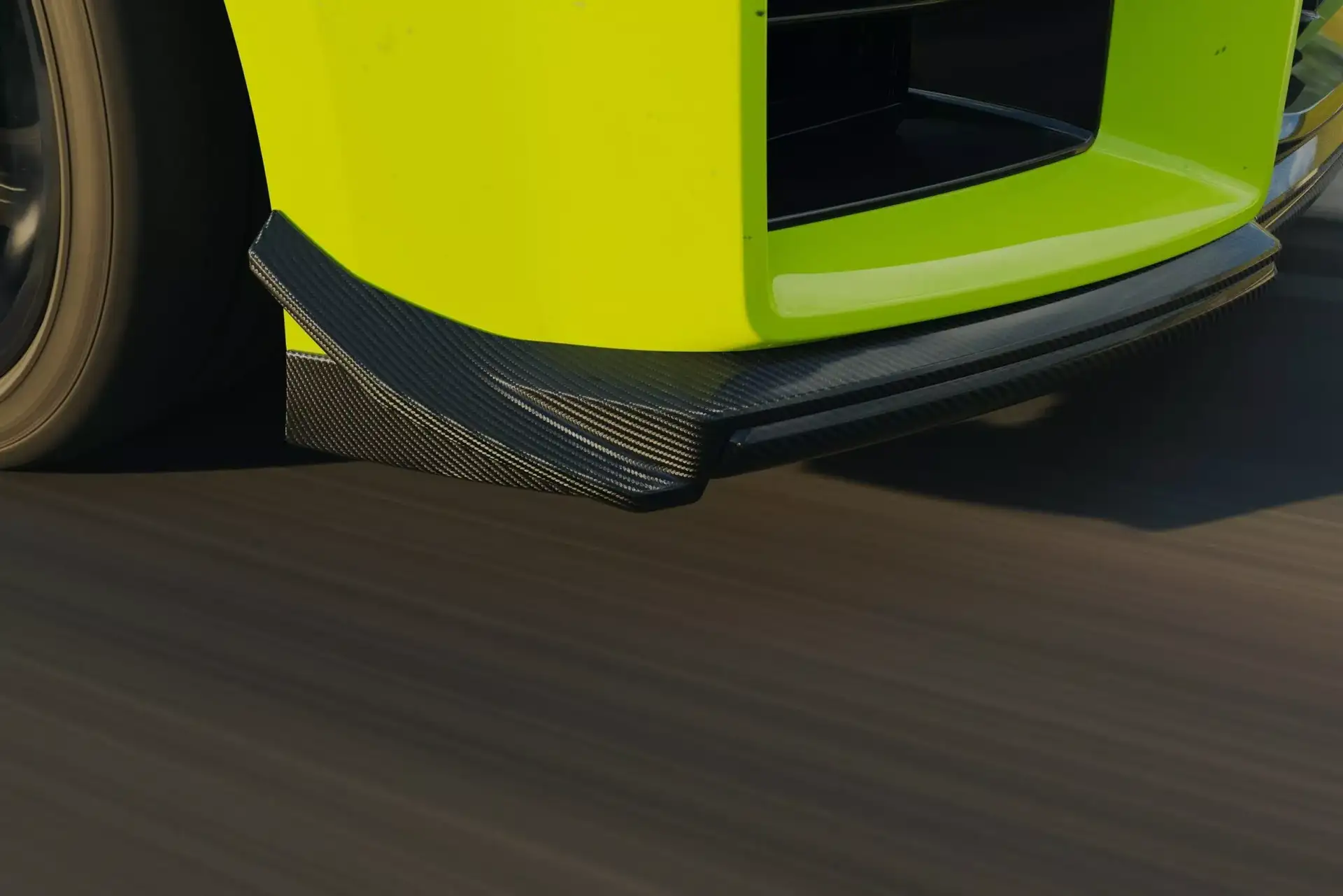
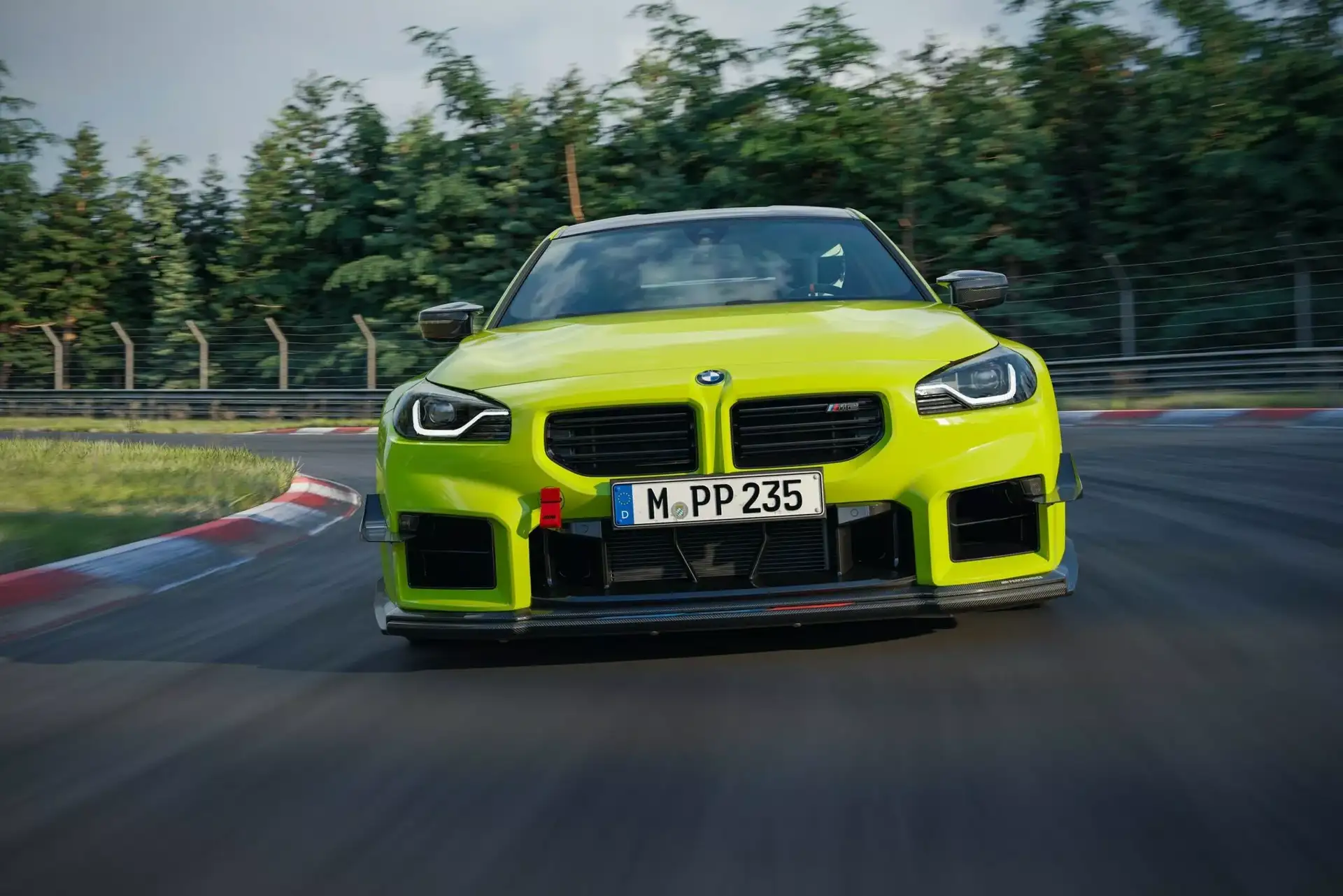
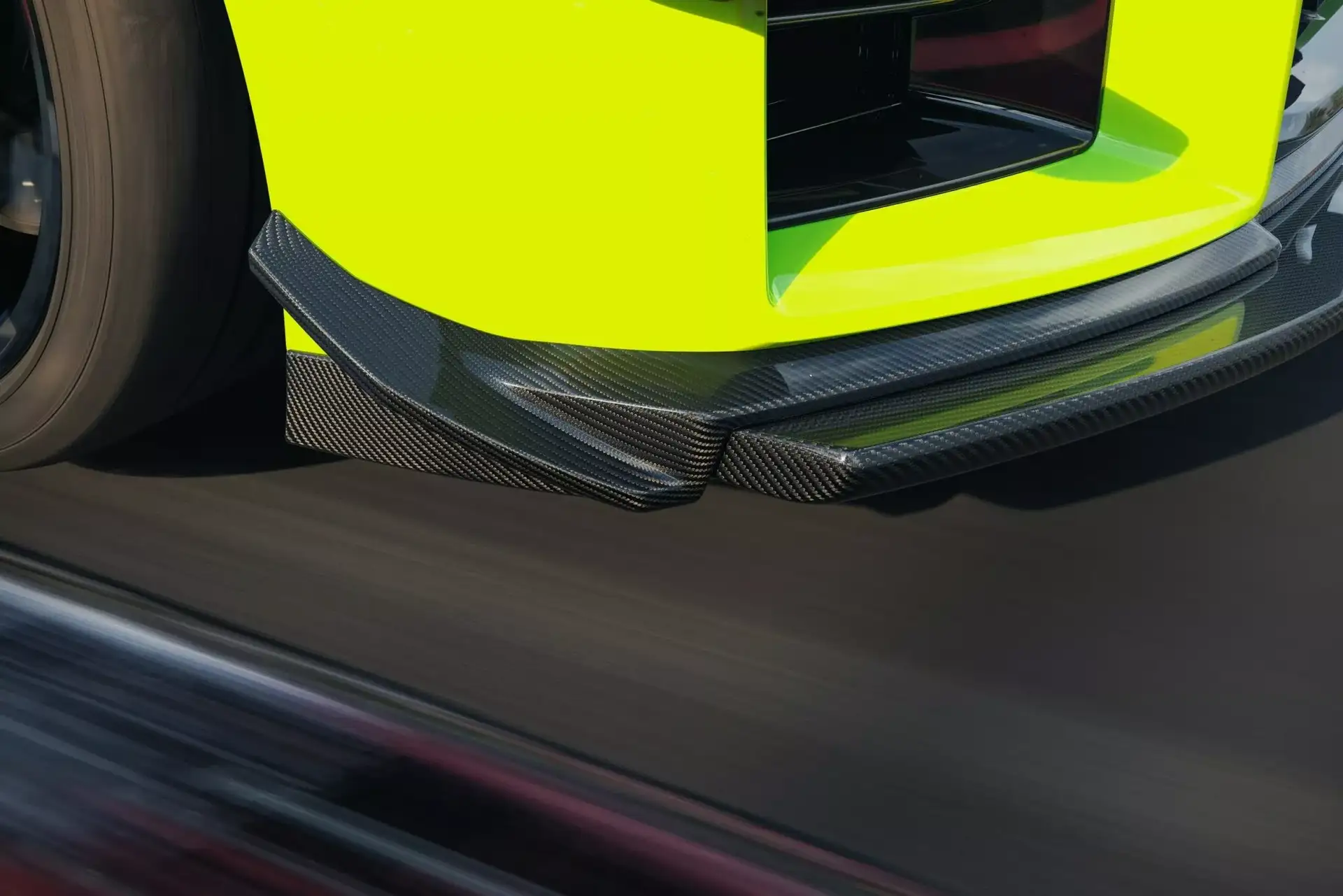
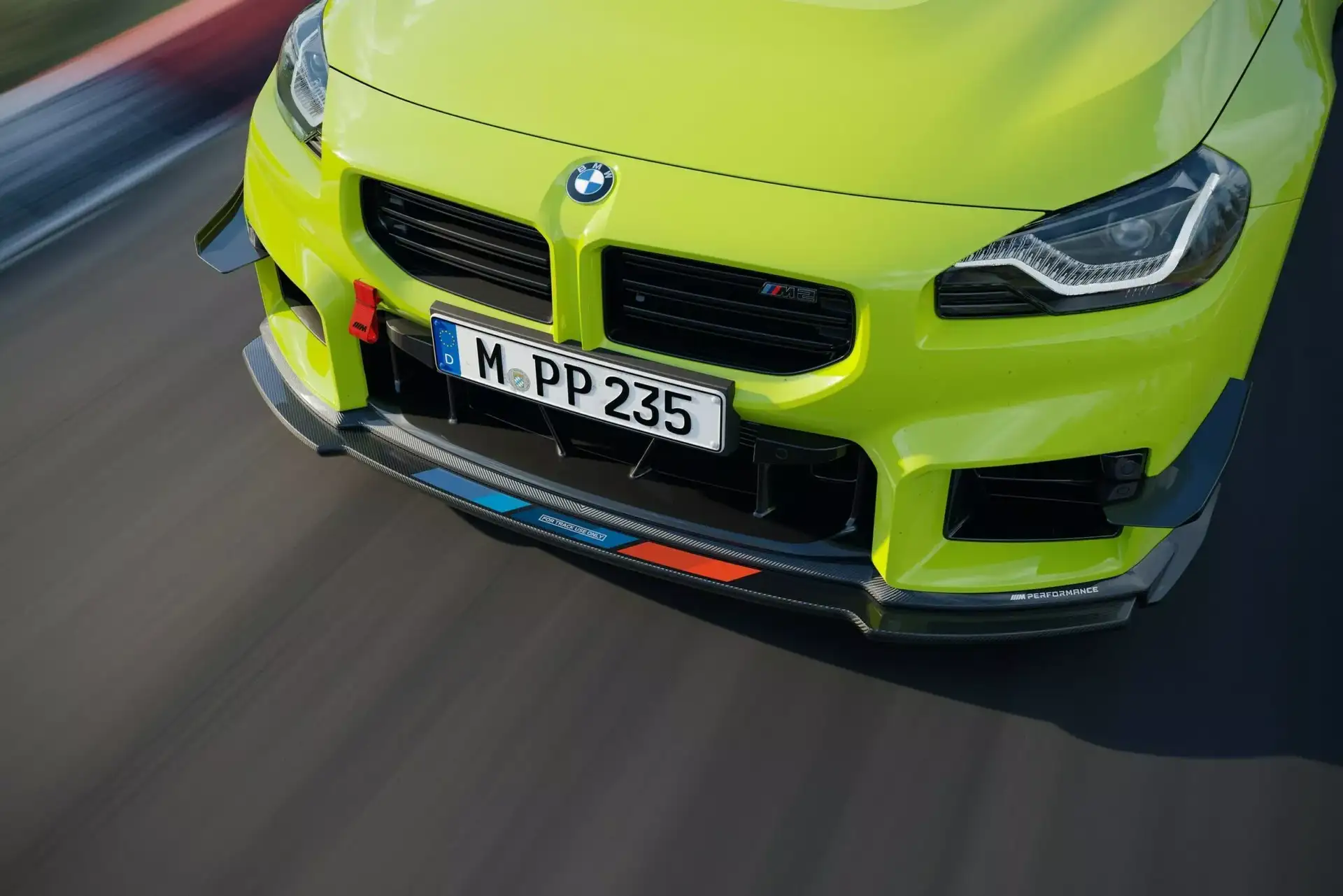
At the front, the Track Kit adds an adjustable splitter and components that work together with the rear. In a track car, it’s no use putting a wing at the back and leaving the front “light” at high speed, because you create a car that turns quickly but is unstable at the limit. BMW also includes elements like discreet canards and a diffuser to help with aerodynamic balance.
Additionally, there is provision for an additional intake focused on cooling, including support for the oil cooler demands, which is critical during long track day sessions when the temperature rises lap after lap.
The Upgrade That Cuts Time The Most Without Making Noise Adjustable Suspension
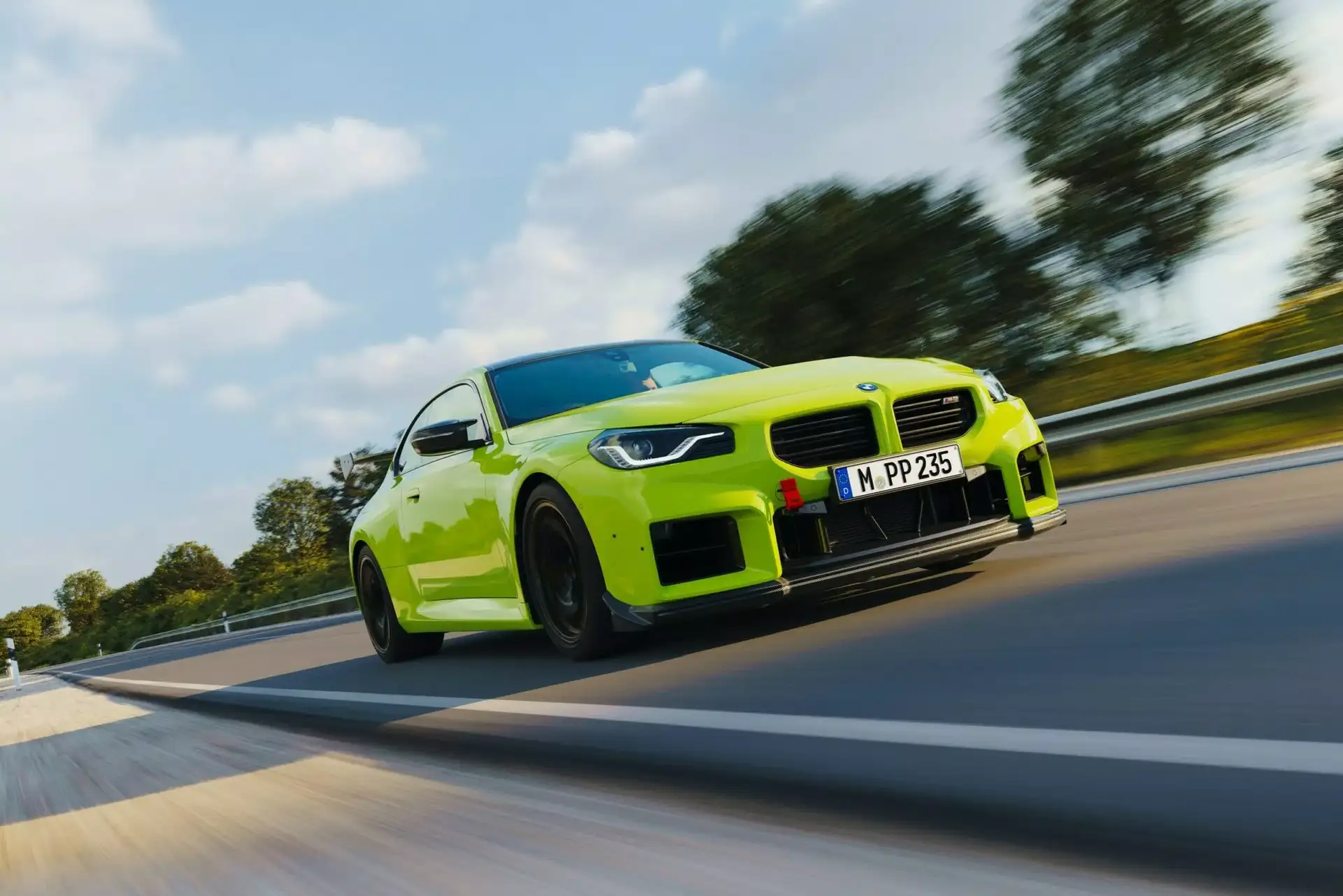
The most important point for those seeking consistency is the suspension. The Track Kit brings four-way adjustable coilovers, as well as adjustable top mounts. In practice, this allows tuning compression and rebound more precisely and adjusting geometry for the type of tire and track layout.
Another relevant fact is the possibility to vary the car’s height by up to 20 mm. On track, this serves to lower the center of gravity, reduce body roll, and adjust rake (car inclination), which directly influences how the floor and diffuser work.
If you like to dive into the technical detail of how wheels, unsprung mass, and material affect behavior and durability, this guide is a perfect complement to the topic Magnesium wheels vs forged aluminum for real-world use. In a track day M2, this becomes a decision of time and cost per lap.
Track Tires As An Option And The Detail That Changes The Car’s Feedback
The kit includes the possibility of fitting track-oriented tires (depending on the market and availability), and here comes a point that many people underestimate: stickier tires not only increase grip but also change the car’s balance, brake temperature, and how the suspension should be adjusted.
In other words, the Track Kit is not “a single part.” It is a package that only makes sense because the parts work together.
BMW M2 CS AND THE Lighter M Performance Exhaust The 8 kg Upgrade That Changes The Response
Besides the M2 package, BMW also focused attention on the BMW M2 CS, a more extreme and focused version, offering a lighter M Performance exhaust. The declared reduction is approximately 8 kg, a number that seems small until you remember that weight relief in specific areas of the car affects response and agility, especially during quick directional changes.
The exhaust can be configured with titanium or carbon fiber tips and tends to deliver a more prominent sound from the inline six twin-turbo. For those who take track days seriously, the real gain is not just noise: a better-built system can influence airflow, temperature, and durability under intense use, especially when the car spends long periods under high load.
If you enjoy this logic of a “seemingly simple upgrade that changes the whole experience,” there is an interesting parallel with motorcycles and approved exhausts. It’s worth checking out this content about Akrapovič titanium exhausts with weight reduction, because the mindset is the same: performance with engineering and legality.
Prices In Europe And The Question That Still Remains
In Europe, the Track Kit M Performance was announced at a price of € 23,500 (without installation). The M Performance exhaust for the M2 CS is priced starting at € 8,343 (also without installation). In direct conversion, this places the M2 package at a high investment level, closer to serious tuning than to an accessory.
The point that is stirring forums and groups is availability in other markets. BMW has not yet confirmed the offering of the Track Kit for some countries outside Europe, and this matters because the M2 has a global base of enthusiasts.
The Real Calculation For Those Who Want Lap Time And Not Just Looks
If you are thinking like an amateur (or semi) driver, the right question is not “expensive or cheap?”. It is:
- How much does it cost per second gained on your target track?
- How much does it cost per track day without headaches, no breakdowns, and no endless tuning?
- How much is it worth to have an integrated kit engineered by the factory, with parts designed to work together?
In other words, the Track Kit seems expensive until you compare it with the traditional route: buying aftermarket aero, testing, adjusting, redoing mounts, dealing with aerodynamic noise, and finding out in the end that the car became unbalanced at high speed.
Quick Table Of What The Kit Delivers
| Component | What changes in practice | Why it matters on track day |
|---|---|---|
| Adjustable swan-neck rear wing | More stability and rear downforce at high speed | Improves confidence in fast corners and corner exit |
| Front splitter and diffuser | Aerodynamic balance and a more “planted” front | Straighter braking, more predictable turn-in |
| Four-way adjustable coilovers | Fine damping adjustment | Consistency lap after lap and circuit adaptation |
| Adjustable top mounts | Geometry adjustment (e.g. camber) | Better tire usage and less degradation |
| Possible height adjustment up to 20 mm | Center of gravity and rake | More stable and aerodynamically efficient car |
For those who like to analyze trends and “how premium brands are selling performance with narrative,” there is a bigger context happening in the high-performance market. Content that relates to this, in a different category, is this one about the dilemma of the Mercedes-AMG S63 E Performance — power, technology, and the hidden cost of keeping everything under control.
In the end, the Track Kit M Performance places the BMW M2 in a rare zone: that of a car that can leave home, take on the road, arrive at the racetrack, and turn into a high-speed machine with real aero and suspension adjustments. And when a manufacturer decides to sell this level of ready-to-go tool, it’s saying without saying that the target audience isn’t the parking lot, but rather the curbs and the apex.