
BMW is making a serious move in hydrogen mobility, and the iX5 Hydrogen is now the clearest proof that fuel-cell tech is still evolving fast.
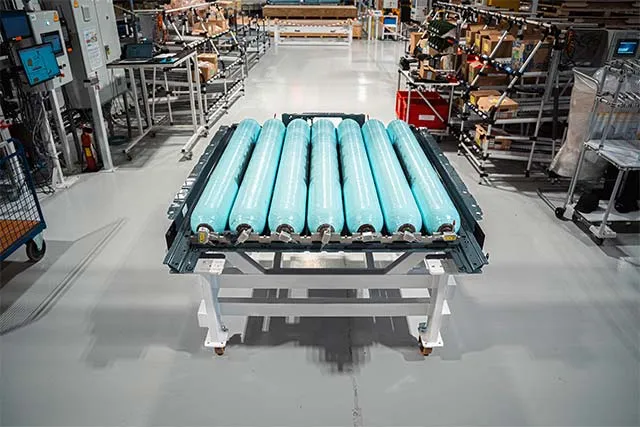
Flat Storage, Bigger Range
The headline upgrade is BMW’s new Hydrogen Flat Storage system, a packaging-focused solution that replaces bulky traditional tank layouts with a lower, flatter arrangement. Instead of relying on large cylindrical tanks, the system uses seven carbon-fibre reinforced high-pressure tanks integrated into a compact modular unit.
That matters because hydrogen vehicles have often been forced to trade range for space. BMW says this new layout can store at least seven kilograms of hydrogen while improving vehicle packaging efficiency. The result is a driving range of up to 750 km, or about 466 miles, which puts the iX5 Hydrogen much closer to the long-distance usability buyers expect from premium SUVs.
And unlike battery-only platforms that can take a long time to recharge, the refuelling advantage remains one of hydrogen’s strongest selling points. Here, the iX5 Hydrogen can be topped up in under five minutes, a time figure that still feels genuinely disruptive in today’s EV market.
Why BMW’s Engineering Approach Matters
The new storage system operates at 700 bar and is built into the vehicle structure for added mechanical protection. BMW has also filed multiple patents around the design, a sign that this is not just a concept exercise but a meaningful engineering step toward production scalability.
Another major benefit is compatibility with BMW’s Gen6 high-voltage battery. That integration allows the fuel-cell system and battery support to coexist without taking away passenger comfort or cargo practicality. In other words, BMW is trying to solve the real-world problem many alternative powertrains still face: impressive tech that ruins packaging.
For readers following the broader electrification race, BMW’s strategy feels refreshingly pragmatic. It is not chasing a single-powertrain future. It is preparing multiple solutions at once, much like other brands expanding their portfolios in different directions, from the bold MERCEDES-BENZ CLA-Class EV to the performance-heavy PORSCHE 911 TURBO S 711HP Híbrido.
A True BMW Driving Experience With Multi-Energy Flexibility
BMW is also making sure the iX5 Hydrogen still feels like a BMW, not just a science project. The model uses fuel-cell technology alongside a high-voltage battery and benefits from drivetrain software such as Heart of Joy and BMW Dynamic Performance Control. That combination is intended to preserve responsiveness, balance, and the brand’s familiar driving character.
Just as important, the company’s flexible production strategy means the same X5 assembly line can support several powertrains, including battery-electric, plug-in hybrid, combustion, and hydrogen fuel-cell versions. Standardized component geometry should reduce complexity and help BMW scale hydrogen more efficiently if demand grows.
This approach fits BMW’s broader technology-neutral philosophy. Hydrogen may not replace battery-electric cars, but it can absolutely serve as a strategic complement, especially for drivers who want long range, fast refuelling, and less dependence on charging infrastructure. That is the same kind of multi-path thinking seen across the industry, from the efficient BYD Seal 06 family to the range-focused MG4 Urban.
Bottom line: the BMW iX5 Hydrogen’s new flat tank technology is more than a packaging trick. It is a serious step toward making hydrogen SUVs practical, efficient, and easier to manufacture at scale.