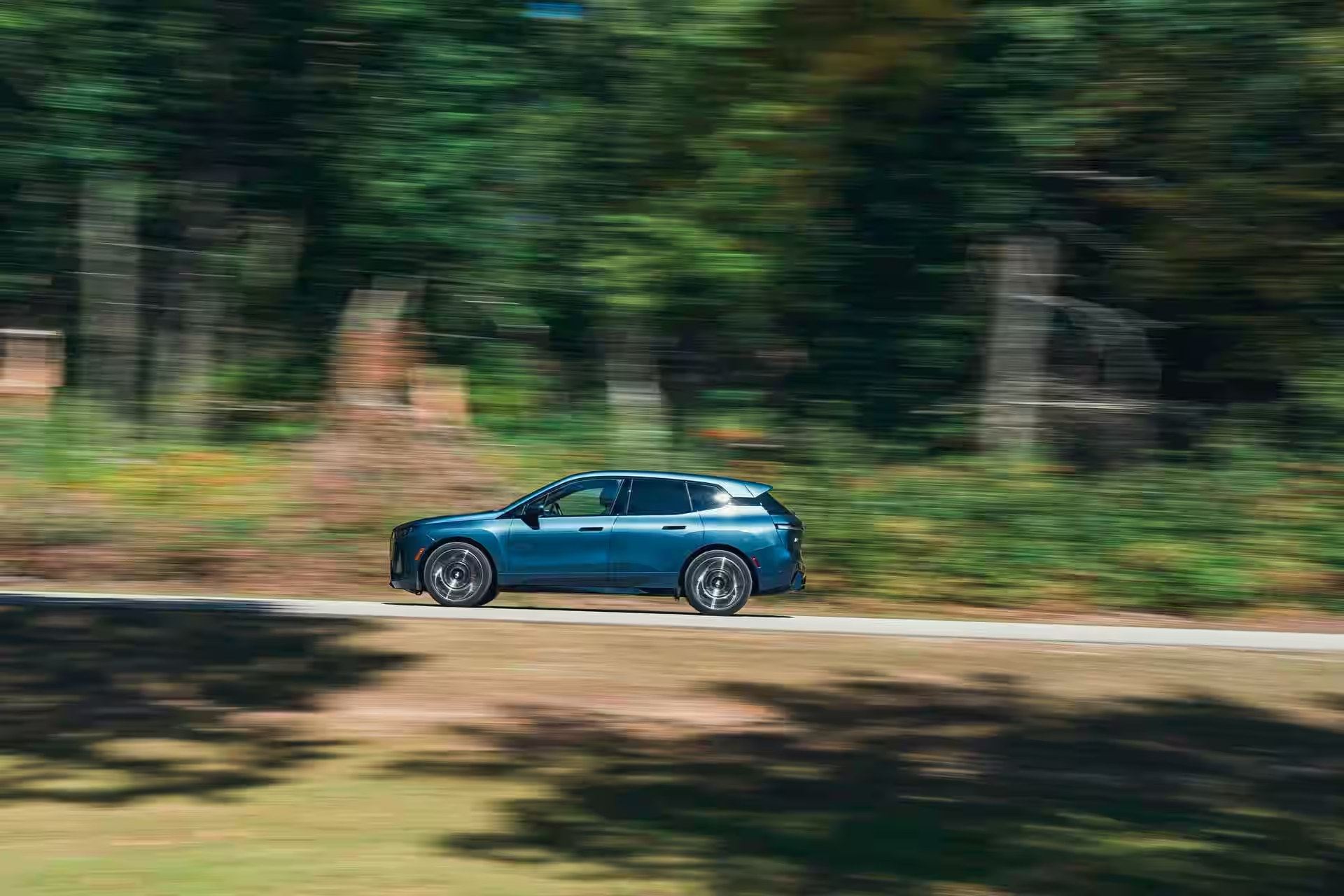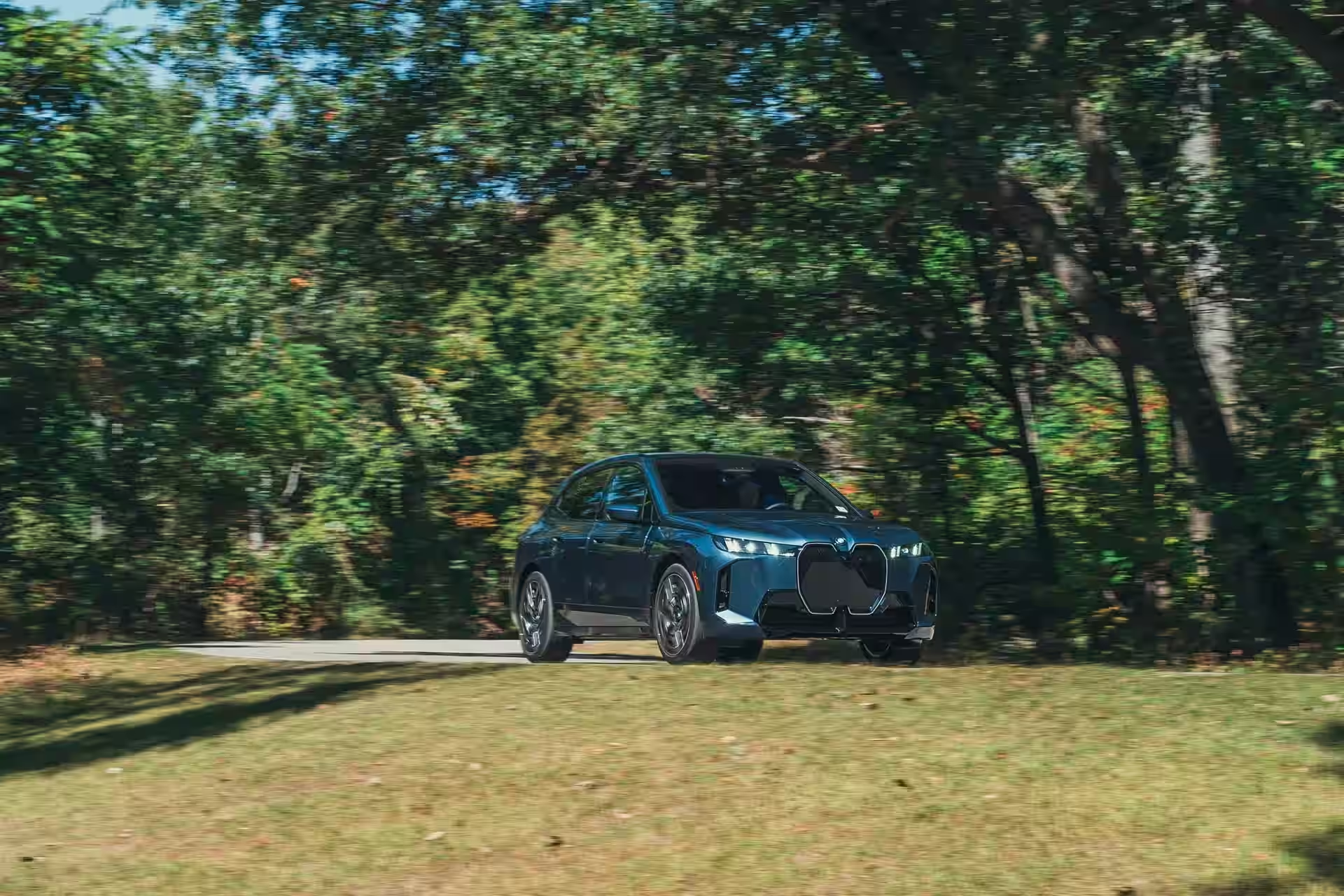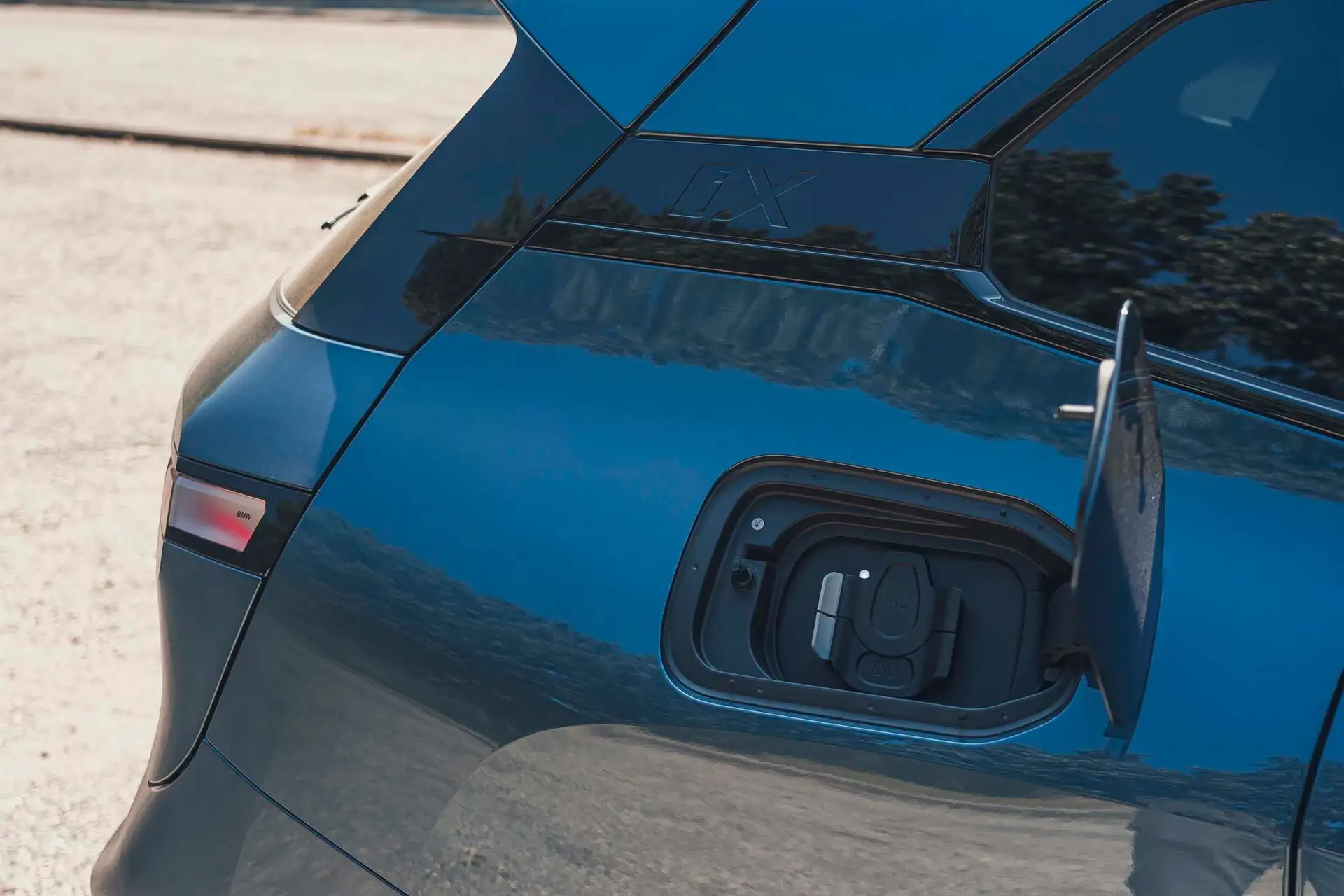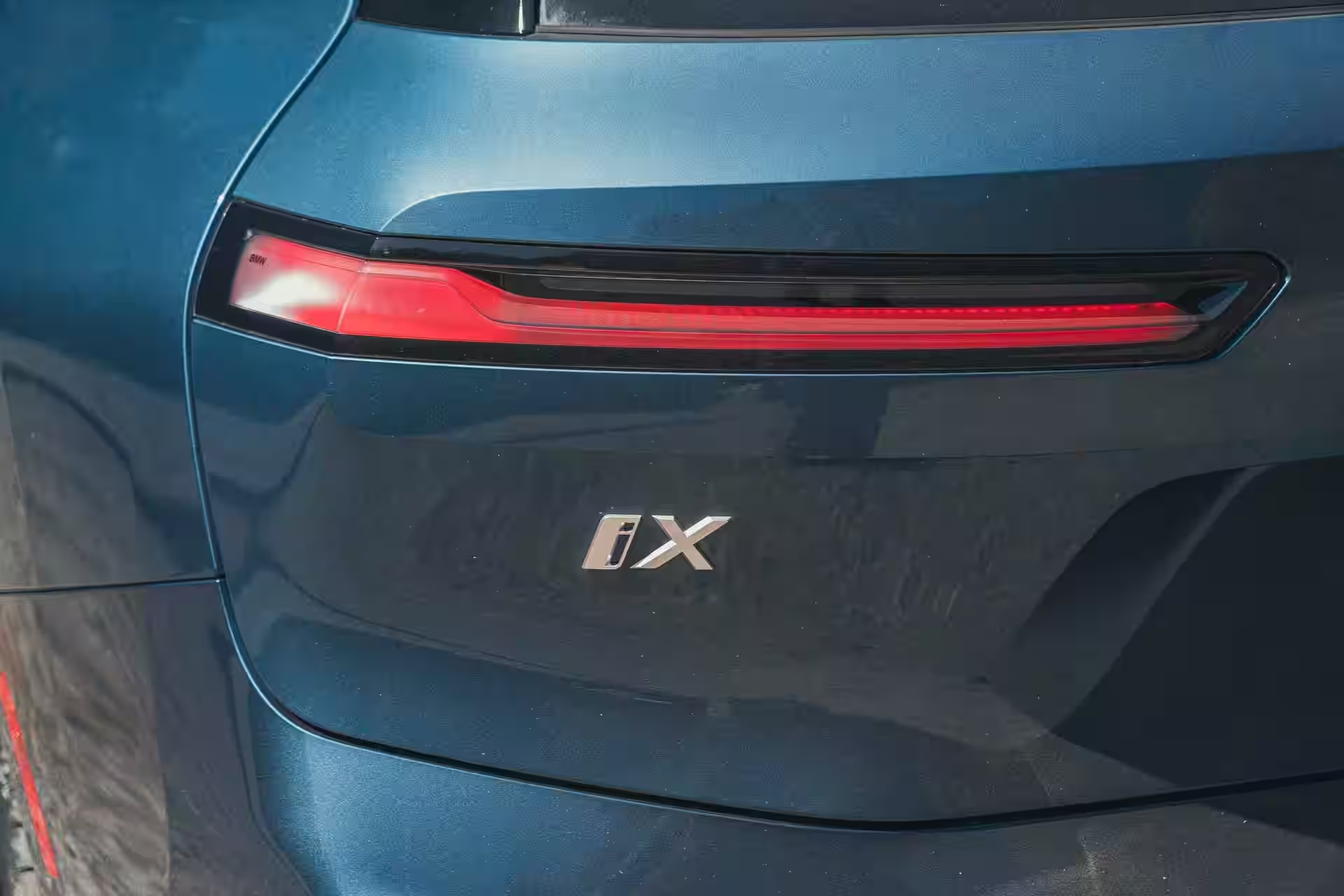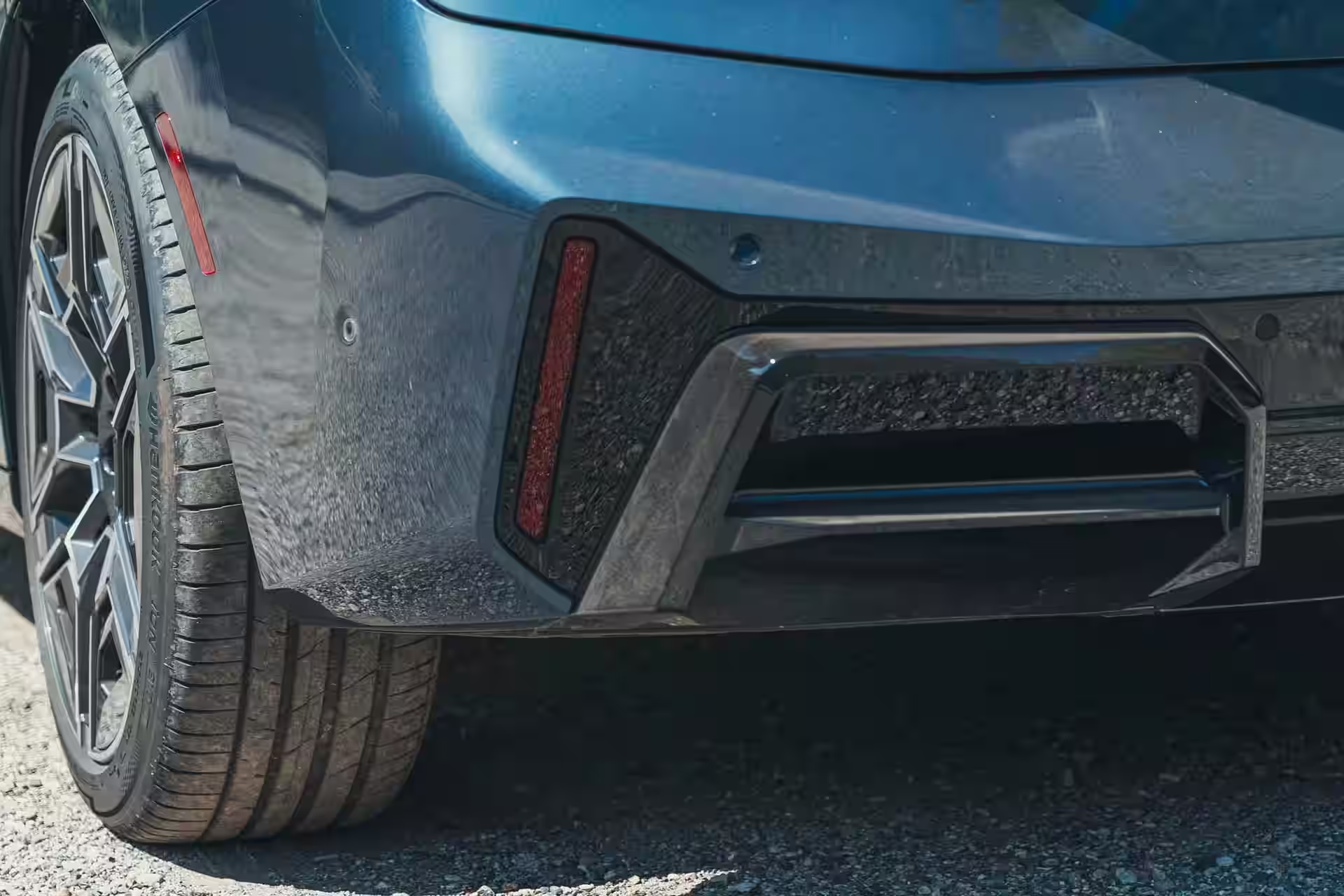
BMW IX 2026 challenges the electric vehicle crisis with more power and a reduced price. Discover how the German brand outperformed its rivals.
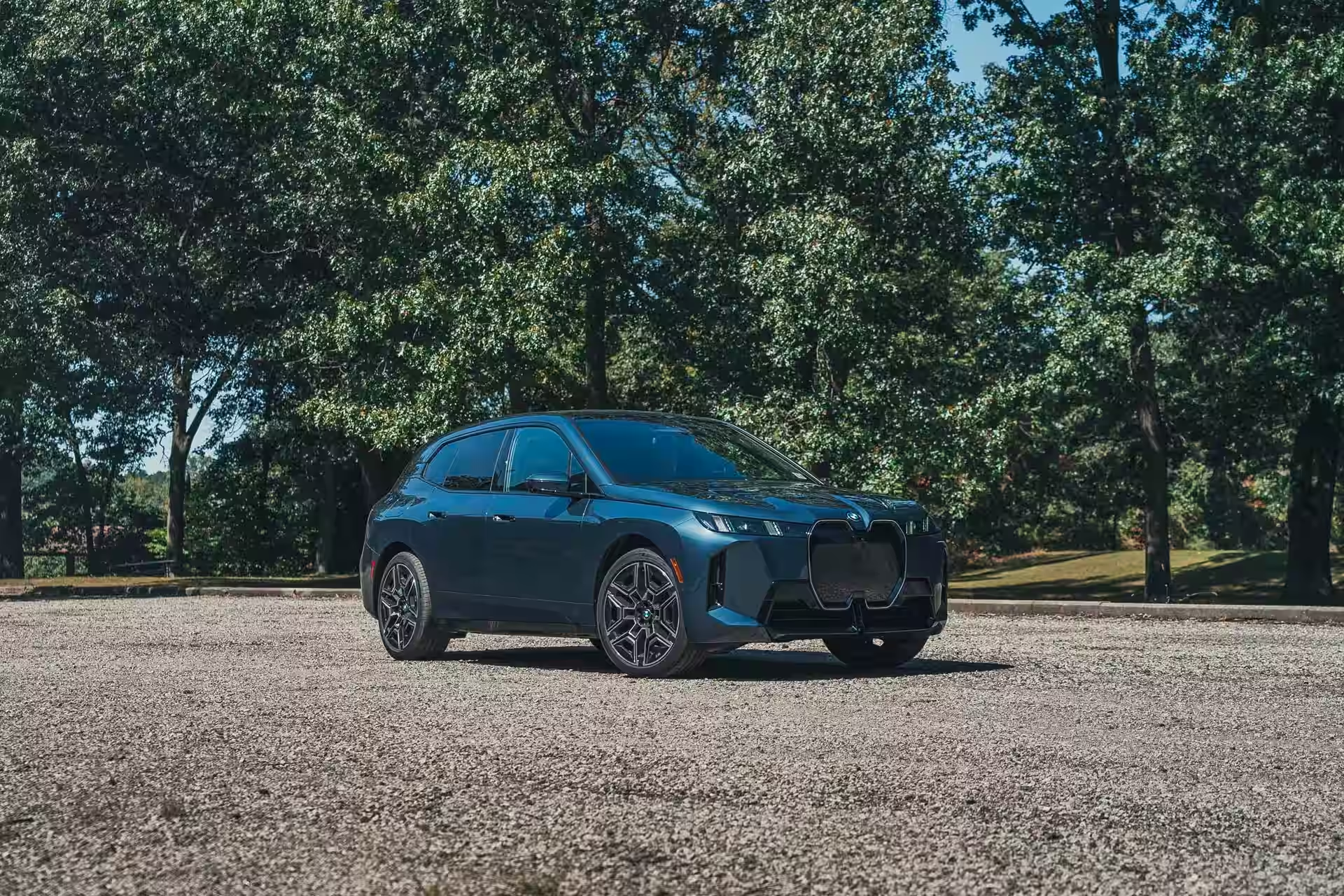
The luxury electric vehicle market is going through a perfect storm. With EV adoption slowing unexpectedly and trade tariffs creating an uncertain scenario, traditional automakers need to act fast. BMW, however, decided not only to react but to strike back with an aggressive strategy for the 2026 model year. The new BMW iX arrives with a proposition that seems contradictory at first glance: more power, greater range, and, surprisingly, a significantly lower starting price.
While the competition struggles to justify exorbitant prices in a saturated market, Bavaria adjusted the dials both up and down simultaneously. The introduction of the entry-level xDrive45 breaks the $80,000 barrier, bringing the brand’s flagship electric SUV to a more accessible level without sacrificing the driving essence that established the model as editors’ choice. But does the savings on the starting price hide cuts in quality or, as instrumented tests suggest, has German engineering found a more efficient path? The answer lies in the details that separate a common electric car from a precision machine.
The Lineup Expansion: More Options, Lower Entry Barrier
The most immediate and impactful change for the consumer is the restructuring of the iX lineup. Previously limited to two versions, the 2026 line expands to three distinct models, creating a more gradual performance and price ladder. The big news is the arrival of the BMW iX xDrive45, which assumes the entry-level position. With a starting price of $76,325, this version represents a reduction of over $12,000 compared to the previous starting point, a bold move in a segment where prices only tended to rise.
Above the new entry model, BMW applies a slight “naming inflation” to align the rest of the family. The old xDrive50 gives way to the xDrive60, while the top-of-the-line M60 evolves into the M70 xDrive. This renaming is not just cosmetic; it signals a substantial power increase across the lineup. The xDrive60 now delivers 536 horsepower, a gain of 20 hp over the previous model, while the M70 reaches an impressive 650 hp, beating the former M60 by 40 horsepower.
Despite the reduction in entry price, it is crucial to note that the iX remains a high-cost proposition. The prices mentioned are just the base, and options can drastically raise the final bill. In tests conducted, the xDrive45 and xDrive60 units carried about $20,000 in extras, while the tested M70 saw its final price inflated by $10,000 in options. Even so, the strategy to lower the entry door is clear: to attract more buyers into BMW’s electric ecosystem at a critical moment.
Performance: The Illusion of Numbers and the Reality of the Track
With the arrival of the xDrive45, the top power of the line starts at 402 hp. Although it is the “least powerful” of the family, instrumented tests reveal that it is far from anemic. The heavy 5,275-pound SUV accelerates from 0 to 60 mph (0 to 96 km/h) in just 4.6 seconds. In suburban traffic or highway mergers, the response is immediate and vigorous, proving that BMW has calibrated the torque delivery to maximize the feeling of agility, regardless of raw power.
In the upper models, BMW states that the xDrive60 will reach 60 mph in 4.4 seconds and the M70 in 3.6 seconds. However, there is a strong suspicion the brand is being conservative in its official estimates. Previous tests with less powerful models (the 516 hp xDrive50 and the 610 hp M60) had already recorded times of 4.0 and 3.2 seconds, respectively. It is highly likely that the new versions, with their updated motors, will surpass these numbers, delivering acceleration that widens the eyes and demands passengers hold on tight.
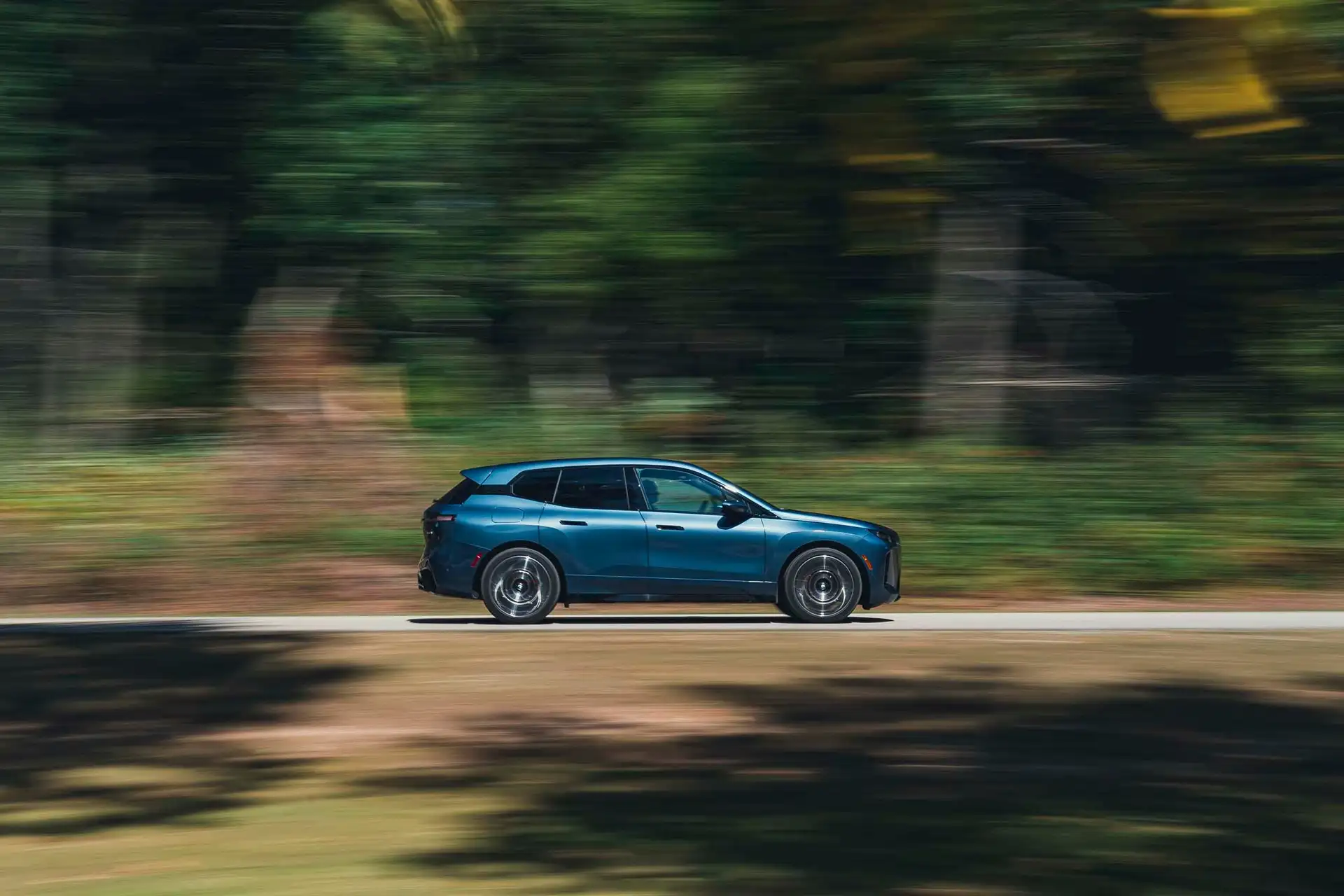
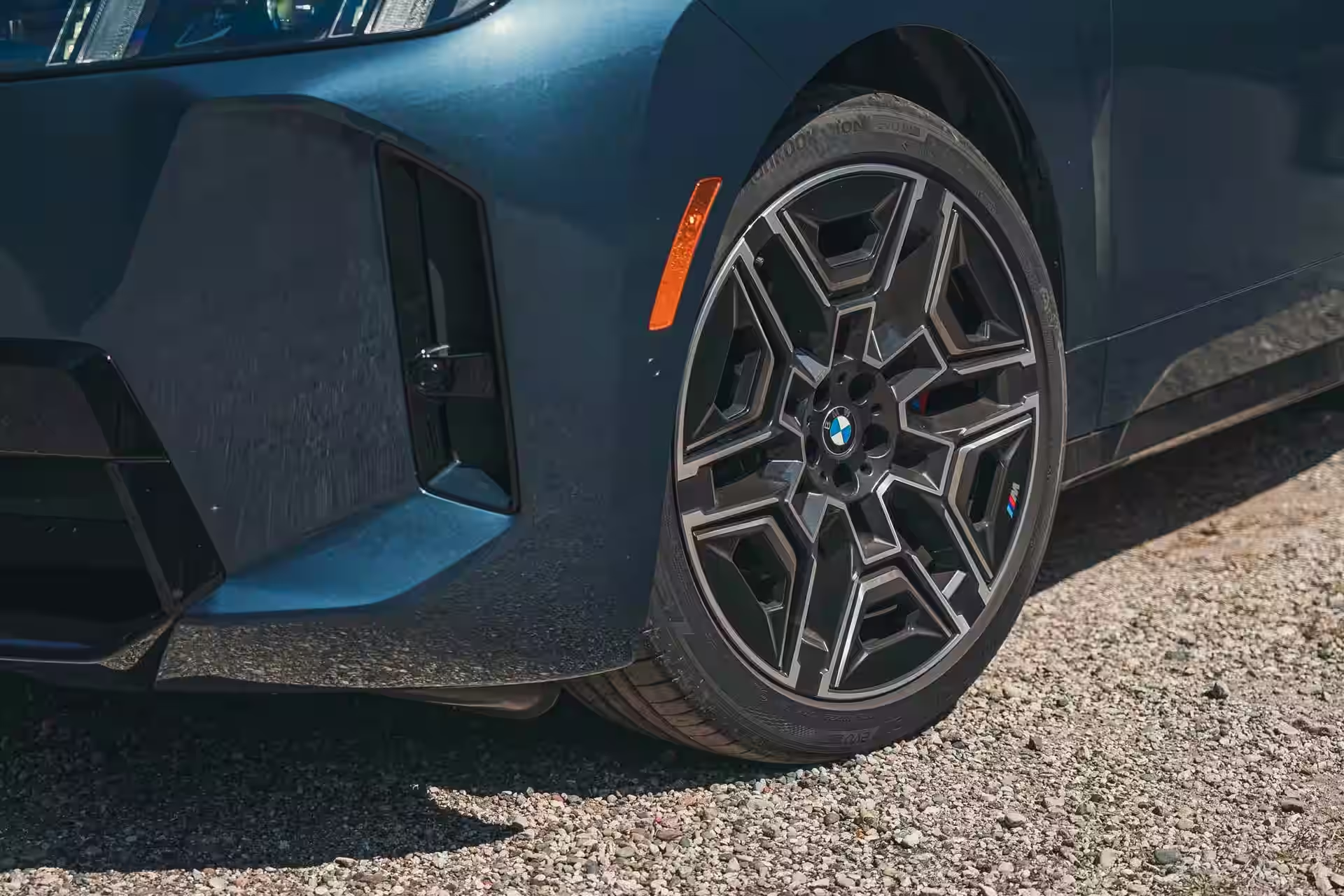
More important than straight-line acceleration is the chassis’s ability to handle this power. Unlike many EVs that offer dizzying acceleration but lack dynamic refinement, the iX shines in driving. Even the M70, with its specific suspension and adjusted stabilizer bars, does not behave like a stiff-legged “boy racer.” All tested models were equipped with four-wheel air suspension and adaptive dampers. The result is a remarkable ability to absorb road imperfections, transmitting zero harshness to the cabin, even with massive 22 or 23-inch wheels.
For those seeking the pinnacle of driving technology, the Professional Driving Assistance package offers semi-autonomous driving on highways up to 85 mph. The system suggests lane changes and executes them with the driver’s confirmation, either through the turn signal or a glance at the side mirror. In all situations, acoustic insulation is exemplary, measuring only 65 decibels at 70 mph, a noise level comparable to the luxurious combustion-engine BMW 760i. This pursuit of refinement recalls the philosophy of rivals like the Porsche Cayenne S Electric 2026, which also prioritizes the polished driving experience over pure brutality.
Range And Efficiency: The Real Game Changer
In a world where range anxiety is still a real barrier, BMW focused on efficiency for the 2026 model. Preliminary numbers show consistent improvement across the lineup, allowing all three models to surpass the psychological and practical EPA range barrier of 300 miles (approximately 482 km). The M70 reaches 303 miles, the xDrive45 hits 312 miles, and the xDrive60 leads with a promise of 364 miles.
These gains aren’t magic but the result of precision engineering. BMW credits the efficiency increase to more modern inverters that use silicon carbide (SiC) technology instead of conventional silicon. Additionally, revised wheel bearings and lower rolling resistance tires help extend every stored kilowatt-hour. While EPA numbers are competitive against Audi, Cadillac, and Mercedes, they still lag behind long-range leaders like the Rivian R1S and Lucid Gravity, which exceed 400 miles.
However, the story changes when we look at the real world. Highway tests at 75 mph (120 km/h) have historically shown that Rivian and Lucid vehicles can fall 20% or more below their EPA ratings. BMW, on the other hand, has a track record of excellence in real-world range tests. The new xDrive45, for example, traveled 290 miles on the highway test, surpassing its own EPA rating of 279 miles. This consistency between estimated and actual range is a valuable asset for consumers planning long trips.
Regarding charging, the iX maintains maximum rates of 195 kW for the upper models and 175 kW for the entry-level version. Although these aren’t the most spectacular numbers on the market — the Rivian R1S charges at 220 kW and the Lucid Gravity can absorb up to 400 kW — the rate is sufficient for practical travel. For home charging (Level 2), all models come with an 11 kW onboard charger, the industry standard. Battery evolution is an ongoing battleground, and while BMW bets on system efficiency, competitors like BYD are revolutionizing the market with technologies such as the 2nd Generation Blade Battery, which promises jumps in range with record charging times.
Design And Interior: An Avant-Garde Technology Bubble
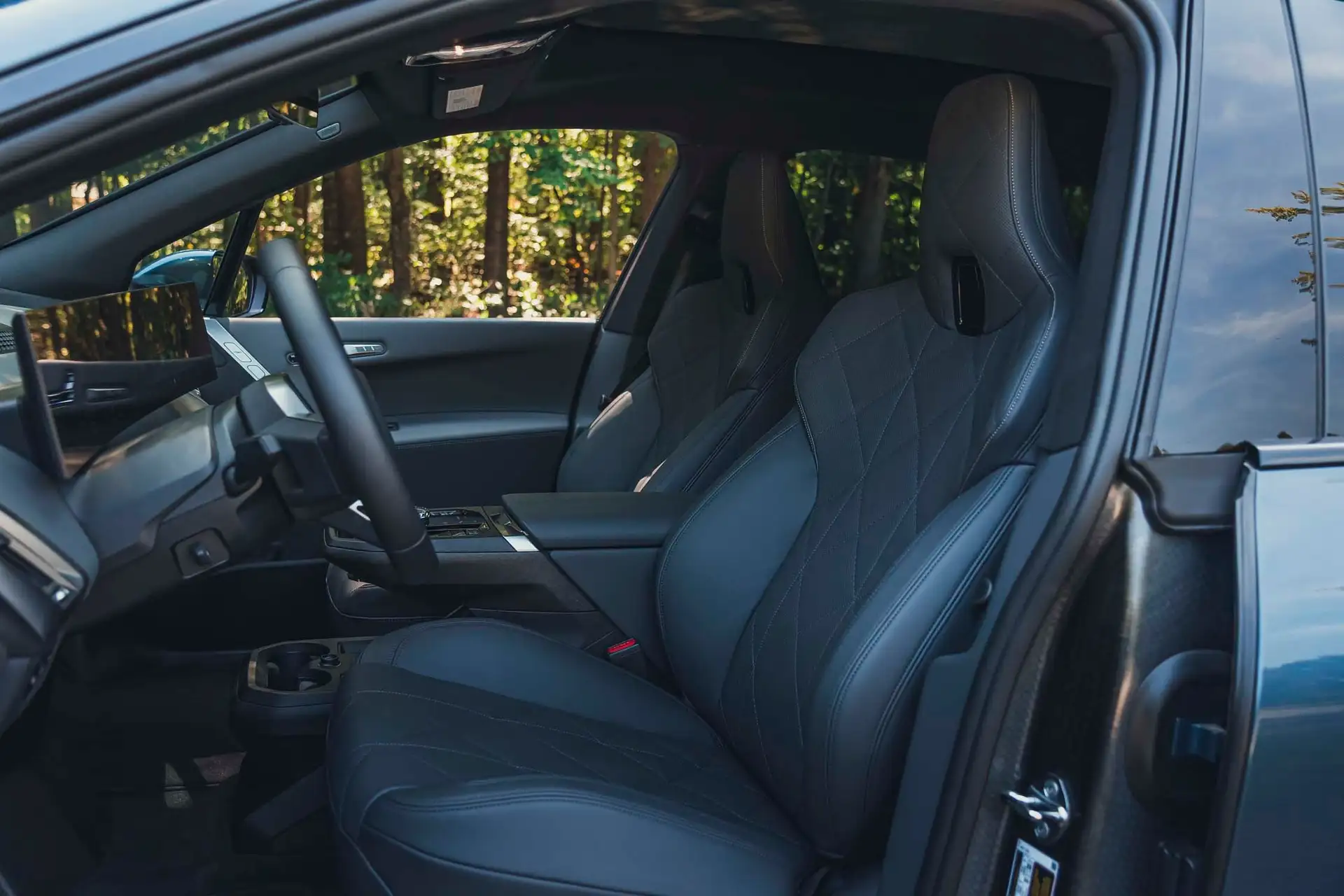
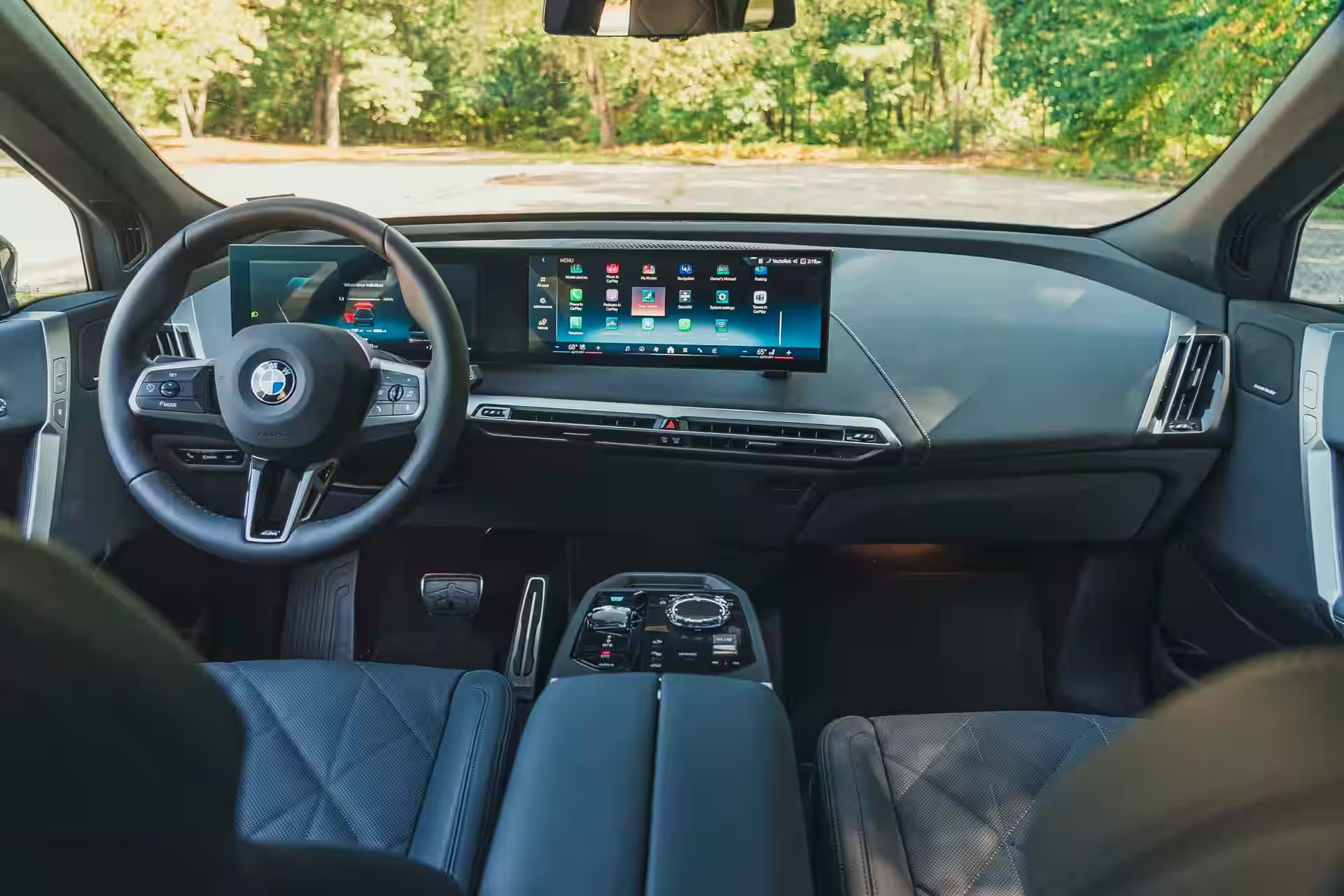
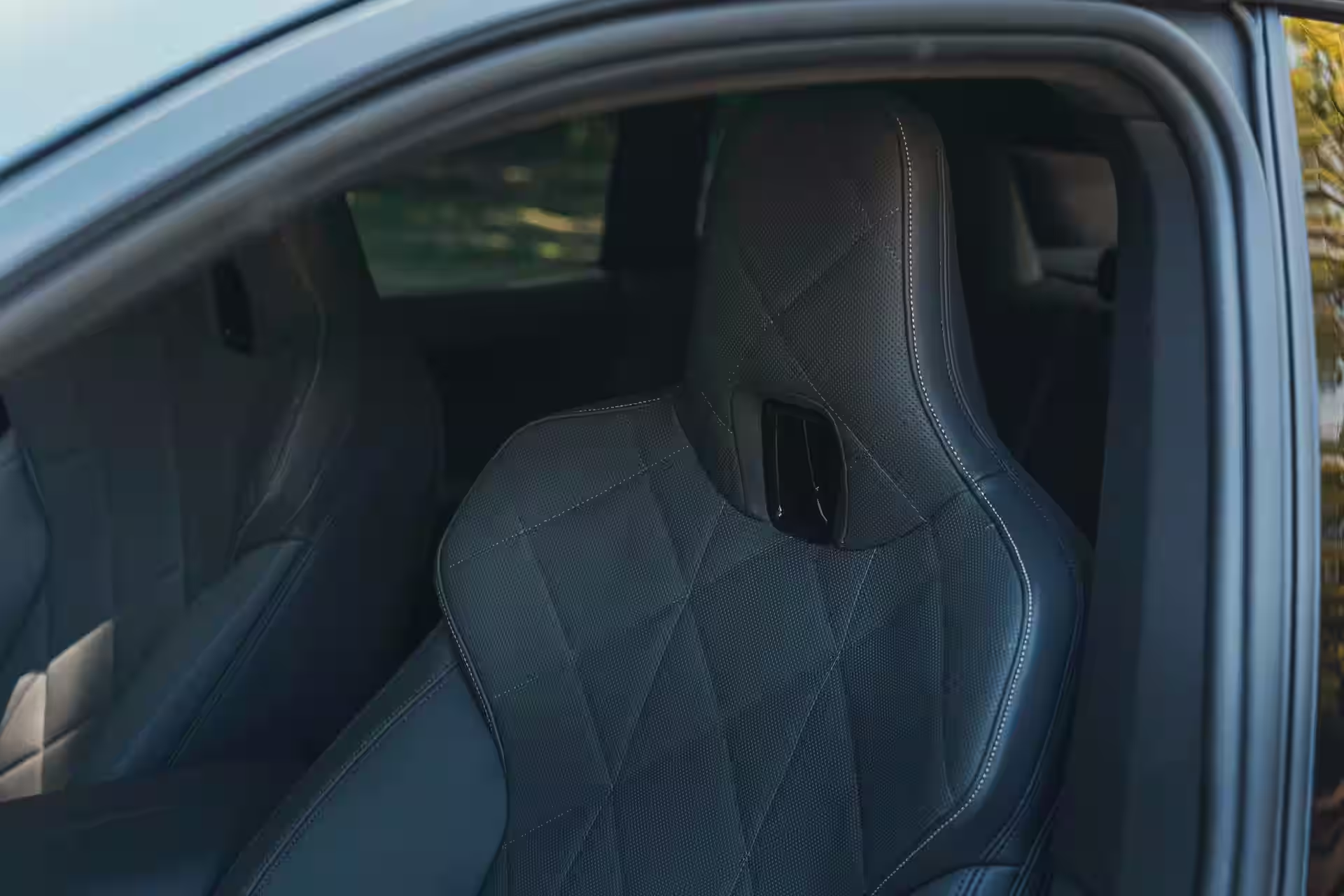
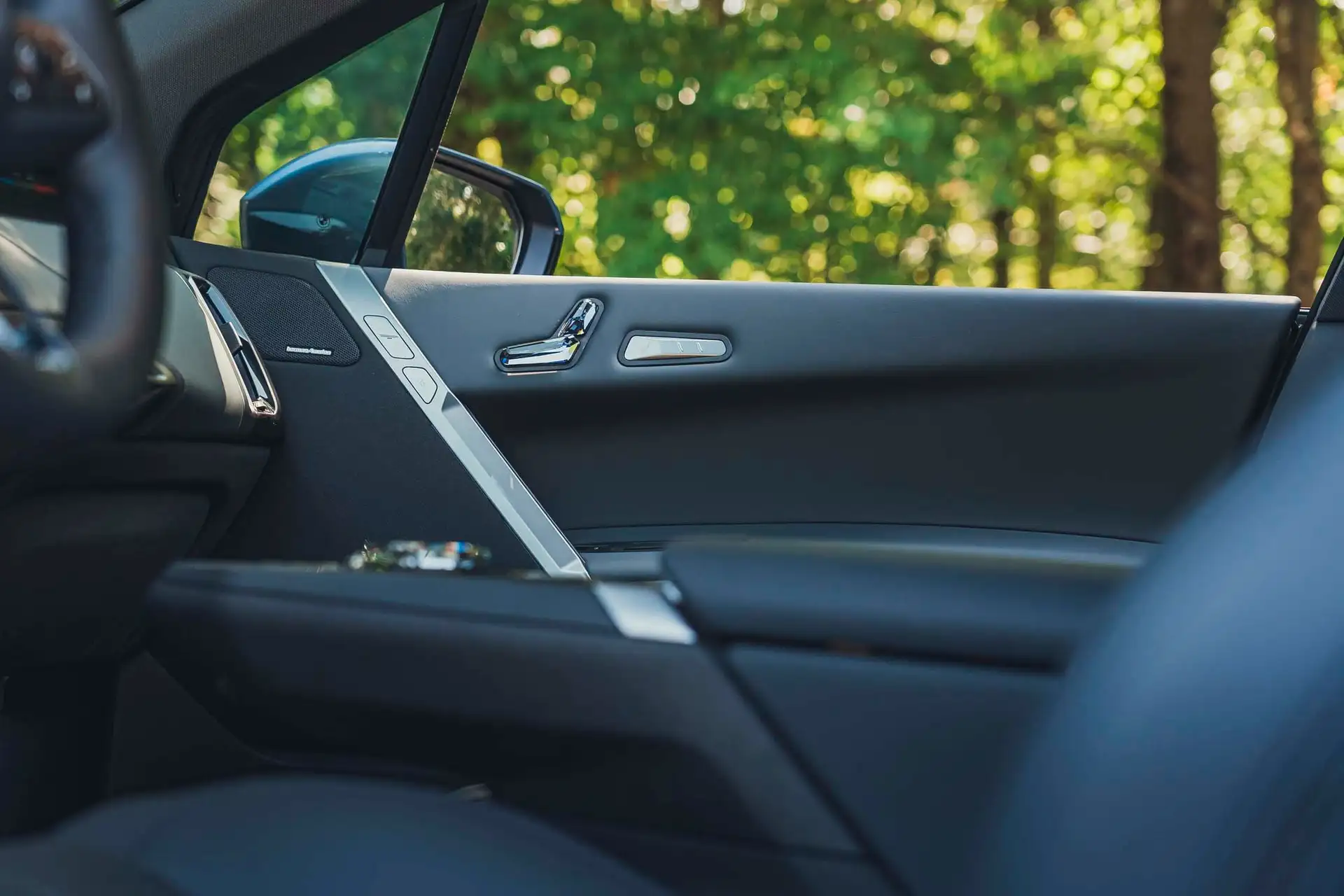
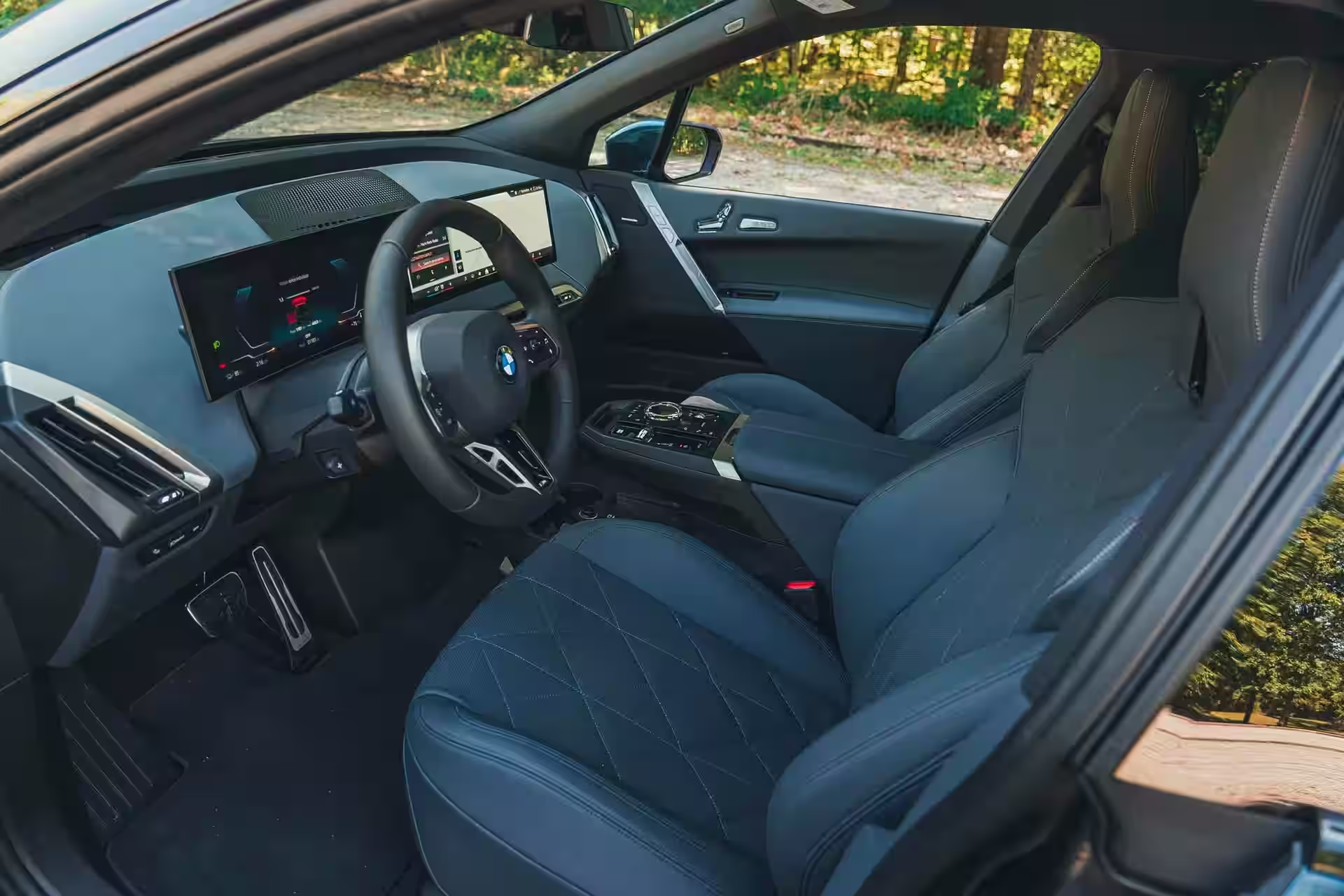
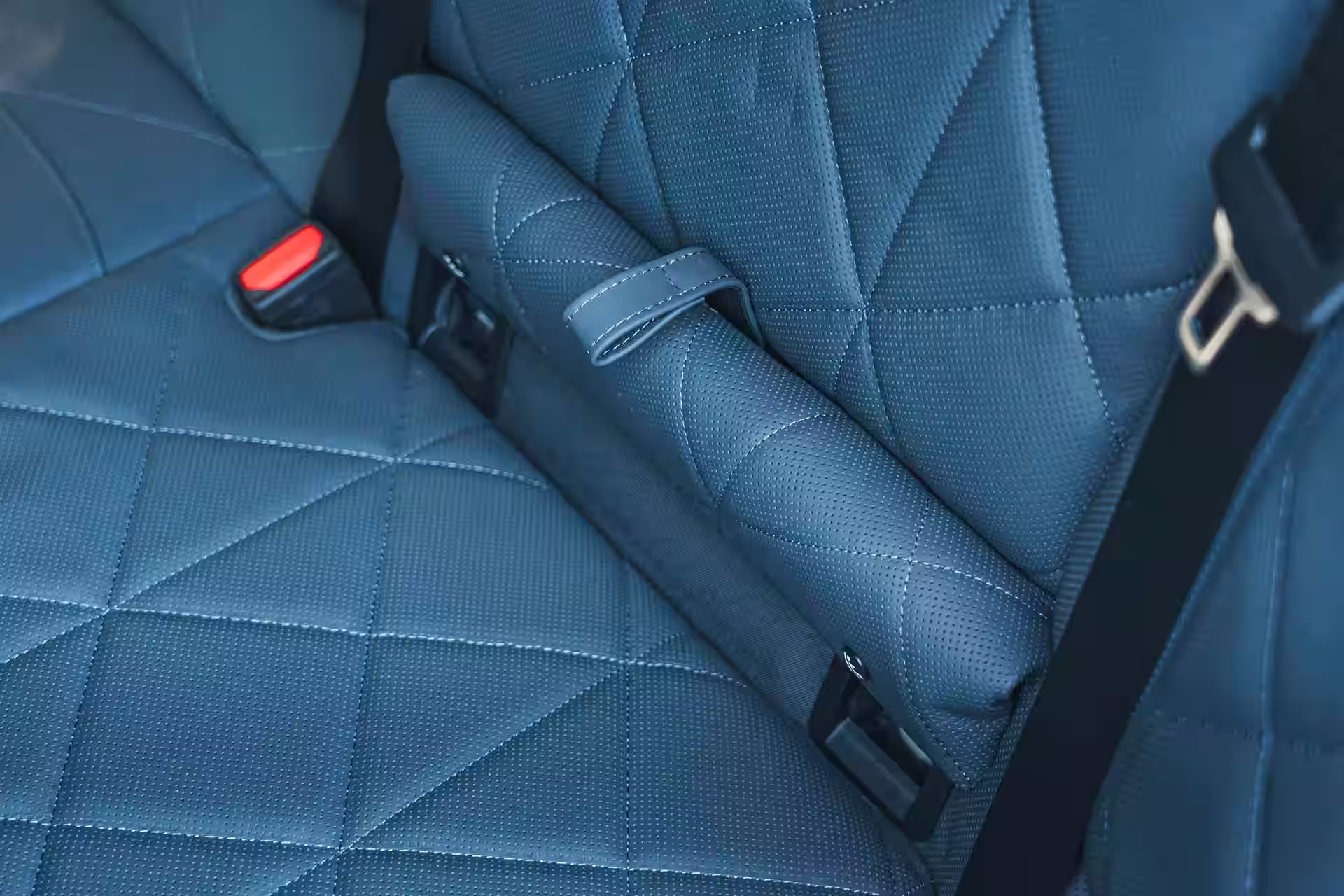
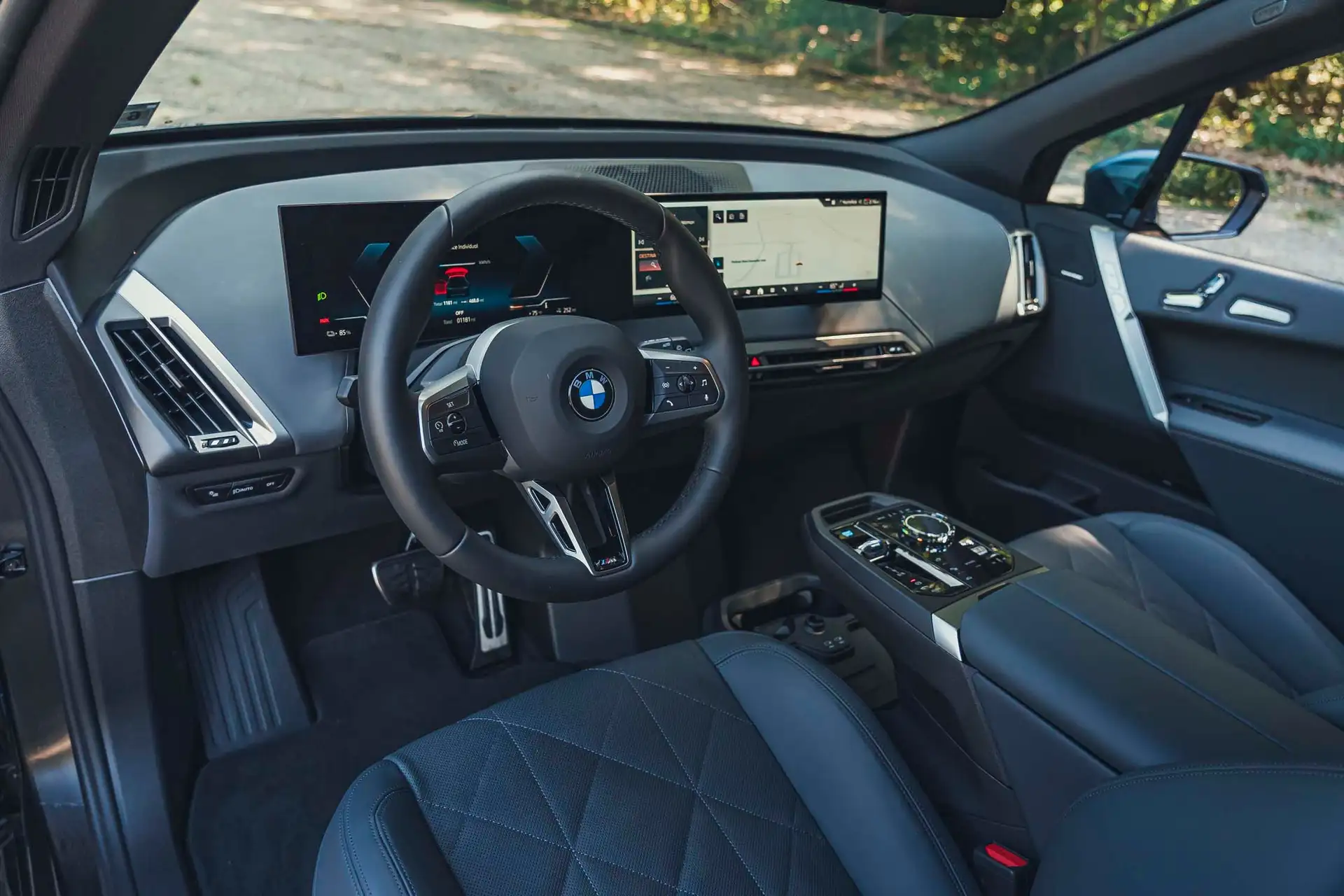
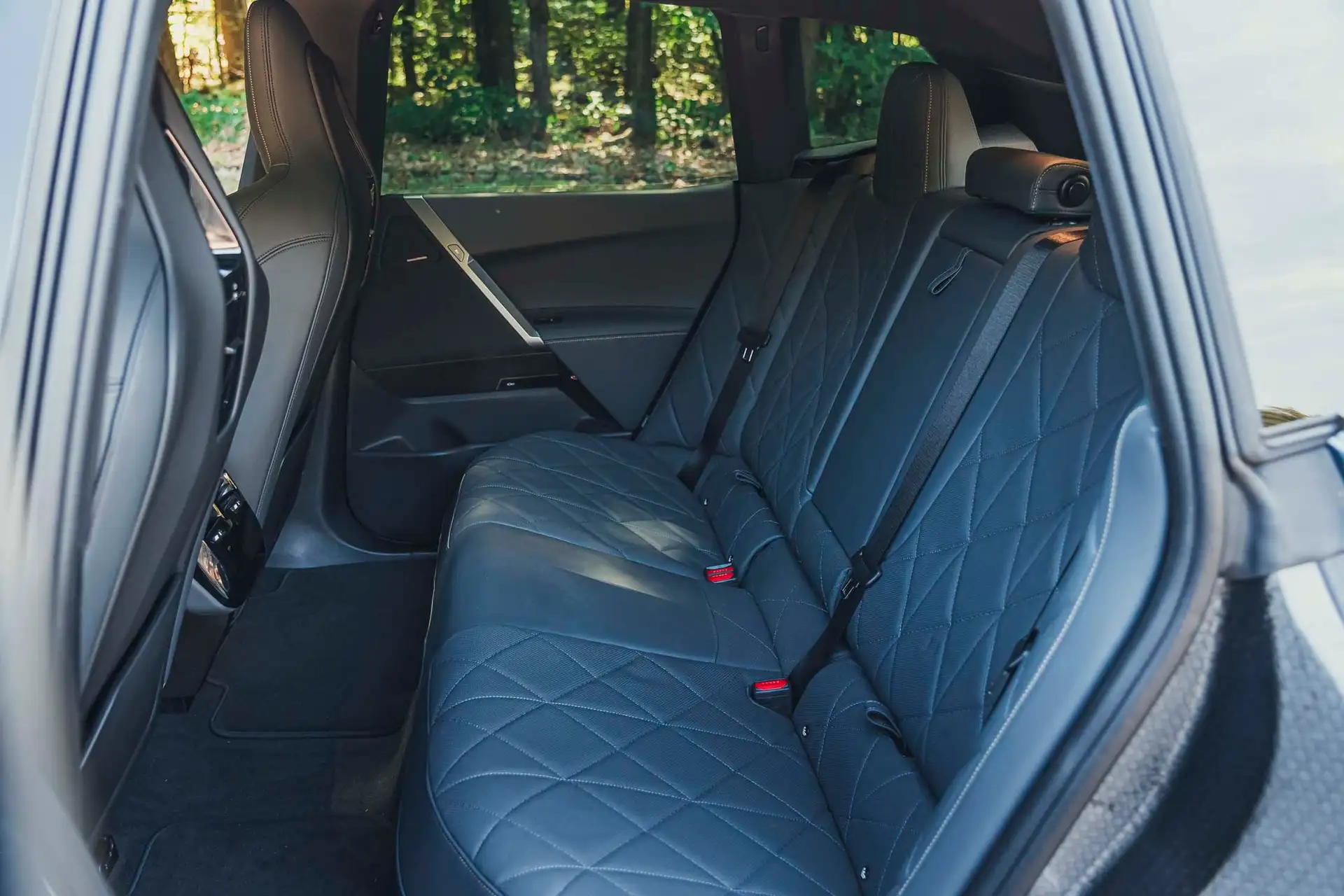
The iX interior remains one of its strongest points, offering a cabin that seems imported from the future. For 2026, changes are subtle but significant for comfort. The big news is the new M Multifunction seat, which offers additional adjustments, including backrest width. This item is standard on the M70 and part of the M Sport package on the lower models. It comes accompanied by a three-spoke round steering wheel, replacing the hexagonal two-spoke unit from the base models, giving a sportier touch to the cockpit.
Sustainability remains at the heart of material choices. Synthetic leather and microfiber are standard, while genuine leather is an extra cost. An intriguing and more accessible option is the wool and microfiber combination, which offers a premium and ethical touch. Thermal comfort has been taken to another level: in addition to heated seats and steering wheel, the iX now features heating elements in the door panels, central armrest, instrument panel, and even the glove compartment. The panoramic glass roof with electrochromic shading completes the feeling of being in a flying lounge.
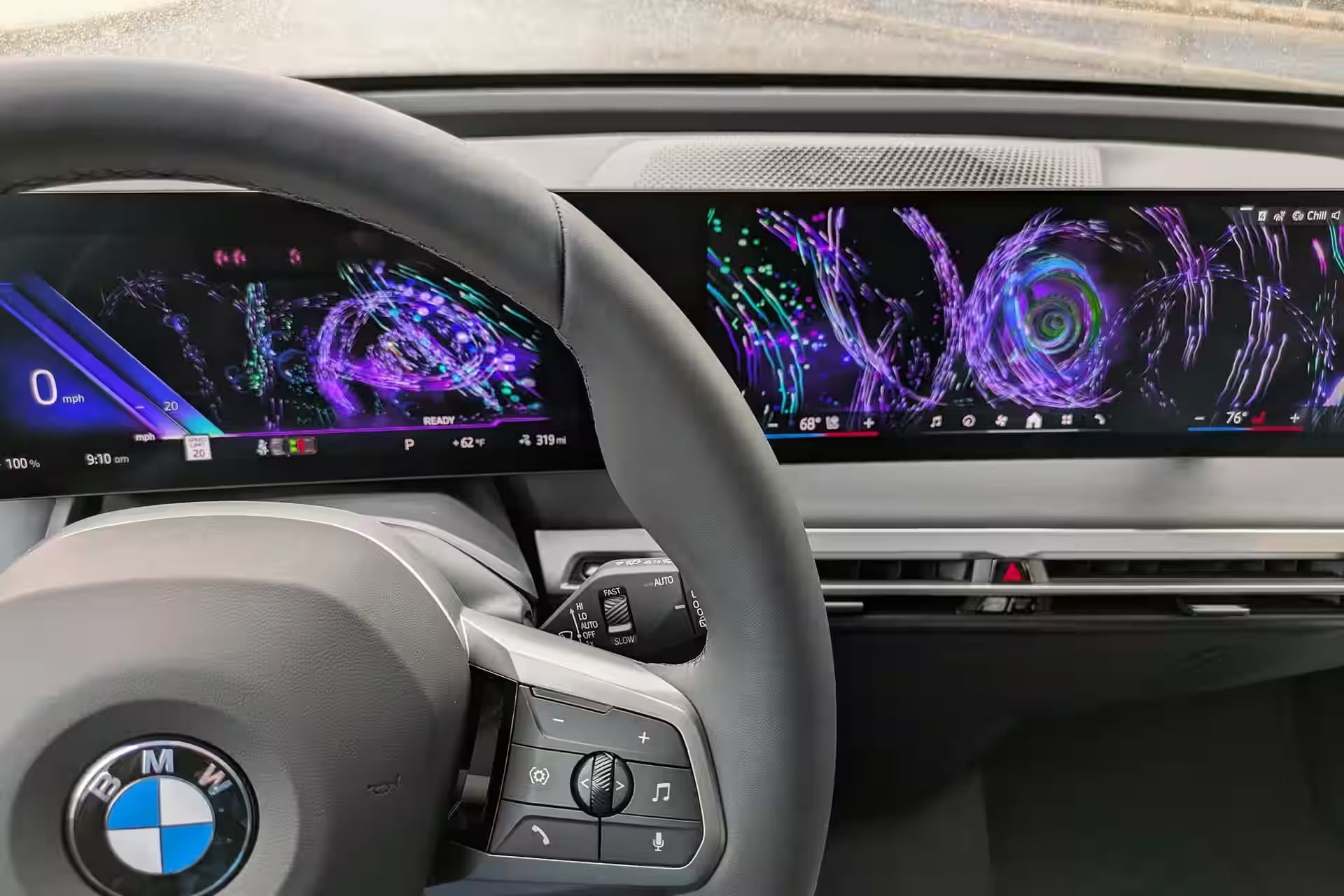
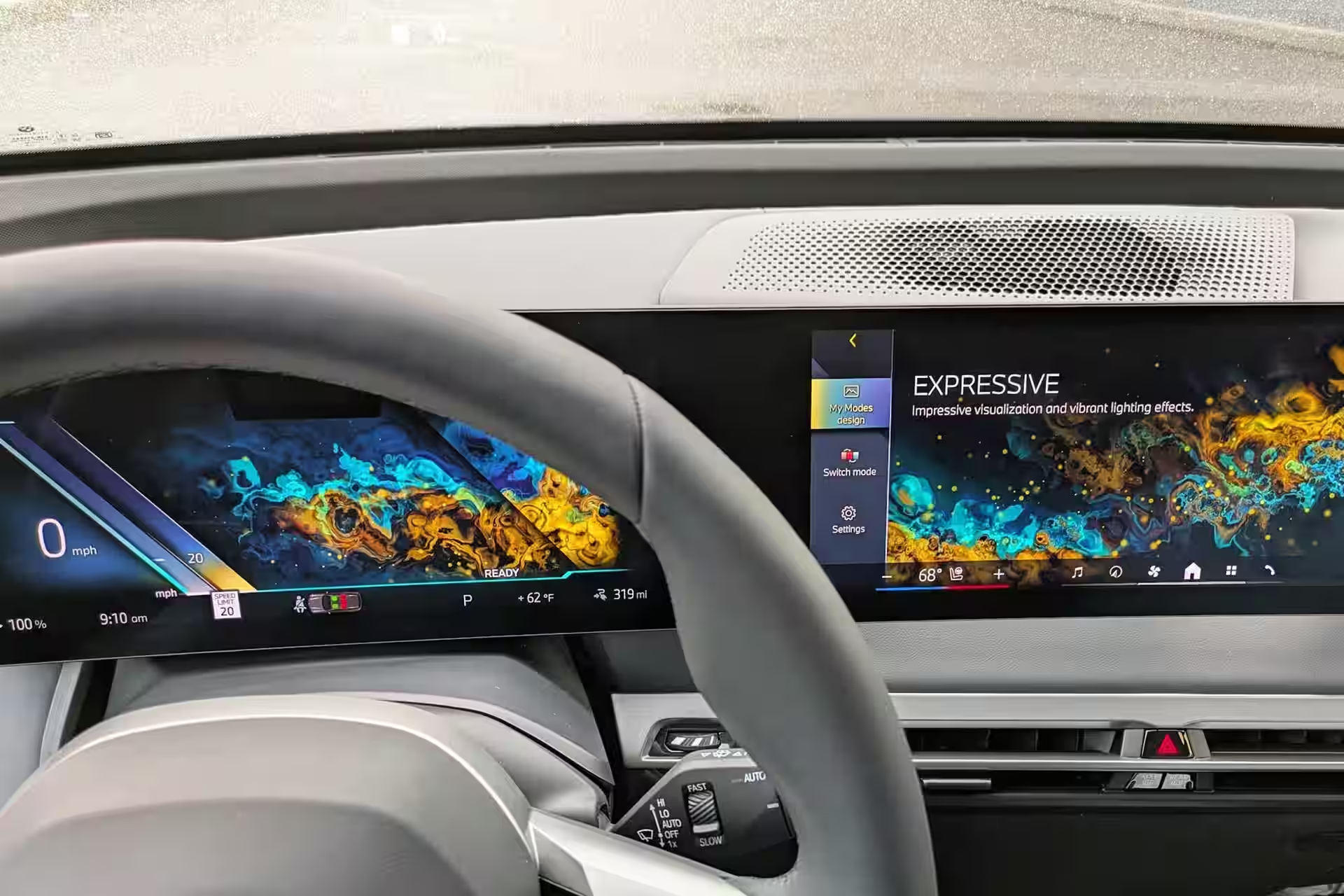
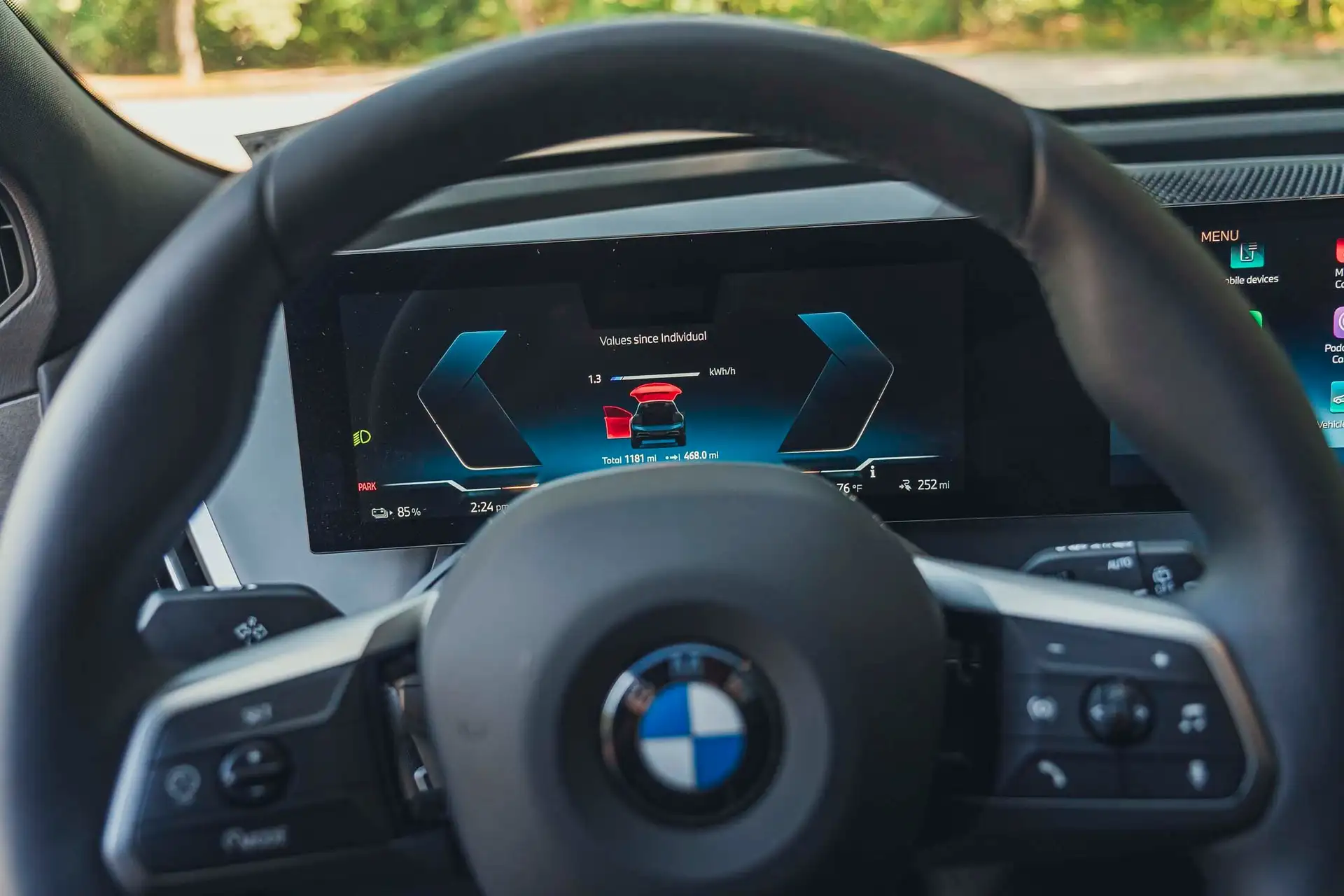
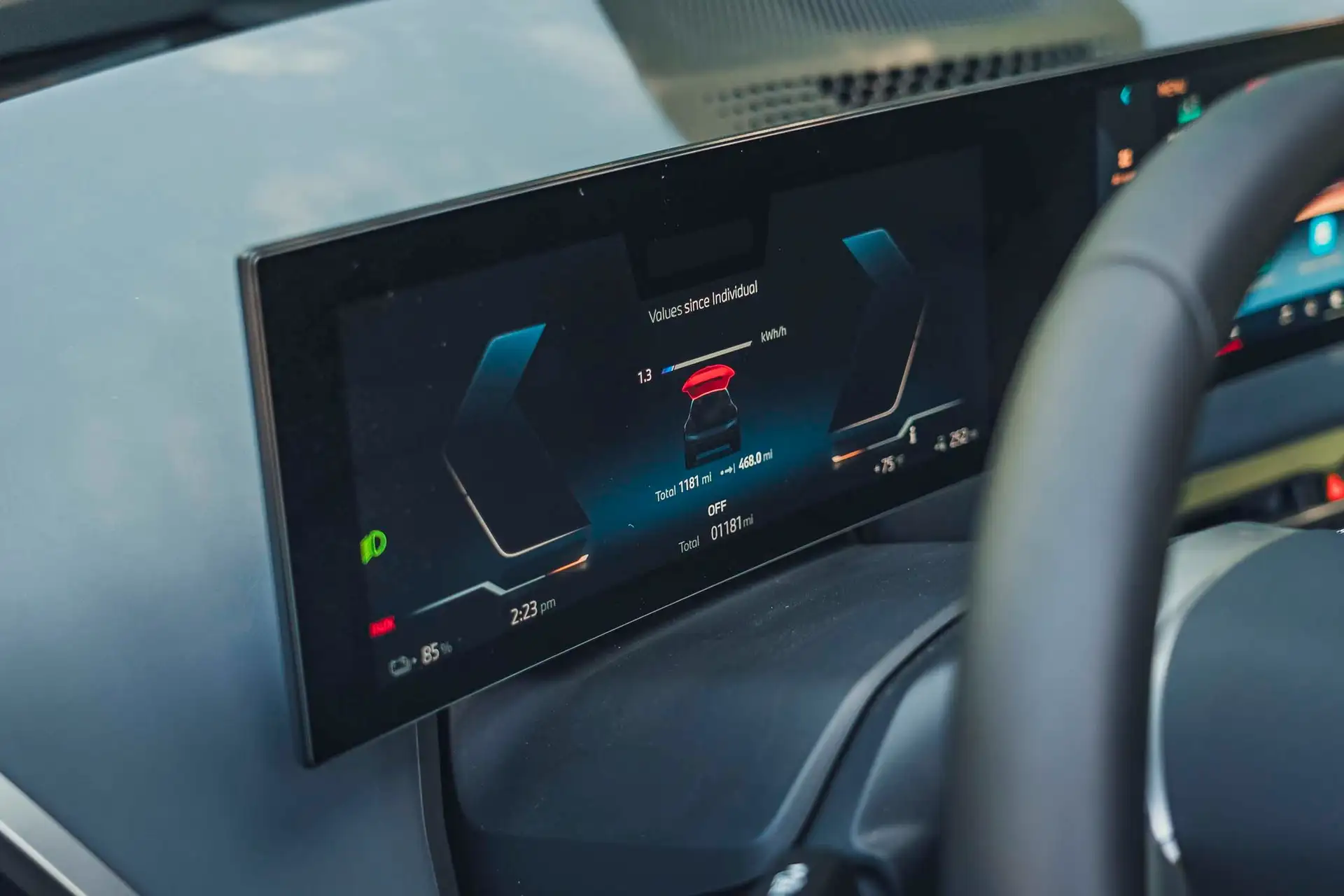
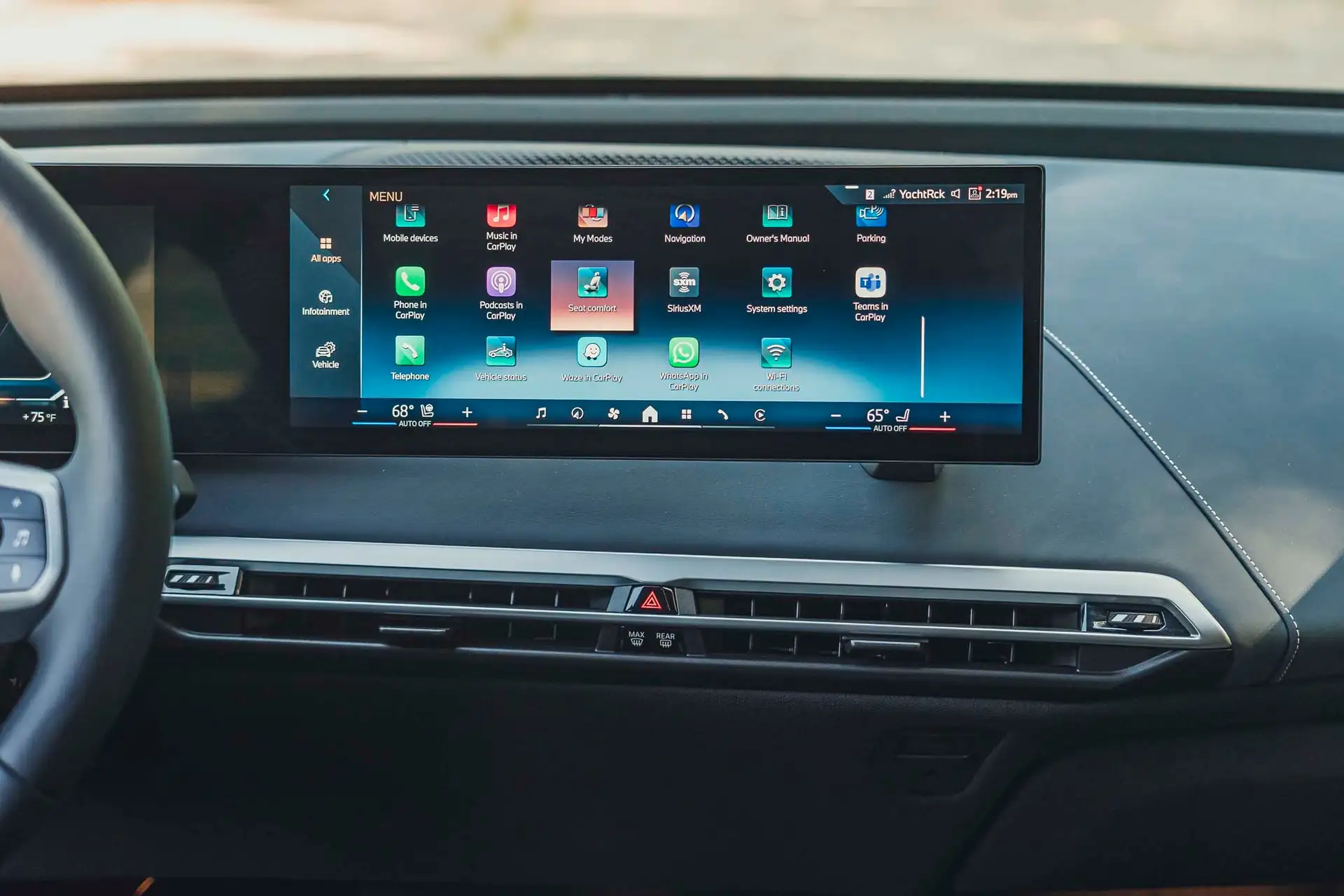
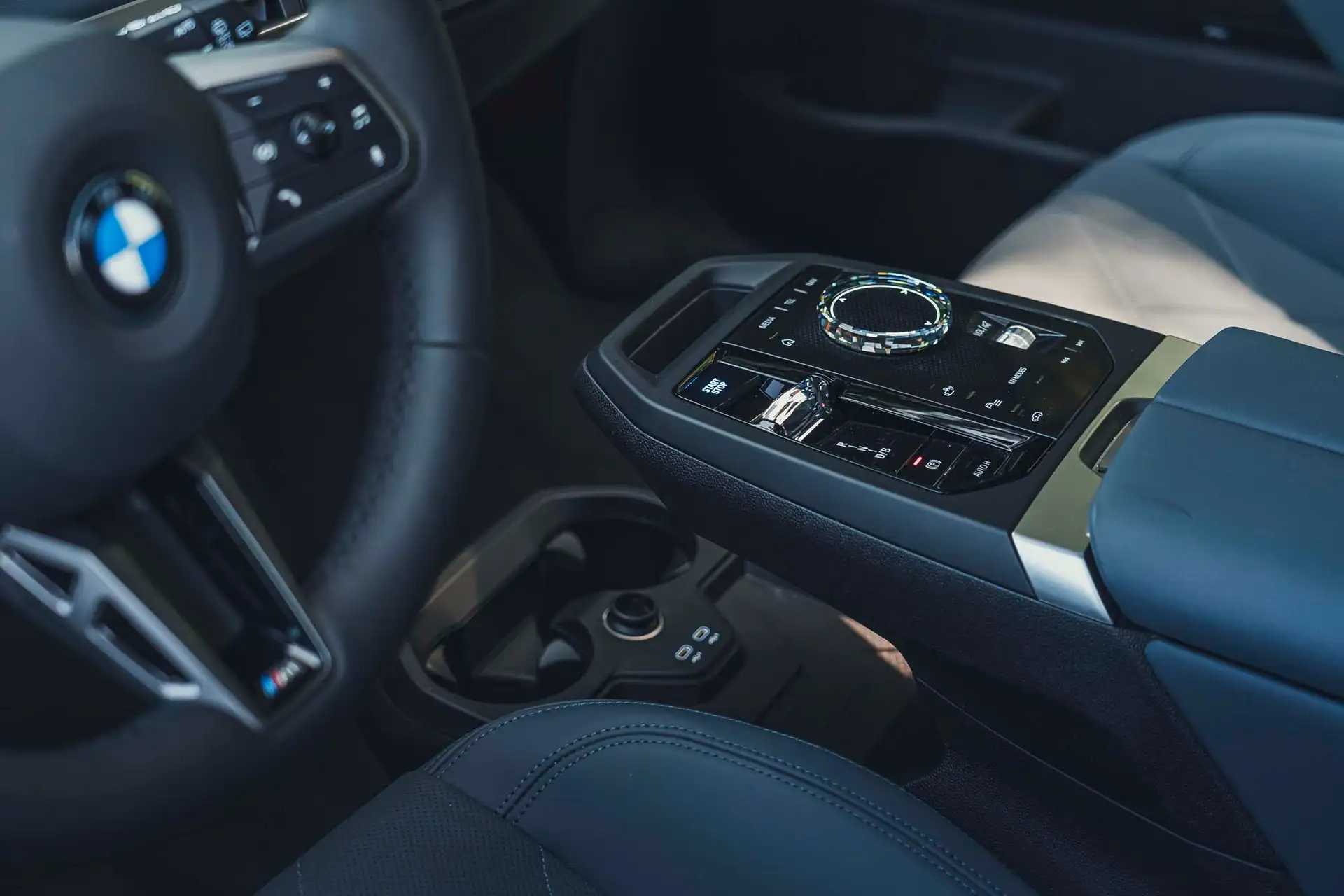
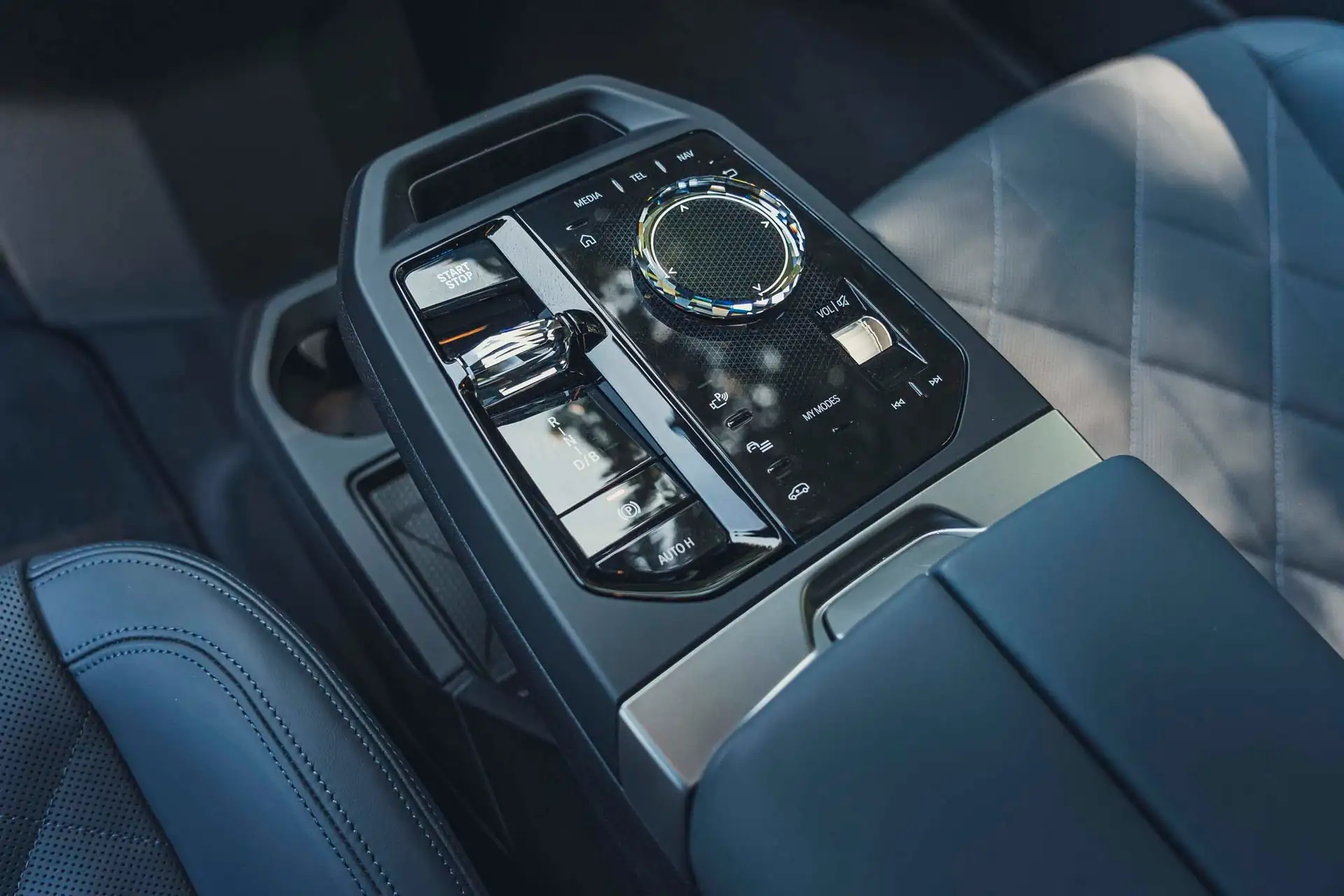
At the center of the dashboard, the “outdoor”-style curved screen merges instrumentation and infotainment, running BMW Operating System 8.5. Although it is not the brand’s latest version, the system is robust, allowing video streaming, games via AirConsole, and even “Digital Art” modes that turn the screen into an abstract gallery. Usability, however, receives a criticism: adjusting the energy regeneration level requires diving into multiple layers of the touchscreen menu, an ergonomic flaw in an otherwise polished car. For those who prefer one-pedal driving, simply engage the “B” position on the glass gear lever.
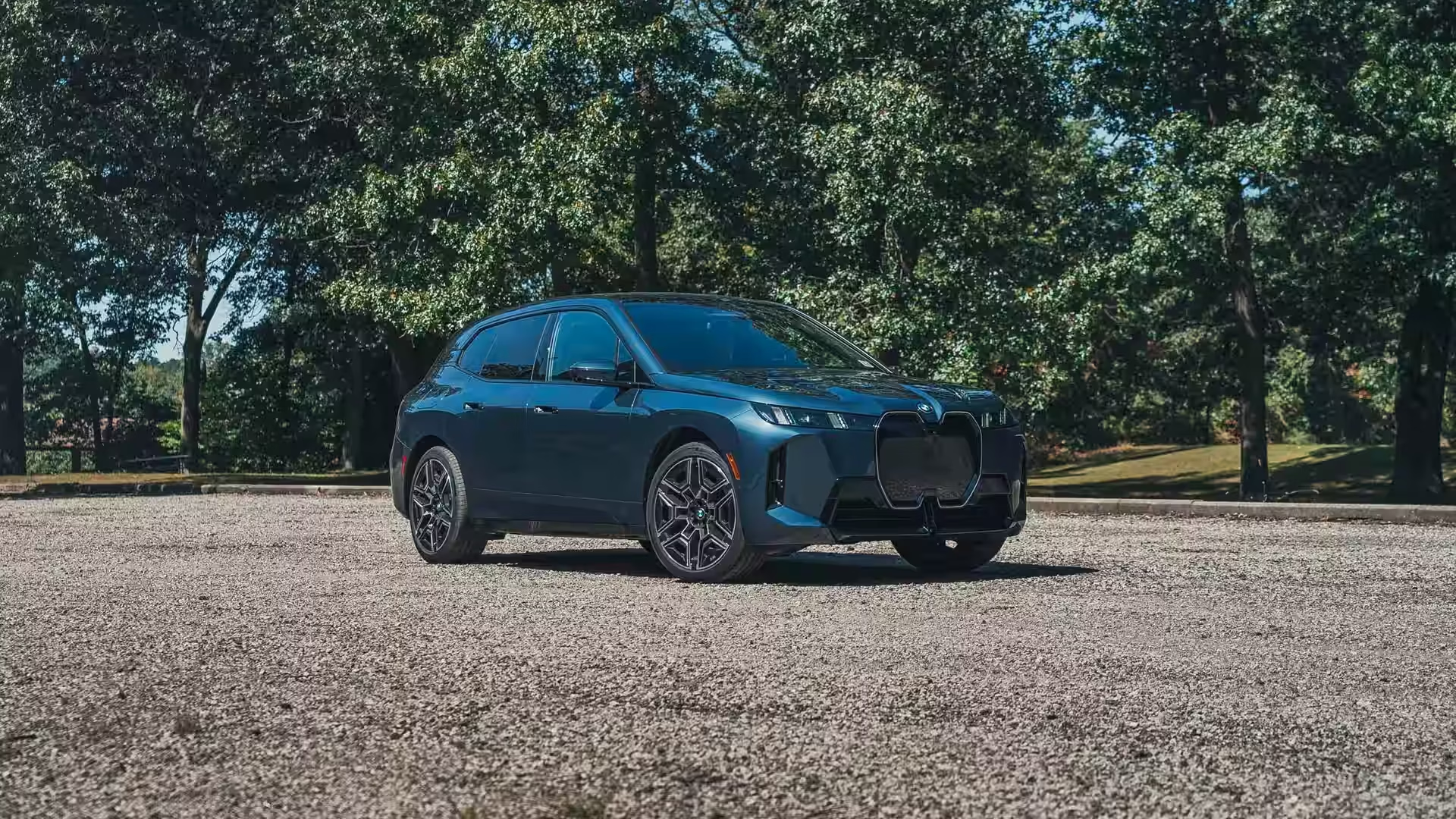
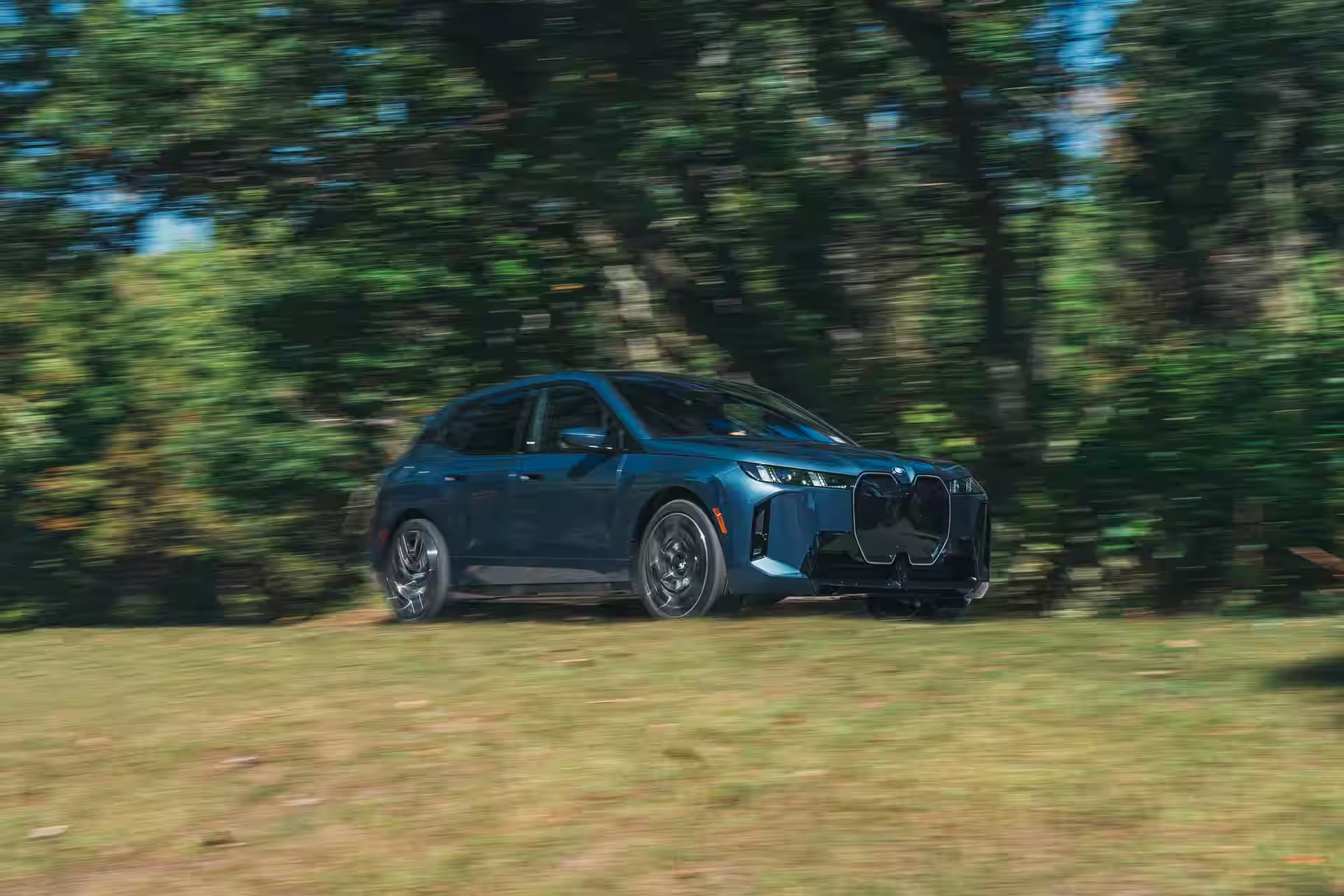
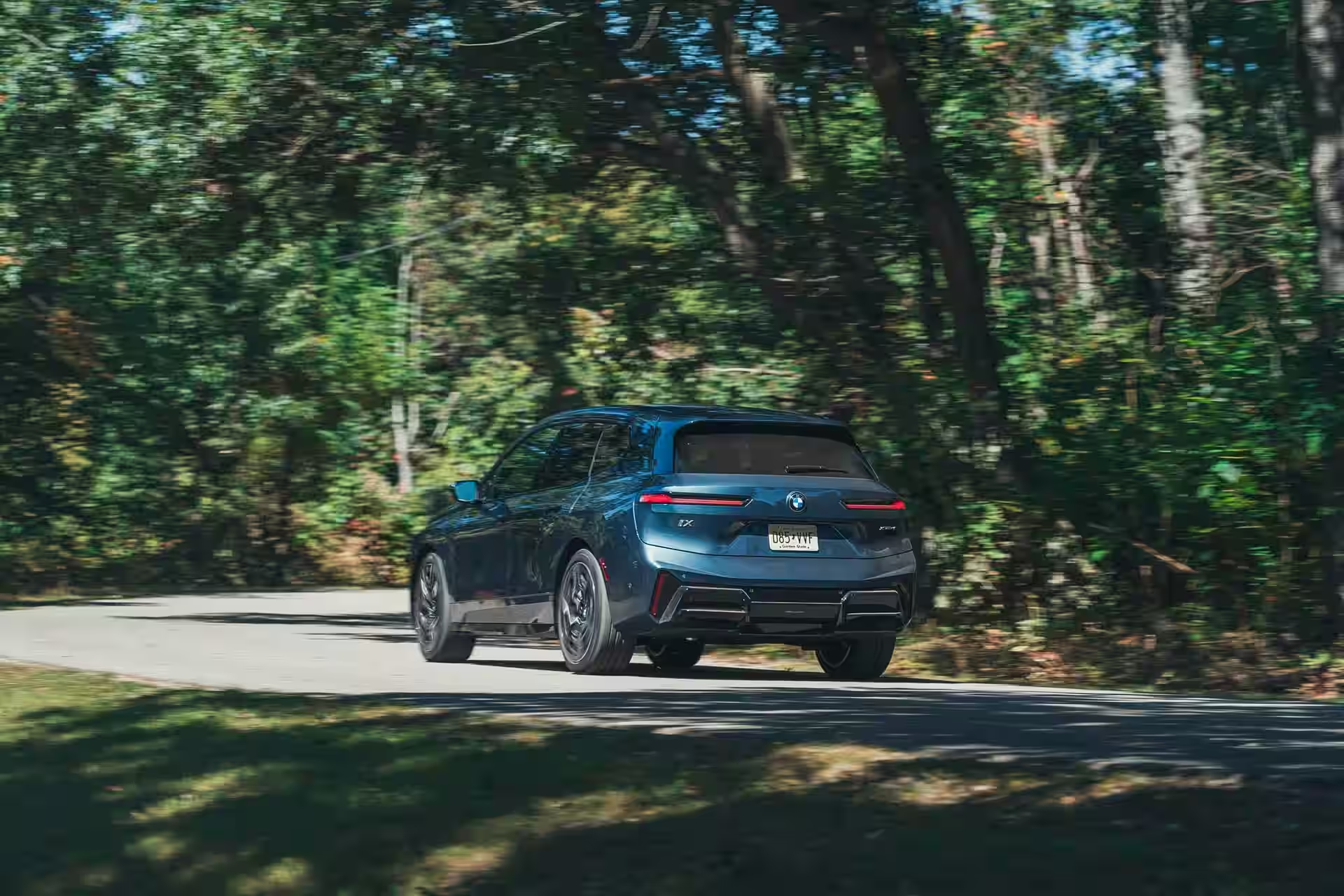
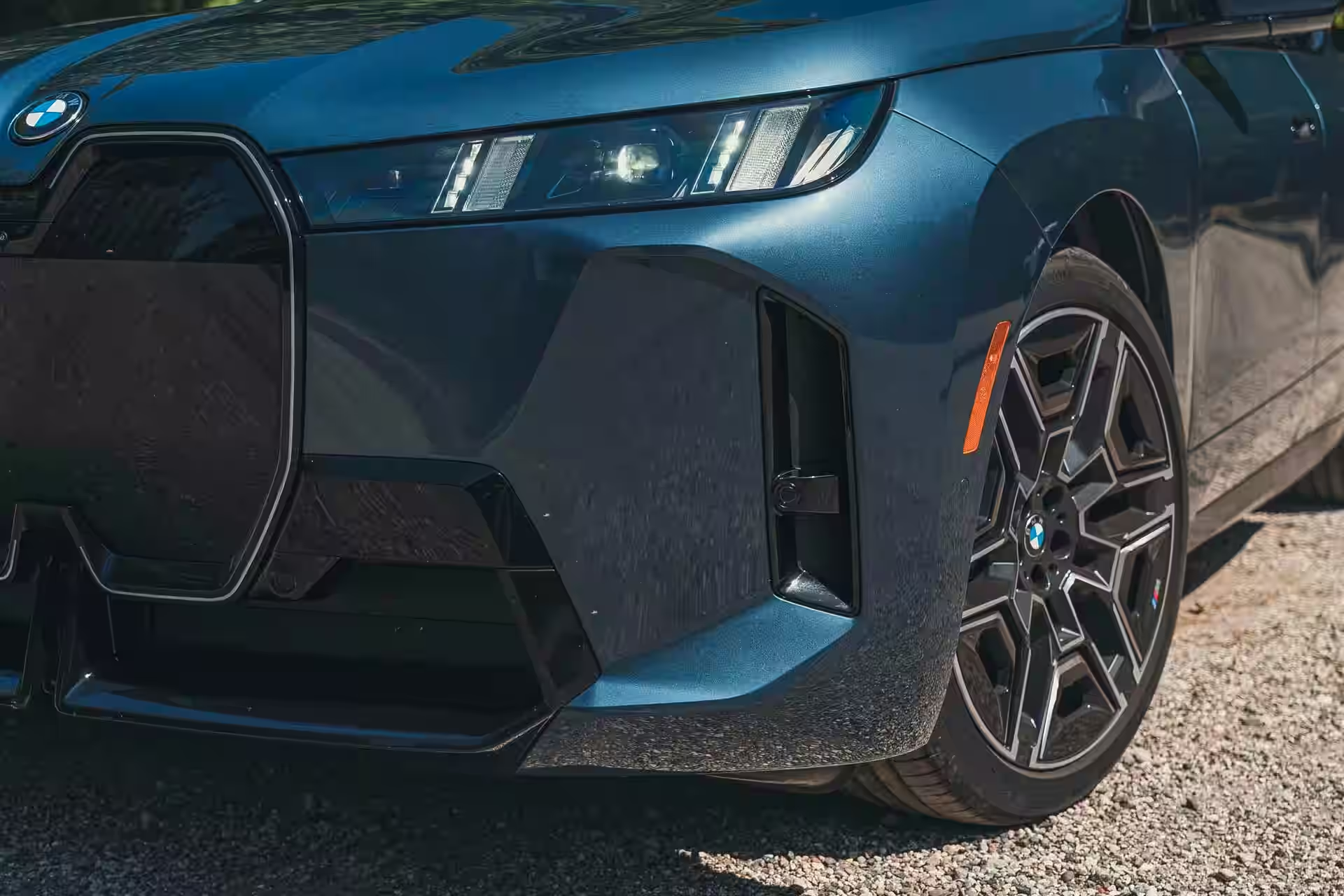
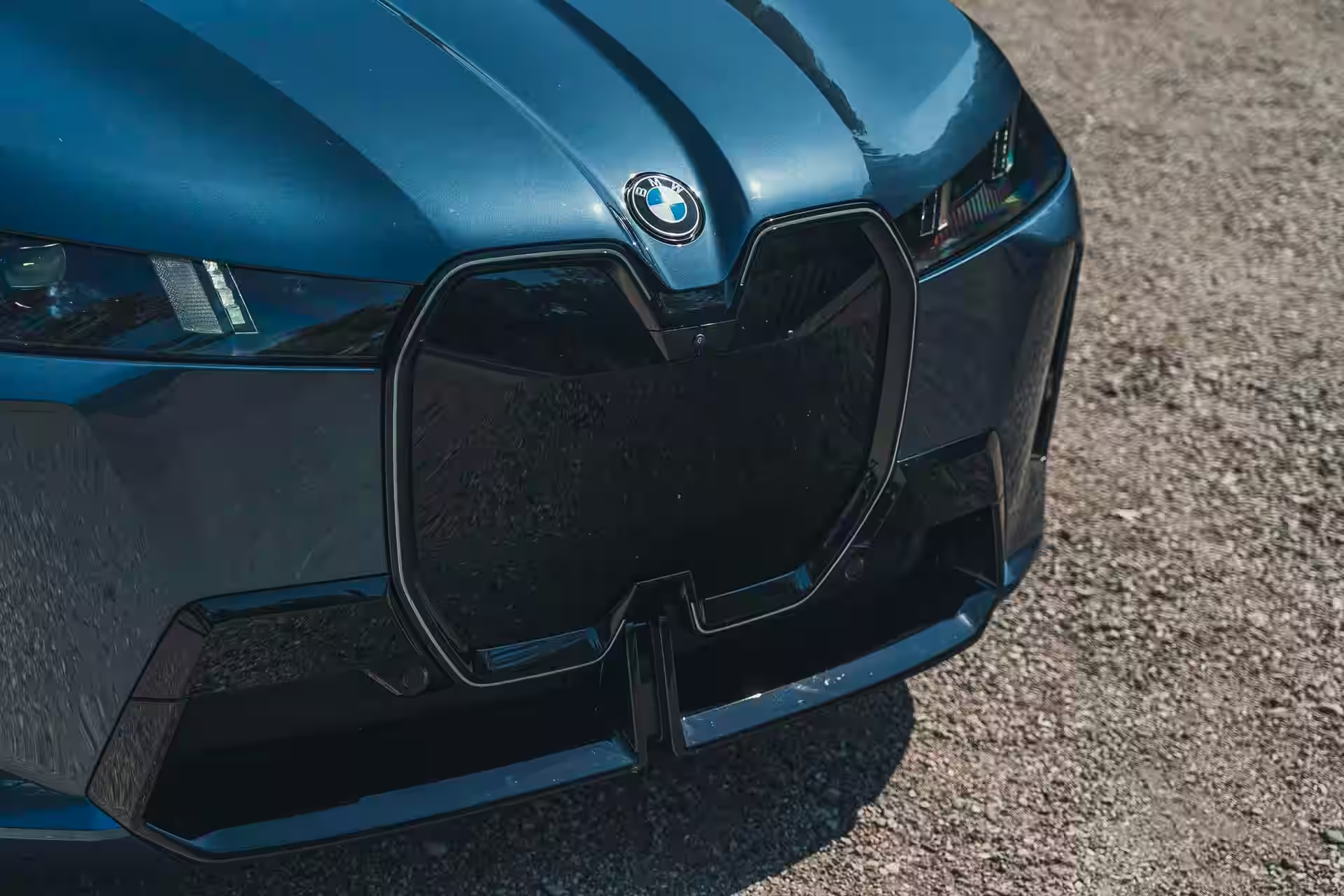
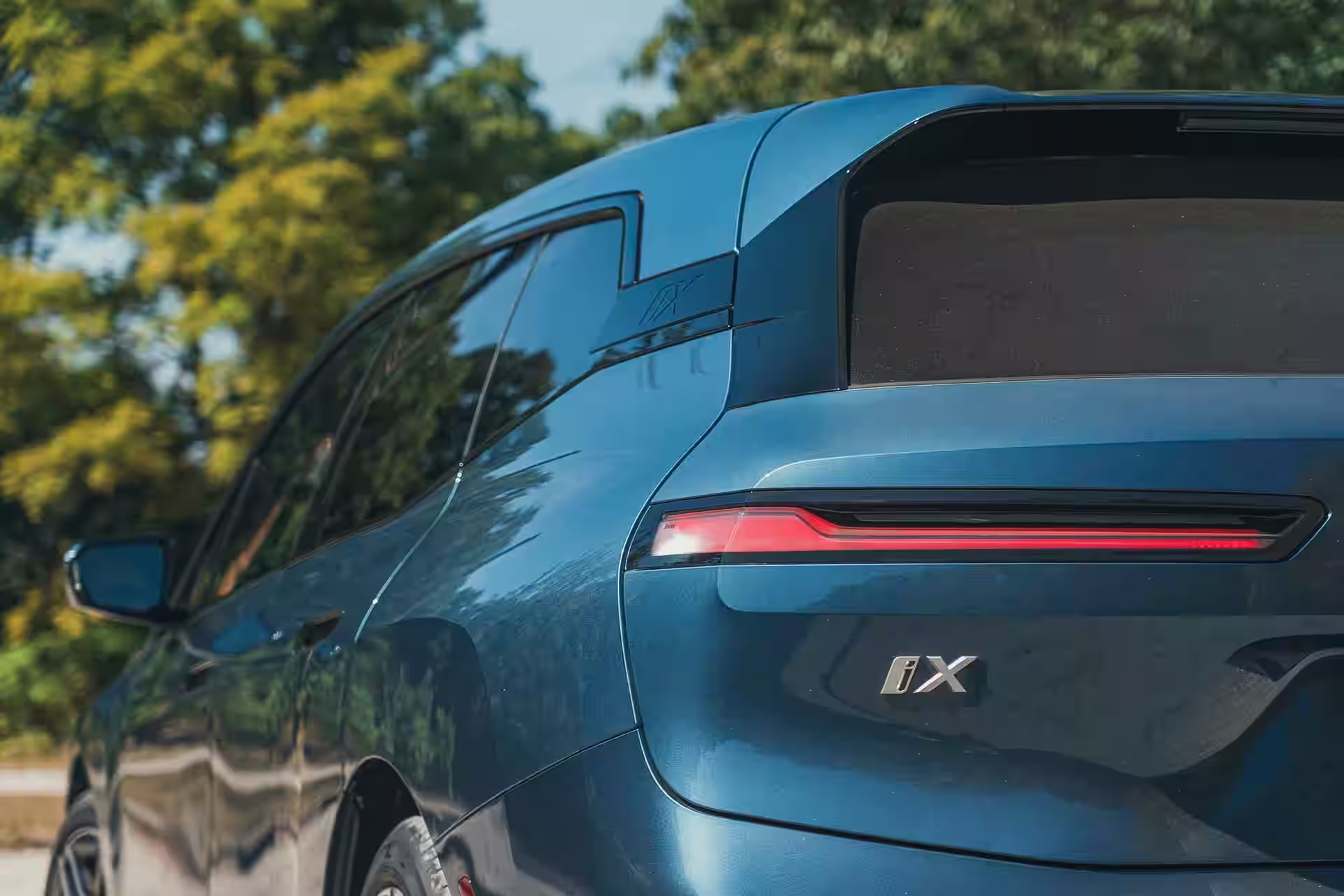
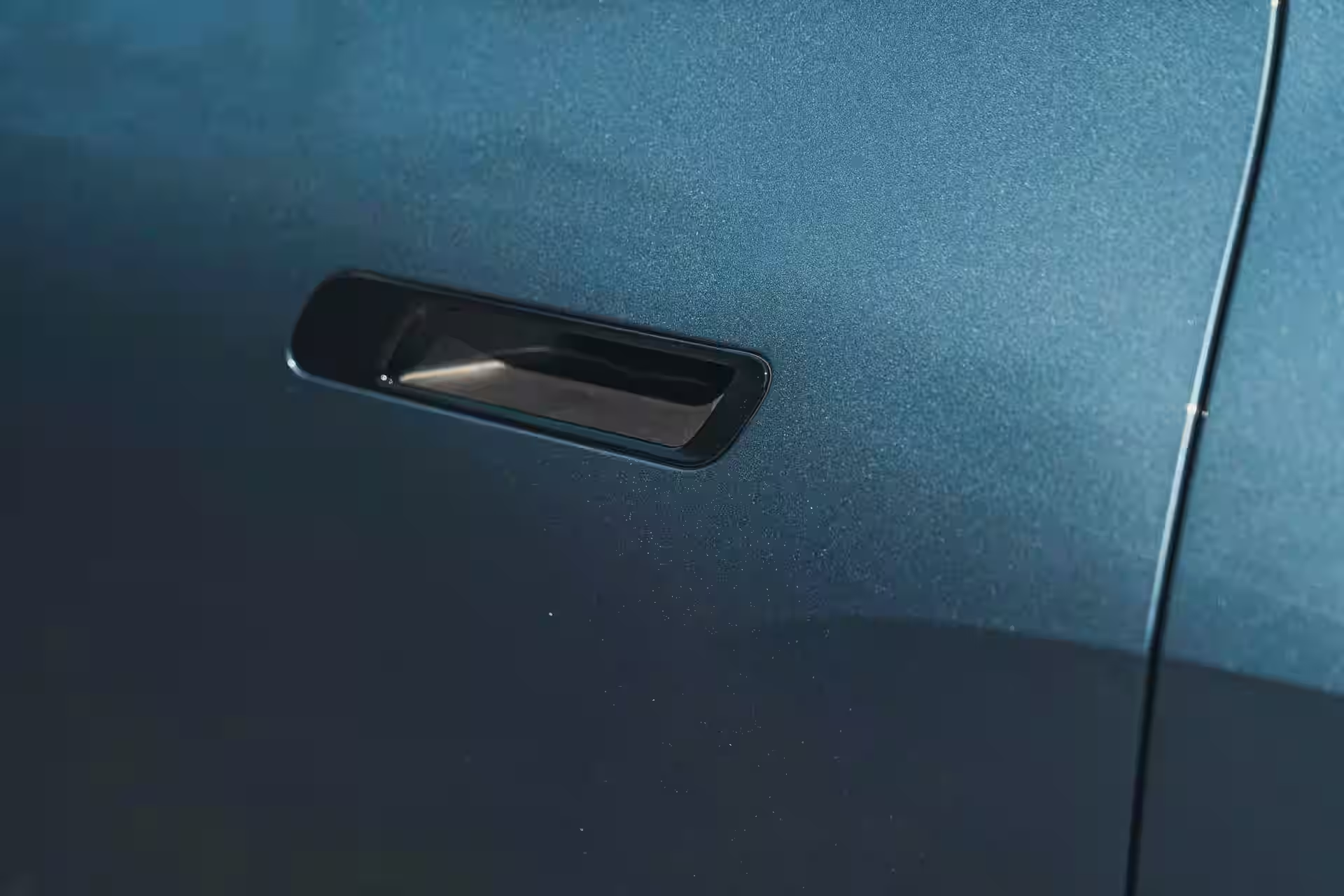
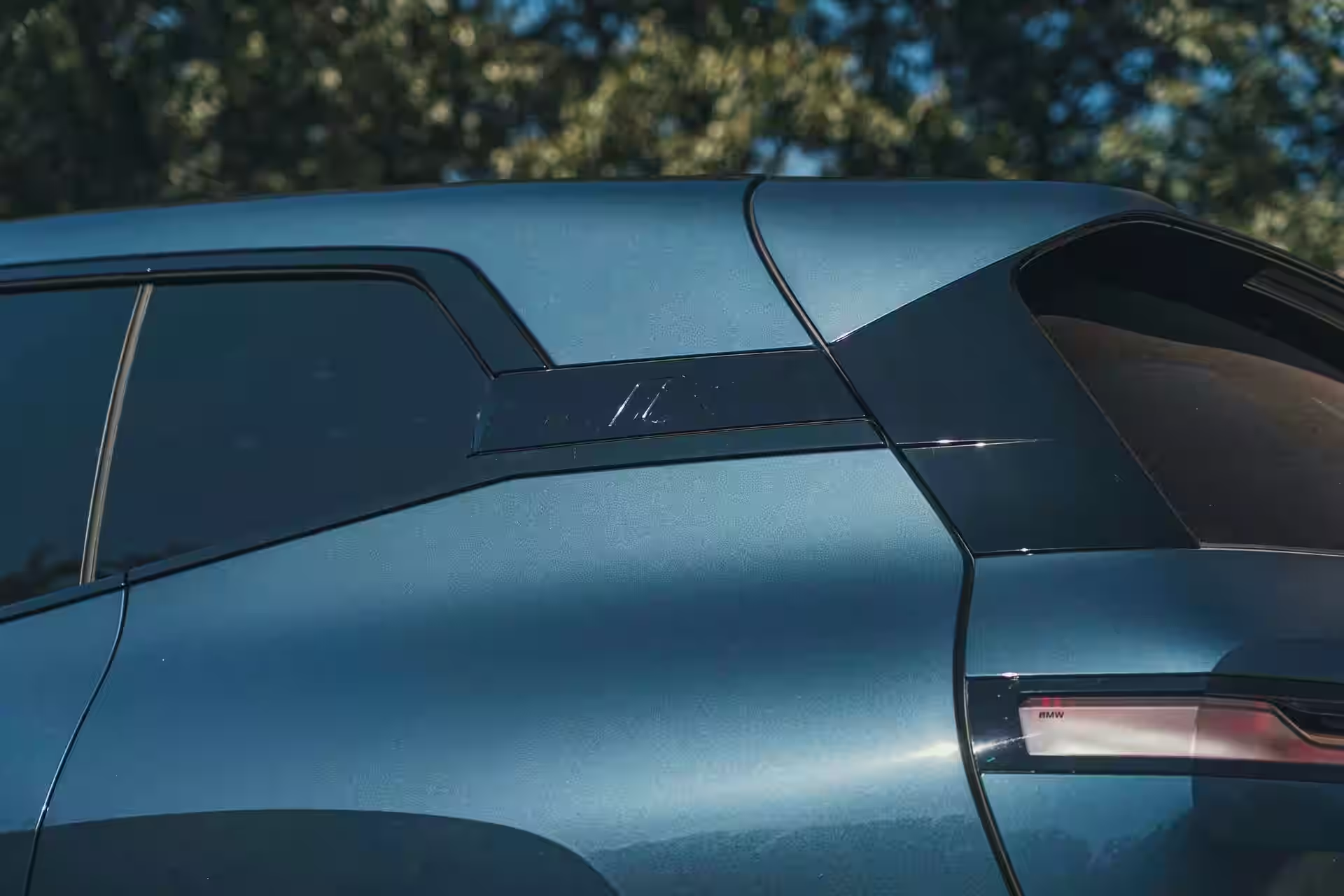
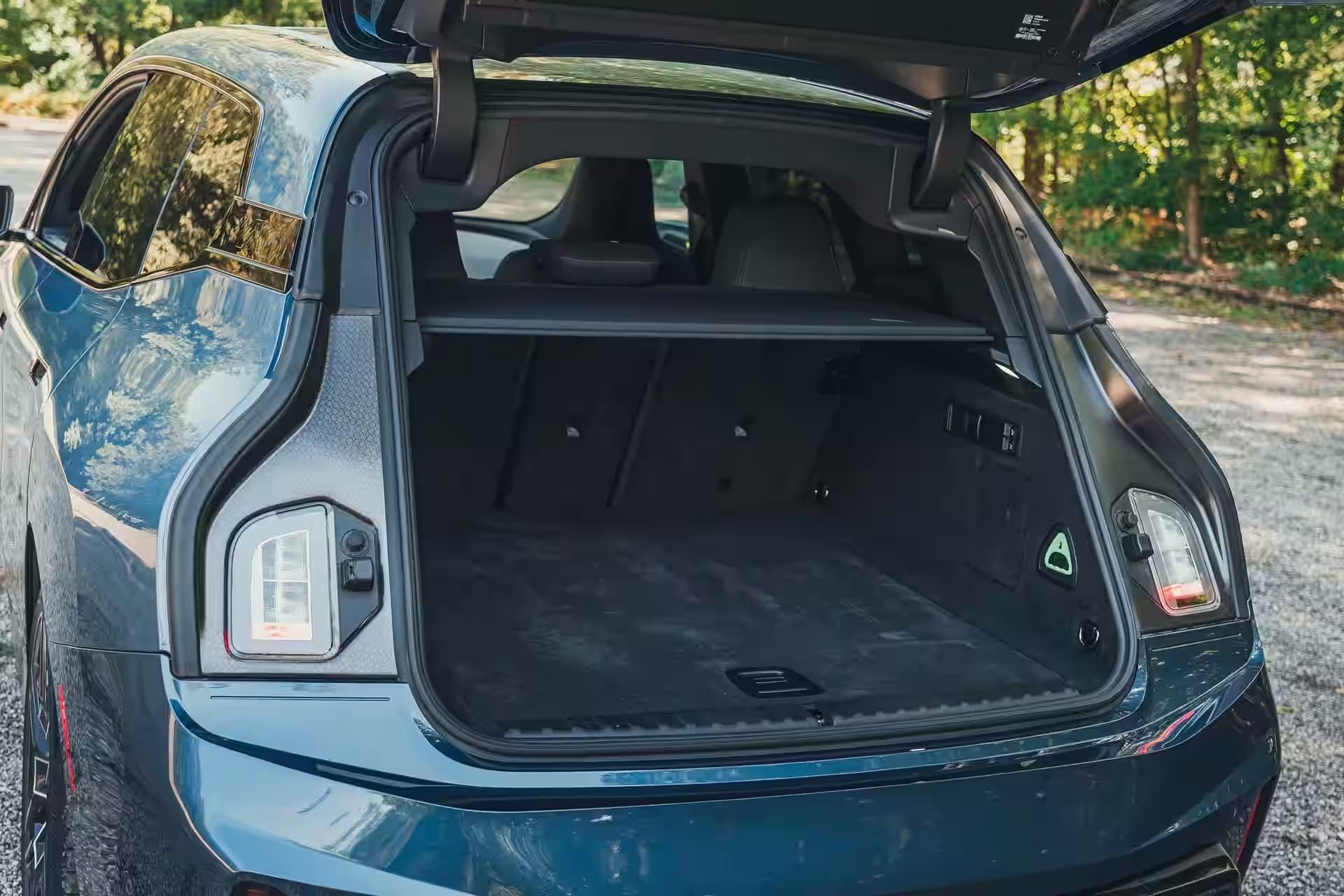
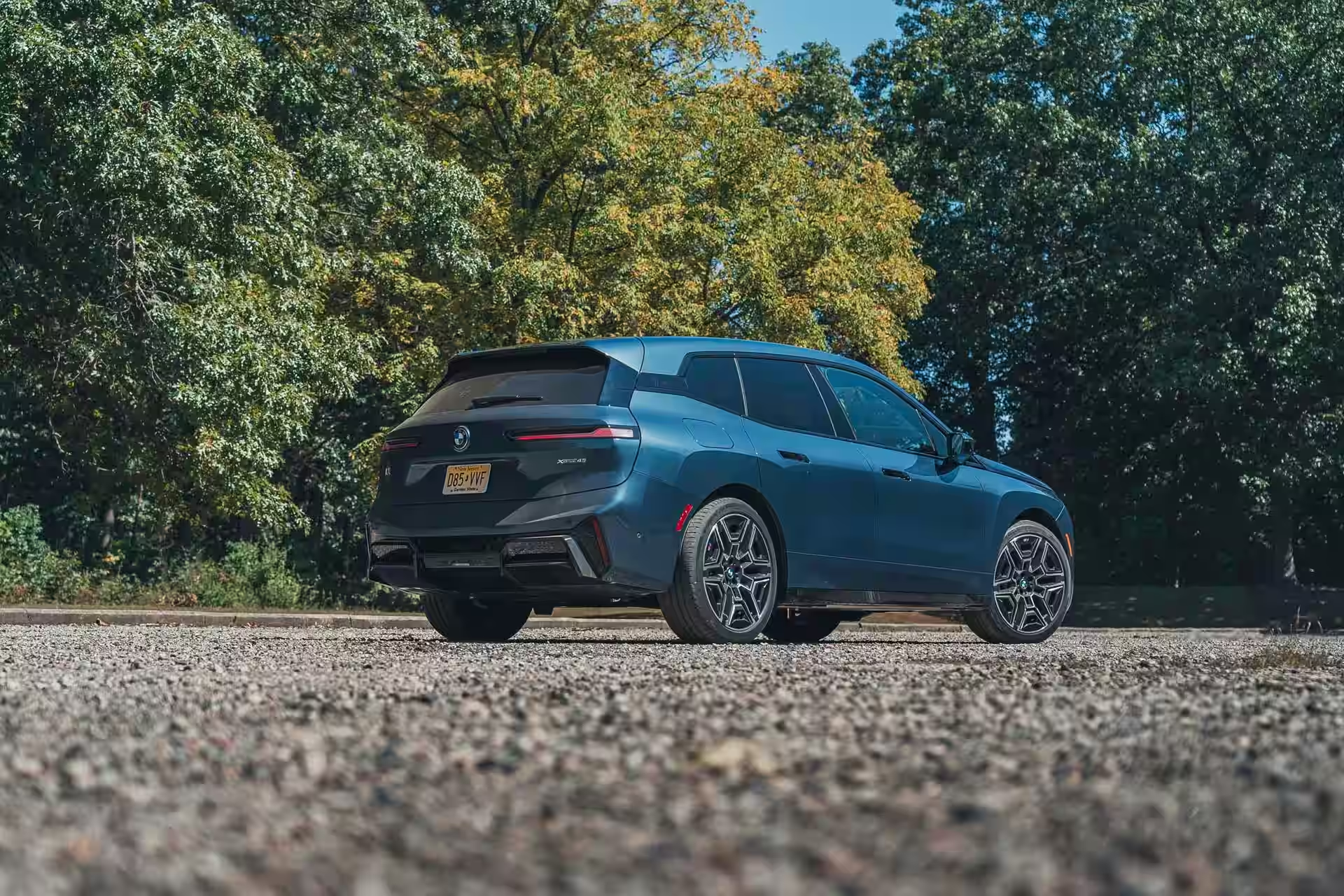
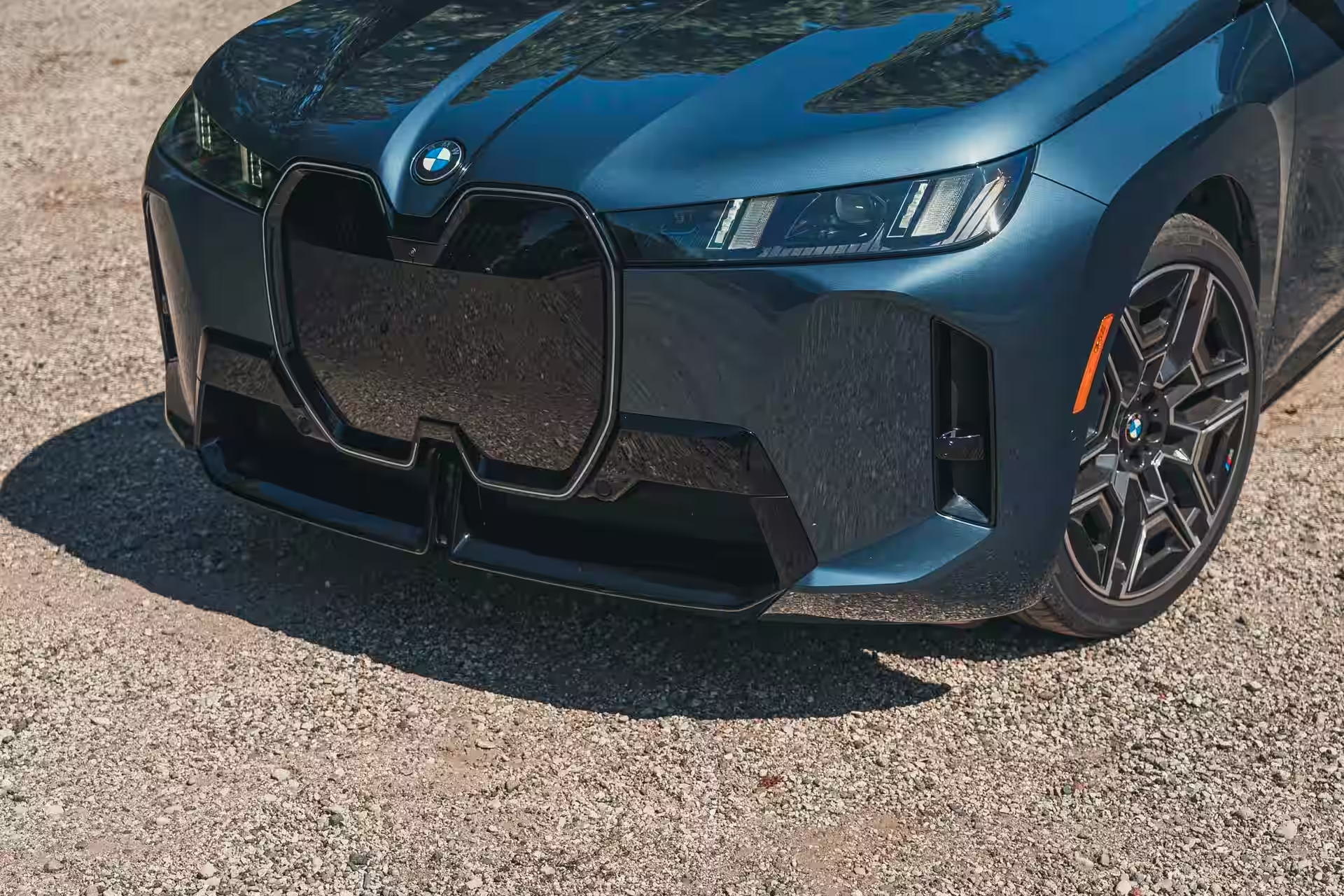
On the outside, the polarizing iX design remains but with refinements. The front grille has been remodeled and the grille panel frames can now be illuminated, creating a distinctive nighttime signature. The angular headlights reflect the grille graphics, and the glossy black sections on the body have been reduced in favor of more body-color paint. Although it is still not considered the most beautiful SUV in its segment, the iX possesses undeniable “inner beauty.” The cohesion between the unique exterior design and spacious interior creates its own identity, unlike other BMW EVs that share platforms with combustion models. The evolution of interior design in the industry is fast, and the trend of returning to physical controls, seen in the Mercedes-Benz S-Class 2026, shows that balancing touch and technology is still a challenge for everyone.
Verdict: Navigating Rough Waters With Excellence
The 2026 BMW iX arrives at a time when the EV market faces headwinds. Slow adoption and tariff wars require manufacturers to offer more value for less money. BMW has answered this challenge masterfully. By introducing the xDrive45, the brand makes the iX financially more viable for a broader audience without diluting the luxury experience that defines the model.
The combination of greater energy efficiency, which translates into real range superior to many rivals, with a chassis that balances cruising comfort and sporty agility, solidifies the iX as one of the best electric SUVs in the world. It’s not perfect — the regeneration interface is frustrating and the exterior design continues to divide opinions — but the overall ownership experience is exceptionally polished.
For the consumer seeking a luxury EV that doesn’t compromise driving dynamics in the name of efficiency, the 2026 iX is a solid choice. It proves it’s possible to “turn the dials up and down” simultaneously: increasing performance and technology while lowering the entry barrier. In a sea of generic electric options, the iX maintains its position as a beacon of traditional automotive engineering adapted for the electric age. Competition is fierce, with launches like the Lucid Gravity promising extreme ranges, but the iX counters with a more balanced value proposition and an established support network.
Additionally, BMW continues to look to the future. While the current iX consolidates its position, the brand is already laying the groundwork for the next generation of electric vehicles with the Neue Klasse platform. The anticipation of what’s to come, as discussed in BMW i3 2026 and the New Neue Klasse Platform, shows that the current iX is just the beginning of a larger transformation. For those buying today, however, the 2026 iX offers the most complete and refined package BMW has ever produced in its electric journey, justifying its place at the top of the luxury SUV food chain.