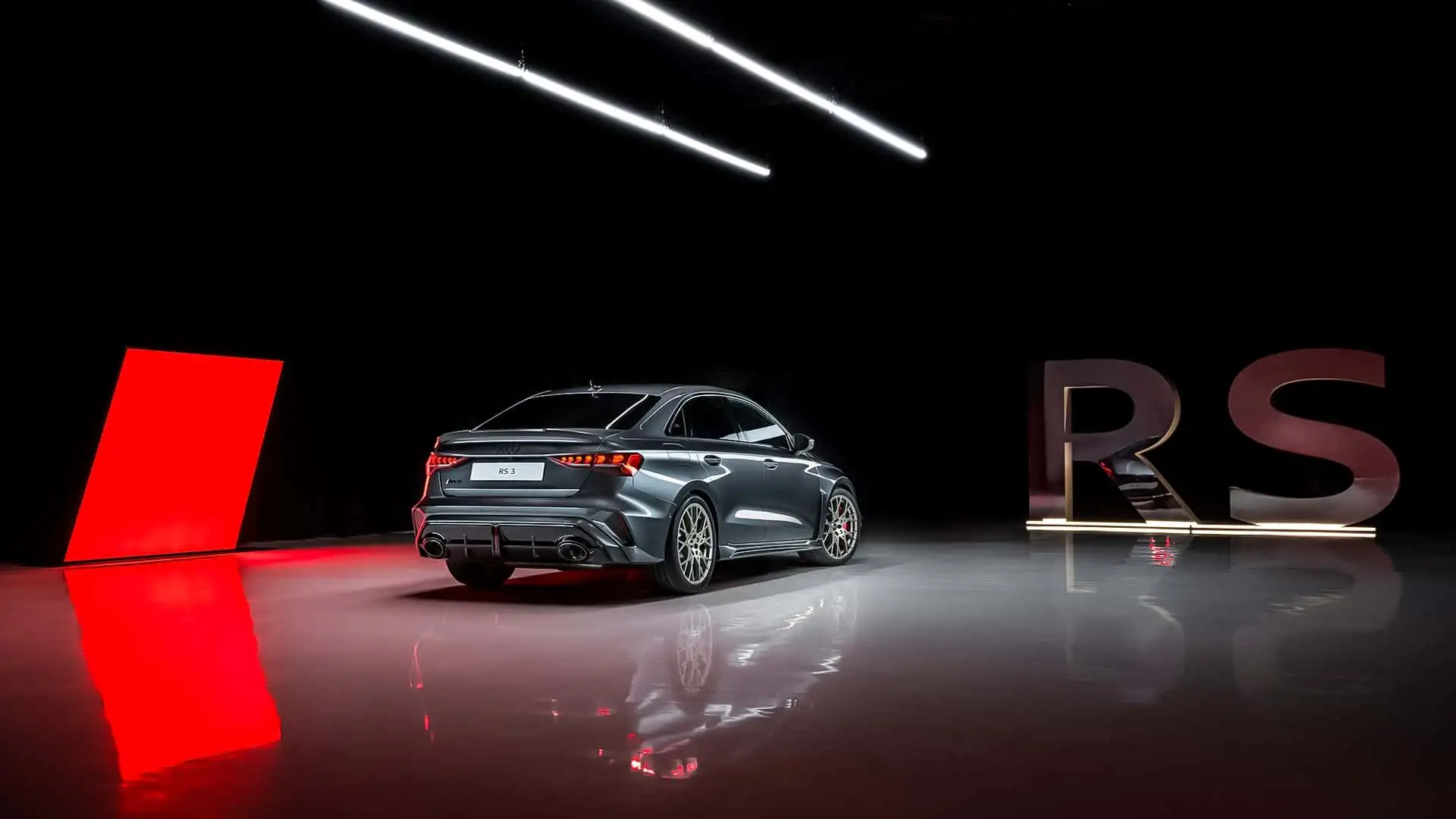
AUDI RS3 COMPETITION LIMITED celebrates 50 years of the 5-cylinder engine with coilover suspension and less sound insulation. See the details.
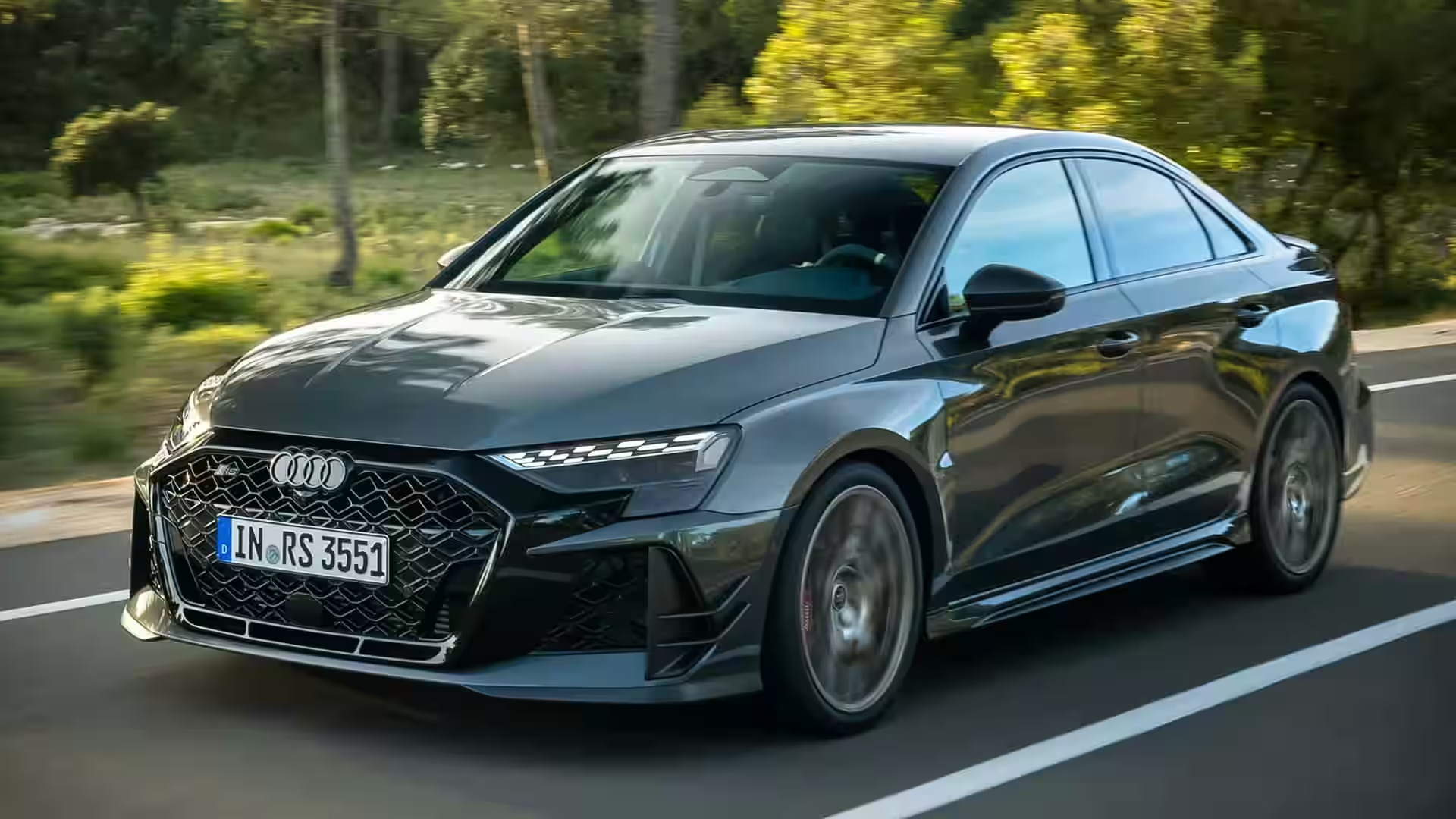
When a German automaker decides to honor half a century of history with only 750 units, you already know something extraordinary is coming. The AUDI RS3 COMPETITION LIMITED 2026 is not just another special edition with exclusive stickers — it is a declaration of war against the electric era, a noisy farewell to the 2.5 TFSI engine that defined generations of enthusiasts.
The Engine That Refused to Die Quietly
For 50 years, Audi’s five-cylinder has been synonymous with glorious irregularity. While the world shifted to conventional configurations, Ingolstadt kept alive the flame of the 2.5 TFSI — the very same that shook the Sport Quattro on rally tracks and turned the RS3 into a cult object among automotive sound aficionados.
In the Competition Limited, the mechanical formula remains intact: 400 hp and 500 Nm of torque delivered with the unique 1-2-4-5-3 cadence that no other engine in the industry can replicate. The 0 to 62 mph acceleration in 3.8 seconds and the top speed of 180 mph are respectable numbers, yet secondary. What matters here is how those numbers are achieved.
The Sound Engineering: When Less Is More
The most controversial — and brilliant — decision by Audi’s engineers was to remove 4 kg of insulating material from the firewall between the engine compartment and the cabin. In an era obsessed with silence and acoustic comfort, the Competition Limited does exactly the opposite: allows noise to invade the occupants’ sacred space.
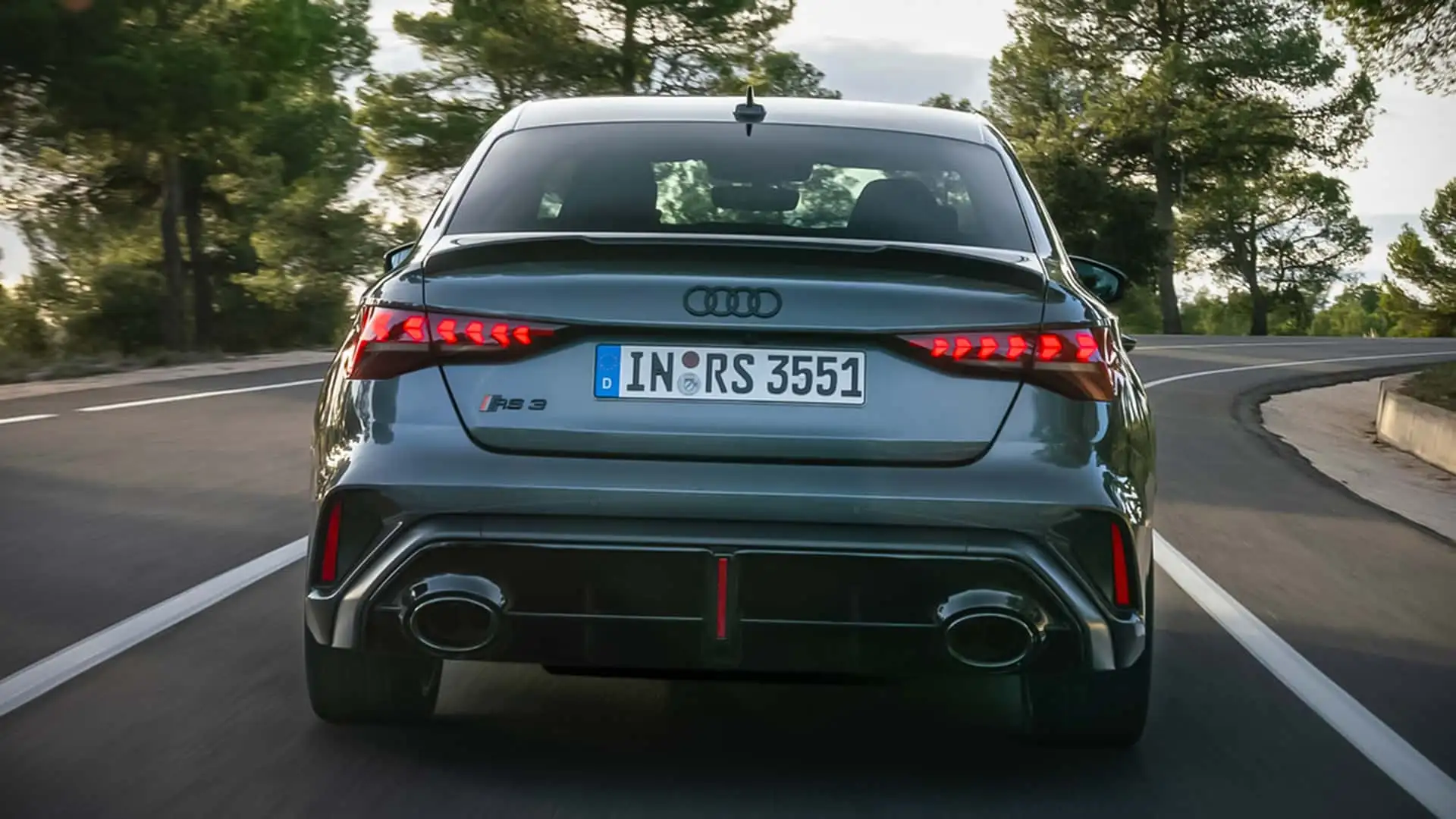
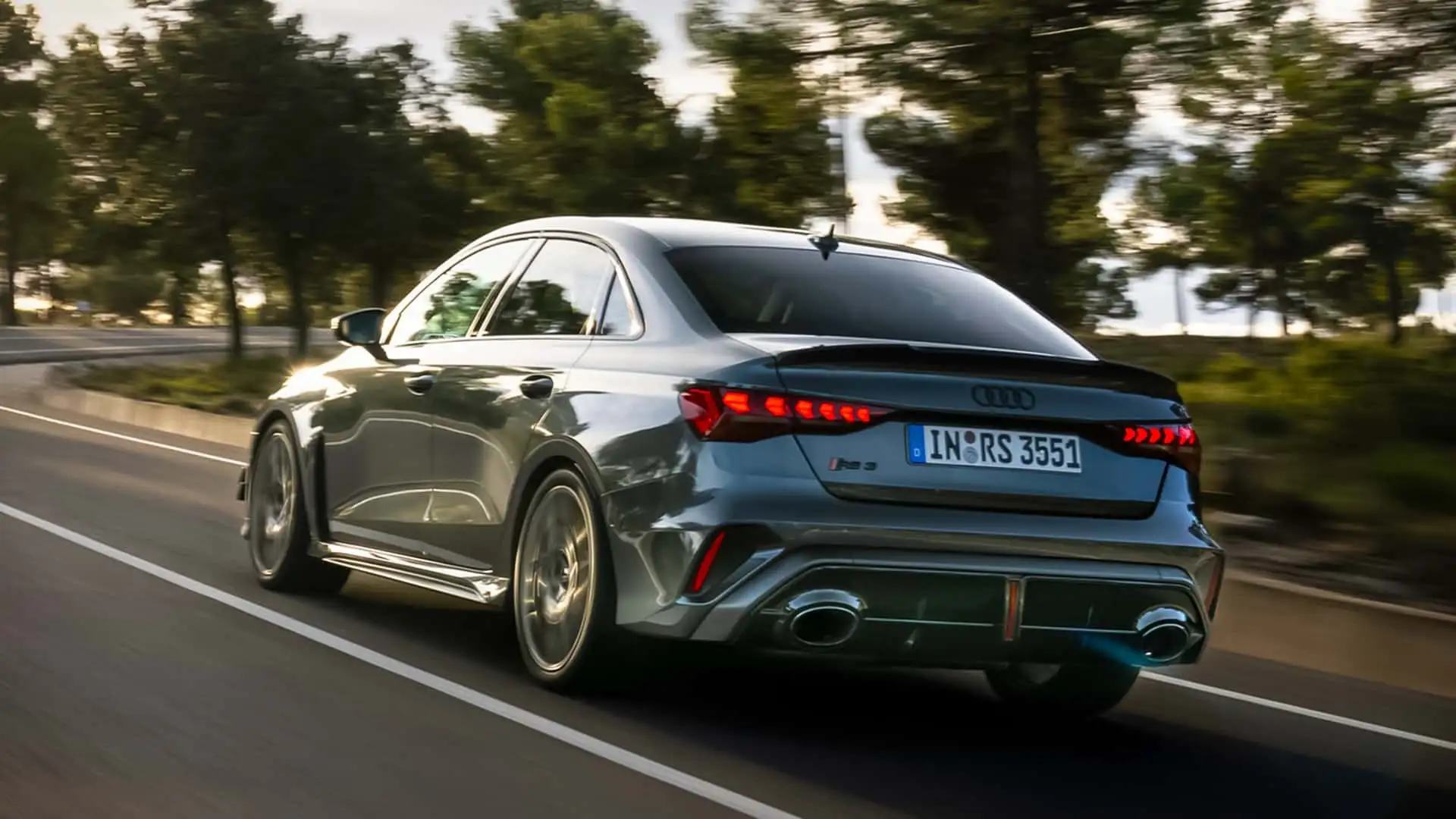
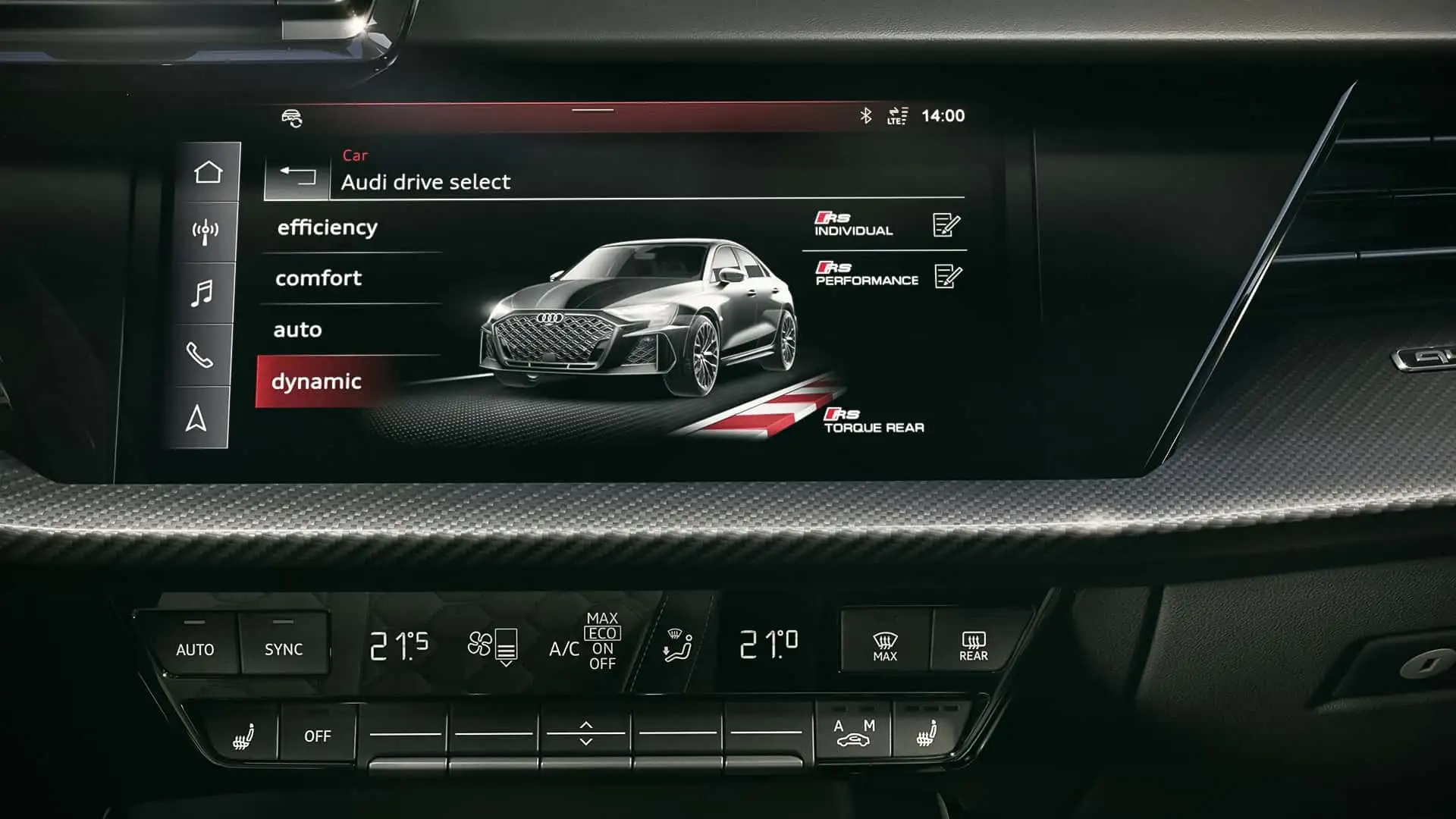
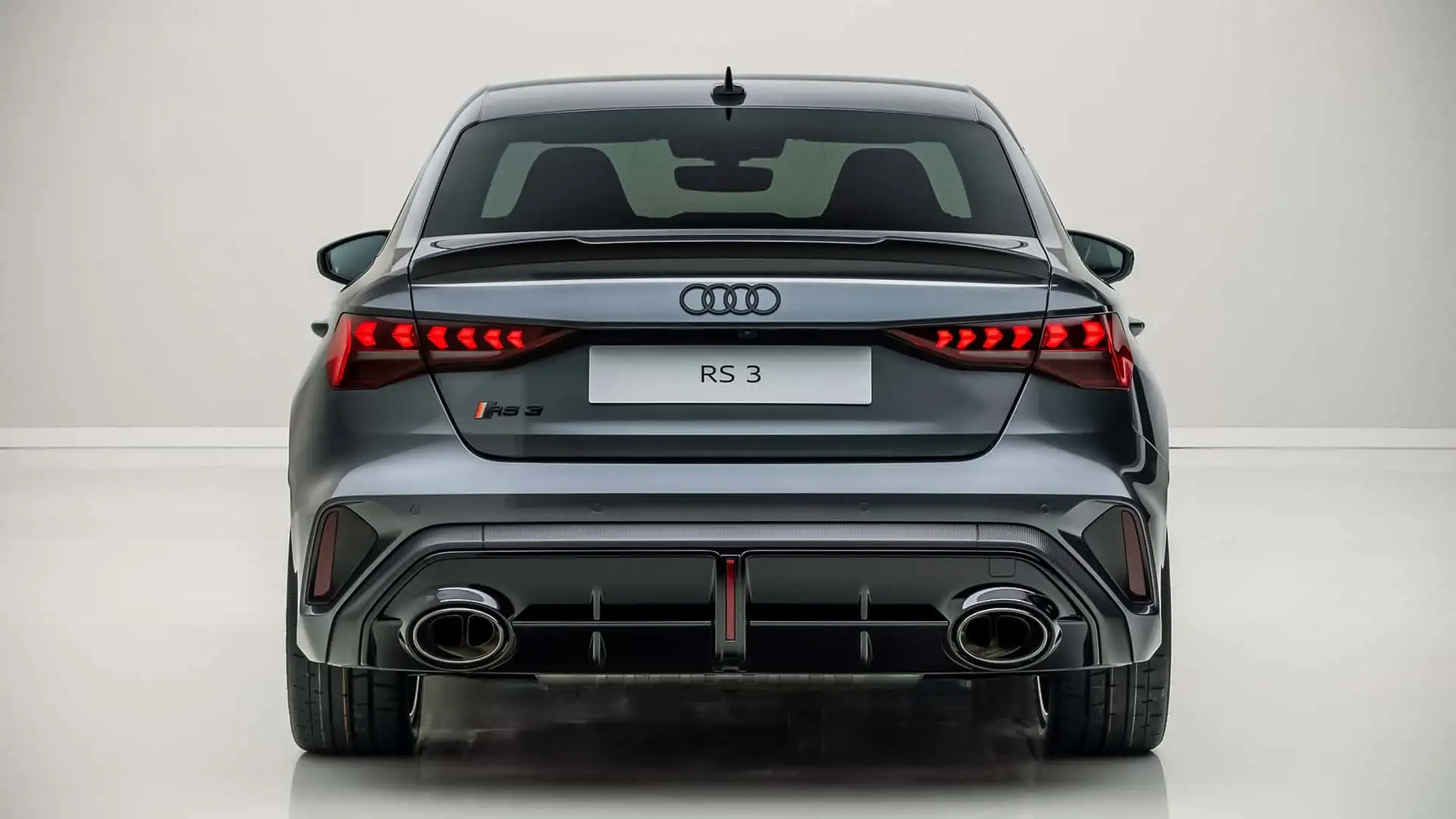
The RS exhaust system was completely recalibrated. In the Dynamic, RS Performance, and RS Torque Rear modes, the exhaust valves now open prematurely, creating a mechanical symphony that purists swear is the most authentic ever produced in series by the brand. It’s the kind of sensory experience that modern forced induction engines often sacrifice in the name of efficiency.
Factory Coilover Suspension: The First in History
For the first time on a production RS3, Audi offers coilover suspension developed specifically for the model. The shock absorbers allow three-way adjustment: high-speed compression, low-speed compression, and rebound — a setup that until recently was the exclusive domain of specialized tuners.
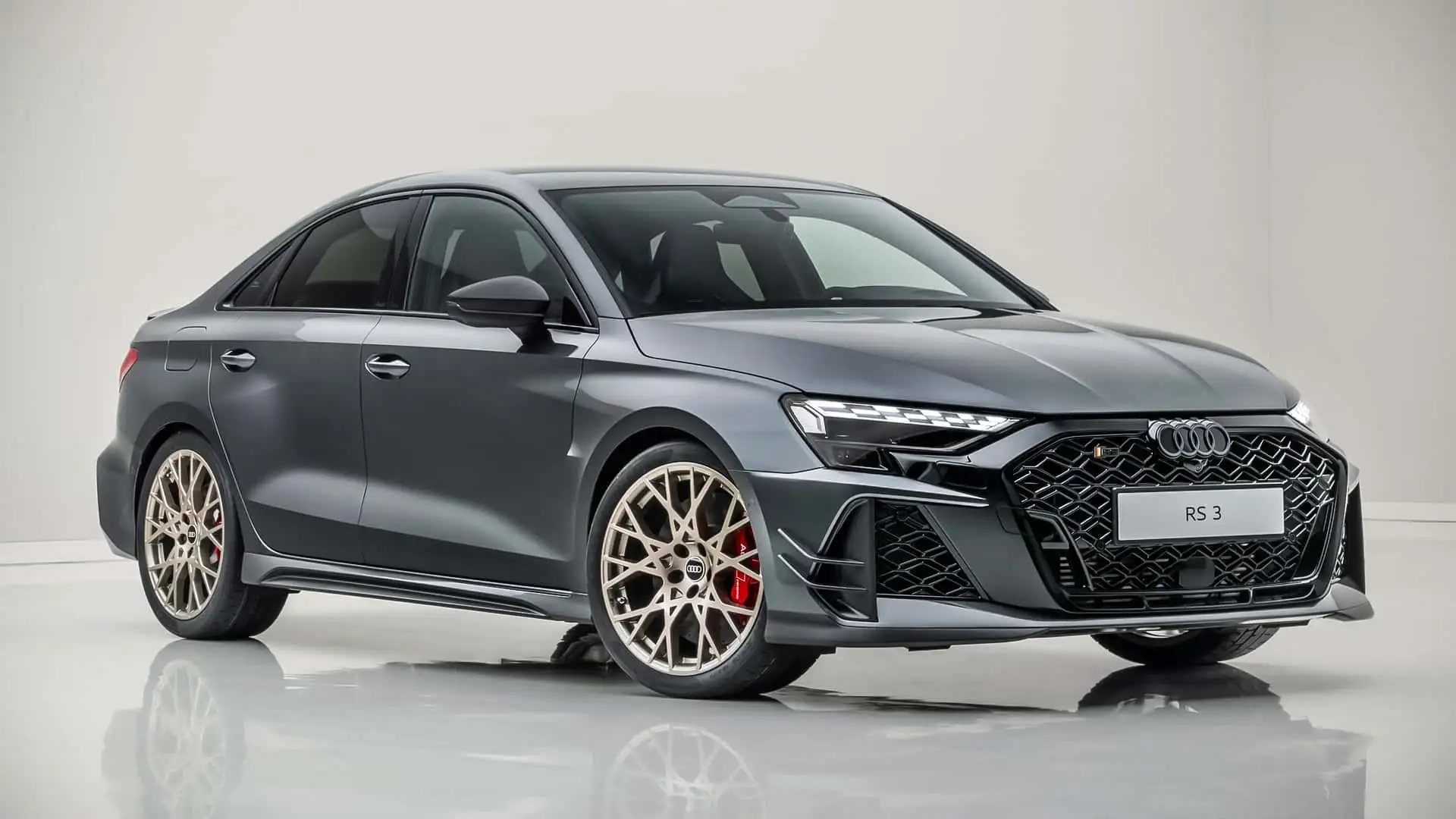
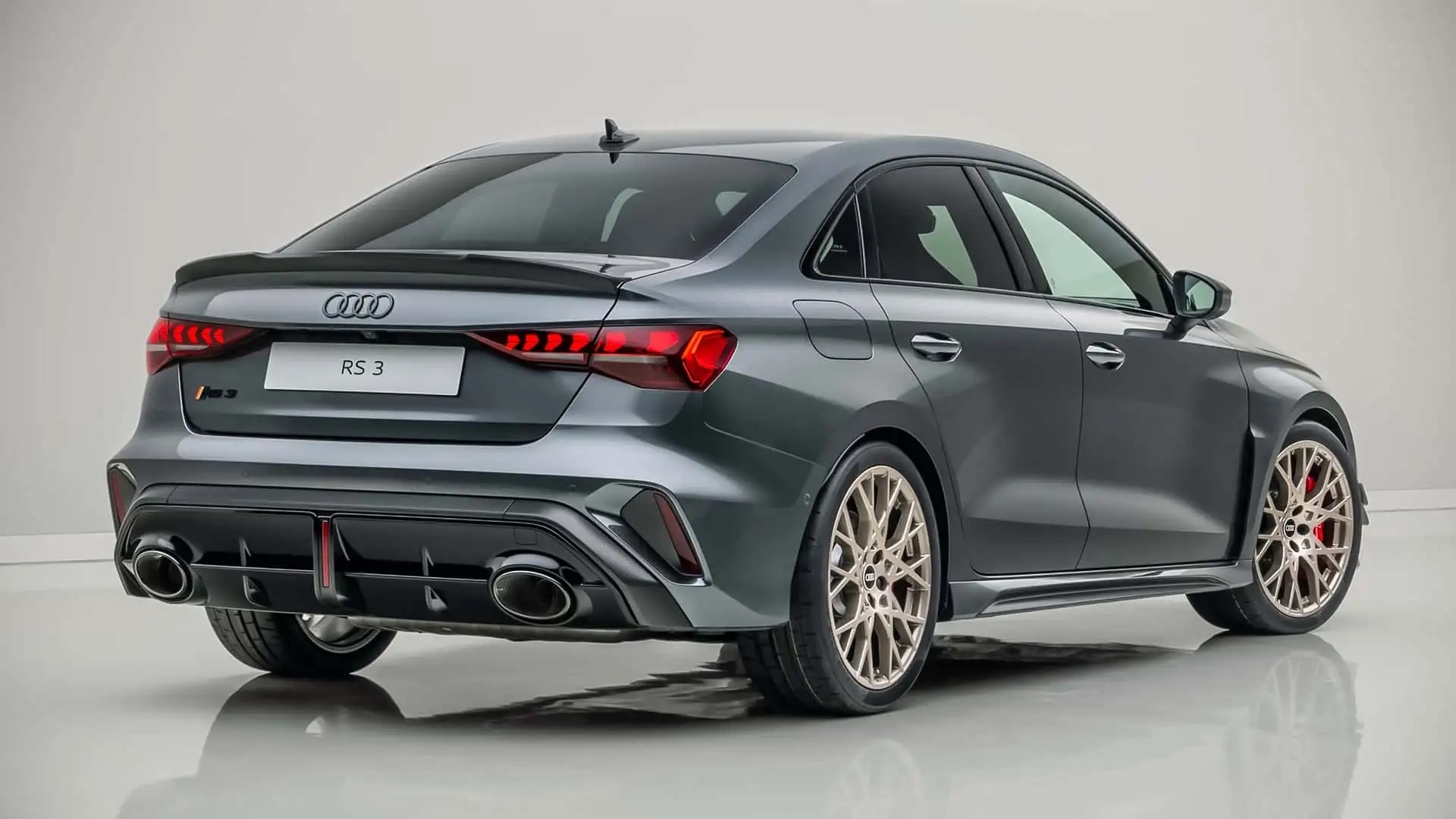
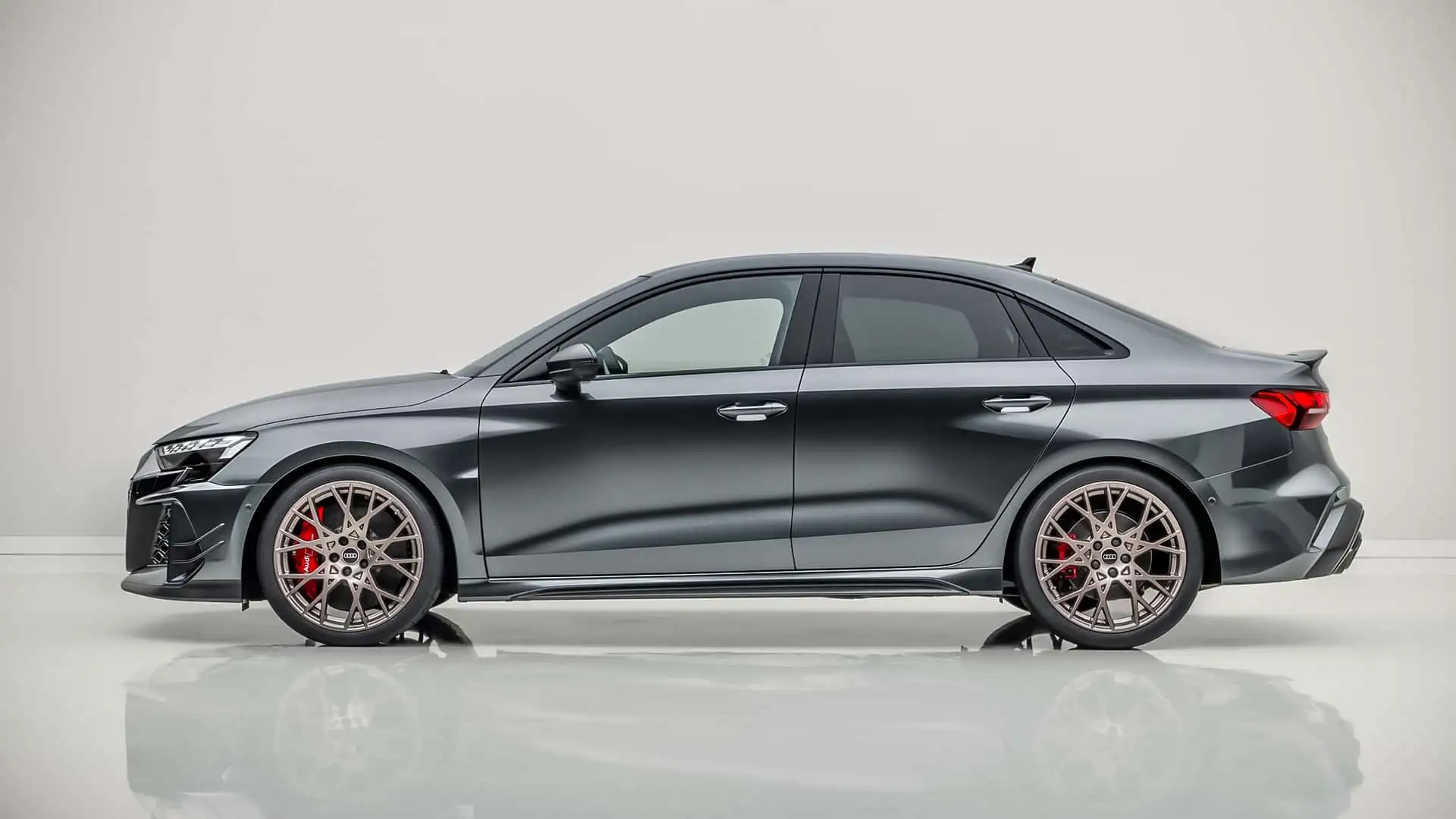
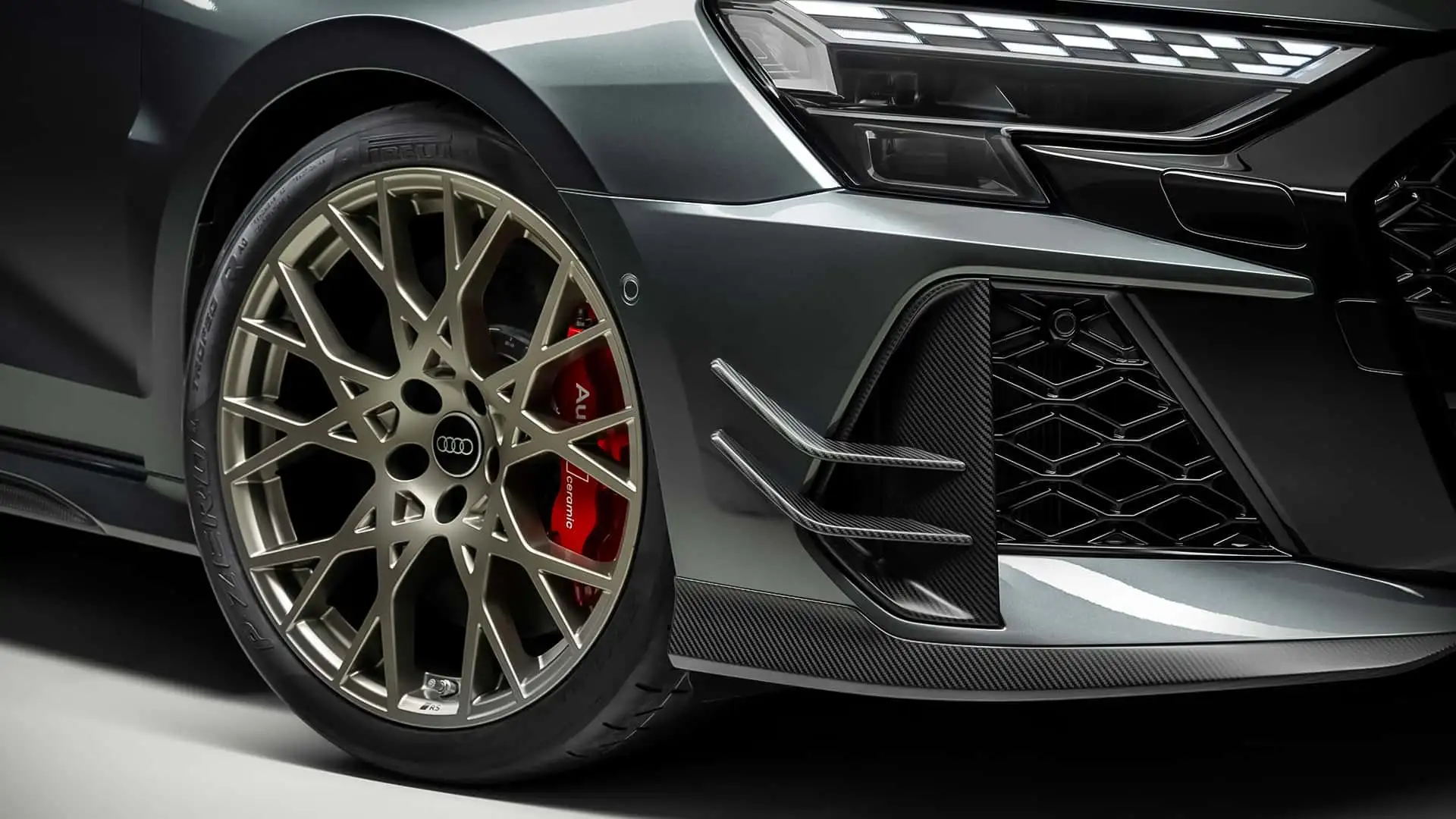
The ride height lowered by 10 mm compared to the standard RS3, combined with a thicker tubular rear stabilizer bar and increased stiffness in the rear springs, transforms dynamic behavior. Carbon-ceramic brakes with red calipers are standard on the front axle, while Pirelli P Zero Trofeo R semi-slick tires remain an option for those planning to dominate track days.
Subversive Aesthetics: Carbon and Forbidden Gold
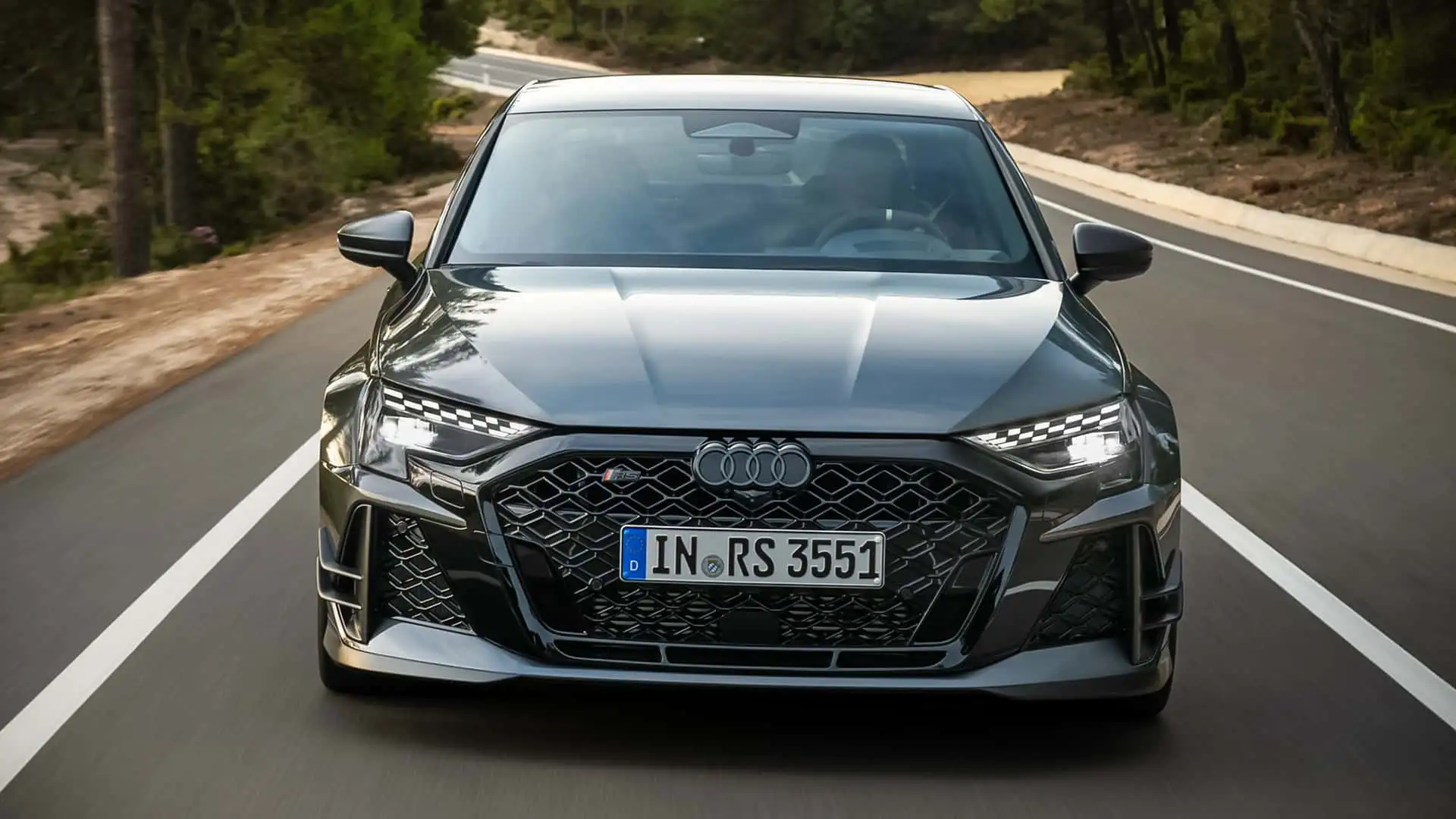
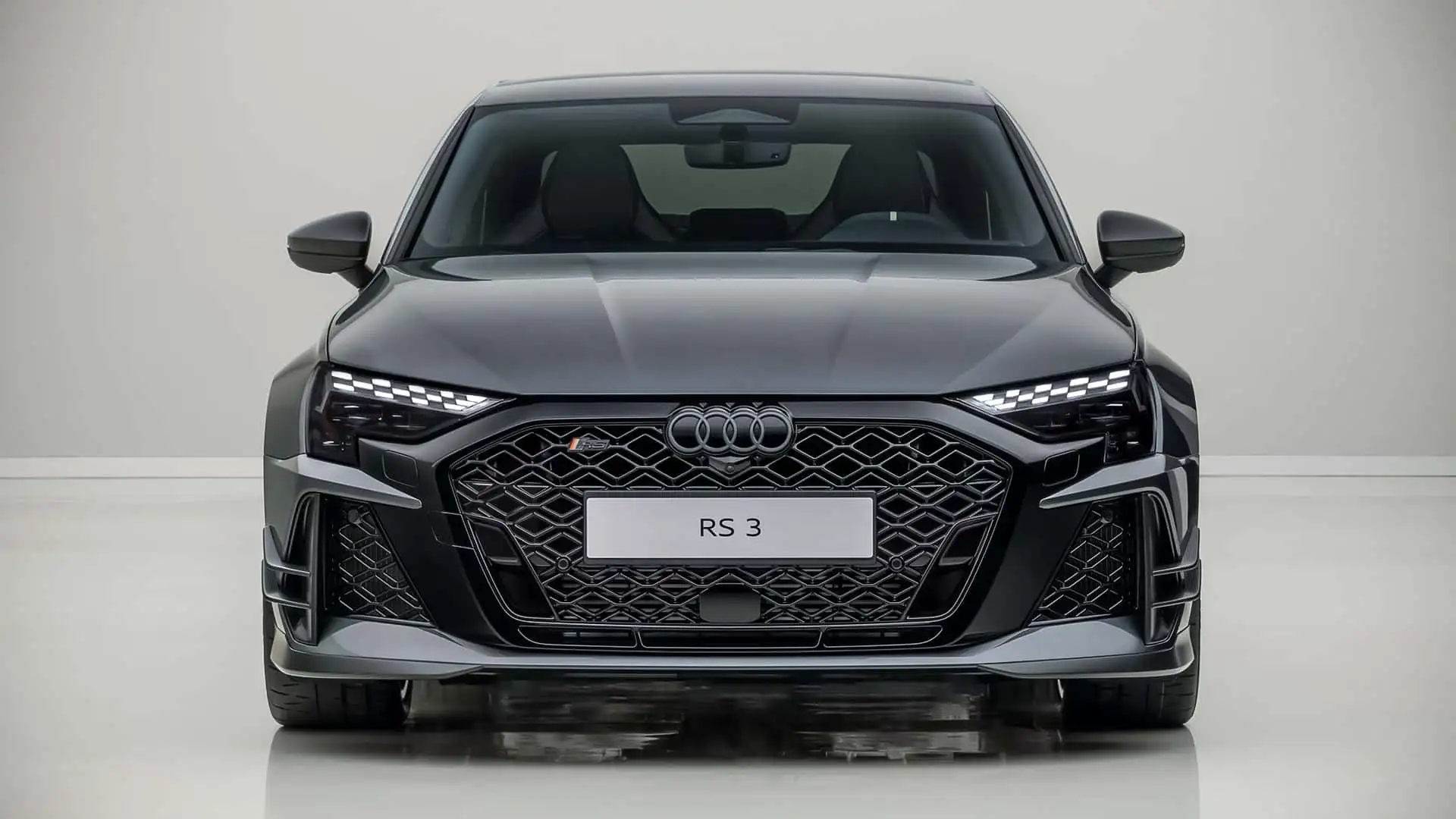
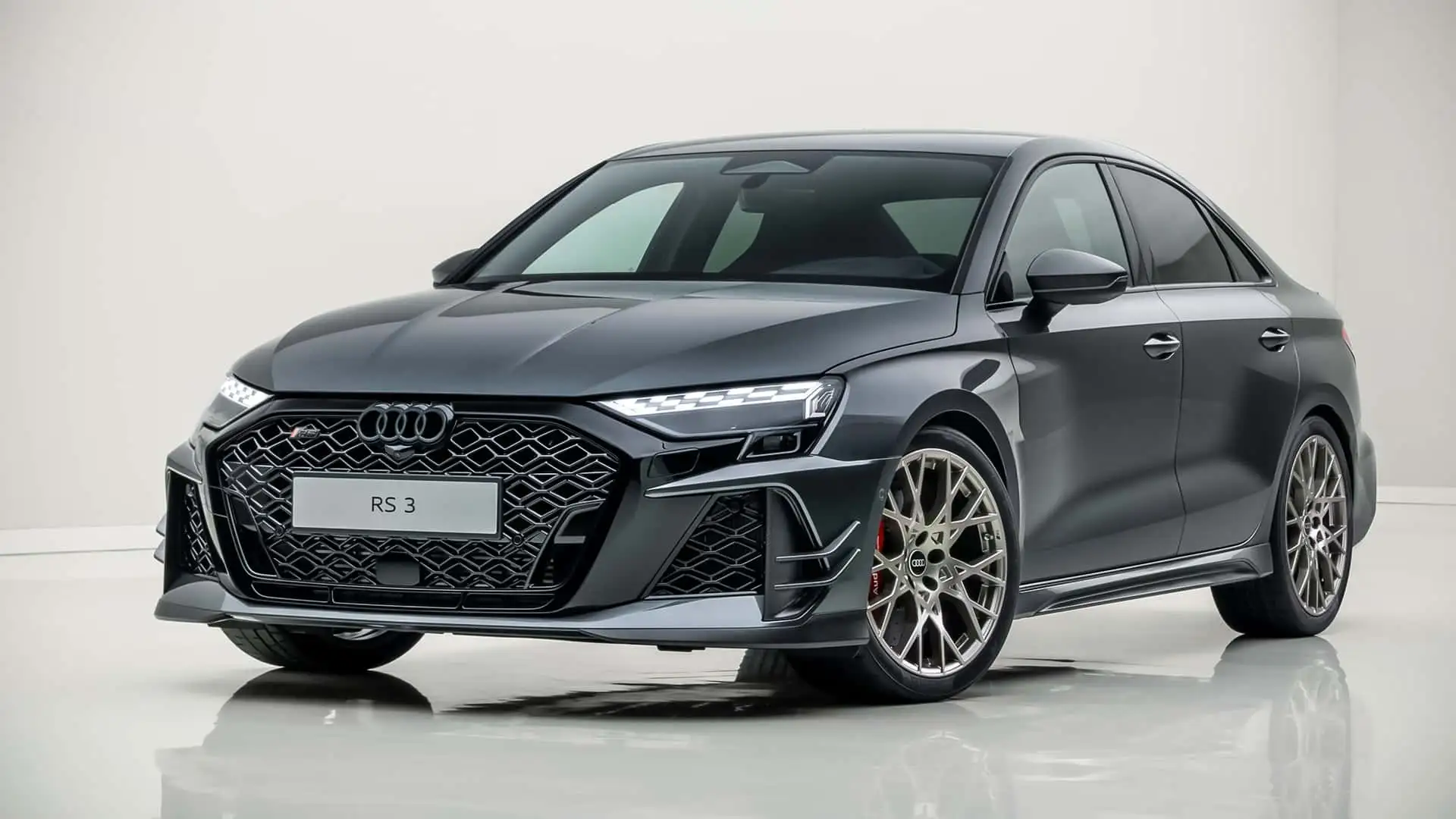
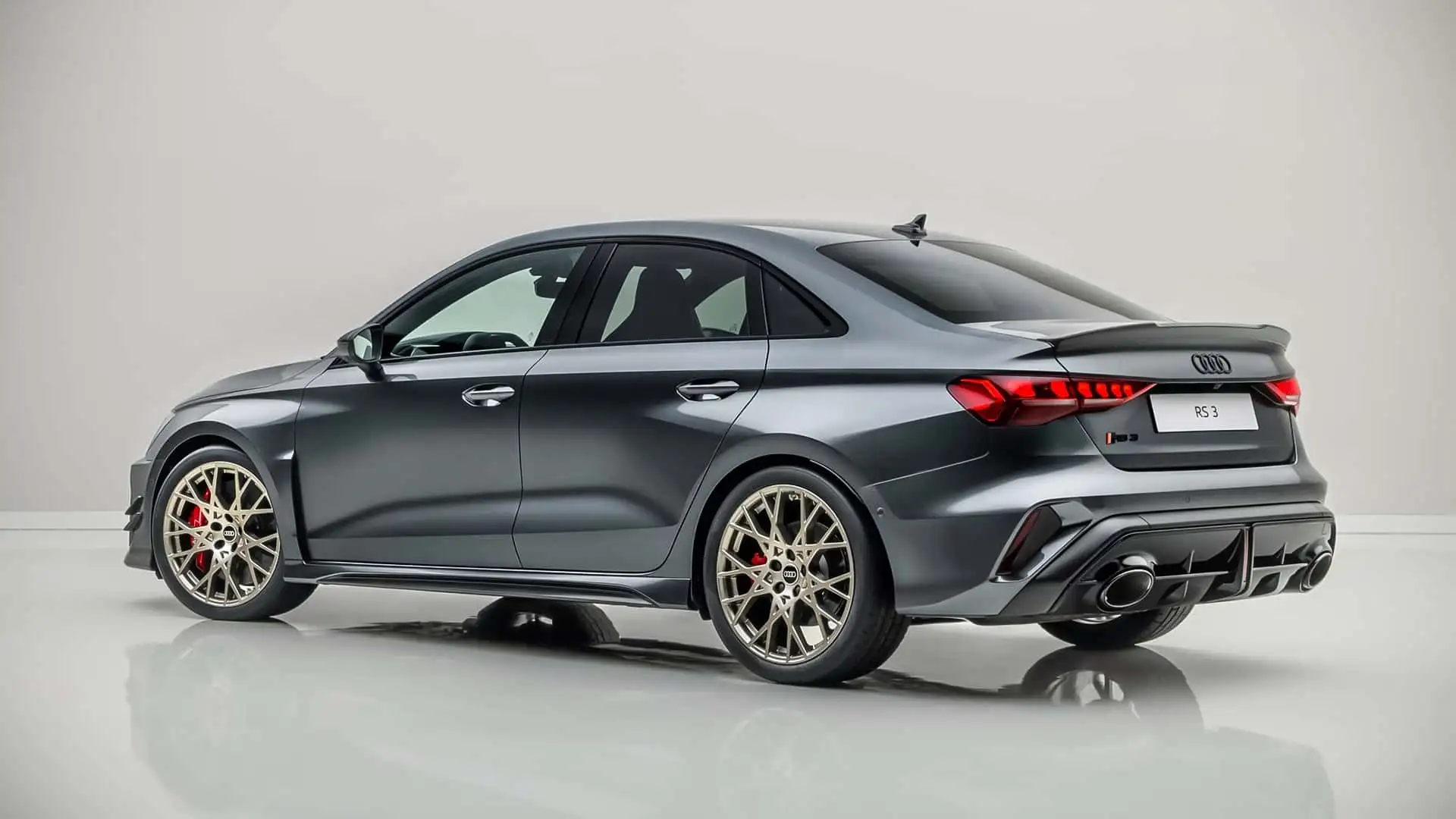
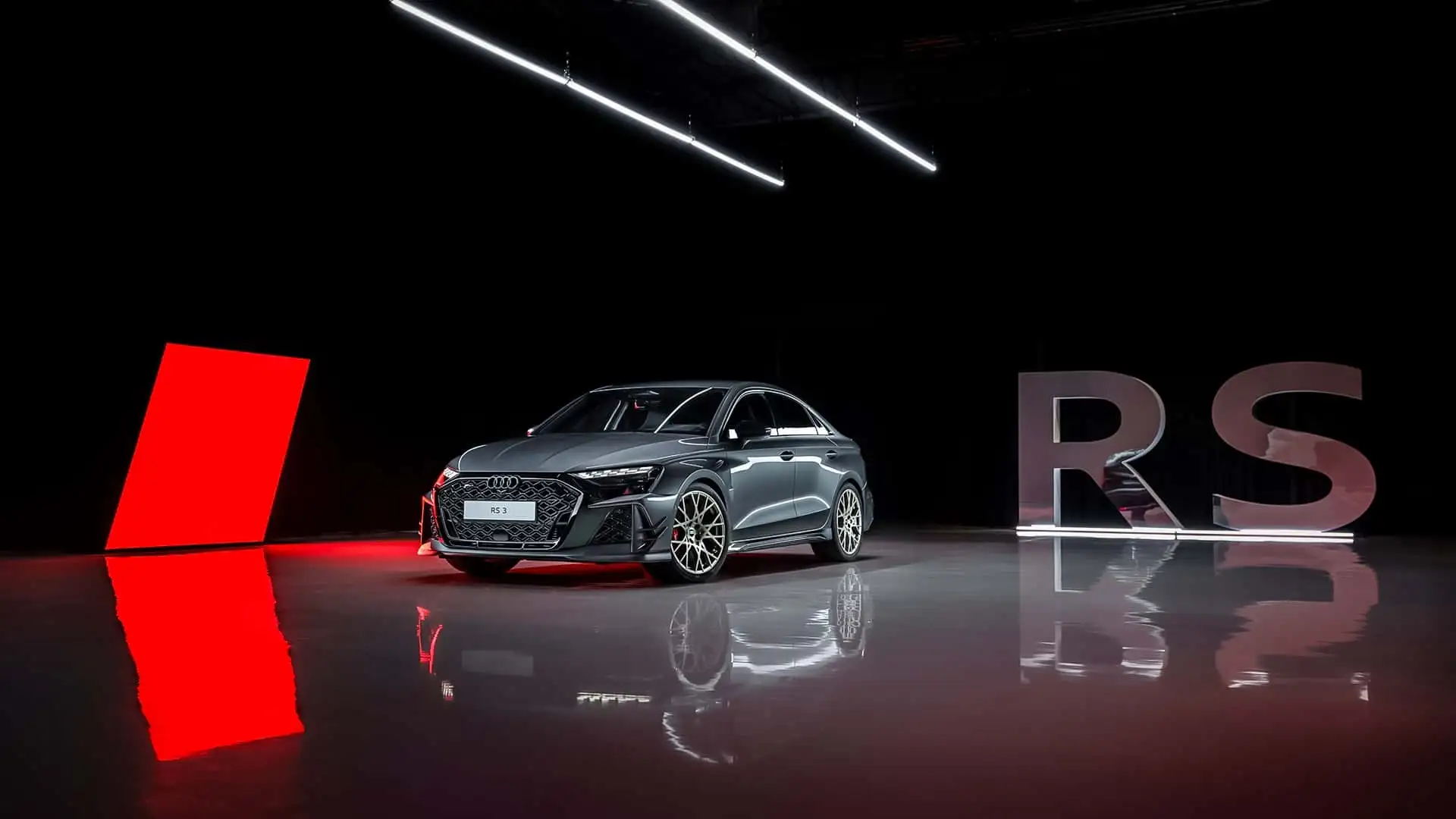
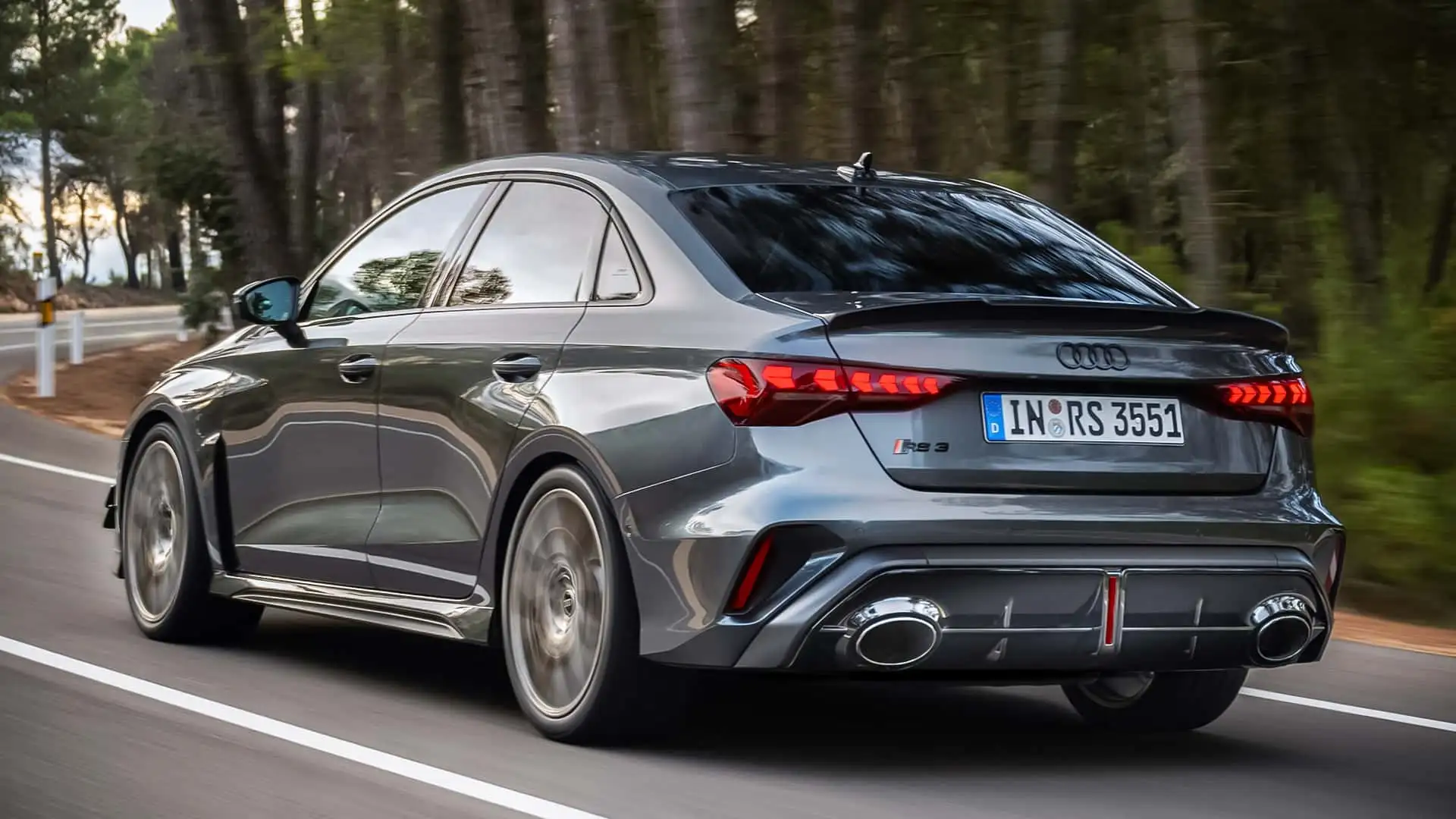
Visually, the Competition Limited communicates exclusivity without shouting. Matte carbon fiber dominates: front splitter, aerodynamic flaps, side skirts, diffuser, and the imposing roof spoiler. The forged 19-inch wheels in the exclusive matte “Neodymium Gold” color create contrast with the available body tones.
The palette includes the classic Daytona Gray, the new Matte Glacier White, and, as the main attraction, Malachite Green — a direct reference to the 1983 Audi Sport Quattro that won the Monte Carlo Rally. It’s a tribute without cheap nostalgia, executed with the precision of those who understand the importance of DNA.
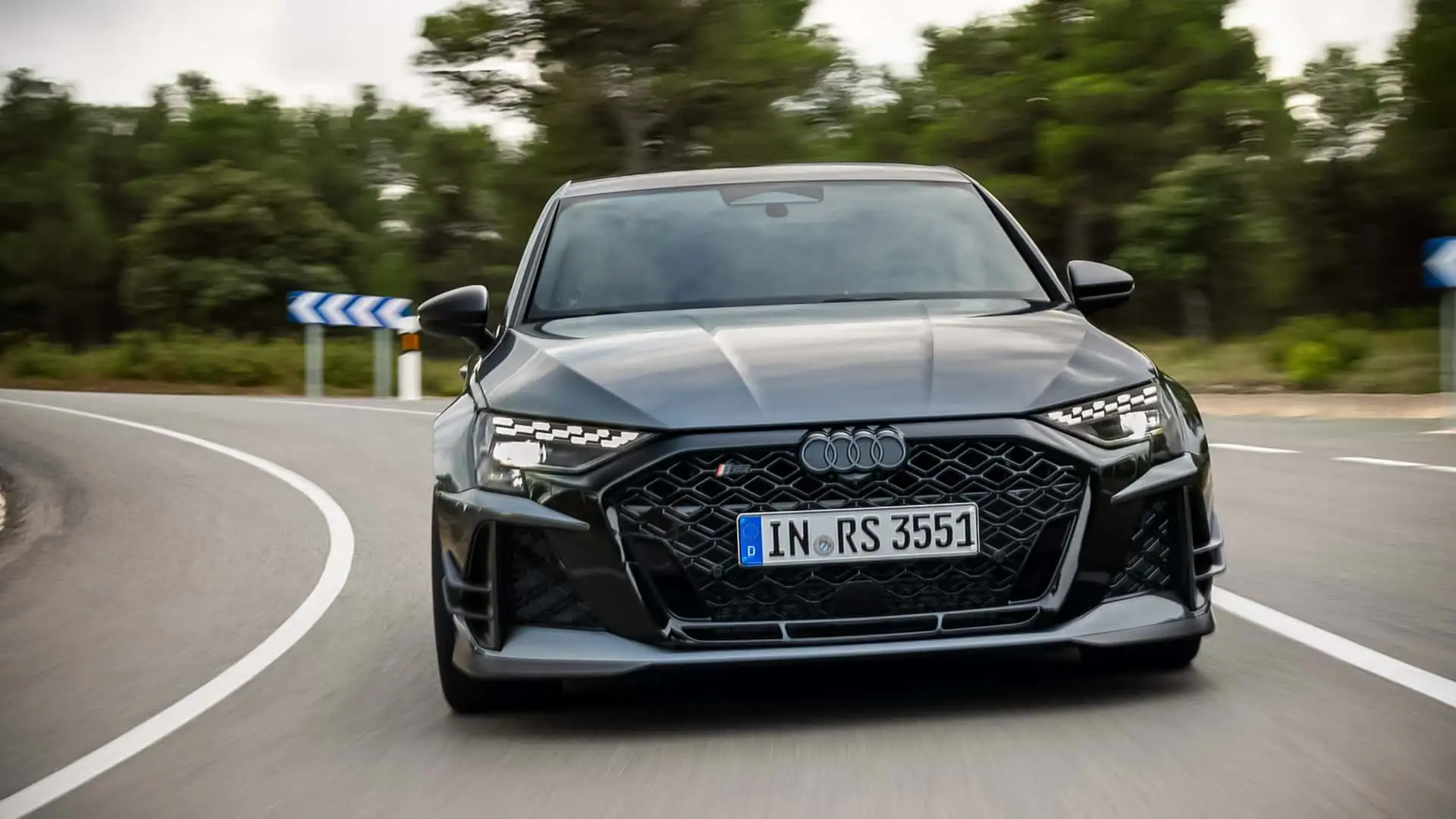
The nerdiest — and most fascinating — detail lies in the Matrix LED headlights. When locking or unlocking the vehicle, the daytime running lights turn on in the exact sequence of the engine’s ignition order: 1-2-4-5-3. It’s the kind of easter egg that separates enthusiasts from mere consumers.
Interior: Where the Analog Resists
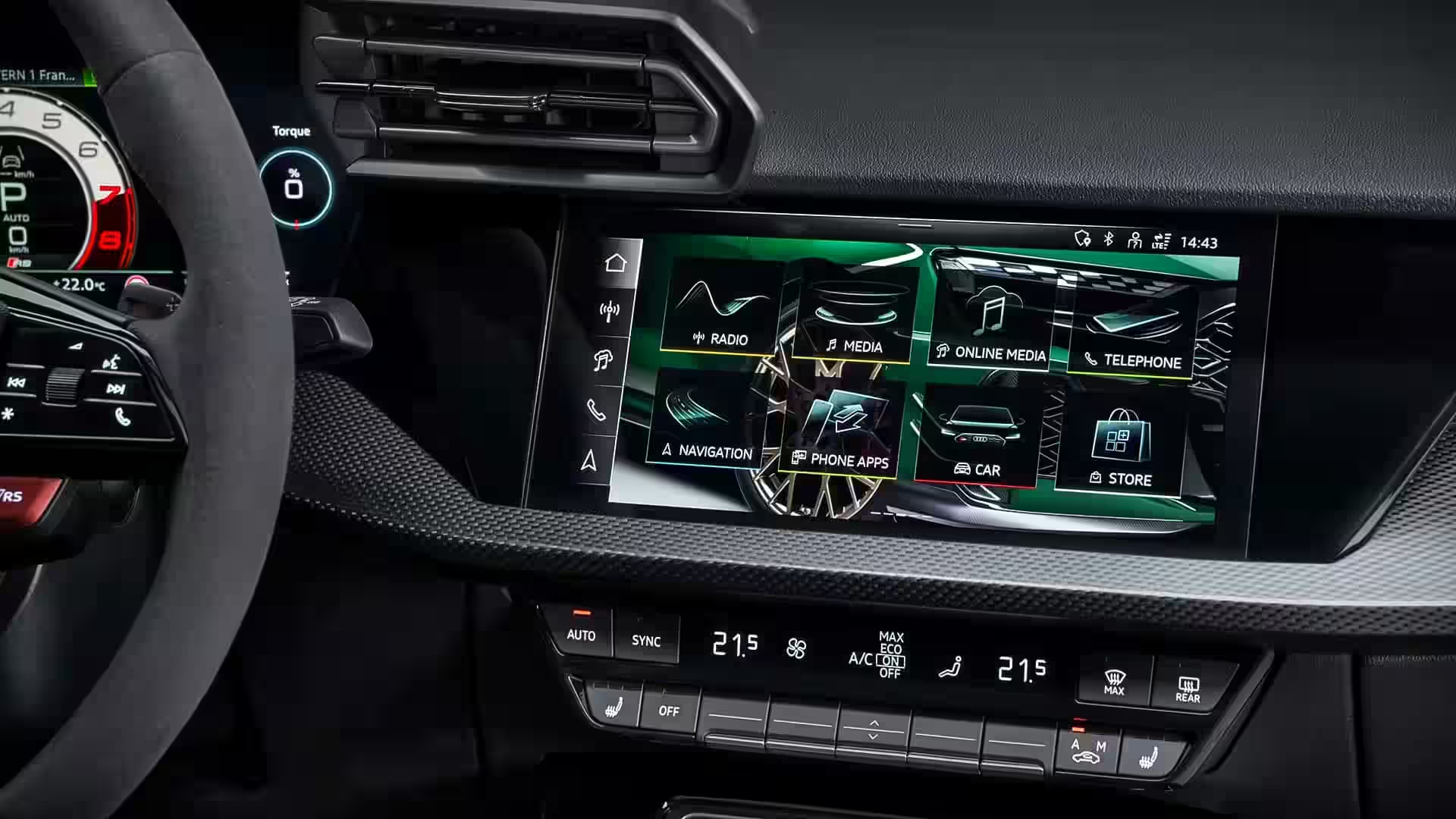
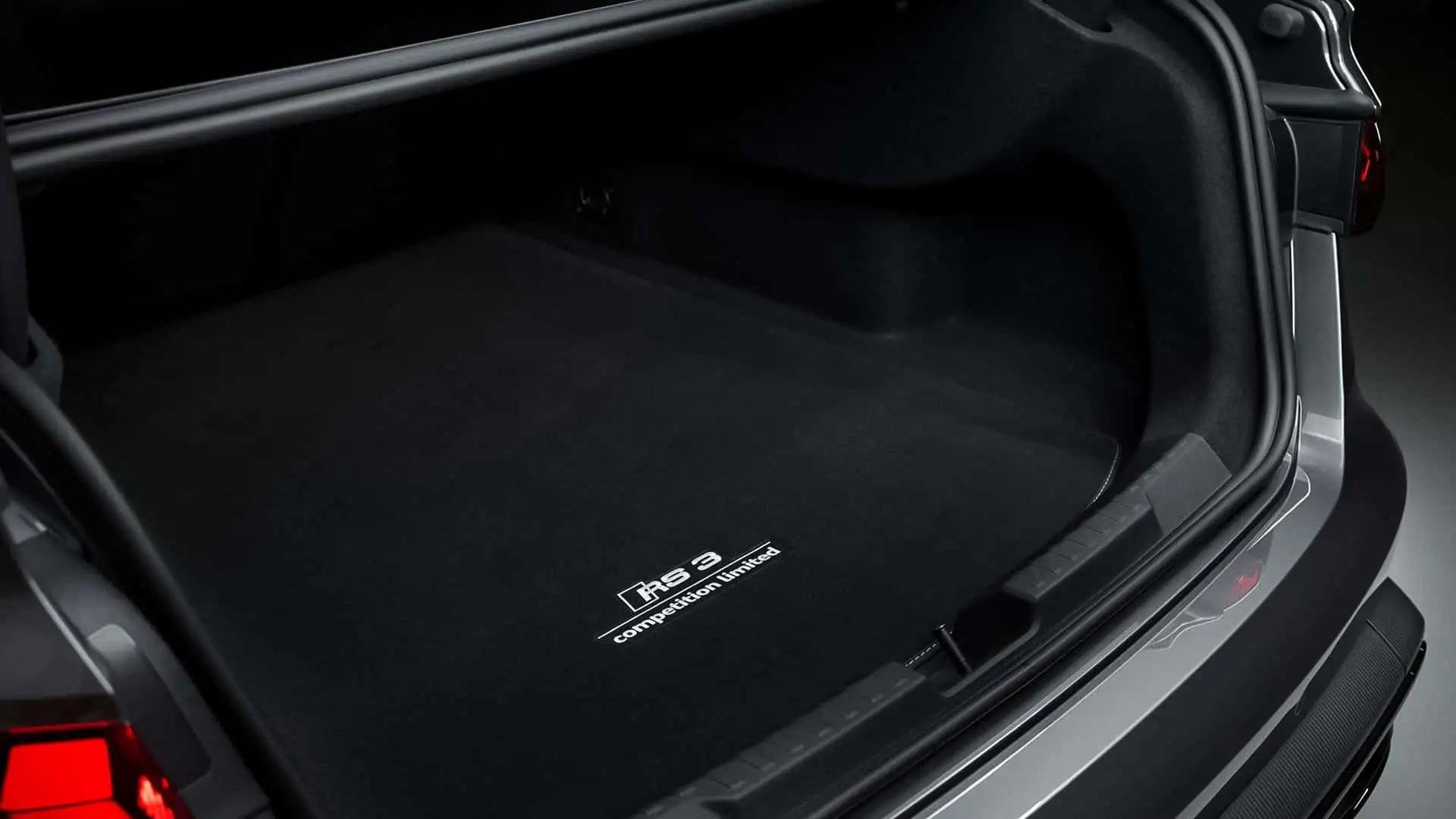
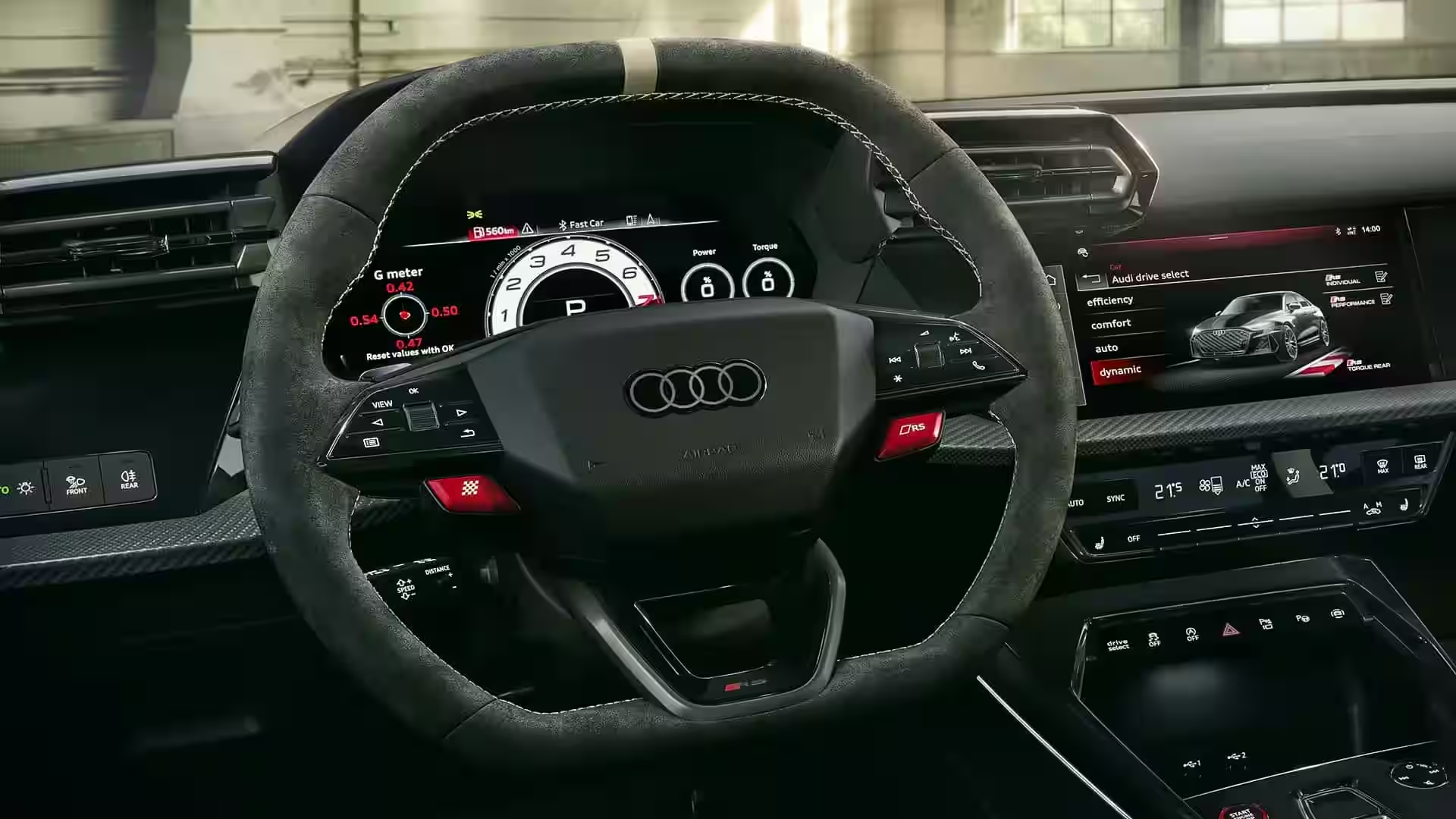
The cabin features RS sport seats with carbon backrests and centers covered in Dinamica microfiber in neodymium gold color. Stitching, seat belts, and the 12 o’clock mark on the steering wheel adopt the ginger white tone, while the digital cluster abandons conventional dark backgrounds in favor of white background displays — a direct evocation of the analog instruments from the 1994 Audi RS2 Avant. A numbered plate on the center console confirms the position of each unit among the 750 produced.
The Mathematics of Exclusivity
The global distribution reveals clear intentions: 585 Sportbacks and 165 sedans, with Germany receiving 187 units (158 Sportbacks). Unfortunately, the Sportback is not expected to arrive in the United States — a market that ironically embraced the five-cylinder in its previous generations.
In Germany, prices start at €100,680 (Sportback) and €102,680 (sedan) — more than €44,000 above a standard RS3. The justification lies in the “full option” configuration: everything Audi can offer in terms of performance and exclusivity is included, with no harsh optional packages menus. Deliveries begin in June 2026.
To contextualize the investment, it is worth comparing it with other farewells to iconic engines. While limited editions from tuning brands often charge exorbitant premiums without factory heritage, the Competition Limited represents — ironically — relative value within the universe of the last editions of legendary engines.
What makes this farewell particularly bitter is the collective awareness that we are witnessing the twilight of an era. Increasingly strict emission regulations and the accelerated shift to electrification have sealed the fate of the 2.5 TFSI in its current form. When the last 750 units find their owners, the uneven sound that defined generations of enthusiasts may fall silent forever — replaced by the synthetic hum of electric motors, no matter how fast they are.
The 2026 Audi RS3 Competition Limited is, therefore, more than just a car. It is an artifact of a civilization in transition, the final roar of an engine that refused conformity for five decades — and that, even on the brink of extinction, found the strength for a farewell that resonates through 4 kg less insulation and an ignition order immortalized in LED lights.