
Imagine a motor roaring at over 10,000 RPM, transforming fuel into pure power: the pistons are the silent heroes of this mechanical symphony. But aluminum or cast iron? The answer isn’t simple and can determine whether your car races on the track or lasts years in heavy-duty work.
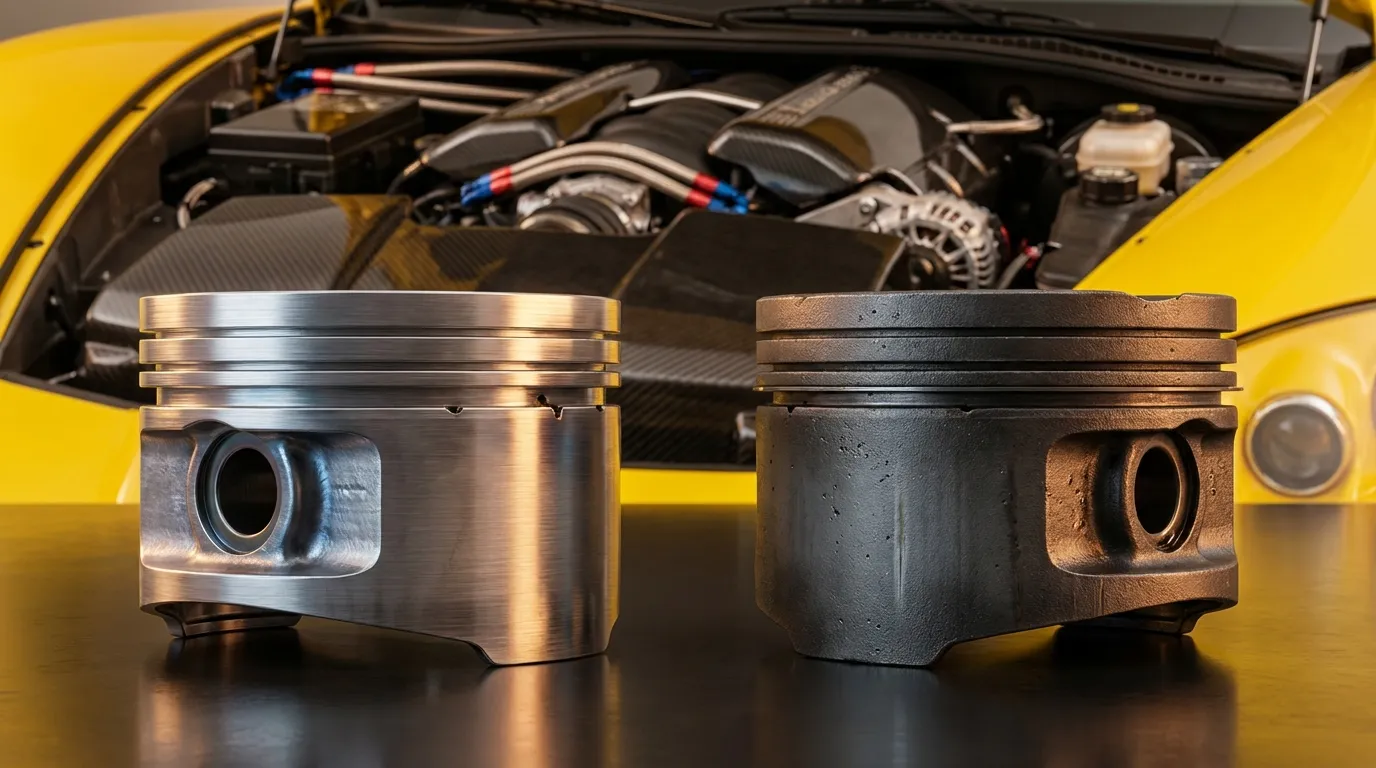
Irresistible Advantages of Aluminum Pistons: Lightness and Thermal Efficiency
Aluminum pistons have won the hearts of engineers for their dramatic weight reduction, essential in high-performance vehicles. A lighter car accelerates faster and consumes less, without sacrificing specs. Think of the LAMBORGHINI TEMERARIO, which relies on forged aluminum pistons to handle its insane 907 hp – without them, the twin-turbo V8 would be just a distant dream.
Additionally, aluminum conducts heat exceptionally well, dissipating the 600°C+ of a gasoline cylinder like no other. This prevents knocking and increases efficiency in turbo engines, such as the 4-cylinder engines that rival V8s. In everyday use, this means more torque at low RPMs and fuel savings on highways, fitting perfectly into the era of downsized engines that replace V6 and V8.
Why Cast Iron Still Reigns in Heavy Diesel Engines?
While aluminum shines on the track, cast iron is the king of extreme durability. Its resistance to thermal deformation makes it ideal for industrial diesels, where pressures exceed 2,700 psi via compression ignition. Here, aluminum would expand too much, causing catastrophic failures under continuous load.
- Superior strength: Supports endless workloads in heavy machinery.
- Long lifespan: Less wear in constant high temperatures.
- Cost-effectiveness: Perfect for commercial fleets where performance isn’t a priority.
In summary, cast iron prevents pistons from “melting” in brutal scenarios, proving that it’s not about being the lightest, but the most resilient.
Forged vs Cast: The Process That Changes Everything in Aluminum Pistons
The magic happens during manufacturing. Cast aluminum pistons are inexpensive and ideal for mass production, but fragile under stress. On the other hand, forged – heated and pressed – align the metal fibers, creating parts for F1 and supercars. In the LEXUS LFA V10, for example, they handle stratospheric RPMs without flinching.
| Type | Advantages | Disadvantages | Ideal Use |
|---|---|---|---|
| Cast Aluminum | Cheap, lightweight | Low resistance | Everyday cars |
| Forged Aluminum | High performance, strong | More expensive | Supercars, racing |
| Cast Iron | Durable, anti-expansion | Heavy | Heavy diesels |
There’s no absolute “best”: for track and supercars like the LAMBORGHINI TEMERARIO hybrid, forged aluminum wins. For tractors and generators, cast iron is unbeatable. Choose based on your scenario – and your engine will thank you with years of mechanical glory.
Want to dive deeper into components that define legends? Stay tuned for news that elevates automotive engineering to another level.