Every time a car launches hard, exits a corner, or lays down power cleanly, it relies on a mechanical idea so old it predates the automobile by nearly 2,000 years.
The 90-Degree Torque Problem That Changed Engineering Forever
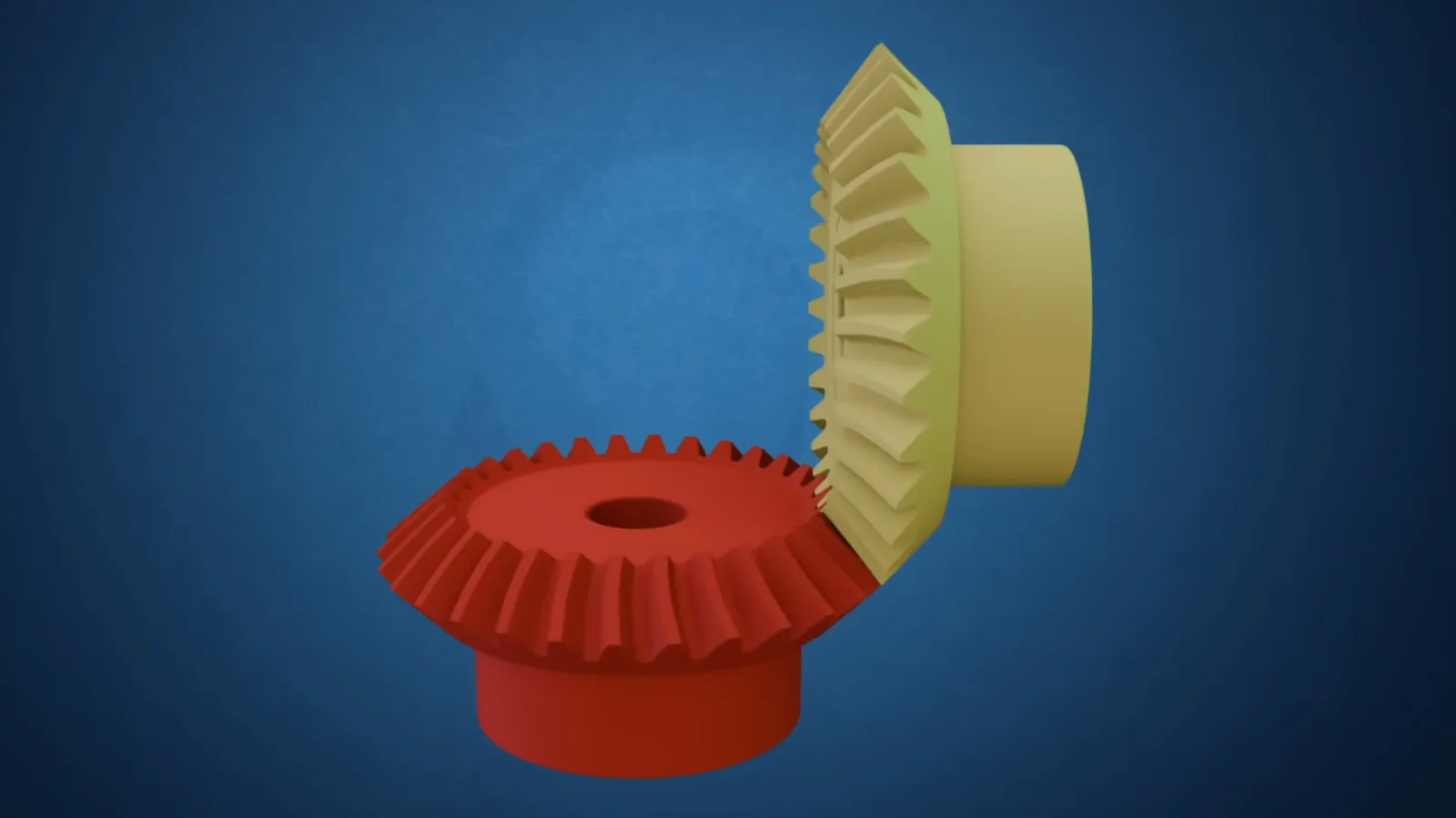
Internal combustion engines, electric motors, and hybrid systems all face the same basic challenge: rotational power usually travels in a straight line through a shaft, but the wheels often need that power redirected. In rear-wheel-drive vehicles, torque leaves the transmission, runs through the driveshaft, and then must turn 90 degrees to reach the axle shafts and wheels.
That redirection is one of the most important mechanical tricks in history. Today, we call the key assembly a differential. In practice, it does more than just bend torque around a corner. It also allows the left and right wheels to rotate at different speeds during turns, improving stability, tire life, and drivability.
This is why the topic matters far beyond textbooks. Without this mechanical solution, modern performance icons, off-road trucks, family SUVs, and EVs would all be dramatically less capable. It is the same hidden logic behind traction-focused machines and torque-rich family haulers, including vehicles discussed in this breakdown of the KIA TELLURIDE 2027 and its torque-first turbo strategy.
How Vitruvius Solved It Before Cars Even Existed
The earliest known breakthrough in right-angle power transmission is linked to Vitruvius, the Roman engineer and architect from the 1st century BCE. He described a system that took rotary motion from a waterwheel and redirected it to drive machinery on another axis.
His solution used a gear arrangement that transferred motion from a horizontal shaft to a vertical one. That may sound simple now, but at the time it was revolutionary. It meant energy from flowing water could be rerouted into useful mechanical work for grinding grain and powering industrial tools.
Why this matters: Vitruvius did not invent the car differential, but he established the core mechanical principle that makes it possible.
Over the centuries, engineers refined this idea with better gear geometry, stronger materials, and more efficient tooth profiles. Early wooden gears gave way to cast iron. Later, improved metallurgy and manufacturing precision enabled more durable and quieter gearsets. Helical and bevel gear designs further reduced vibration, shock loading, and noise.
That same obsession with reducing harshness and improving power delivery still shapes the modern automotive world. If you want to understand how small hidden components dramatically affect ride quality and response, it connects well with this look at the hidden component that decides comfort, durability, and brutal response.
From Roman Mills To Modern Drivetrains
| Era | Mechanical Solution | Main Benefit |
|---|---|---|
| Ancient Rome | Right-angle gear transfer | Redirected waterwheel power to machinery |
| Industrial Age | Iron gears and improved tooth shapes | Higher load capacity and durability |
| Modern Cars | Bevel gears inside differentials | 90-degree torque transfer to drive wheels |
| Performance Vehicles | Limited-slip and torque-vectoring systems | Better traction and corner-exit acceleration |
Why Modern Differentials Are Far More Than Simple Gears
In a modern rear-wheel-drive car, the differential usually contains a ring gear and pinion gear that turn the flow of power by 90 degrees. But that is only the start. Inside, side gears and spider gears manage speed differences between the left and right wheels. Without that function, the car would bind and scrub tires every time it turned.
Performance applications add another layer. A limited-slip differential helps prevent one wheel from spinning uselessly when traction drops. Instead of wasting torque on the wheel with the least grip, the system biases more power to the wheel that can use it.
- Open differential favors smooth street operation but can waste power in low-grip situations
- Mechanical limited-slip differential uses clutches, cones, or gears to improve traction
- Torsen differential uses worm gear mechanics to bias torque intelligently
- Electronic differential control can brake an individual wheel or actively vector torque
- Locking differential can force both wheels to turn together for extreme traction needs
This is where ancient mechanical thinking meets modern software. Many advanced AWD and EV systems now use electronic controls to distribute torque with extraordinary precision. Some systems react in milliseconds, constantly adjusting for grip, steering angle, throttle input, and wheel speed.
That is also why high-performance all-wheel-drive legends remain so fascinating. The same 90-degree torque logic evolved into drivetrain layouts that rewrote traction and handling expectations, as seen in this AUDI UR-QUATTRO restomod story.
Even electric vehicles, despite their different packaging freedom, still depend on clever torque routing. Some use individual motors to avoid traditional differential compromises, while others still rely on reduction gears and differential assemblies. The mission remains the same: send torque where it matters, when it matters.
And if torque itself is often misunderstood, that makes drivetrain engineering even more critical. For readers who want a practical angle, this article on specified torque and hidden workshop mistakes adds an important real-world layer.
The biggest takeaway? Burnouts, drag launches, hill climbs, wet-road grip, and stable corner exits all trace back to one deceptively simple engineering victory: humanity learned how to make rotational force turn a corner without losing control.
That ancient breakthrough never disappeared. It simply evolved into one of the most essential systems in every serious drivetrain, from family crossovers to hypercars like those compared in this PORSCHE 911 TURBO S vs Ferrari SF90 acceleration face-off.
Long before launch control, torque vectoring, and electronic traction management, the real revolution was much simpler: engineers figured out how to bend power around corners.