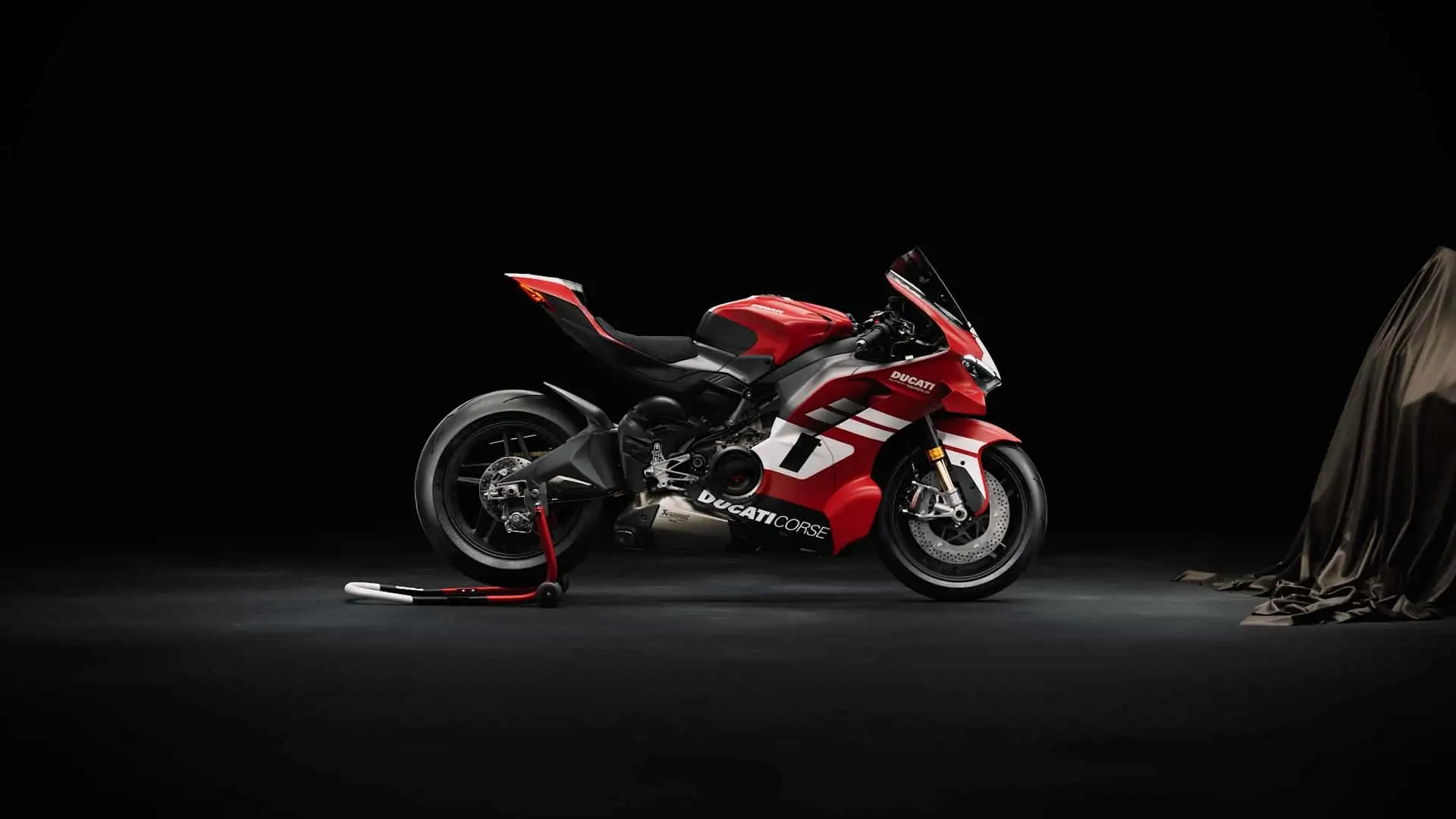
DUCATI SUPERLEGGERA V4 CENTENARIO combines carbon fiber and 247 hp. Meet the road bike with pure MotoGP DNA. See all the details here!
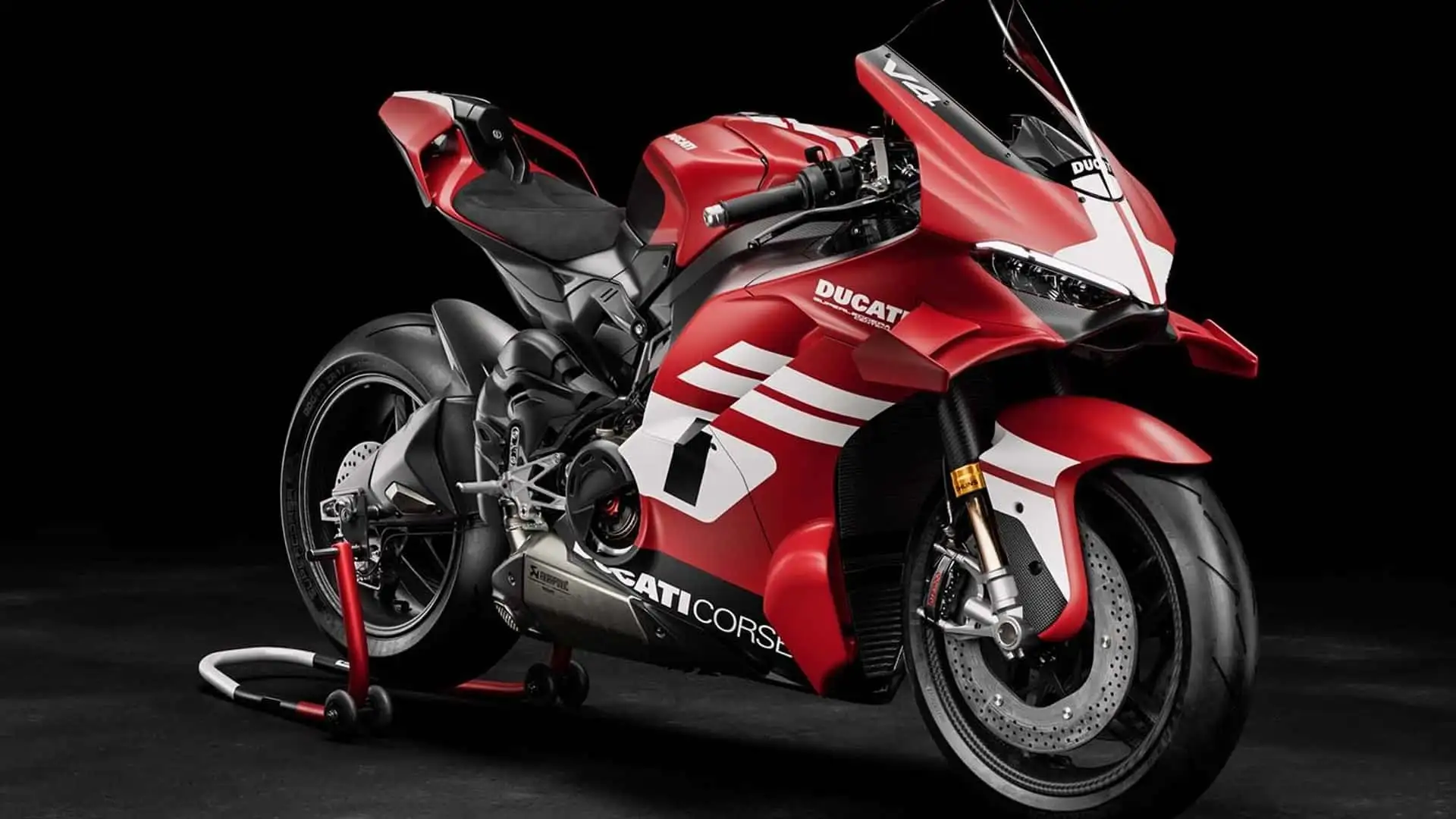
Ducati did not celebrate 100 years with nostalgia. It built a carbon-fiber missile with MotoGP DNA, 247 hp, and the kind of exclusivity that instantly turns a motorcycle into legend.
What Makes The Ducati Superleggera V4 Centenario So Extreme?
The Ducati Superleggera V4 Centenario is not just another commemorative special edition. It is Ducati’s most radical expression of a road-legal motorcycle, built to mark the brand’s centenary with engineering excess instead of ceremonial restraint. Limited to 500 units, this machine sits at the intersection of collectible art, race technology, and production-bike insanity.
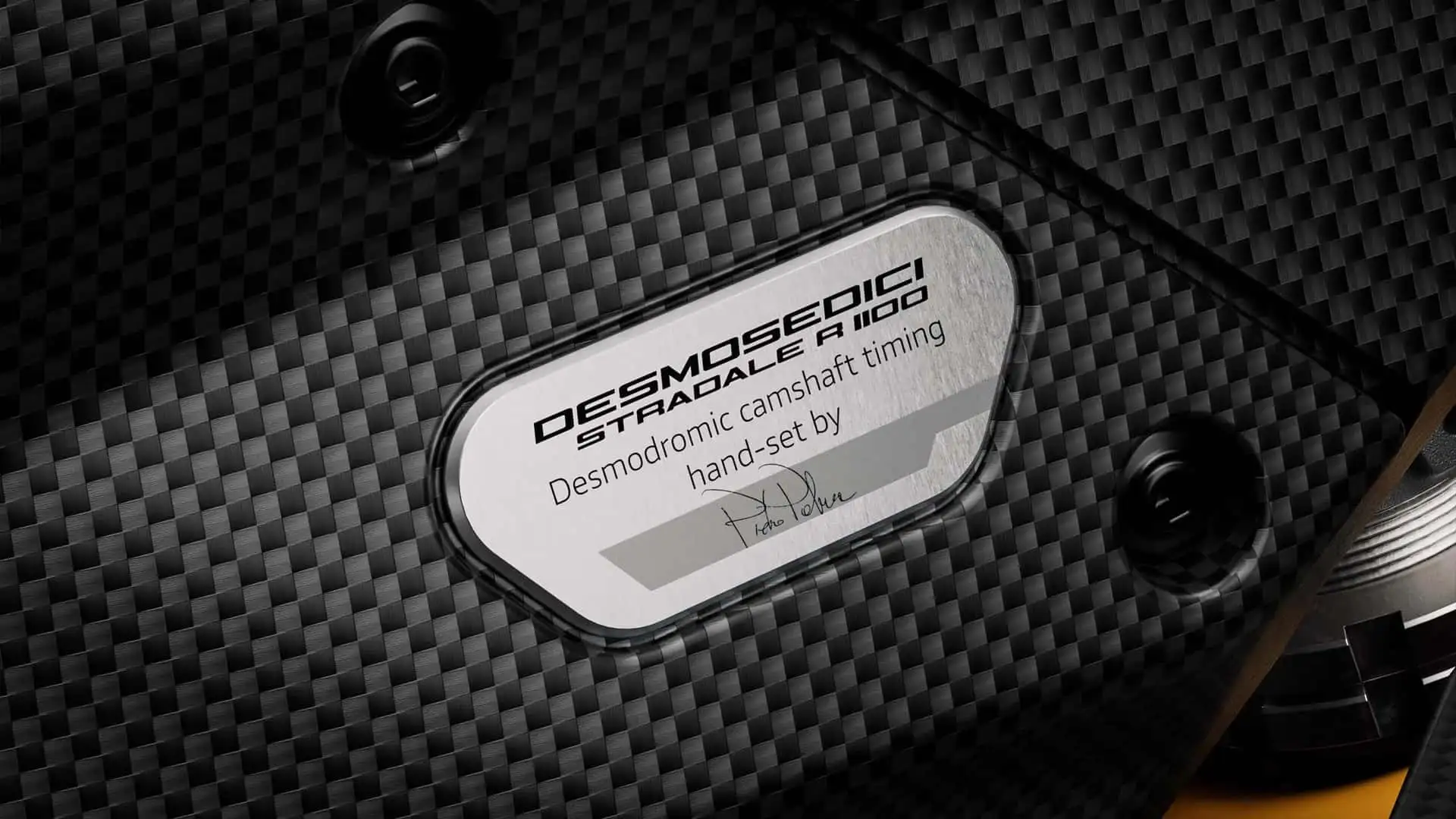
At the center of the project is Ducati’s 1,103 cc Desmosedici Stradale V4, an engine architecture deeply linked to the company’s racing knowledge. In standard road trim, Ducati says the bike produces 228 hp. Install the included Akrapovič racing exhaust and dedicated race calibration, and output climbs to an astonishing 247 hp. For a motorcycle that can legally wear a license plate, that number alone changes the conversation.
This is also a machine obsessed with weight reduction. The Superleggera name has always represented Ducati’s ultimate lightweight philosophy, and the Centenario pushes it further with a massive use of advanced materials. The frame, swingarm, bodywork, and wheels all rely heavily on carbon fiber. Ducati has also fitted carbon ceramic Brembo braking technology, a detail that underlines how far removed this bike is from conventional superbikes.
For readers who follow extreme performance machines beyond the two-wheel world, this same philosophy of removing compromise can also be seen in hyper-exclusive projects like the LAMBORGHINI REVUELTO Novitec with more than 1,048 hp, where engineering becomes a statement rather than just a spec sheet. Ducati is doing the motorcycle equivalent here.
Even more impressive is how Ducati has combined the power increase with race-focused electronics, serious aerodynamic development, and a level of material sophistication that borders on prototype territory. This is not a styling package. It is a full technical exercise in what happens when a manufacturer gives its engineers permission to chase the maximum.
Official Highlights That Define The Centenario
- Engine 1,103 cc Desmosedici Stradale V4
- Power 228 hp in street configuration
- Power with racing exhaust 247 hp
- Production Limited to 500 motorcycles worldwide
- Construction Carbon fiber frame, bodywork, wheels, and swingarm
- Suspension Öhlins NPX 25/30 Carbon fork and fully adjustable Öhlins rear shock
- Brakes Brembo high-performance carbon ceramic system
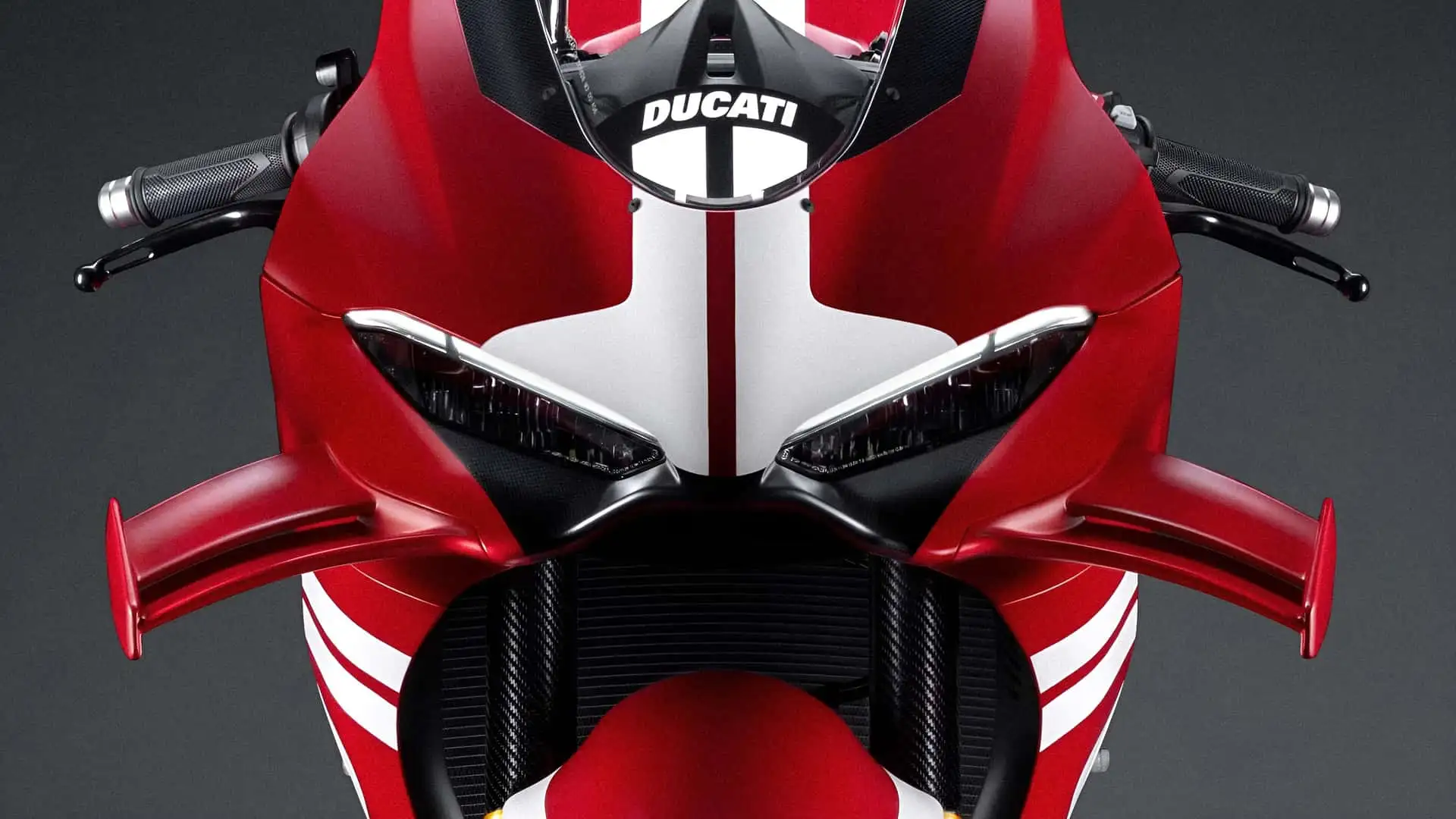
- Aerodynamics MotoGP-inspired winglets and airflow management
- Transmission Ducati racing-style gearbox layout
Carbon Fiber Everywhere, MotoGP Aerodynamics, And A Chassis Built Without Mercy
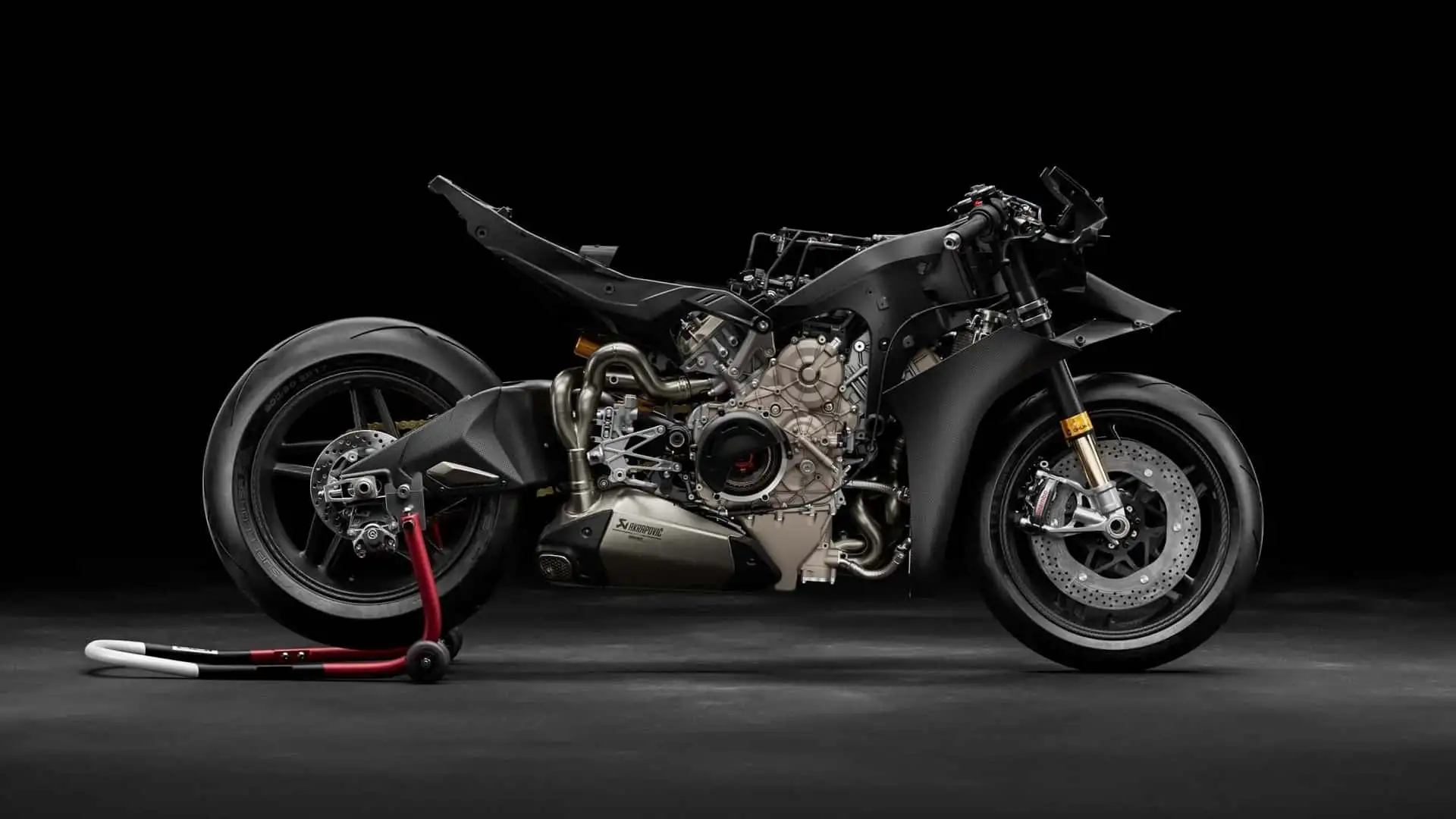
If the engine is the heart of the Ducati Superleggera V4 Centenario, then the chassis and aero package are its defining personality. Ducati did not simply make the bike powerful. It made it surgically focused.
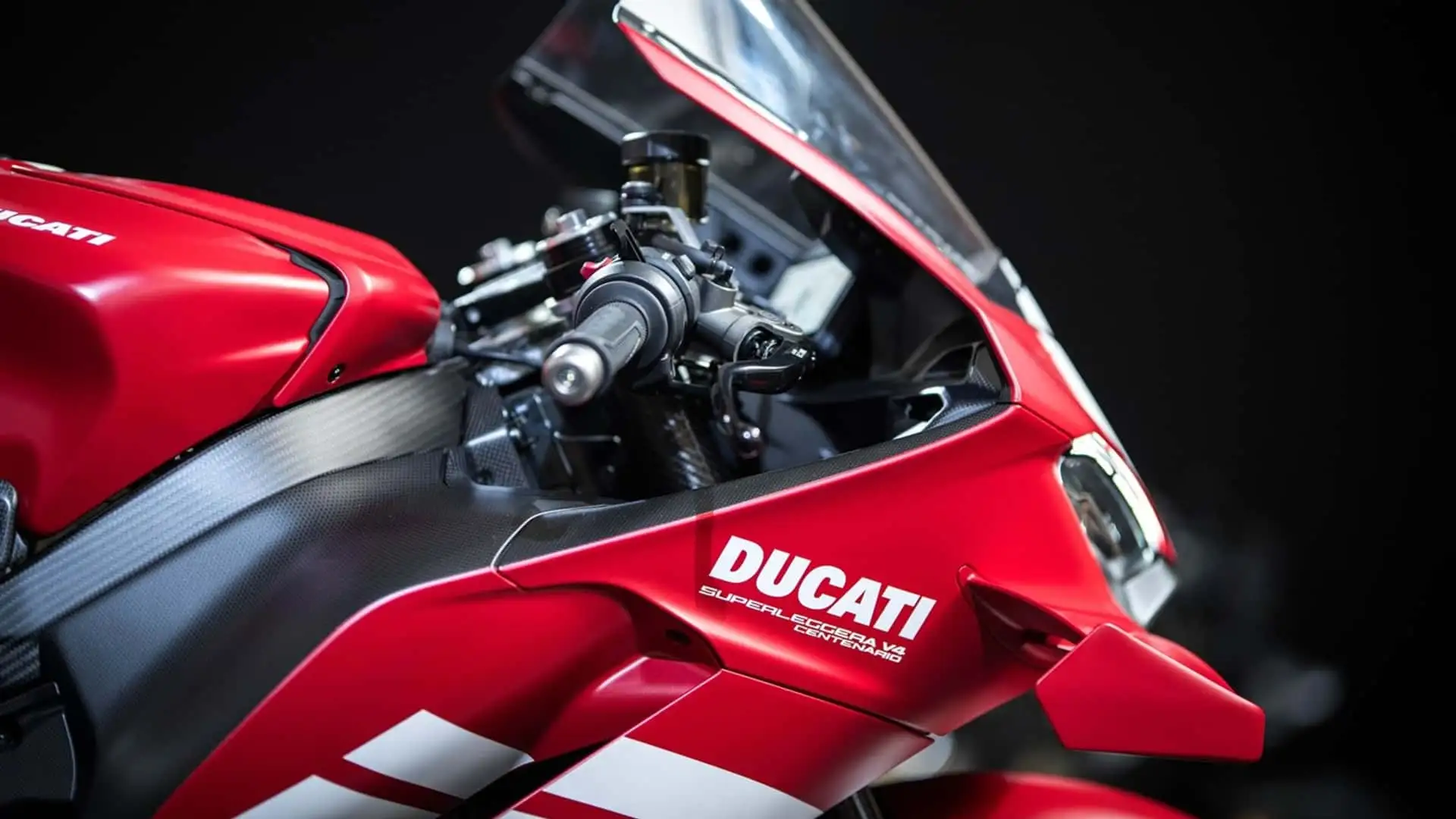
The use of carbon fiber here is unusually comprehensive even by modern exotic standards. On many premium motorcycles, carbon is used selectively for visual drama or modest weight reduction. On the Centenario, carbon is structural, functional, and central to the bike’s identity. The frame, swingarm, fairings, and wheels all contribute to cutting mass while sharpening handling response.
One of the most technically significant details is the front suspension. Ducati states that the bike uses the Öhlins NPX 25/30 Carbon fork with carbon fiber sleeves, making it the first road motorcycle to feature this solution. This is not a cosmetic flourish. Reducing unsprung and front-end mass has a direct impact on direction changes, steering precision, and how the rider feels the tire loading during aggressive braking and corner entry.
That matters because the Centenario is designed to exploit racetrack-level grip and speed. Ducati has built in aero surfaces derived from its premier-class racing work, including front winglets and carefully shaped bodywork to improve high-speed stability, increase front-end load under acceleration, and reduce nervousness when the bike is operating at speeds where ordinary road machines begin to feel compromised.
The strategy mirrors what has happened in the four-wheel performance world, where road cars increasingly borrow downforce-driven thinking from motorsport. If that trend interests you, the BMW M2 Track Kit M Performance shows how even street-legal cars are being transformed into aerodynamic weapons without losing registration.
Ducati’s electronic package is equally important. The ECU logic is derived from the brand’s race-bred hardware and recalibrated for the Centenario’s added output. Riders get a broad suite of advanced controls, including traction control, wheelie control, slide control, launch control, and ride modes tailored for different conditions. On a bike with this power-to-weight profile, electronics are not just convenience tools. They are part of the machine’s survival kit.
The Ducati Superleggera V4 Centenario is less about comfort or usability and more about translating the logic of a factory race program into something a private owner can register, collect, and occasionally unleash.
There is also a distinctive racing gearbox layout with neutral below first gear, a solution familiar to competition environments and appreciated by riders who value quick and consistent gear engagement. It is a small detail on paper, but on a machine built around precision, details like this matter.
Why The Weight Story Is As Important As The Horsepower
Big horsepower generates headlines, but the real magic of the Superleggera formula has always been the relationship between output and mass. Ducati’s engineering approach here is based on a simple truth: a lighter motorcycle accelerates harder, brakes later, changes direction faster, and asks less of its tires.
That is why the carbon architecture matters so much. It is also why the Centenario enters a rare territory occupied by only the most obsessive vehicles of any type. The same collector mindset can be seen in ultra-limited machines like the GORDON MURRAY T.50S Niki Lauda, where engineers chase purity, not compromise.
| Category | Ducati Superleggera V4 Centenario |
|---|---|
| Engine | 1,103 cc V4 |
| Street Power | 228 hp |
| Race Exhaust Power | 247 hp |
| Production Volume | 500 units |
| Main Material Theme | Extensive carbon fiber use |
| Purpose | Road-legal superbike with MotoGP-level influence |
Price, Ownership Experience, And Why This Ducati Is Already More Than A Motorcycle
Exotic machines like this are never sold as mere transportation. Ducati understands that buyers at this level expect a full ownership ritual, and the Superleggera V4 Centenario delivers one.
Owners receive a curated package that goes far beyond the motorcycle itself. The delivery presentation includes a custom wooden crate, certificate of authenticity, dedicated cover, paddock stands, and a track-use kit. That race kit includes the Akrapovič exhaust, race software, aluminum fuel cap, brake lever guard, battery maintainer, racing seat, and multiple carbon protective components.
In practice, Ducati is selling not only the bike, but also a curated bridge between road ownership and circuit deployment. The kit allows removal of road-going components such as mirrors, lights, plate carrier, and sidestand-related equipment, making track preparation cleaner and more brand-integrated than what owners of ordinary superbikes experience.
Then there is the MotoGP Experience. A select group of 26 owners will receive access to a special track event with Ducati instructors, culminating in a ride experience connected to Ducati’s top-tier racing world. That elevates the Centenario from a purchase to a credential. It gives owners a narrative few machines can match.
As for price, Ducati has kept official figures restrained in some communications, but the expectation is that this motorcycle lands deep into six-figure territory depending on market, taxes, and optional apparel. Estimates place it roughly in the US$100,000 to US$150,000 region, though exclusivity often shifts final transaction realities. At that level, the Centenario competes less with other motorcycles and more with collectible exotic objects.
That creates an interesting debate. Will most owners really ride it, or will many preserve it as a future blue-chip collector piece? Ducati history suggests both paths will happen. Some buyers will put it on display beside art and supercars. Others will use it exactly as intended and discover whether a road-legal Ducati can genuinely feel like a filtered MotoGP prototype.
For enthusiasts drawn to motorcycles that prioritize emotion and mechanical identity over mass appeal, there is a fascinating contrast between this carbon-intensive missile and more accessible machines such as the TRIUMPH DAYTONA 660 2026 or the HONDA X-ADV 2026. Those bikes speak to usability and broad appeal. The Centenario speaks to obsession.
That obsession is exactly the point.
Ducati could have marked its centenary with a paint scheme, a numbered badge, and a heritage speech. Instead, it chose to create one of the most technically aggressive production motorcycles ever offered to the public. In a market where many special editions lean on nostalgia, the Superleggera V4 Centenario uses engineering as its celebration language.
And that may be the most Ducati thing of all.
It is a machine designed to dominate conversations about best Ducati superbike, most powerful road-legal Ducati, limited edition superbike, and MotoGP-inspired motorcycle technology. More importantly, it deserves to dominate those conversations. Very few motorcycles combine this level of power, carbon construction, aerodynamic sophistication, collector appeal, and manufacturer-backed track credibility in a single package.
If the question is whether the Ducati Superleggera V4 Centenario is excessive, the answer is easy. Yes. But that excess is not accidental. It is engineered, curated, and wrapped in one of the most desirable badges in motorcycling.
For a 100th birthday, that feels less like a tribute and more like a declaration of war.