
DUAL-MASS FLYWHEEL or single-mass. Learn about the pros and cons of this part that defines the luxury or vibration of your car.
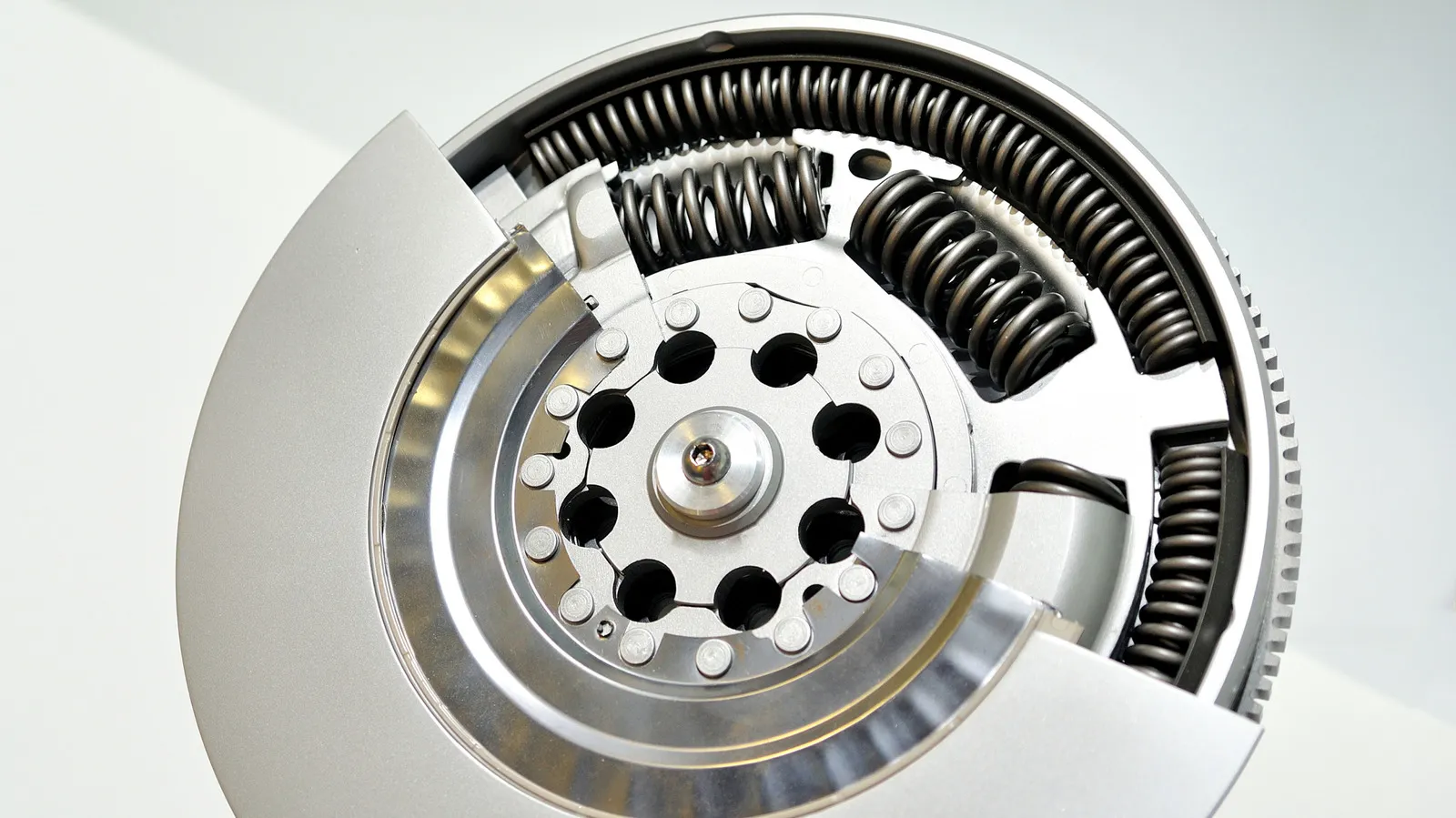
It sits hidden between the engine and the transmission, almost never comes up in bar conversations, and rarely gets any credit. Even so, the dual-mass flywheel can be the reason a manual car or a dual-clutch car feels refined, quiet, and civilized at low revs. And it can also be the part that turns a “simple” repair into a pretty expensive bill.
What Is a Dual-Mass Flywheel and Why Do Automakers Use This Part
The so-called dual-mass flywheel, also known by the English term dual-mass flywheel, is an evolution of the traditional engine flywheel. Instead of being a single rigid part, it is made up of two masses connected by springs and damping elements. In practice, this makes it possible to filter part of the torsional vibrations generated by the engine before they reach the clutch and gearbox.
To understand its role, it helps to remember the basics. The engine flywheel is a disc attached to the end of the crankshaft, usually made of steel, cast iron, or aluminum. It helps with starting, stores rotational energy, and smooths out the torque pulses produced with each combustion event. In modern engines, especially high-torque turbo engines at low RPM, these pulses can be more aggressive than they seem.
That is where the dual-mass flywheel comes in. The first mass follows the crankshaft. The second works with the clutch and transmission. Between them, a set of springs absorbs jolts, oscillations, and irregularities. The result is easy to notice behind the wheel: less vibration, less noise, and less harshness during launches, gear shifts, and low-speed acceleration.
This type of solution has become especially common in diesel engines, in cars with few cylinders, and in setups with manual transmission or dual-clutch transmission. It is no coincidence that brands like Volkswagen and Audi have widely used this component in models with 2.0 turbo engines and DSG gearboxes. If you follow the brand’s technical decisions, it is also worth seeing how certain design compromises show up even in trim and ergonomics in VOLKSWAGEN GOLF GTI 2026 and the design mistake that is annoying a lot of people.
In technical terms
Single-mass flywheel = more direct connection, more vibration.
Dual-mass flywheel = more damping, more comfort, greater complexity.
How the Dual-Mass Flywheel Improves Comfort, Shifting, and Transmission Lifespan
The automakers’ main argument for using the dual-mass flywheel is not marketing. It’s engineering applied to real-world use. Engines with lots of torque at low RPM deliver power early, but they can also send mechanical “shocks” through the system. Without enough damping, these pulses reach the transmission, causing noise, shudder, and premature wear.
In a conventional flywheel, part of this damping depends on the clutch itself. With a dual-mass flywheel, the job is shared much more efficiently. This brings clear benefits:
- Reduction of torsional vibrations sent to the transmission
- Less noise and harshness at idle and low RPM
- Smoother takeoff in city traffic
- Drivetrain protection in high-load situations
- Better refinement in turbocharged 4-cylinder and diesel engines
This effect is even more valued in modern cars, which aim to run at low RPM to save fuel and meet emissions targets. The problem is that running “lugged” at low revs often punishes the transmission when there is no good control of vibrations. The dual-mass flywheel helps exactly in this critical zone.
In vehicles designed for families or urban use, this makes a lot of sense. Even models focused on efficiency and smoothness depend on invisible engineering decisions to deliver perceived comfort. This technical debate connects directly with trends seen in recent projects, such as the KIA TELLURIDE 2027, which switched from the V6 to a turbo to gain everyday torque.
| Feature | Single-Mass Flywheel | Dual-Mass Flywheel |
|---|---|---|
| Construction | Single piece | Two masses with springs |
| Comfort | Medium | High |
| Noise and vibration | Higher | Lower |
| Sporty response | More direct | More filtered |
| Maintenance | Simpler | More expensive |
Disadvantages, Failure Symptoms, and When It’s Worth Switching to a Single-Mass Flywheel
If the dual-mass flywheel is so efficient, why do so many enthusiasts criticize it? The answer lies in three points: cost, weight, and complexity.
Unlike the single-mass flywheel, which in many cases can be resurfaced, the dual-mass one usually does not allow traditional reconditioning. When it shows internal wear or excessive play, replacement is usually complete. This makes maintenance more expensive and greatly increases the cost of a clutch service.
Another point is dynamic behavior. Many original units weigh around 13.6 kg or more, equivalent to about 30 pounds. This extra weight helps smooth operation, but it also makes engine response less immediate. In modified cars or those driven more aggressively, some owners prefer installing a single-mass setup to get a more direct feel during load changes and acceleration.
But that swap comes at a cost. Converting to a single-mass flywheel can increase:
- Gear noise in the transmission
- Idle vibration
- Jerking at low RPM
- Discomfort in city driving
In other words, the choice between a single-mass and a dual-mass flywheel depends on the car’s purpose. In a stock street setup, comfort and durability usually matter more. In heavy-duty builds, the priority may shift to robustness under increased torque and a more raw response. If you want to better understand how upgrades affect the mechanical health of the system, it’s worth reading Turbocharger vs Supercharger and the hidden cost that drains your wallet before 100,000 km.
The most common symptoms of dual-mass flywheel failure include:
- Metallic knocking sounds when starting or turning off the engine
- Excessive shudder on takeoff
- Abnormal vibration in the clutch pedal
- Rattling noises at idle
- Difficulty engaging or a rough feeling during gear changes
These signs should not be ignored. In many cases, the problem is confused with a clutch defect, engine mounts, or even the transmission bearing. A proper diagnosis requires a serious technical inspection, because mistakes at this stage multiply the damage. To avoid this kind of trap, it also makes sense to understand the mechanical signs that many repair shops would rather not explain clearly.
There is also an important factor for anyone considering a remap, larger turbo, or a significant increase in torque. Many original dual-mass flywheels are designed for a specific load range. When the engine starts delivering much more force than the factory calibration anticipated, the assembly can move into a zone of accelerated wear. In these cases, some owners switch to a single-mass flywheel with a reinforced clutch kit, accepting more noise and vibration as a side effect.
In the end, the reason automakers adopt the dual-mass flywheel is straightforward: it improves refinement, protects the drivetrain, and makes modern cars more pleasant in real-world use. The problem is that this mechanical sophistication does not come free. And when it fails, the bill quickly reminds you that comfort, quiet, and smoothness almost always have a price. If your concern is preserving the mechanical system for longer, it is also worth reviewing basic usage and maintenance habits in engine maintenance and the silent mistake that shortens the lifespan of thousands of cars.