
YAMAHA TRICITY 300 revolutionizes with a fixed front airbag. Discover how the partnership with Autoliv creates a vital barrier for the rider.
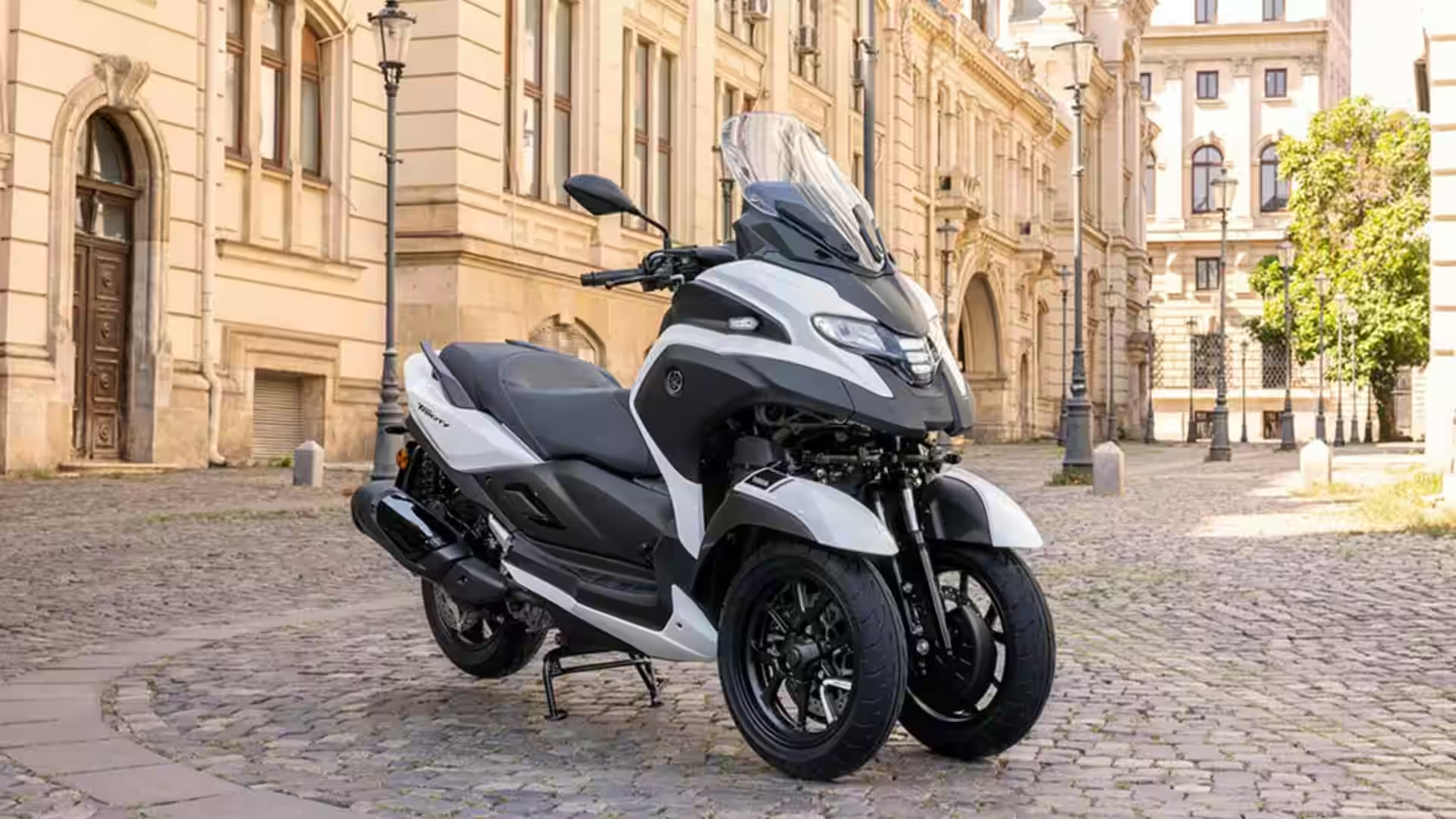
Forget everything you knew about urban scooters. For decades, these vehicles were seen merely as basic transportation tools, focused exclusively on fuel economy and practicality. However, the landscape has drastically changed. Yamaha has just announced an innovation that sounds like science fiction to the average rider: a three-wheeled scooter equipped with a frontal airbag system developed in partnership with the Swedish giant Autoliv. This is not just a model update, it is a declaration of war against urban accident statistics.
The Revolution of Passive Safety on Two Wheels
The big news lies in the integration of an airbag module directly into the front panel of the Yamaha Tricity 300. Unlike inflatable wearable vests we already know, this system is fixed to the scooter and designed to deploy vertically towards the rider in the event of a severe frontal impact. The goal is to create a kinetic energy absorption barrier between the rider’s body and the handlebars or fixed obstacles.
The partnership with Autoliv, responsible for the safety of millions of modern cars, brings immense technical credibility to the project. While cars rely on safety cages and seat belts, motorcycles require solutions that consider the immediate separation between rider and machine. Although airbag technology in two-wheeled vehicles is still a complex area, its application on a stable platform like the Tricity makes perfect logical sense. To understand the technological evolution we are witnessing, it is worth observing how other brands are heavily investing in electronics, as seen in the Honda X-ADV 2026 arriving in Brazil priced at R$ 93,500 and a transmission detail that could change your buying decision.
Three-Wheel Stability as a Basis for Innovation
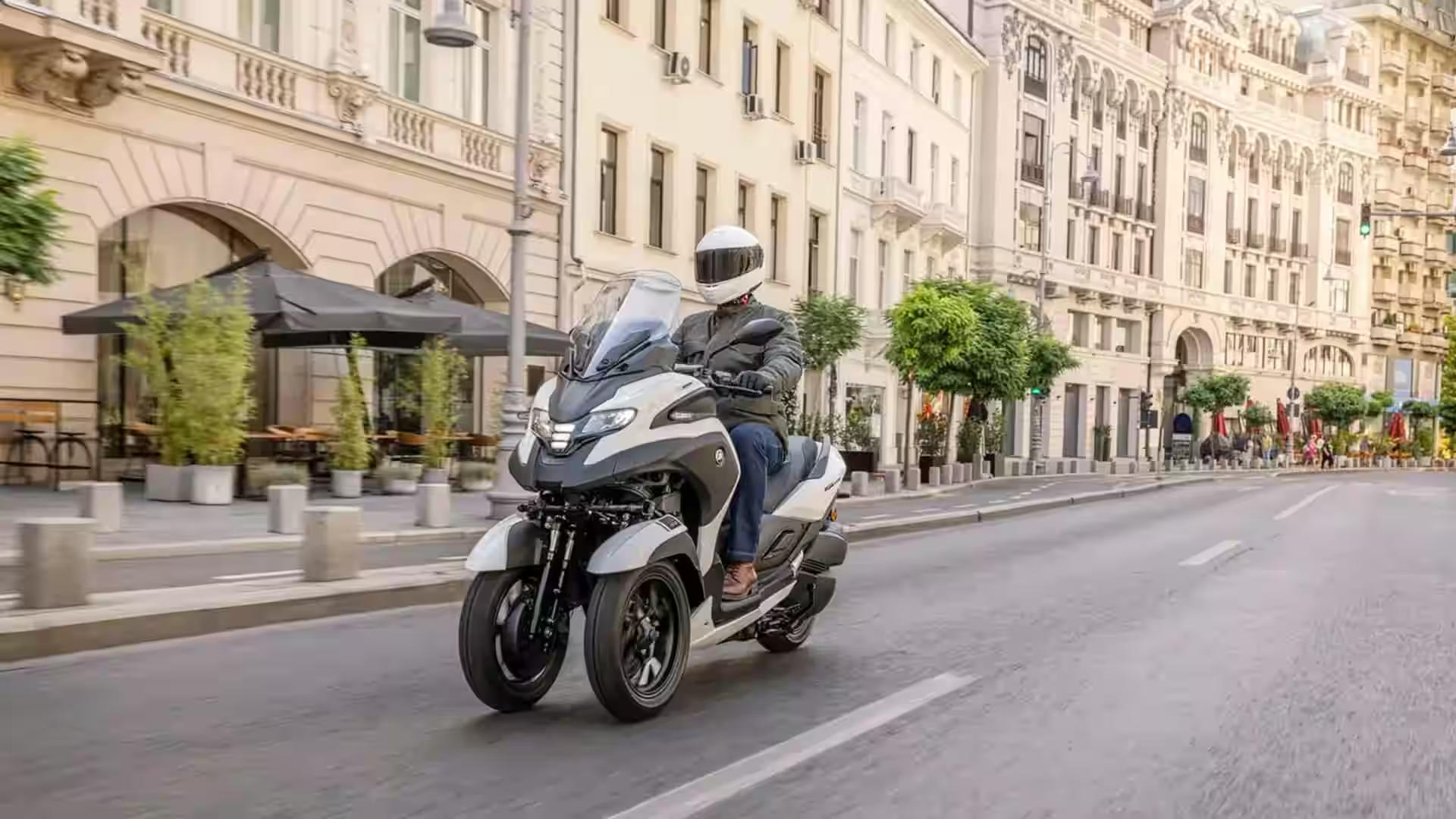
The choice of the Tricity 300 as the platform for this safety test was not random. With its LMW (Leaning Multi-Wheel) tilting system, the scooter offers two front contact points, ensuring superior grip on wet or uneven surfaces. This intrinsic stability allows the airbag sensor system to focus on detecting real collisions, not just sudden evasive maneuvers.
The 292cc single-cylinder engine positions the vehicle in a niche between the traditional urban scooter and small touring machines. By adding the airbag, Yamaha signals that safety should not be a privilege of luxury motorcycles with exorbitant prices. The democratization of cutting-edge technologies is crucial, especially when we compare the passive protection of motorcycles with that of modern automobiles. Recently, we have seen how the automotive industry is rapidly advancing in this regard, exemplified by the Volvo EX60 2027 the electric SUV that hides a supercomputer brain and can save your family without you noticing.
The Impact on the Urban Mobility Market
This move by Yamaha indicates a bigger trend: safety technology is descending from elite models to the commuter segment. Scooters move more people daily than any other type of motorcycle, from Rome to Bangkok. Protecting this audience is where technology can save the greatest number of lives. The industry is realizing that controlled traction and lean-sensitive ABS are just the beginning.
While the Tricity 300 prepares the ground for this new era, other manufacturers are also rethinking safety engineering and performance in their mid-size lines. The competition is fierce, and mechanical details make all the difference in durability and rider confidence, a topic deeply discussed in analyses about the Ducati DesertX V2 2026 new V2 890cc engine with 110 hp, low-end torque, and off-road chassis that challenges KTM 890 Adventure R and Yamaha Ténéré 700. Yamaha, in turn, maintains its reputation for reliability, similar to the robustness found in renowned adventure models like the Yamaha Ténéré 700 World Raid 2026 arrives in the USA and reveals the detail that is rewriting true adventure.
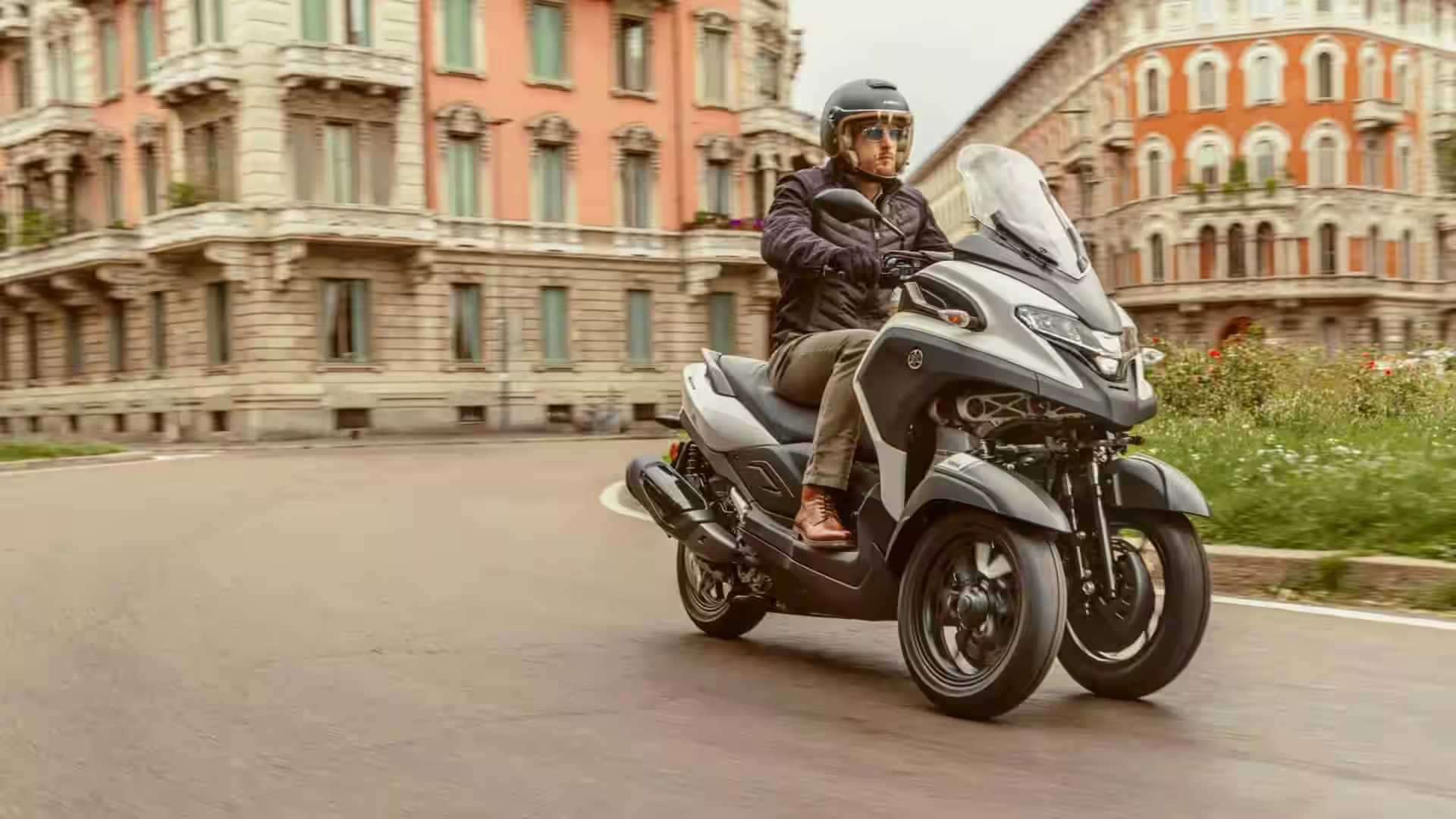
Furthermore, customization and technology go hand in hand in today’s market. Riders seek machines that offer factory safety but also allow individual expression, a balance that the Suzuki GSX-8R Daidai-Iro the edition that declared war on customization shops tried to uniquely address. However, Yamaha’s proposal with the airbag on the Tricity goes beyond aesthetics or pure performance; it is a matter of urban survival.
The introduction of the airbag in the Yamaha Tricity 300 marks a turning point in the history of two wheels. It is not just about adding a safety device, but reimagining how we interact with the chaotic traffic of metropolises. If this technology proves effective in real collision scenarios, it is very likely that we will see a technology race where airbags will become mandatory or highly desired items in large displacement scooters in the coming years. The future of urban commuting just got safer, and potentially, much smarter.