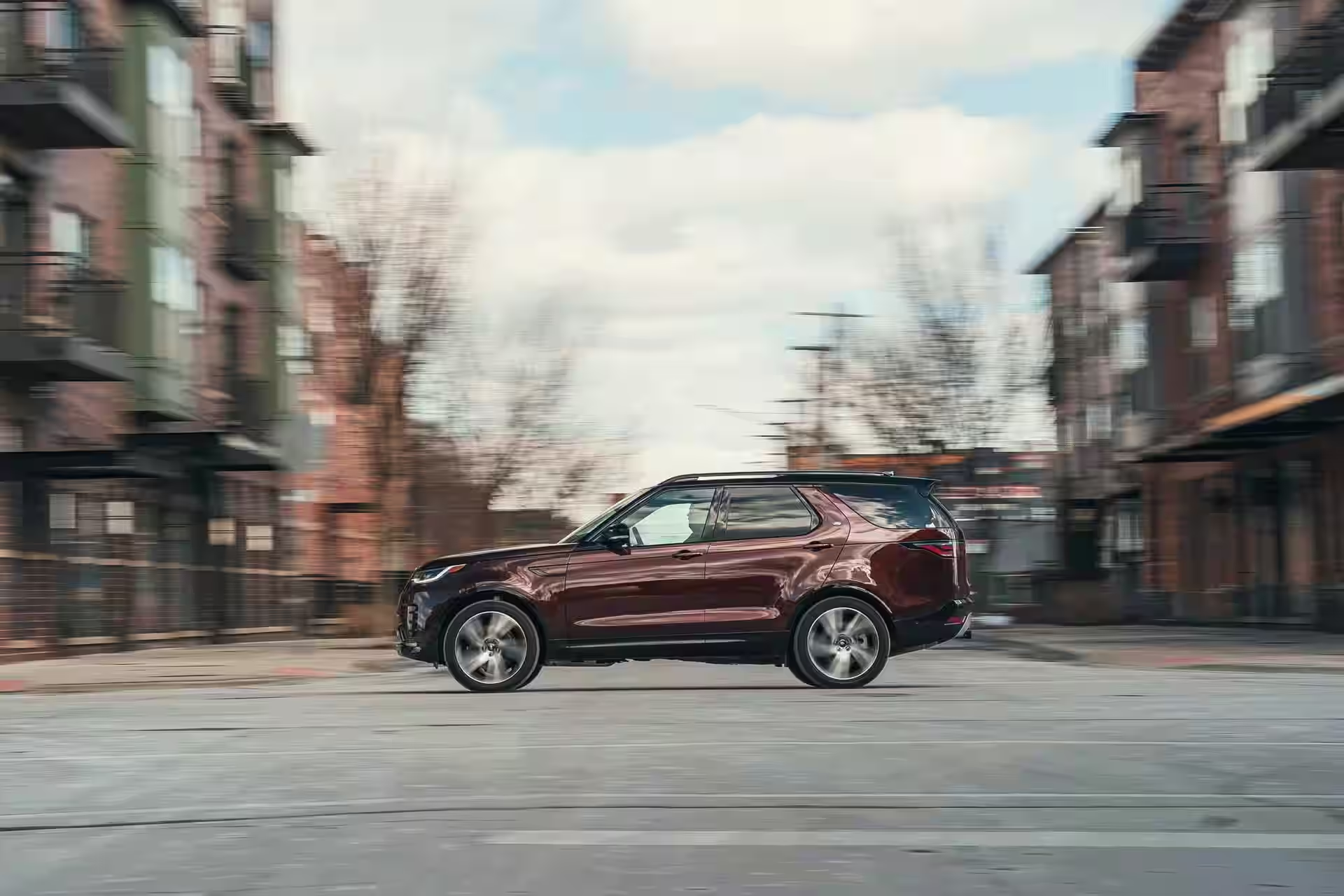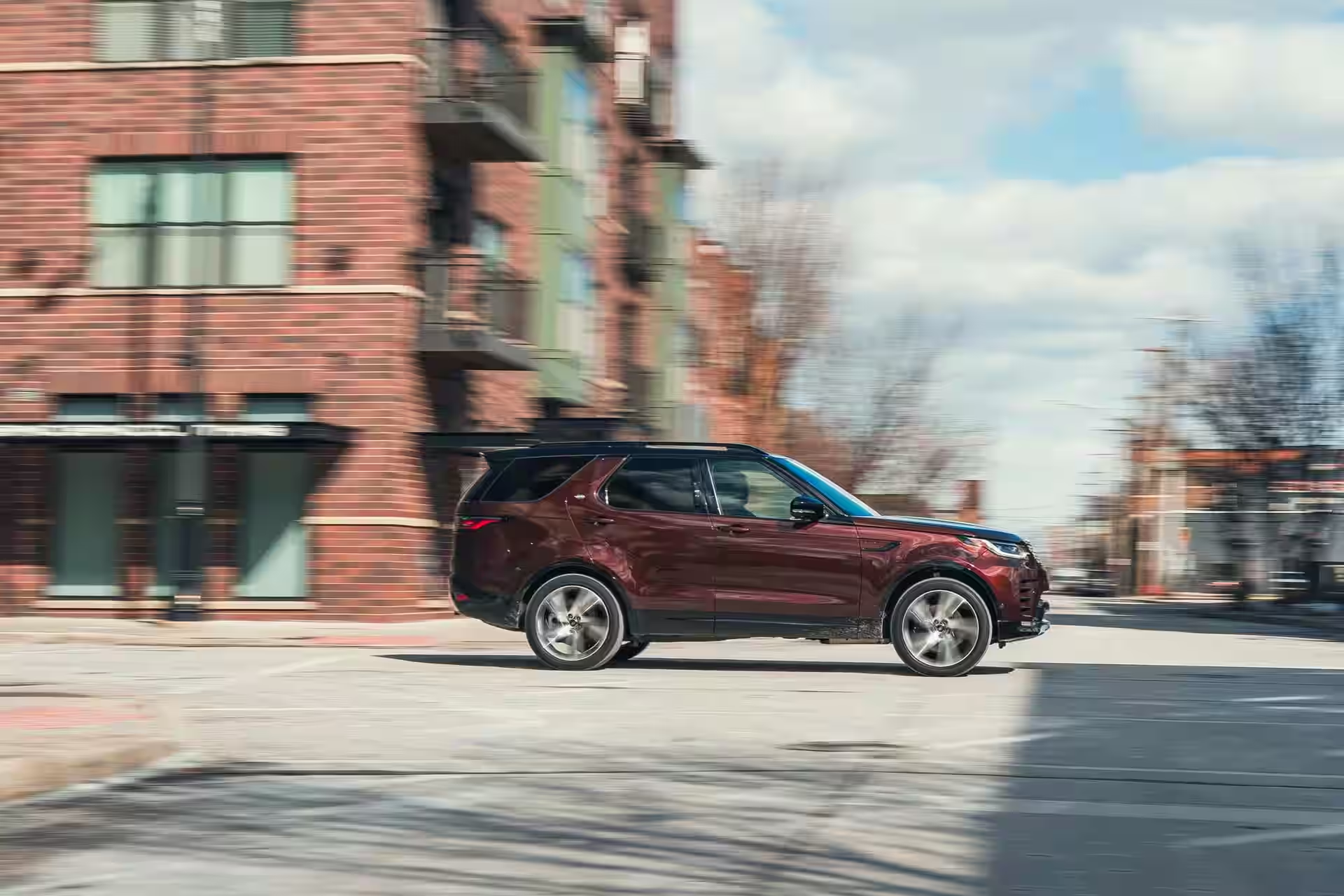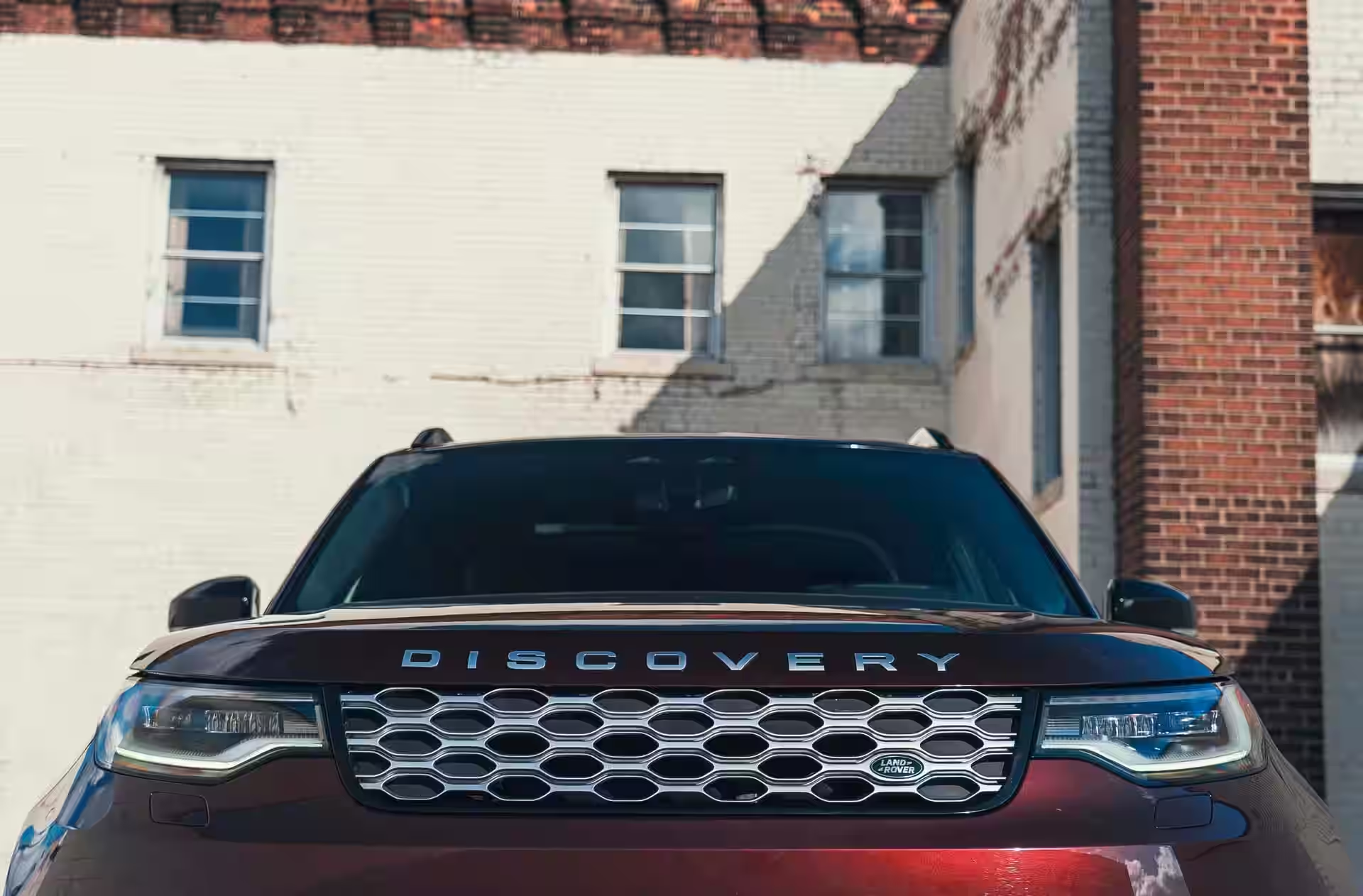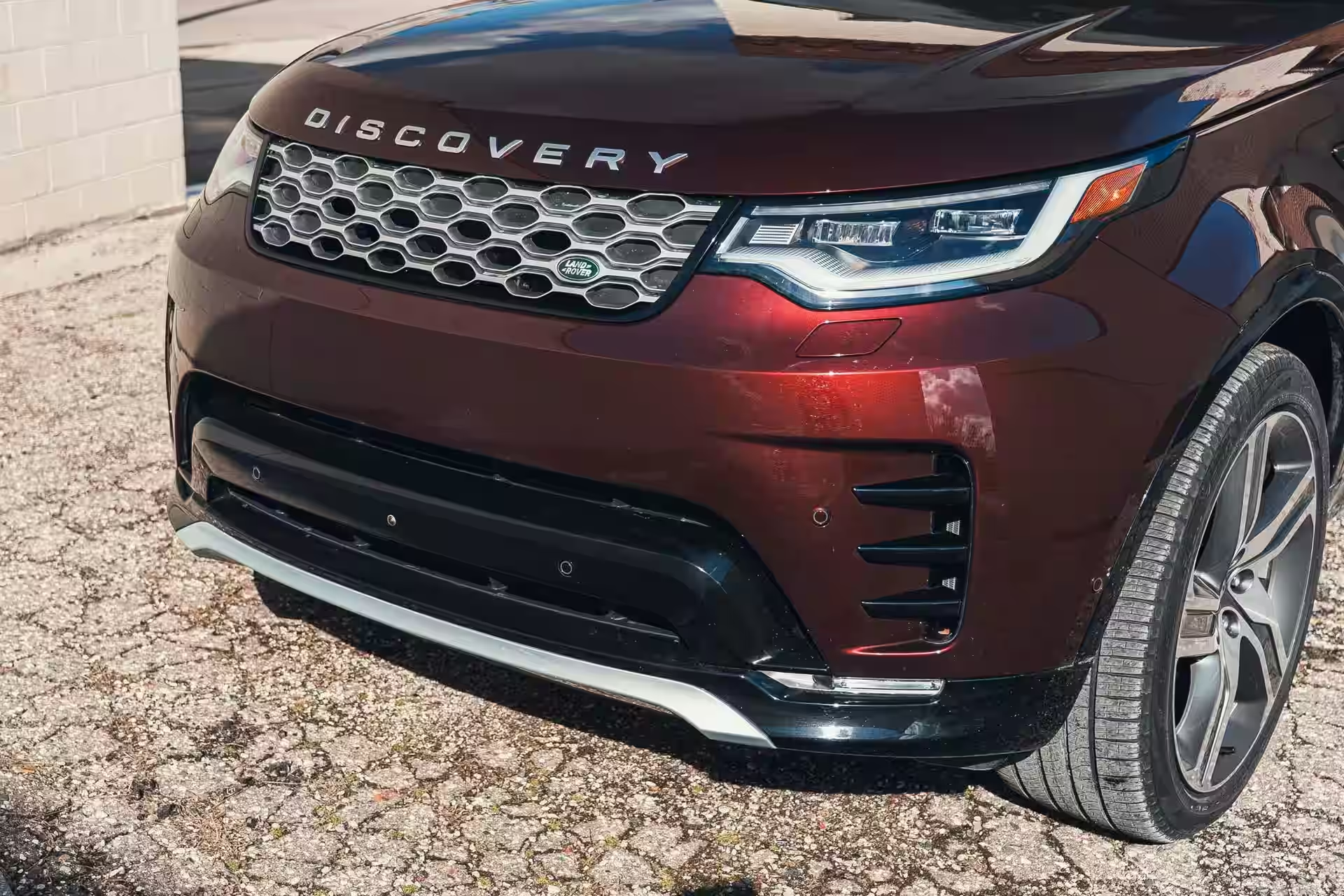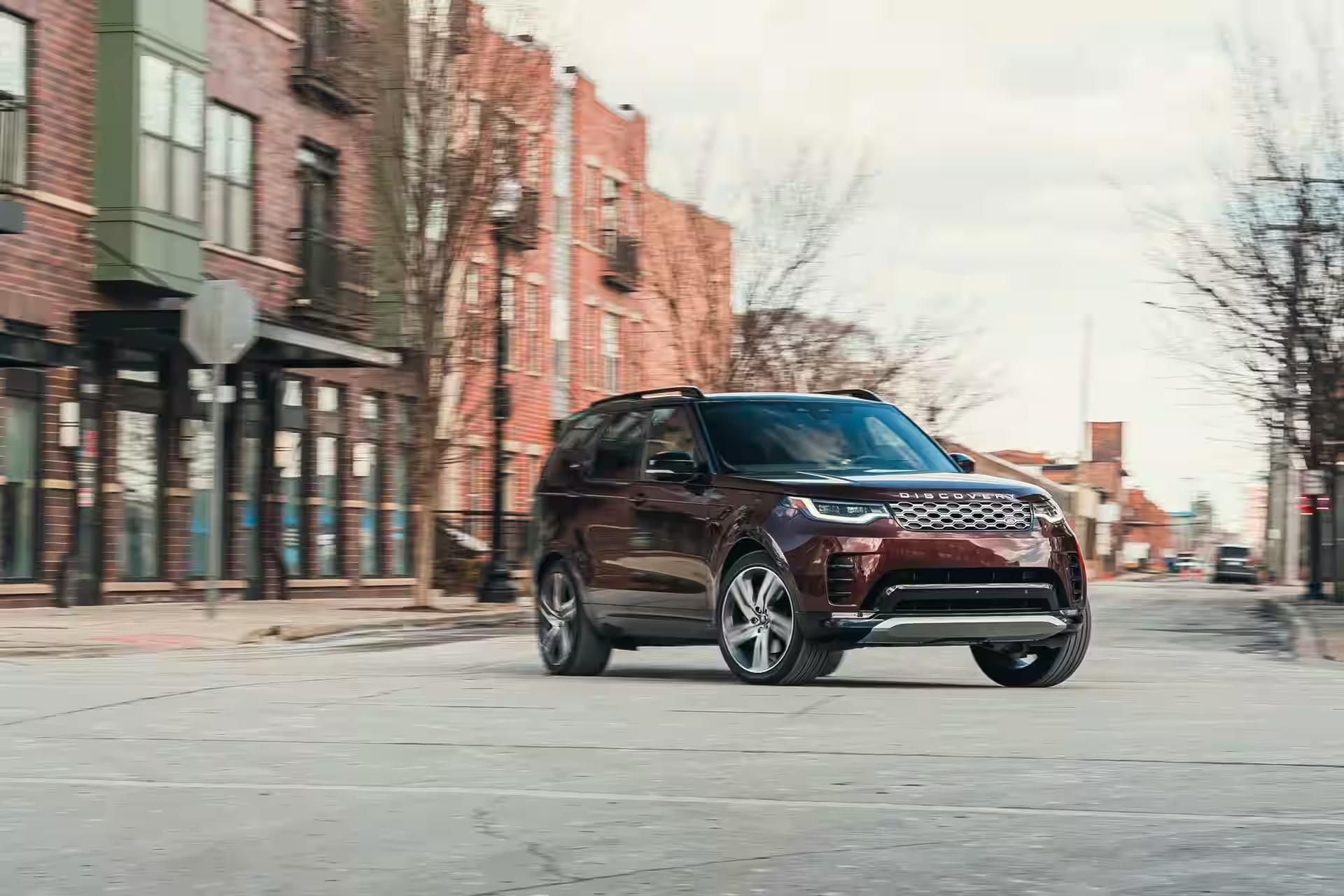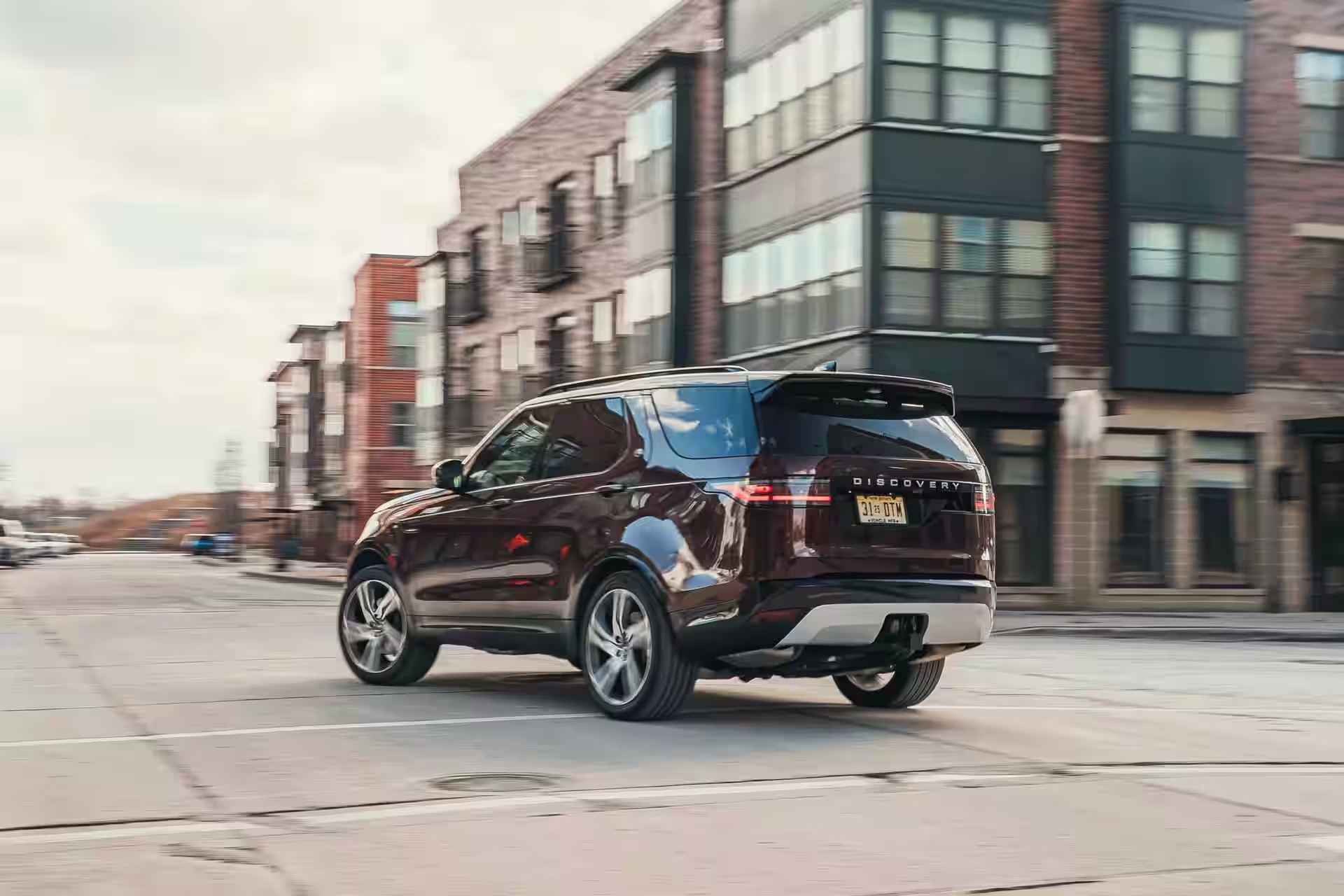
LAND ROVER DISCOVERY 2026 brings 355 hp and minimalist luxury. Find out if the veteran still beats the Lexus GX in comfort and braking. Check it out!
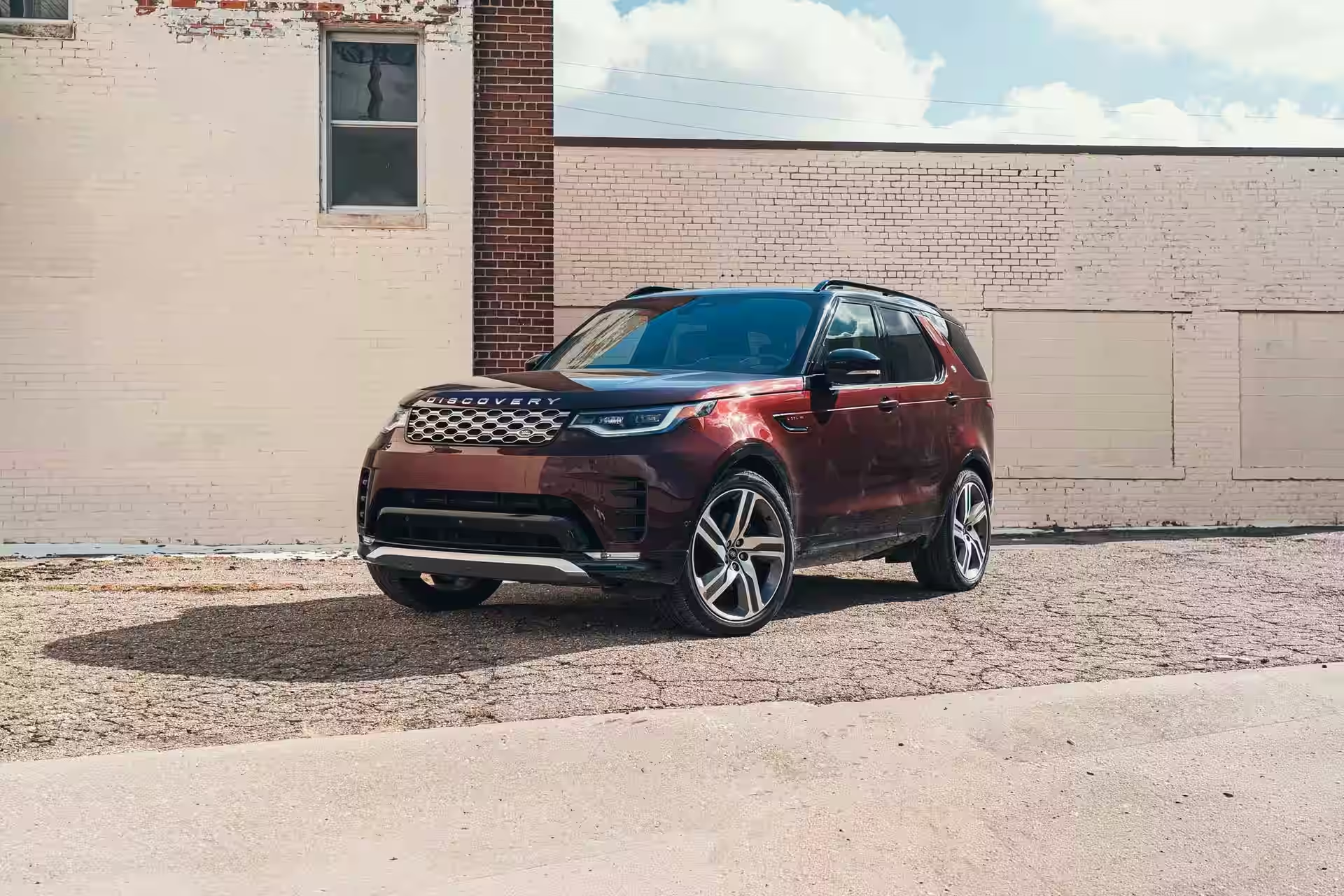
Nine years. That is how long the current generation of the Land Rover Discovery has been around — and the last significant update happened when the world was still concerned about social distancing. While competitors like the Nissan X-Trail 2026 and Kia Telluride 2027 renew their offerings with cutting-edge technology, the British “Disco” stands firm as a monument to persistence. But is the arrival of the new Gemini and Tempest versions with a new powertrain enough to keep this giant relevant?
The Bipolar Heart That Moves 2,572 Kilos of Sophistication
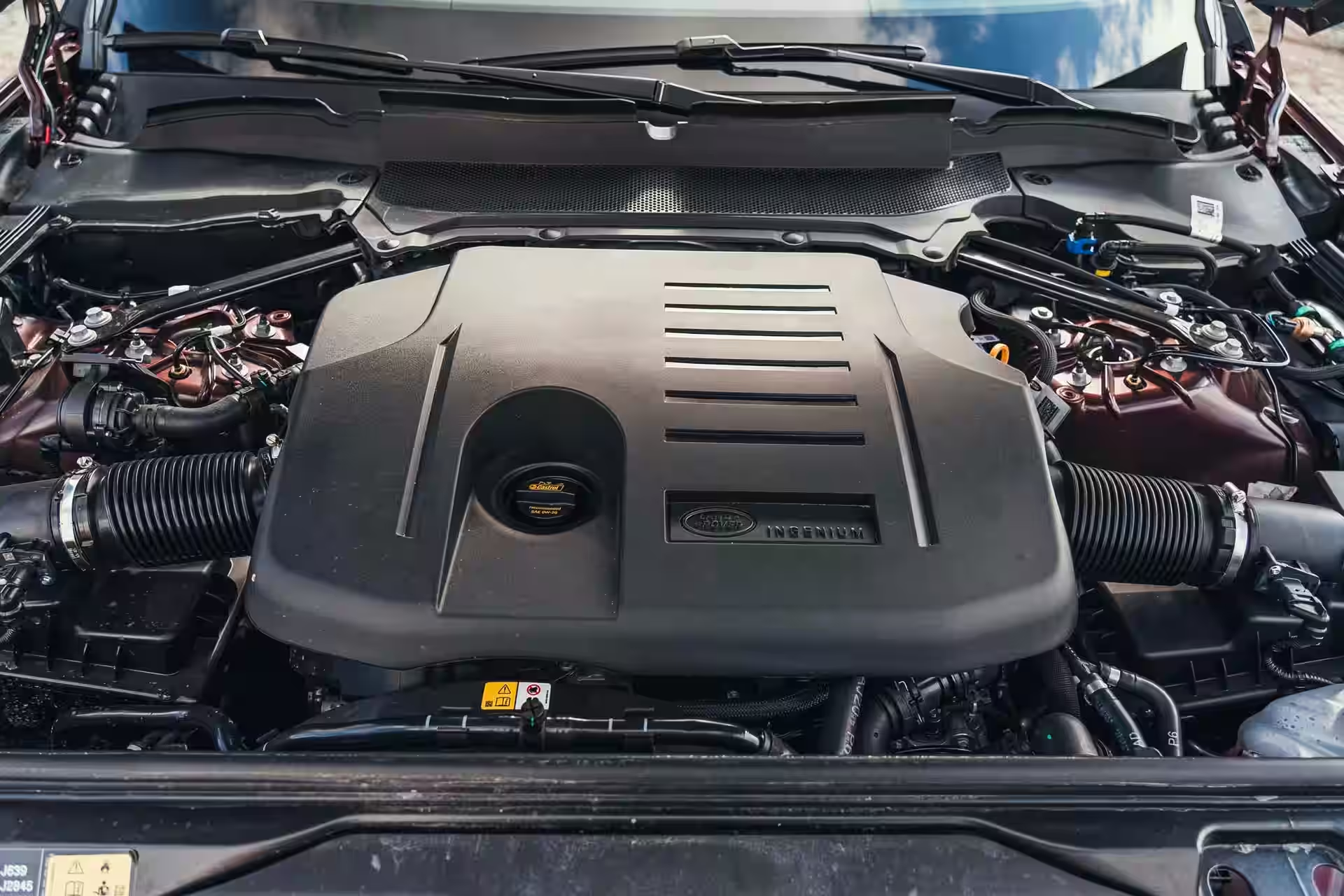
The big news of the Land Rover Discovery 2026 lies under the hood of the top versions. The 3.0 inline-six turbo engine with 48-volt mild hybrid assistance delivers 355 horsepower and 369 lb-ft of torque (about 500 Nm) — numbers that, on paper, put the SUV in the fight with the best in the category.
But reality on the test track reveals a divided personality. The Gemini Discovery accelerates from 0 to 60 mph in 6.6 seconds — a respectable time for a machine weighing 5,671 pounds (about 2,572 kg). To put it in context: that’s only 0.4 seconds slower than the Lexus GX and 0.7 seconds behind the Audi Q7, both with comparable powertrains.
The problem arises when analyzing the elasticity. The 5 to 60 mph test in 7.3 seconds reveals a powertrain that is slow to respond. The difference between standing acceleration and rolling acceleration is greater than that of rivals — a sign that the 8-speed automatic transmission and engine need time to understand what the driver wants.
“The accelerator has no sweet spot. Ease into it and you fall behind in traffic. Apply a few microns more before leaving first gear and the engine literally jumps into action, catapulting you forward.”
The solution found by the engineers? A counterintuitive technique: gentle acceleration in first gear, gradually increasing after shifting to second. Elegant? No. Functional? Relatively.
Ride Comfort and Cabin Limitations
If the powertrain is the contradictory side of the Discovery, the air suspension represents its true soul. In constant operation, the SUV delivers a serene ride that prioritizes family comfort above all — exactly what luxury buyers expect.
Noise measurements, however, tell a less favorable story. At 70 mph (113 km/h), the Discovery records 67 decibels — 1 dB above the Lexus GX and 2 dB higher than the Audi Q7. In a segment where silence is synonymous with refinement, this difference is audible.
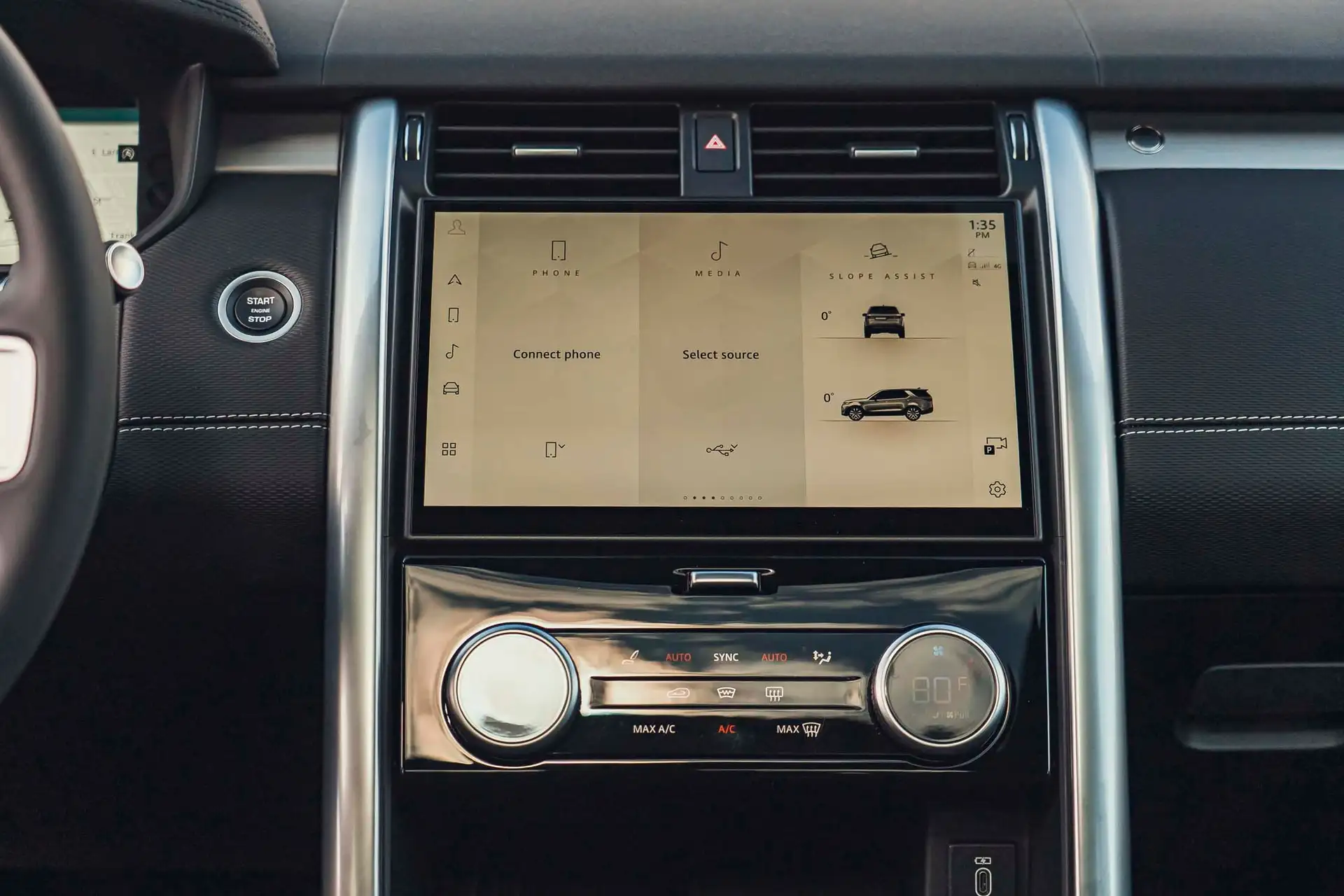
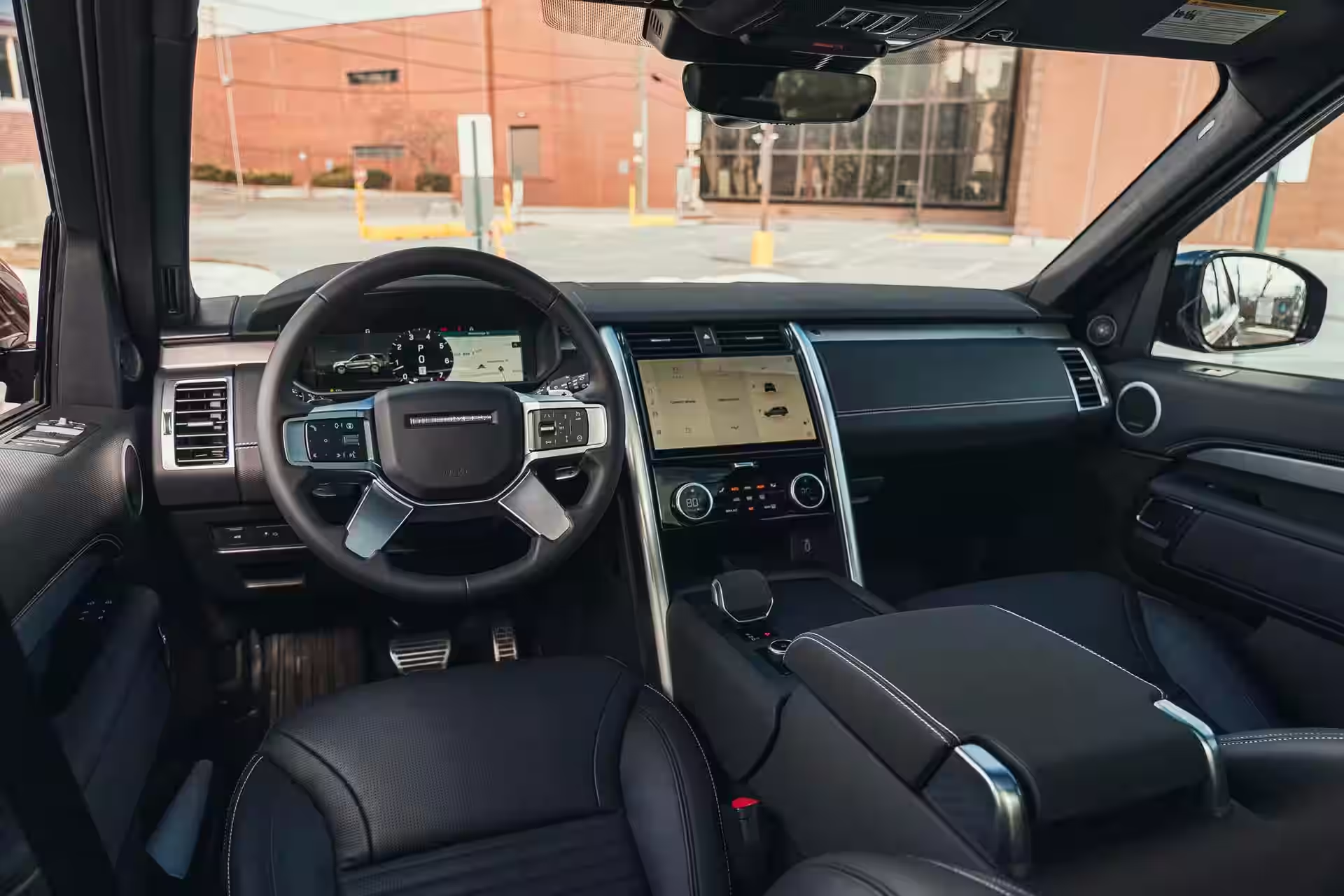
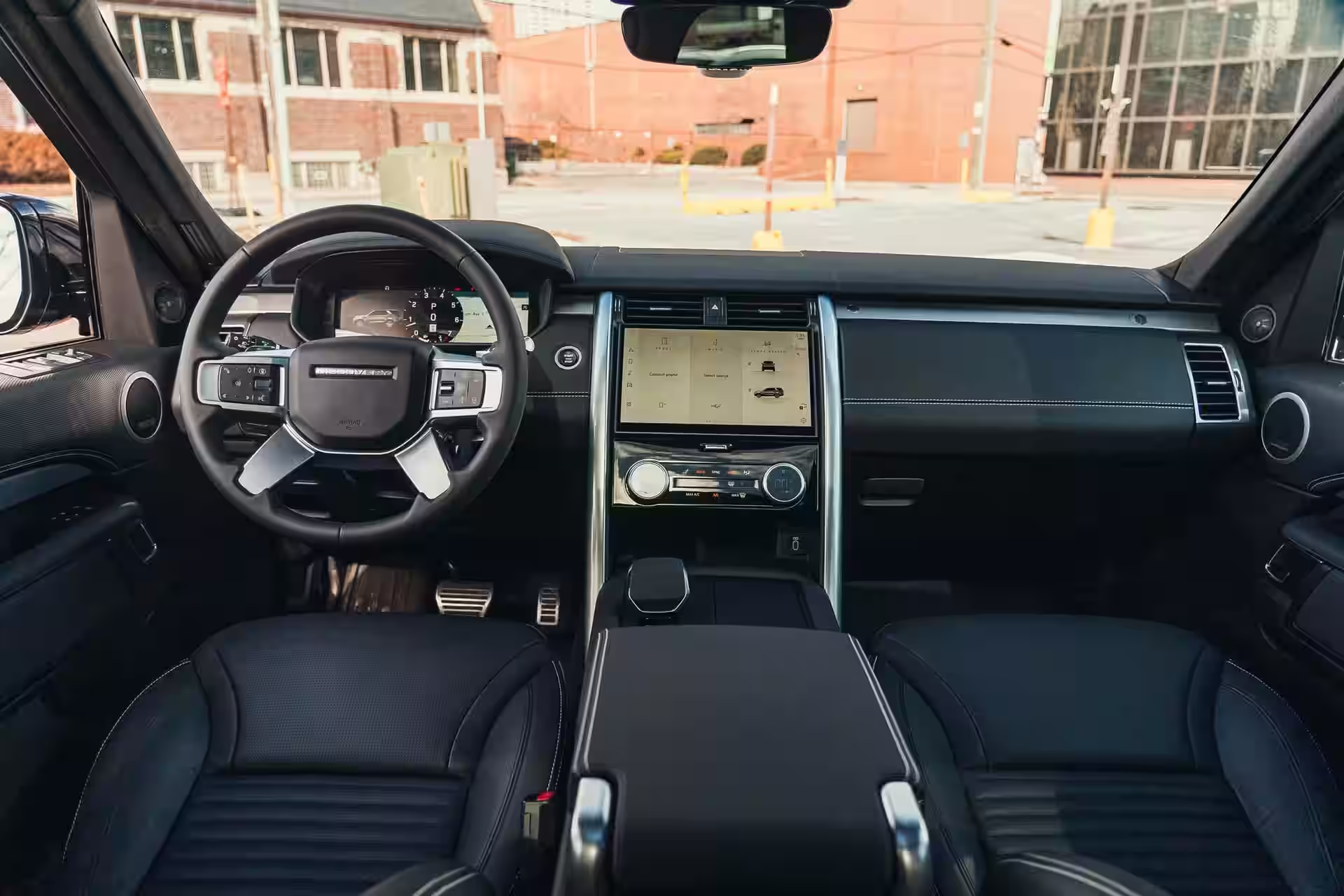
The interior follows Land Rover tradition: quality materials, clean and minimalist layout that contrasts with some rivals’ tendency to fill the cockpit with unnecessary elements. The Pivi Pro system with an 11.4-inch screen features an appealing design, although some functions require a learning curve.
The 12.3-inch instrument cluster, on the other hand, shows the platform’s age — its architecture dates back to the now-defunct Jaguar F-Type, with a dated look in the center of the display.
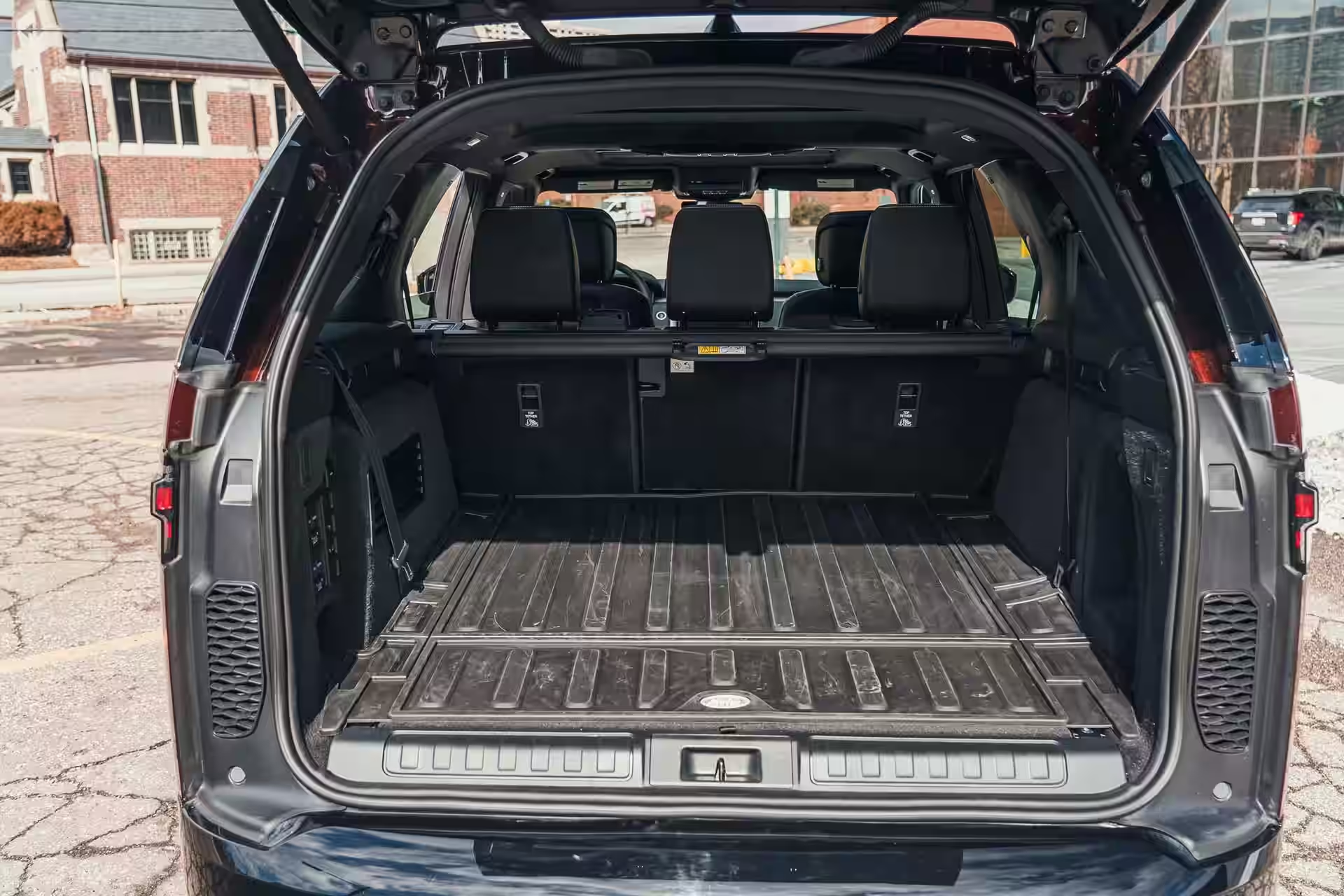
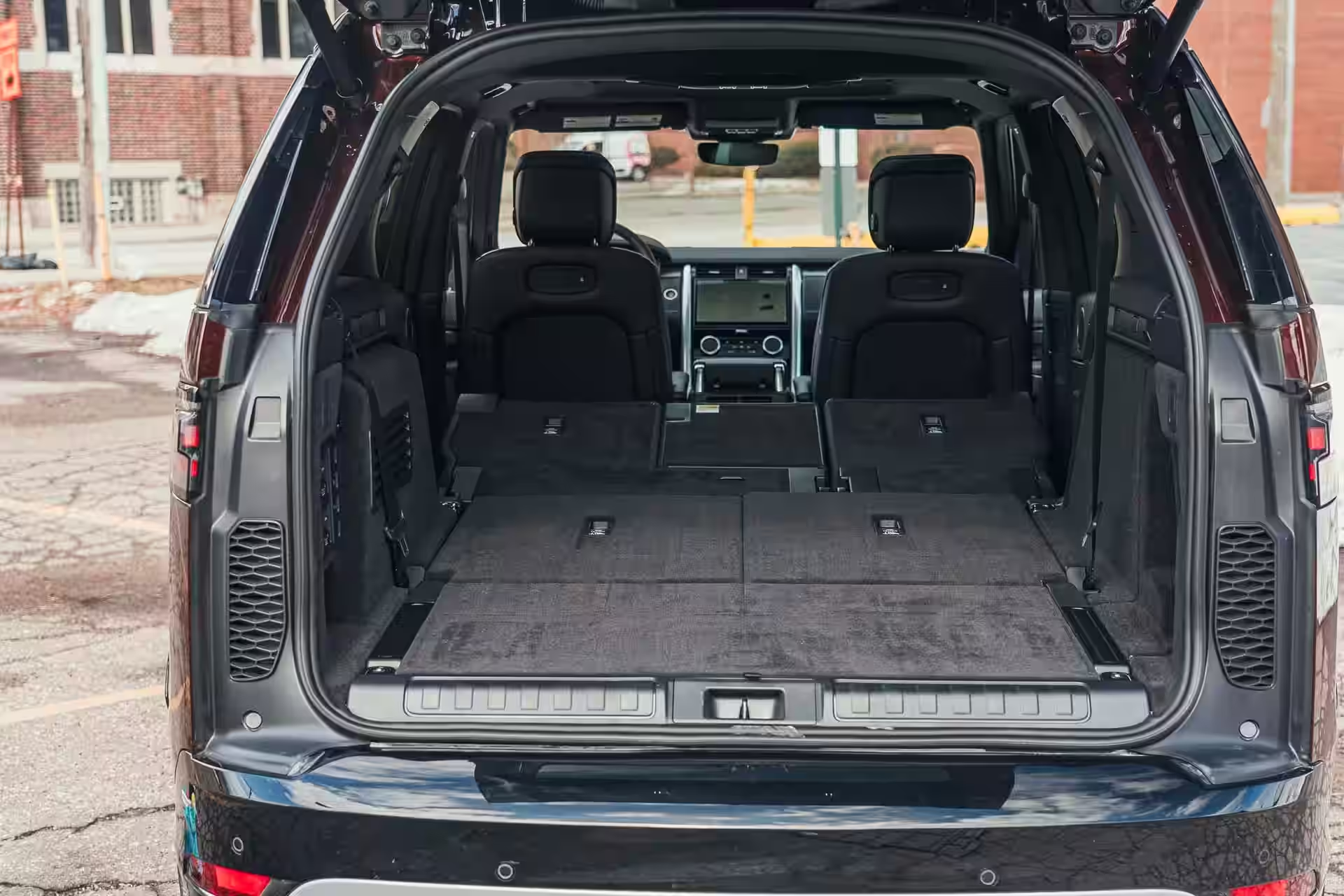
And there’s the elephant in the room: the third row. Tight for adults, it drastically compromises cargo space when in use. With all seats upright, only 6 cubic feet (approximately 170 liters) remain — a volume lower than many compact hatchbacks.
| Configuration | Load Volume |
|---|---|
| 3rd row upright | 170 liters (6 ft³) |
| 3rd row folded | 935 liters (33 ft³) |
| 2nd and 3rd rows folded | 2,010 liters (71 ft³) |
Curious fact: the space under the center armrest is occupied by a refrigerator — a feature you might find essential or totally unnecessary, depending on your lifestyle.
Real Capacity Versus Entry Price
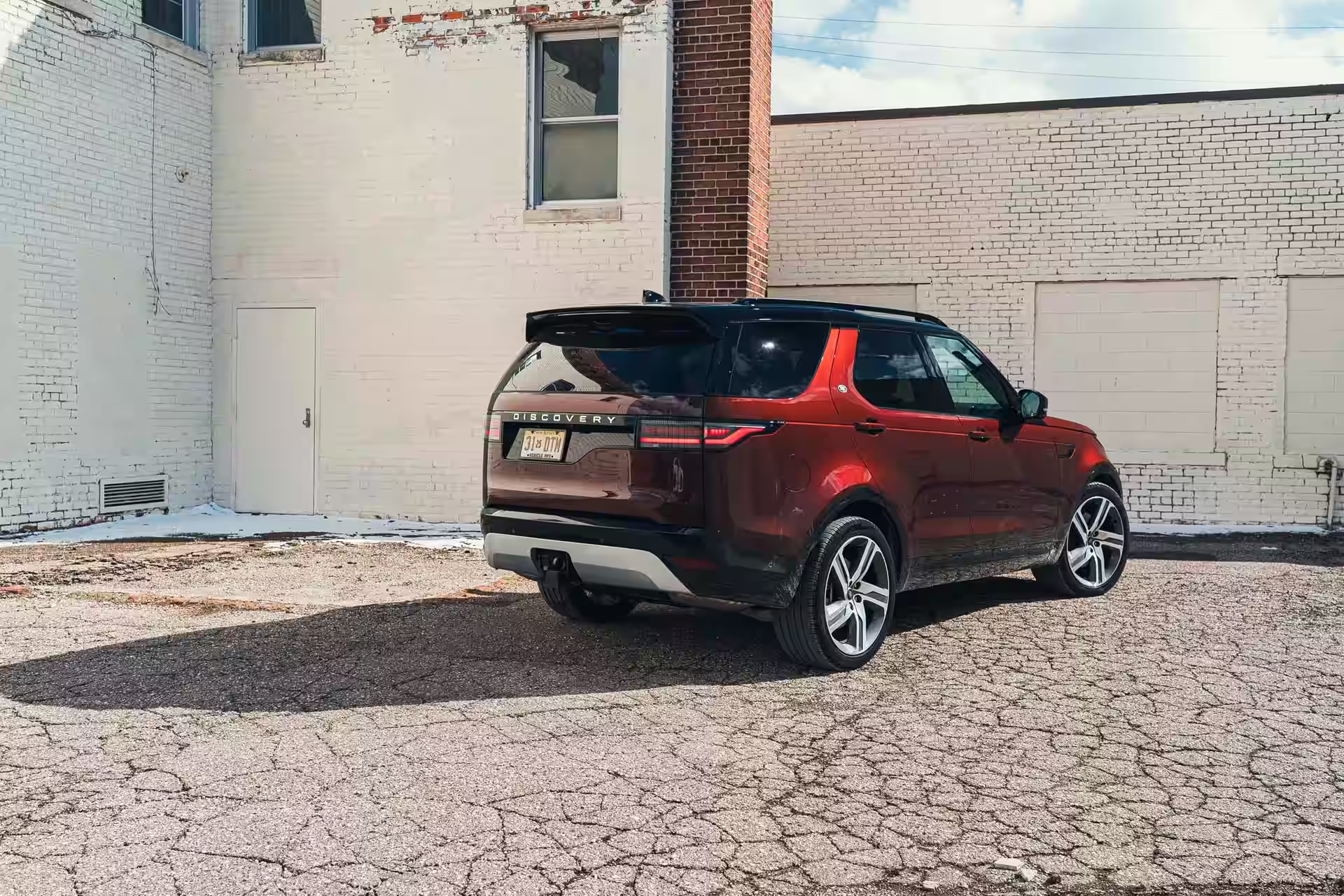
The 2026 Land Rover Discovery does not hide its off-road credentials. 4×4 drive is standard on all versions, and the Advanced Off-Road package ($2,400) adds a two-speed transfer case, locking rear differential, and driving modes for extreme terrain.
But here lies the dilemma: how many owners will actually take a $72,650 (base price) vehicle on serious trails? Our test unit, equipped with 22-inch wheels ($1,650), technology package, towing package, electric third row, and other perks, reached $83,195 — a value close to the top of the range.
The towing capacity is remarkable: 8,200 pounds (approximately 3,720 kg), higher than many competitors. But the fuel consumption on the highway — 22 mpg (10.7 km/l) in our tests at 75 mph, below the 23 mpg promised by the EPA — might weigh on the wallet of those planning long trips.
For those seeking alternatives with different propositions, the Renault Bridger Concept 2026 promises off-road spirit at a more accessible price, while the GWM Tank 700 Hi4-Z combines luxury with an electric range of 190 km — something the Discovery does not offer.

Braking, at least, compensates for the imperfections. Stopping from 70 mph required only 164 feet (about 50 meters) — 8 feet better than the Lexus GX and 11 feet ahead of the Audi Q7. The pedal is progressive and easy to modulate, a rare quality in large SUVs.
On the 300-foot skidpad, the Pirelli Scorpion Zero All Season 285/40R-22 tires provided 0.82 g of grip — close to the Q7 (0.86 g) and significantly better than the uncomfortable GX (0.75 g). It’s not a handler, but it doesn’t fall apart in corners either.
The verdict? The 2026 Land Rover Discovery is a survivor. Comfortable, capable off-road, with an interior that has aged gracefully — but it also carries the flaws of an architecture that should have been replaced already. For those who value tradition and don’t mind a temperamental accelerator, it’s still a valid choice. For those seeking state-of-the-art, newer rivals offer more cohesive experiences at similar — or lower — prices.