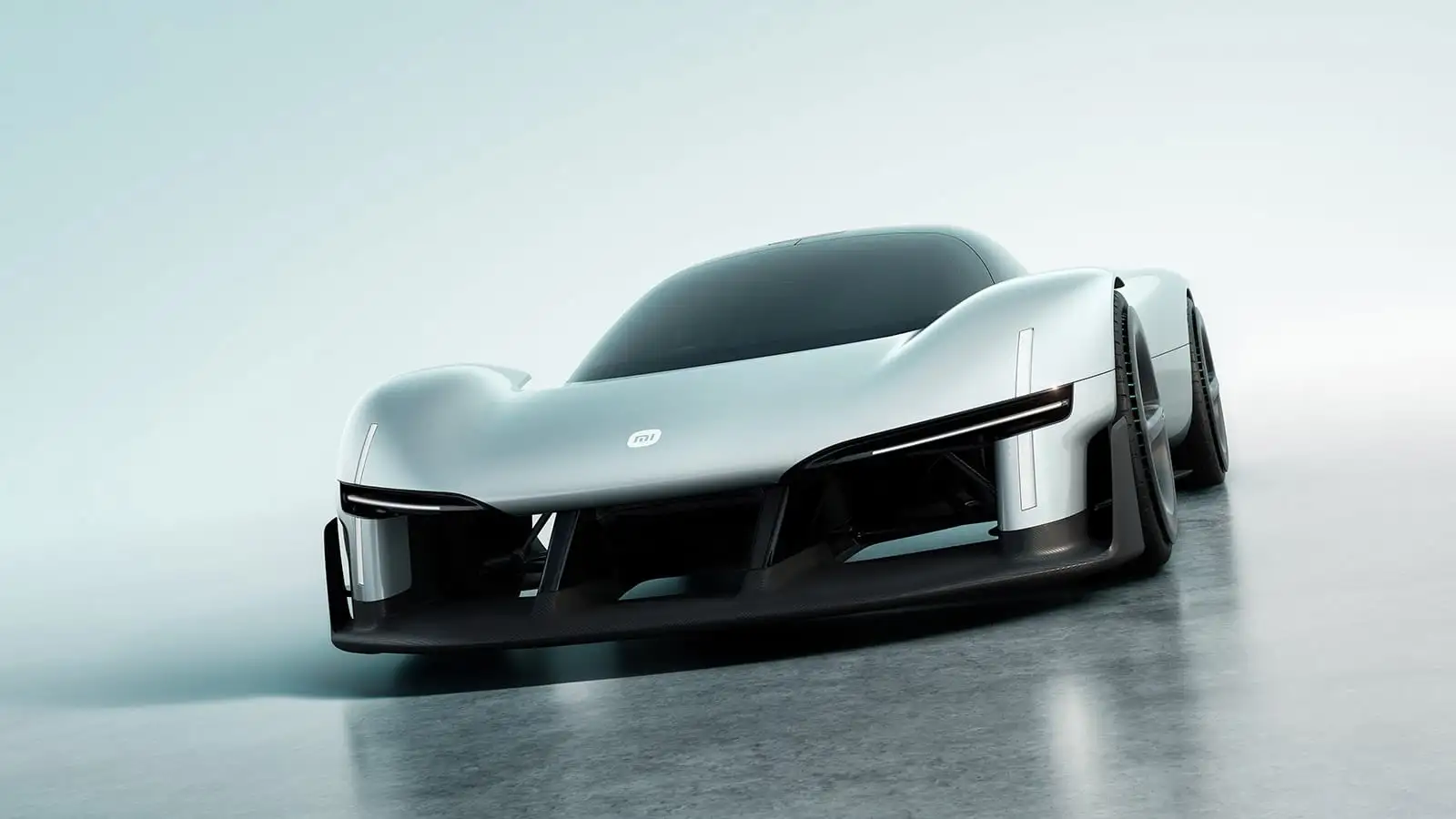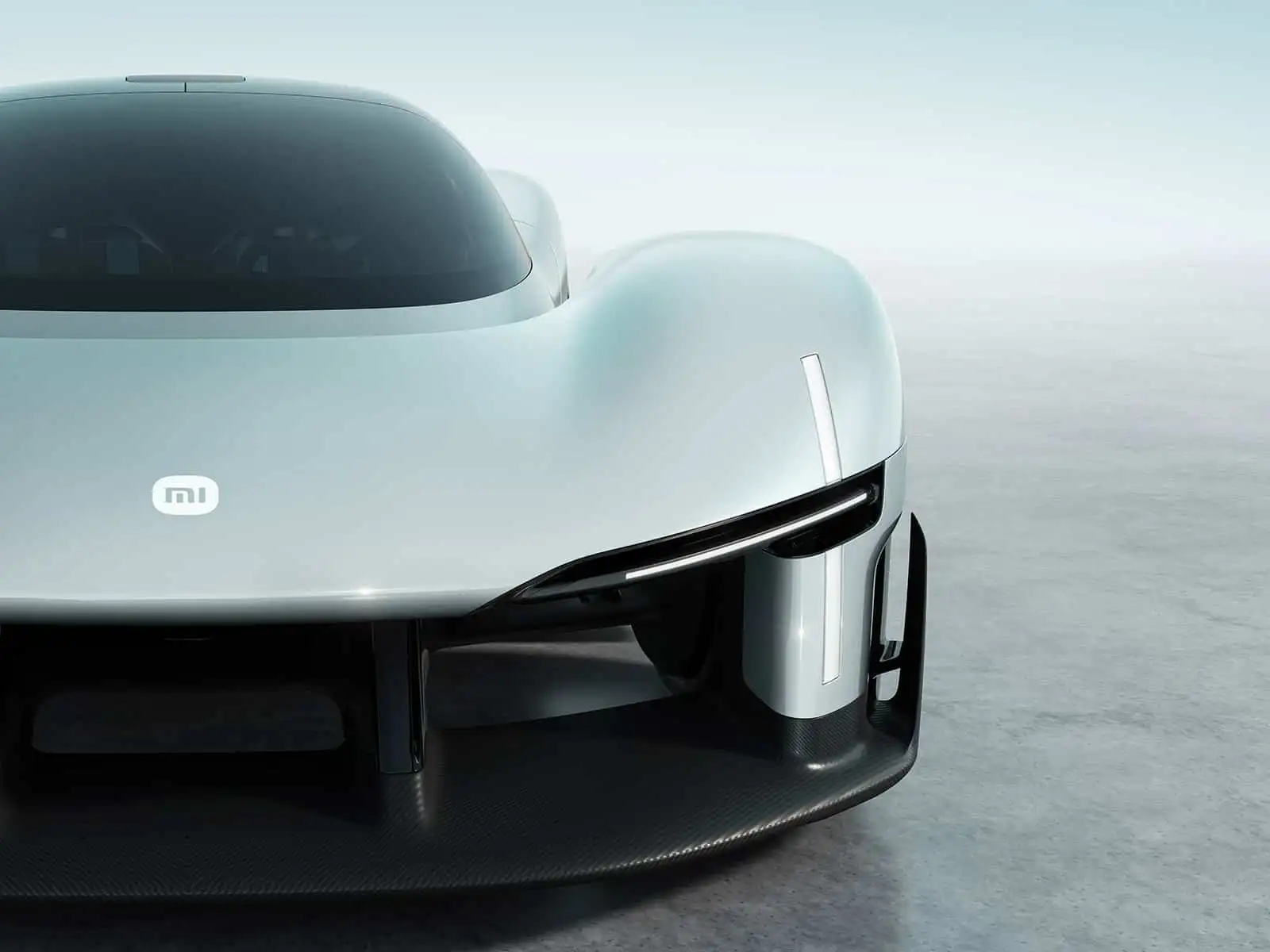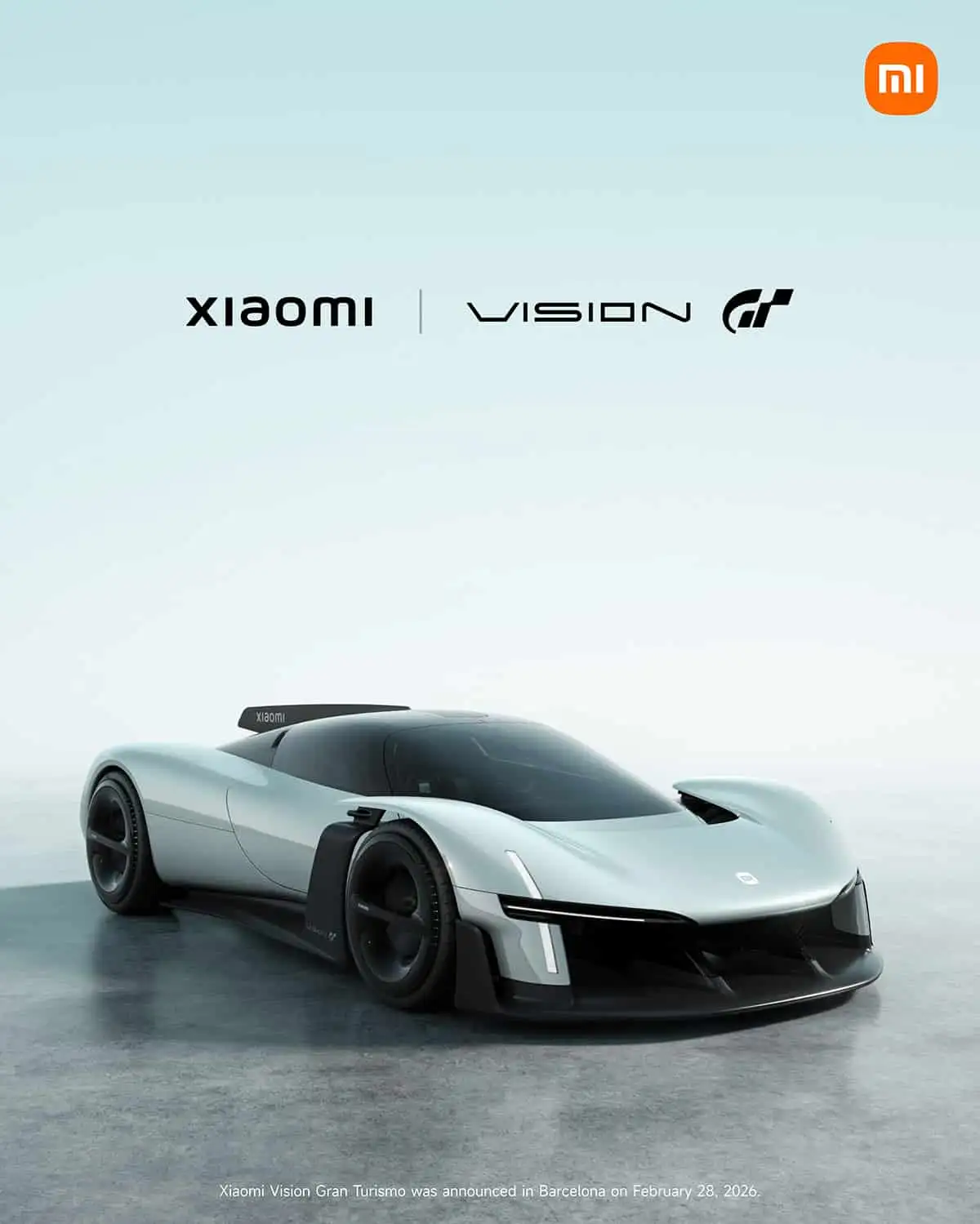
When a brand known for smartphones decides to put an electric supercar on the Europeans’ radar, it’s not just design: it’s strategy. The Xiaomi Vision GT is born as a concept, but it already arrives with a direct message to those who have dominated the automotive imagination for decades.
Why the Xiaomi Vision GT Made Headlines Before MWC 2026
The announcement of the Xiaomi Vision GT happened on the eve of MWC 2026, in Barcelona, a stage where people usually talk about connectivity, AI, and digital ecosystems. And that’s exactly where Xiaomi is trying to turn the key: instead of “just” competing in the market with traditional electric cars, it wants to compete for culture and desire.
From a positioning standpoint, the most symbolic move was another: Xiaomi became the first Chinese brand to join the Gran Turismo project, an initiative historically occupied by manufacturers that are almost synonyms for performance and luxury in Europe, like Mercedes-Benz, Porsche, and Ferrari. In other words, the Vision GT doesn’t want to convince just with its 0 to 100 km/h. It wants to convince by the place where the passion for cars begins today for millions of people: in video games.
The message is simple and uncomfortable for traditional brands if the new generation learns “what a supercar is” inside Gran Turismo, whoever dominates this territory gains a real emotional advantage.
Design And Aerodynamics With “Less Is More” And A Touch Of Hypercar
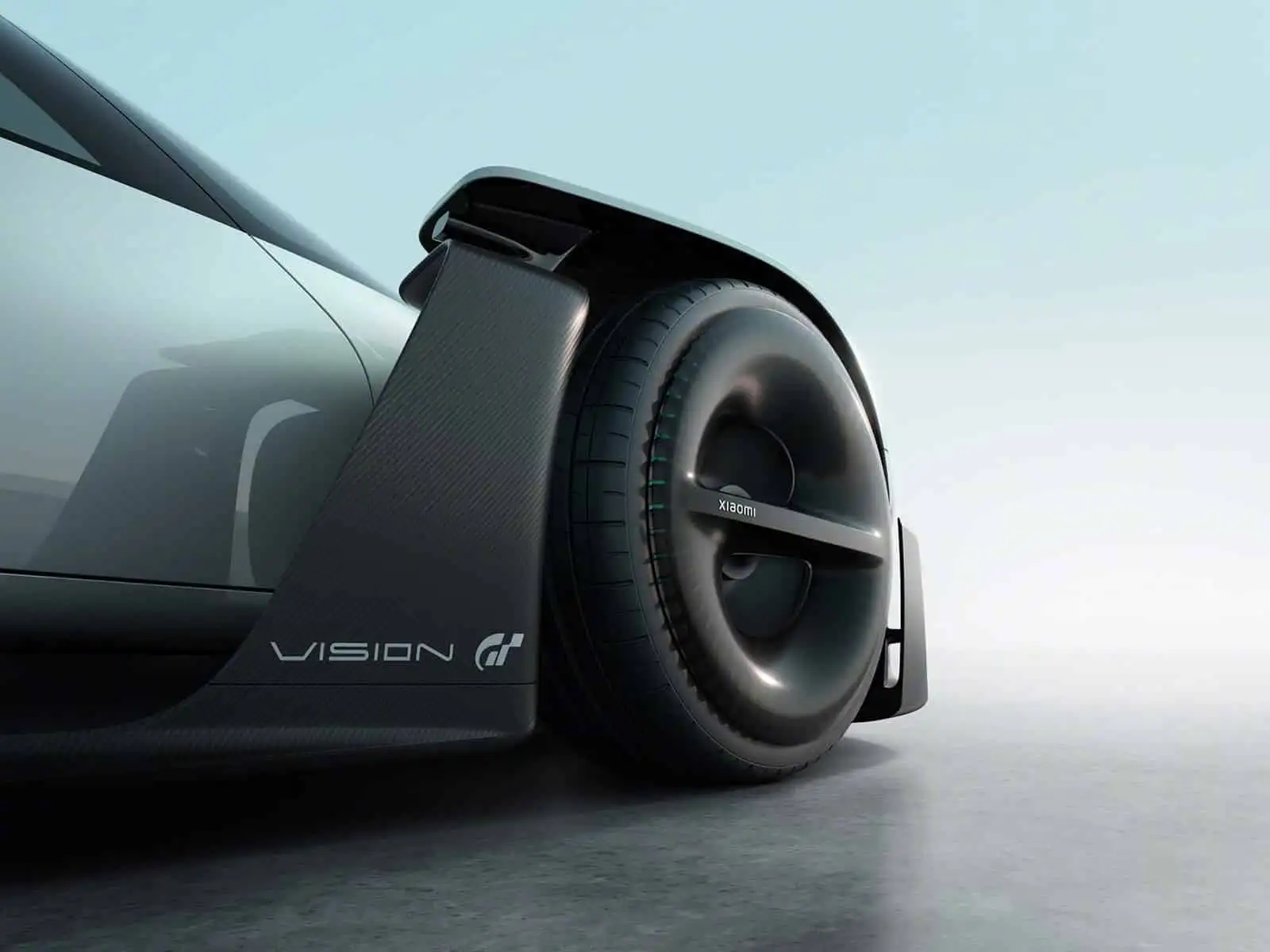
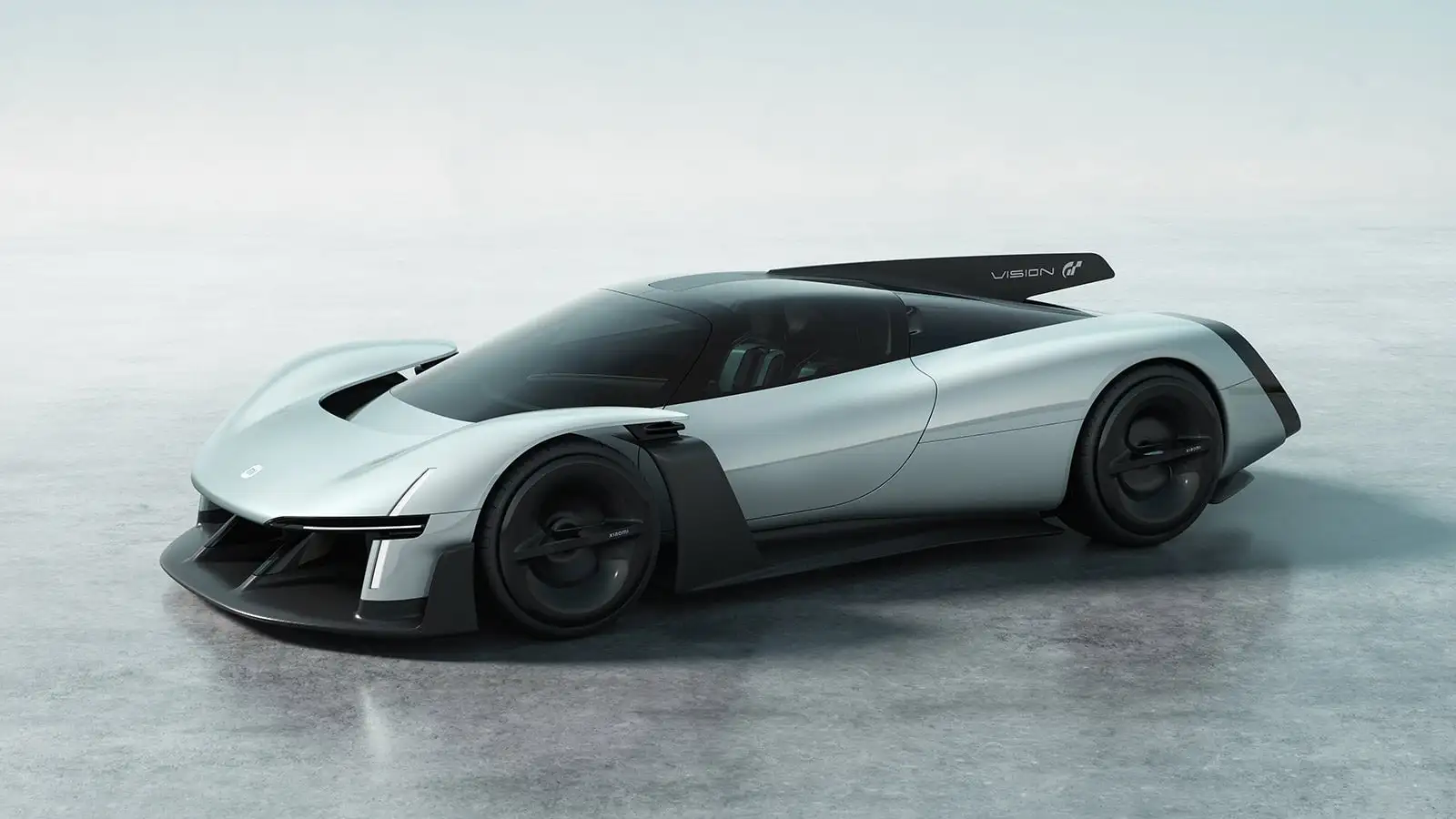
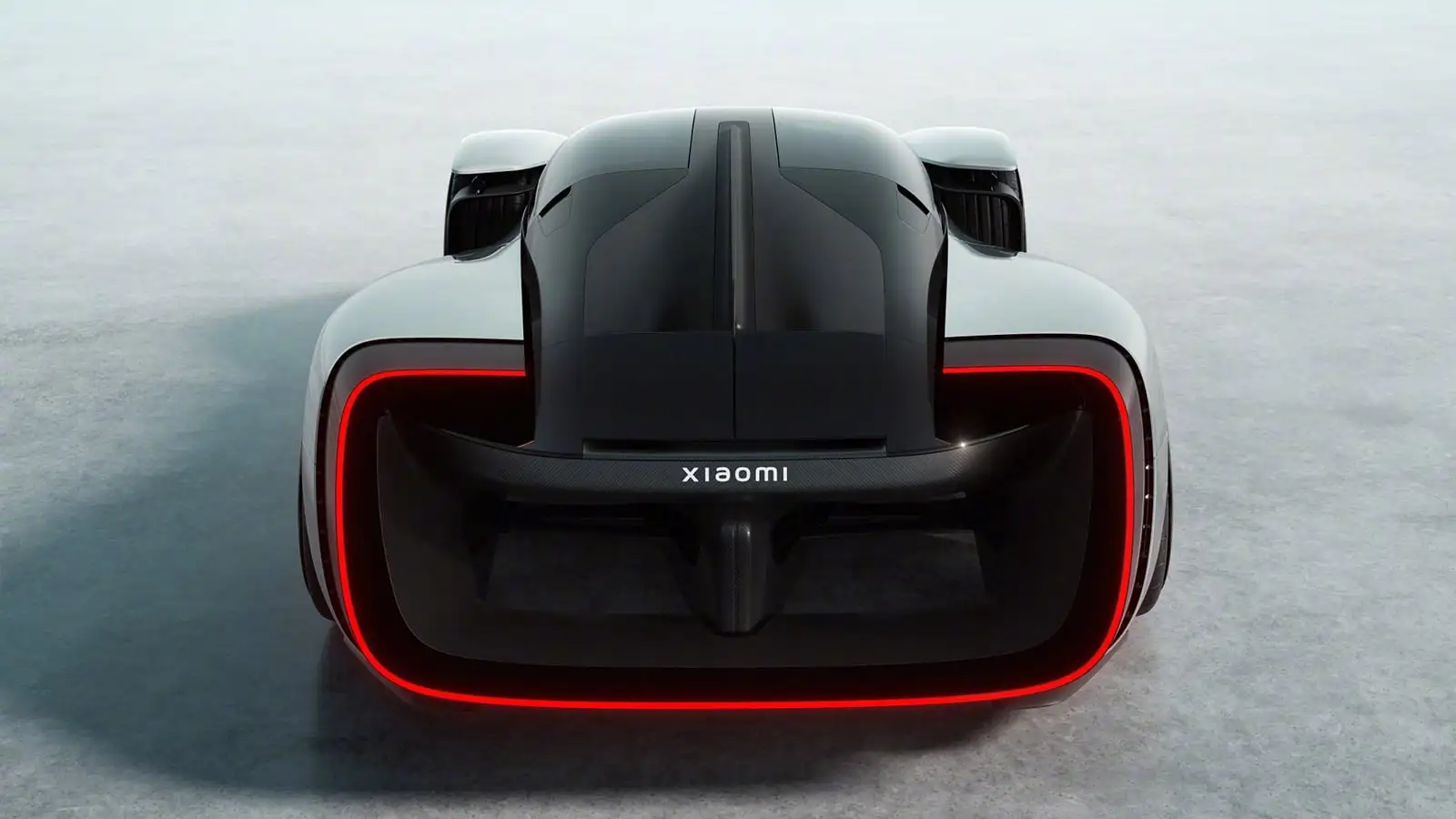
Xiaomi describes the Vision GT design philosophy as a “less is more” applied to aerodynamics. In practice, this means trying to avoid unnecessary appendages and making almost every line of the bodywork have a real function. Still, the concept doesn’t skimp on what creates immediate visual impact.
- Proportions ultra low and wide, in the “widebody” track style.
- Scissor doors to reinforce the supercar signature.
- Rear wing gigantic in carbon fiber, with a clear downforce proposal.
- Center-lock wheels, typical detail of race cars, with visual and practicality for quick changes.
- Carbon-ceramic brakes, chosen to hold speed with repetition and high temperature.
If you enjoy concepts that play with the boundary between “game car” and “real car”, it’s worth comparing this proposal to the obsession with extreme grip of the MCMURTRY SPÉIRLING and its otherworldly downforce. The difference is that Xiaomi is using this exaggeration as a showcase for a bigger plan, not just as an engineering demonstration.
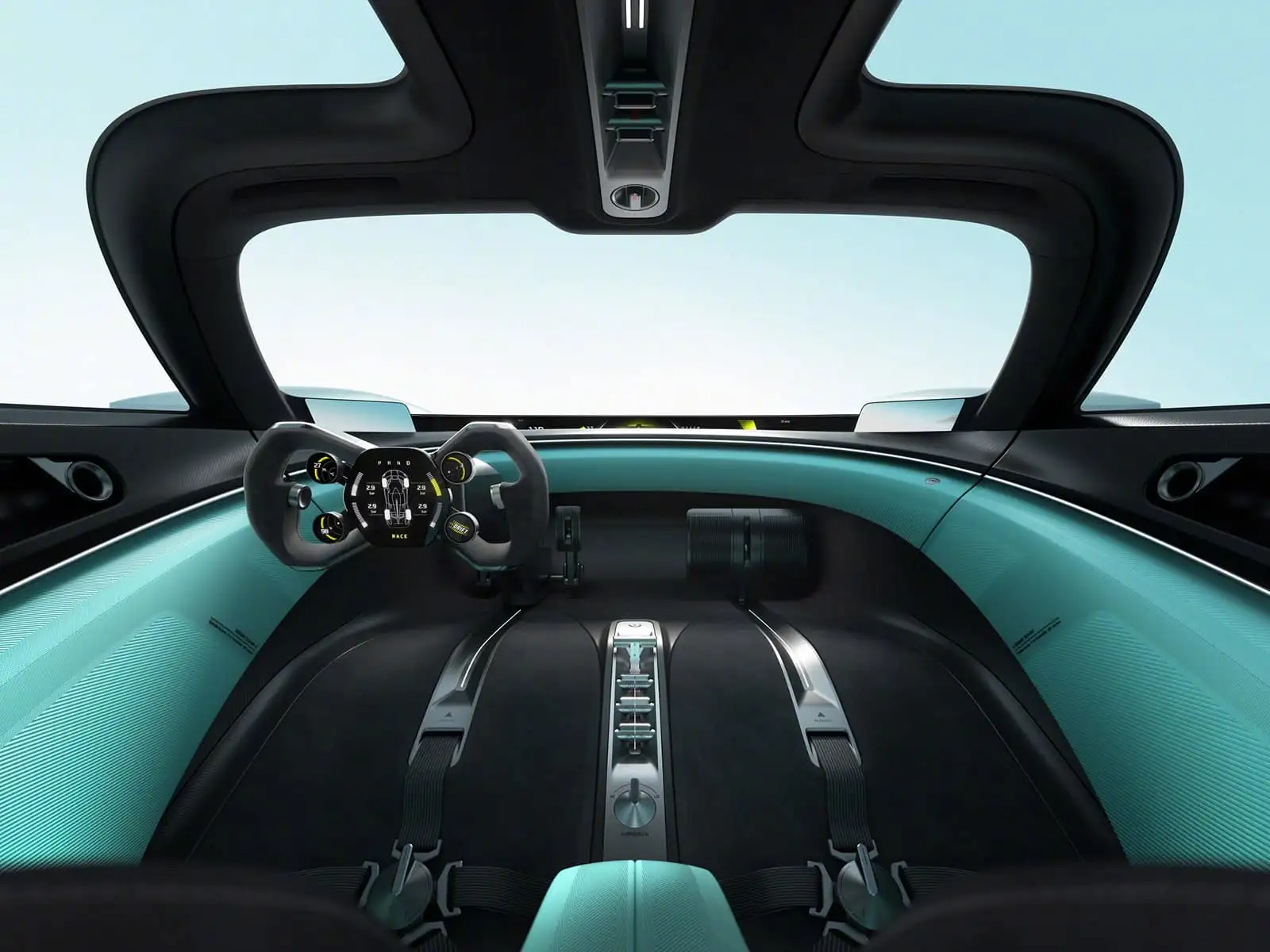
Cockpit With Panoramic Screen And Physical Buttons (Yes, They Stayed)
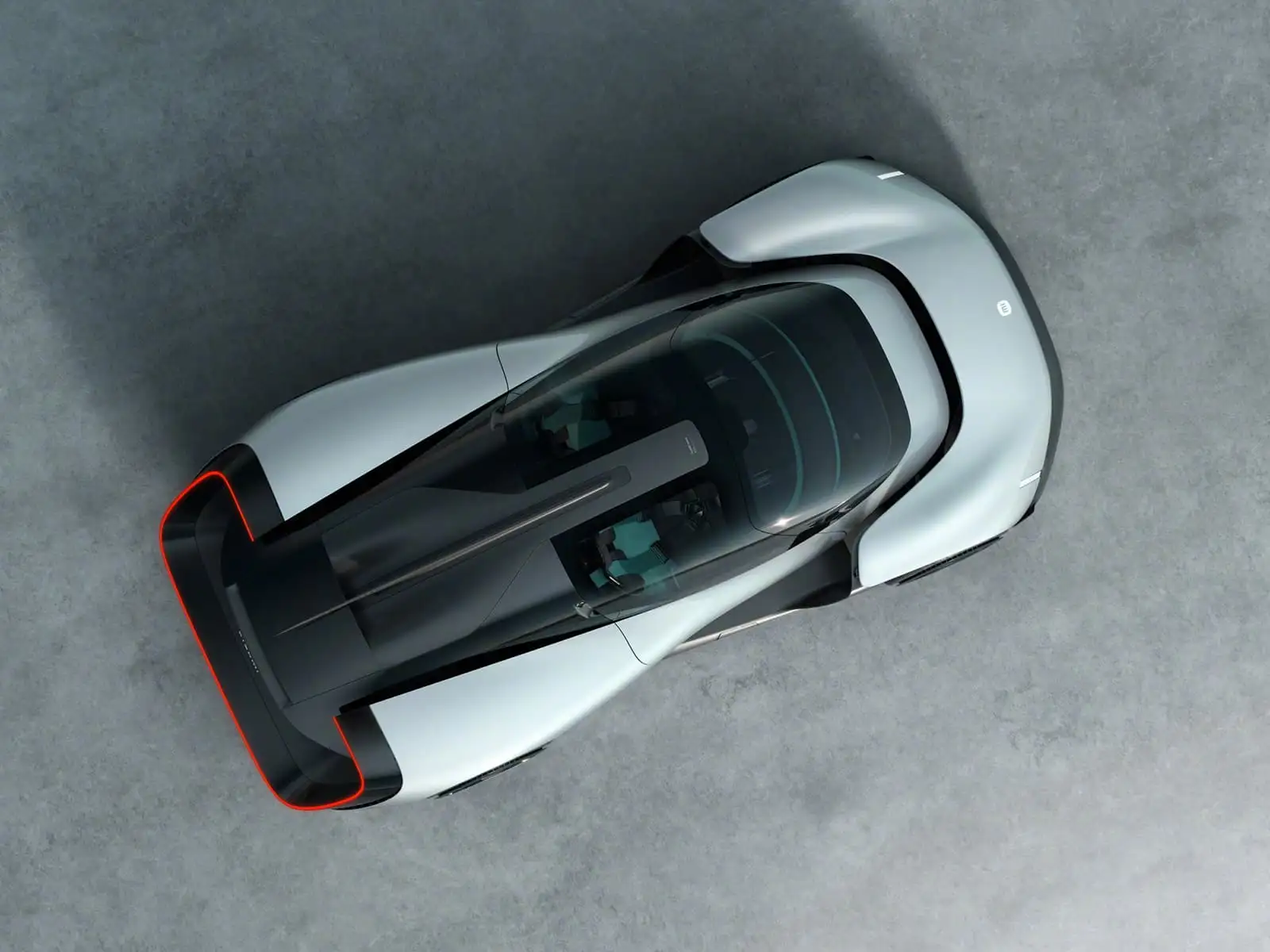
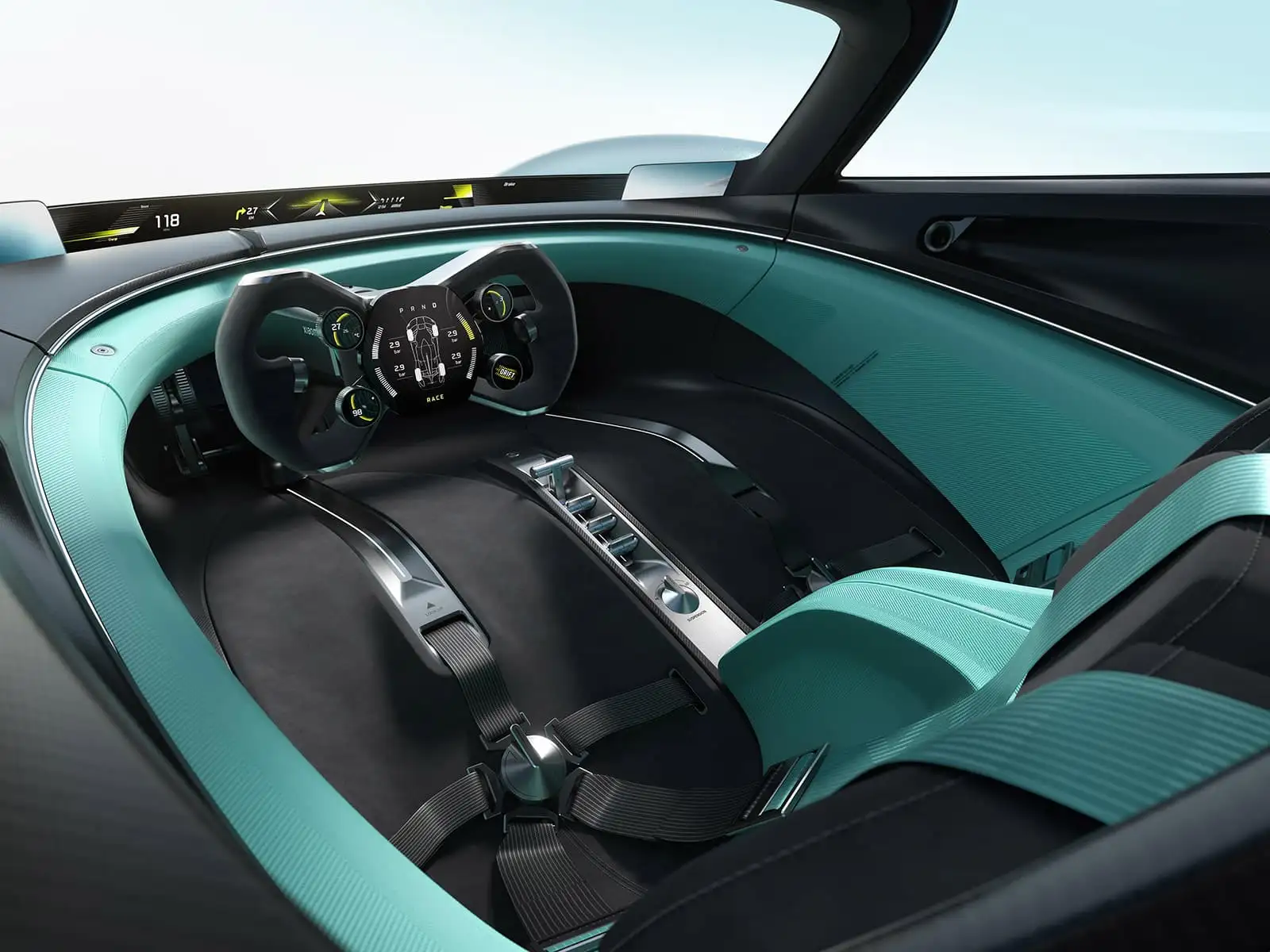
The Vision GT interior follows a trend that mixes futurism with a detail many people were missing: physical controls where they really matter. The cabin features a panoramic screen with “skyline” reading, suggesting a continuous interface focused on telemetry and infotainment.
But Xiaomi decided to keep a console with tactile commands, including a circular selector and a gear lever with aircraft throttle aesthetics. This isn’t gratuitous nostalgia. In a performance car (even virtual), physical buttons reduce errors in critical moments and avoid relying on menus.
For those following how giant screens are redefining automotive interiors, there’s an interesting parallel with the “big screen vs ergonomics” dilemma in modern SUVs, like the GMC Terrain 2027 and its 15-inch screen, where technological shine can clash with real usability.
900 V Platform, 1900 HP, and the Gran Turismo Trick to Conquer the World
The Vision GT was presented as an electric concept built on a 900 V base with silicon-carbide (SiC), an architecture that, in industry terms, is usually associated with three practical advantages: greater efficiency at high power, the possibility of very fast recharging (depending on the pack and charger), and lower heat generation in critical electronic components.
The number that made headlines is the estimated power: 1,900 hp. This places the model in the territory where “supercar” becomes “hypercar” in terms of output. For quick context, 1,900 hp is power to compete with extreme projects and limited editions, even though Xiaomi is operating here in the concept format for a simulation ecosystem.
| Item | What Xiaomi highlighted | Why it matters |
| Electrical architecture | 900 V with SiC | Technical base for high power and fast charging potential |
| Power | Estimated 1,900 hp | Positions the Vision GT as a showcase of extreme performance |
| Aerodynamics | Focus on function, “less is more” | Promise of efficiency and stability, not just aesthetics |
| Ecosystem | Integration with home, devices, and car | Brand differentiator beyond the “car itself” |
| Experience | Gran Turismo 7 and dedicated simulator | Expands global reach and creates desire before the real product |
Gran Turismo 7, Dedicated Simulator, and the “Shortcut” to Consumer Passion
The plan is clear: players worldwide will have access to Vision GT in Gran Turismo 7, and Xiaomi is still talking about a dedicated driving simulator for those without a console. This creates a direct bridge between the brand and an audience that already consumes performance as entertainment.
If you look at it coldly, it’s a modern marketing funnel: first comes the fantasy (the car in the game), then comes the habit (the person drives, shares, does lap times), and only then comes the desire to own something from the brand in the real world. It’s the same logic of building desire through the imaginary, something that century-old brands have done for decades with competition and movies, but now at internet speed.
By the way, this movement of Asian brands “invading” Europe with product and narrative is becoming a pattern. An example outside the car world, but with the same spirit of attacking European territory, is the Ultraviolette X-47 Crossover, which also arrives targeting the dominance of traditional brands directly.
The Nürburgring Effect Behind the Concept
Even as a concept, the Vision GT is supported by a pillar that gives credibility to Xiaomi’s performance narrative: recent real-world results with its line of electric vehicles. The brand has already used track performance as proof of engineering, including the fame around fast laps and what that communicates to the public.
For those who follow the sector, this type of “track stamp” has become almost a currency. It’s similar to what happens when a sports car breaks symbolic barriers and changes the tone of the debate on who dominates performance, like in the Chevrolet Corvette ZR1 in historic record. The discussion stops being just specs and turns into reputation.
What the Vision GT Reveals About Xiaomi’s Strategy in Europe
Instead of trying to “convince” Europe with a common car and a common campaign, Xiaomi seems to choose a more aggressive and modern path:
- Gain attention where Europe gathers to talk about the future, like MWC in Barcelona.
- Gain emotional legitimacy by entering the Gran Turismo club, alongside brands that shaped the imagination of luxury and racing.
- Gain cultural scale using a product that can be experienced worldwide, even without existing in production.
- Gain differentiation with the ecosystem discourse, something traditional manufacturers are still learning to operate.
The result is a concept that works as a technological and cultural “bait” at the same time. And if this formula catches on, it can accelerate a scenario where the European consumer doesn’t just compare Porsche vs Ferrari vs Mercedes, but also starts comparing software, integration, and experience with the same weight as power and design.