
It’s cheaper, has a reputation for being “just like regular diesel,” and yet it can turn into a big problem if it ends up in the wrong tank. Off-road diesel, also known as red diesel, exists for a specific reason—and that’s exactly why using it on the street is often treated as tax fraud.
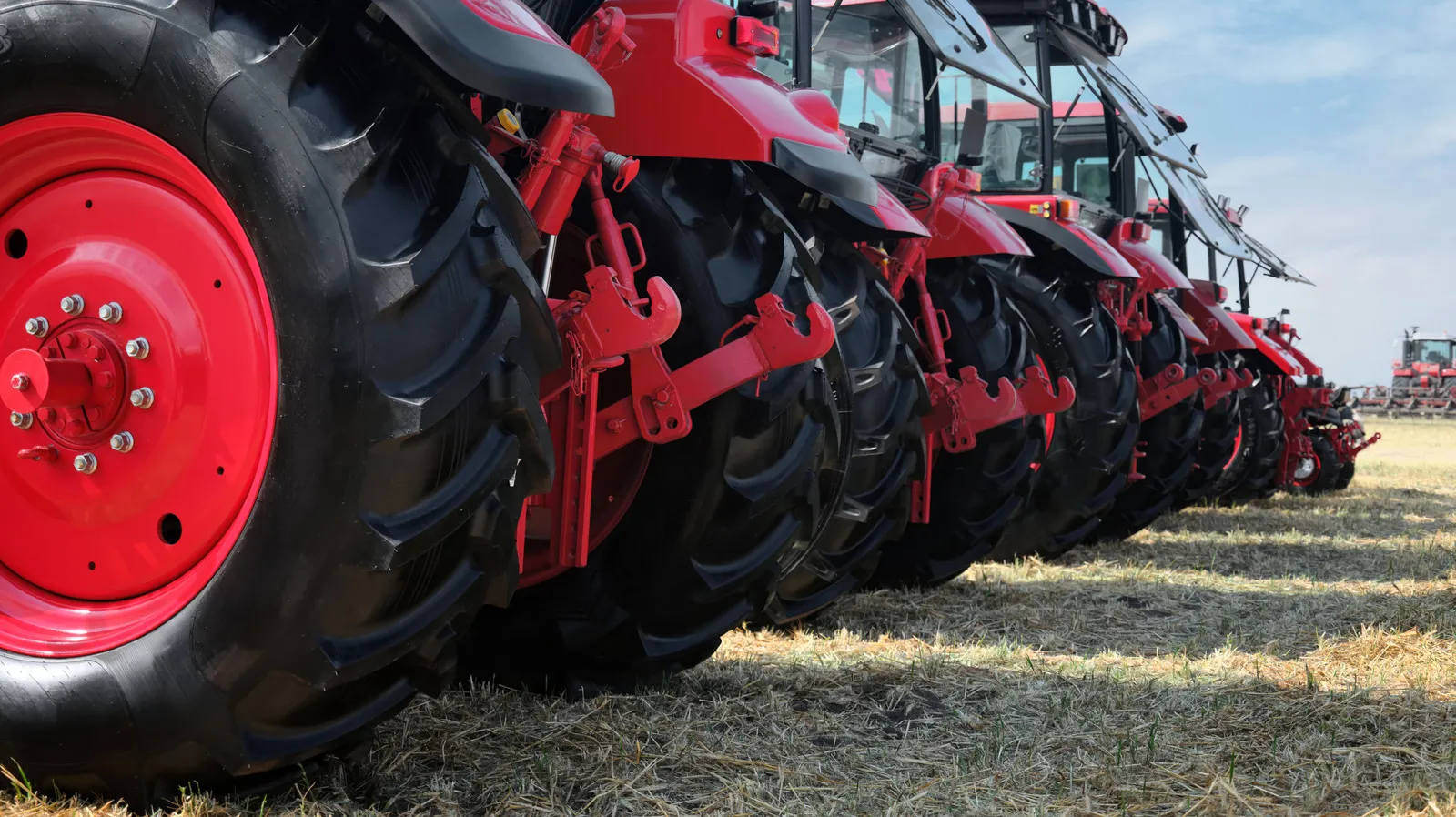
What Is Off-Road Diesel and Why Does It Exist
When you fill up at a gas station, part of the price per liter isn’t “expensive gas” or “station margin”: it’s tax. In many countries (with variations by state/region), taxation on fuels funds road maintenance, construction projects, oversight, and part of the infrastructure that allows trucks, buses, and cars to circulate daily.
The historical point of friction came when sectors like agriculture, mining, construction, and industrial operations argued something simple: “If my tractor, generator, or machine spends the day on the farm, construction site, or mine, why should I pay fuel tax designed for highways?”
That’s where the concept of off-road diesel comes from: a diesel intended for equipment that does not run on public roads or that runs exceptionally, with its own rules. To facilitate inspection and prevent this cheaper fuel from becoming a “shortcut” for those circulating on asphalt, authorities adopted a straightforward method:
- Dye in the fuel, usually red, for identification;
- Different tax treatment, with lower tax burden or exemption;
- Clear usage rules, linked to the type of vehicle, operation, and location.
In other words, off-road diesel is not “magic fuel”. It is a tax instrument with a visual marker to reduce fraud.
Off-Road Diesel Is Different From Highway Diesel
This is the doubt that makes the topic explode in Google searches. The correct answer is: it depends on the country and the current regulation. In many places, for decades, off-road diesel could have different environmental specifications (classic example: higher sulfur content). With the advancement of emission rules and standardizations, in several modern scenarios, off-road and on-road can be chemically very similar — and the big practical difference becomes tax and traceability.
Even when the “product” is similar, the legal destination remains different. And that’s where many people get confused: “if it’s practically the same, why is it illegal?”. Because the central issue isn’t the engine, it’s taxation.
If you enjoy technical content about engines and efficiency, it’s also worth reading Why Do Diesel Engines Have Higher Compression Ratios Than Gasoline Ones, because this helps understand why diesel is so strategic in fleets and heavy transport.
Why It’s Illegal to Use Off-Road Diesel in Street Vehicles
The legal and tax reasoning is almost always the same: if the fuel was sold with reduced taxes for not using highways, but was used by someone who uses highways, there was evasion. That’s why the issue isn’t treated as a “minor infraction,” but as:
- tax fraud or attempted evasion;
- improper use of marked fuel;
- unfair competition (especially in transportation and logistics).
In practice, red diesel becomes tempting mainly where diesel is a large part of the operational cost, such as:
- transport companies and cargo trucks;
- diesel pickups used on daily routes;
- van and utility fleets;
- companies with internal tanks and own fueling.
The “Trick” That Many People Don’t Understand
The risk is not just in “a gas station attendant seeing it”. The risk is in a technical and operational detail: the dye can be detected even after dilutions, depending on the test and concentration. Authorities and agencies usually use specific inspection methods, and the presence of the marker can be enough for a fine.
In addition, there is a side effect that few people consider: accounting trail. Companies that buy large volumes of off-road diesel can be audited, and the numbers need to “match” the type of operation they declare.
Speaking of SUV and off-road vehicle operation, see how the market is pushing off-road into everyday life in increasingly powerful models, like the FORD EXPLORER TREMOR 2026, which mixes trails and pavement — and this further increases public confusion about “trail fuel” versus “legal fuel for street driving”.
How Inspections Detect Red Diesel in the Tank
Many people imagine it would be impossible to “catch” this. But inspections don’t rely on guesswork: they look for a physical marker.
If off-road diesel is marked with dye, they just need to collect a small sample of the vehicle’s fuel (or from the filter/line) to check for the marker.
Inspection points vary by country and region, but typically include:
- scales and weighing stations (especially for trucks);
- blitzes and special operations in logistics corridors;
- industry events and fairs (where fleets and machinery are concentrated);
- yards and company inspections when there is suspicion or audit.
What makes this “viral” is the contrast: the gain per liter seems small, but the cost of getting caught can be gigantic.
What Are the Most Common Penalties
The consequences vary widely, but typically involve a combination of:
- fixed fine (high amount already on the first offense, in some jurisdictions);
- fine per volume (calculated per irregular liter/gallon);
- retroactive payment of taxes and fees;
- vehicle seizure in serious cases or recidivism;
- labor issues if the vehicle is corporate (termination for cause, compliance breach);
- lawsuit when fraud is characterized.
For those who live the road routine with modern diesel, it’s useful to compare with market and technology discussions — for example, the new AUDI Q5 DIESEL 2026 shows how today’s “street” diesel is designed for efficiency, noise, and emissions within strict standards, which reinforces why governments take the issue seriously.
The Dye “Fades” Over Time
Another common myth is thinking that just running a few tanks “fixes” it. The dye may fade visually, but:
- residues can remain in lines, pump, filter, and tank;
- the test can detect traces even in mixtures;
- if there’s an investigation for purchase/stock, the discussion doesn’t stop at the tank.
In practical terms, using off-road diesel on the street is a “discount” that can turn into a liability.
Exceptions and Situations Where It May Be Allowed
Despite the general rule being strict, there are situations in which governments may issue temporary authorizations to ensure supply and essential services. This usually happens in scenarios of:
- natural disasters (severe blizzards, hurricanes, floods);
- logistics chain disruption and lack of road diesel;
- emergency operations with mobilization of teams and supplies.
In these conditions, there may be a temporary waiver so that response vehicles (energy, rescue, transport of critical items) use marked diesel without penalty — but this is defined by an official act, with specific period, area, and rules.
Checklist to Avoid Falling into a Trap
If you operate diesel vehicles (or manage a fleet), this checklist reduces risk:
| Risk | How to avoid |
|---|---|
| Fueling with off-road diesel for “savings” | Prohibit in internal policy and train drivers |
| Confusion between agricultural tank and road tank | Identify pumps, hoses, and tanks with visual standard |
| Purchasing volume incompatible with operations | Maintain consumption control and reconcile invoices |
| Third parties fueling company vehicles | Require proofs and audit routes/fuelings |
For those who love vehicles truly geared toward dirt, not asphalt, there’s a clear difference between “off-road project” and “urban use” — and this shows in machines like the KAWASAKI BRUTE FORCE 450 EPS, which are made for work and trails, exactly the type of scenario that justifies fuel with differentiated taxation.
Off-Road Diesel in Brazil Is the Same Thing
In Brazil, there’s a similar discussion involving destination, taxation, and ANP standards, but the central logic is universal: fuel with tax benefits or specific destination cannot be used outside the rules. As the country has particularities in nomenclature, blending, distribution, and inspection, the responsible recommendation is always to confirm in your region:
- which diesel is allowed for your vehicle;
- which specification and sulfur content are required;
- how local legislation treats marked/industrial/agro diesel.
Se você está comparando custos de rodagem e quer cortar desperdício sem correr risco legal, muitas vezes o “ganho escondido” está em manutenção preventiva e itens simples — como no guia Como O Ar-Condicionado Do Seu Carro Faz Mais Do Que Apenas Resfriar O Ar, que mostra como sistemas auxiliares também impactam consumo e conforto, especialmente em frotas.
Off-road diesel (red diesel) is usually cheaper because it carries less tax and is marked for inspection purposes. Using it in a vehicle that runs on pavement can be interpreted as tax evasion, with heavy fines, risk of seizure, and legal problems. The per-liter discount rarely compensates for the headache.