Learn why mixing brake fluids can be deadly. Understand the chemical differences between DOT and mineral oil in a practical way.
How DOT Brake Fluids Work and Why the Label Matters
Fluids classified as DOT follow standards set by the U.S. Department of Transportation for thermal performance, corrosion resistance, and compatibility. The most common acronyms you’ll find are DOT 3, DOT 4, DOT 5, and DOT 5.1. Each has different chemical characteristics:
- DOT 3 and DOT 4 — glycol-based (hydrophilic). Absorbs water over time, lowering the boiling point and requiring periodic replacement.
- DOT 5 — silicone-based (hydrophobic). Does not absorb water but is incompatible with systems designed for glycol-based fluids and can cause water to accumulate at low points.
- DOT 5.1 — glycol with superior thermal performance, compatible with DOT 3/DOT 4 in many modern high-performance systems.
Why This Matters in Practice
Safety: water in the fluid means vapor bubbles during intense braking lead to loss of efficiency. Maintenance: glycol fluids require periodic replacement (usually every 1–2 years, as recommended). Compatibility: mixing different chemical families can degrade rubber parts and seals.
Mineral Oil: Who It’s Designed For and Actual Benefits
Mineral brake oil is not exactly “engine oil” or plain household oil — these are specific formulations, traditionally used in bicycles, e-bikes with hydraulic brakes, and some agricultural or classic car lines. Brands like Shimano and Magura are references in this segment.
- Advantages: typically hydrophobic, less corrosive to metal components, less aggressive to paint in case of splashes, and provides a more stable pedal feel in systems designed for it.
- Disadvantages: does not meet DOT standards, lacks third-party certification like FMVSS, and is incompatible with systems requiring glycol-based fluids.
Where Mineral Oil Excels
In cycling, e-bikes, and some older hydraulic systems (e.g., certain Bentley, classic Rolls-Royce models, or tractors), mineral oil offers practical benefits: less internal corrosion and more predictable behavior for the manufacturer’s design. However, the lack of a DOT standard means you rely on the fluid manufacturer and system to trust performance in extreme conditions.
Direct Comparison: Properties That Influence Choice and Maintenance
| Property | Mineral Oil | DOT 3 / DOT 4 / DOT 5.1 (glycol) | DOT 5 (silicone) |
|---|---|---|---|
| Compatibility | Only designed for mineral oil systems | Designed for glycol-based DOT fluids | Requires silicone-compatible system |
| Hygroscopicity | Hydrophobic (does not absorb water) | Hygroscopic (absorbs water) | Hydrophobic |
| Dry Boiling Point | Approx. 400–500 °F (depending on formulation) | DOT 3/4 vary; DOT 4 higher than DOT 3 | High; generally stable |
| Effect of Water | Water remains at low points and can boil at 212 °F | Water mixed reduces boiling point (wet boiling) | Water accumulates in bubbles, periodically reducing efficiency |
Practical Implications
At high temperatures (long descents, track use), the presence of water in glycol fluid gradually decreases braking efficiency. In mineral oil systems, water tends to separate and accumulate in low points, which can lead to localized boiling, but the mixture does not reduce the overall boiling point as glycol fluids do.
Which to Choose and Practical Advice for Vehicle and Bike Owners
First of all: consult the manufacturer’s manual. Switching fluid types without following recommendations can cause system failure and void warranties.
Golden Rules
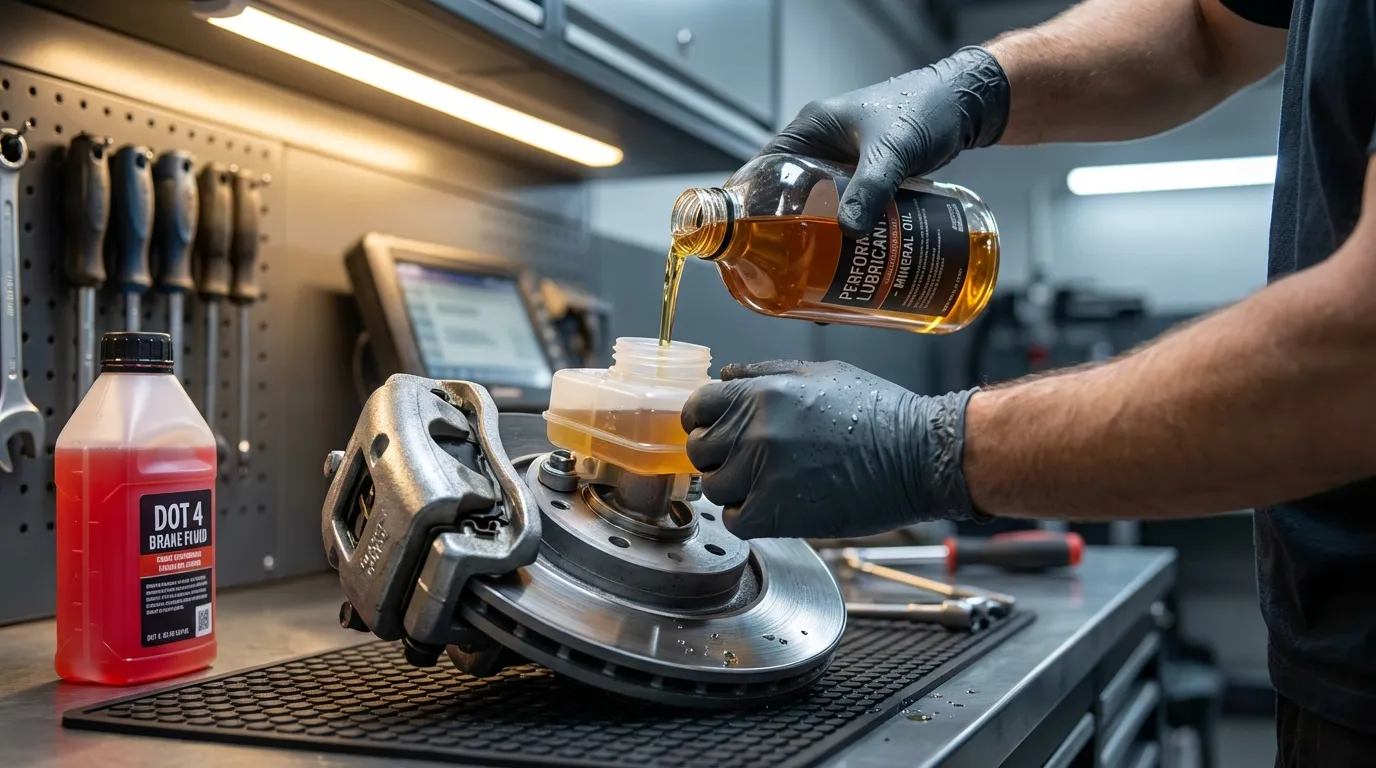
- Never mix mineral oil with glycol or silicone DOT fluids. Chemical incompatibility can cause hoses to swell, damage seals and gaskets, and even lock components.
- Replace fluid according to manual. For glycol fluids, replacement is usually annual or every 24 months depending on usage and boiling point tests. For motorcycles and vehicles under severe use, do it more frequently.
- Check for contamination: darkened color, particles present, spongy pedal, visible drips around connections.
- When bleeding, follow the correct procedure to avoid introducing air. If unsure, take it to a trusted workshop.
Basic Steps to Check Fluid
- Open the reservoir and observe the color and level with the engine off and cold.
- If the fluid is dark, it indicates degradation—schedule for replacement.
- Use a boiling point test kit or send it to a service for analysis if water absorption is suspected.
- Always dispose of used fluid according to local environmental regulations.