A hybrid that doesn’t need a plug? Discover how the e-Power system delivers instant torque and record-breaking efficiency in city and highway driving.

Imagine driving an SUV that accelerates like a pure electric, without the stress of plugs or charging stations. The 2025 Nissan Qashqai e-Power promises exactly that in the competitive world of compact crossovers, featuring a facelift that gives it a more aggressive look. But does it outperform rivals like the Hyundai Tucson Hybrid?
Renovated Design and Revolutionary Powertrain of the 2025 Nissan Qashqai e-Power
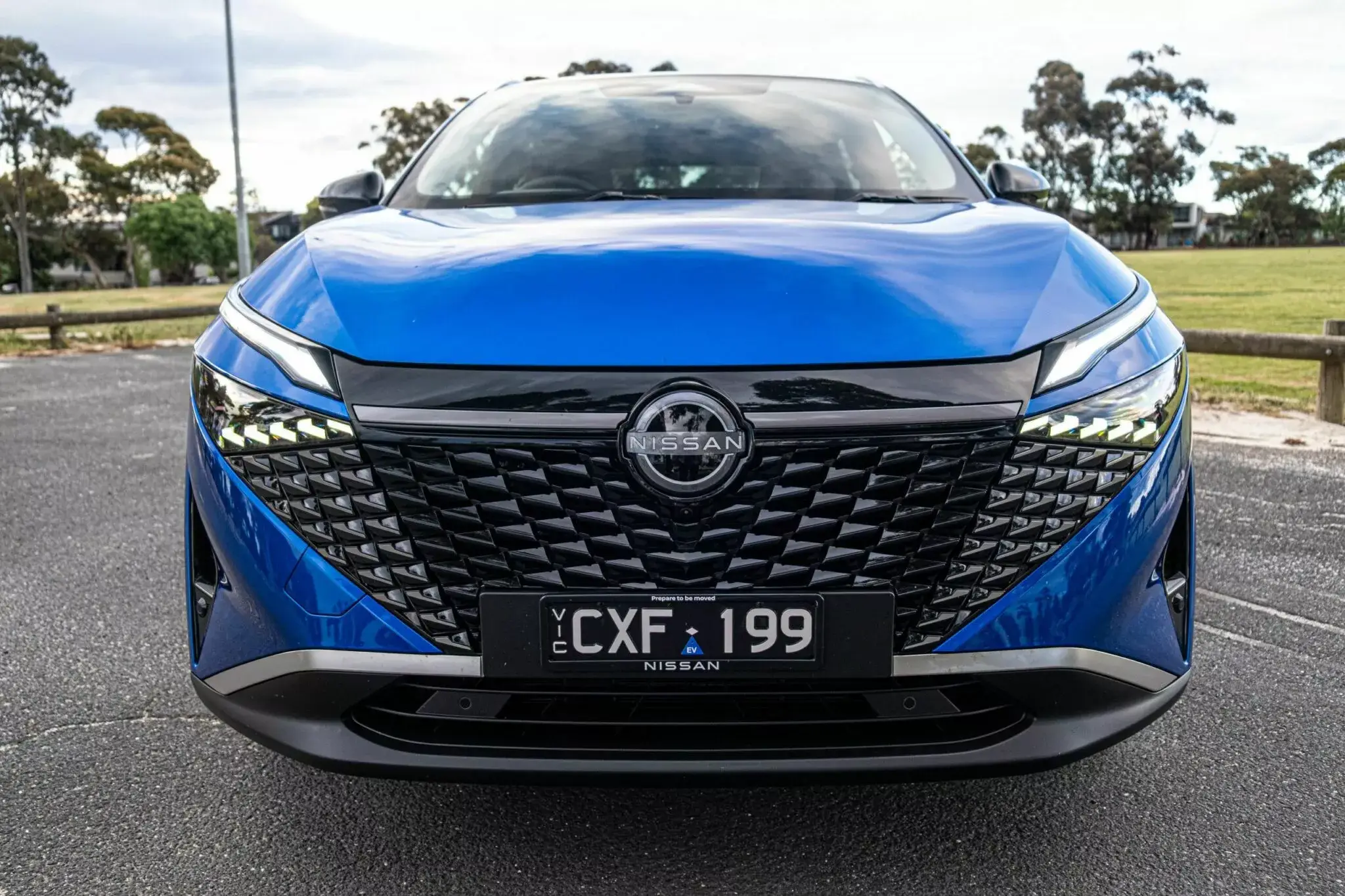
The 2025 Nissan Qashqai e-Power arrives with an updated visual that screams modernity. The front features sleek LED headlights and a larger grille, creating a more imposing and sporty face, perfect for standing out in urban traffic. At the rear, transparent LED taillights and a redesigned bumper add a premium touch. Available in versions like the new top-of-the-line N-Design, it measures smaller than giants like the Toyota RAV4, positioning itself as an agile compact SUV for busy U.S. cities.
The heart of the innovation is the e-Power system, a brilliant hybrid solution: a 1.5L turbo three-cylinder engine (115 kW/154 hp) that works solely as a generator for a 2.1 kWh battery, which powers the 140 kW (188 hp) electric motor delivering 330 Nm of torque to the wheels. The result? 0 to 60 mph acceleration in about 8 seconds, utilizing a single-speed transmission for instant response. No clutch or confusing gearboxes – it’s smooth like an EV but without needing a plug. In real-world tests, fuel consumption was an impressive 5.3 L/100 km (or approximately 44 MPG US), beating the previous model’s 5.8 L/100 km and closing in on Nissan’s official 4.8 L/100 km rating.

The steering is precise and well-calibrated, with the e-Pedal mode offering regenerative braking that handles 90% of daily stops. Day-to-day driving is characterized by silence: the gasoline engine hums discreetly in the background. However, during strong accelerations, its metallic three-cylinder sound can be slightly irritating – a point Nissan may need to refine to fully compete with more refined hybrids on the market.
Efficiency, Interior Comfort, and Daily Technology for US Drivers
Inside, the 2025 Qashqai maintains an ergonomic cockpit featuring black and brown leather finishes, contrasting white stitching, and a configurable 12.3-inch digital instrument cluster. The 12.3-inch central screen runs a responsive infotainment system with wireless Apple CarPlay and Android Auto – practical, though perhaps lacking the polish of native Google systems in some regions. Physical buttons for volume and shortcuts are a welcome feature in an era of frustrating touchscreens, although the piano black surfaces tend to attract fingerprints.
The standard six-speaker audio system is adequate; opting for the top-tier model with the 10-speaker Bose system provides better sound quality. As for space? It’s good for couples or singles, offering a decent cargo area, but it falls slightly short compared to the 2026 Nissan Rogue PHEV or rivals like the Kia Sportage in terms of rear-seat comfort. Larger families might find it slightly cramped, suggesting the larger X-Trail (Rogue in North America) might be a better fit.
| Version | Engine | Price AU$ (approx. US$) |
|---|---|---|
| ST | 1.3L Gasoline | AU$ 39,037 (~US$ 25,500) |
| Ti e-Power | e-Power Hybrid | AU$ 50,990 (~US$ 33,300) |
| N-Design e-Power | e-Power Hybrid | AU$ 58,990 (~US$ 38,500) |
These prices position it toward the higher end of the compact crossover range, often exceeding pure gasoline options. And reliability? Nissan scores well with only 9 recalls reported in 2025, suggesting strong manufacturing quality control compared to many rivals.

Market Comparison: Qashqai vs Rivals – Is It Worth Buying in the US Market?
In the saturated compact SUV segment, the Qashqai e-Power faces fierce competitors like the Hyundai Tucson Hybrid (172 kW/231 hp, more torque, and a lower starting price of AU$ 47,664) and the segment leader, the Toyota RAV4. The Tucson often wins on raw power and available space, while the RAV4 generally dominates resale value. The Qashqai scores highly on efficiency and its accessible EV-like driving feel, making it ideal for drivers covering about 300 miles weekly without range anxiety – a key advantage over traditional plug-in hybrids like the powerful Toyota hybrids mentioned previously.
- Pros: Leading efficiency (approx. 44 MPG US), EV-like quiet operation, updated sporty design, intuitive e-Pedal feature.
- Cons: Higher price point, limited rear-seat space, noticeable engine noise at high RPMs, basic standard audio system.
“The Qashqai e-Power is like a disguised EV: smooth and efficient, but needs more refinement to truly challenge the best hybrids in the segment.” – Expert review.
For drivers prioritizing exceptional fuel economy and a smooth driving experience without the commitment of plugging in, the 2025 Nissan Qashqai e-Power is certainly worth a test drive. In a competitive market where rivals like the 2026 Hyundai Santa Fe PHEV are increasing power output, the Qashqai remains relevant due to its unique e-Power hybrid technology. If your budget aligns with its premium positioning and passenger space is secondary, this could be your next road companion. Test drive one to feel the difference – Nissan is making a significant bet on this “wireless hybrid” approach.