Ferrari brings racing logic to the water
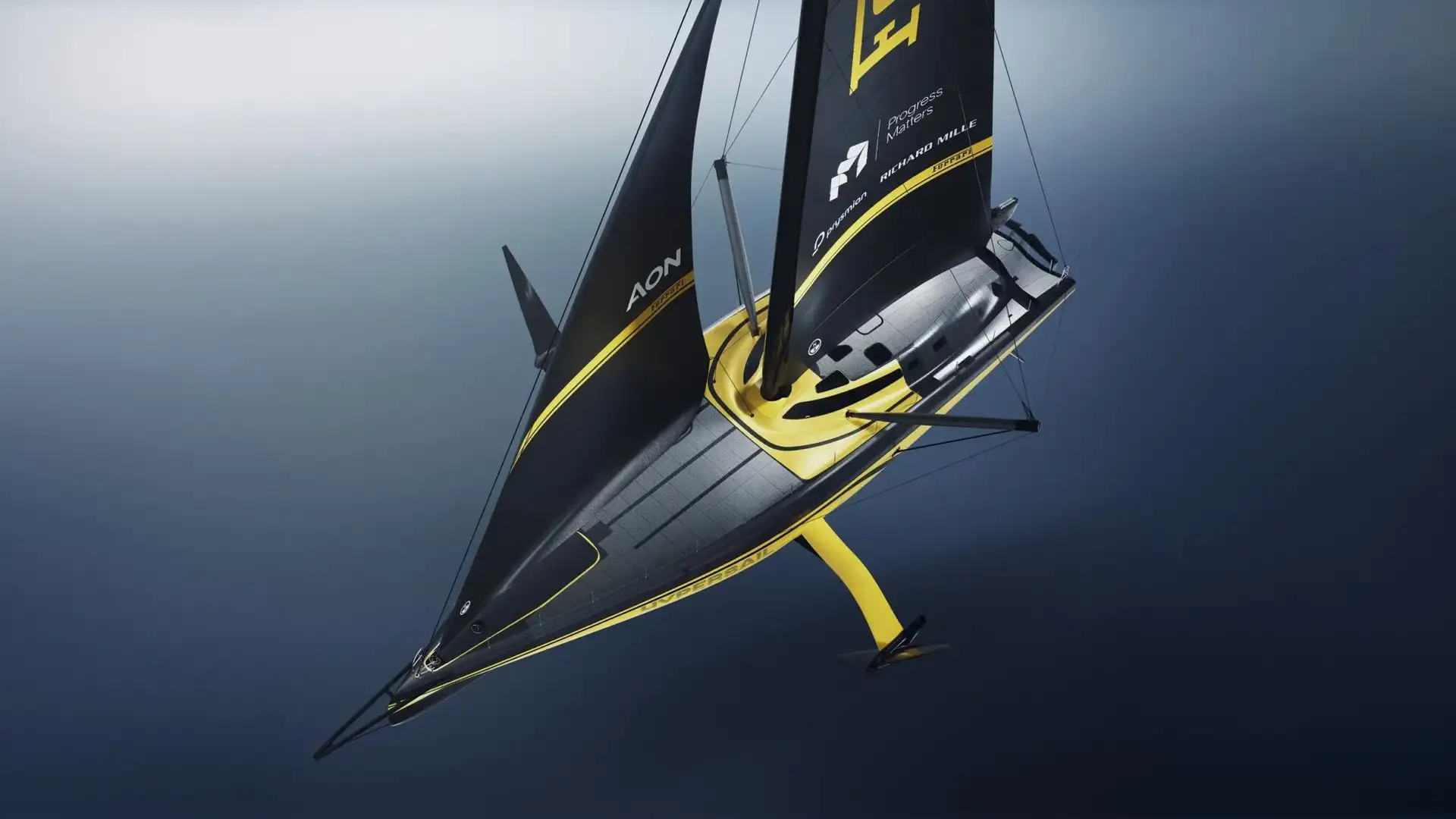
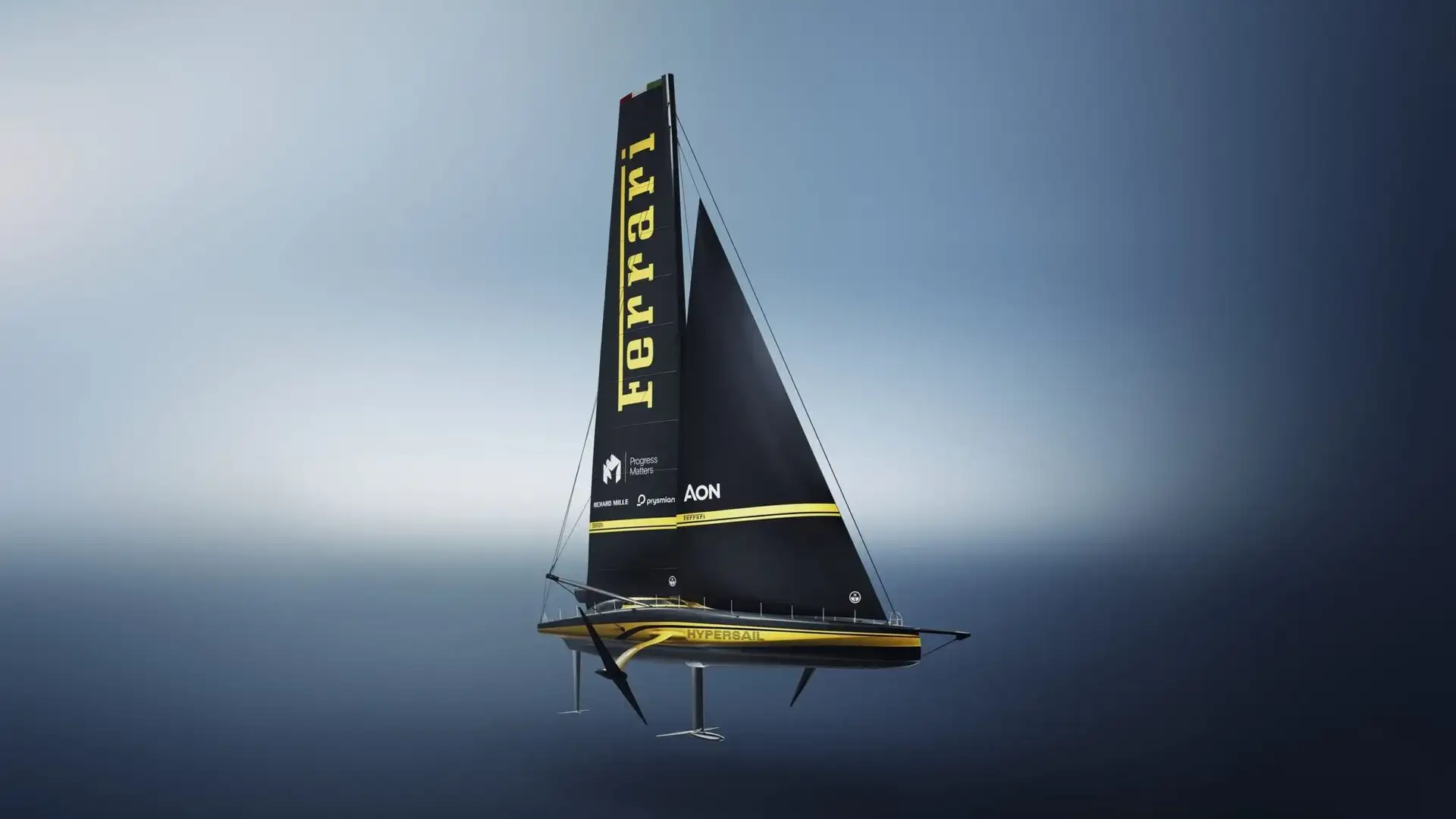
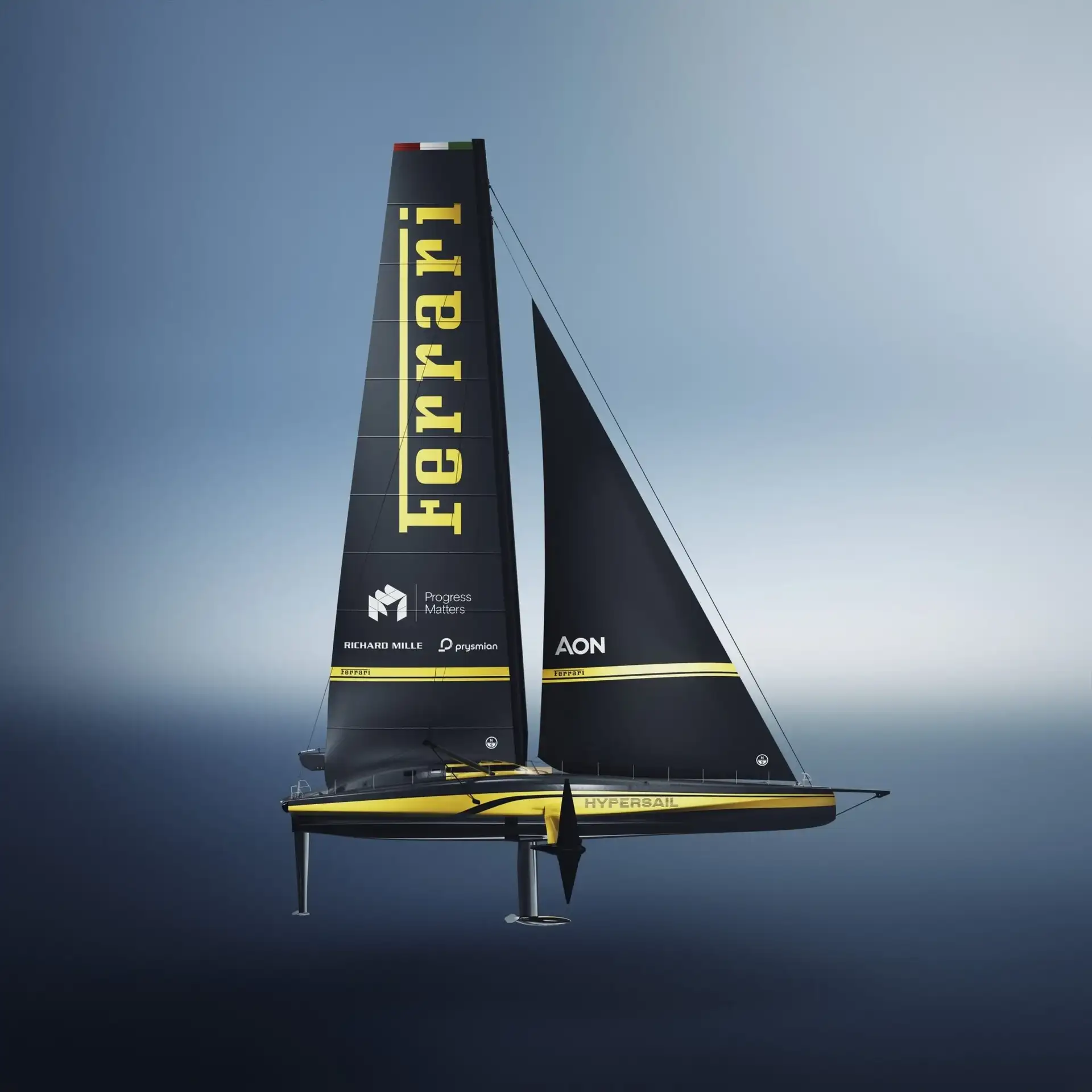
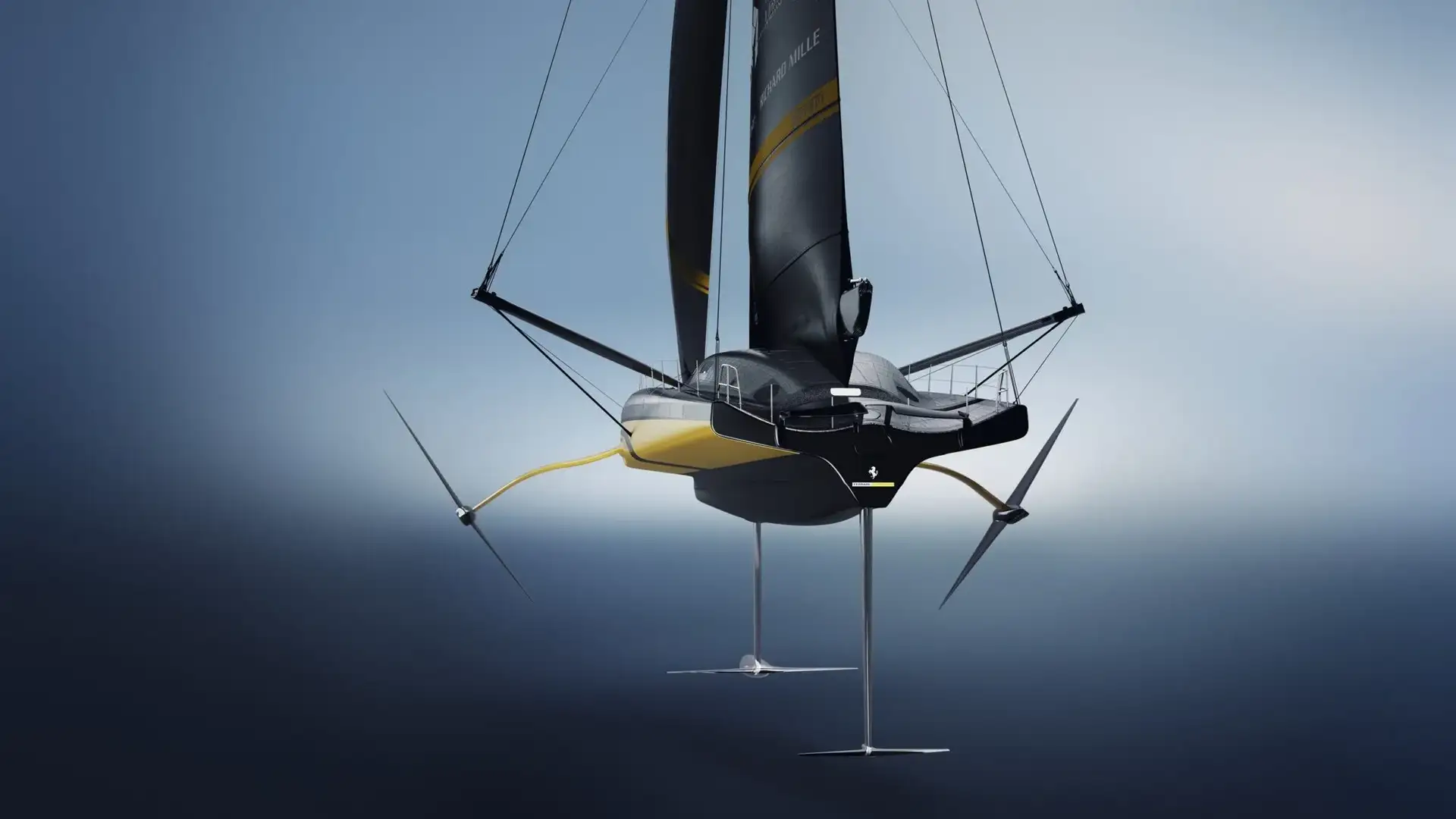
Ferrari’s Hypersail is not a branding stunt with a prancing horse badge; it is a 100-foot racing yacht developed with naval architect Guillaume Verdier, the Ferrari Tech Team and Ferrari Design Studio under Flavio Manzoni. Unveiled at Milan Design Week, the project translates Ferrari’s competition mindset into marine hardware, with the stated aim of reducing drag, maximizing lift and pushing the boundaries of what a racing yacht can do under its own sail power. The most immediate statement is the livery: yellow, not red, and deliberately so.
| Critical specification | Factual detail |
|---|---|
| Length | 100 feet |
| Hull material | Carbon fiber |
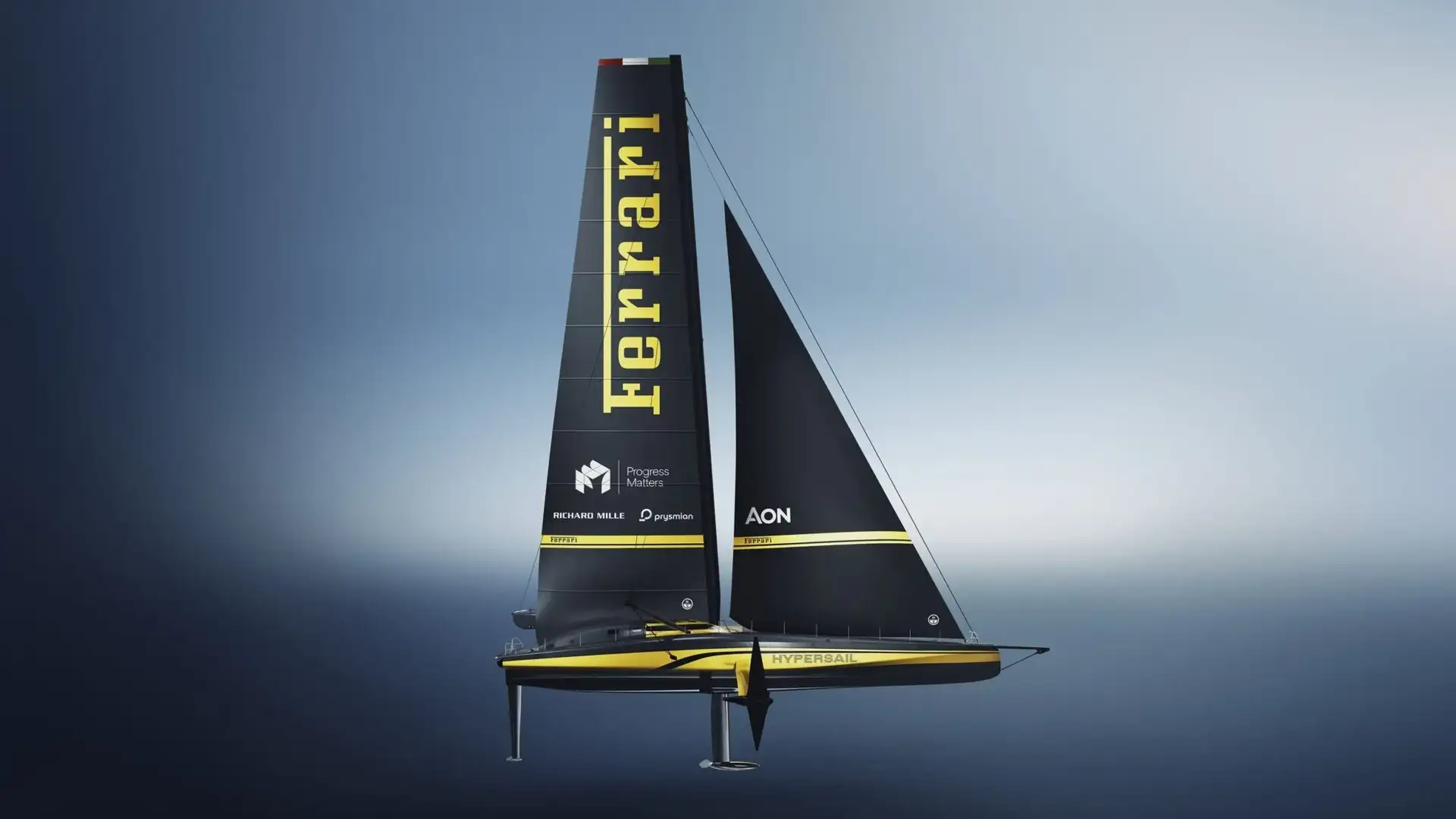
| Foil system | Two T-foils with flaps |
| Keel | Canting keel |
| Solar output | Up to 20 kW |
| Livery color | Nuova Gialli Fly inspired by the 275 GTB |
The hidden detail that connects this to Ferrari’s Le Mans era
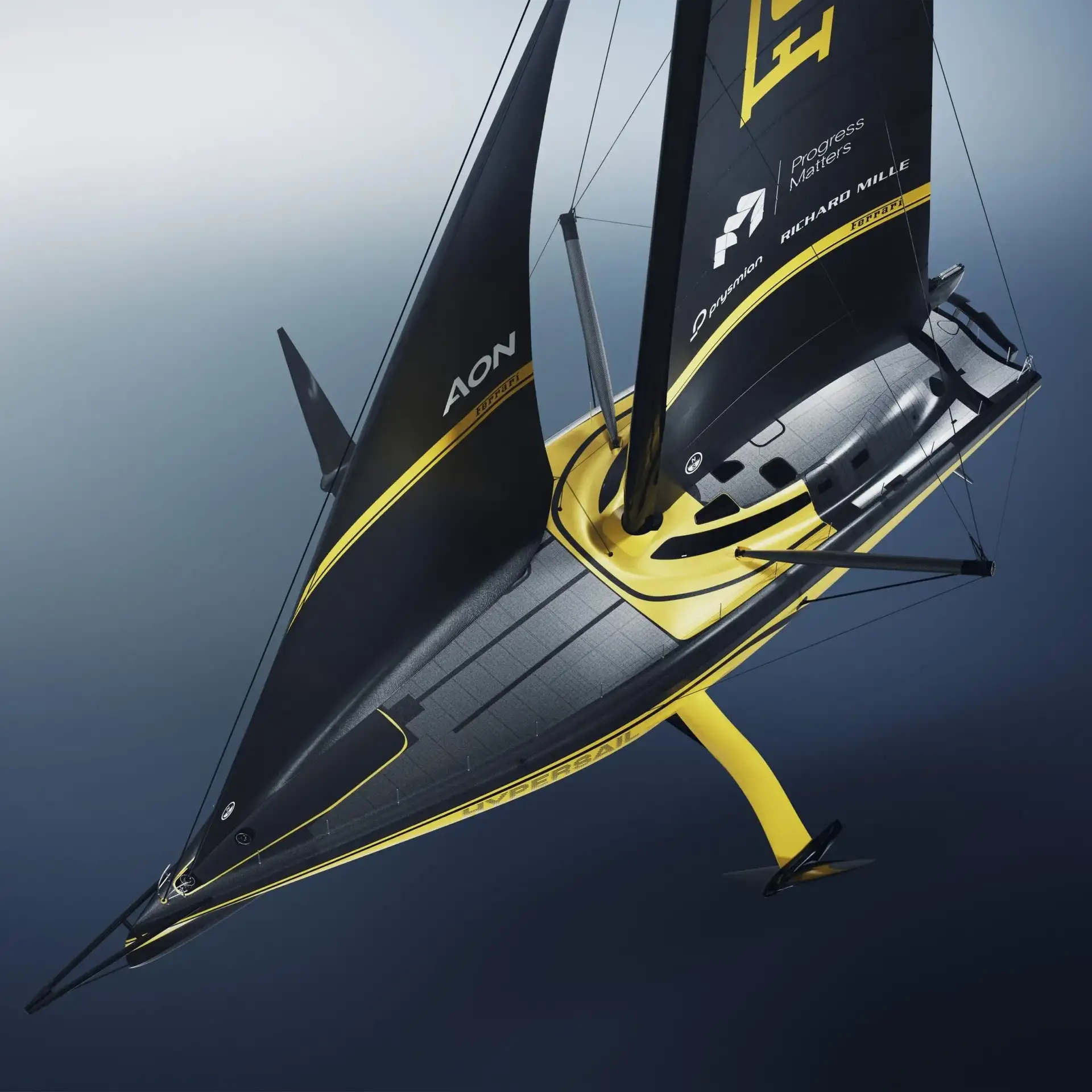
The design references are not arbitrary. Ferrari says the Hypersail’s proportions draw from the Monza SP1 and SP2, while the coachroof echoes the 499P hypercar that won Le Mans. That matters because it shows the yacht was shaped with the same aerodynamic and packaging discipline the company applies to endurance racing. For readers tracking Ferrari’s broader performance direction, the bridge to the FERRARI 499P Chega a Imola Com Título em Jogo makes the design language easier to read: this is not nautical decoration, it is a motorsport-derived form language exported to a different medium.
Foils, keel and solar power are doing the real work
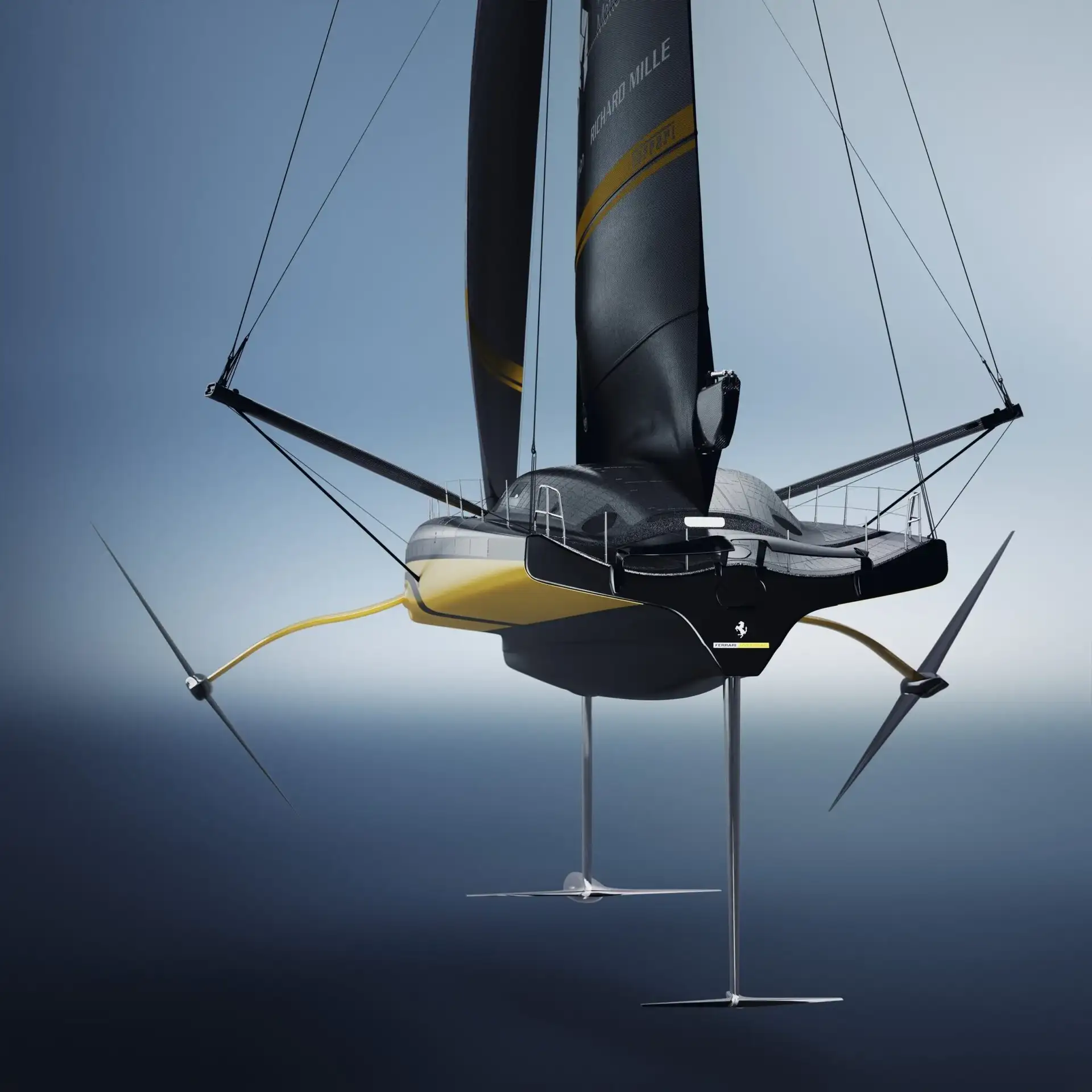
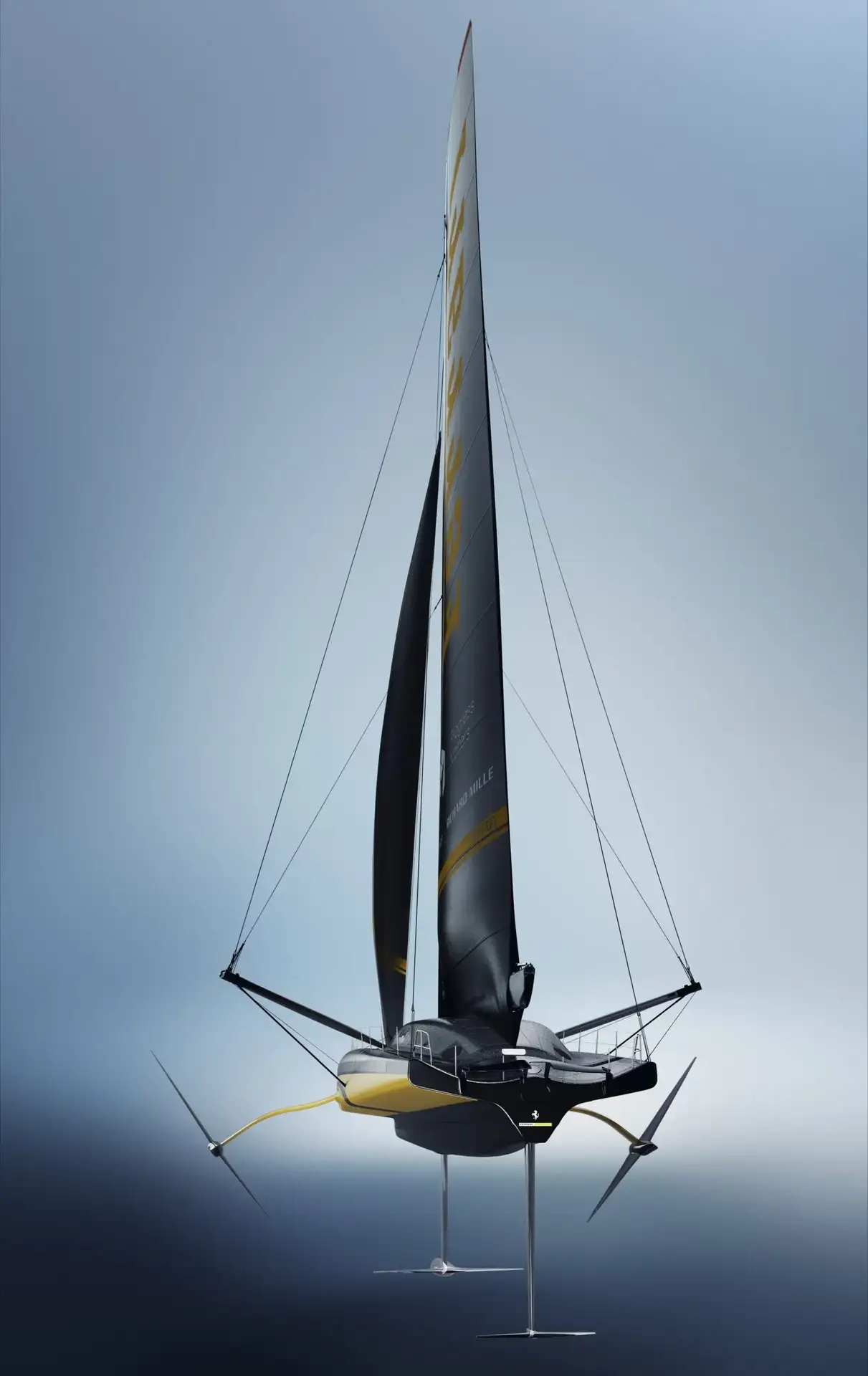
The Hypersail’s performance argument depends on its underwater and energy systems. A canting keel shifts ballast for stability and efficiency, while the twin T-foils with flaps are designed to raise the main structure out of the water, cutting wetted surface and unlocking speed potential. Ferrari has also placed solar panels on the deck and hull sides after analyzing real exposure over open water, and those panels are strong enough to support foot traffic. The claimed output reaches 20 kW, feeding an energy recovery system rather than relying on conventional fuel consumption.
Why the operational phase matters more than the unveil
Ferrari says Hypersail has entered its operational phase, which means the structure and control systems are being finalized. In practice, that is the meaningful milestone because yacht projects live or die on integration: foil behavior, load management, deck usability, energy recovery and control calibration all have to work together under changing sea states. Ferrari has not disclosed its ultimate competition or customer plan, but the platform already signals where high-end marine engineering is heading: lighter structures, smarter power use and active hydrodynamics rather than brute-force displacement.
For enthusiasts watching cross-category innovation, the Hypersail sits in the same conversation as performance-led projects that borrow from motorsport rather than luxury theater. The same appetite for technical theater appears in products like the PORSCHE 911 TURBO S 711HP Híbrido, where engineering substance is the headline, not just the badge.
FAQ
Is Ferrari Hypersail a production yacht?
No official production plan has been announced. Ferrari has only confirmed that the project is in its operational phase.
Why is the yacht yellow instead of red?
Ferrari used Nuova Gialli Fly, a yellow associated with the 275 GTB, to emphasize heritage rather than the usual road-car red.
What makes Hypersail technically interesting?
Its canting keel, twin T-foils with flaps, carbon-fiber structure and solar-assisted energy recovery system are the core performance features.
How much power can the solar system produce?
Ferrari says the panels can generate up to 20 kW.
Which Ferrari models influenced the design?
Ferrari cites the Monza SP1 and SP2 for proportions and the 499P hypercar for the coachroof inspiration.