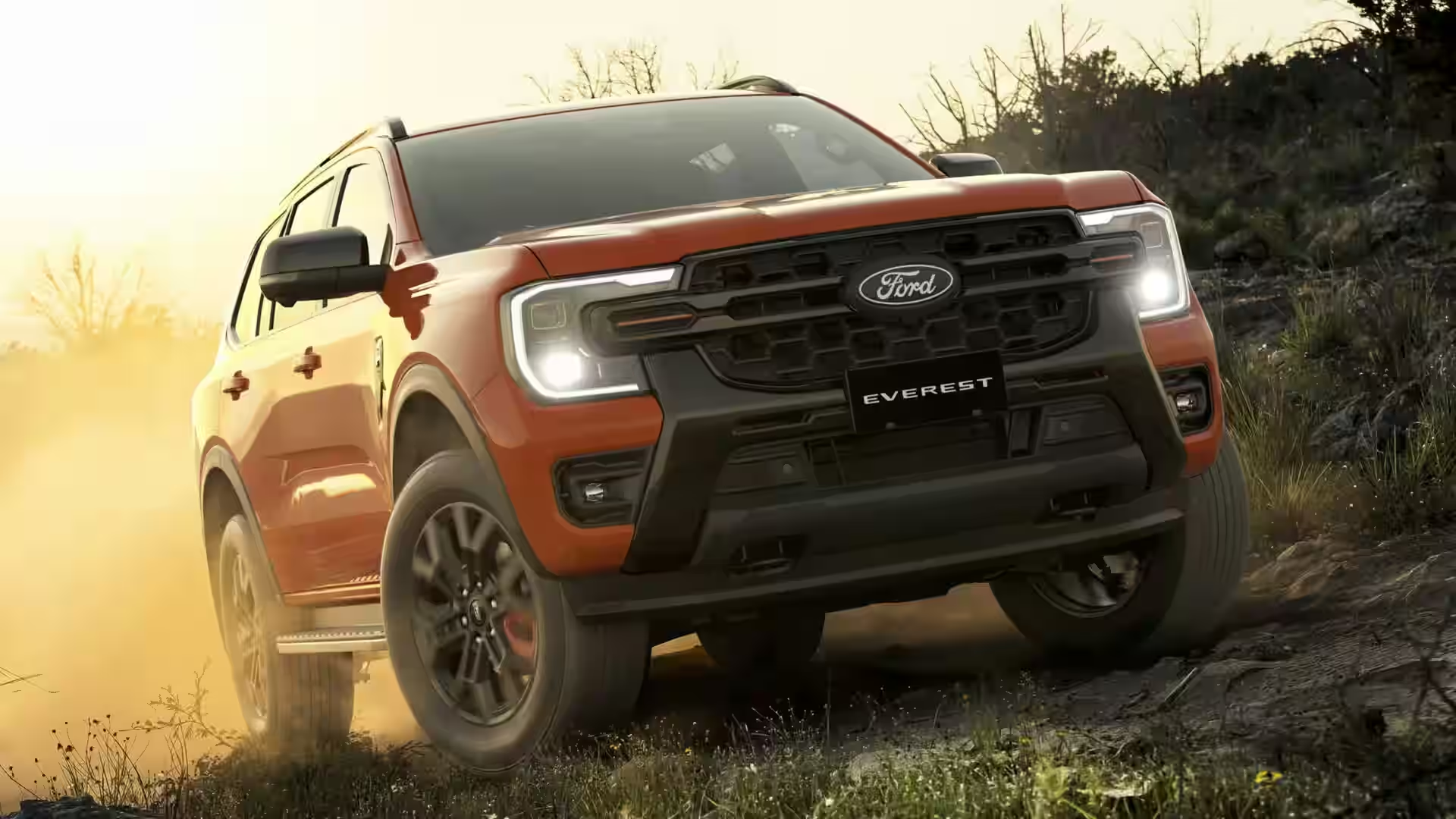
Ford gives the Everest Wildtrak another limited Australian run
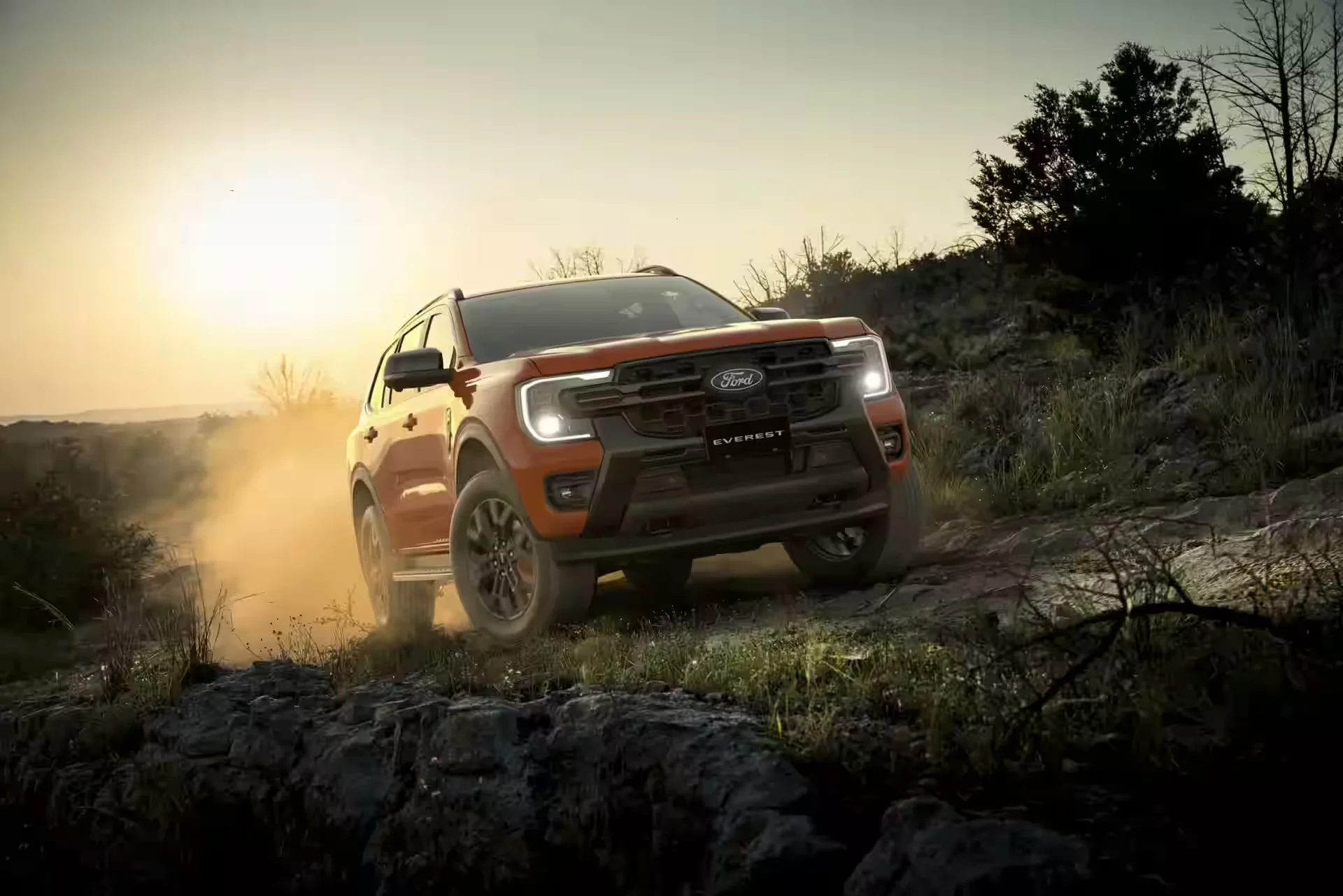
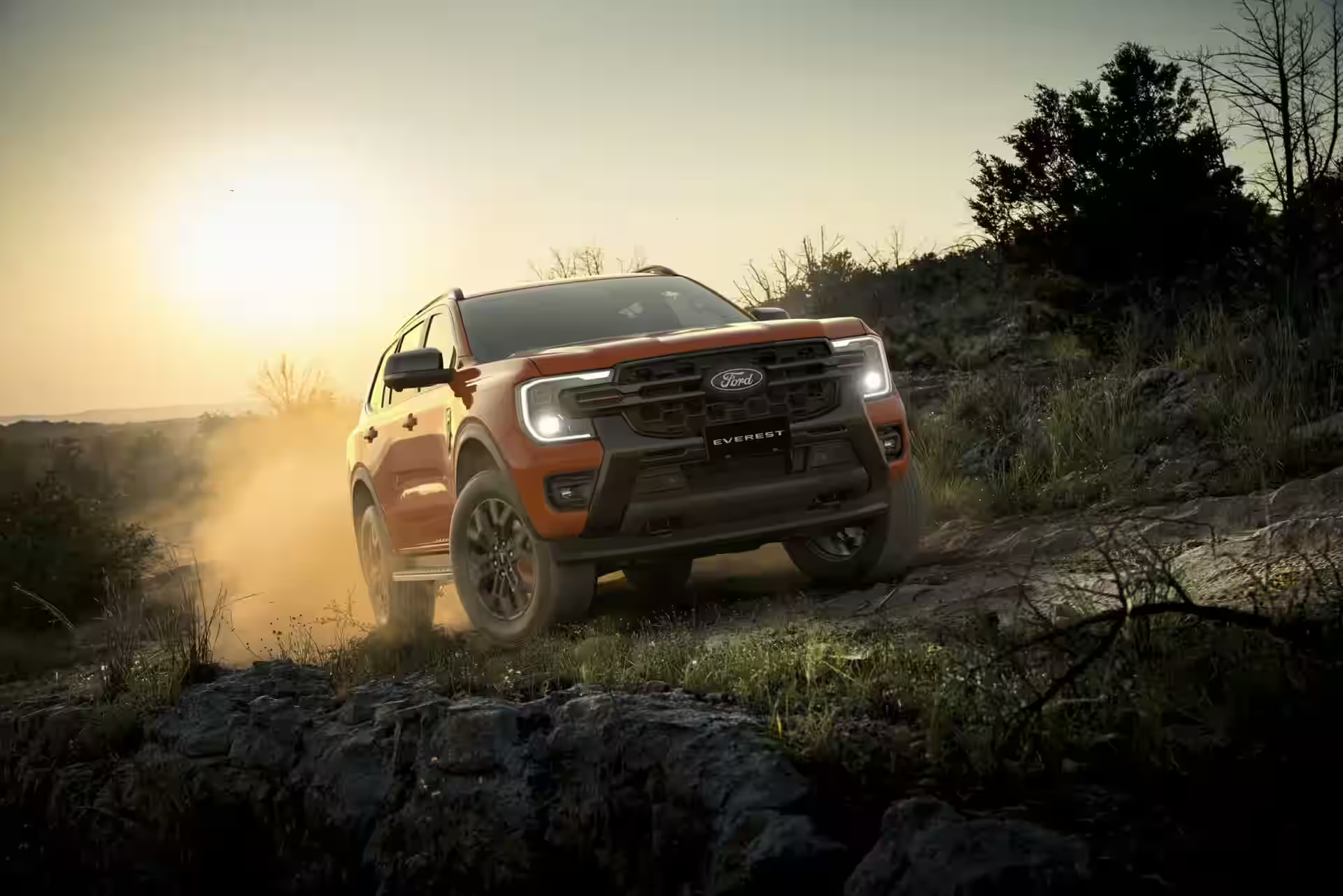
Ford has confirmed the Everest Wildtrak is returning to Australia for a third limited appearance, with 1,000 units scheduled for local showrooms in Q3 2026.5. This is not a cosmetic-only package. The 2026.5 Everest Wildtrak borrows heavily from the higher-spec Platinum grade, while retaining the familiar Ranger-derived ladder-frame architecture and the V6 diesel powertrain that has become the core of the Australian lineup.
| Critical spec | Ford Everest Wildtrak 2026.5 |
|---|---|
| Engine | 3.0-liter V6 turbodiesel |
| Output | 247 hp / 184 kW / 250 PS and 600 Nm (443 lb-ft) |
| Transmission | 10-speed automatic |
| Driveline | Full-time 4WD |
| Australian price | AU$ 79,990 (US$ 57,300) |
What changes versus the standard Everest line
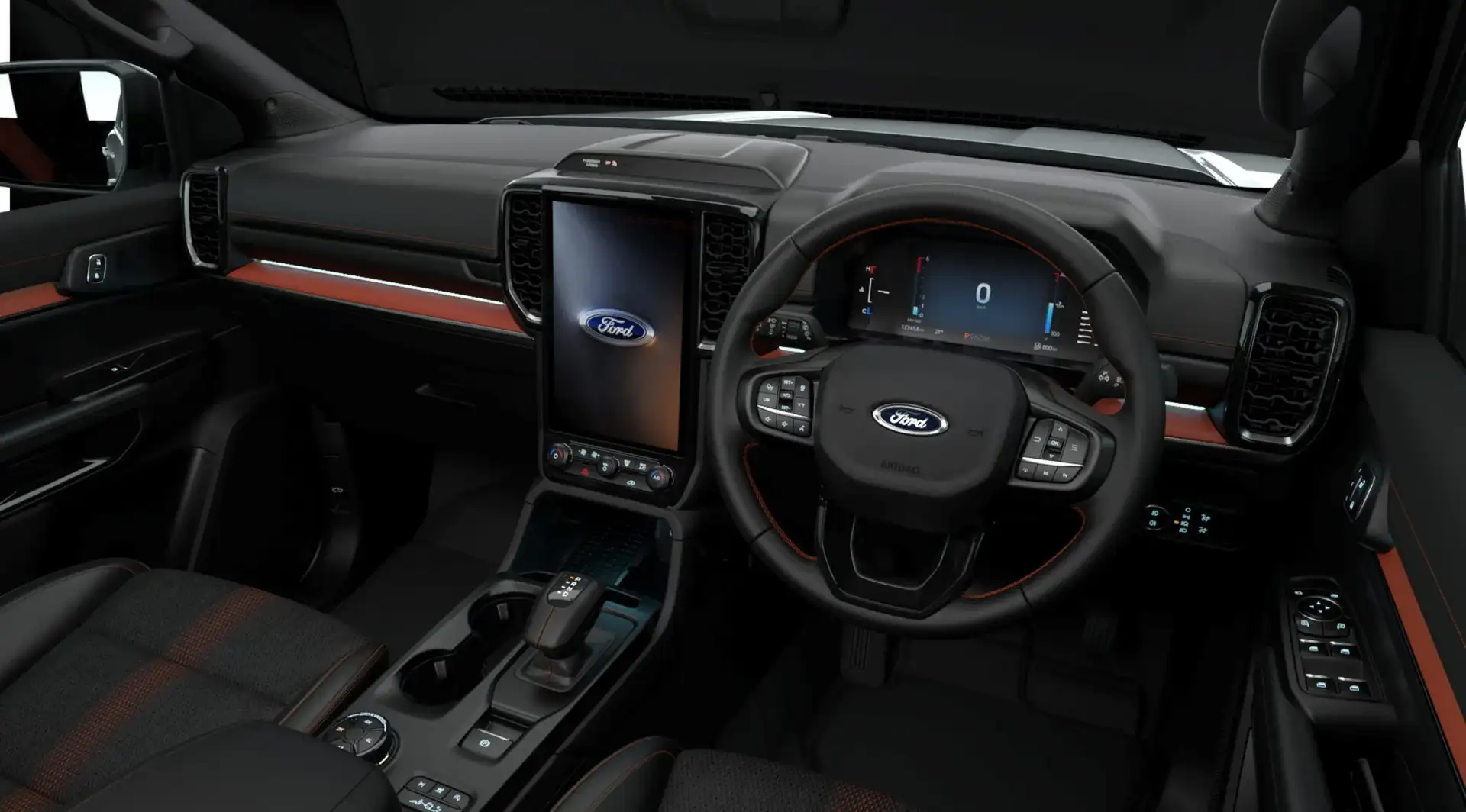
The Wildtrak’s visual package now leans into Ford’s current orange-accented performance styling language. Ignite Orange replaces the previous Luxe Yellow finish, paired with gloss black exterior details and 20-inch alloy wheels with orange inserts. Buyers who intend to use the SUV off-road can delete that look in favor of 18-inch wheels with all-terrain tires at no extra cost, which is the smarter choice if you plan to exploit the Everest’s chassis rather than just display it.
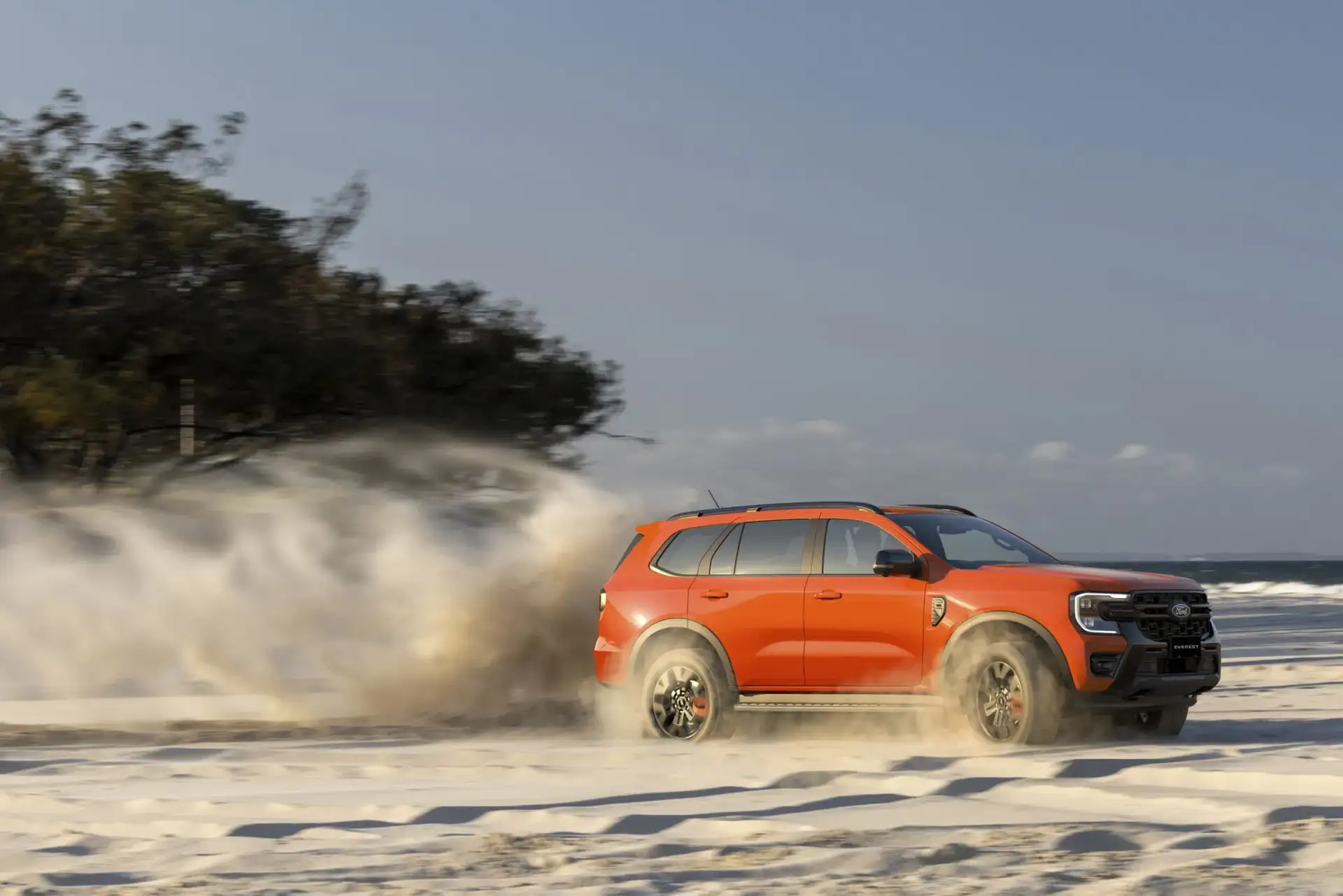
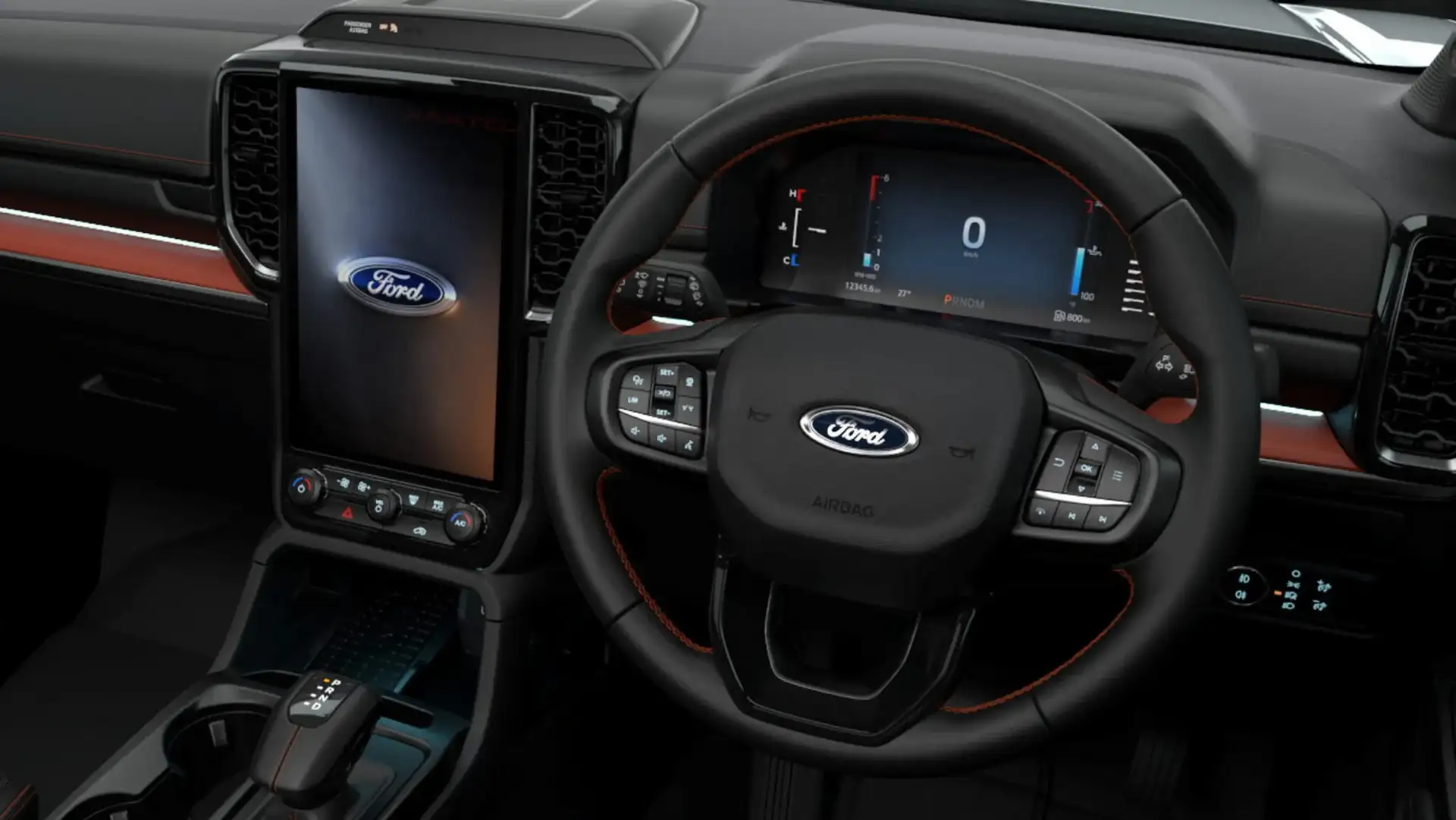
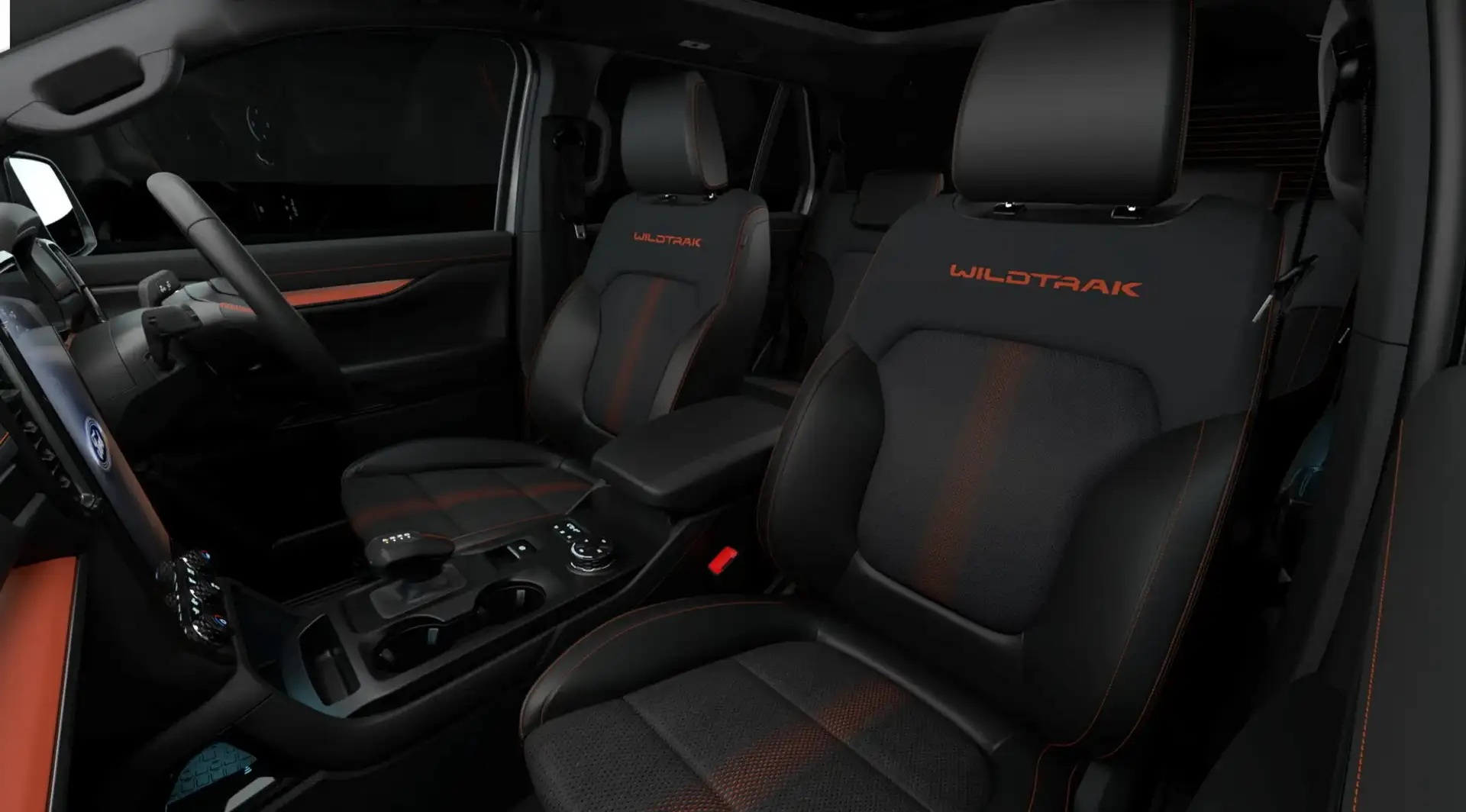
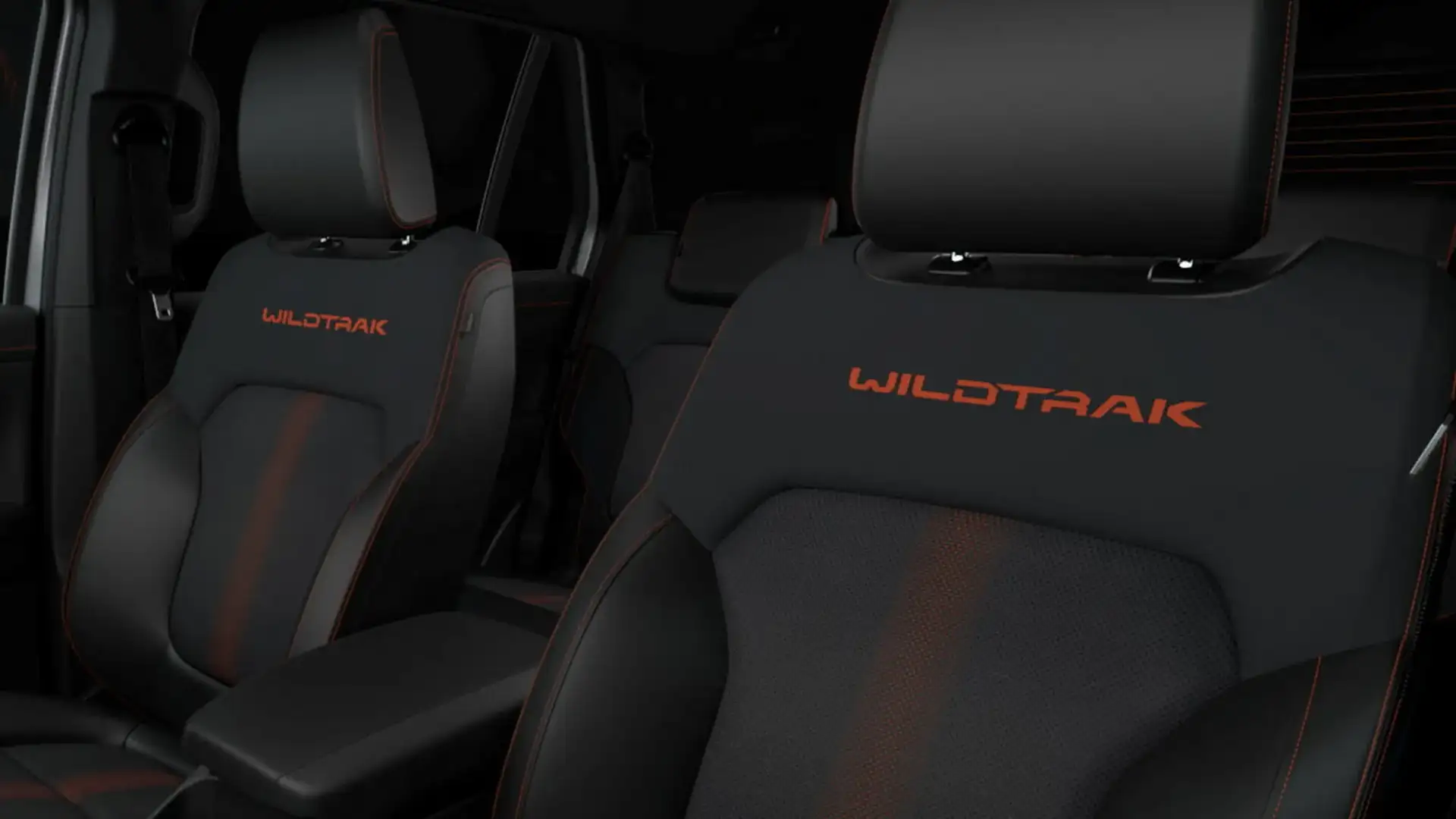
Inside, Ford has kept the changes focused and meaningful. Orange stitching, Wildtrak embroidery on the leather seats, and the addition of premium equipment from the Platinum trim are the real story here. That means Matrix LED headlights, a panoramic sunroof, ambient lighting, and power-folding third-row seats are now standard. Those are not small comfort upgrades; they materially change how the Everest competes against mainstream three-row SUVs in the Australian market.
Why the powertrain matters more than the badge
The biggest mechanical detail is also the least surprising: Ford has dropped the 2.0-liter bi-turbo diesel from the Australian Everest lineup, leaving the 3.0-liter V6 as the only engine across the range. That simplifies the sales pitch and strengthens the Everest’s premium positioning, because the 3.0 V6 does the heavy lifting with 600 Nm available through the 10-speed automatic and a full-time 4WD system.
For buyers who care about towing, mid-range punch, and relaxed highway driving, this is the configuration that matters. The trade-off is obvious as well: pricing now starts much higher than a four-cylinder family SUV, but Ford is clearly betting that Everest customers in Australia are willing to pay for the combination of torque, space, and equipment.
If you want to understand how brands are using special editions to add identity without changing the platform, the pattern is similar to what we saw in the GMC SIERRA DENALI SCARLET NIGHT EDITION ADICIONA IDENTIDADE VERMELHA, where visual differentiation is doing more of the marketing work than mechanical reinvention.
Why Americans keep asking for it
The Everest remains one of Ford’s clearest “wrong market, right product” vehicles for North America. It fills the gap between the Bronco’s rugged two-row image and the Explorer’s more mainstream family brief, which is why enthusiasts keep asking why Ford does not simply bring the Everest stateside. The answer is still the same: market positioning, tariffs, and emissions compliance make the business case difficult, especially when the Explorer already covers the three-row family role in Ford’s U.S. portfolio.
There is also a product-planning reality that cannot be ignored. Ford does not appear eager to launch a Toyota 4Runner rival in America when the Bronco already owns the brand’s off-road lifestyle identity. That leaves the Everest doing exactly what Ford wants it to do elsewhere: serve as a premium, diesel-powered, three-row SUV for markets where that formula still makes commercial sense.
For readers tracking how global SUV strategy is diverging, the Everest’s return sits in the same conversation as the BMW SÉRIE 7 RECEBE FACELIFT E A VERDADEIRA GUERRA DA LUXO REVELADA, where equipment, powertrain choice, and market-specific packaging matter as much as the nameplate itself.
FAQ
Is the Ford Everest Wildtrak sold in the United States?
No. Ford continues to reserve the Everest for selected global markets, with Australia, New Zealand, Thailand, the Philippines, and South Africa among the key regions.
How many 2026.5 Everest Wildtrak units will be sold in Australia?
Ford will sell 1,000 units in Australia for this limited run.
What engine does the Everest Wildtrak use?
It uses a 3.0-liter V6 turbodiesel with 247 hp, 184 kW, or 250 PS and 600 Nm of torque.
How much does it cost?
Australian pricing starts at AU$ 79,990, which Ford says matches the Everest Tremor.
What makes the Wildtrak different from the regular Everest?
The main additions are Ignite Orange paint, gloss black trim, orange-accented 20-inch wheels, Matrix LED headlights, a panoramic sunroof, ambient lighting, and power-folding third-row seats.