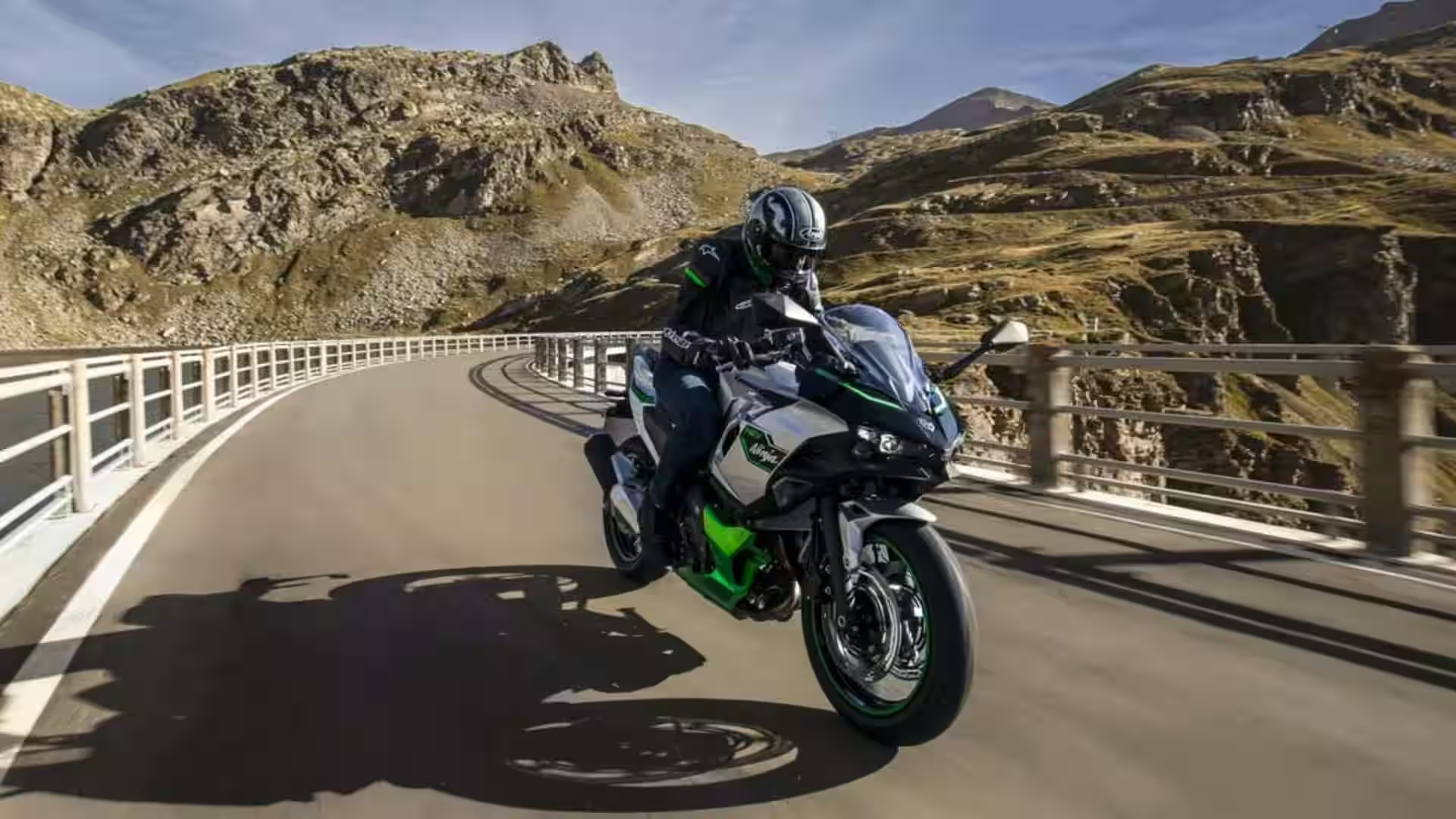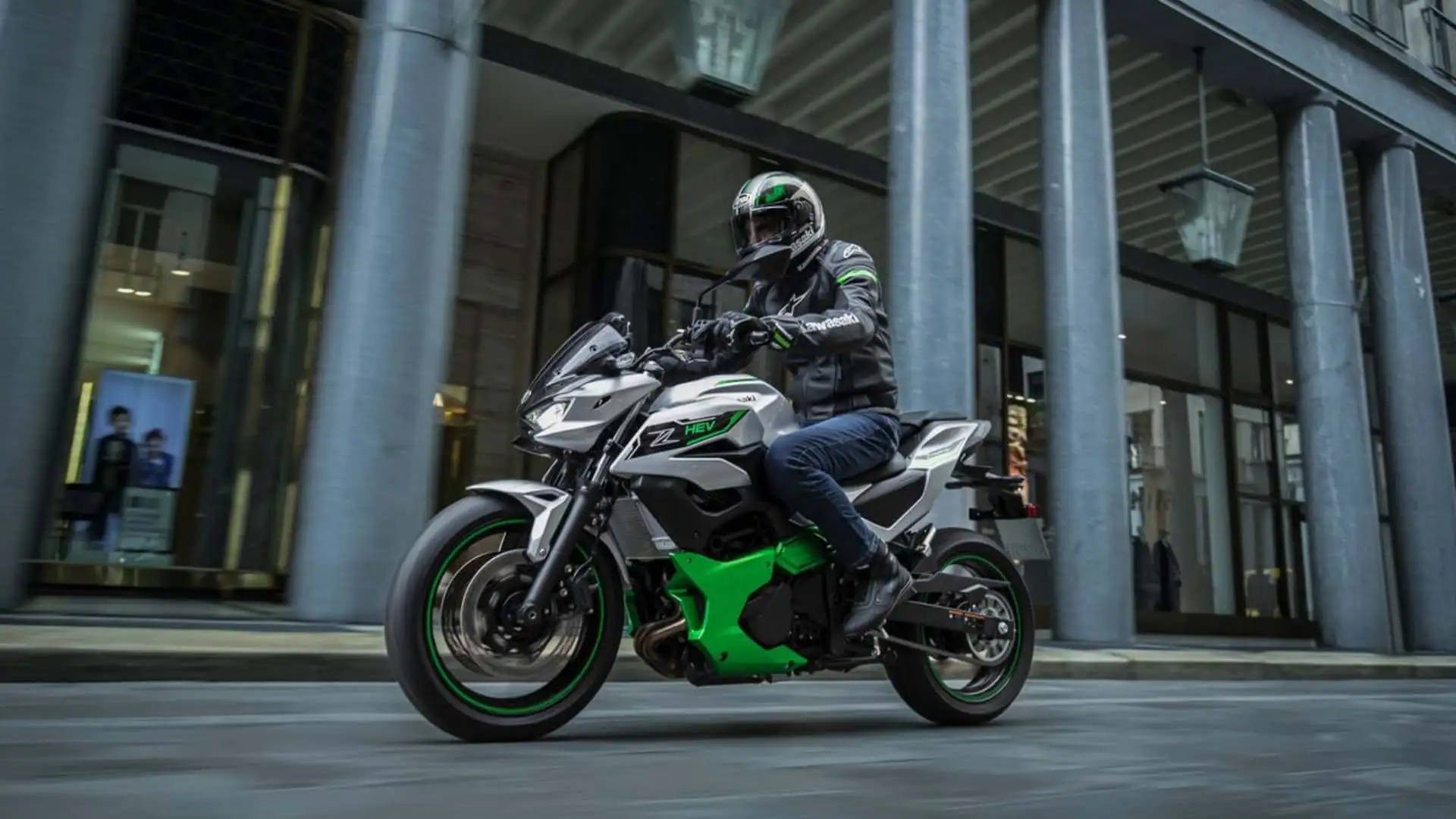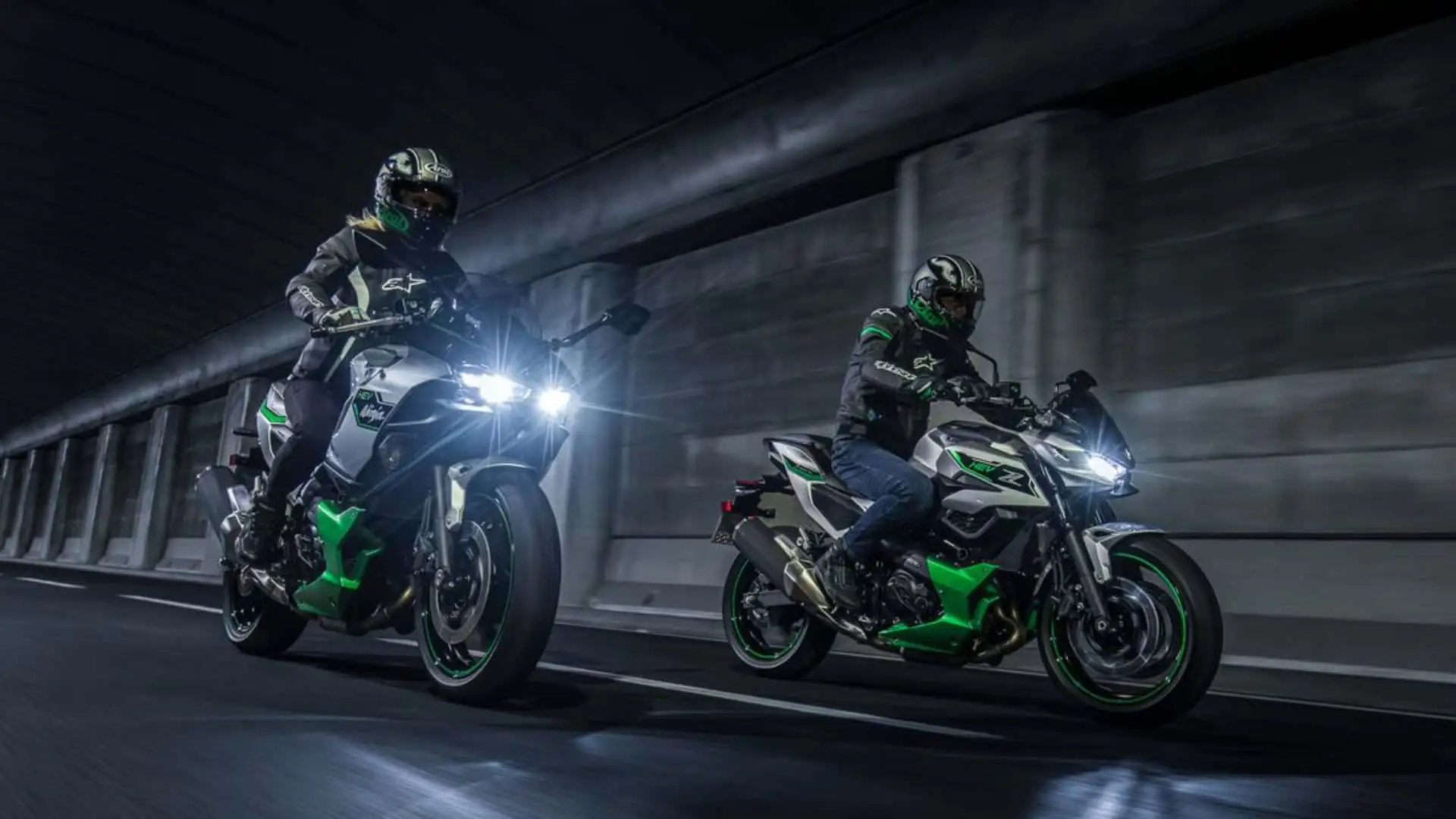
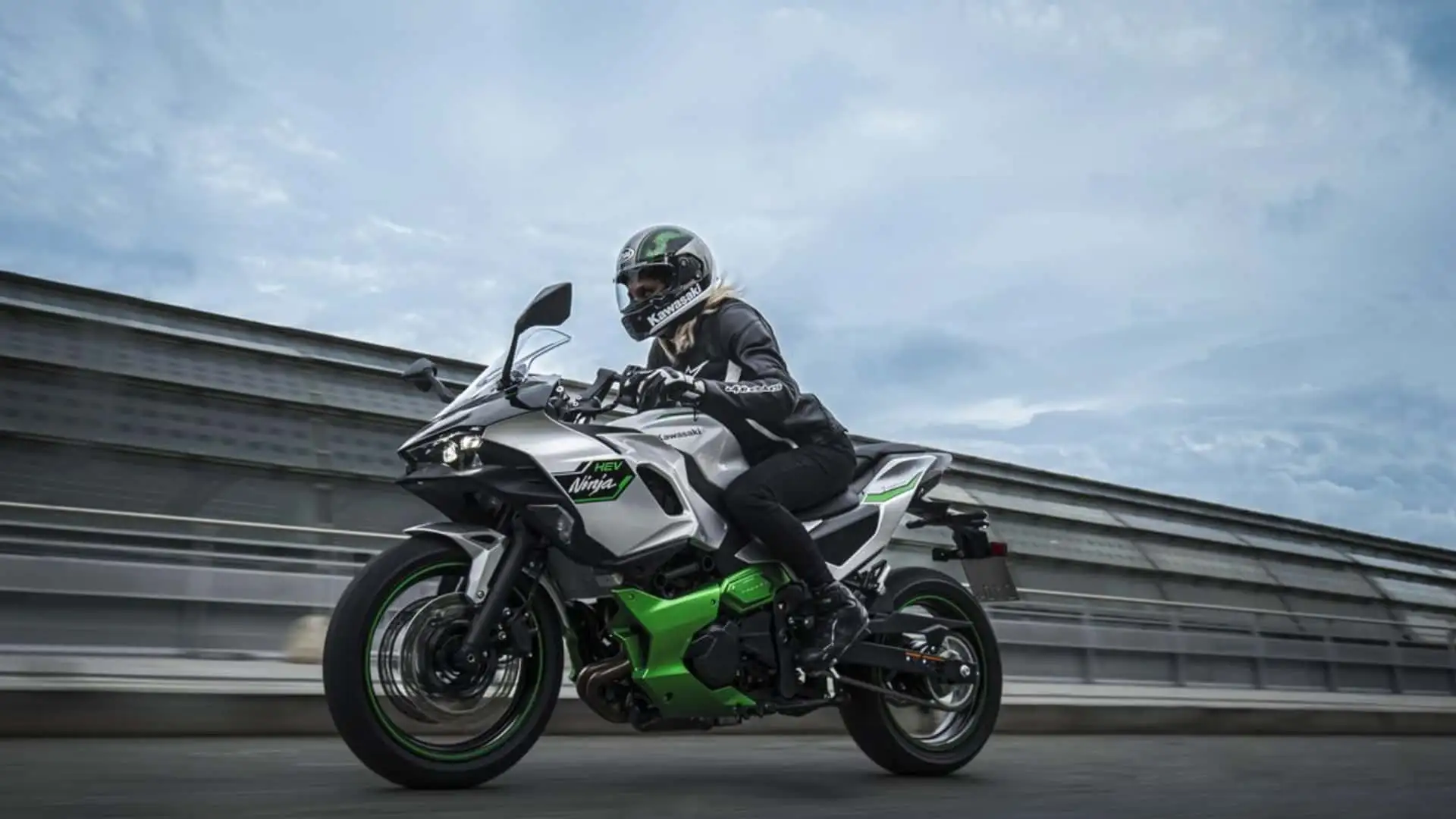
Kawasaki is doing something most motorcycle brands still ignore: refining hybrid tech until it feels less like a science project and more like a real daily rider. The latest updates to the Ninja 7 Hybrid and Z7 Hybrid are small on paper, but they could matter a lot in the real world.
Why Kawasaki’s Hybrid Strategy Still Matters
The motorcycle industry has spent years talking about electrification, but most of the attention has gone to either full EV bikes or traditional combustion engines. Kawasaki chose a different route with the Ninja 7 Hybrid and Z7 Hybrid, and that decision now looks more interesting than ever.
These are not concept models, prototype teasers, or limited-run science experiments. They are production strong-hybrid motorcycles built to be ridden every day. That alone gives Kawasaki a unique position in a market where most competitors have avoided the complexity of mixing an engine and electric motor in one package.
For riders, that matters because hybrid motorcycles promise a rare combination:
- Better low-speed usability in traffic
- Electric-assisted efficiency without range anxiety
- Performance flexibility when the ride turns sporty
- More practical commuting behavior than a pure ICE sport bike
Packaging challenges, cost pressure, and rider expectations have kept hybrids rare on two wheels. Kawasaki has still pushed forward, and these upgrades suggest the brand is serious about making the idea more usable rather than merely futuristic.
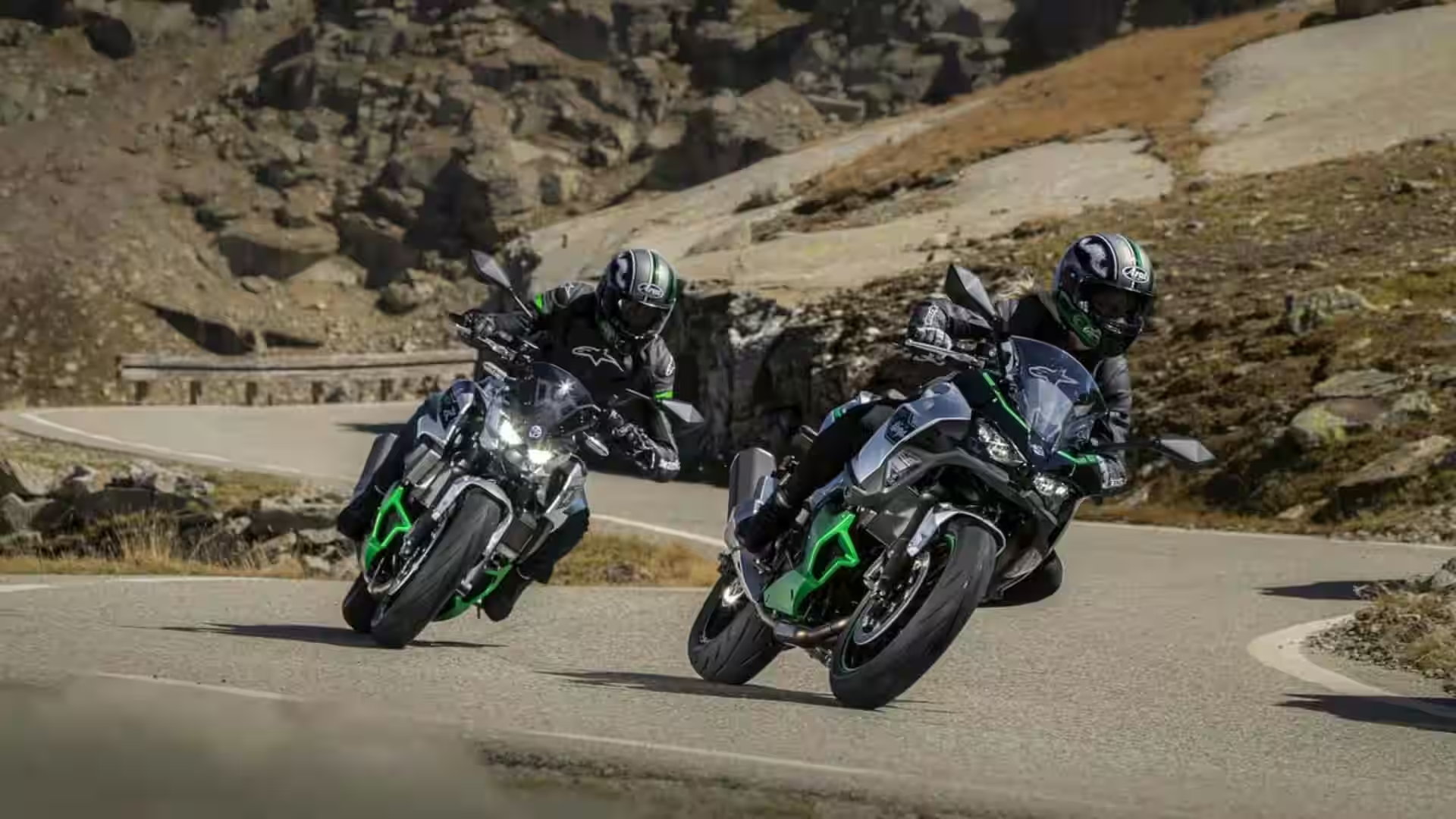
The Big Upgrades Riders Will Actually Notice
The most important change is a practical one. Kawasaki has updated the hybrid control logic and ECU mapping to make the system respond more naturally in everyday riding. In simple terms, the bike should feel smarter, smoother, and less awkward when switching between power modes.
The biggest headline feature is the expanded EV and Hybrid mode switching speed. Riders can now change modes at speeds of up to 37 mph, compared with the previous 16 mph. That is a major improvement for urban riding, where traffic speeds constantly rise and fall. It makes electric-only operation far more useful in stop-and-go situations, short city hops, and neighborhood riding.
Another key update involves Sport mode. It was previously linked only to the manual transmission setting with paddle shifters, but Kawasaki has now opened it up to the automatic transmission mode as well. That means riders can get a sharper throttle response and a more aggressive character without having to take control of gear changes.
This may sound like a software tweak, but it changes how the motorcycle can be used. It broadens the appeal of the hybrid platform and makes the bike easier for commuters, newer riders, and anyone who wants performance without constant manual input.
| Update | What Changed | Why It Matters |
| Mode switching speed | 16 mph to 37 mph | EV mode becomes much more usable in city traffic |
| Sport mode availability | Now works with automatic transmission | More aggressive riding without manual shifting |
| ECU mapping | Reworked for smoother behavior | More natural transitions and better everyday feel |
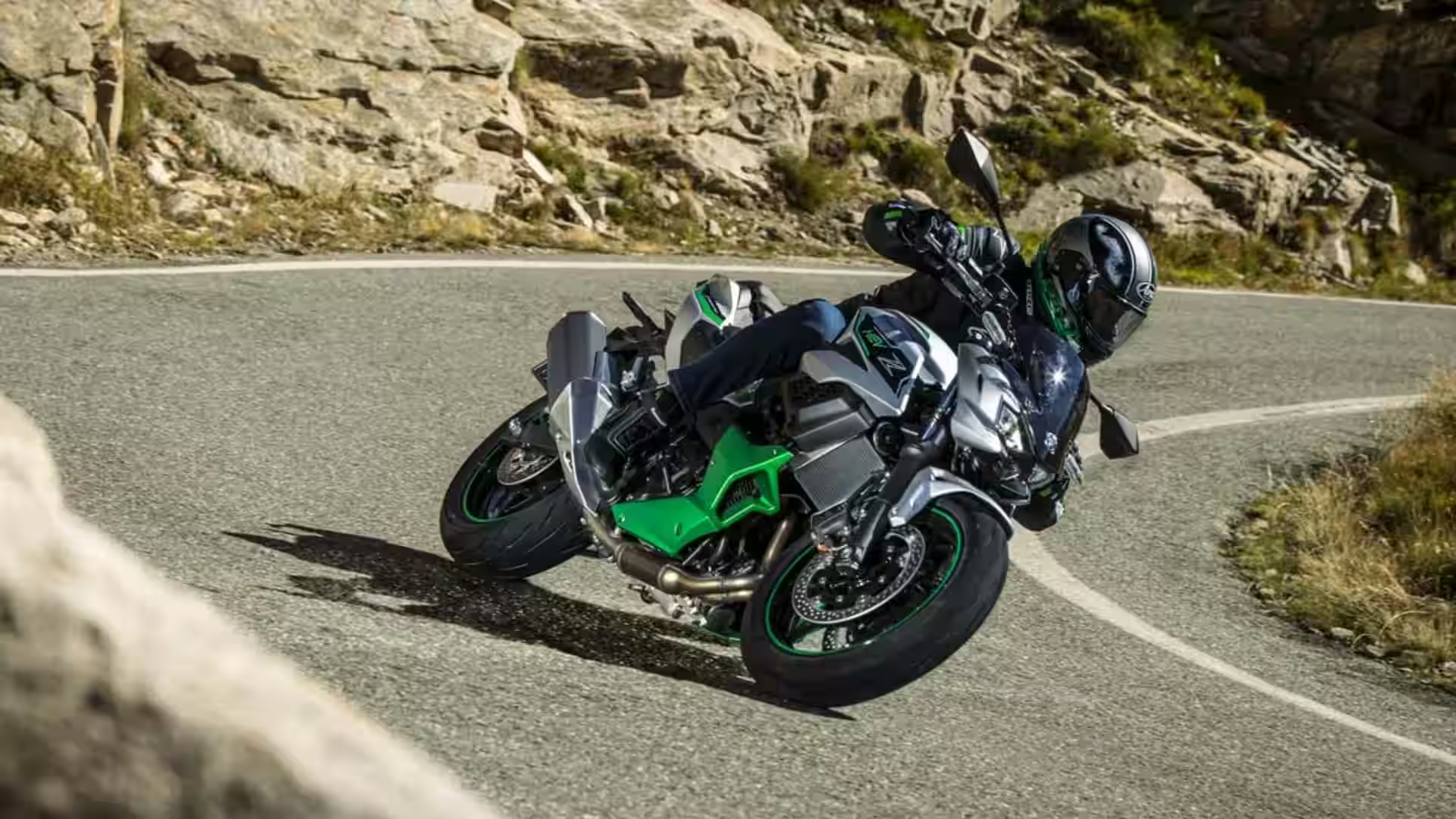
What This Means for the Future of Hybrid Motorcycles
The bigger story is not just about one update. It is about Kawasaki proving that hybrid motorcycles can evolve into something practical rather than gimmicky. The Ninja 7 Hybrid and Z7 Hybrid already stood alone in the mainstream market, and these refinements strengthen that lead.
If hybrid cars became normal by solving real usability problems, motorcycles may need the same path. Kawasaki seems to understand that. Instead of chasing headlines with extreme power figures alone, it is focusing on the day-to-day riding experience: smoother transitions, more flexible modes, and better urban practicality.
That approach also makes Kawasaki’s hybrid lineup a fascinating contrast to other electrified projects in the industry. While some brands are still debating how to enter the space, Kawasaki is already collecting real-world feedback and improving the package. If you follow the broader shift in powertrains, this is the kind of development that could influence everything from commuter bikes to premium sport motorcycles. Related stories like the Honda XL750 Transalp 2026 with E-Clutch and Suzuki’s updated GSX-8R and GSX-8S show how quietly important tech updates can reshape a bike’s value.
For riders who want a machine that can commute, play, and experiment with the future at the same time, Kawasaki’s hybrid duo remains one of the most intriguing motorcycles on sale. And if you want more proof that the market is shifting toward smarter electrified machines, check out BYD’s premium-to-mass-market strategy, Geely’s long-range hybrid push, and Porsche’s hybrid performance benchmark.