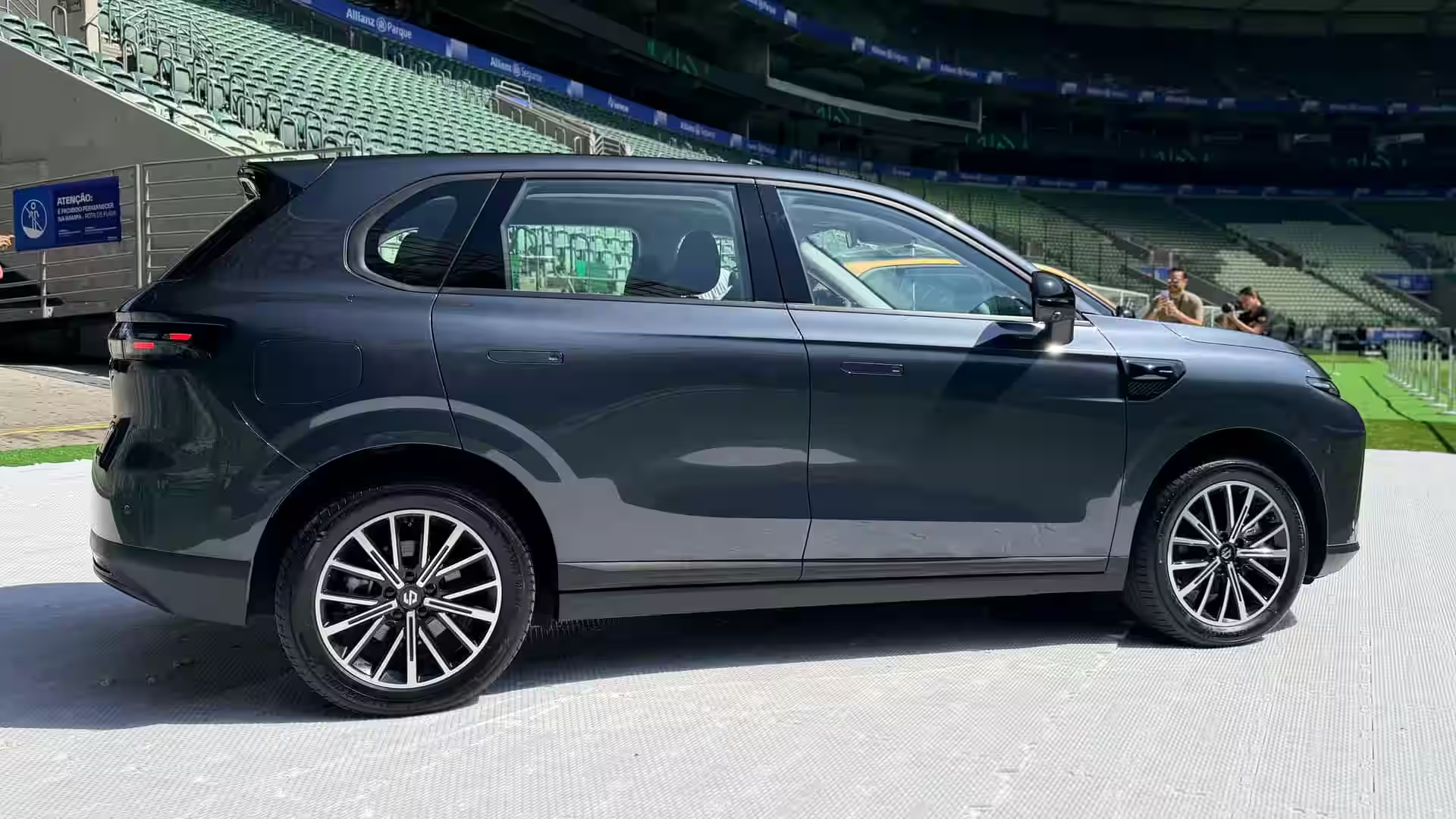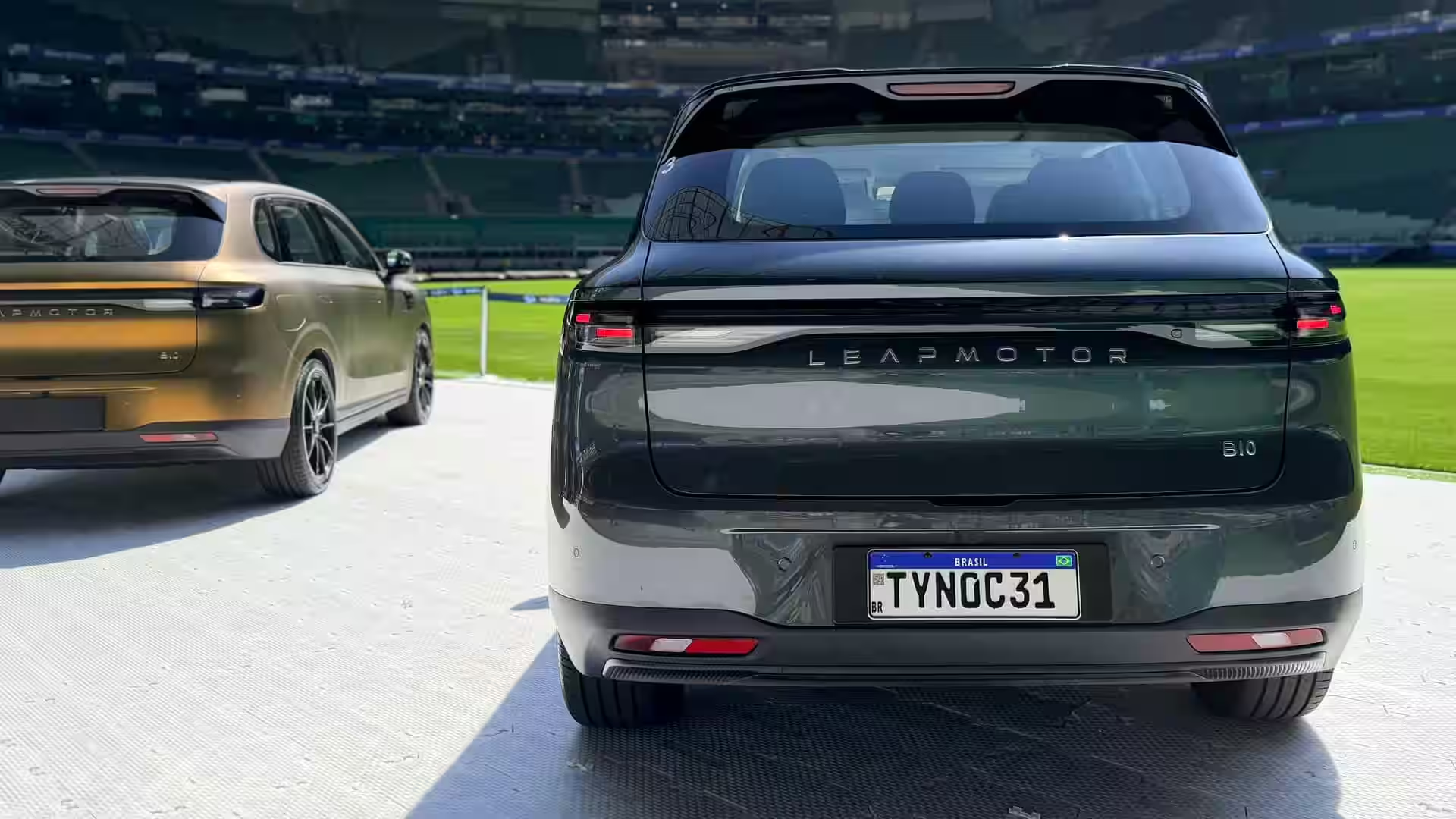
Leapmotor is no longer just another EV story in Brazil. Stellantis is turning the brand into a much bigger bet, and the most important piece may be a range-extender system designed specifically for the Brazilian market.
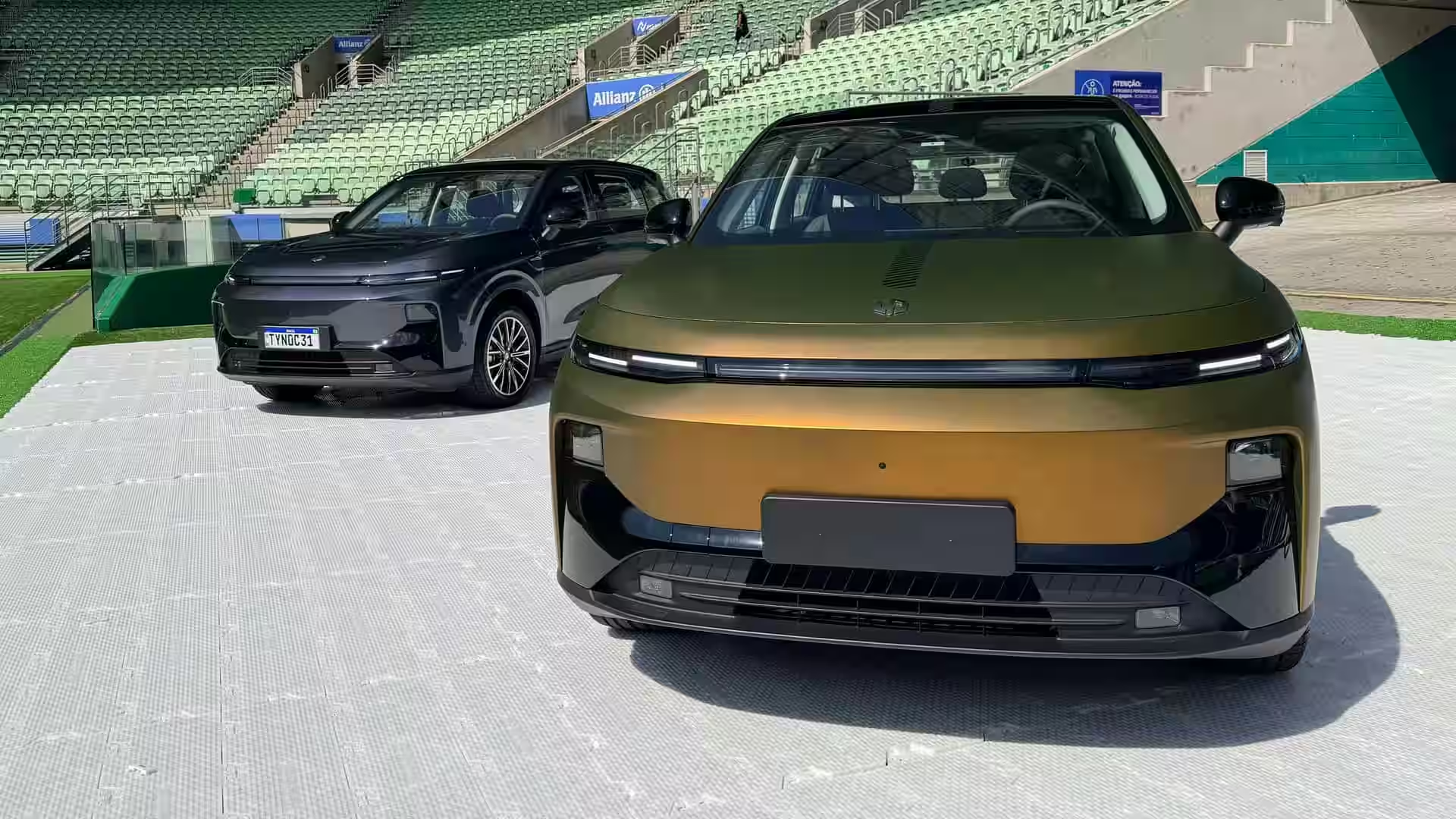
Leapmotor’s Brazil Plan Is Bigger Than Pure EVs
At first glance, the launch strategy looked simple: bring in the Leapmotor B10 and Leapmotor C10, build a local footprint, and support the shift to electrified mobility. But Stellantis has now confirmed something far more ambitious. In Goiana, Pernambuco, the company is developing an inédita REEV flex technology that combines electric drive with a combustion engine able to run on ethanol or gasoline in any proportion.
That detail matters. Brazil is one of the world’s most mature flex-fuel markets, and using ethanol as part of a range-extender strategy could lower running costs while fitting local fuel habits far better than a battery-only approach. In other words, this is not a copy-and-paste Chinese EV plan. It is a regionalized electrification strategy built around the realities of the Brazilian market.
The production base will be the Goiana Automotive Hub, where Stellantis already has industrial expertise and where the company says expansion is underway to support the new Leapmotor operation. For readers following the global EV race, this is the kind of move that signals long-term commitment, not a short commercial experiment.
If you are tracking how Chinese brands are being localized by global groups, this is also a strong signal that Stellantis wants Leapmotor to become more than a showroom import label. It wants the brand to be part of its South American engineering and manufacturing ecosystem.
What REEV Flex Actually Means On The Road
REEV stands for Range Extender Electric Vehicle. The layout is simple but clever: the wheels are driven only by an electric motor, while the combustion engine never directly powers the car. Instead, it works as a generator that keeps the battery charged when needed. That means the driving feel remains electric, but range anxiety drops dramatically.
“The combustion engine is not there to move the car. It is there to keep the battery alive.”
This approach is already familiar within the Leapmotor lineup. The C10 REEV has been shown with a 1.5-liter generator setup and, in certain conditions, can approach 1,000 km of combined range. In Europe, the Leapmotor B10 REEV has also appeared with a gasoline-powered extender, offering around 86 km of electric-only range and total range that can reach roughly 900 km depending on use.
For buyers, that formula solves one of the biggest barriers to EV adoption in countries where charging networks are still uneven. You get the smooth, quiet, instant-response character of an EV, but without being trapped by sparse fast-charging access on long trips.
| System | How It Works | Why It Matters |
|---|---|---|
| REEV | Electric motor drives the wheels | Feels like a pure EV |
| Range Extender | Combustion engine generates electricity | Boosts autonomy without direct drive |
| REEV Flex | Engine runs on ethanol or gasoline | Matches Brazil’s fuel reality |
For anyone comparing this with other market disruptors, it sits in the same conversation as models like the BYD Seal 06 family, where electrification is being tailored for mass adoption rather than premium-only positioning.

Why Brazil Could Become The Global Test Lab
Stellantis says the Brazilian team is leading the development, and that could be the most important part of the entire story. If successful, this would become the first REEV flex technology in the world, a combination of hybrid-series architecture and flex-fuel adaptation designed in South America.
That opens several strategic doors:
- Lower fuel cost per kilometer thanks to ethanol compatibility
- Reduced emissions compared with gasoline-only range extenders
- Better long-distance practicality than a battery-only SUV
- Faster market adoption in countries with limited charging coverage
It also explains why Stellantis is not treating Leapmotor as a niche import. The company appears to be building a bridge between electrification and local energy infrastructure, and Brazil is the perfect place to test that bridge at scale. If the system works reliably in Brazilian conditions, the technology could become a reference point for other flex-fuel markets in Latin America and beyond.
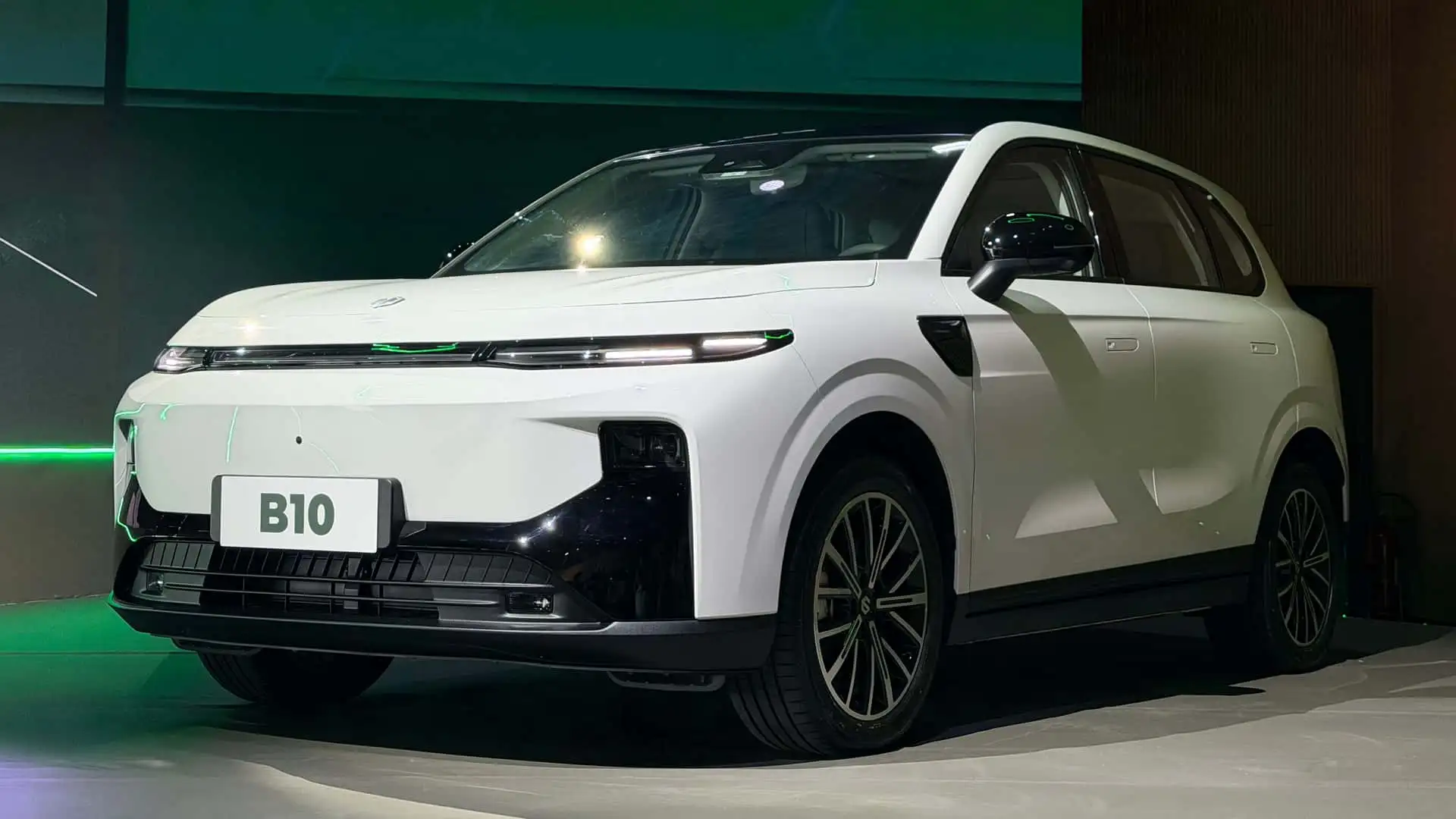
The B10 itself is already positioned as a crucial model for the brand’s growth, and the local development story adds even more weight to its arrival. If you are following the wider SUV and electrified crossover battle, you may also want to check how other brands are pushing the same frontier in different ways, such as the HAVAL HX PHEV or the Kia Seltos 2027 hybrid direction.
In practical terms, the Leapmotor strategy is a response to a real consumer problem. Pure EVs still make sense for many drivers, but not everyone is ready to depend entirely on charging stations. A flex REEV gives buyers a psychological and practical buffer, especially in a country where road trips, regional distance, and fuel familiarity still influence purchase decisions.
That is why this announcement is more than a technical footnote. It shows Stellantis is betting that the future in Brazil will not be defined by a single powertrain, but by a smarter mix of electric driving and locally optimized energy use. And if Goiana becomes the birthplace of the world’s first REEV flex, Leapmotor could end up setting a template that other automakers will be forced to copy.