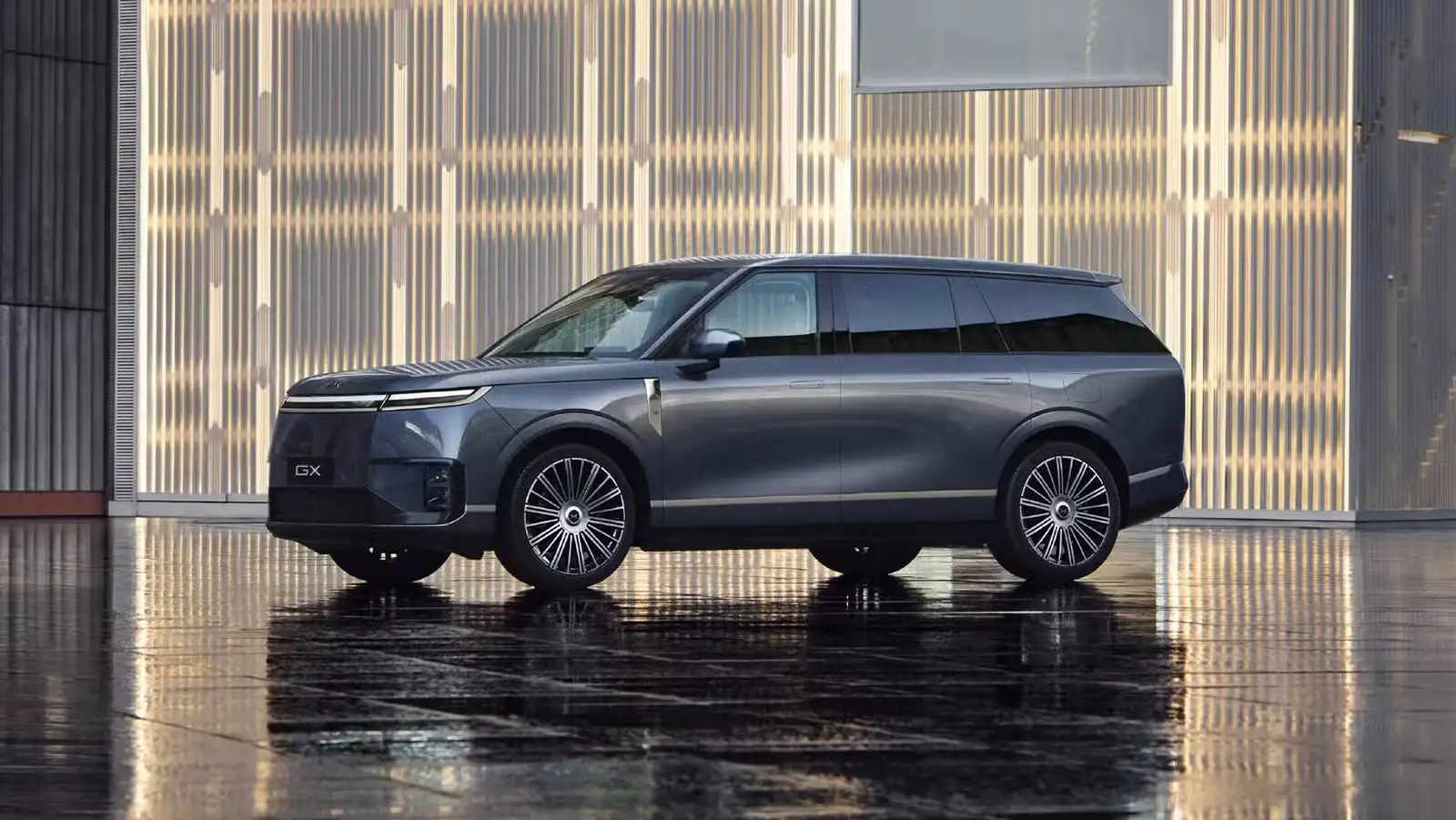
Xpeng is no longer teasing a simple large SUV. The new XPENG GX is shaping up as a serious statement in China’s premium market, blending luxury-SUV proportions, next-generation chassis tech, and a dual-powertrain strategy that could widen its appeal far beyond typical EV buyers.
A Flagship SUV Built To Push Xpeng Upmarket
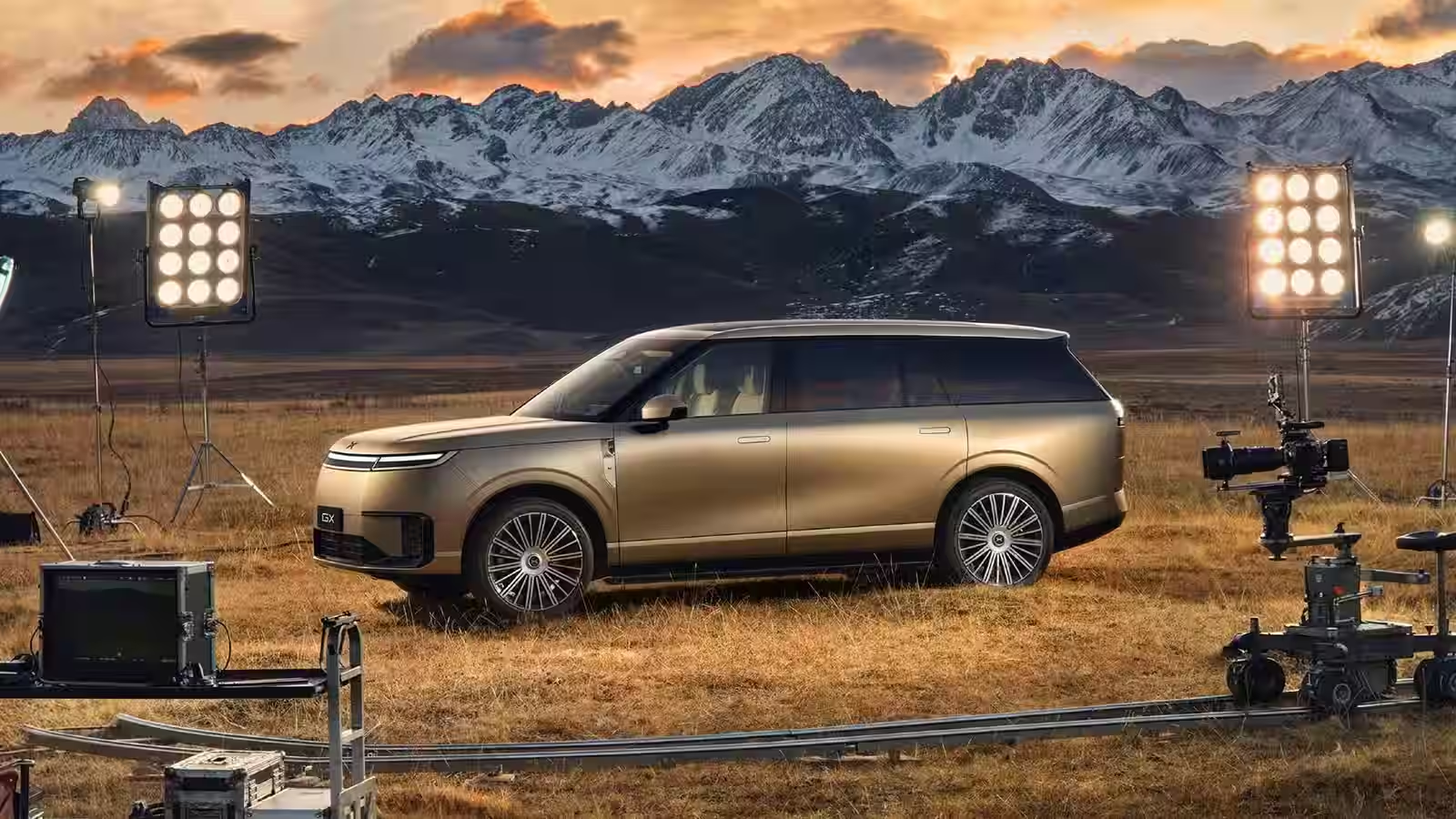
The latest official images reveal the Xpeng GX in refined grey and gold finishes, reinforcing its role as the brand’s new flagship. Internally known as G01, the model sits above the G9 and is expected to enter the 400,000 to 500,000 yuan price bracket, or roughly US$58,500 to US$73,200 at current exchange rates.
Dimensionally, this is a true full-size SUV. The GX measures 5,265 mm long with a 3,115 mm wheelbase, and it adopts a six-seat layout aimed at families and executives who want space without stepping into minivan territory. That strategy matters, especially as buyers compare large premium SUVs globally, from China’s new tech-heavy contenders to traditional luxury benchmarks. If you have been tracking where the segment is heading, the shift mirrors what we have seen in rivals and adjacent products such as the BMW X7’s technology-driven identity crisis and the Volvo EX90’s software-first luxury formula.
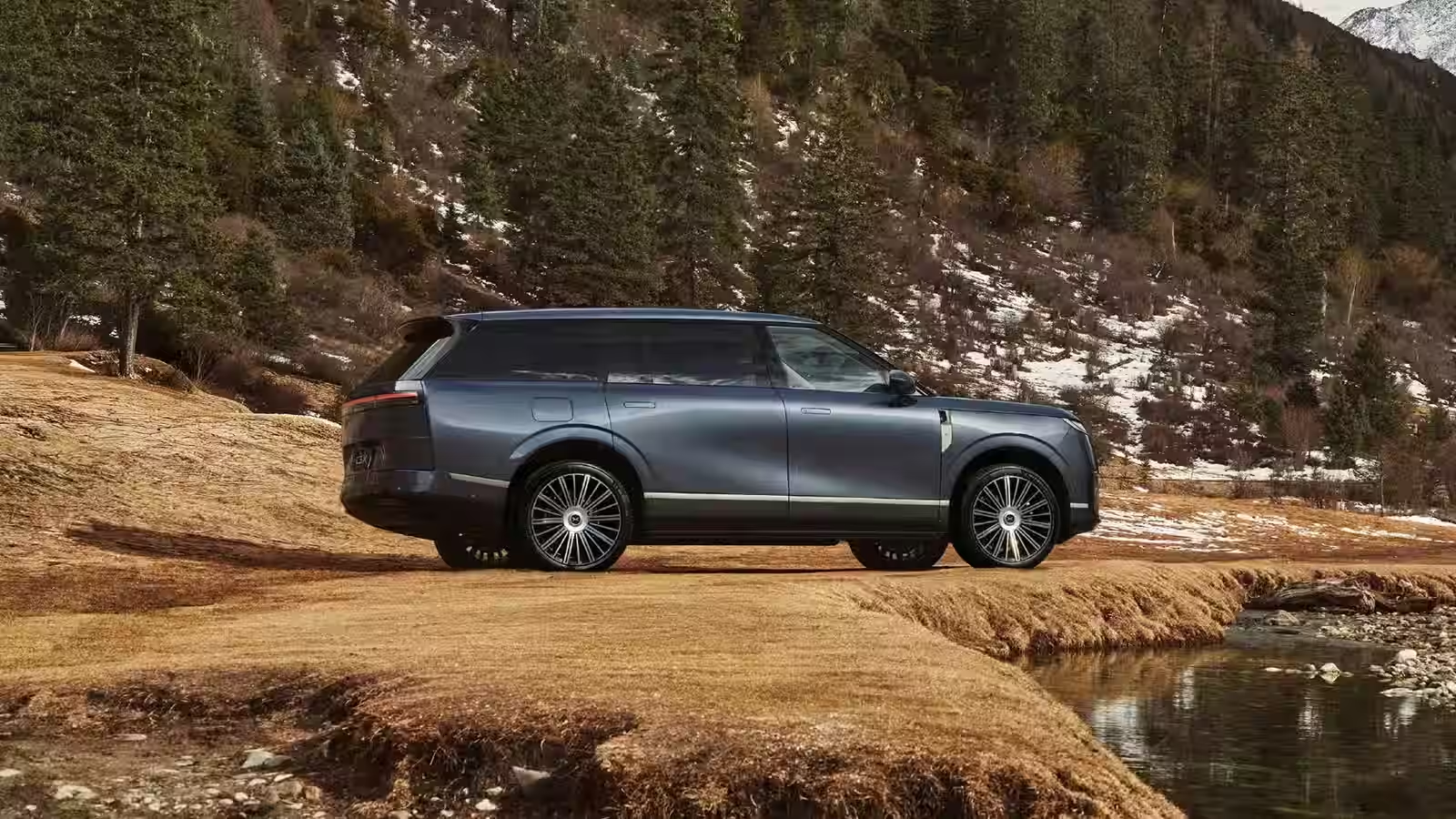
Its side profile has already drawn comparisons to Range Rover-style surfacing and stance, but Xpeng’s message is different. The company is positioning the GX as a machine built for the physical AI era, where hardware, software, sensors, and vehicle dynamics are tightly integrated rather than added as isolated features.
BEV And EREV Versions Could Be The Real Market Weapon
One of the most important details is that the GX will not rely on a single propulsion formula. According to public regulatory filing information from China’s Ministry of Industry and Information Technology, the SUV will be sold in both BEV and EREV forms.
- BEV versions are expected with rear-wheel drive and all-wheel drive configurations.
- Top speed for listed battery-electric variants reaches 200 km/h.
- EREV versions use a 1.5-liter gasoline engine as a range extender paired with dual electric motors.
That matters because the EREV layout can answer one of the biggest objections buyers still have toward large electric SUVs, especially in regions where charging convenience remains inconsistent. In practical terms, Xpeng is trying to keep one foot in the pure-EV future while defending itself against range anxiety in the present. That same wider electrification battle is also visible across the Chinese market, where brands are moving fast with different strategies, as seen in the BYD Seal 06 GT and DM-i Wagon push and the Geely Galaxy M7’s huge range claim.
| Key Xpeng GX Specs | Details |
|---|---|
| Vehicle Type | Full-size six-seat luxury SUV |
| Platform | SEPA 3.0 |
| Powertrains | BEV and EREV |
| Length | 5,265 mm |
| Wheelbase | 3,115 mm |
| Top Speed | 200 km/h for listed BEV variants |
| Range Extender Engine | 1.5-liter gasoline unit |
Steer-By-Wire, Rear Steering, And 3000 TOPS Change The Story
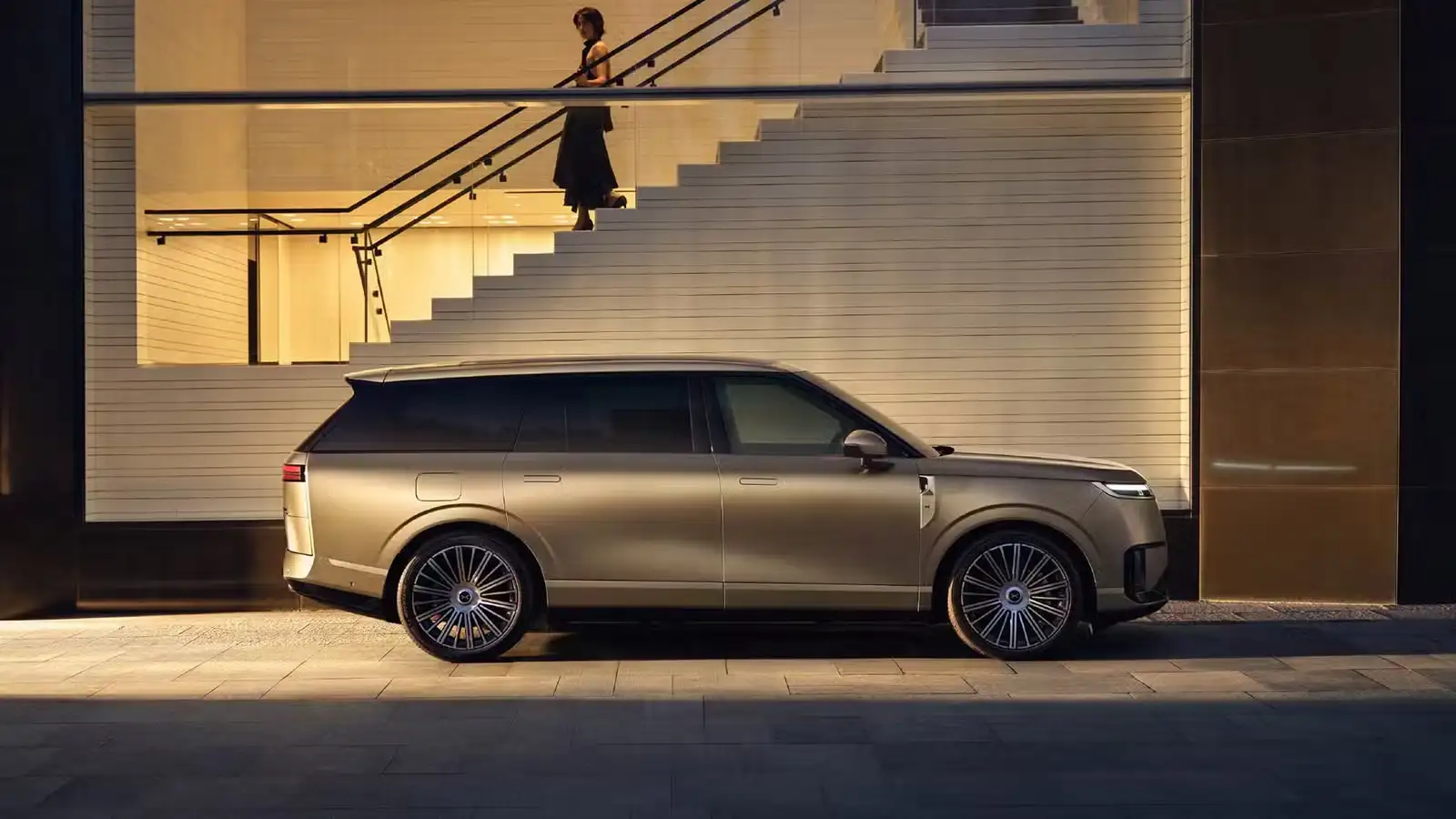
The GX is far more interesting underneath than its conservative silhouette initially suggests. Xpeng says the SUV uses steer-by-wire and rear-wheel steering, two technologies usually associated with expensive, innovation-focused models. Together, they can improve low-speed maneuverability, high-speed stability, and packaging flexibility.
Even more headline-grabbing is the vehicle’s computing backbone. Local reports have indicated the GX is being tested with L4 autonomous driving capability and powered by four Turing chips delivering a combined 3,000 TOPS of effective computing power. In the current EV arms race, those numbers place the GX in direct conversation with the most software-ambitious vehicles on the market, not just traditional family SUVs. If autonomous capability is becoming the next prestige battleground, this is exactly why stories like Changan’s L4 robotaxi approval matter so much.
Xpeng is also timing the GX reveal carefully. The renewed image campaign landed just before Nio prepared to spotlight its own flagship SUV technology. That is not accidental. It signals that China’s premium electric SUV war is no longer just about battery size or acceleration. It is now about who can make luxury, software, AI computing, and real-world usability feel like one seamless product.
“The GX is not merely a larger Xpeng. It is the company’s clearest attempt yet to challenge both legacy luxury SUVs and China’s new-generation EV leaders with one product.”
If the production model delivers the promised blend of packaging, dual-energy flexibility, advanced chassis systems, and high-level assisted driving, the Xpeng GX could become one of the most important Chinese luxury SUV launches of the year.